达特茅斯学院舍堂活动中心试点设计
美国新罕布什尔州汉诺佛市
 Sasaki
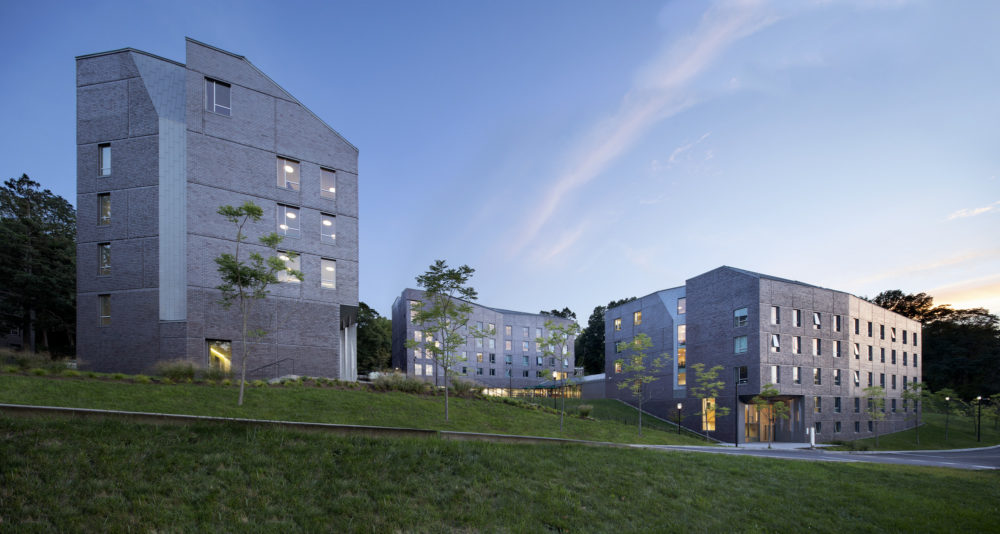
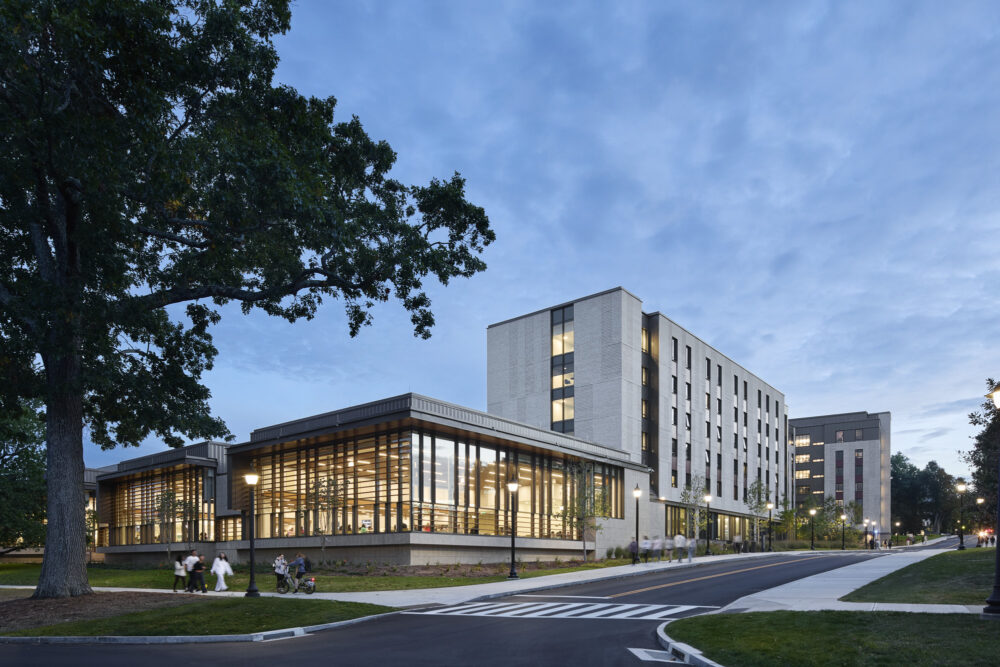
As part of a broader housing renewal initiative, Sasaki worked with Dartmouth College and Harriman Architects on the renovation of Brace Commons, Andres, and Zimmerman Halls. A continuation of Sasaki’s work from the Residential Life Study, the House Center Pilots, and implementation of the housing system, the project’s goals were to modernize the residential cluster, designed by Herbert S. Newman in 1987, to reposition room types for greater community, and to make the plaza and below-grade student space more welcoming, accessible, and flexible for the entire community.
In reimagining Brace Commons, the design team transformed a central, underutilized space into a hub of community, flexibility, and aesthetic warmth, enhanced by natural light, clear indoor–outdoor flow, and varied gathering areas. The landscape design complements this, activating the surrounding plaza into a green, inviting, and accessible environment with performance-ready features and sustainable infrastructure.
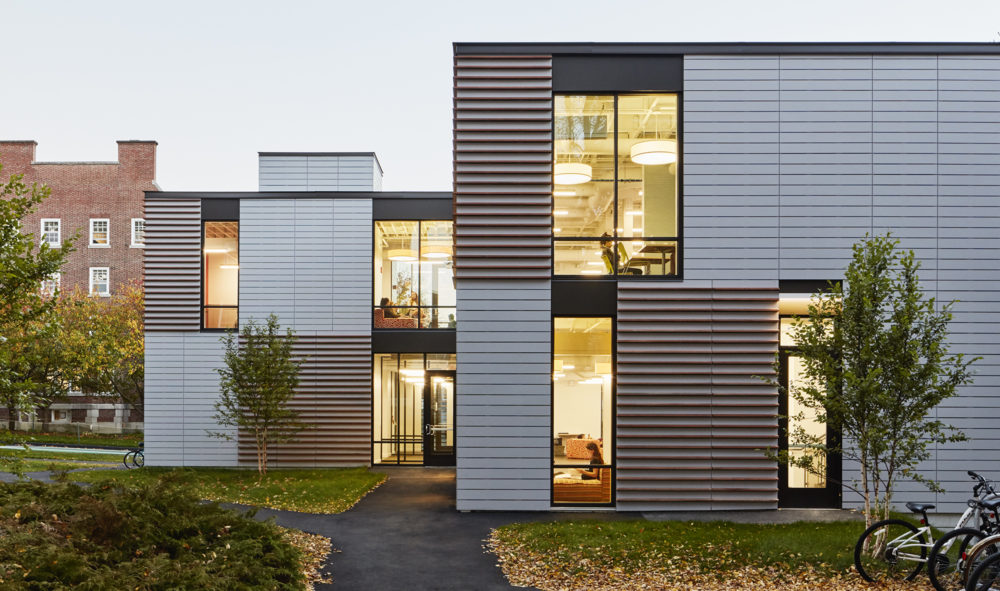
Sasaki partnered with Harriman Architects on the architectural transformation of Brace Commons, which builds upon the strength of its centrally situated, spacious volume. The renovation reimagines the interior as a dynamic, versatile student‑life hub. By bringing natural light into the space through a new light monitor and new exterior window wall, the design creates seamless indoor–outdoor connectivity highlighted by a welcoming south entrance that opens directly onto the newly renovated entry landscape.

Light monitor illuminates the interior of Brace Commons
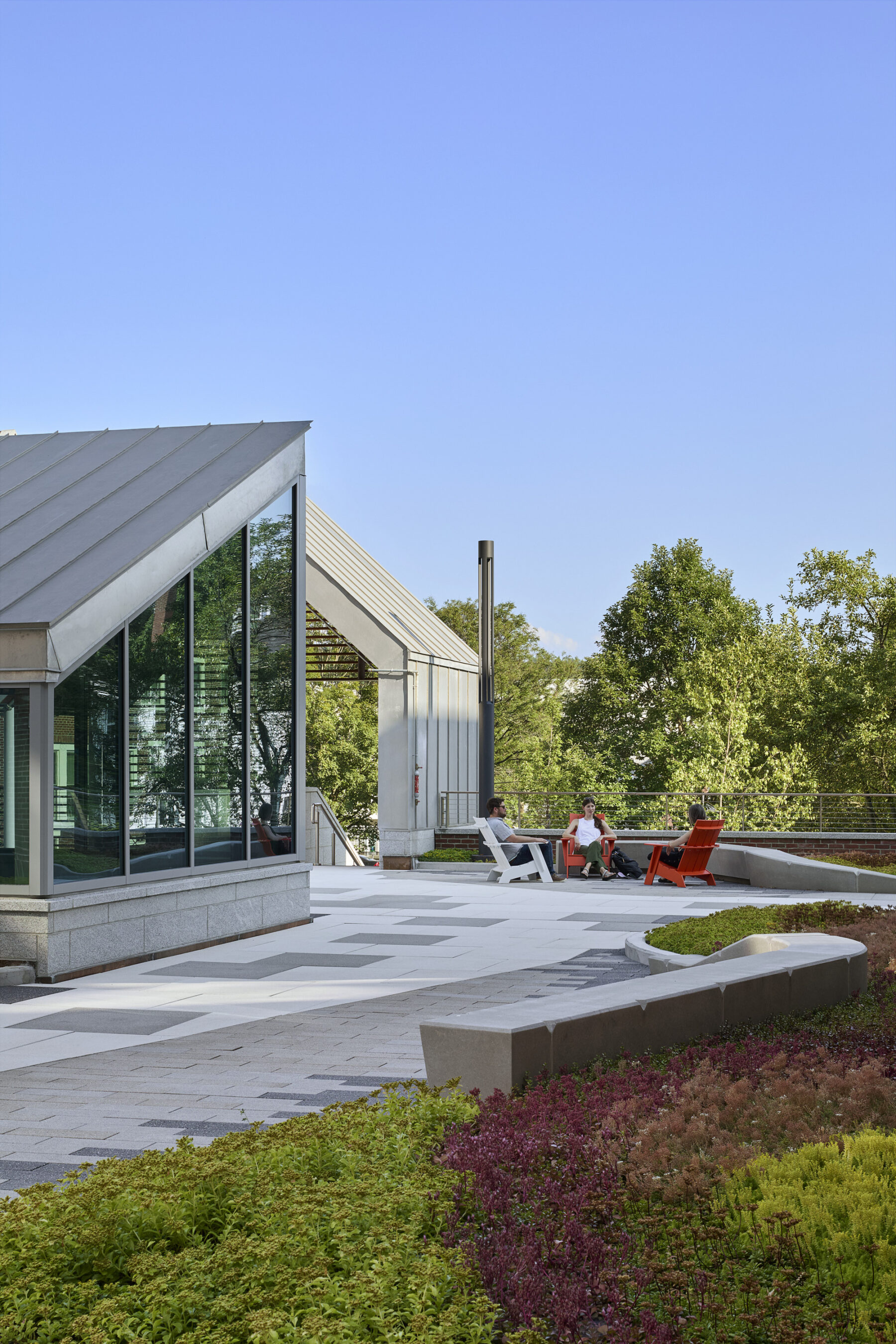
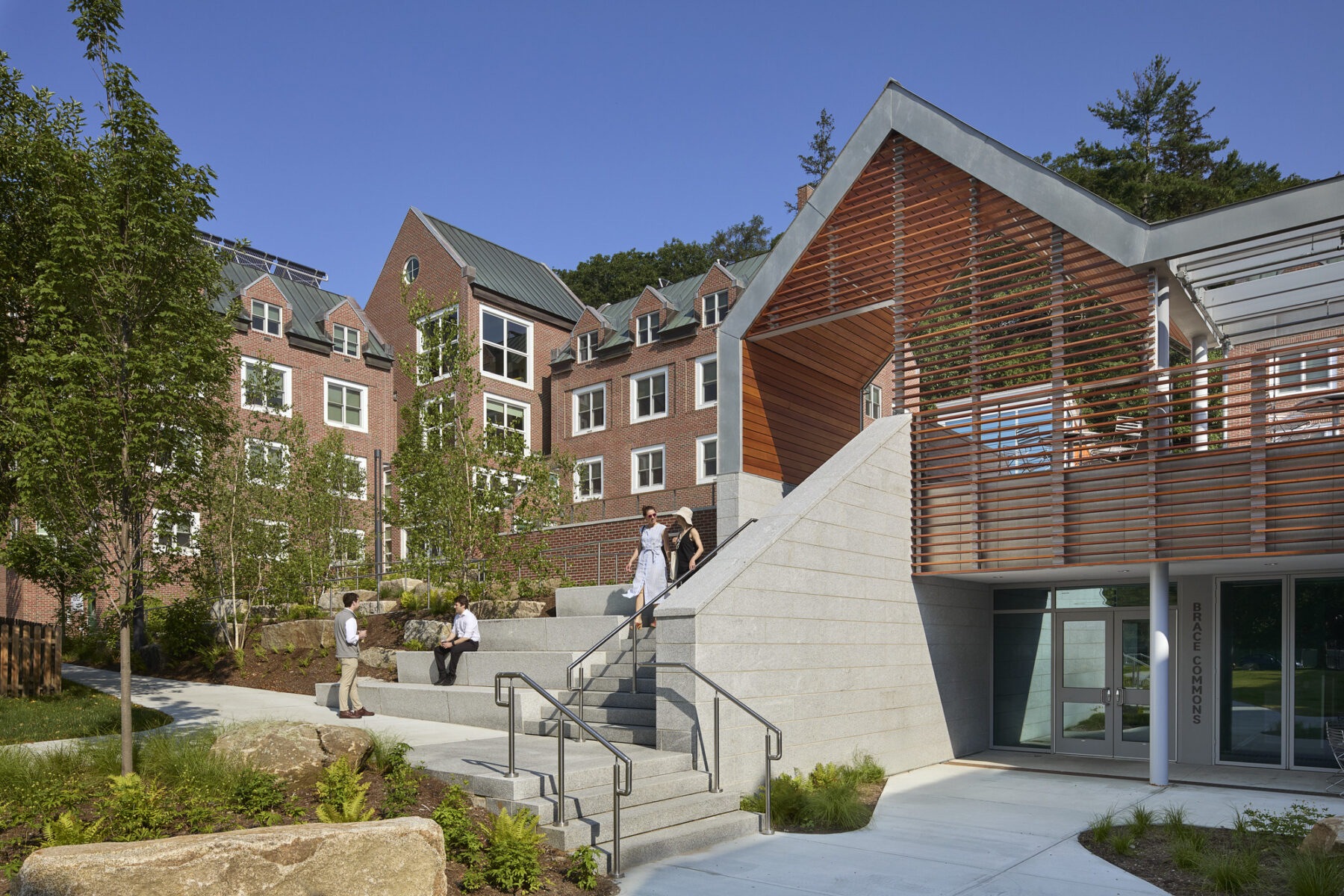
Light monitor and new entry pavilion at plaza level
Internally, the design preserves the flexibility of the original central space for large events, while adding flexible furniture groupings and several peripheral rooms to support a diverse range of day-to-day student activities, from House dinners to casual group study to informal lounging. The inclusion of a community kitchen reflects a commitment to fostering shared experiences and spontaneous social interaction. The new layout enables film nights, collaborative work, cooking events, and even weekly yoga classes, adding to the communal vitality of East Wheelock House.
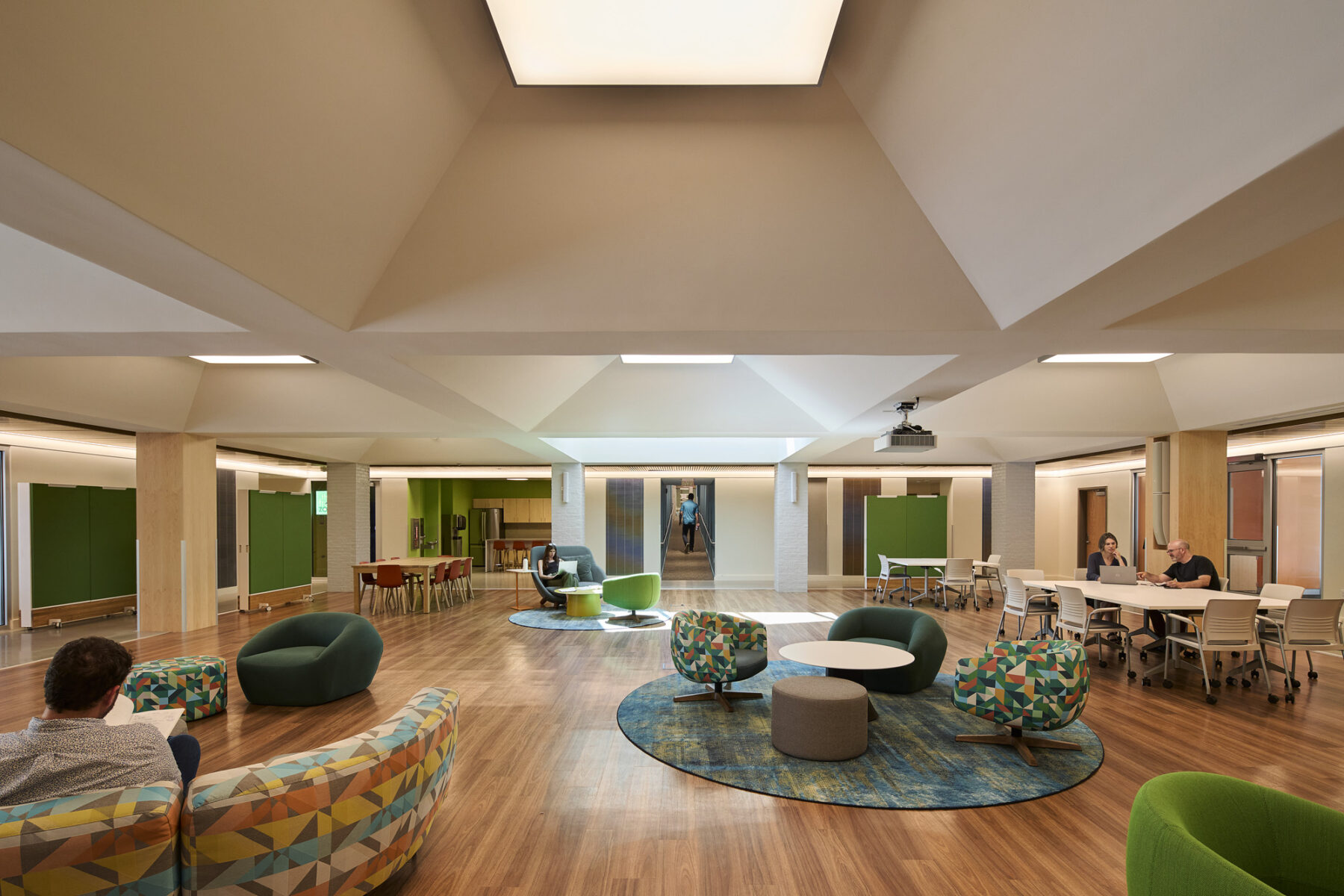
A distinctive feature is the accessibility-forward design: the “slipper test” allows residents to traverse the entire house, including Brace Commons, without stepping outdoors, a key improvement for inclement weather. The connections to each of the four residential buildings are color-coded for wayfinding and to draw residents’ attention to these connective routes.
On the exterior, the rooftop plaza has been transformed into a vibrant, dynamic landscape that enhances accessibility, visibility, and usability year‑round. The project introduces outdoor seating, native plantings, performance‑ready plazas, and solar‑panel‑topped pergolas, designed to support both daily lounging and formal gatherings.
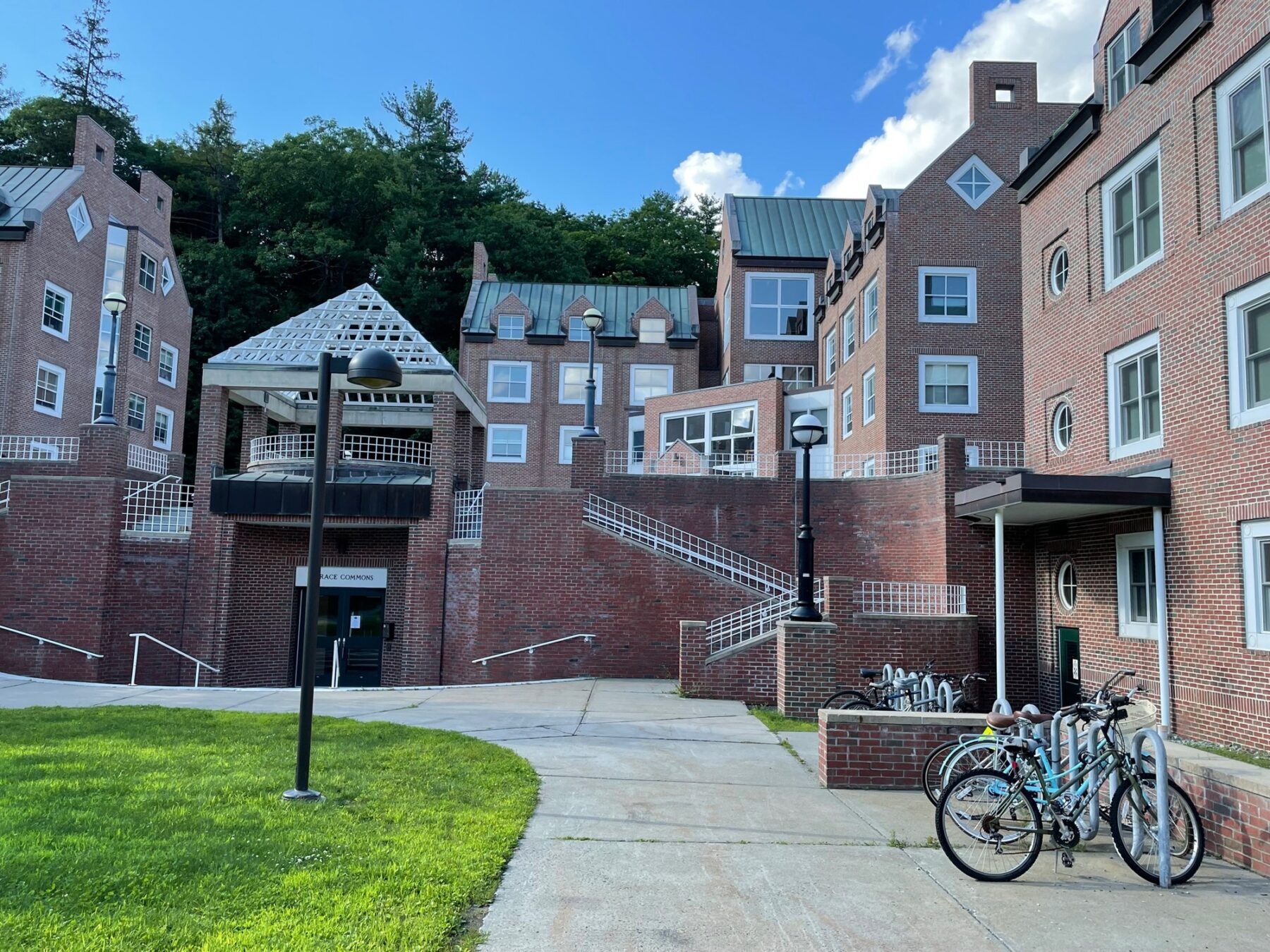
Brace Commons main entrance before renovation
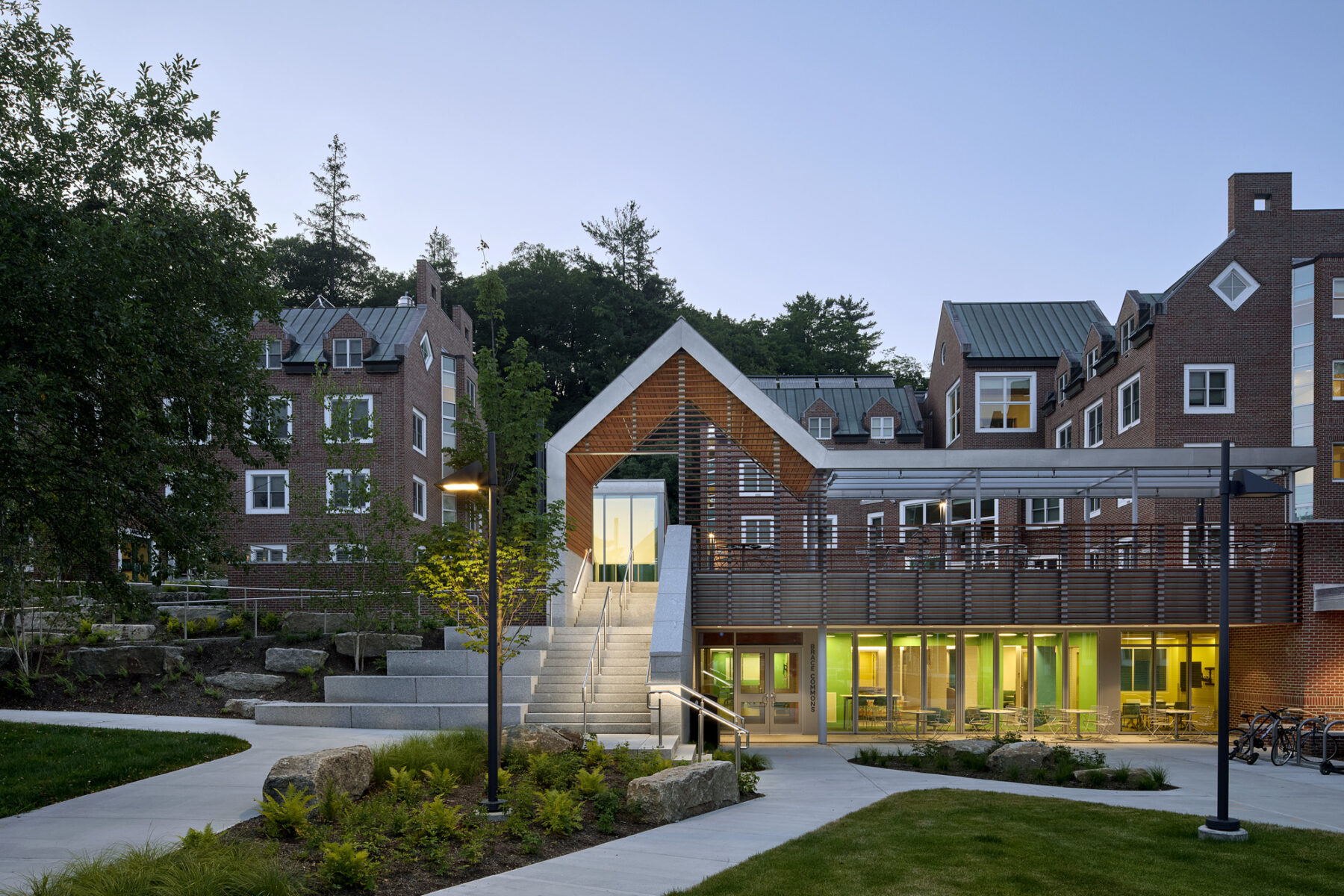
Brace Commons main entrance after renovation
The landscaped courtyard at street level, with a direct connection to the interior of Brace Commons through a window wall, creates a renewed street presence for East Wheelock House. The renovation grounds the four buildings and the adjacent Faculty House in a cohesive landscape, and extends opportunities for outdoor performances and community connection.
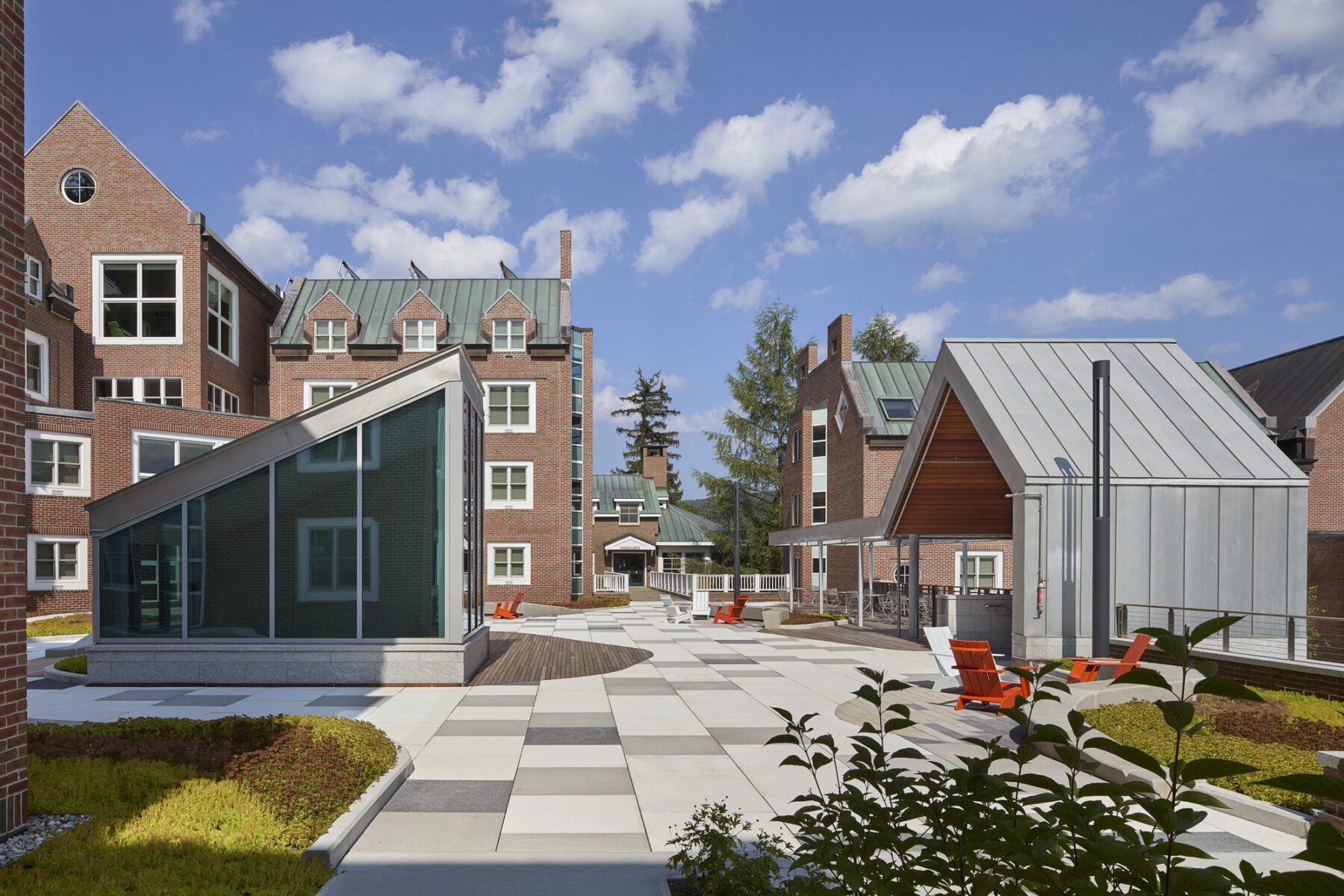
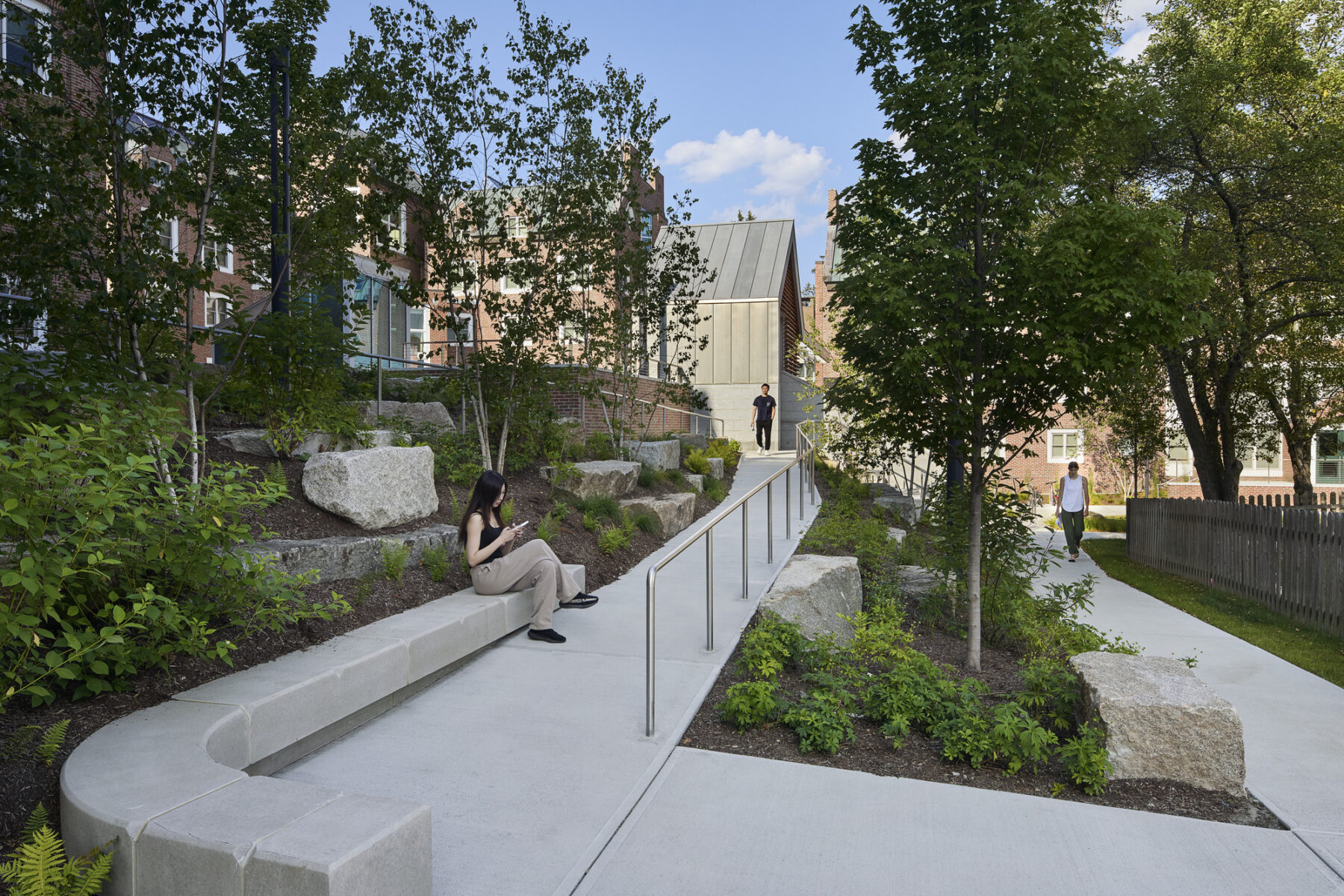
Connecting the courtyard and the plaza, a hillside landscape replaces what was originally a grand, but forbidding, brick staircase. Winding through local granite boulders, social benches, and native plantings, an accessible walkway allows cyclists and wheelchairs to ascend to the plaza and to the upper campus landscape beyond. A new entry pergola with stairs and seating also connects the two levels and provides additional small-group and casual seating to complement the open spaces of the plaza.
Brace Commons re-opened to the campus community in the spring of 2024. Together, the architectural and landscape interventions coalesce into a modern, resilient embodiment of Dartmouth’s commitment to community, sustainability, and lasting student‑centered design.
想了解更多项目细节,请联系 Carla Ceruzzi或Vinicius Gorgati.