Cantigny Park Garden and Landscape Improvements
Wheaton, Illinois

Today’s public gardens are far more than repositories of plant curiosities or seasonal horticultural displays. They are community anchors and arks of plant genetics. They teach visitors about environmental sustainability, celebrate local and regional histories, host performances and exhibitions, and bring people together through events, photography, classes, and festivals. They cultivate biodiversity and community.
Over the course of seven decades, Sasaki has worked on public gardens across a broad range of geographies and garden types. Master planning for university arborea and botanic gardens at Penn State, the University of Wisconsin, Madison and the University of Illinois at Urbana Champaign established our understanding of research-based gardens.
As our world becomes more nuanced, with rising expectations around climate resiliency, fiscal and environmental sustainability, disaster preparedness, earned revenue potential, and universal accessibility, Sasaki remains committed to helping public garden institutions lead on these topics.
While our design methodologies remain grounded in integrated planning, ecological understanding, and a respect for place, the breadth of topics we consider and the voices we include have evolved dramatically. Our partnerships with institutions like the Arboretum San Antonio, the UC Berkeley Botanical Garden, Cantigny Park, and Bonnet Springs Park reveal that this evolution mirrors the trajectory of public gardens themselves.
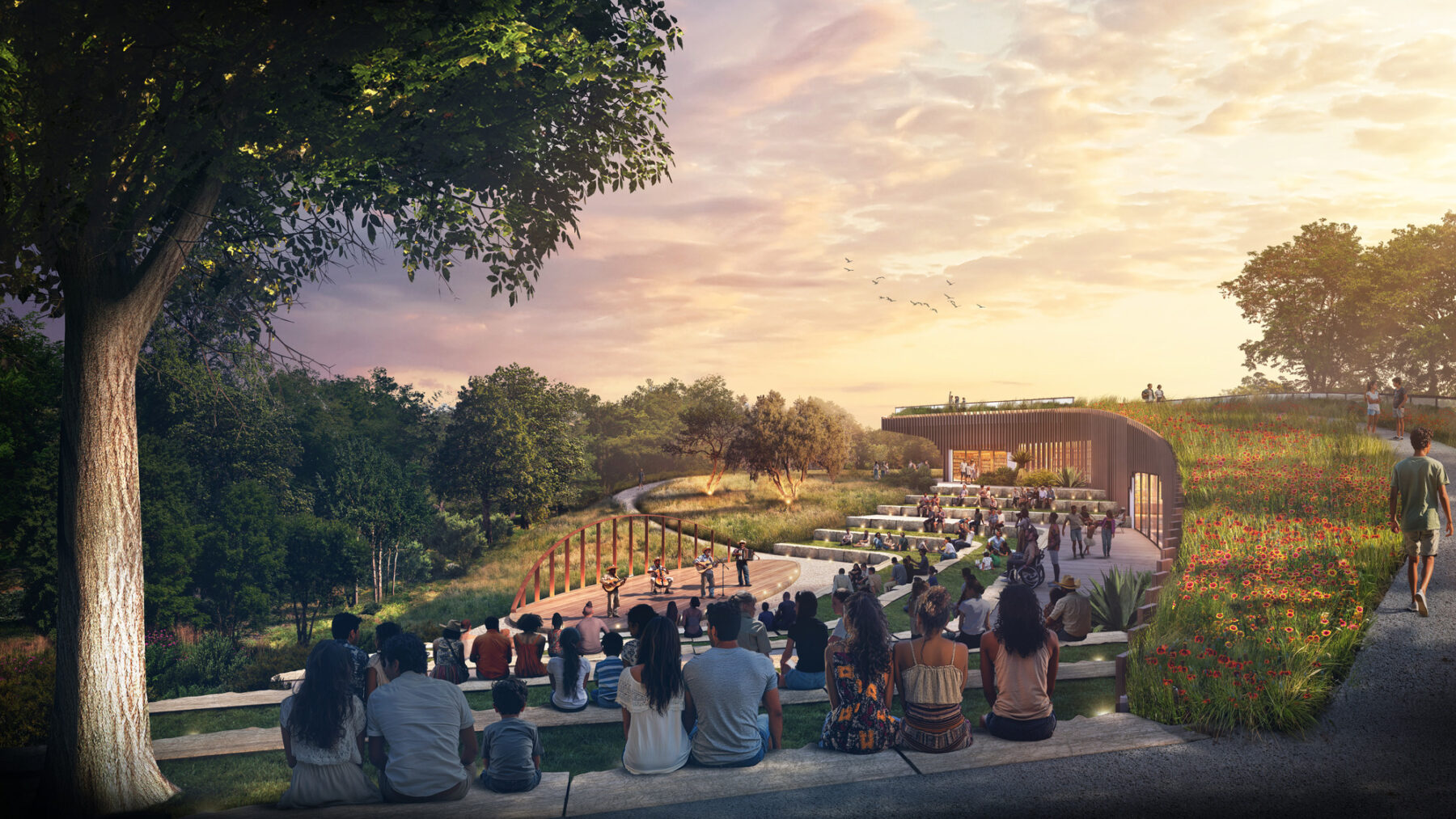
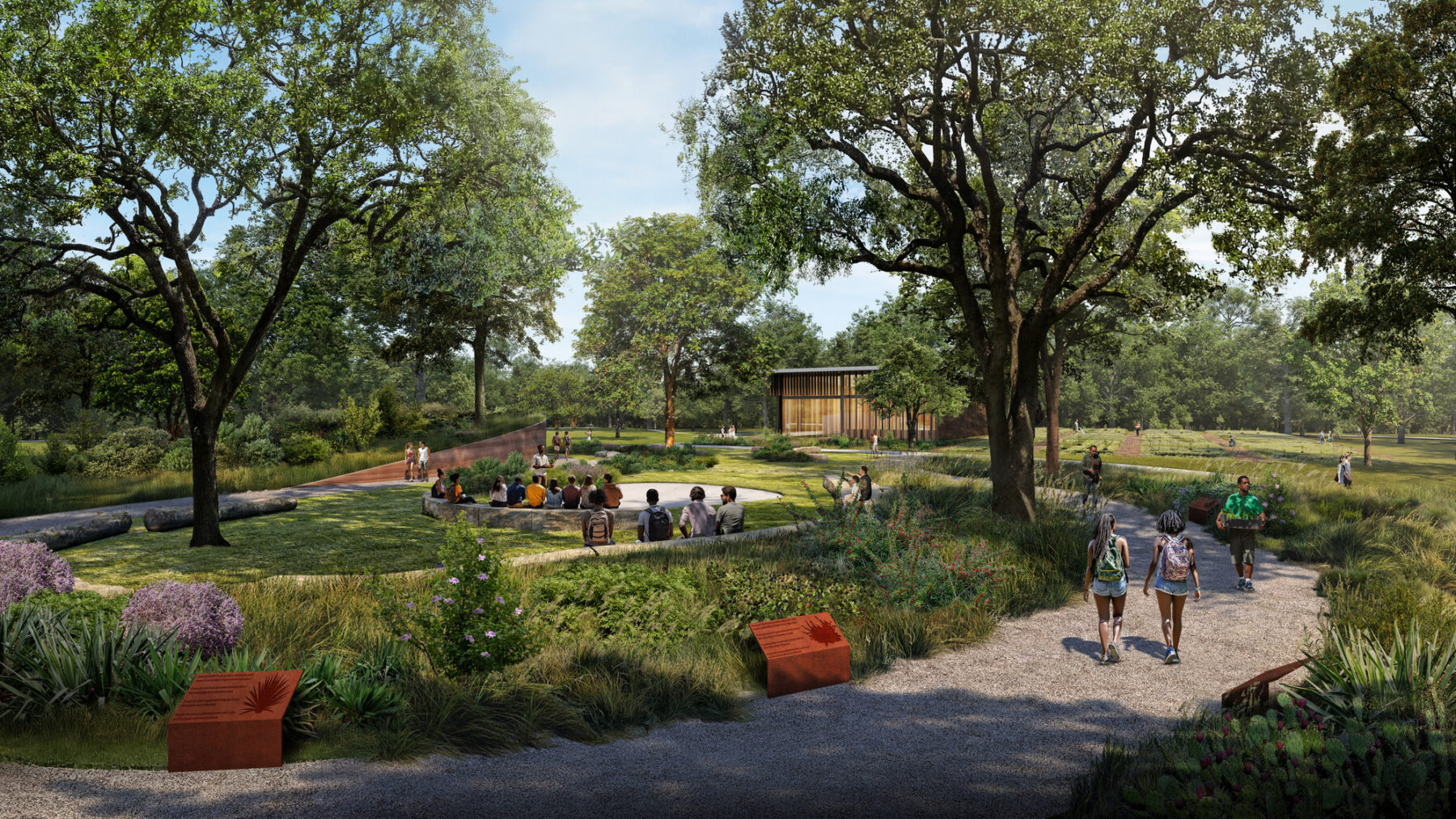
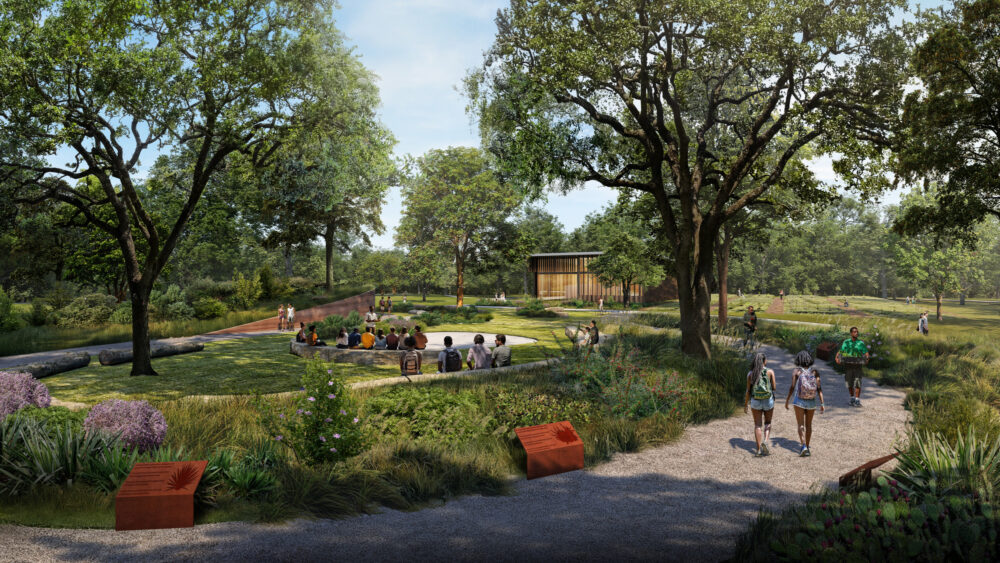
Rendering of the Arboretum San Antonio
A successful public garden seamlessly integrates design excellence with operational realities and organizational mission. What was once considered a conceptual master plan has evolved into a comprehensive roadmap that aligns physical design, programming, operations, and financial sustainability.
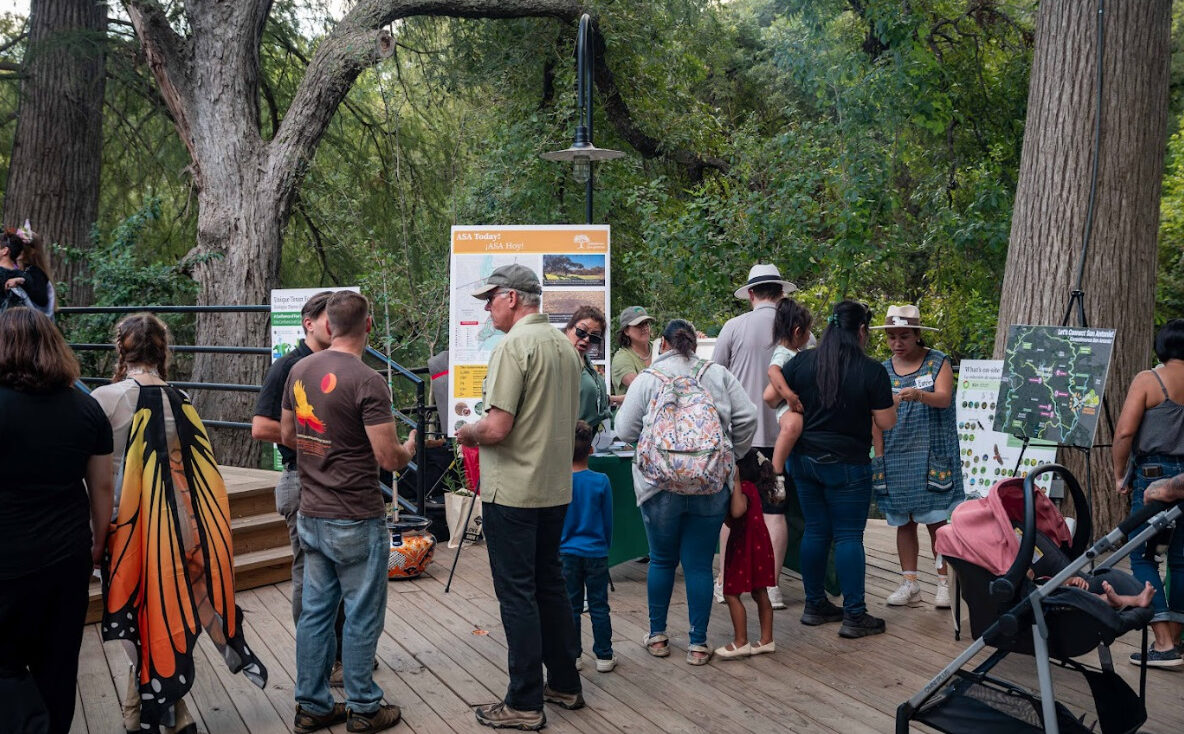
Community input for the Arboretum San Antonio informed every step of the process.
Our recent Comprehensive Plan for Arboretum San Antonio is a clear example. Here, community engagement and day-to-day operations shaped every design decision. Over the course of a year, Sasaki collaborated with local community liaisons to meet residents where they already gathered. Pop-up events, focus groups, and neighborhood partnerships helped us listen deeply to the needs of a diverse and expansive city. More than 18,000 residents participated in digital and in-person engagement.
Each phase of outreach informed the next. Survey responses shaped program elements, circulation strategies, and phasing priorities, ensuring the arboretum grows into an institution that reflects and serves all of San Antonio.
By mapping remnant habitats and species, the team created a long-term management plan that supports biodiversity, community science, and culturally rooted restoration practices.
Developing an operations and maintenance plan alongside site design and strategic planning allowed us to holistically consider implementation, including costs, potential revenue sources, staffing and equipment needs, and spatial requirements. The result is a plan grounded in community and operations as well as ecology and design.
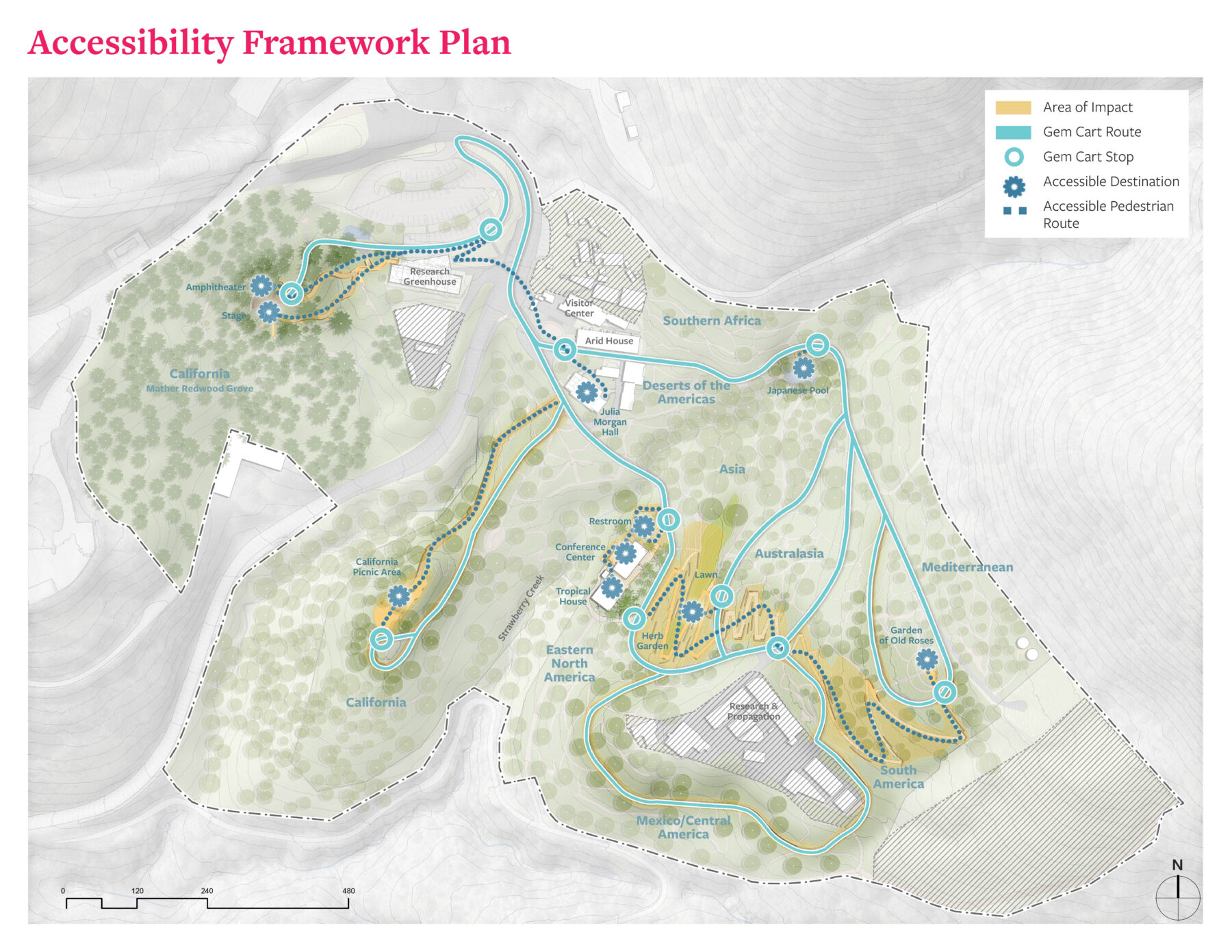
The framework plan for the UC Berkeley Botanical Garden integrates multi-modal accessibility.
Public gardens, especially those within historic or topographically complex landscapes, face the challenge of welcoming all visitors while preserving sensitive collections, cultural assets, and historic views and landscape experiences.
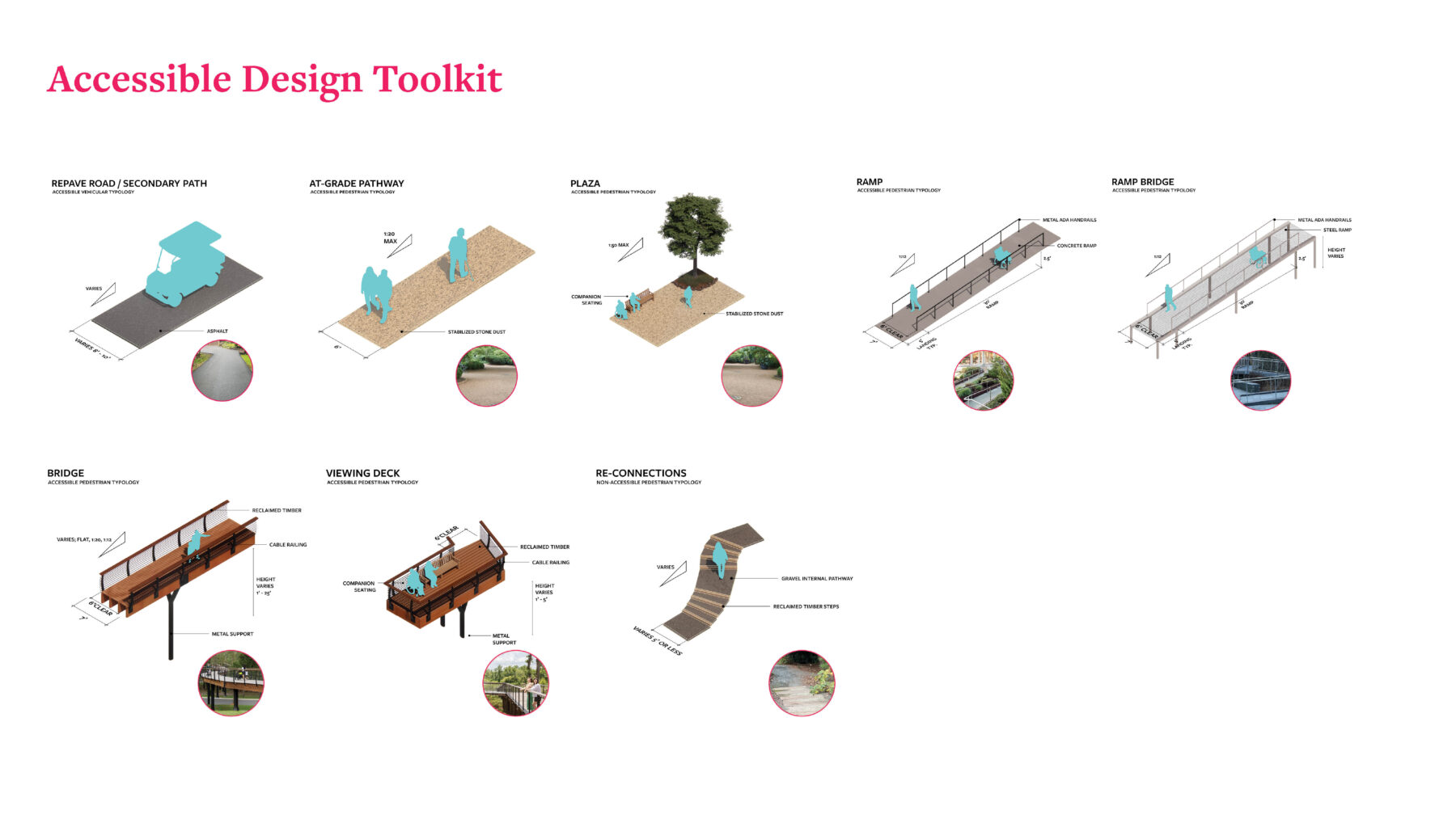
The UC Berkeley Botanical Garden’s variable topography contributes to its diverse micro-climates and ecological variety, but its steep terrain isn’t entirely accessible. Sasaki developed an accessibility framework that lays lightly on the land, honoring the garden’s historic character while significantly improving universal access. To make most grade changes accessible to visitors with mobility challenges, the study proposes a circulation route accessible via a new cart that will bring visitors as close as possible to key destinations. For areas that a cart cannot easily access, the study envisions a continuous accessible pedestrian path that elevates visitor experience and enhances inclusivity.
The team worked on a variety of accessibility options in response to the botanical garden’s unique topography.
The study integrates ADA considerations in a manner that improves the experience for all, weaving together cultural landscape preservation, visitor safety, and horticultural integrity to demonstrate how accessibility can function as an act of stewardship.
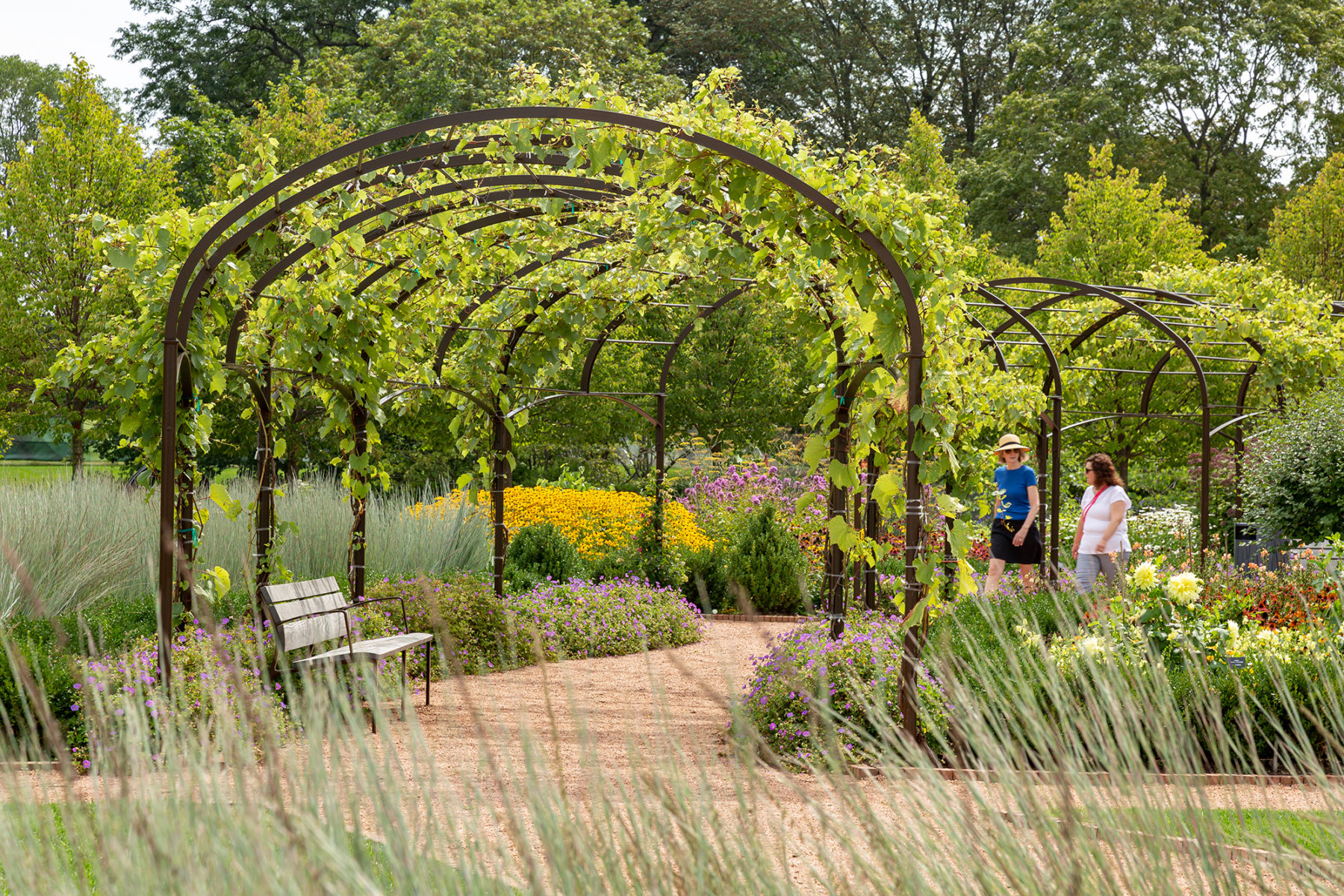
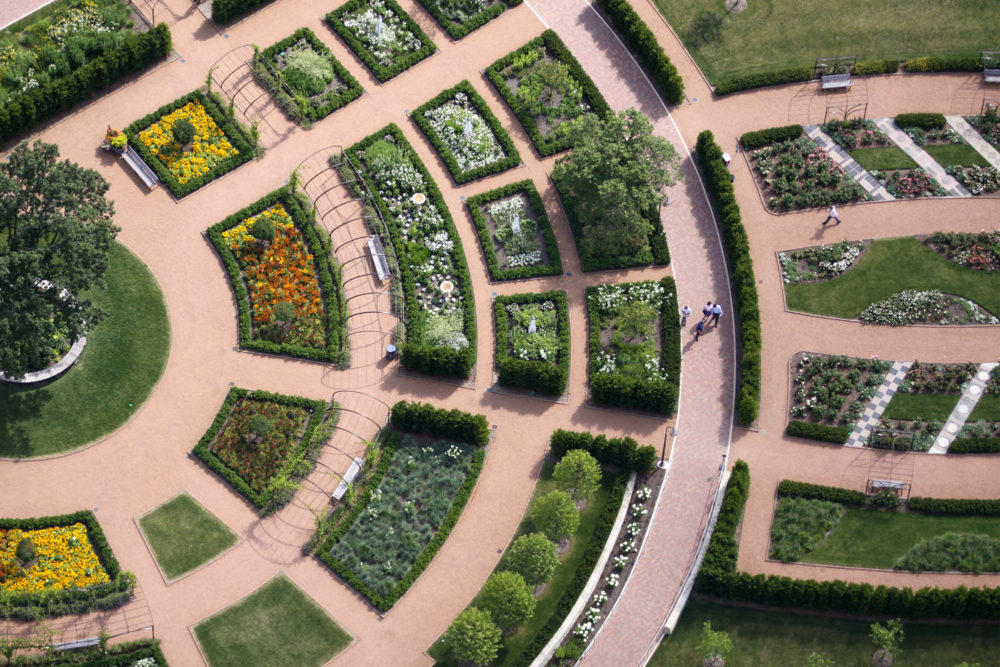
View of Cantigny Park in Wheaton, Illinois.
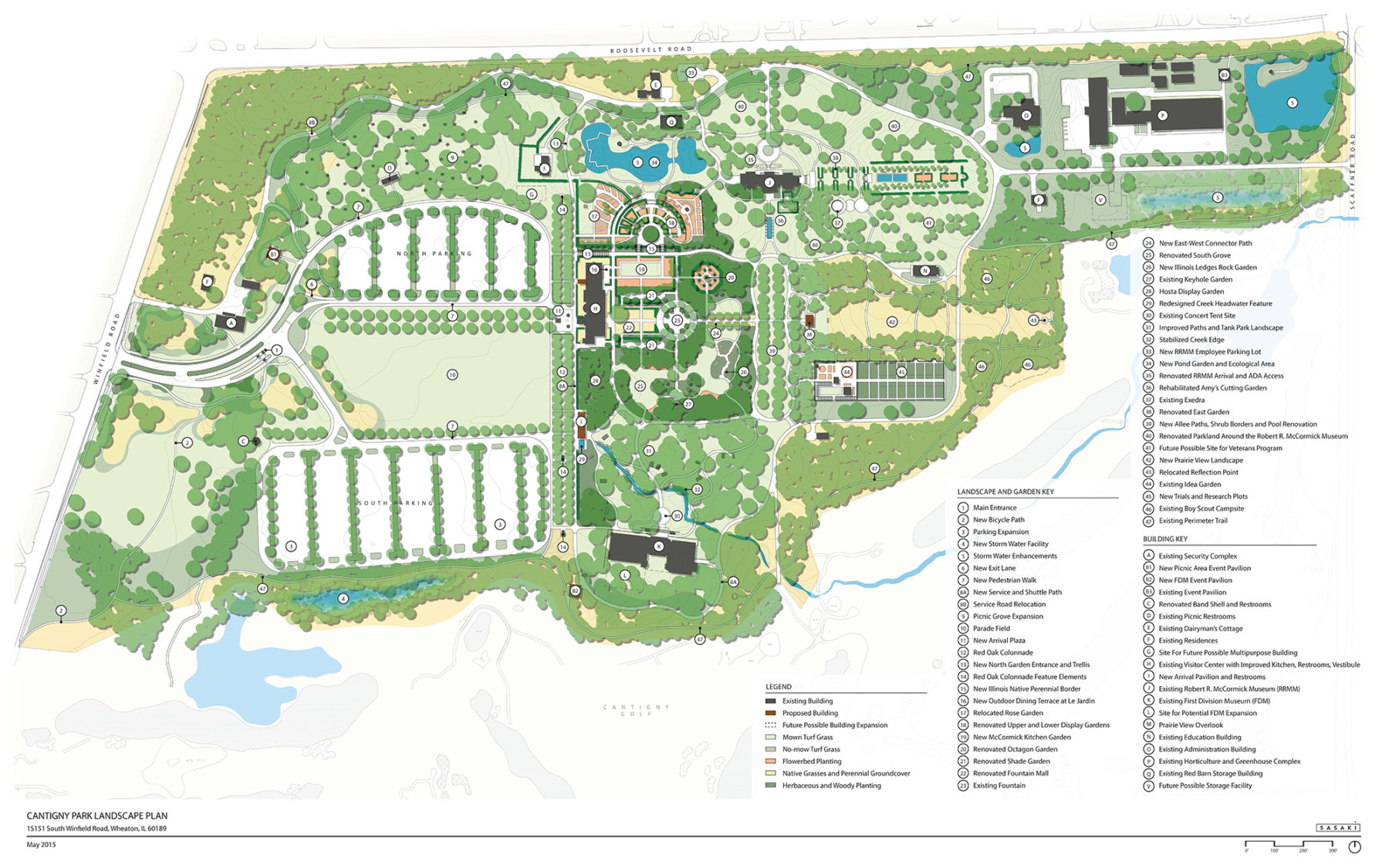
At Cantigny Park in Wheaton, Illinois, Sasaki led Project New Leaf, a transformative six-year revitalization of more than 140 acres. With more than 400,000 annual visitors, the park required more than refreshed plantings; it needed a reimagined visitor experience rooted in horticultural excellence and operational efficiency. When the park subsequently reopened with more than 20 acres of new and renovated gardens, it represented the most significant renewal of the property’s gardens and infrastructure since the original gardens were designed in the 1960s and 1970s.
The 2015 master plan strengthens the connection between the institution’s mission and its physical environment by addressing garden restoration, visitor wayfinding, visitor experience, and revenue enhancement.
Already a beloved community and regional attraction, Cantigny had many pre-existing programs that it sought to preserve and improve. Sasaki worked with stakeholders across the institution—from horticultural staff and trustees to volunteers and maintenance staff—to develop an approach that expanded themed horticultural exhibits, including new destinations such as the Rock Garden and Display Gardens, managed stormwater, updated parking facilities, and brought more legibility to the park through upgraded pedestrian paths and a renewed arrival sequence.
Cantigny is a wonderful example of an important regional display garden with a robust local audience that now spans generations of members with true affection for this unique place. It was important that the garden renewal respected, protected, and sensitively improved the connections that families had established with the park over many years.
Joe Hibbard FASLA, PLA Principal Emeritus
Together, these interventions create a more resilient, accessible, and engaging landscape that supports Cantigny’s mission. The master plan was fully implemented in 2021, offering visitors a wide range of spaces and experiences that deepen their connection to this extraordinary property.
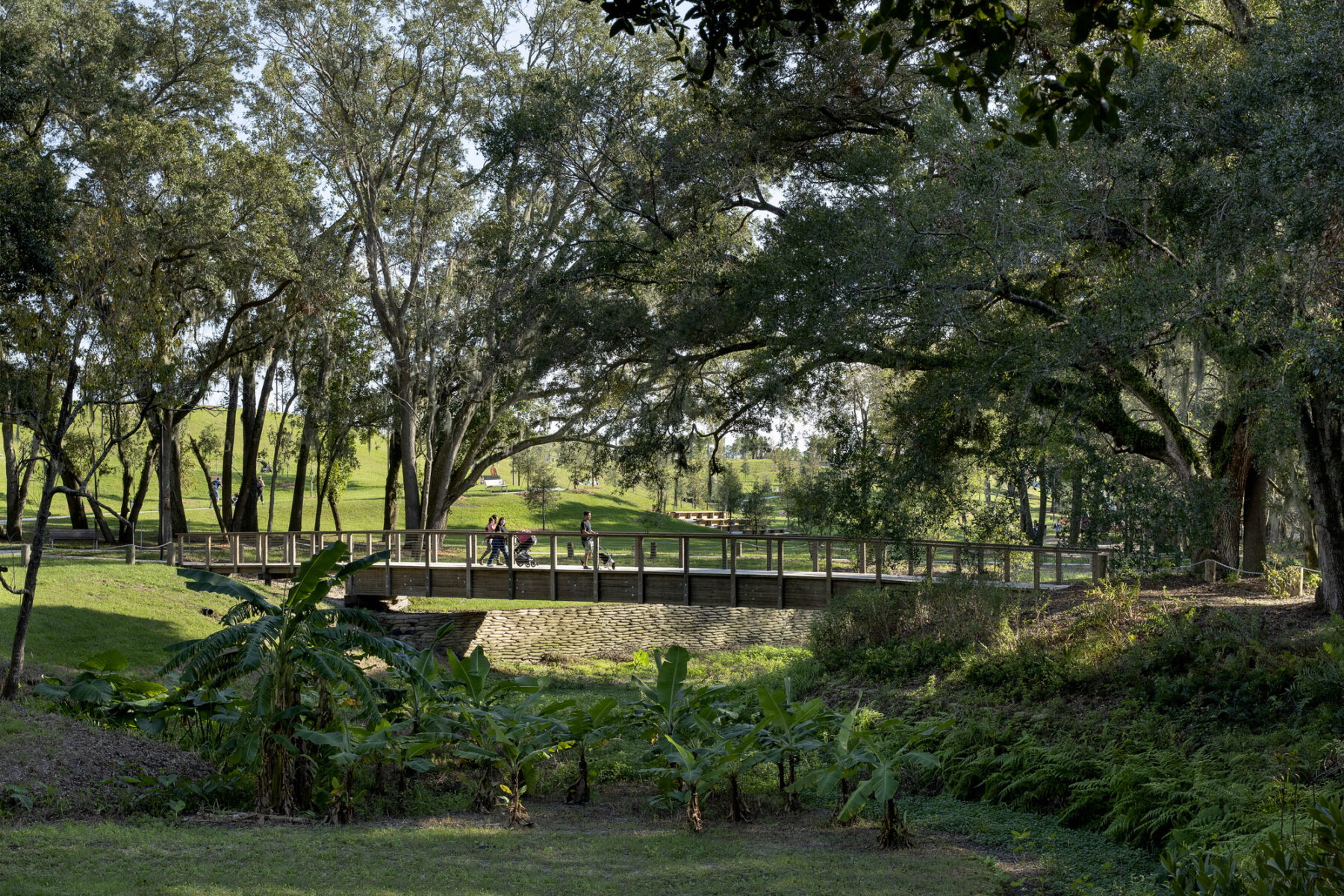
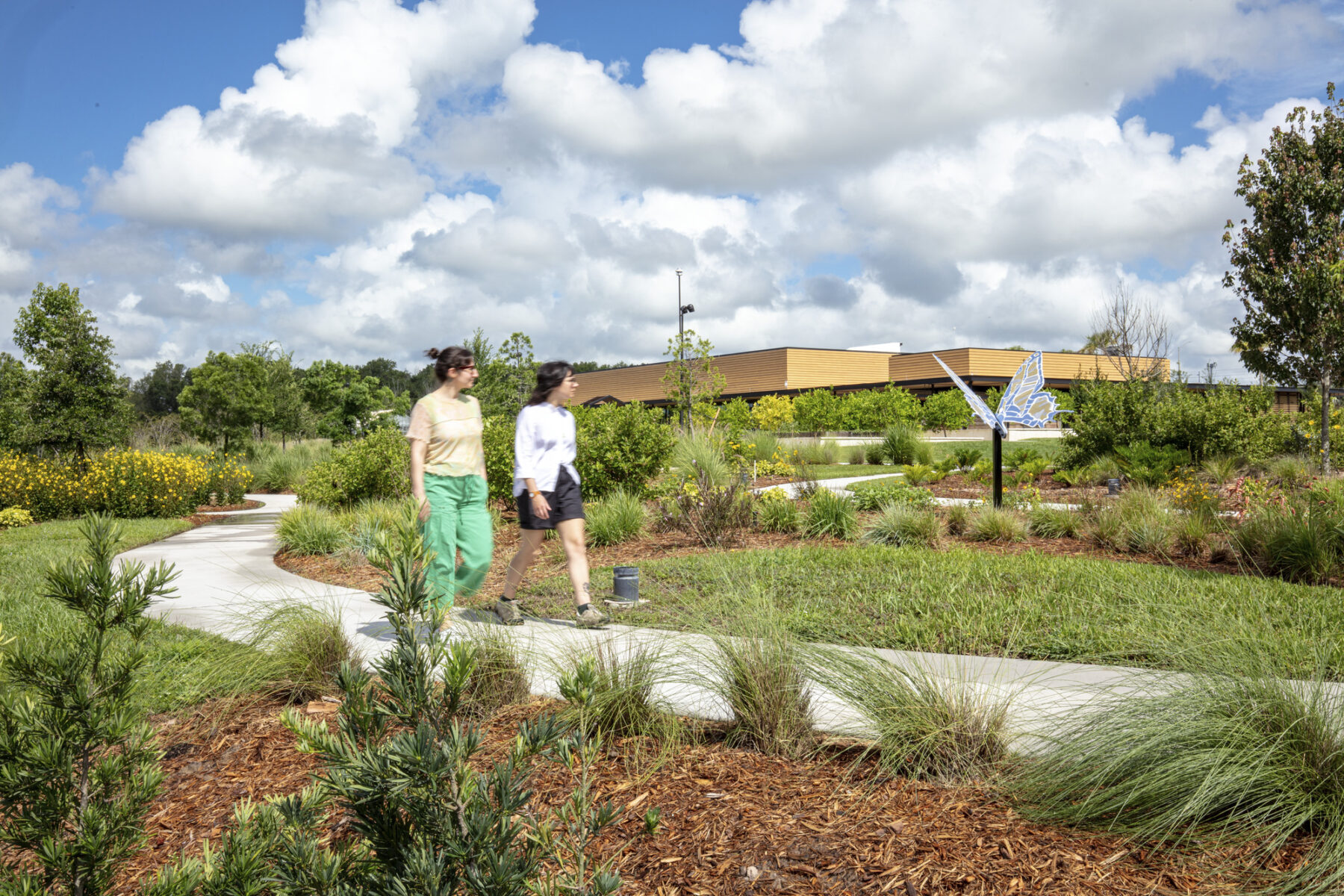
Bonnet Springs Park in Lakeland, Florida, offers a variety of nature-based experiences for visitors of all ages.
A former industrial and agricultural brownfield, the remediated Bonnet Springs Park is an example of how a multifaceted organization can combine mission-driven programming with strong earned-revenue strategies.
As a public garden and park, event destination, and museum partner, Bonnet Springs was designed to have a wide array of experiences to invite visitors in through many “doors of relevance.” This broad appeal, which includes children’s play areas, horticultural display, active recreation, and seasonal events not only drives visitation throughout the year but also entices new audiences—especially those who may not typically seek out botanical spaces—to return again and again.
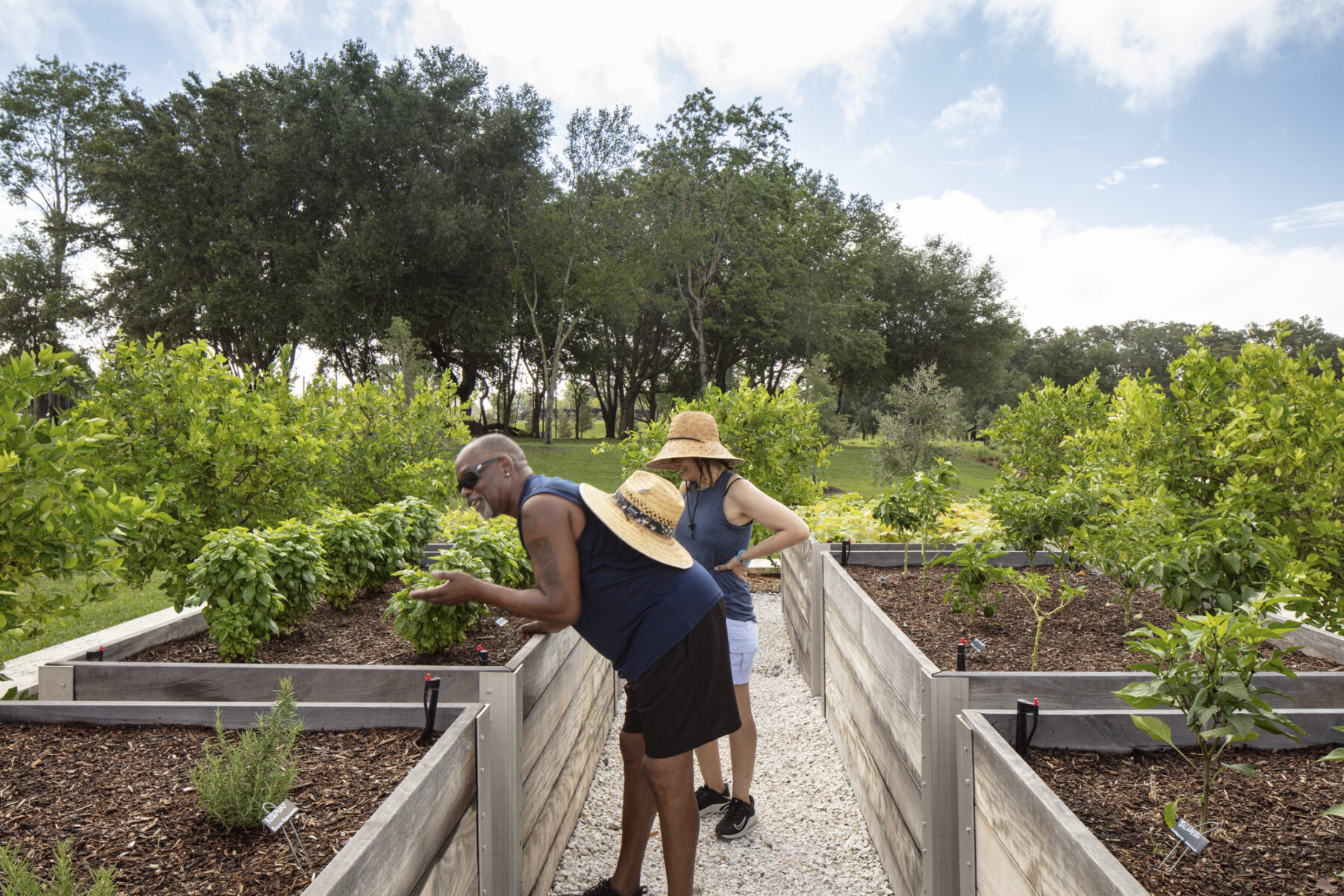
The park boasts two public gardens, the Harrell Family Botanical Garden and the AgAmerica Heritage Garden. The botanical garden encourages visitors to interact directly with the plants, with each garden room focusing on one of the five senses. This whimsical, immersive approach aligned with the overarching goals of both the park and the Florida Children’s Museum.
The Harrell Family Botanical Garden features five garden rooms that focus on the activating the senses.
The AgAmerica Heritage Garden tells the history of Bonnet Springs Park’s site, which once served as a rail yard and an orange grove.
A key part of this success lies in designing with programmatic and event needs in mind from the earliest stages. Partnerships with organizations like the Florida Children’s Museum amplify the park’s mission while expanding its reach, creating complementary experiences that benefit all partners. Event rentals were a major driver, and the design for space and operations that offer multiple events occurring simultaneously was one of the most effective ways to ensure long-term financial resilience. This includes careful attention to operations and maintenance procedures, dedicated laydown and back-of-house spaces, parking and arrival logistics, and thoughtful schedule sequencing.
By shaping indoor and outdoor “garden rooms,” the park is equipped to adapt to weather, manage varied event scales, and choreograph seamless setup and breakdown. These spatial strategies not only support earned revenue but also protect the regular visitor’s experience.