Daniel Church: On the Potential and Power of Downtowns
For Daniel Church, successful downtowns are critical to building more sustainable, vibrant futures for our cities and communities.
 Sasaki
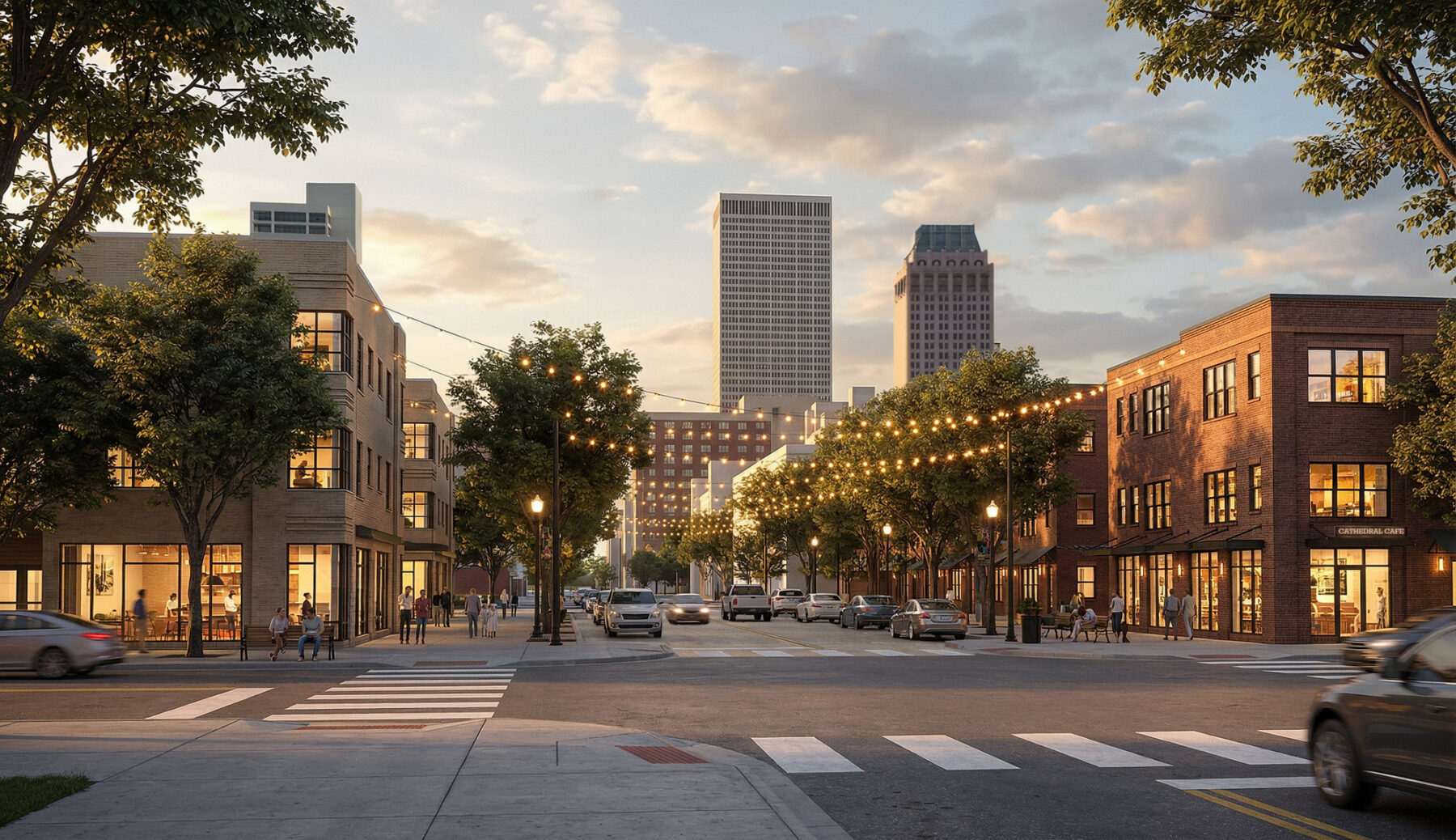
The Tulsa Cathedral District Pre-Development Plan represents a proactive and strategic response to Downtown Tulsa’s growing housing demand and the citywide need for more diverse, inclusive, and attainable housing options. The Plan lays out an urban design vision for the district on the southern side of Downtown Tulsa, while also providing a detailed economic development and phasing strategy for key priority sites to inform future tax-increment financing (TIF) decisions.
Situated in the southern portion of Downtown, the Cathedral District is rich in architectural character, cultural assets, and development potential, with over 40 acres of highly-underutilized surface parking lots today. The Pre-Development Plan outlines a vision to transform underutilized properties and public spaces into a vibrant, mixed-income, mixed-use neighborhood that reflects both the historic identity and future promise of Tulsa’s urban core.
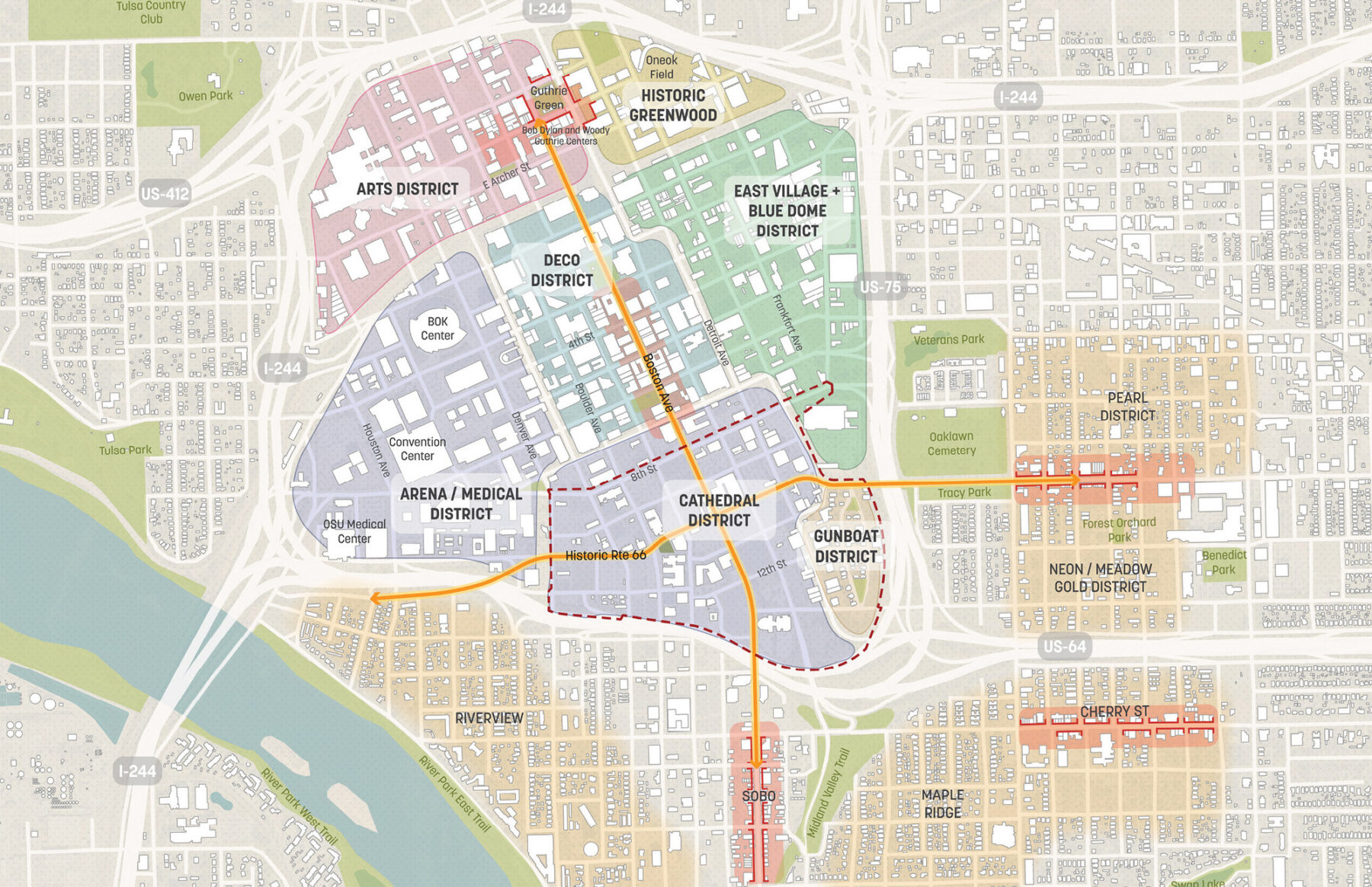
The Cathedral District is a 160-acre district located on the southern end of Downtown Tulsa
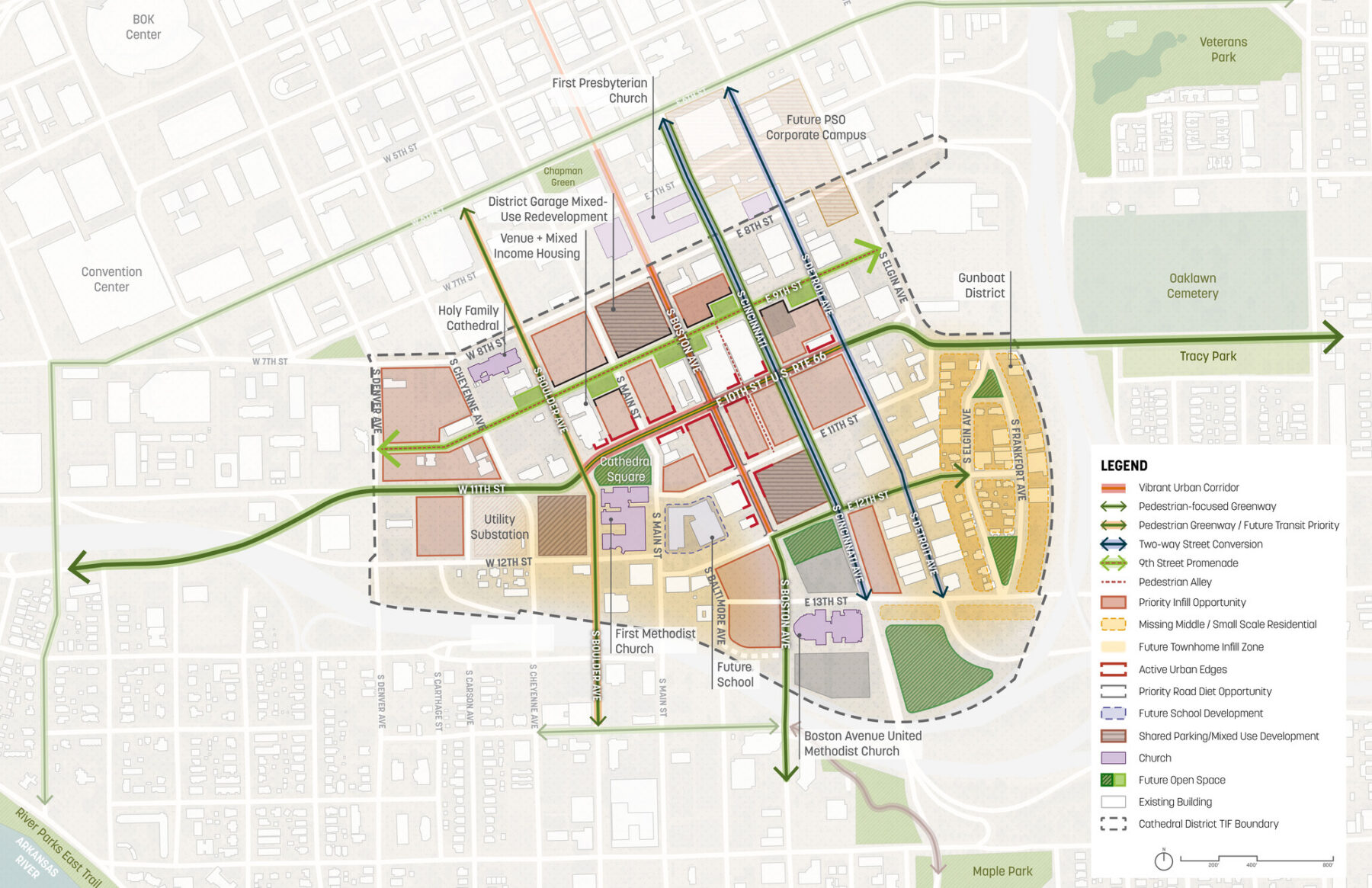
The Cathedral District Pre-Development Plan established a bold but achievable urban design framework and vision for the neighborhood
Working with key institutional stakeholders in the district, including multiple faith-based organizations and Tulsa Community College, the Sasaki team developed a plan that outlines a strategy for delivering new housing and mixed-use development to help meet the projected demand for 2,500 to 3,300 additional housing units in Downtown. At the same time, the Plan also outlines a strategy for reinvestment, preservation, and adaptive reuse in the district.
Through the process, five Big Ideas emerged. Together, these guiding ideas established the Urban Design Framework for the District and serve as a tool for shaping decisions around future investment and development.
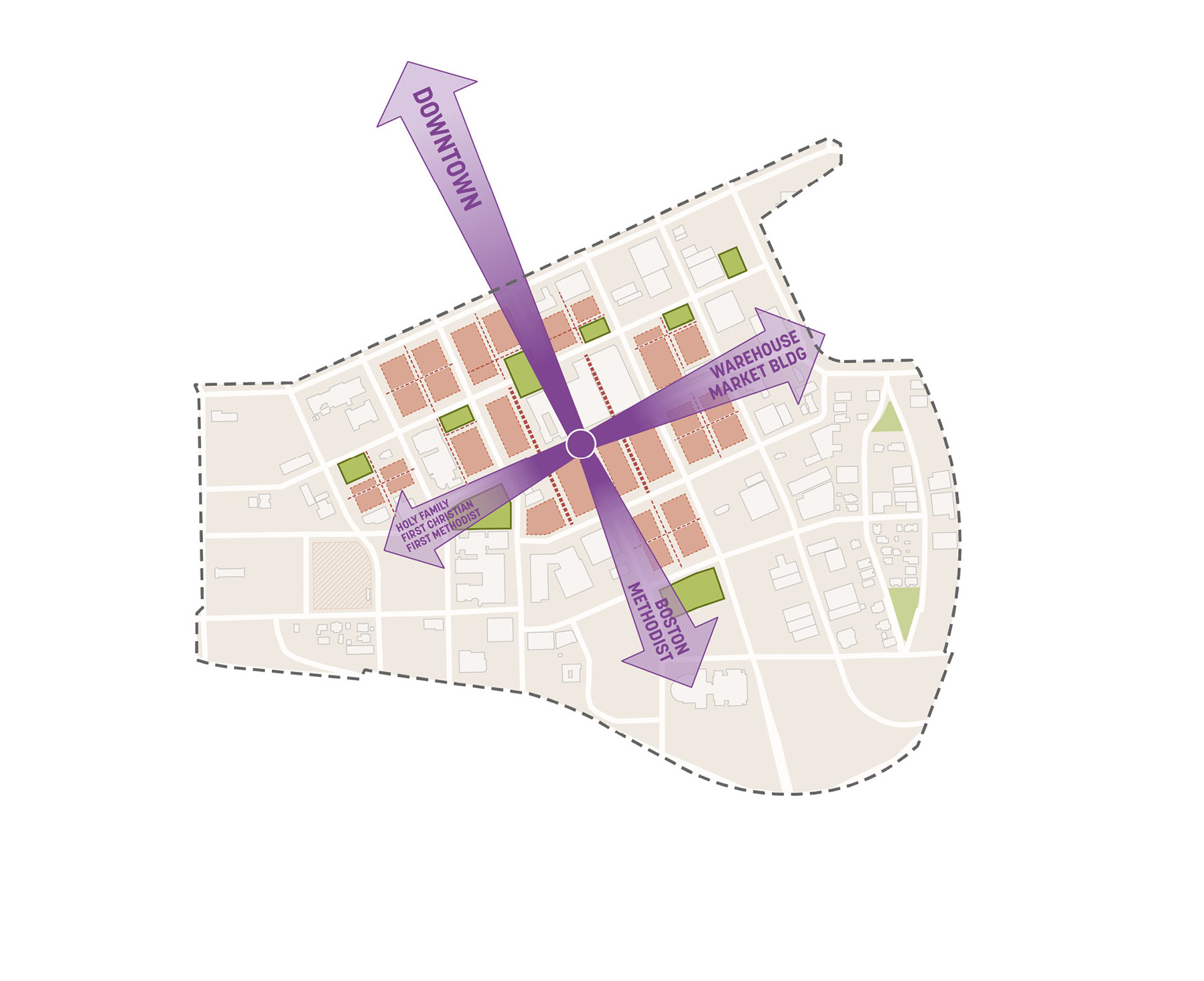
Celebrate architectural heritage and embrace the human scale
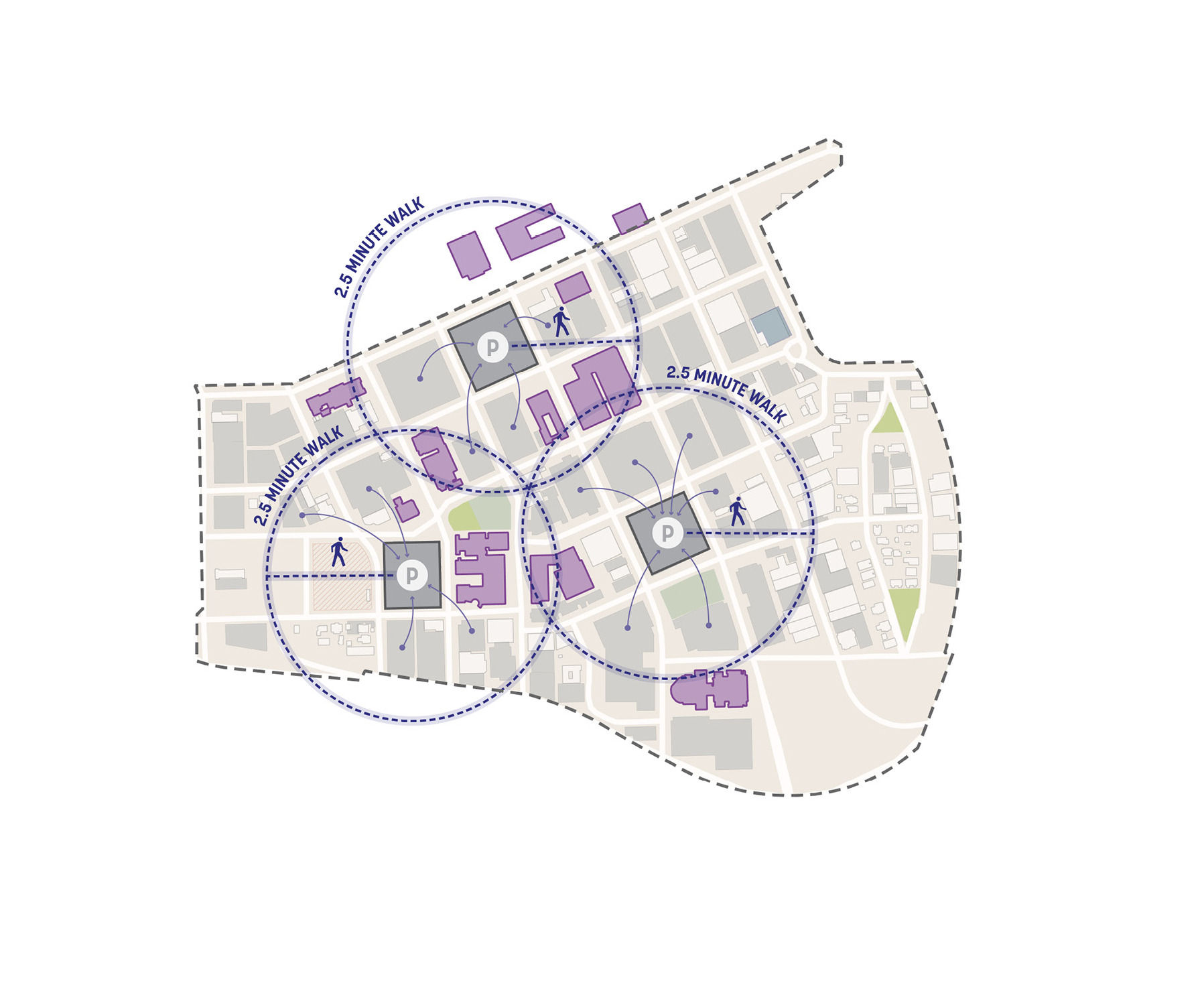
Shared parking agreements to unlock development
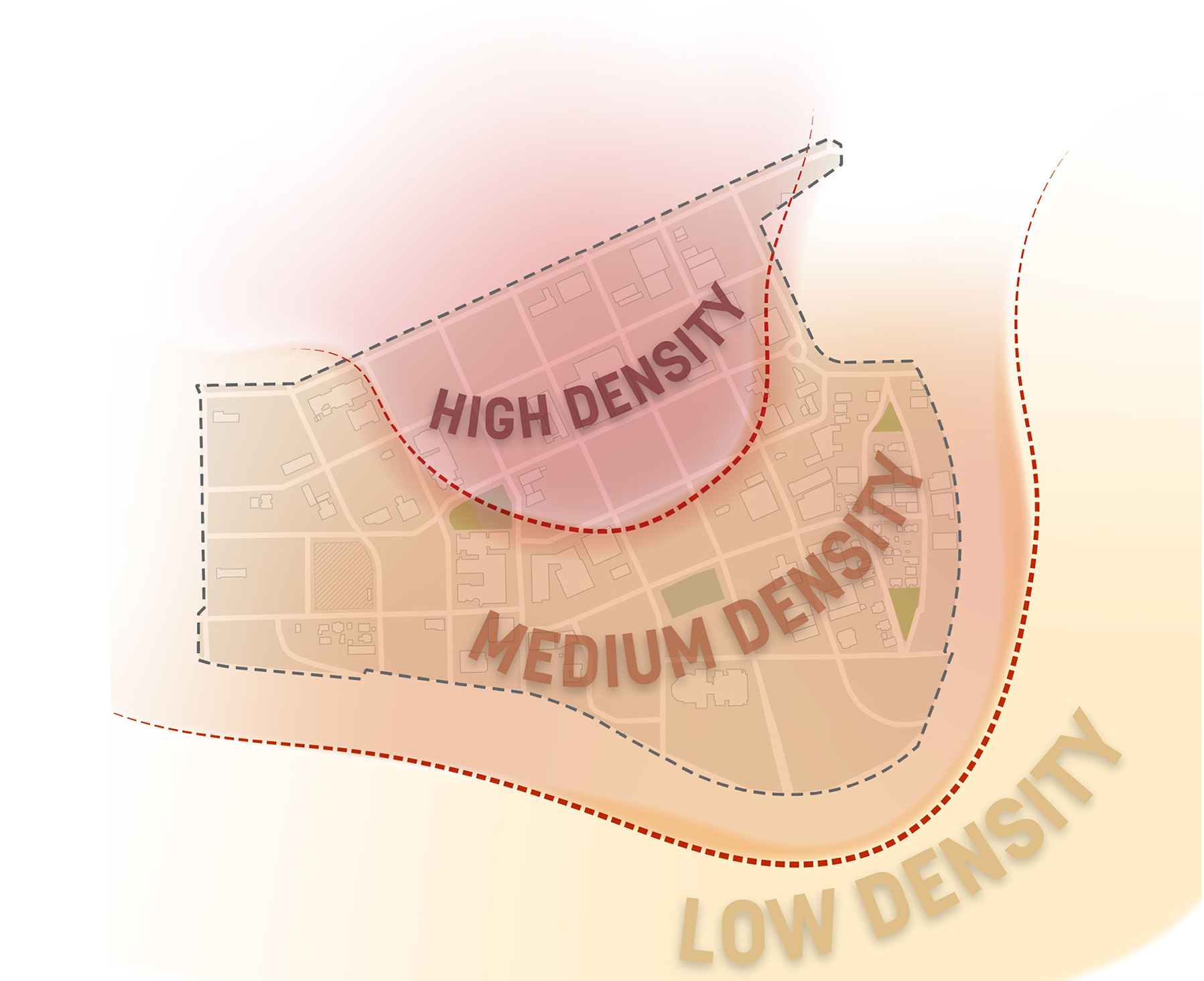
Be the transition to surrounding neighborhoods
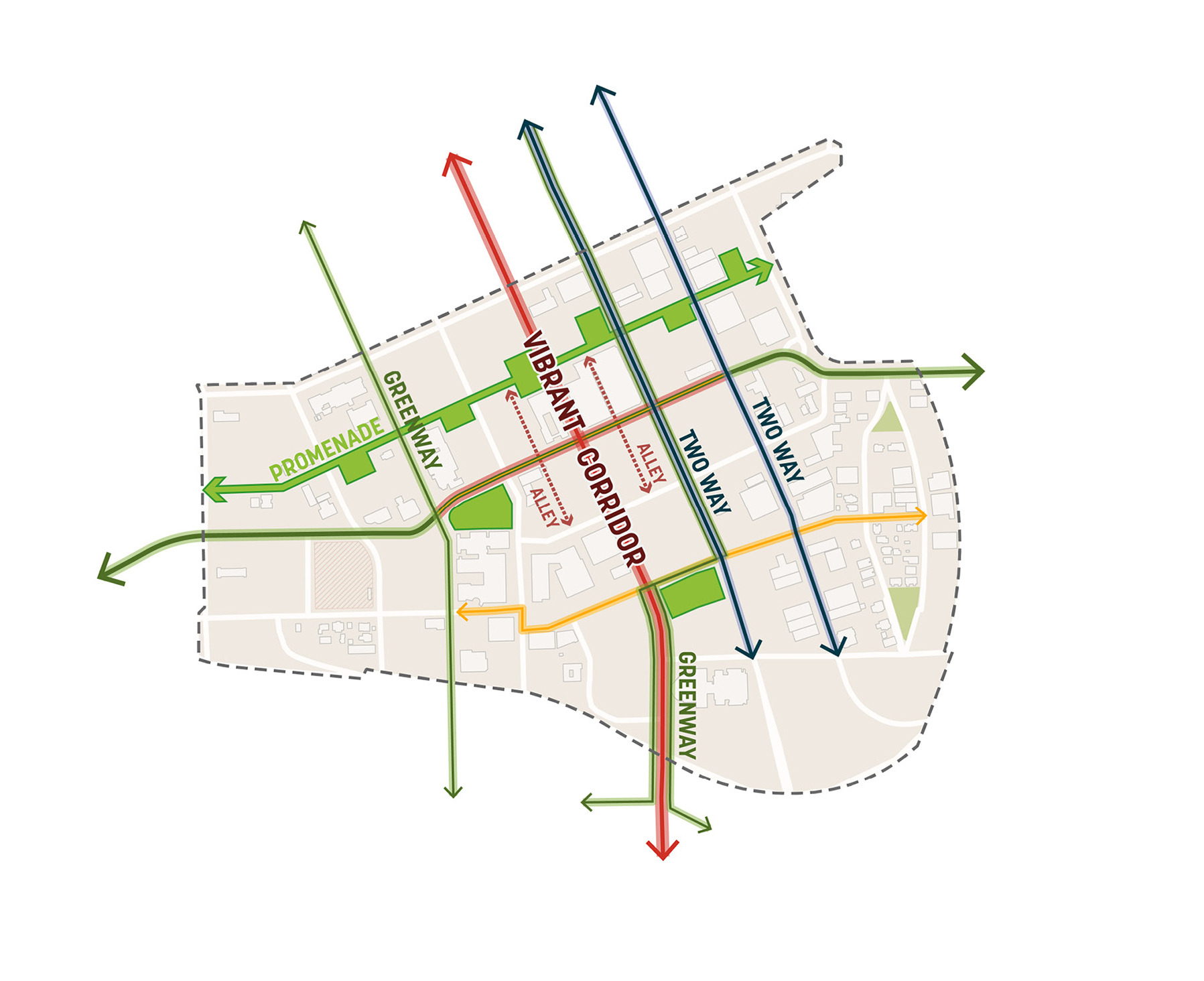
Tame the streets and create new open spaces
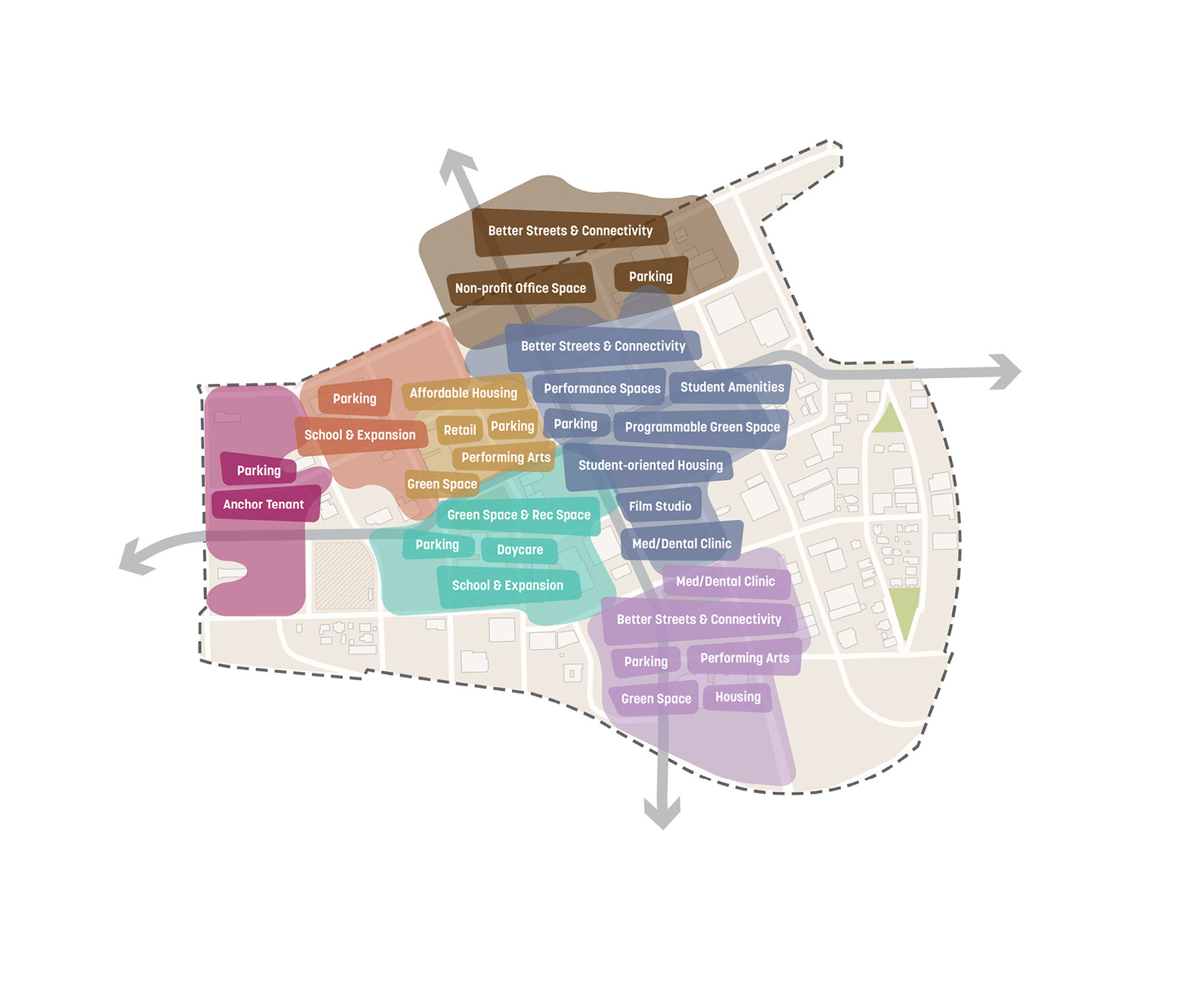
Share resources to share in success
Celebrate architectural heritage and embrace the human scale
Shared parking agreements to unlock development
Be the transition to surrounding neighborhoods
Tame the streets and create new open spaces
Share resources to share in success
With more than 40 acres of parking lots within the Cathedral District, there is ample opportunity for additional growth and development. While not every underutilized or vacant site will develop for varying reasons, many sites emerged through the planning process as opportunities for new growth. To guide this process and future decision-making, it was important to establish a decision-making scoring framework to objectively score different sites against one another. Key criteria that were used to evaluate sites in the district included property size and shape, continuity of ownership, land use, ownership motivation, alignment with the district framework, and historic preservation and context.
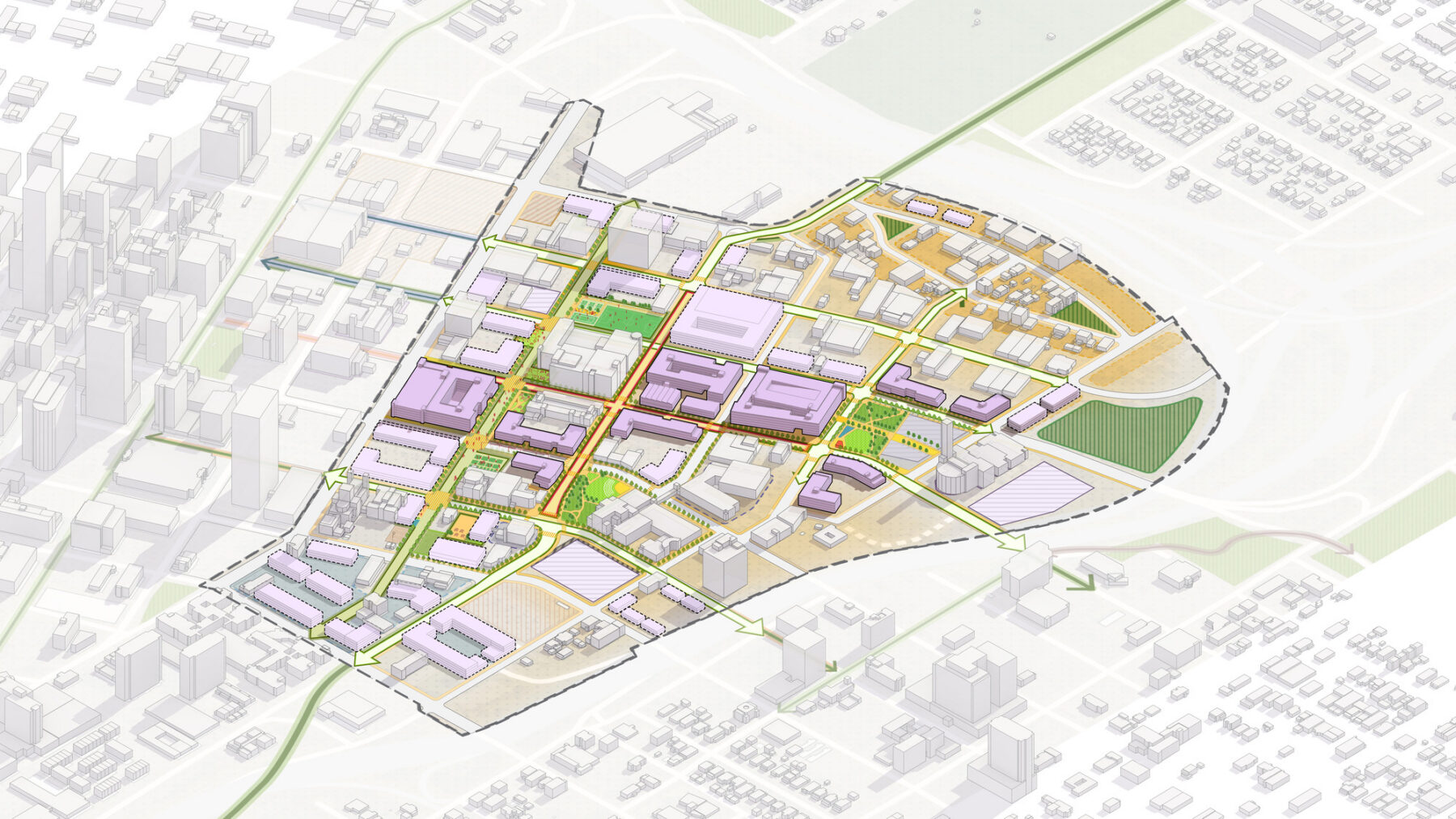
The Tulsa Cathedral District Pre-Development Plan establishes an urban design vision for the south side of Downtown Tulsa, providing guidance and future public and private investments to transform the district
Six specific sites were identified and advanced as priority properties due to their geographic location, their ownership’s desire for redevelopment, or their ability to help unlock additional redevelopment through shared parking strategies. Feedback collected through stakeholder engagement helped to refine the desired development outcomes. For each site, the plan outlines key development considerations that future development should consider and integrate to reinforce the overall urban design framework and to ensure District continuity and success over time.
Understanding the development potential for these six sites, along with the long-term viability of other sites to redevelop, allowed for the Plan to help inform future TIF projections of the potential future value of development and the potential cost of future public realm enhancements. This planning process quickly highlighted the challenges with the existing TIF District’s expenditure cap. Because of this planning process, the PartnerTulsa, the City of Tulsa, and the Downtown Tulsa Partnership successfully amended the TIF district’s expenditure cap to unlock $200M more in potential future investment.
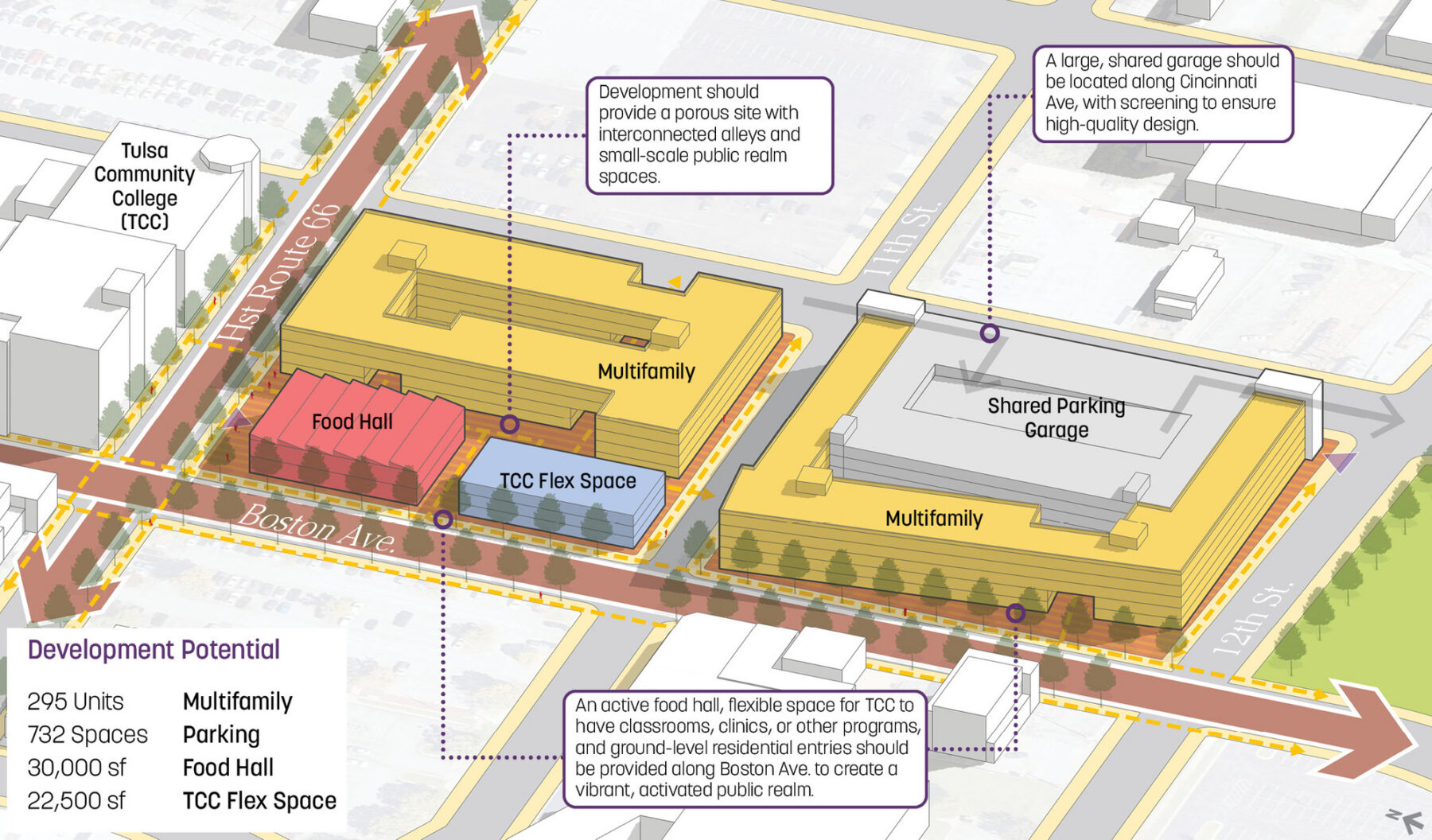
The preferred development option identified potential for multifamily housing, shared parking, flex space for Tulsa Community College, and a food hall
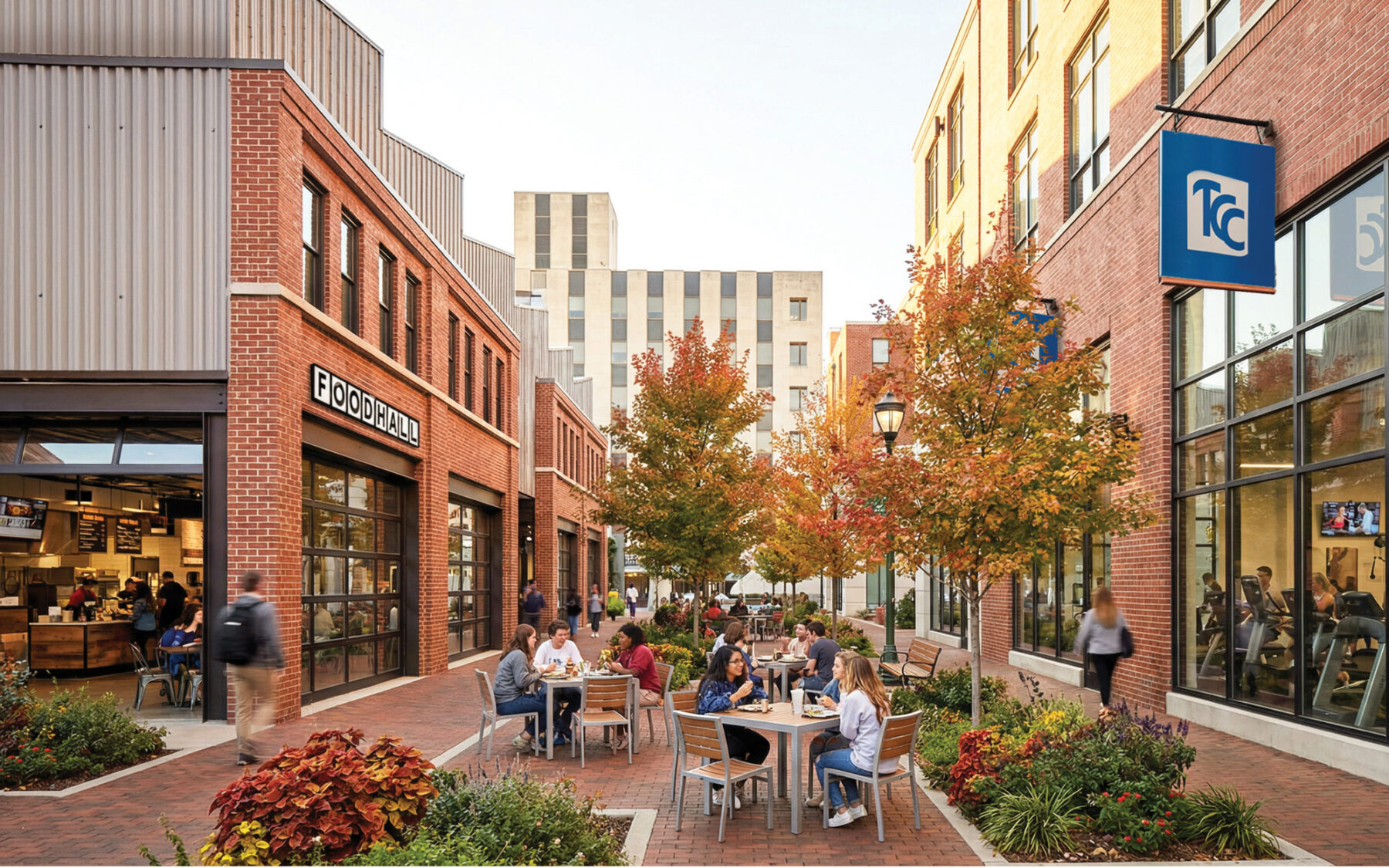
As a major institutional anchor in the District, Tulsa Community College’s two surface parking lots were identified as opportunities to redevelop into mixed-use to serve students as well as the broader community.
Key private development opportunity sites, including existing surface parking lots owned by Sharp Development at the former First Christian Church, were also identified and imagined through this plan to be transformed into active streetscapes with multifamily and ground-level retail.
As a part of the Cathedral District Plan, district-wide guidance was developed around best urban design and public realm best practices to ensure high-quality future development. These guidelines will help inform future TIF applications and should be used to shape the design of future private investments. In addition, a series of key public realm investments were outlined, including the conversion of two one-way streets to two-way traffic, public realm improvements on several key corridors, and the creation of new public open spaces to provide recreational and outdoor amenities for the district’s future population. Each public realm move was provided a high-level pricing estimate to inform future TIF dollar allocation and expenditures.
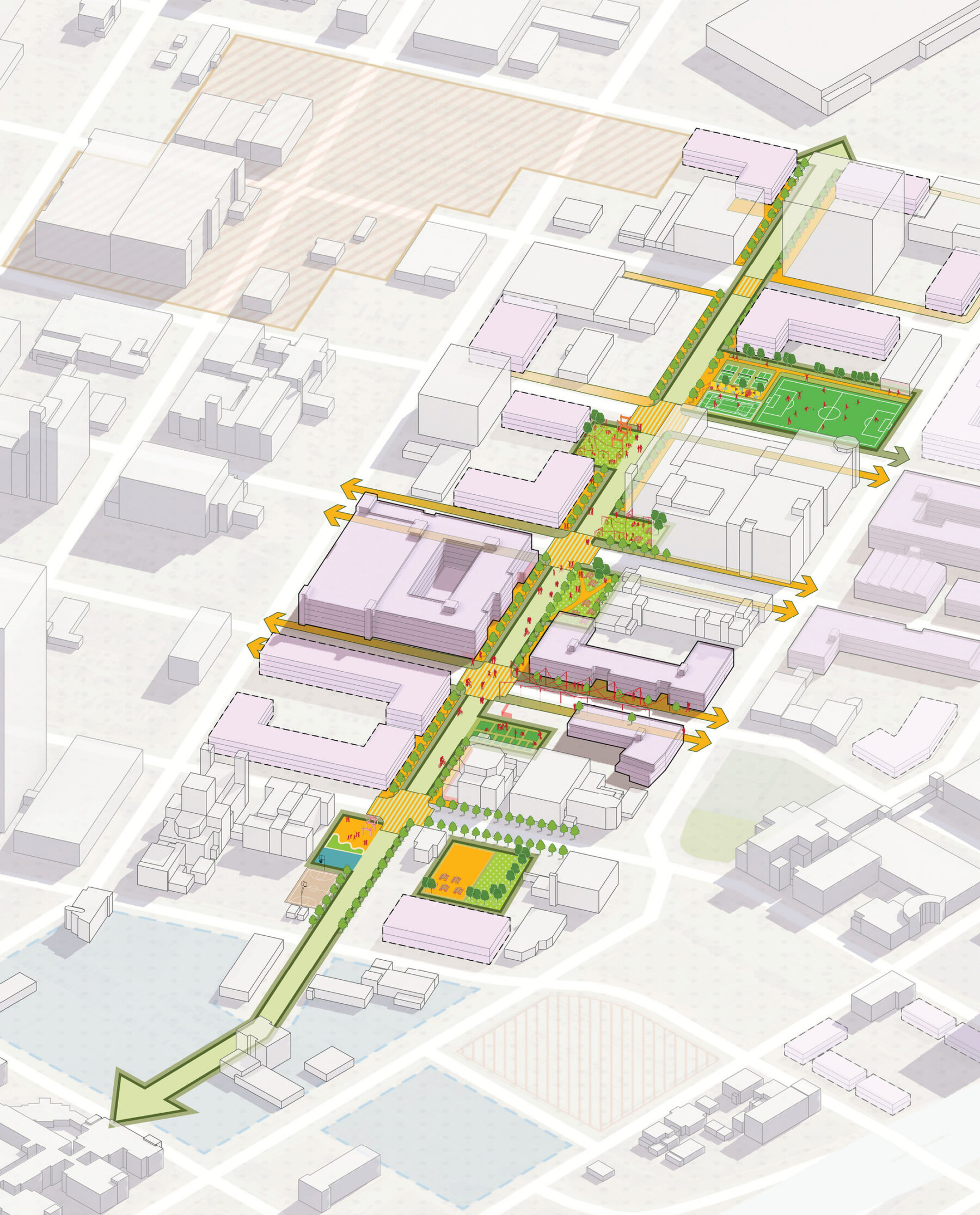
The Ninth Street Promenade was one of a series of key public realm improvements that were recommended in the Plan
The Tulsa Cathedral District Predevelopment Plan was completed in April of 2026 and adopted by the City Council.
想了解更多项目细节,请联系 Joshua Brooks.