美国邦纳斯普林斯公园:从草图到实现
From raw sketches to construction, how do our interdisciplinary design teams bring their visions to reality?
 Sasaki
In 2025, the City and County of Denver made its largest ever single acquisition of private property with the purchase of Park Hill Golf Course, set to become an urban park. The site, which operated as a private golf course from the 1930s until 2018, will be ecologically restored and redesigned as the largest addition to Denver’s park system in more than a century. Park Hill Park will soon stand as the city’s fourth-largest open space—providing a vital new resource in an area long underserved and lacking premier parks and greenways.
The site is situated on the northeast side of Denver in the Park Hill neighborhood, a historically underserved area of mixed residential and light industry. Over the past century, it has operated as a dairy farm, supported Lowry Airfield, and later functioned as a golf course. After the course closed and the land was sold to a private developer in 2019, residents voted to block development. In 2025, Mayor Mike Johnston finalized a land swap exchanging 155 acres near Denver International Airport, ending years of litigation and transforming the fenced property into Denver’s fourth-largest public park.
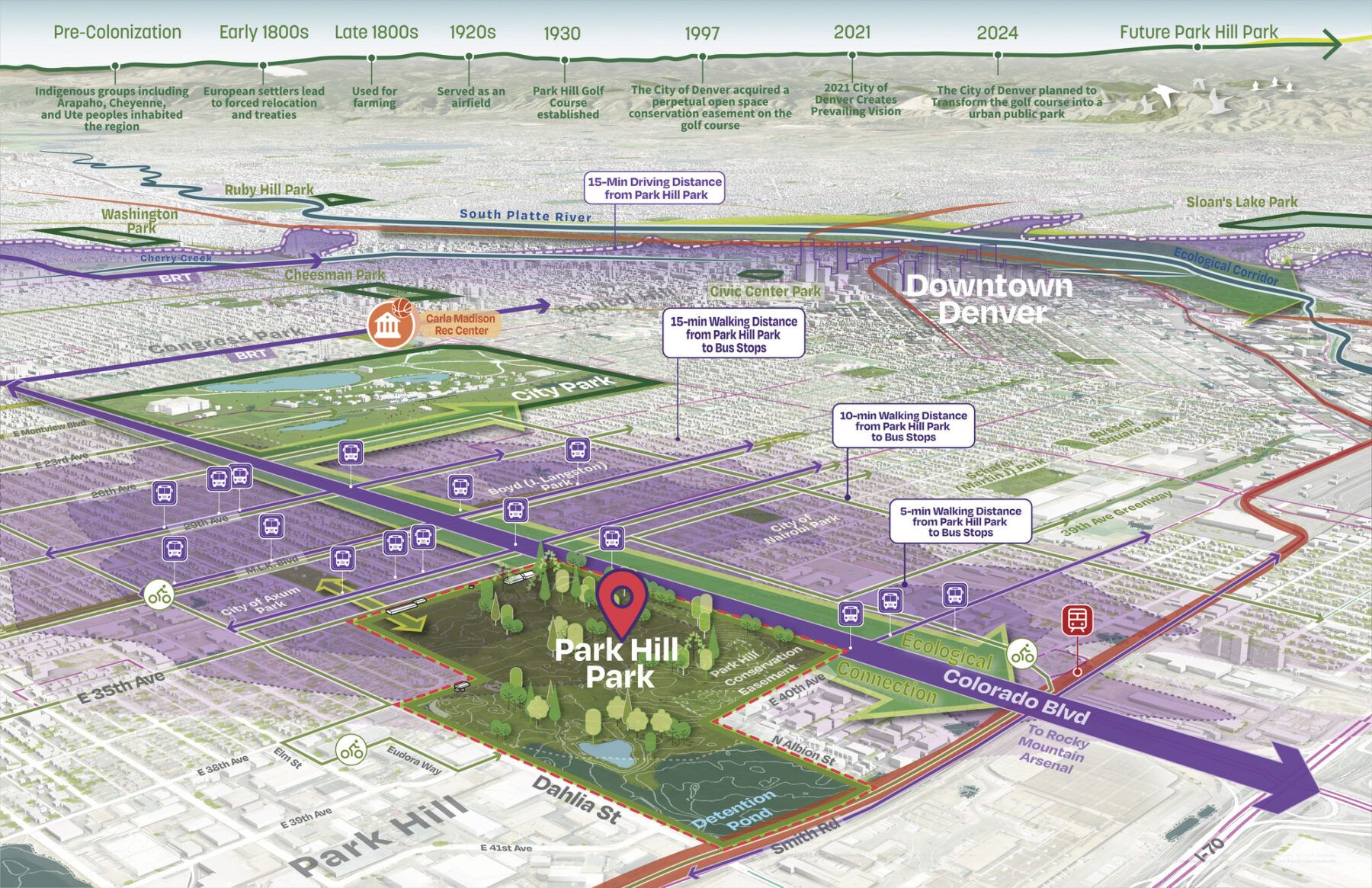
Park Hill Park will provide crucial open space for neighborhood residents while filling a regional need, as a destination for recreational amenities as well as an ecological stepping stone
Park Hill Park lies where the Rocky Mountains meet the Great Plains within a rare Steppe eco-region. Its location makes it a critical link between Front Range open spaces and eastern prairies, including the nearby 16,000-acre Rocky Mountain Arsenal National Wildlife Refuge.
Within the Cherry Creek–South Platte River watershed, the site connects to regional and national waterways. The Platte to Park Hill project leverages open space and a 25-acre detention pond to create an integrated stormwater system. Together, these efforts present a major opportunity for ecological restoration to support migratory birds along the Central Flyway while advancing low-impact design.
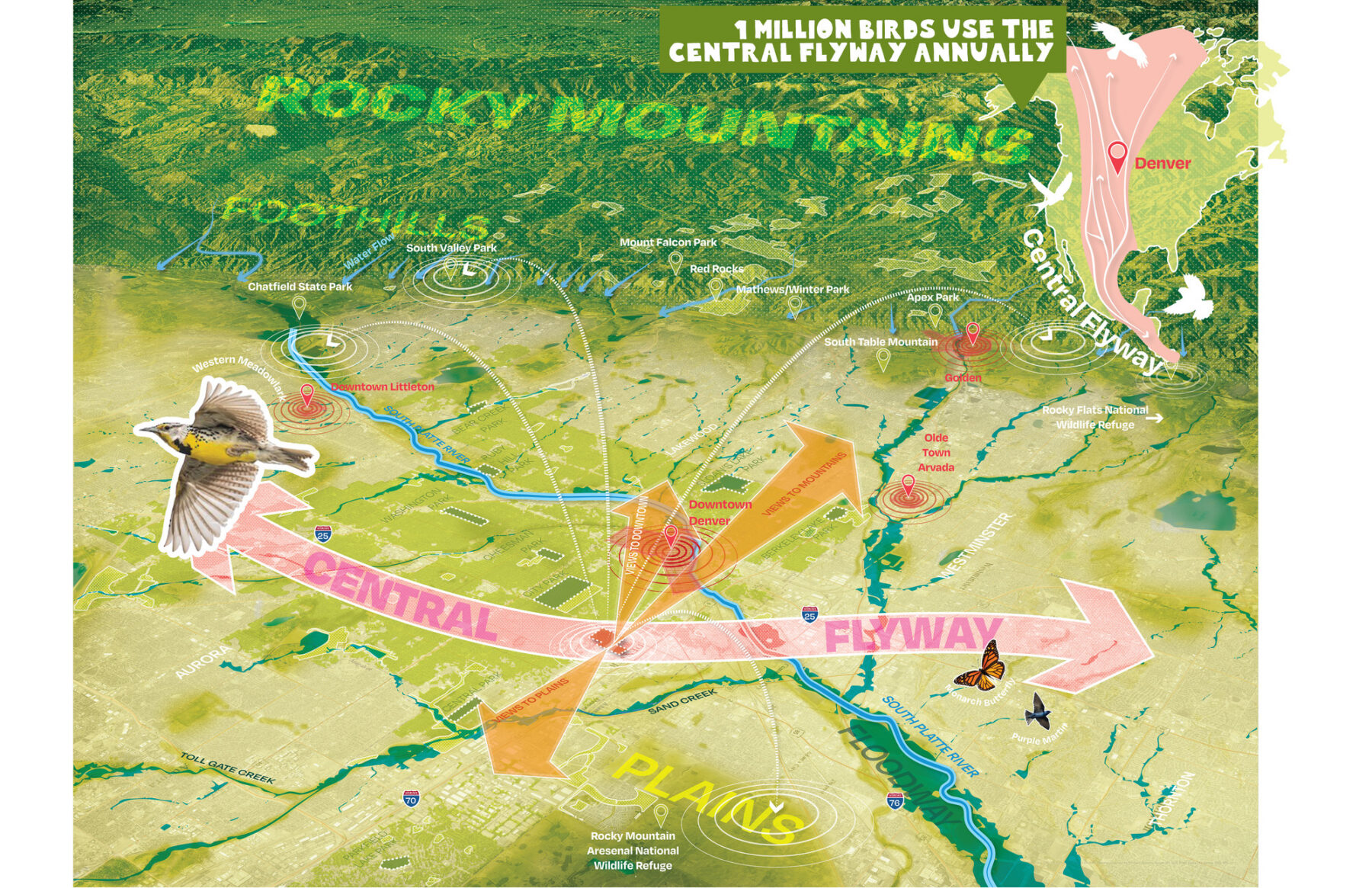
Site analysis of the overall park system focused on site constraints and opportunities for ecological enhancement and increased access
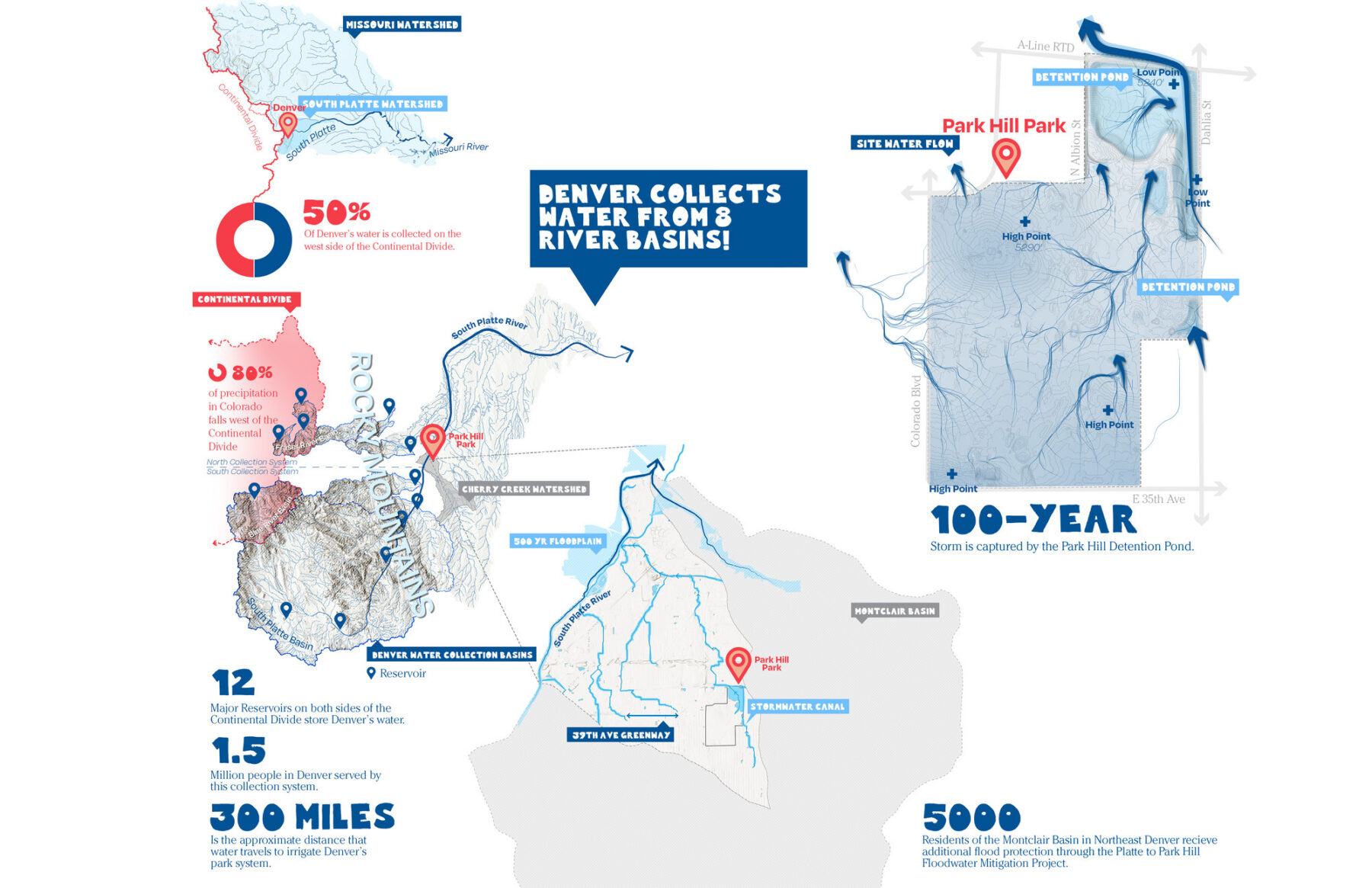
Located in the Cherry Creek–South Platte River Watershed, the site is connected upstream to the Denver Water Collection Basins and downstream to the Missouri Watershed, ultimately joining with the Mississippi River
The Park Framework is defined by a central ribbon of ecologically rich open areas surrounded by recreational and cultural uses that bring users into a place that celebrates activity, interaction, respite, and community.
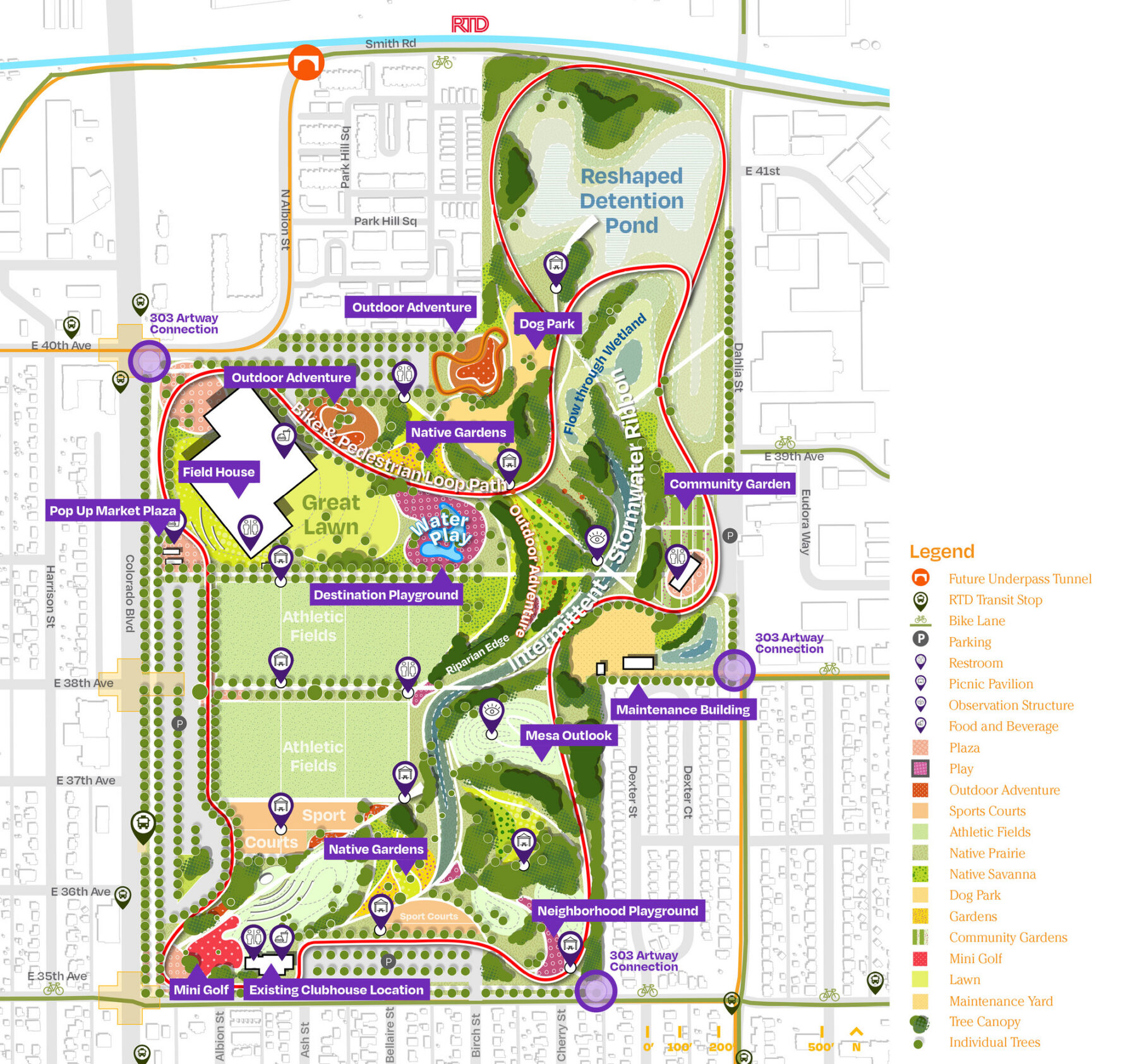
The Park Framework Plan balances active spaces and recreational amenities with passive space and ecological systems
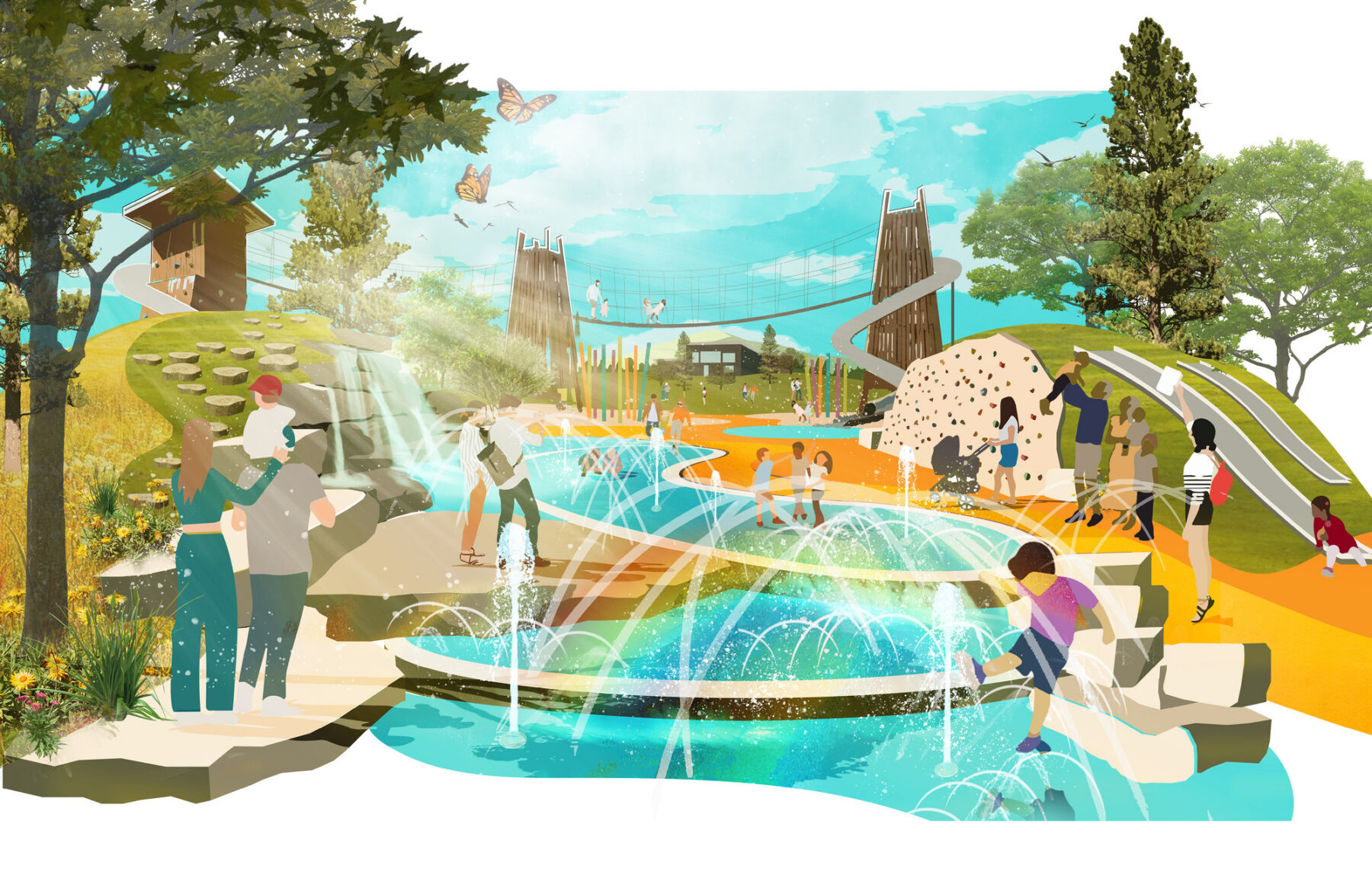
Balancing open space and active park activities, visitors can immerse themselves in nature extending through the park, with observation points and nature-based play. Higher-energy areas of the park include spaces for traditional organized sports, alternative sports, and destination interactive water features. Park corners are designed to be more active, with a field house, destination playground, and outdoor adventure areas. Ample athletic fields and sports courts along Colorado Boulevard provide places to play various sports.
A cultural hub for community gathering is envisioned around the existing clubhouse. Amenities such as picnic pavilions, restrooms and observation structures are located throughout the park. The entire site is connected by a wide, multi-use park loop and pathway system for easy access throughout.
The framework was developed in collaboration with the community and stakeholders, where continuous feedback was nurtured through a series of interactive touch points including open houses, activations, site tours and a custom-built project website. The planning process brought together the City, consultants, and stakeholder groups, while workshops and surveys captured key priorities, highlighting strengths, challenges, and opportunities, and provided a foundation for analysis and design. Equity and trust-building guided the process through intentional outreach to under-served communities, including neighborhood meetings, as well as youth and senior targeted engagement events at local neighborhood centers.
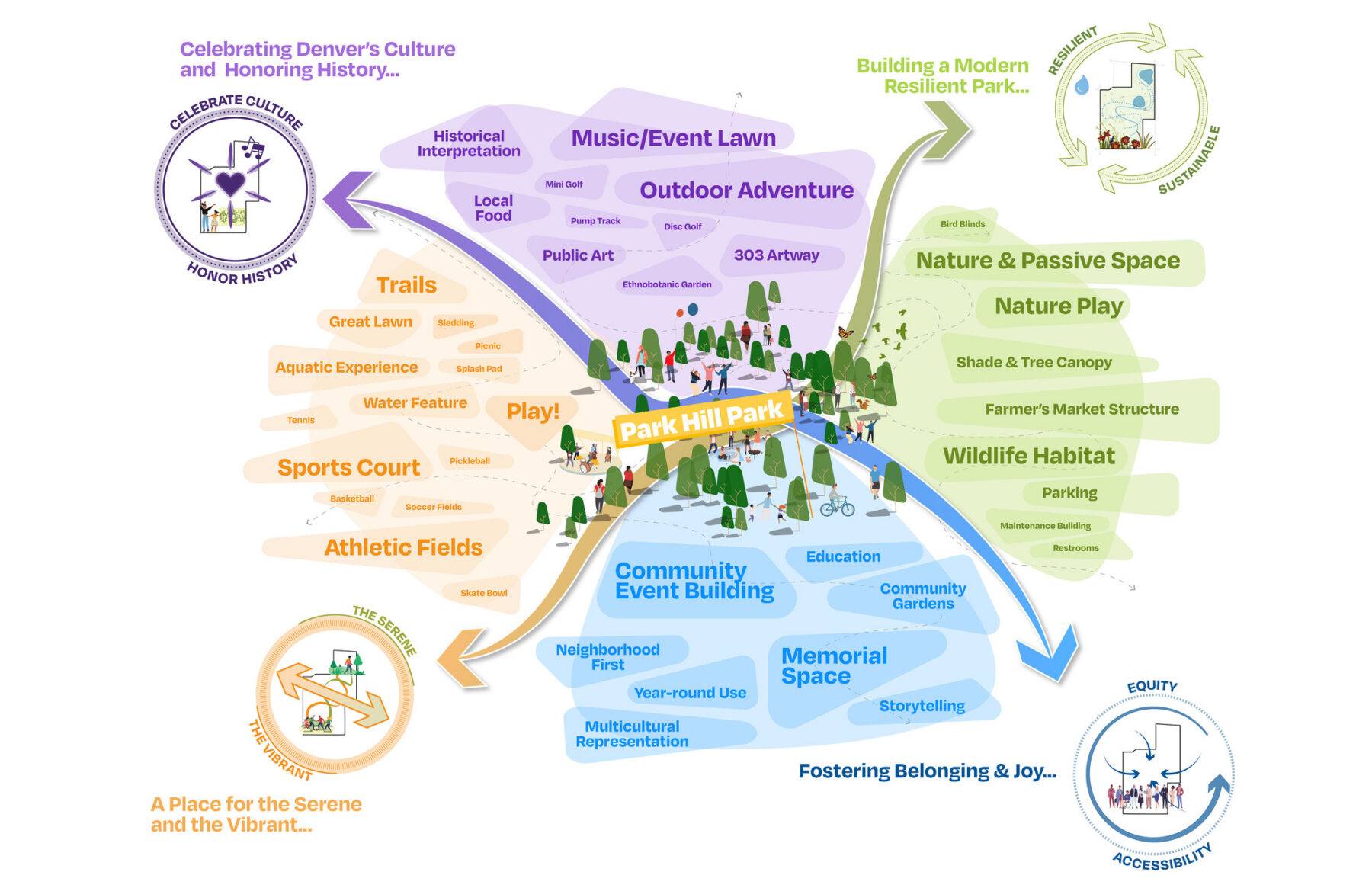
The four guiding principles—Celebrating Denver’s Culture and History, Building a Resilient and Modern Park, A Place for the Serene and the Vibrant and Fostering Joy and Belonging—will continue to shape the plan as future details are developed in collaboration with the community and as the park is constructed
A key turning point in the process was large mapping exercises to better understand the correct scale, type, and location of park uses and amenities, as well as how the community would use the site. This led to a preferred framework plan with strong community validation and a commitment of $70 million in bond funding. Through eight major engagement efforts spanning August 2025 through January 2026, the design team reached thousands of Denver residents and gathered comprehensive feedback that shaped the design and built consensus around the park’s future direction.
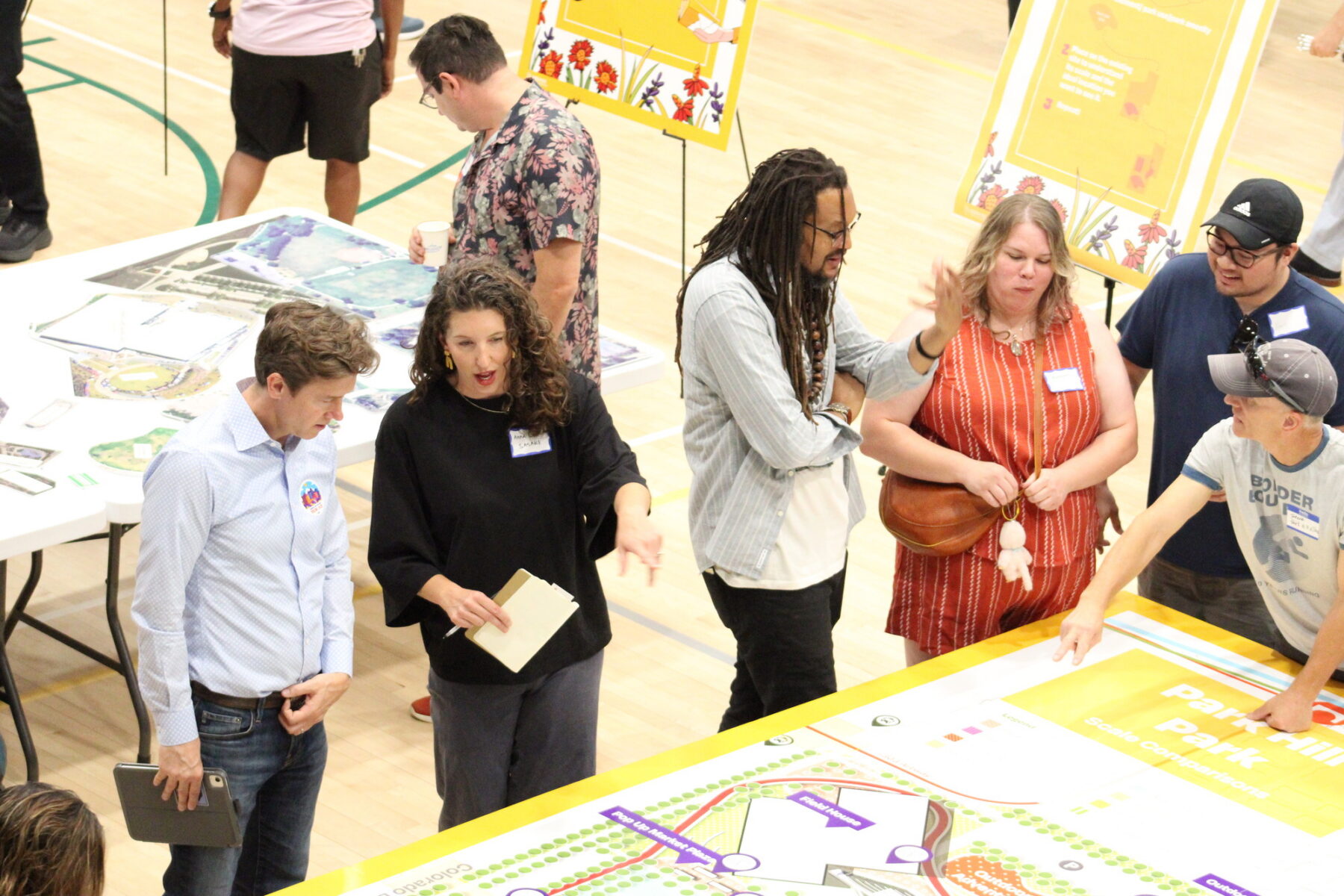
Large mapping exercise with the community and Denver Mayor Mike Johnston
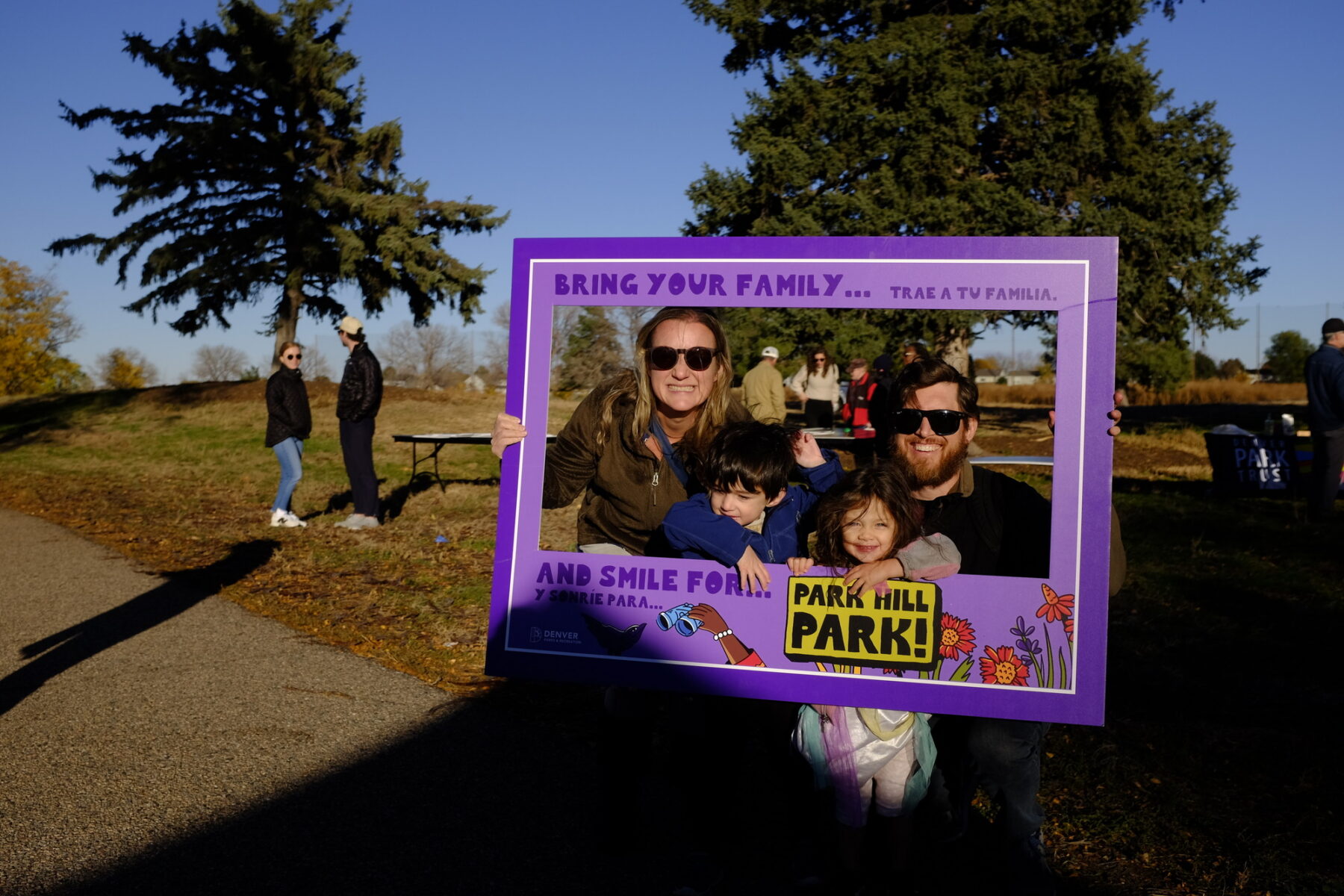
The community experiences the site for the first time as a public park.
Capturing and cleansing stormwater is a key element of the design. The approach follows existing overall site grading and drainage to treat 100% of stormwater on site. A meandering creek bed through the middle of the park will collect runoff while creating visual interest, education, and opportunities for ecological enhancement. Other integrated strategies include parking lot green infrastructure, a flow-through wetland, building runoff re-capture, and vegetative filtering, working together to reduce downstream flooding and collectively creating an ecological, hydrological, and educational resource for the community.
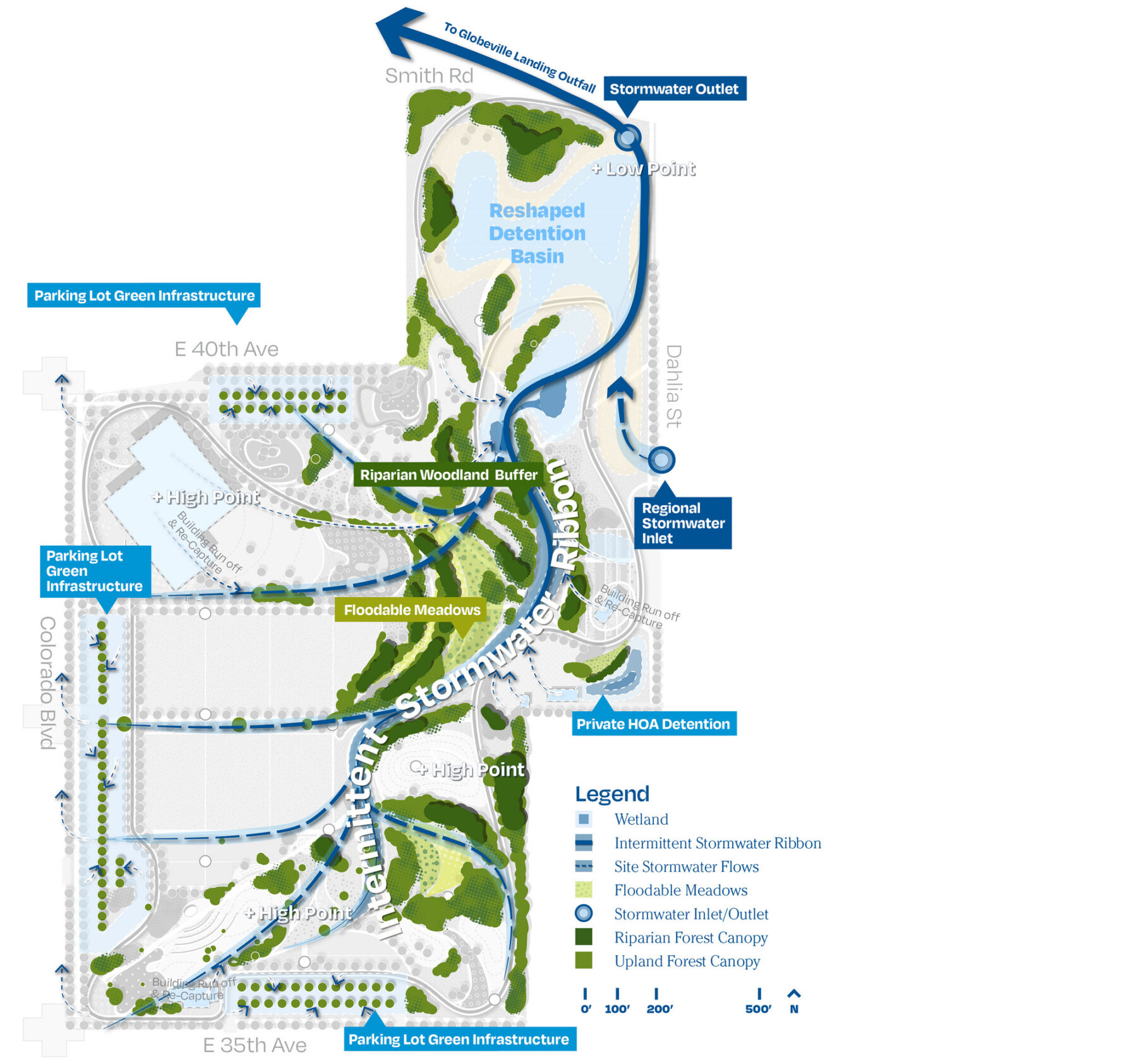
The framework leverages integrated stormwater strategies, including parking lot green infrastructure, a flow-through wetland, building runoff re-capture, and vegetative filtering
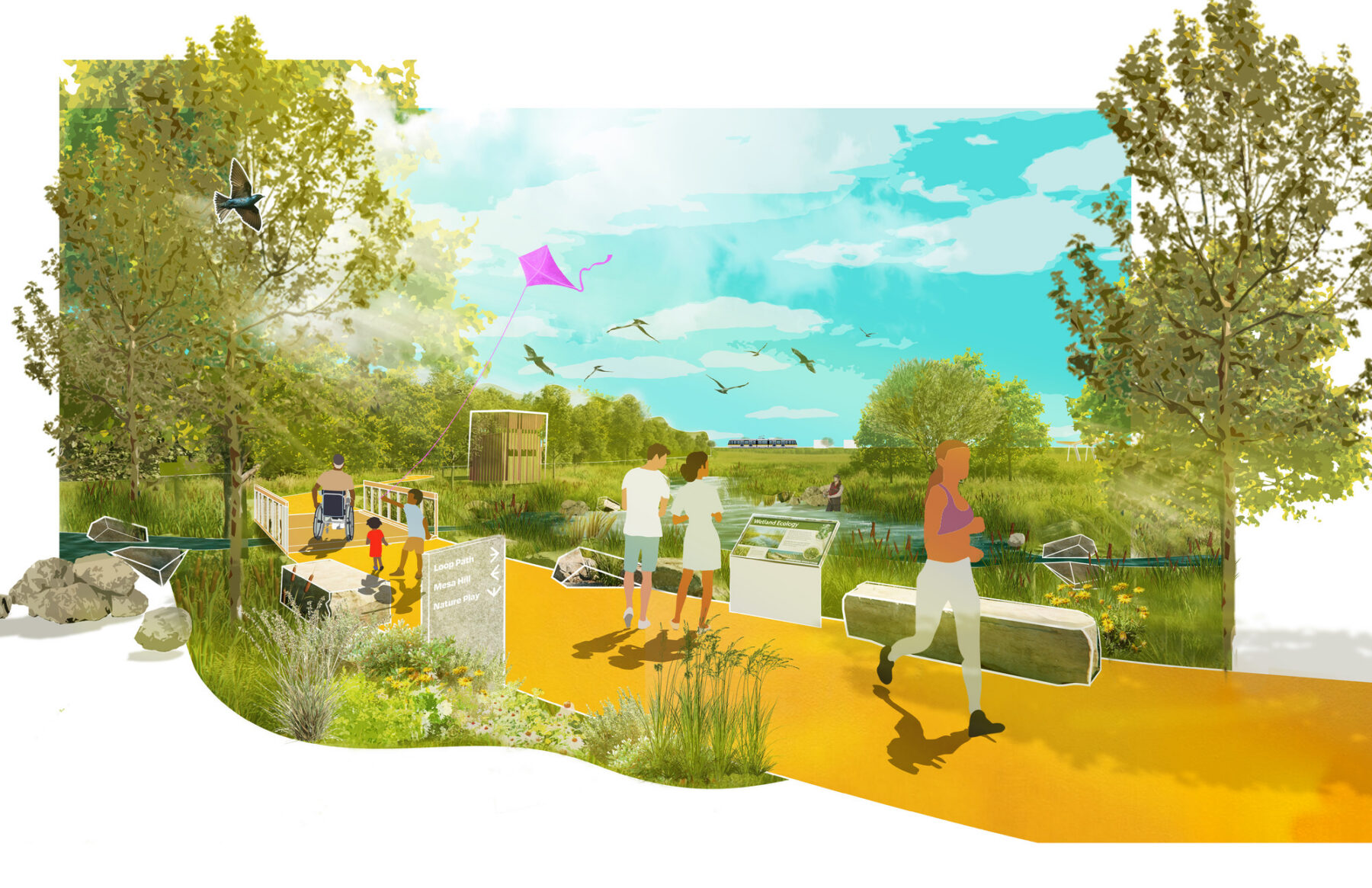
The flow through wetland envisions a vibrant and restored aquatic ecosystem that includes interactive and educational features
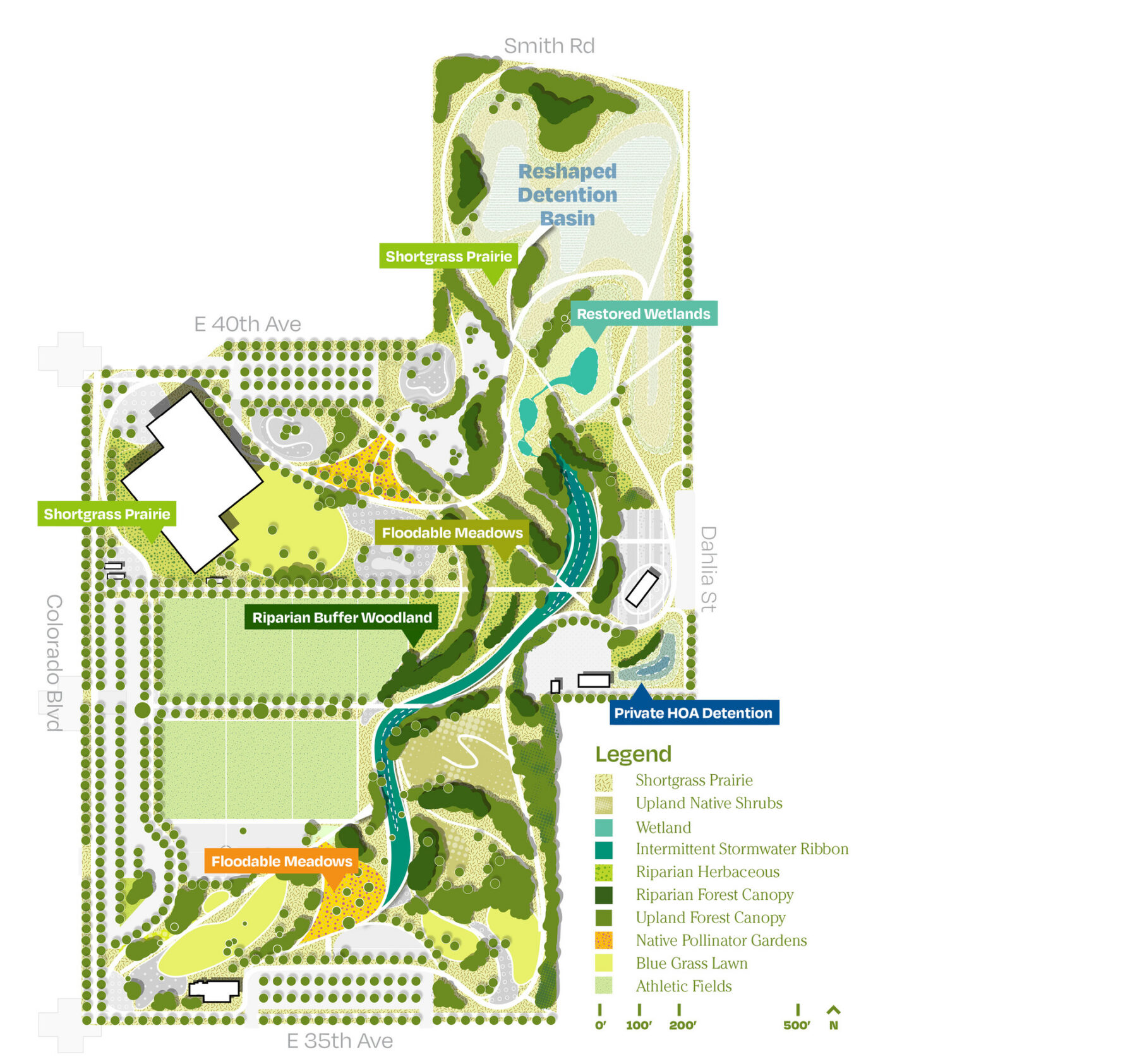
Nearby nature was prioritized with a proposed range of native habitat types, providing wildlife habitat, pollinator forage, ecosystem services, and human health benefits
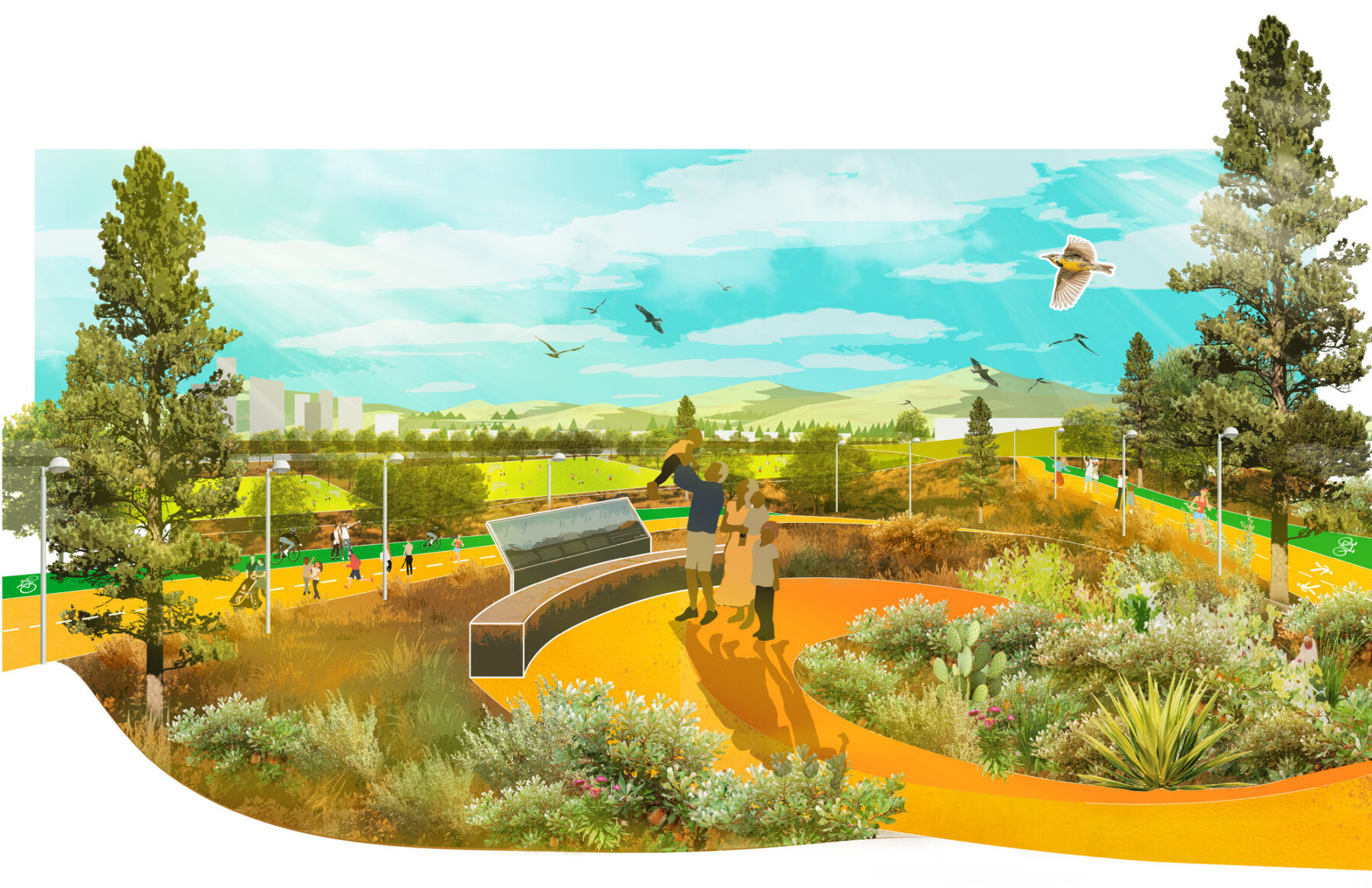
The Mesa Hill in the southeastern part of the park provides a unique upland ecology with interpretative signage, areas to rest, and a viewpoint to overlook the park as well as Denver and the Rocky Mountains beyond
The design seeks to honor the site’s layered history through collaboration with local artists, storytellers, cultural ambassadors, and community members. Public art and spaces for community gathering create opportunities for cultural interpretation, education, and celebration.
The renovated clubhouse will provide a central gathering space that connects the community to one another and to the park through a range of programming and educational opportunities. The 303 Artway will connect through the park, highlighting visionaries, artists, leaders, and community activists who have built this historically unique and diverse neighborhood.
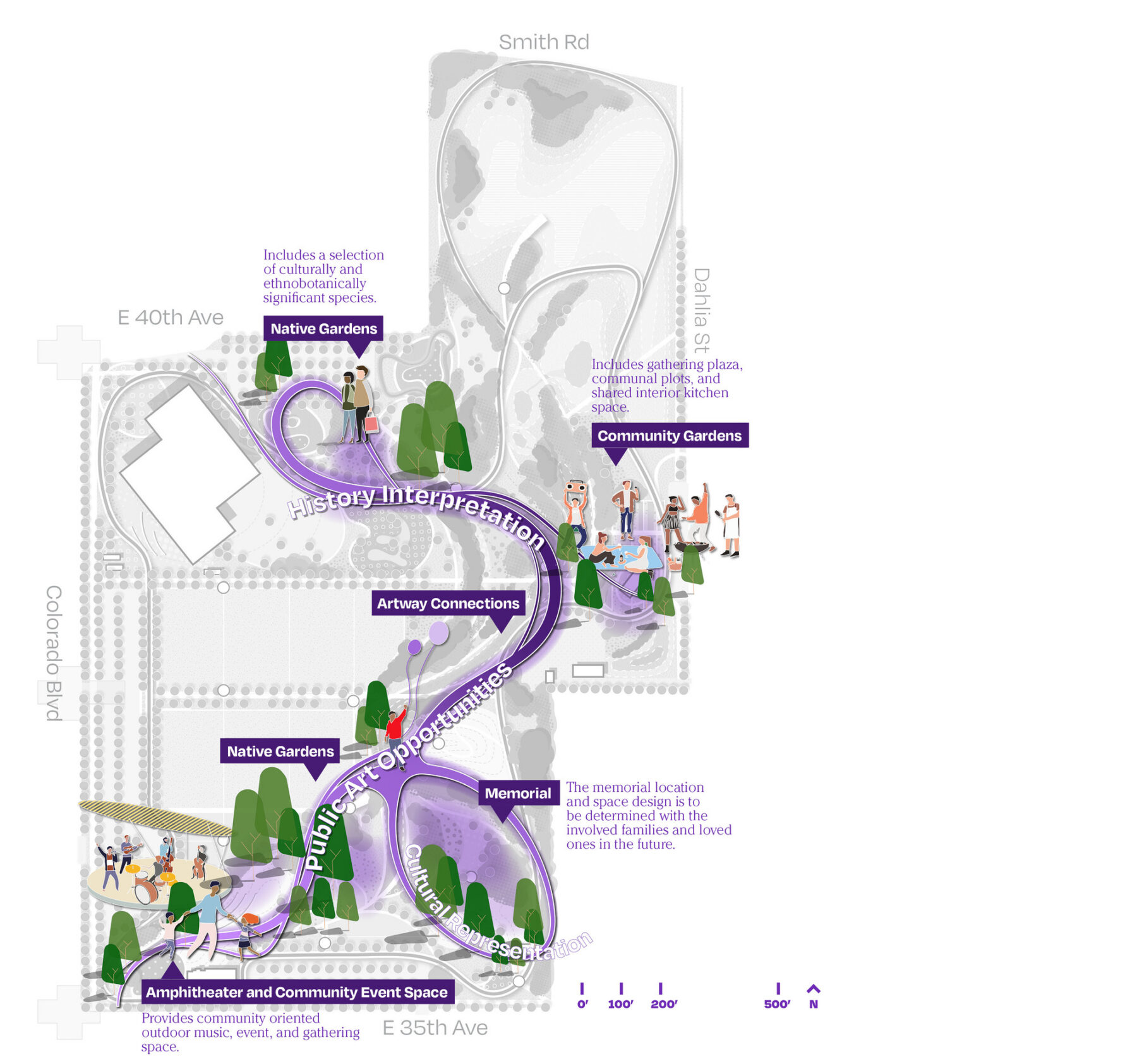
Public art and spaces for community gathering create opportunities for cultural interpretation, education, and celebration
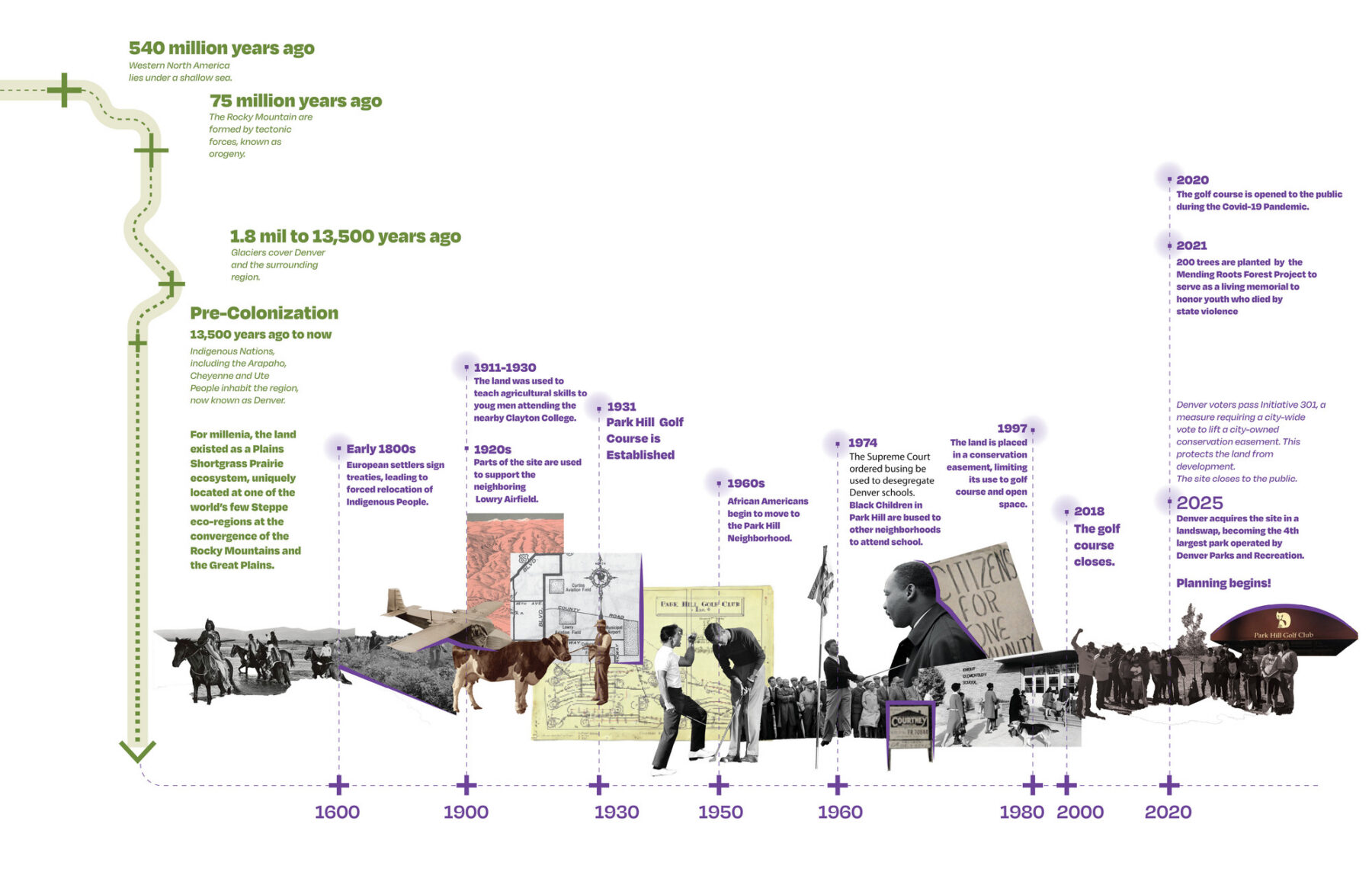
The site has a layered and rich history, from dairy farm, to airport runway, to golf course
The visioning process was truly a collaborative effort of co-creation with Denver’s residents. Sasaki successfully advanced the project from three conceptual “Big Ideas” to a preferred framework plan with strong community validation and a commitment of $70 million in bond funding. The final framework was presented in January of 2026, and the next stages of design and planning will focus on developing framework details, prioritizing amenities, developing phasing strategies, and implementing the first phase of the project.
想了解更多项目细节,请联系 Anna Cawrse.
From raw sketches to construction, how do our interdisciplinary design teams bring their visions to reality?
Anna Cawrse and Joshua Brooks discuss Bonnet Springs Park and Greenwood Park in Parks & Recreation Magazine