City of Little Rock Downtown Master Plan
Little Rock, AR
 Sasaki
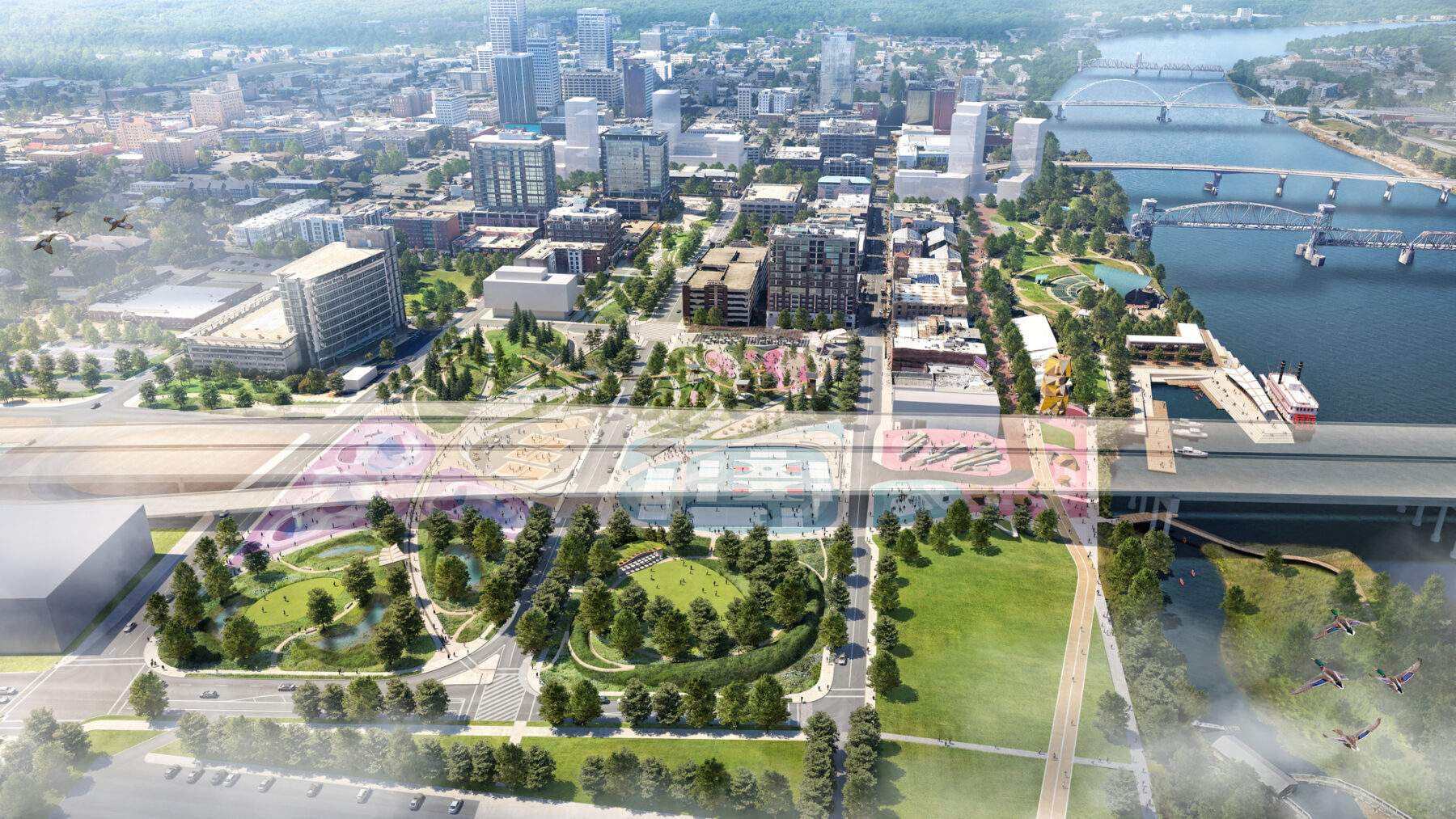
Located within one of Little Rock’s most culturally and ecologically vibrant areas, 30 Crossing Park is poised to activate a key downtown corridor and stitch together areas of the city that had been previously fractured by the interstate.
Planned for an 18-acre opportunity site created by the removal of I-30 bridge exits and ramps, Sasaki’s design for 30 Crossing Park will provide dynamic new civic and cultural amenities while catalyzing economic development in the city’s downtown.
The project emerges from the Downtown Little Rock Master Plan, which identified the vacant parcels underneath and adjacent to the I-30 bridge as key areas for transformative public space development. In its multifaceted nature, which involves not only the park’s physical design but also the broader development of surrounding civic infrastructure to support new economic development and financing tools, the park serves as a microcosm of the processes at work in the Downtown Master Plan as a whole. As such, this once-in-a-generation project will serve as a model for transformative development in Downtown, catalyzing policy changes and guiding future projects.
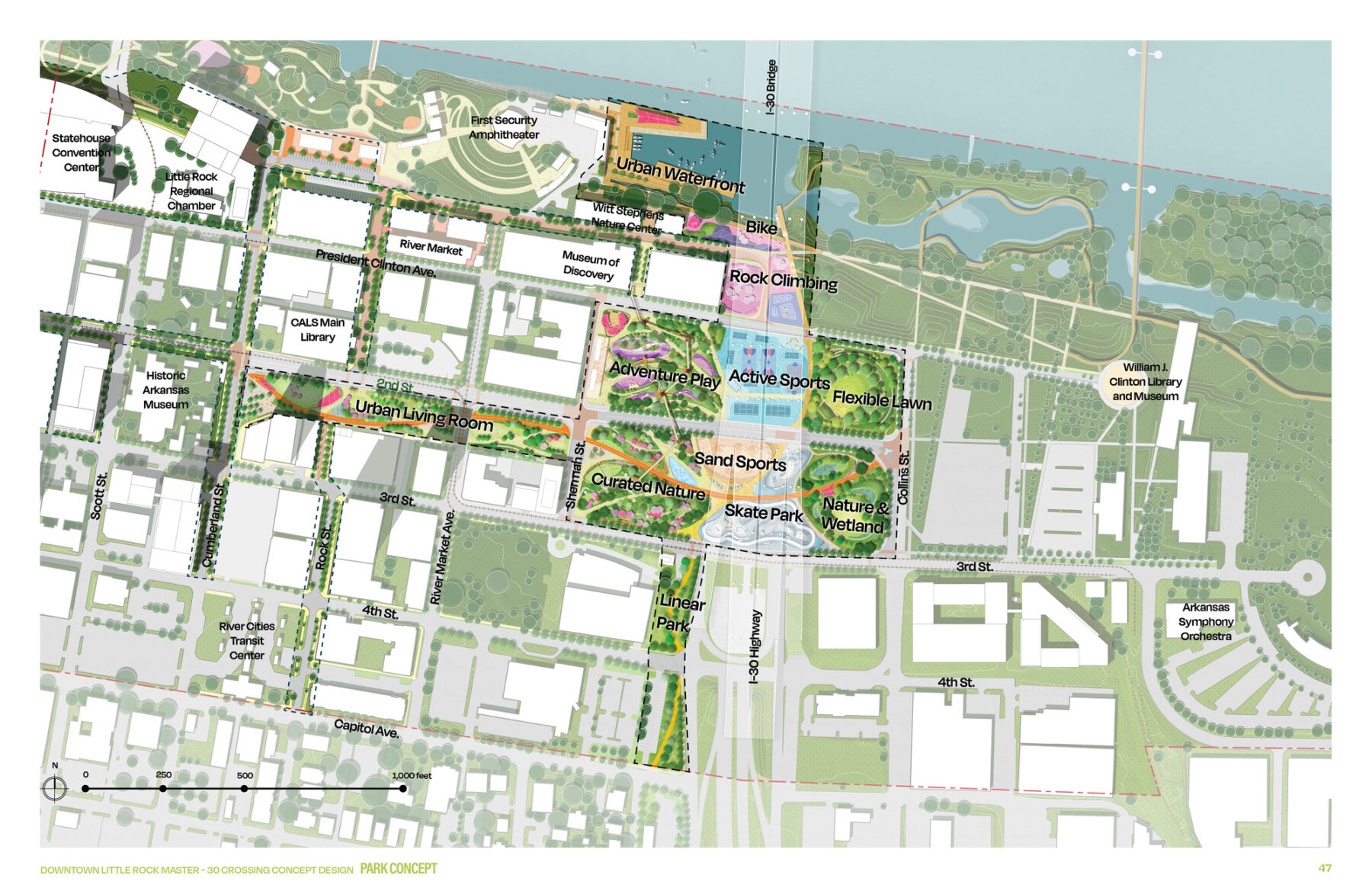
The park comprises five distinct zones – the linear green corridor to the west, the main park area near downtown, a quieter section near the Clinton Library, the space beneath the bridge, and the waterfront area.
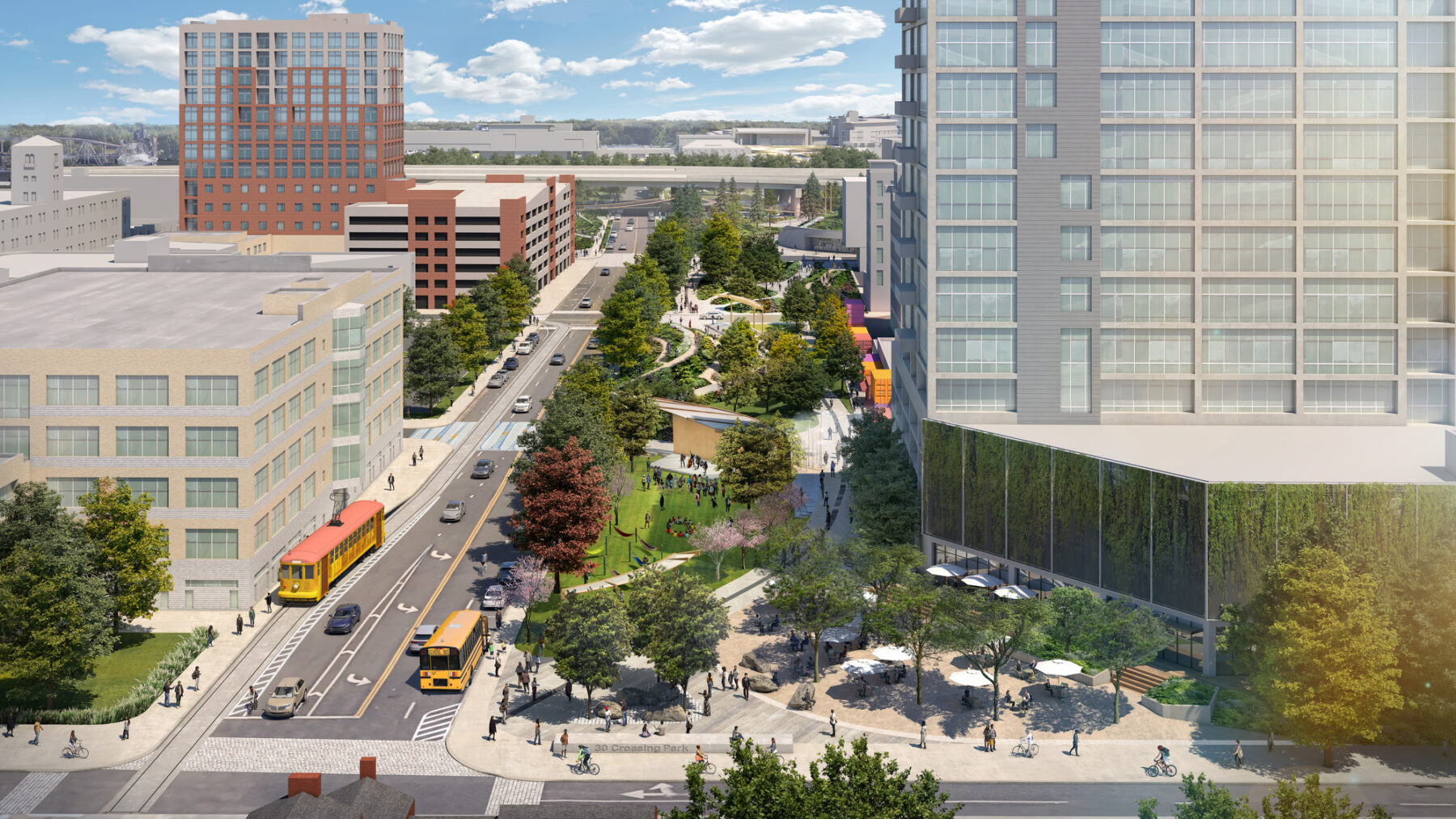
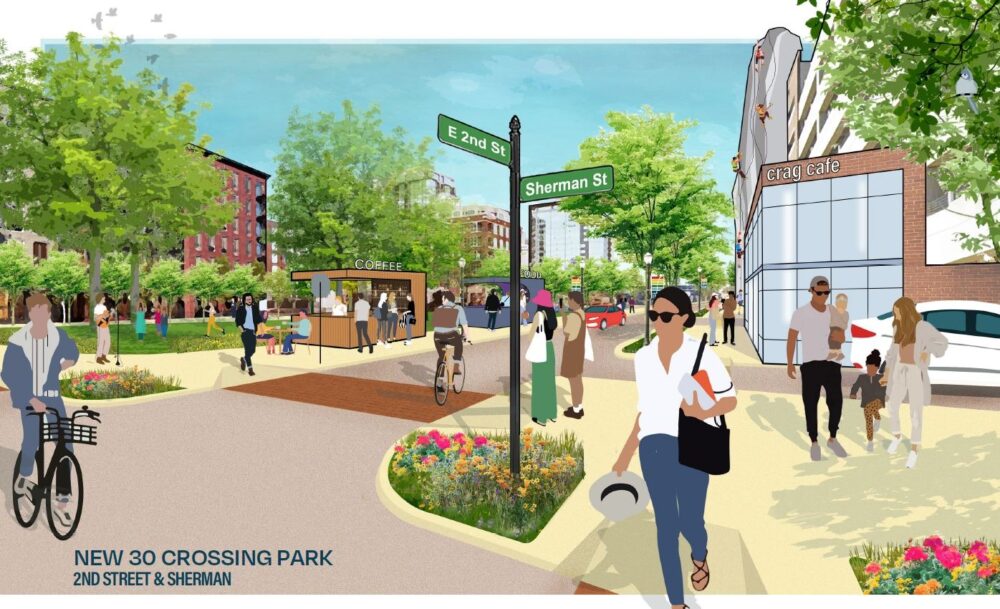
As entry points and critical transition zones, the park edges are just as integral to the park’s strategy as the park’s core. Street improvements are proposed for the surrounding neighborhoods to integrate the park into the urban fabric and enhance pedestrian access.
The plan envisions the park as a connector, bringing downtown closer to the waterfront, bridging cultural institutions and communities on the east and west sides of the bridge, and strengthening links between regional trail systems. Despite the richness of cultural, natural, and commercial assets that converge in this area, the noise and off-ramps of the Interstate have inhibited the site from acting as a vital and welcoming connector between these resources, making it feel like it sits behind the city, on the “backside” of the urban core.
Over the course of 14 months, Sasaki undertook a robust planning and design process that involved numerous meetings with the Executive Committee, a group of City elected officials and department and agency directors, as well as the Stakeholder Committee, which included nearby property owners, institutions, and neighborhood representatives. Extensive collaboration with the Arkansas Department of Transportation (ARDOT) helped clarify the regulatory framework and shape the forthcoming phases and design delivery processes.
The heart of the park, bounded by Collins and Sherman Streets to the east and west, and 3rd Street and President Clinton Avenue to the south and north, is a multimodal recreational environment that serves as a hub of activities, welcoming visitors of all ages, locals, and tourists alike.
Constructed hills create a shifting topography that delineates various activity zones and infuses the landscape with dynamism. The hills are sculpted with Ouachita sandstone retaining walls and feature plant communities of the Ouachita mountain ridges on the south slopes and the Ozark valleys on the north slopes.
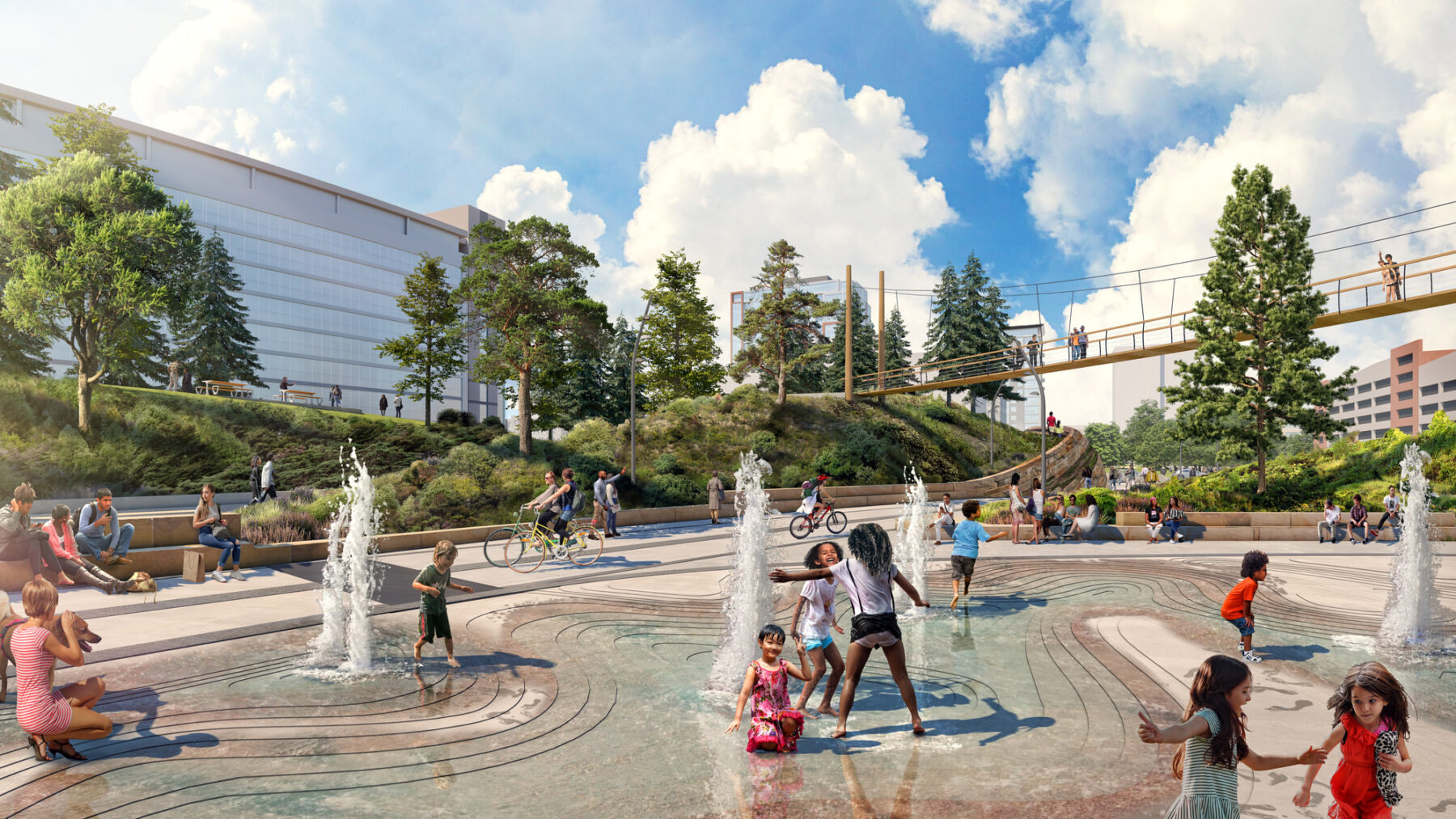
The water plaza echoes the region’s waterways, while elevated cable bridges help pedestrians cross over 2nd Street and connect play zones.
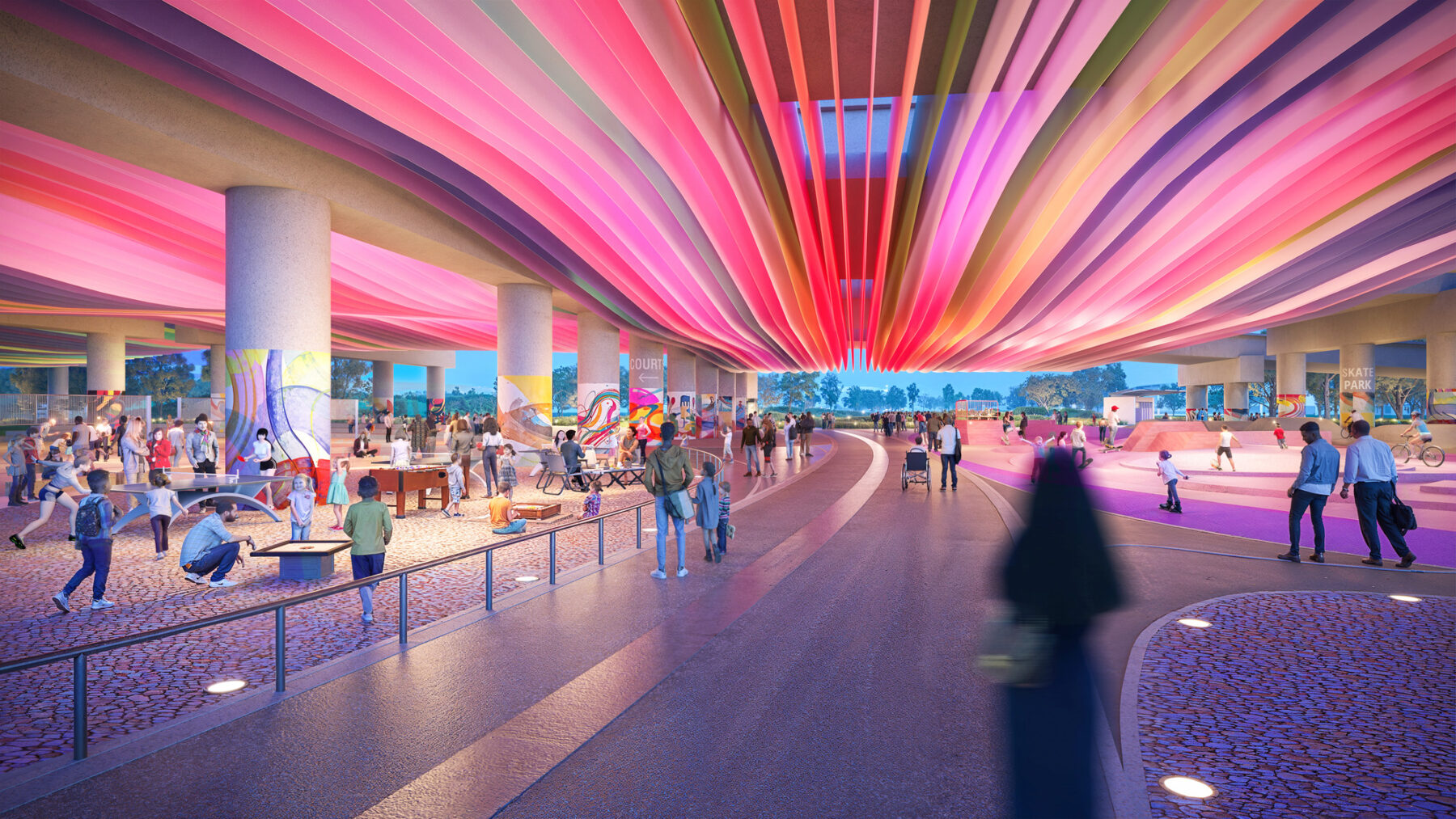
Skate parks and sand play zones flank the River Link Trail that passes under the bridge.
The underside of the bridge provides a flexible plaza, with space for picnicking and space for food trucks to park. Acoustic curtains help dampen noise from above, and offer an opportunity for local fabric and lighting artists to contribute creative solutions. The paved areas under the bridge are dedicated to a range of recreational sports, including basketball, pickleball, skateboarding, BMX, and bouldering, and a sand-filled area provides space for volleyball and sand play.
In the southeastern block of the park, meadows and emergent wetlands are home to native Mississippi species, and a network of rain gardens collects stormwater. A large event lawn north of 2nd Street provides space for large-scale community programming.
The park also draws on the idea that “great parks have edges,” recognizing that the park’s edge conditions are just as integral to creating a welcoming and beautiful urban environment as its core.
30 Crossing is surrounded by some of Little Rock’s most iconic cultural institutions, including the William J. Clinton Presidential Library and Museum, the Museum of Science and Discovery, the CALS Main Library, and the Historic Arkansas Museum (HAM). The plan proposes a cultural trail that links a series of city blocks running from the park’s core to the Main Library and the HAM as a civic greenway, interspersed with outdoor rooms that support educational programming. Along the trail are plazas providing spaces for school groups to meet and have lunch, public restrooms, and a hammock grove where families can rest and read, perhaps with a book borrowed from the Main Library.
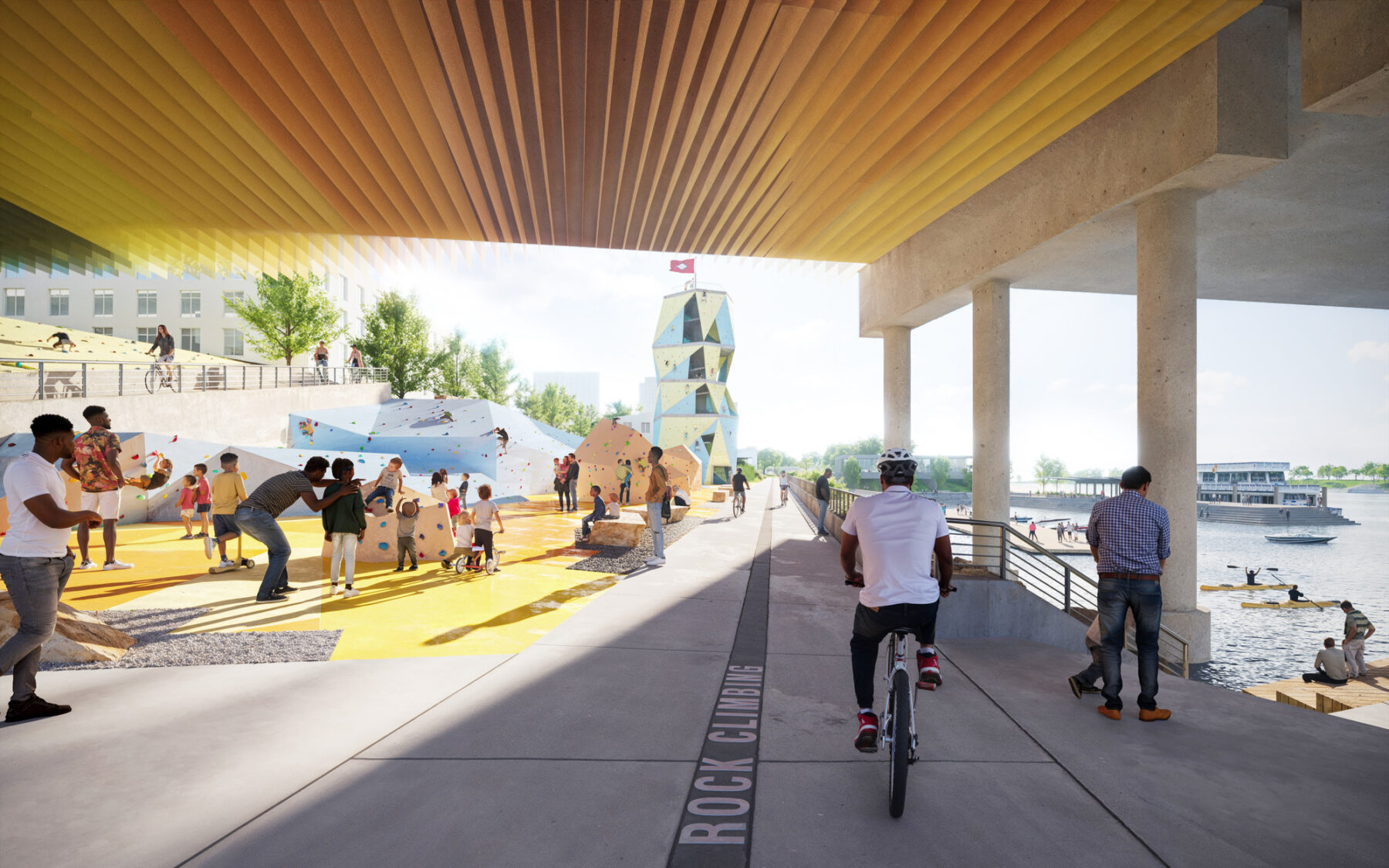
A multi-use path runs along the active waterfront, while the bouldering wall and climbing tower offer recreational opportunities for different skill levels.
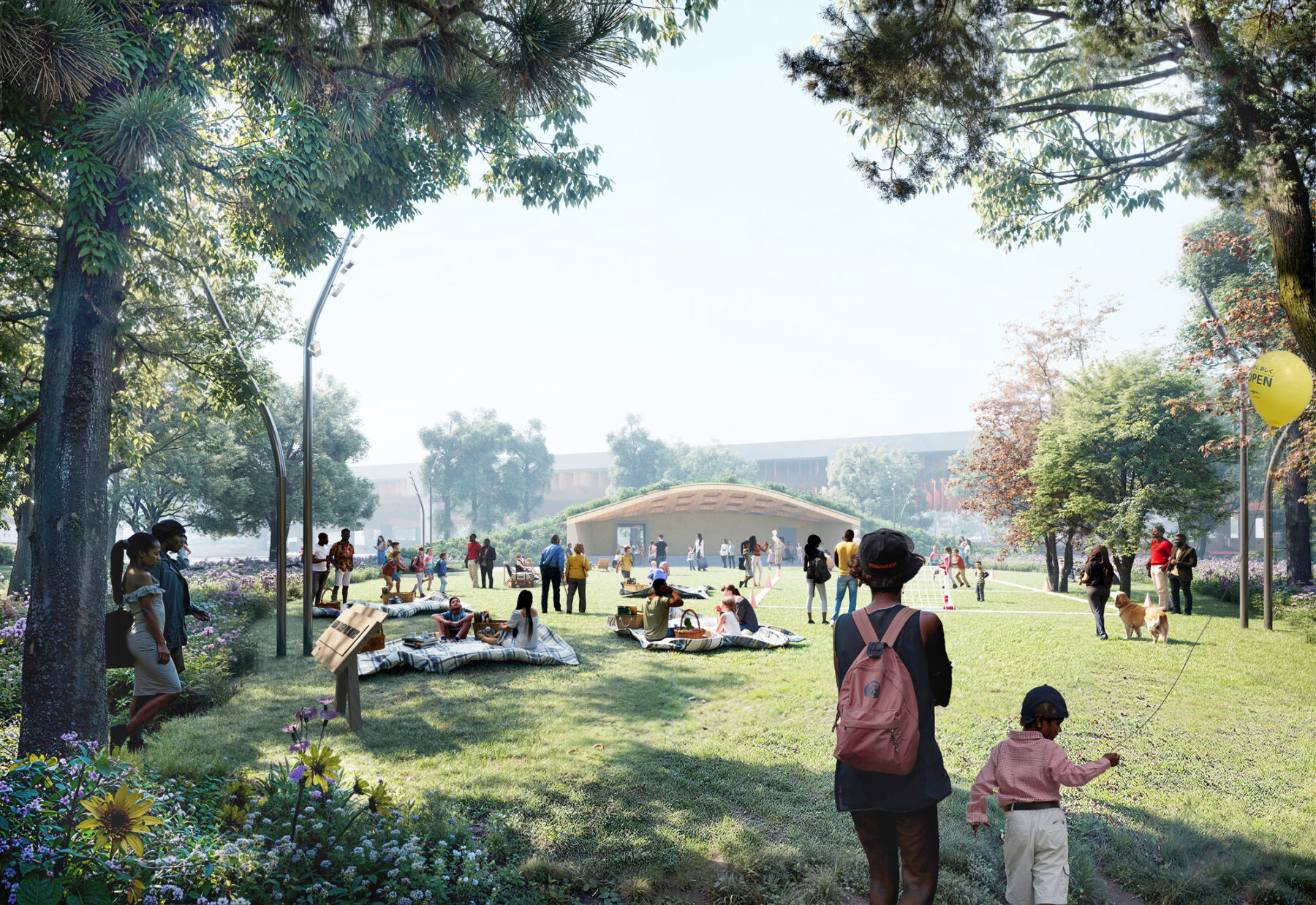
Large outdoor events can be held at the Meadow Stage, which is set into a surrounding berm and seamlessly integrates into the landscape.
The park also plays a vital role in connecting downtown Little Rock to the Arkansas River and bolstering the network of green corridors in the city through connections to other parks like MacArthur Park. 30 Crossing fills a gap between existing greenways, bike networks, and pedestrian-prioritized spaces to re-stitch the fabric of the downtown grid across the I-30 corridor, while laying the groundwork for future trail development, such as the Arkansas River Trail, a southeast rail-to-trail that would pass through the park as a crossroads.
Generous sightlines will prioritize visible links to the river, and a welcoming, accessible new waterfront features outdoor gyms, a boardwalk, and a riverboat quay where paddlers and boaters can access the river from downtown.
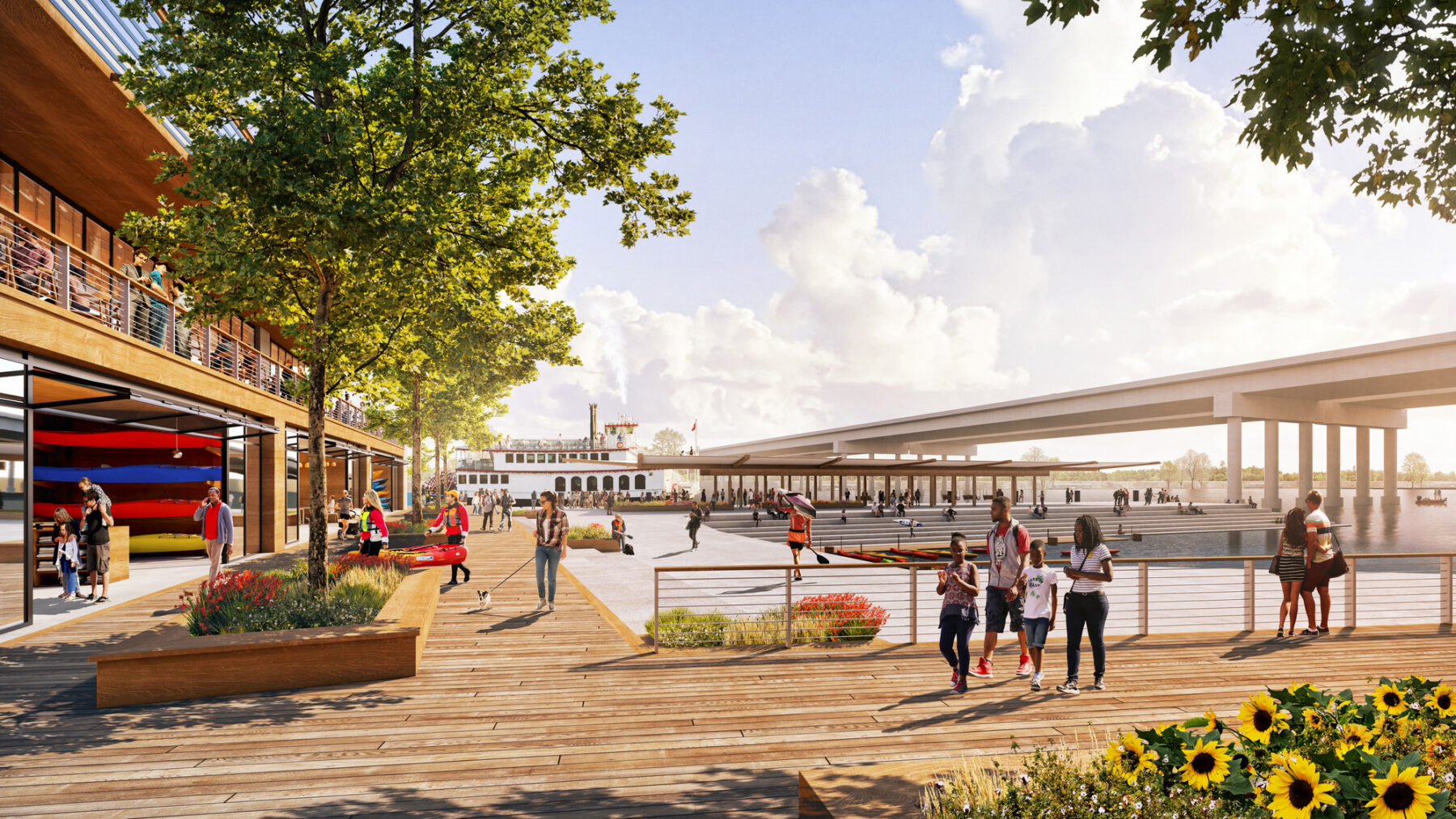
The waterfront features a fully accessible series of ramps and landings, and a multipurpose River Landing Building that navigates the grade change between the boardwalk and the First Security Amphitheater. Fitted with flood-resistant features, the building houses storage facilities for the boat house and park maintenance, as well as food and beverage services and back-of-house operations for the Amphitheater.
The park’s development strategy emphasizes leveraging the park to support district-wide revitalization. The plan outlines a vision for building ground-level restaurants and retail that directly activate the park, as well as infill opportunities along the Arkansas River to address community members’ widespread frustrations about the lack of food and beverage options along the waterfront. Other key sites were identified as opportunities for daily-life retail establishments and parking, helping to uplift overall quality of life for residents and strengthen the park’s role as a social hub.
Working with Sasaki has been an outstanding experience. This project presented unique challenges and opportunities, and Sasaki took the time to step back, review these constraints in detail, and deliver creative, practical solutions. One of the most exciting aspects was how Sasaki leveraged public engagement, and their ability to adapt and incorporate feedback has set the stage for a park that truly reflects the vision and needs of Little Rock.
Leland Couch, Parks Director, City of Little Rock
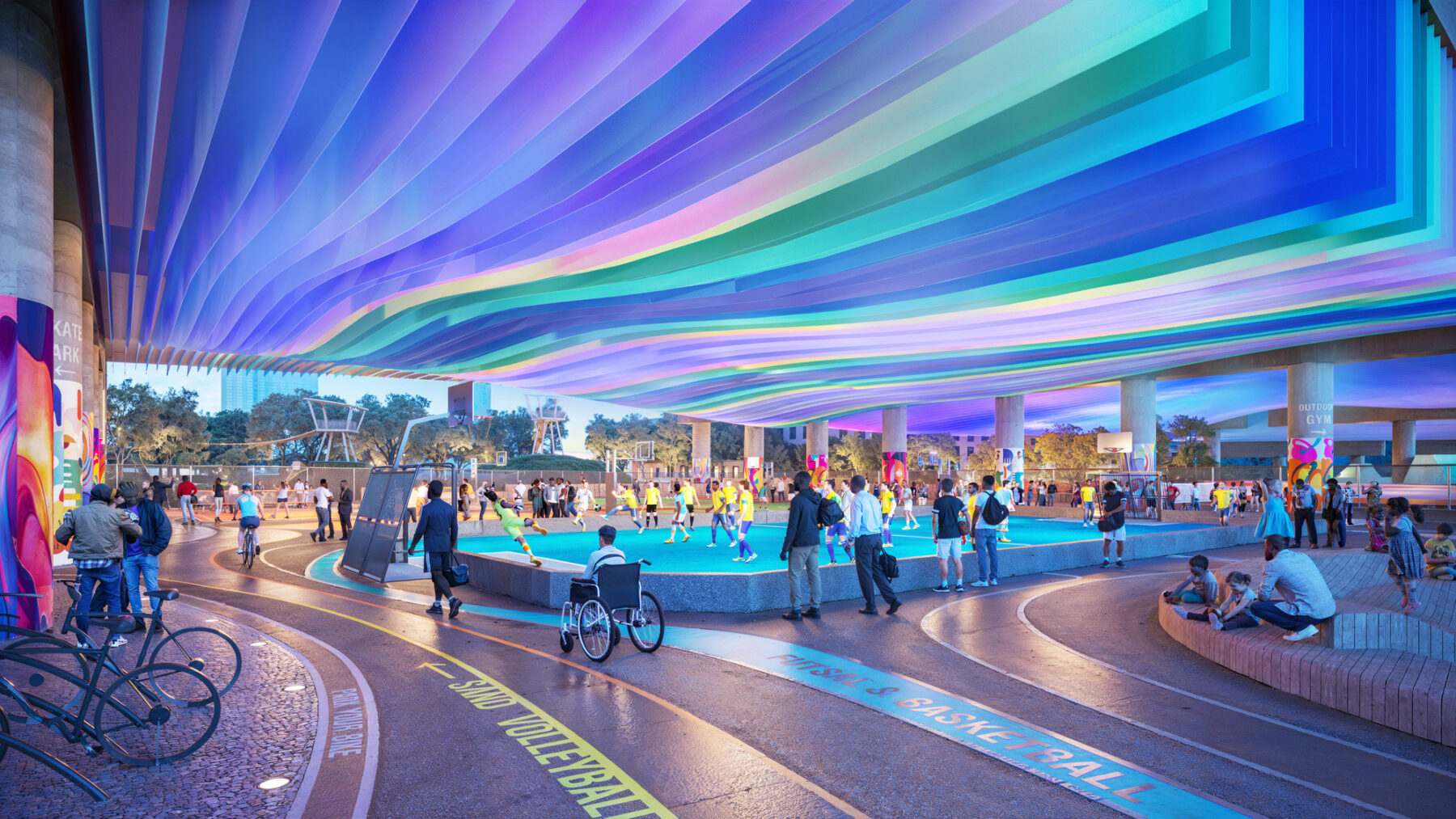
Beneath the bridge, a series of paved areas are dedicated to basketball, futsal, and pickleball.
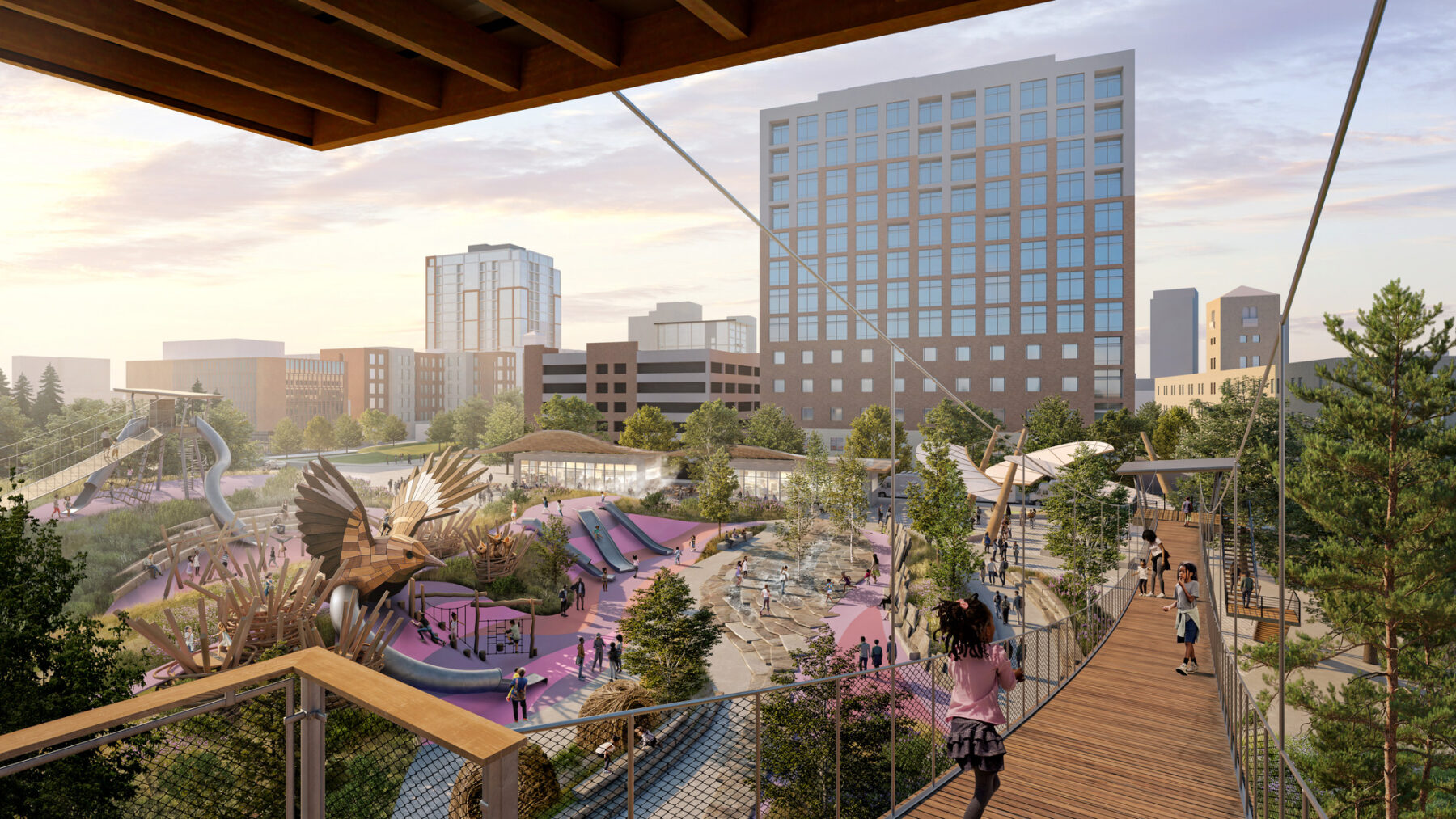
A dynamic network of playgrounds suited for all ages, the Mountain and Towers Play Zone is replete with slides, swings, and cable bridges connecting playground towers inspired by fire towers in the Ouachita mountains.
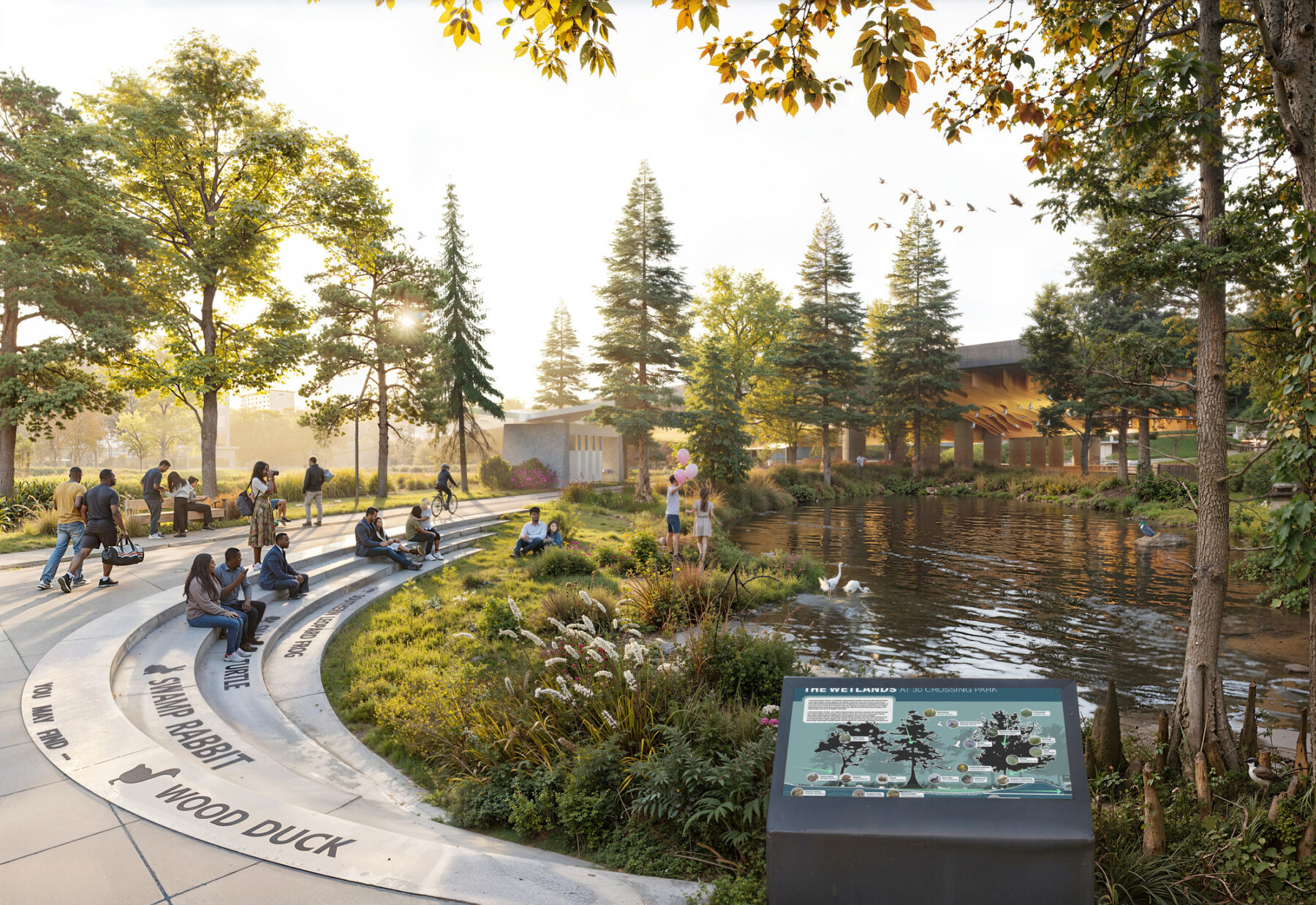
Rain gardens collect and treat stormwater while also providing a showcase habitat for Mississippi ecologies, framed by bald cypresses and tupelos.
Beneath the bridge, a series of paved areas are dedicated to basketball, futsal, and pickleball.
A dynamic network of playgrounds suited for all ages, the Mountain and Towers Play Zone is replete with slides, swings, and cable bridges connecting playground towers inspired by fire towers in the Ouachita mountains.
Rain gardens collect and treat stormwater while also providing a showcase habitat for Mississippi ecologies, framed by bald cypresses and tupelos.
想了解更多项目细节,请联系 Joshua Brooks或Chris Hardy.