Right-Sizing and Optimizing Space Use
Our right sizing assessments are geared toward optimizing institutions’ existing resources, and identify how well the instructional room supply aligns with section sizes.
 Sasaki
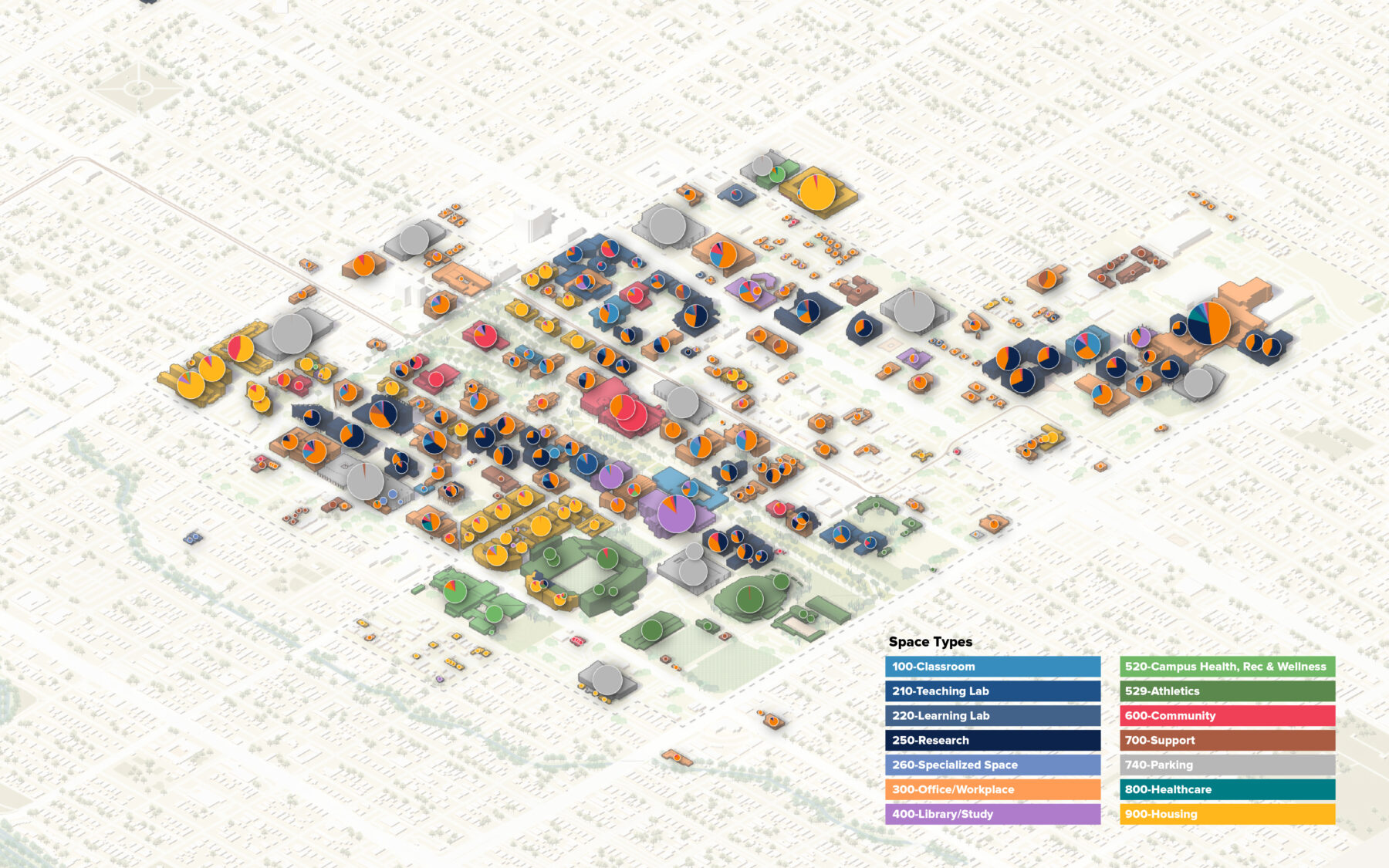
Existing Space Overview (Colored by space types, with pie charts illustrating space distribution)
In collaboration with the University of Arizona, Sasaki conducted a robust, data-driven analysis to evaluate campus space usage, inform future needs, and guide strategic investments. Together with university stakeholders, the team crafted a roadmap to align space supply with institutional priorities, optimize management efforts, and support long-term growth.
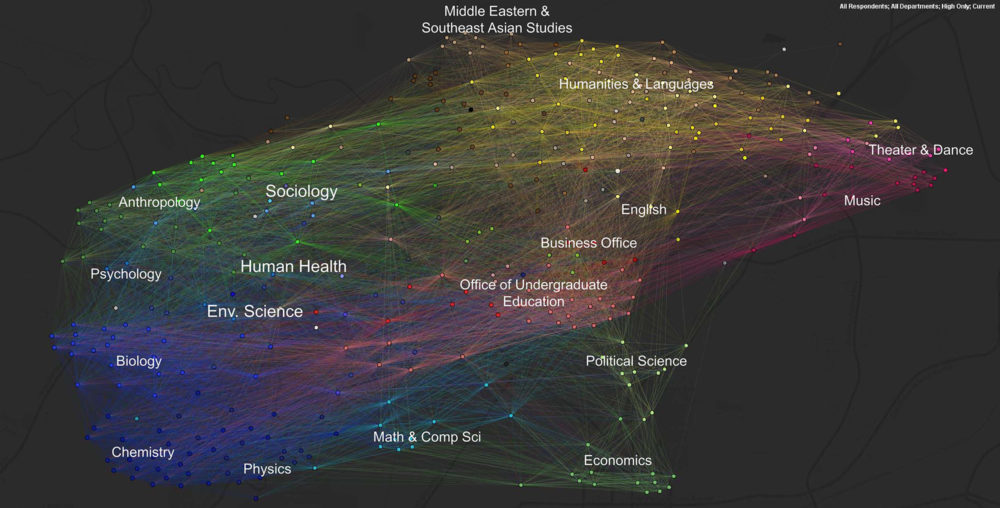
As one of the state’s major public universities, the University of Arizona oversees 794 buildings totaling 20 million gross square feet. Sasaki employed the Visualizer tool, built in-house by our data and design strategies team, to overlay clean, processed data layers, uncovering spatial synergies and inefficiencies. Visualizer allows design teams to realize spatial relationships, departmental collaboration, and to quickly visualize space distribution across campus. Extensive peer benchmarking across space types and research expenditures helped pinpoint strengths, gaps, and opportunities. By moving beyond anecdotal observations, the data revealed clear patterns in needs and usage that might have otherwise gone unnoticed.
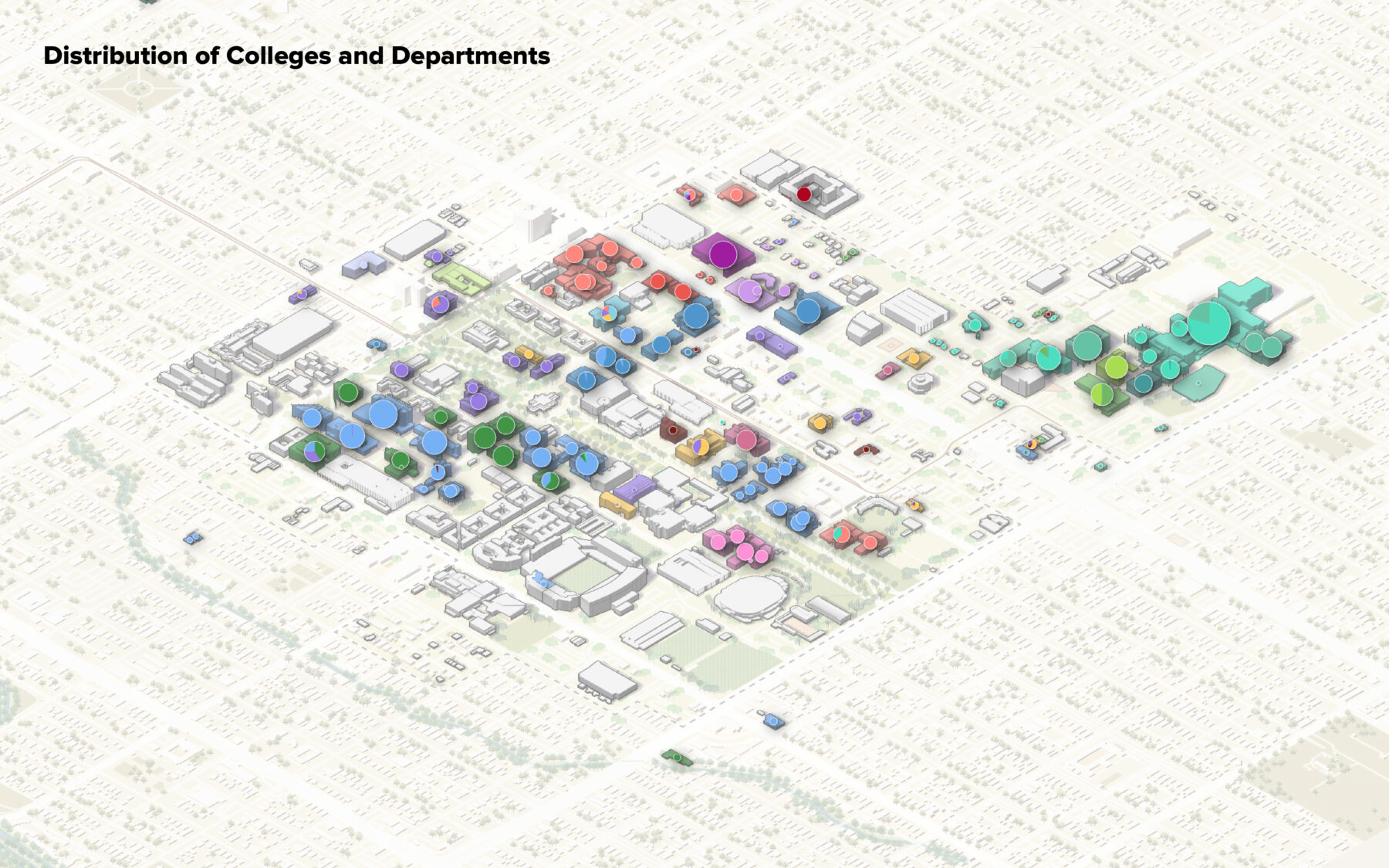
Distribution of colleges and departments
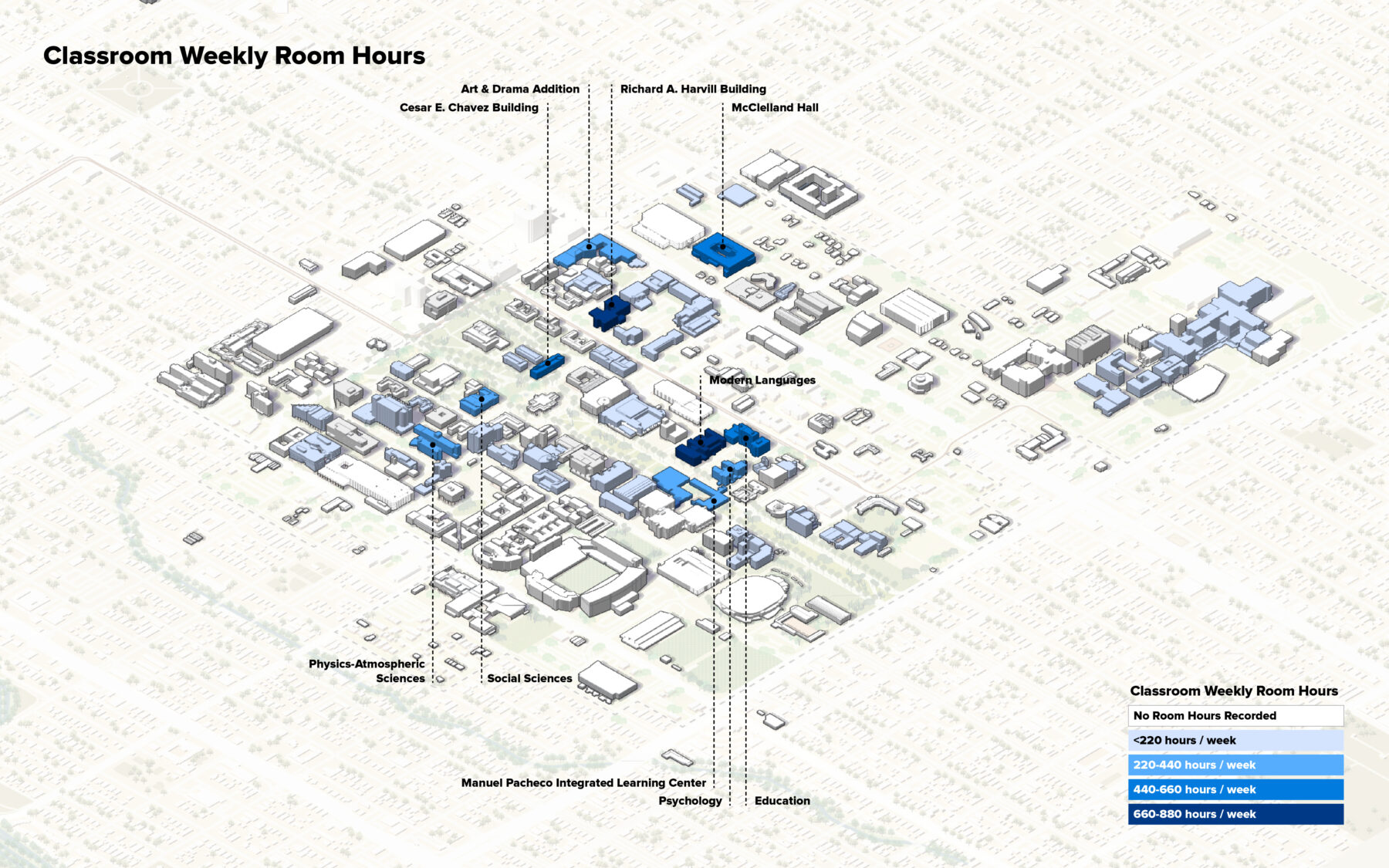
Analysis of classroom weekly room hours revealed which buildings are in use the most
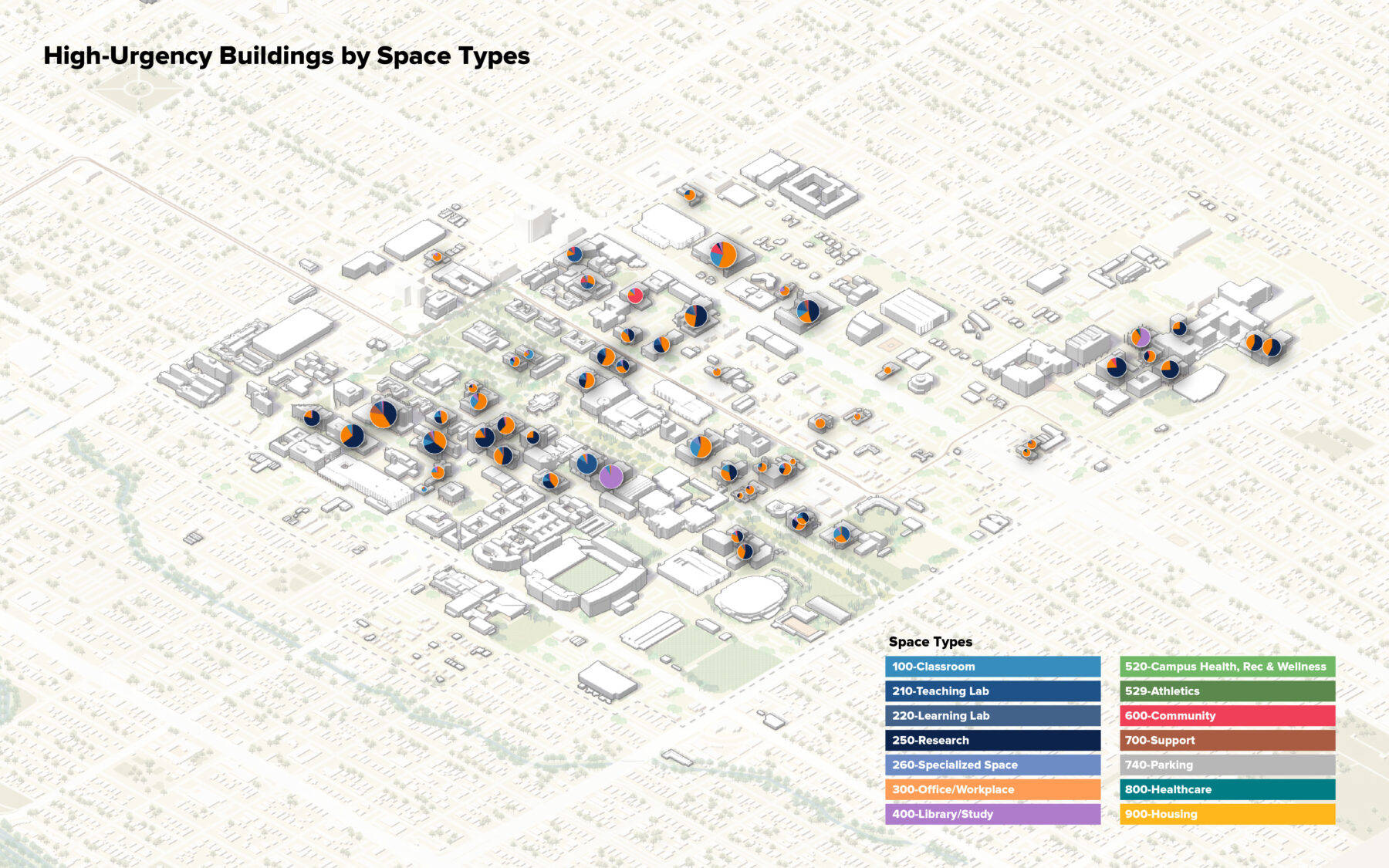
High-urgency buildings by space types
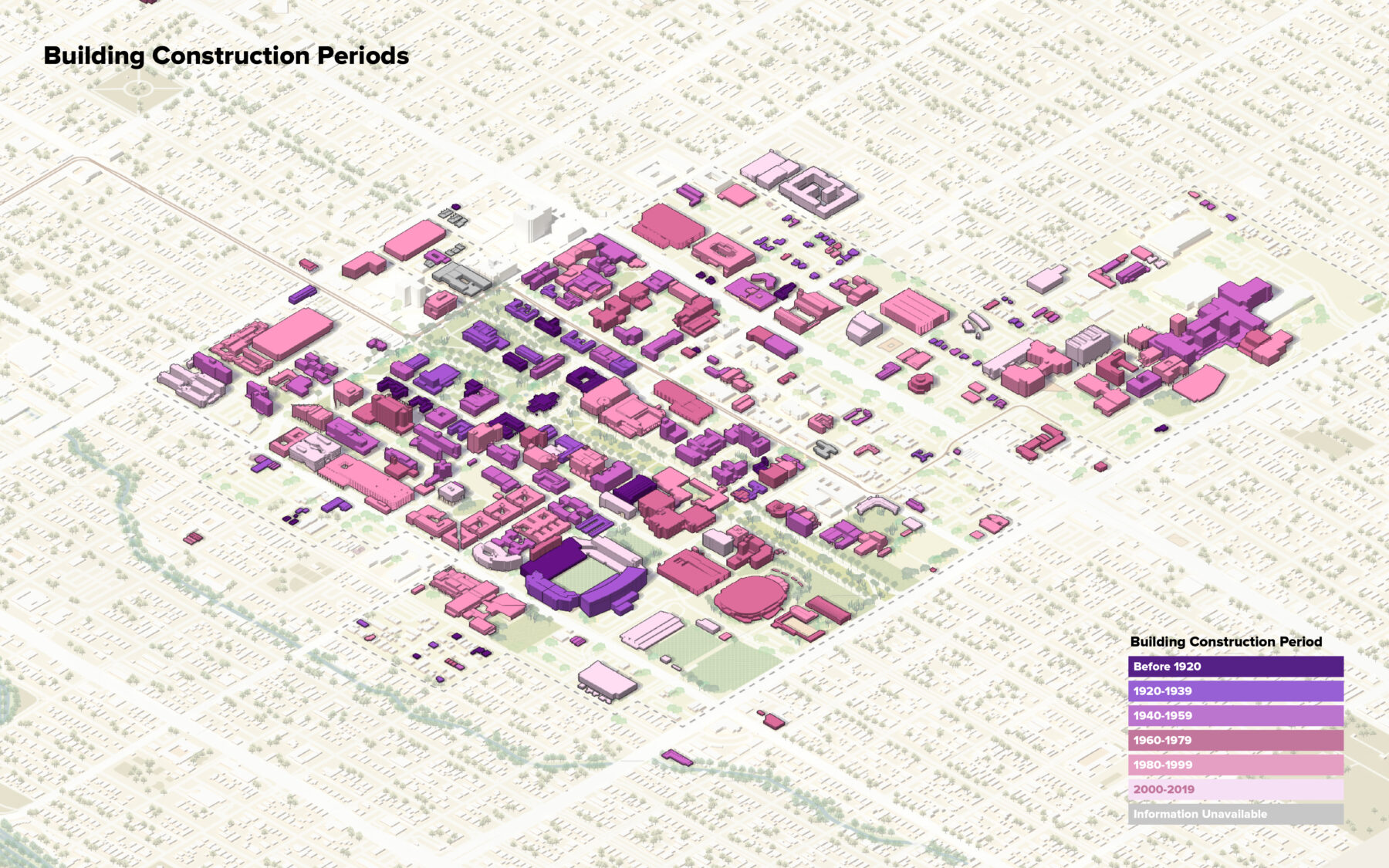
Construction periods for all campus buildings
Distribution of colleges and departments
Analysis of classroom weekly room hours revealed which buildings are in use the most
High-urgency buildings by space types
Construction periods for all campus buildings
Space optimization begins with aligning needs and demands, and must be backed by clear policies and strategic resource distribution. The space analysis for University of Arizona highlighted uneven usage patterns in classrooms and teaching labs—often shaped by discipline-specific needs and space ownership. These insights supported right-sizing strategies and the development of flexible lab typologies that promote shared, adaptable use.
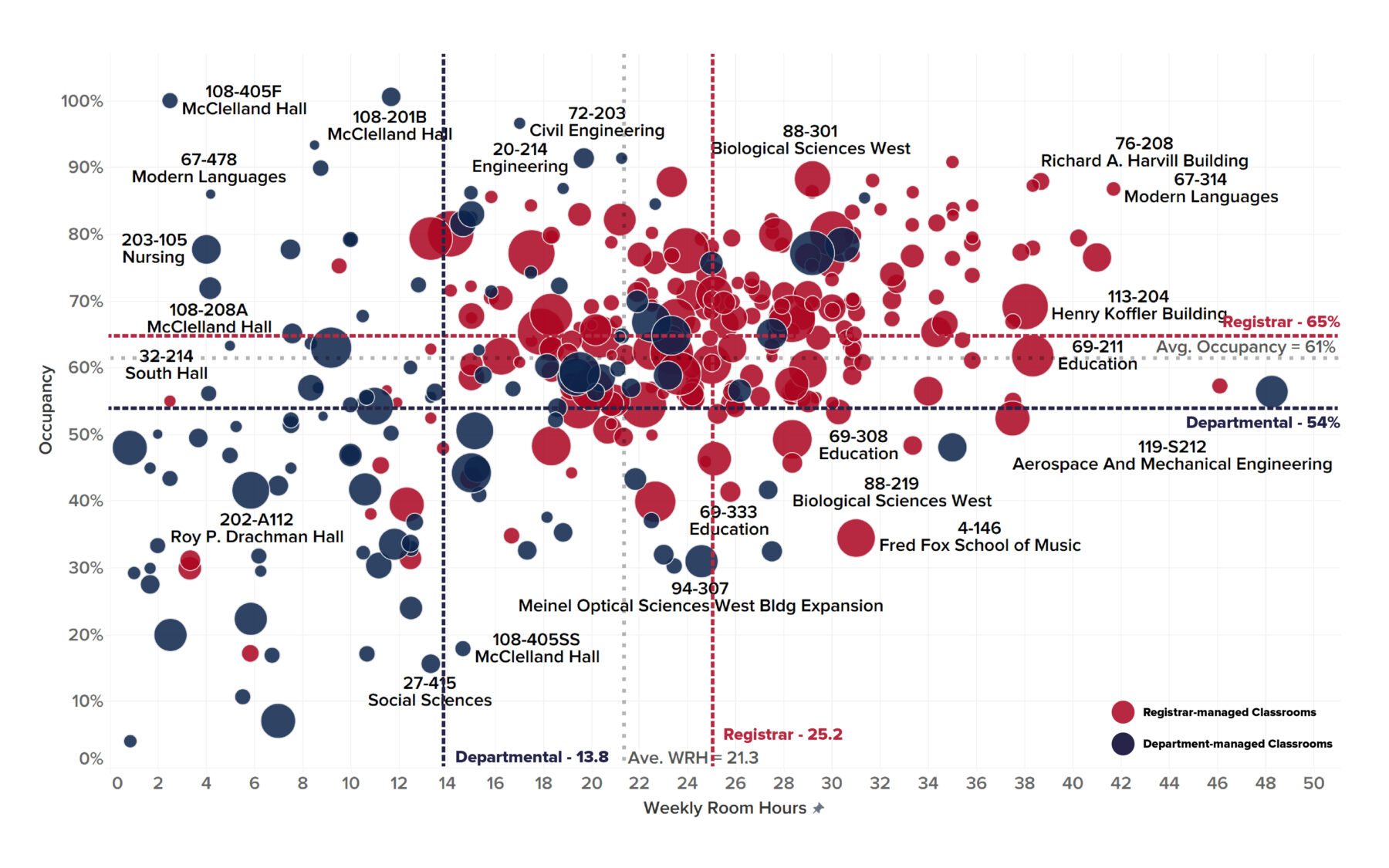
Classroom scatterplot shows registrar-managed and departmental-managed rooms
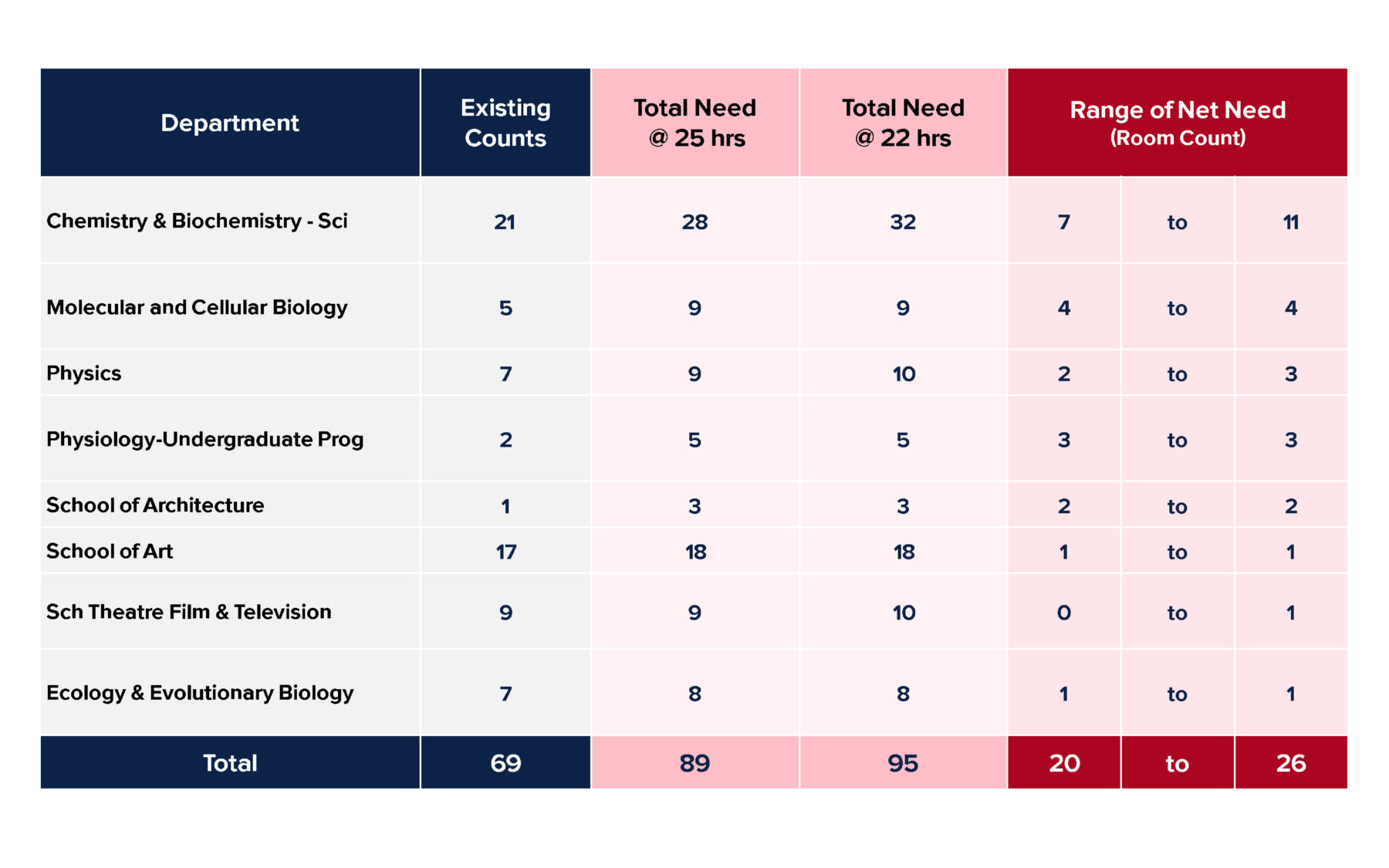
Teaching lab optimization
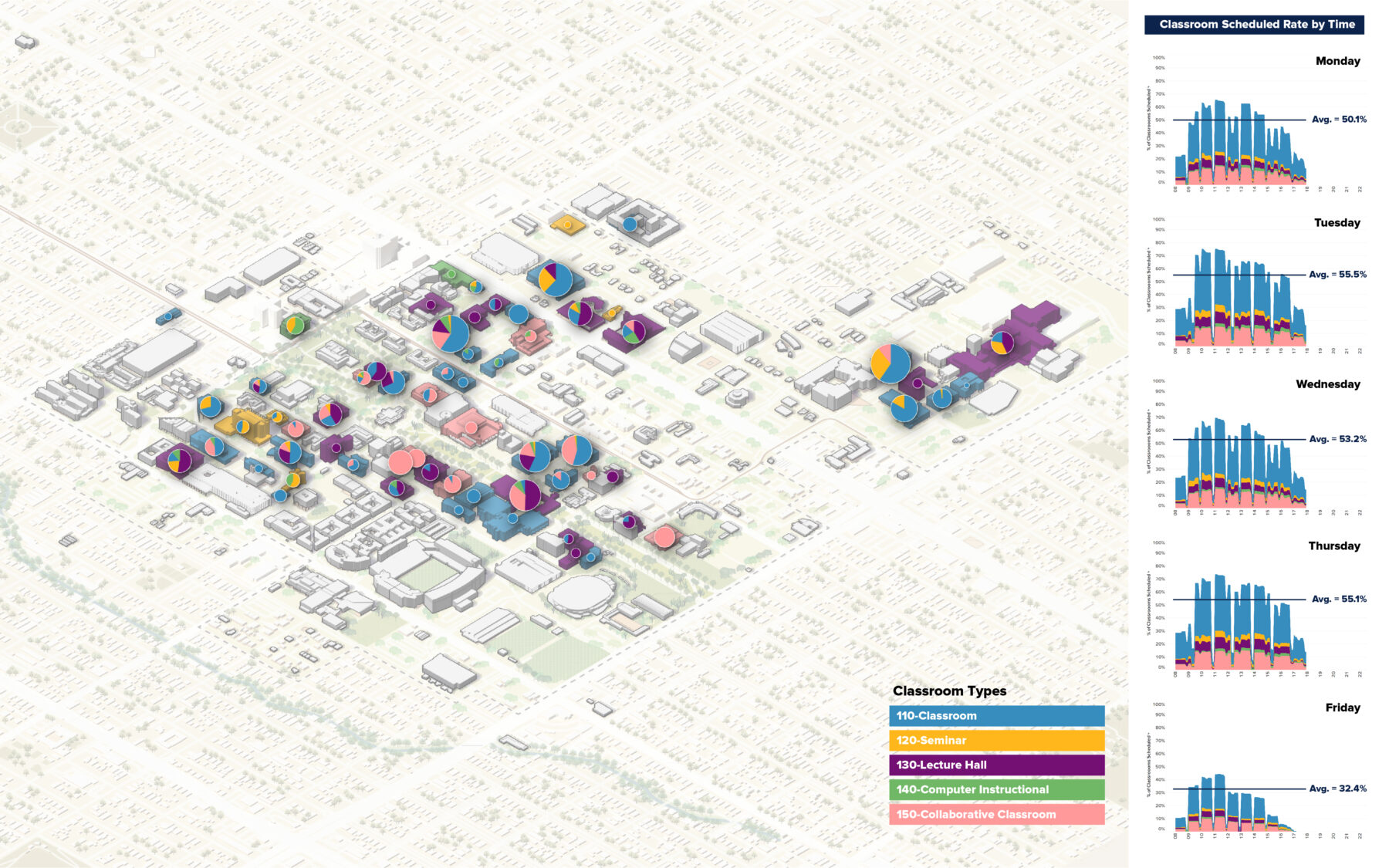
Classroom types and weekly usage patterns
Office space emerged as a significant surplus, according to space projection models and peer benchmarks. Calculated metrics revealed disparities among colleges and administrative units. At a high level, the analysis identifies areas suitable for office consolidation, unlocking potential for retrofitting into collaborative and community-oriented spaces. This allows the university to accommodate growth sustainably—without defaulting to new construction.
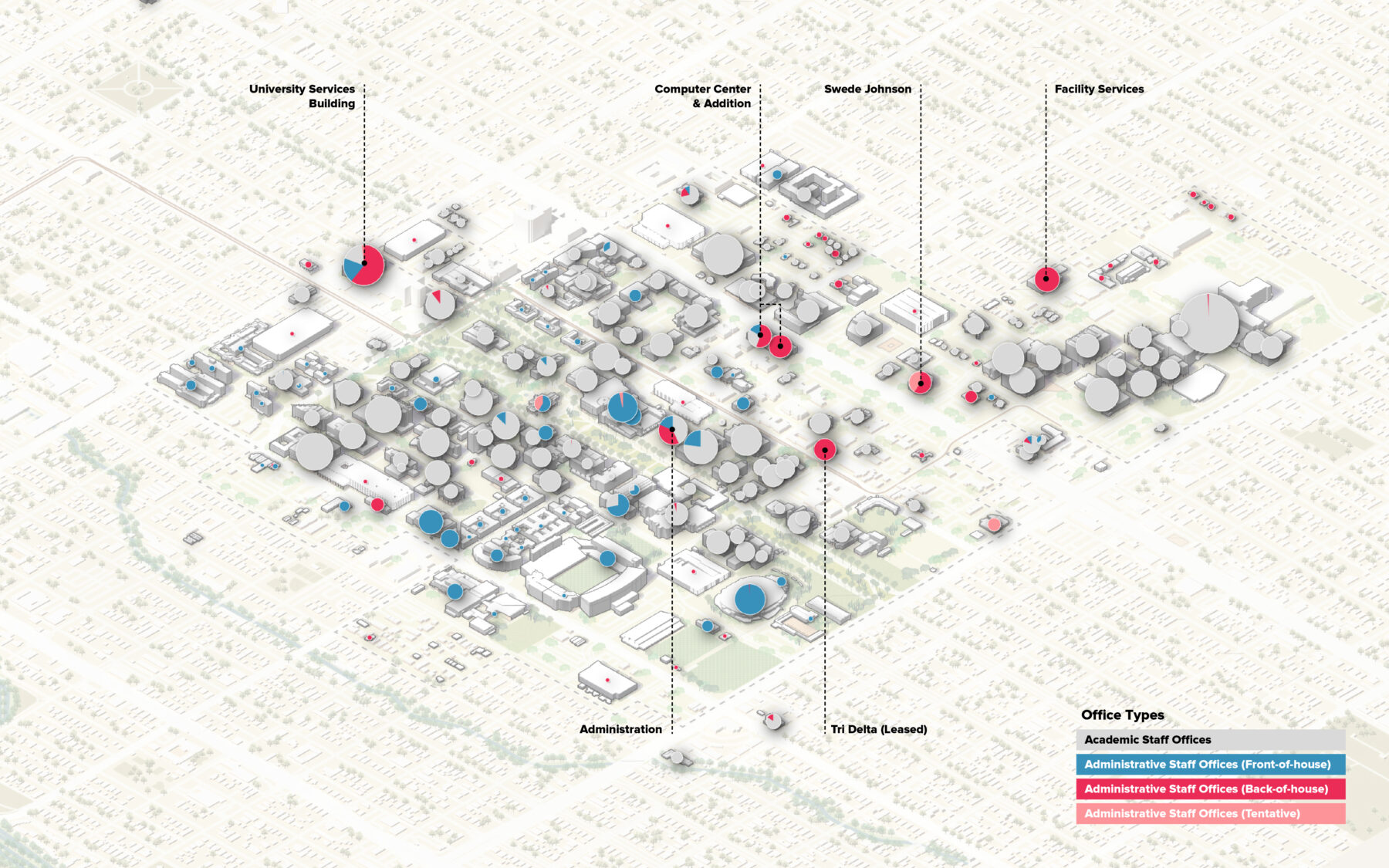
Office distribution analysis
The study also aligns critical deferred maintenance needs with programmatic improvements, ensuring resources serve both infrastructure and academic priorities. At the district level, a new interdisciplinary science and engineering hub is envisioned at the heart of campus, replacing an outdated lab building with lesser space quality. The nearby engineering building, a historically significant building with deferred maintenance, is identified as a retrofit candidate for a future data, computing, and network sciences hub—an area of strategic growth for the University of Arizona.
At the building scale, high-level test-fits demonstrate how underutilized areas can be transformed to meet evolving programmatic needs.
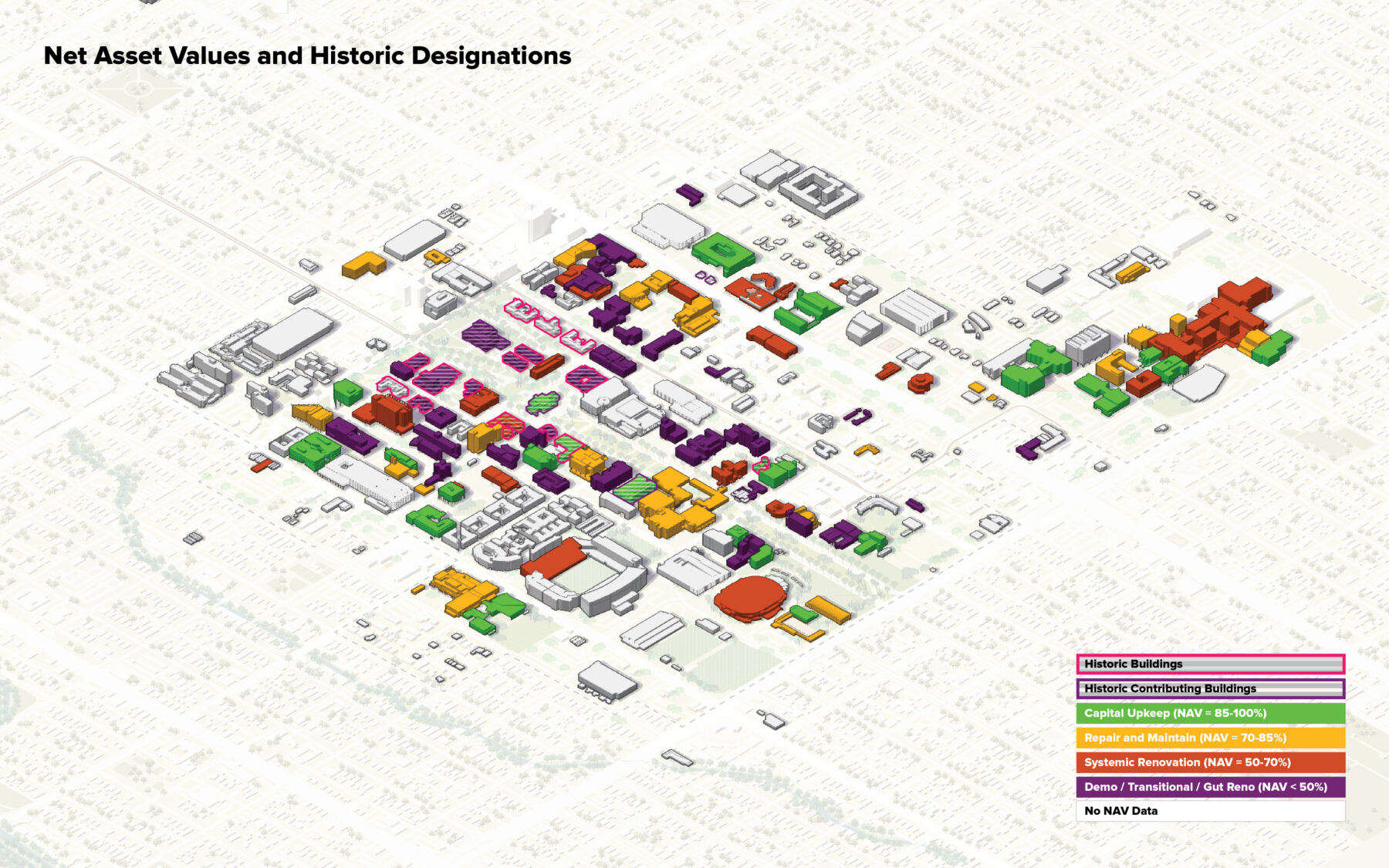
Disparities in deferred maintenance net asset values—lower in the campus core and higher in newer peripheral buildings—underscore a ‘donut effect’ pattern in campus growth and investment.
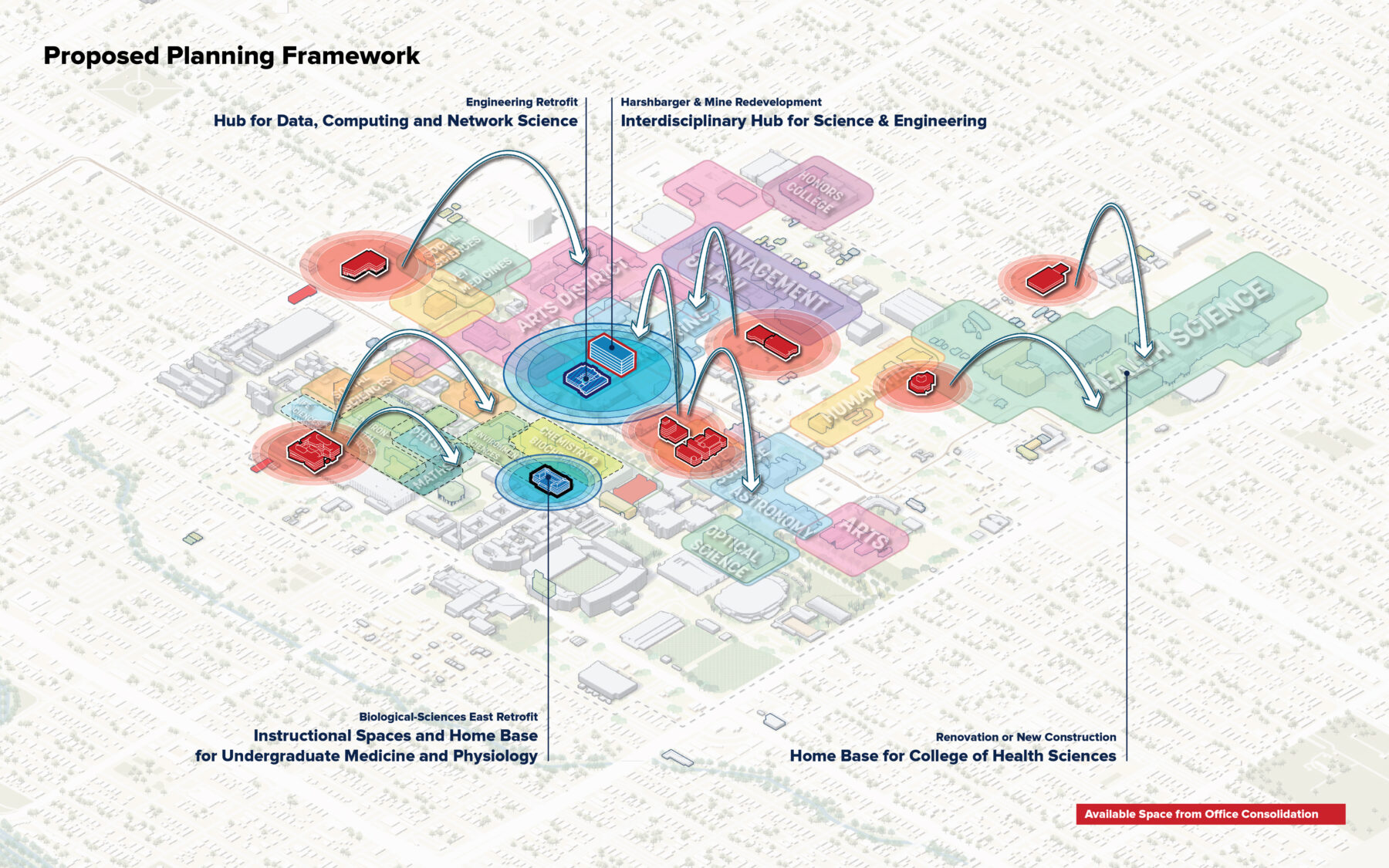
Proposed Planning Framework with three key buildings proposed for renovation or redevelopment, including the Biological Sciences East building
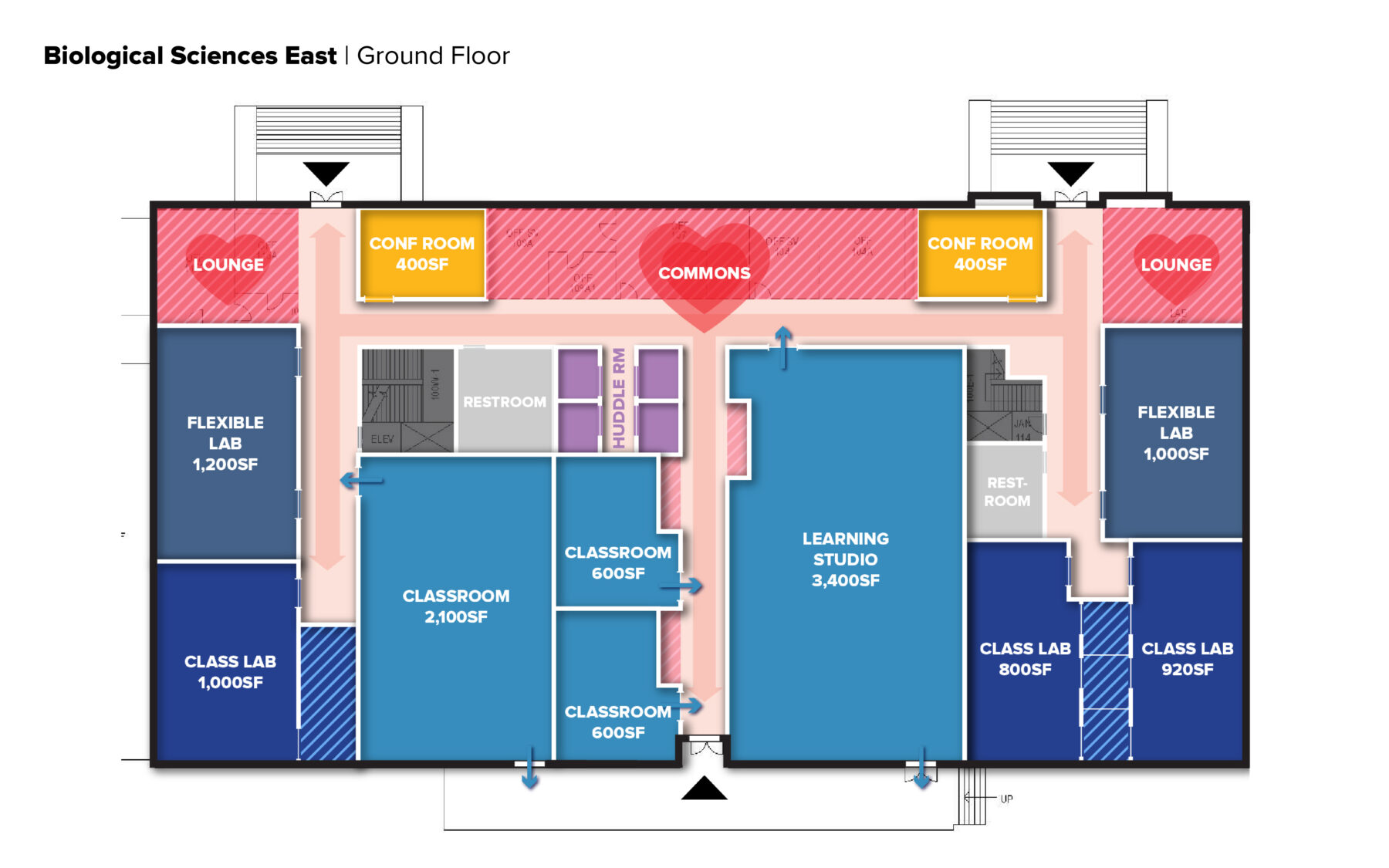
Biological Sciences East Building retrofit – ground floor plan
Spaces alone don’t define success—policies and standards are essential to ensure effective use. Through extensive stakeholder engagement and analysis, the study uncovered current challenges and drafted space management principles to guide decision-making across campus units.
These principles aim to build consensus around stewardship, responsibilities, and space allocation procedures. Detailed recommendations for classrooms, offices, and other key space types support implementation and promote consistent, forward-looking practices.
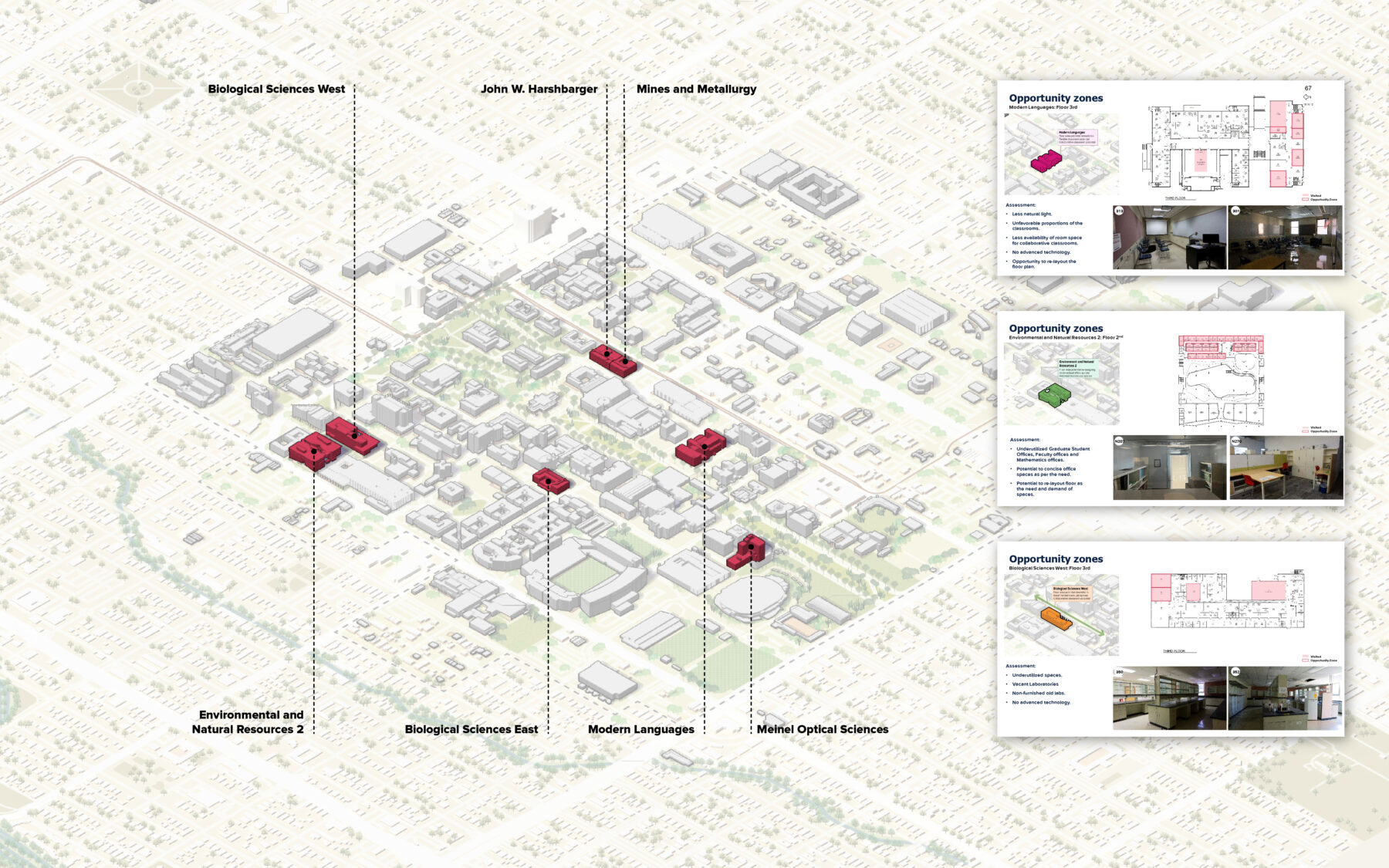
Site visit observations
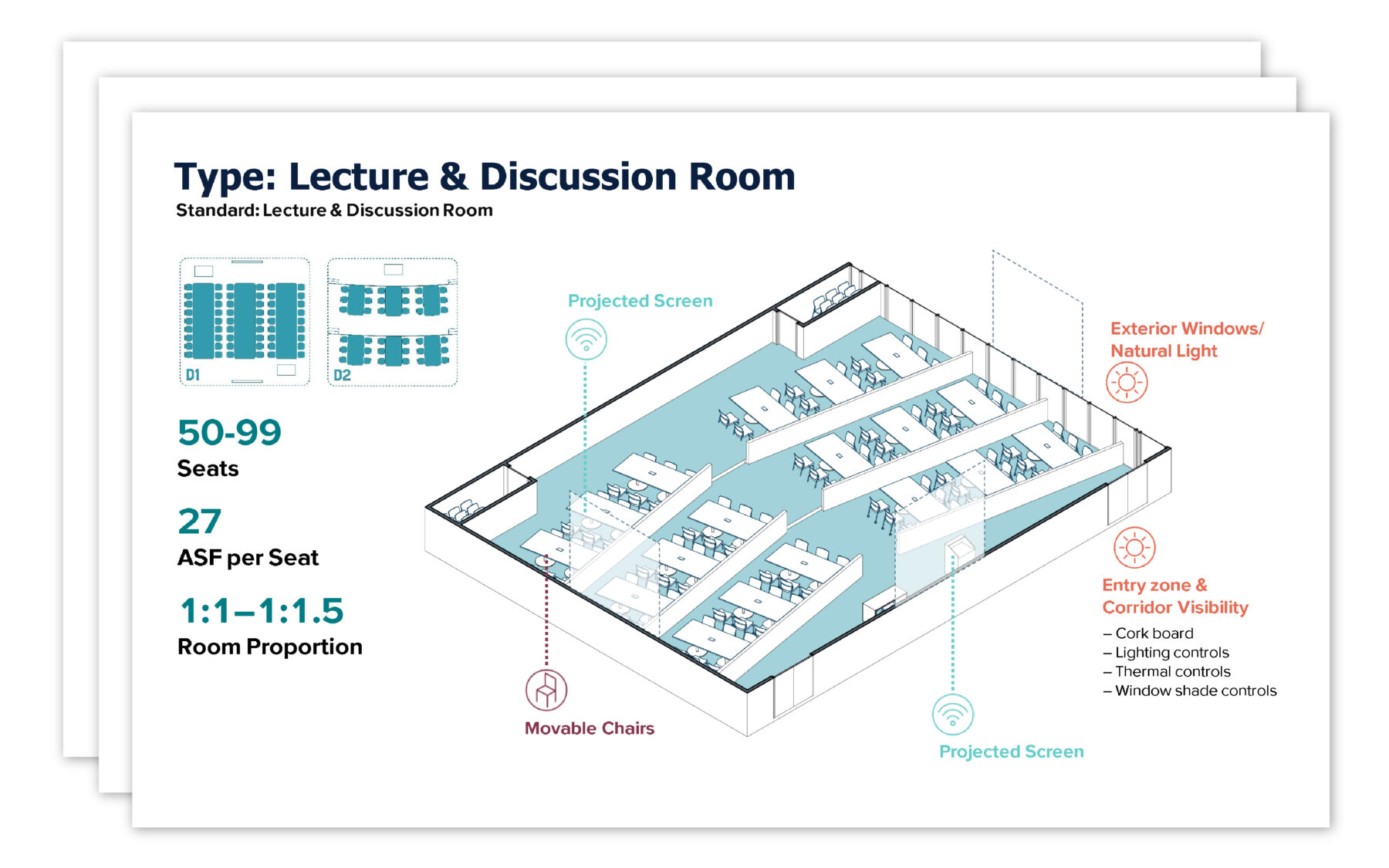
Classroom space standards
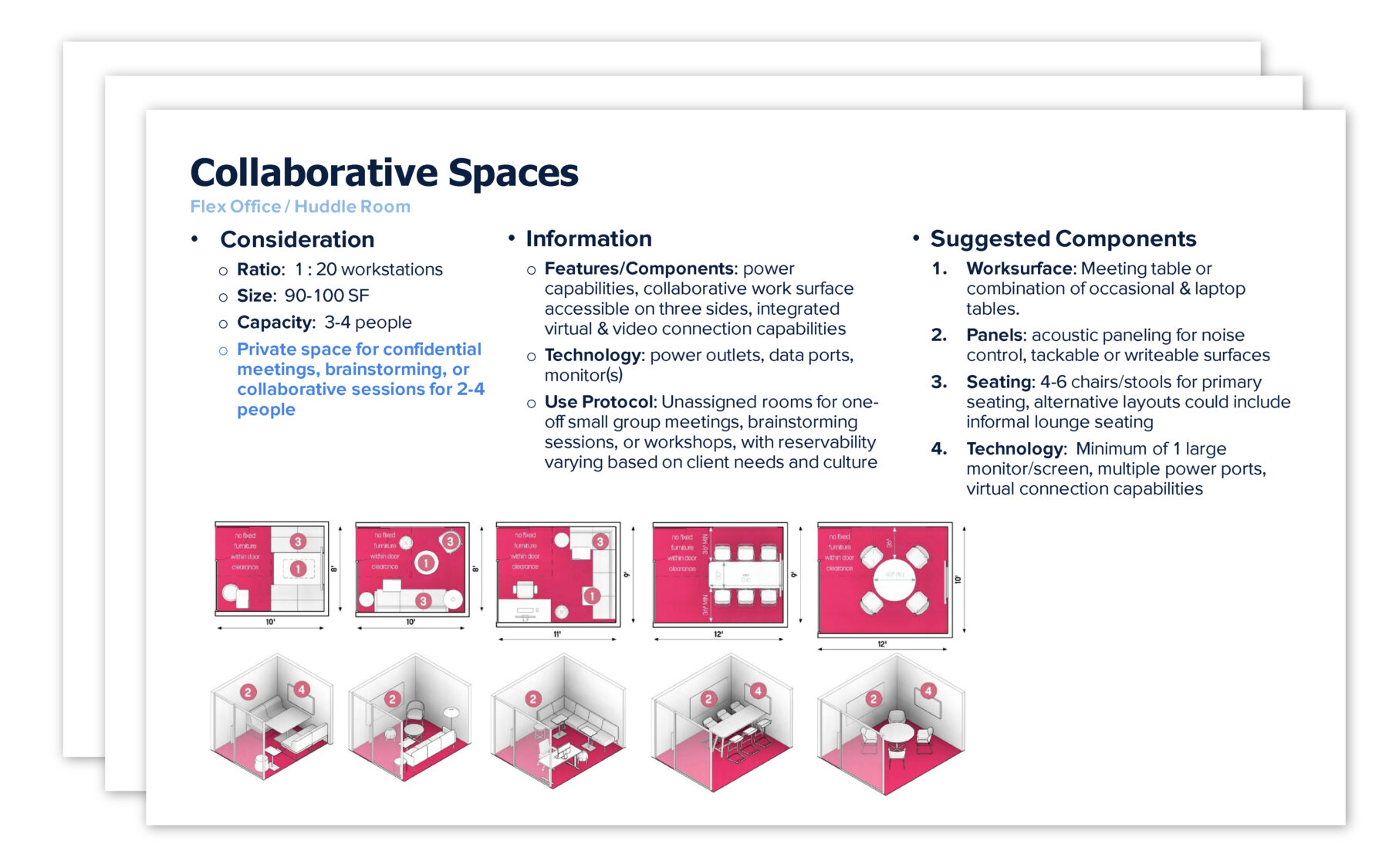
Office space standards
As technological advancements accelerate, universities face new opportunities to reimagine their educational and research environments through space optimization, retrofits, and efficient management. Campus spaces are never solely about accommodating activity; they act as catalysts for personal growth and societal transformation by shaping relationships among people, environments, and knowledge. This space study equips the University of Arizona with strategic direction as they grow future programs, standardize how technology is used in the classroom, and model more collaborative and community spaces for their campus.
想了解更多项目细节,请联系 Tyler Patrick.
Our right sizing assessments are geared toward optimizing institutions’ existing resources, and identify how well the instructional room supply aligns with section sizes.
We use data and technology to enable collaborative, agile space planning. Our work links space planning, design, financial planning, and academic planning to create high-value solutions for our clients.