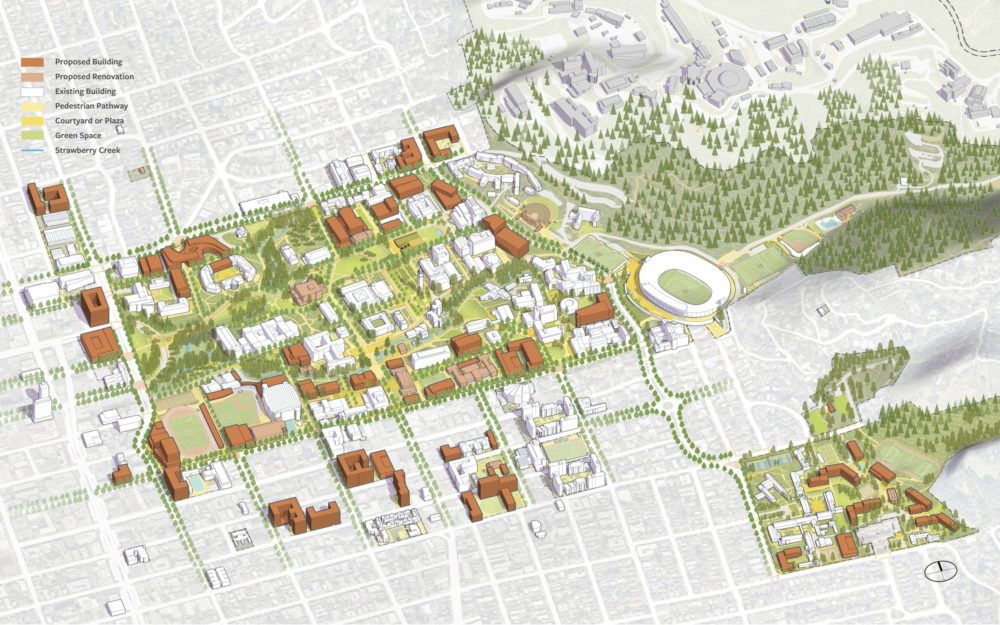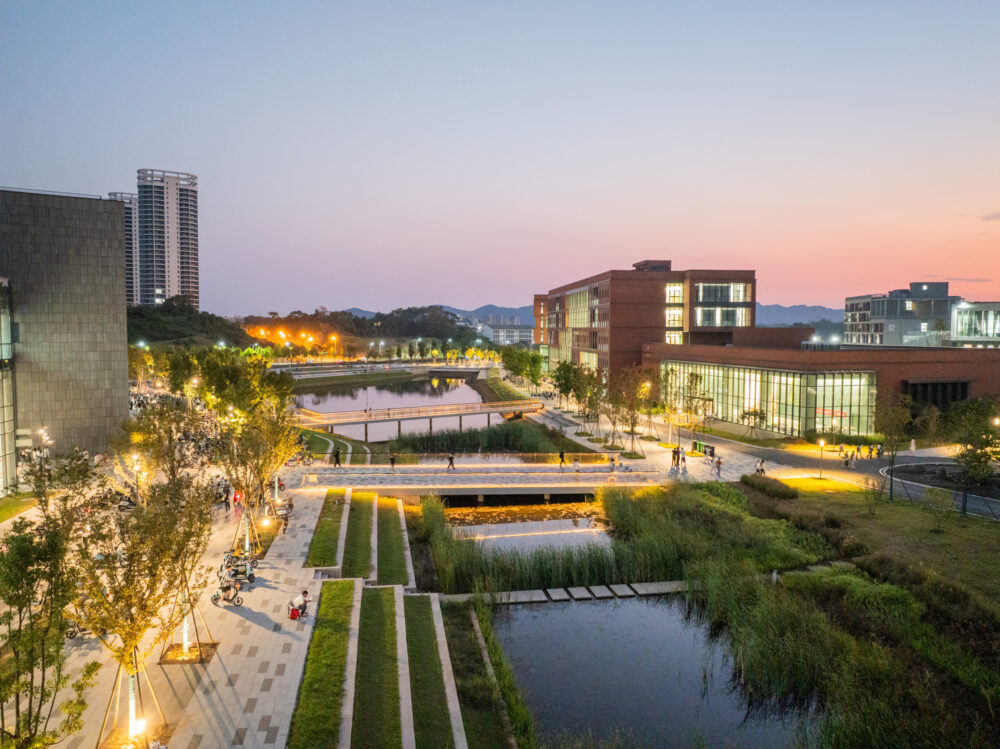
信阳学院南湖校区门户景观
中国河南省信阳市
 Sasaki
In early 2021, the Baylor University Board of Regents accepted a comprehensive report from the Commission on Historic Campus Representations which recommended steps in resolving and acknowledging the university’s connection to slavery, including creating a Memorial and reinterpreting existing campus landmarks that are connected to this history. Sasaki was selected by Baylor to design a physical manifestation of the Commission’s recommendations. The new Memorial stands as a tangible acknowledgment of a challenging part of Baylor’s history while pointing the University toward renewal, reconciliation and restoration.
Sasaki was tasked to create a physical manifestation of the Commission’s recommendations. Phase one included working with a wide range of university stakeholders to create a master plan and design guidelines for a new Memorial to Enslaved Persons and reinterpretation of the Judge R.E.B. Baylor statue, both of which sit prominently on Founders Mall. Phase two included additional stakeholder engagement, independent research into the history of the campus, and full design of the Memorial and the Judge R.E.B. Baylor reinterpretation.
“We sit under shade trees we did not plant. We drink out of wells we did not dig. And, we are warmed by fires we did not light.”
Dr. Michael McFarland, Baylor University Board of Regents, Member of the Commission on Historic Campus Representations
The Memorial to Enslaved Persons is located at the center of Founders Mall, the symbolic heart of the Baylor campus. The Memorial utilizes limestone, the material fingerprint of Central Texas, and primary building material used at the university’s original campus in Independence, TX. As the only large-scale limestone application on the Waco campus, the Memorial is a unique and immediately identifiable landmark that echoes the building material used to construct the university’s original buildings, built by enslaved laborers in nearby Independence, TX.
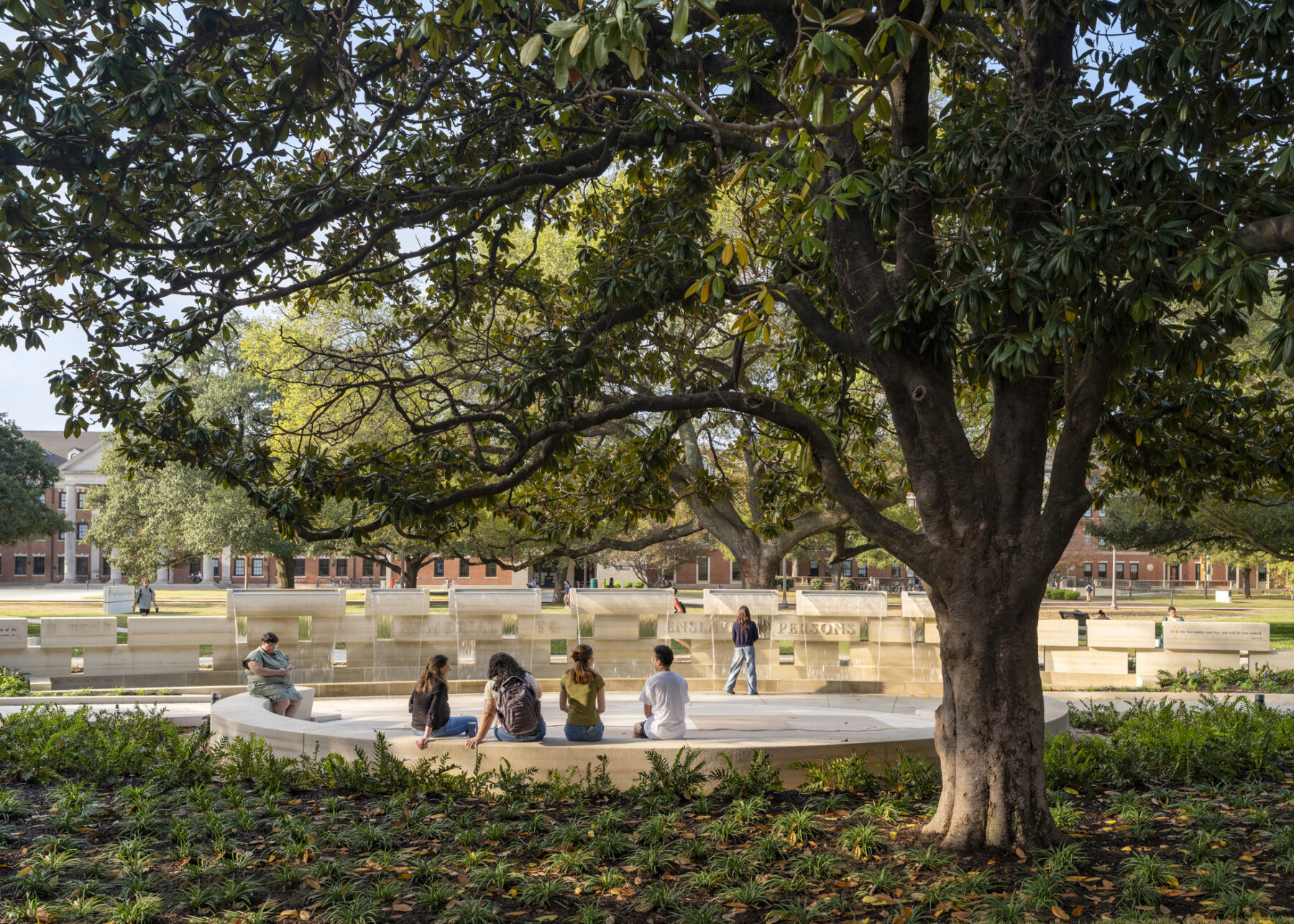
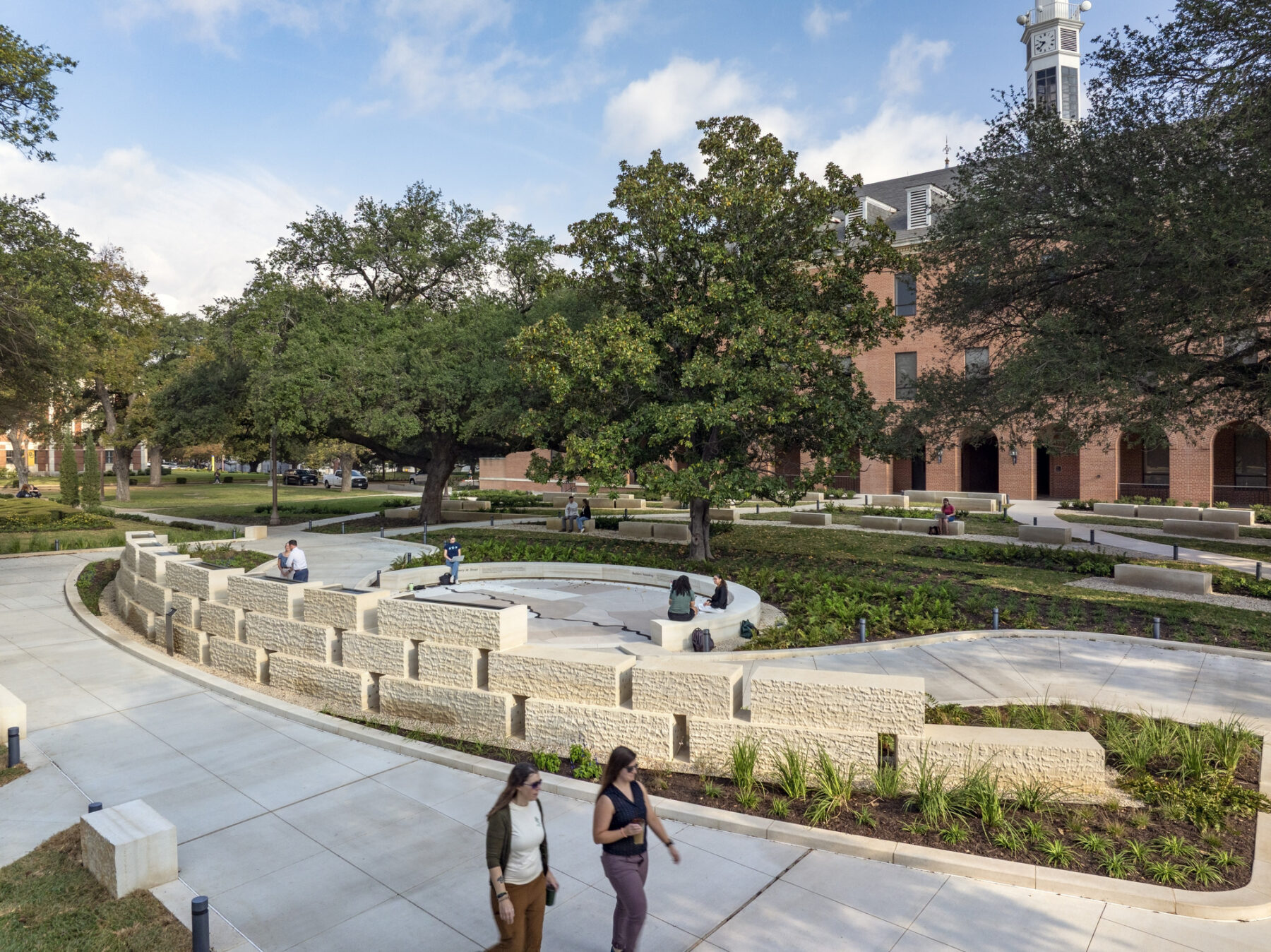
The Memorial is designed in three parts: The Outer Ring, the Inner Ring, and the Resonance Garden.
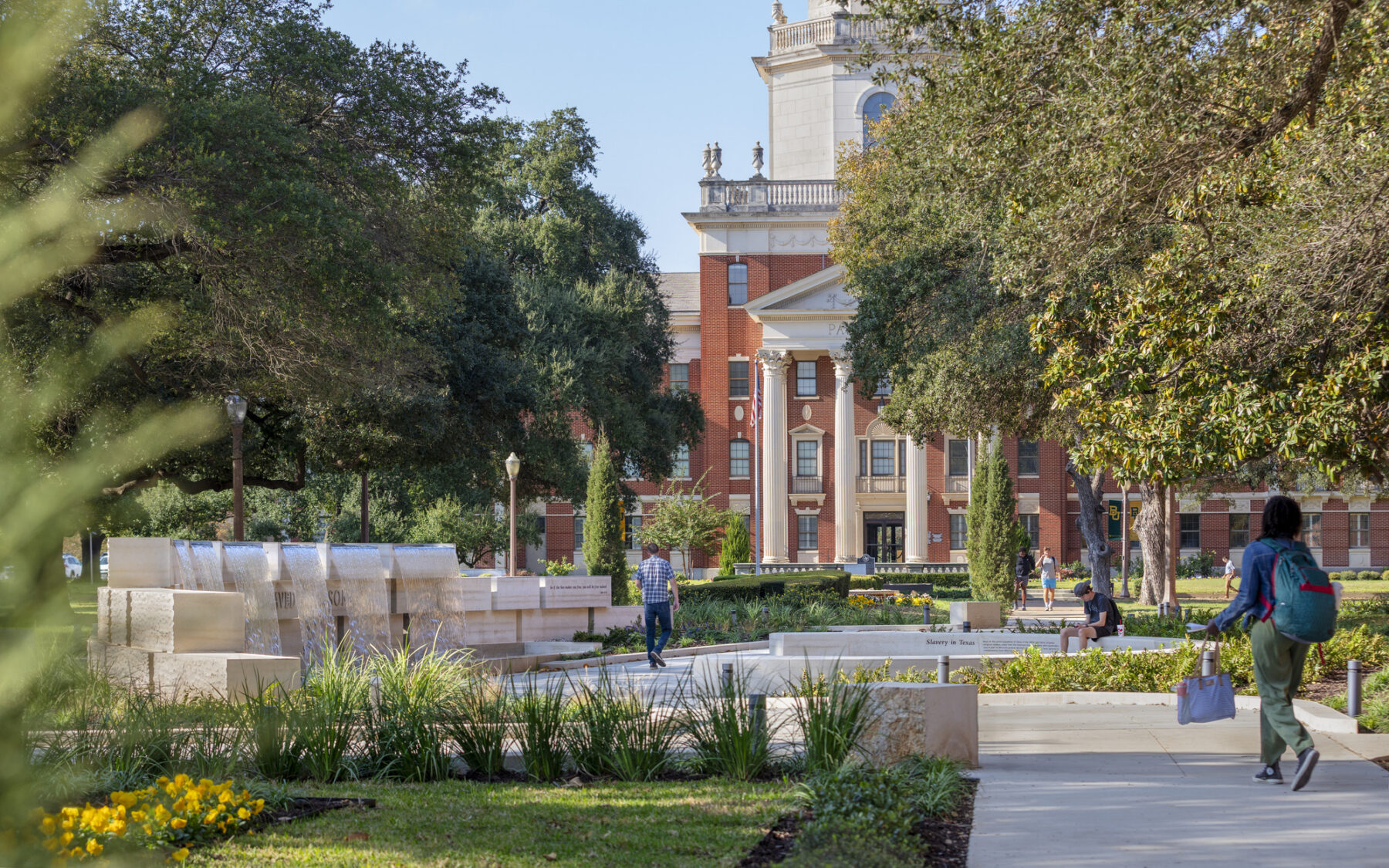
Pathways bend into the Memorial space, toward the story of the enslaved.
The shape of the Memorial is such that all pathways bend into it, towards the story of the enslaved and moving around existing Live Oaks and a treasured Southern Magnolia tree. This gesture draws users into the space, creating a universally designed experience and ensuring the Memorial is free and open for all.
The Memorial itself consists of three main areas: the Outer Ring, the Inner Ring, and the Resonance Garden.
The Outer Ring
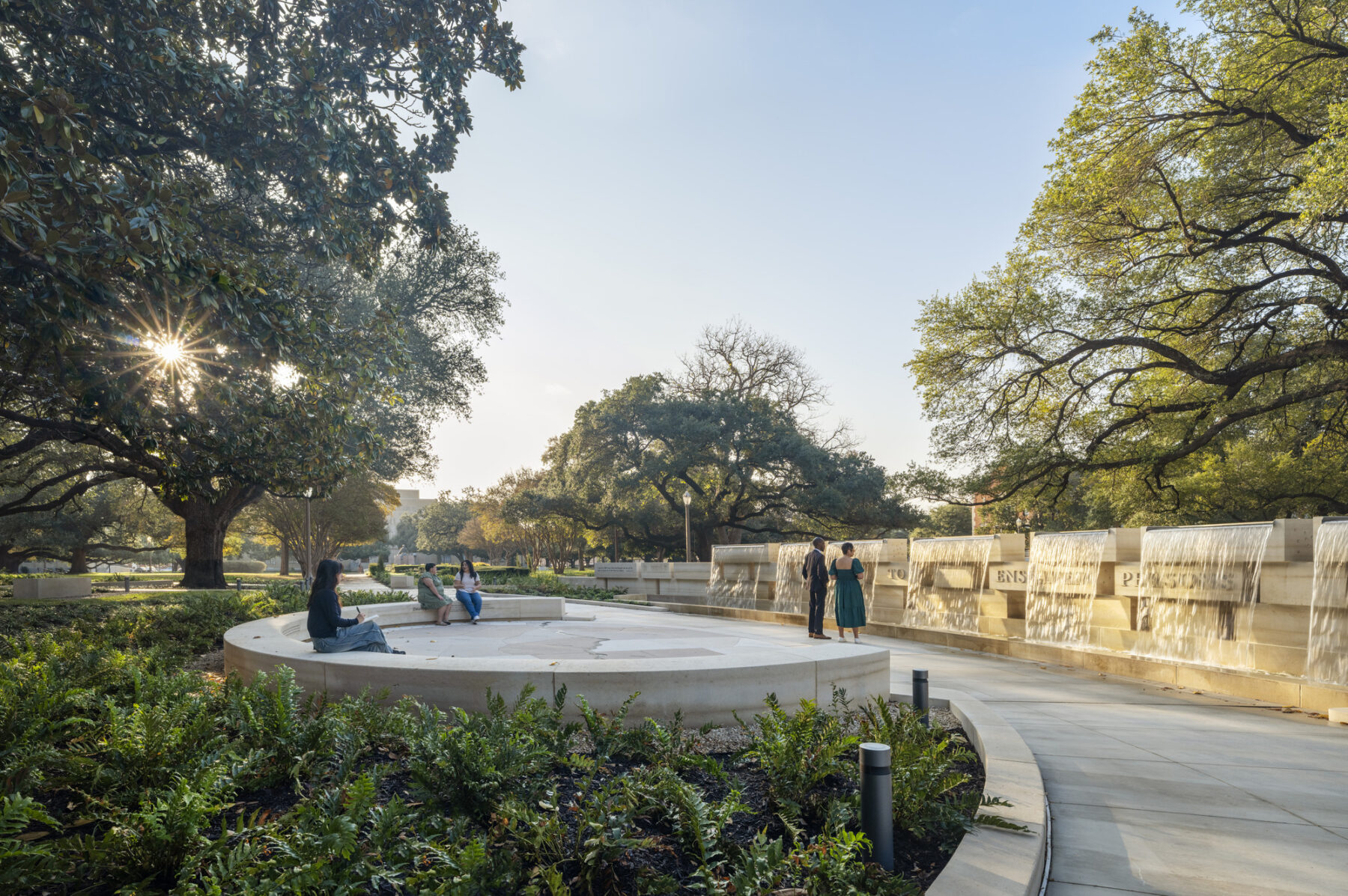
The Outer Ring honors the people who were enslaved by the university’s original trustees and founders. The long, curved wall is both a focal point and a backdrop for gatherings and events. Within the wall are 33 voids, one for each of the 33 individuals enslaved by Judge R.E.B. Baylor. At night, each void glows with a light meant to remember and honor these individuals. The fiber optic light patterns within each void are inspired by constellations, referencing Following the Drinking Gourd folklore of following the north star to freedom.
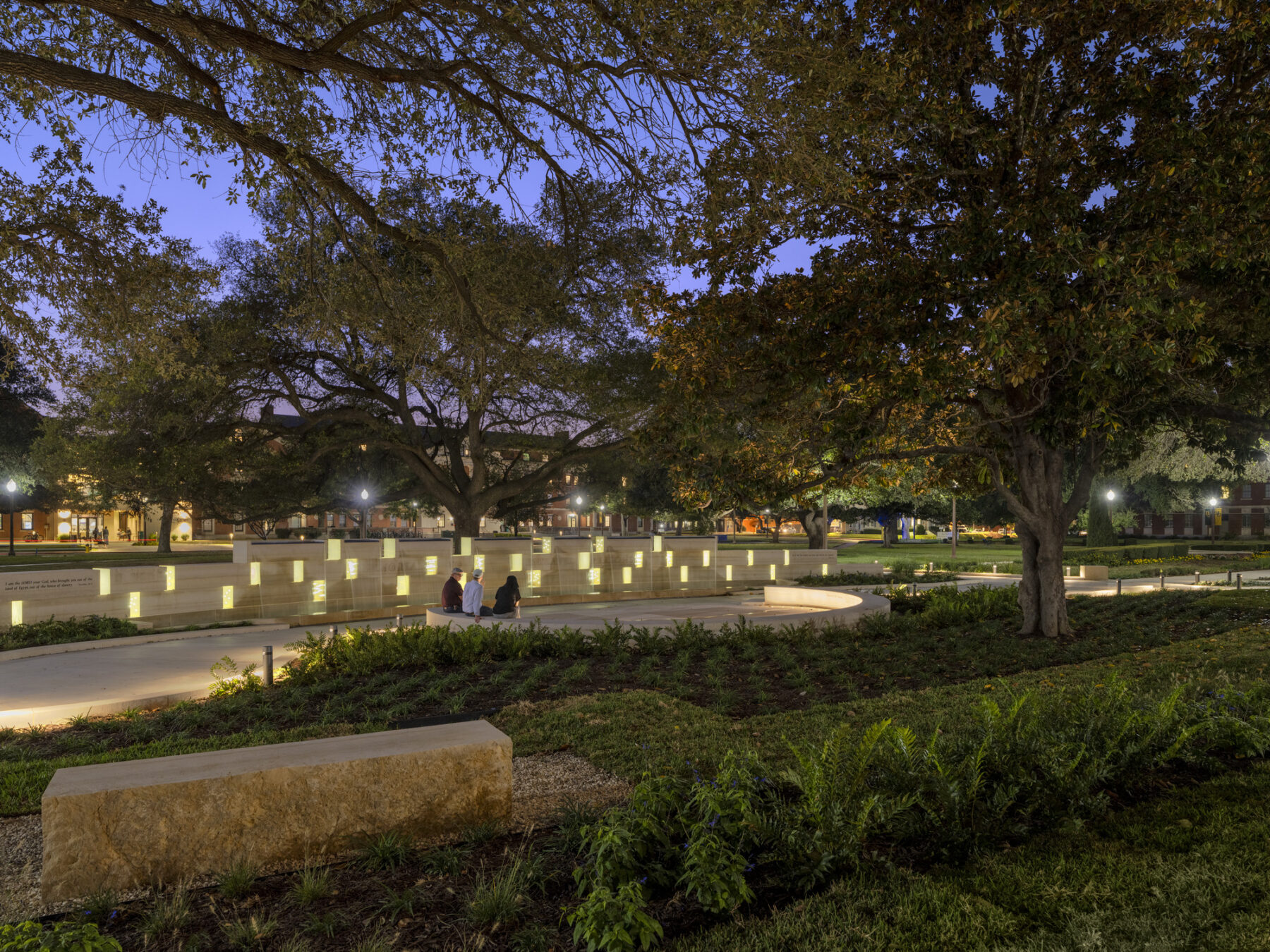
At night, the Outer Ring’s 33 voids glow, honoring each individual enslaved by Judge R.E.B. Baylor.
Water is a central element of Baylor’s Baptist roots and of the Memorial. On one side of the Outer Ring, seven fountains spill down from the wall’s top course of stones, creating an effect where users can see their reflection in the water. When standing in front of the fountain, the experience is heavy and enveloping, as the sound of the fountain overtakes ambient noise and conversation. This one-on-one experience with the Memorial elicits a personal moment of connection to the story and the humanity of the enslaved.
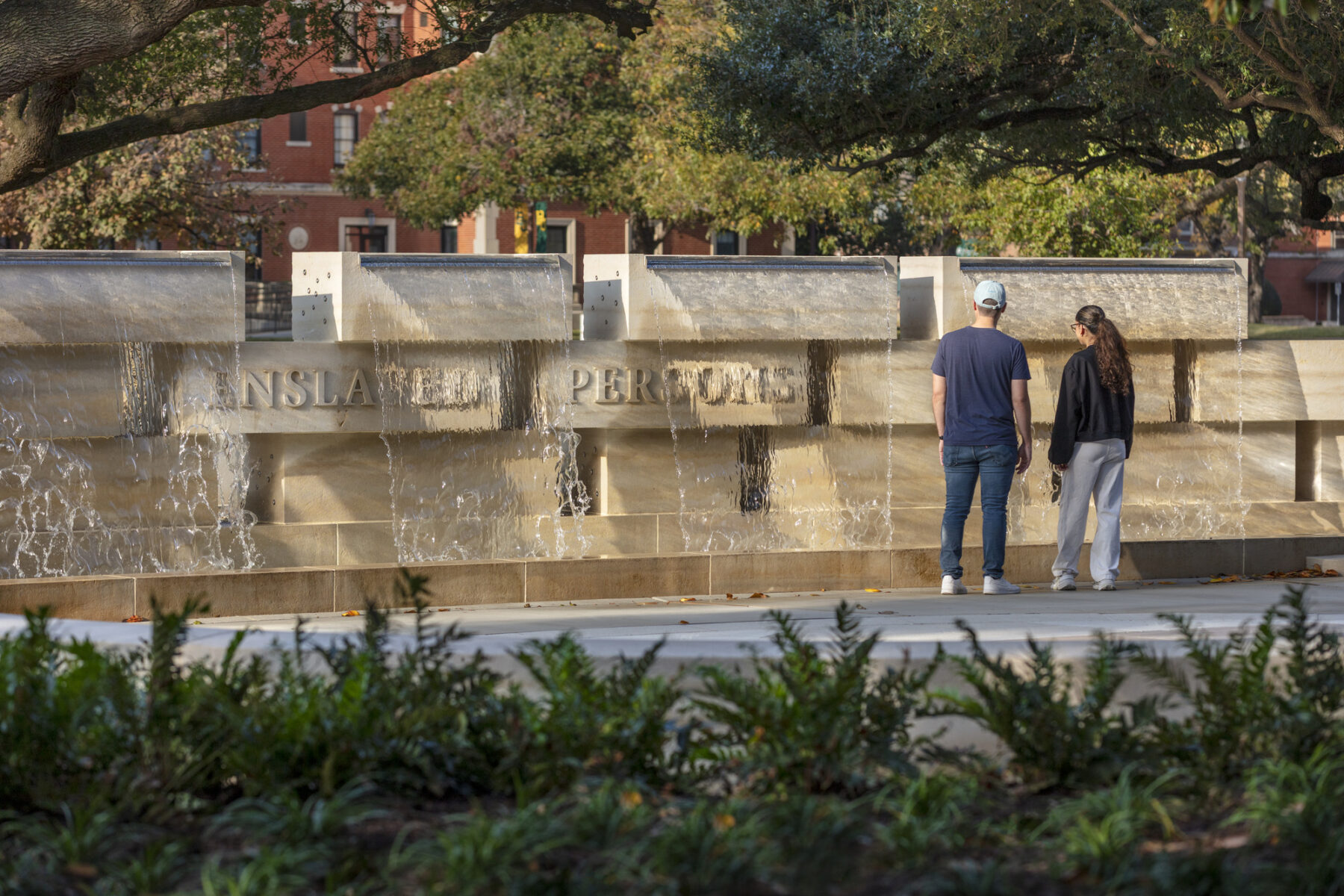
Seven cascading fountains envelop visitors and passers-by.
On the other side of the Outer Ring, a unique texture is present along the length of the wall. This CNC-routed texture is an interpretation of the unmistakable hand-carved textures found on the oldest buildings in Independence, serving as a reminder of the slave labor that built the original university buildings. This space also includes a plaque dedicated to Ann Freeman, the only named person enslaved by Judge Baylor known at this time. The plaque is connected via QR code to the Memorial’s digital space, providing in-depth information on her story. The university encourages research and scholarship into the identities of other enslaved individuals connected to Baylor’s history, and reserves space next to Ann Freeman’s plaque for additional plaques to be added over time.
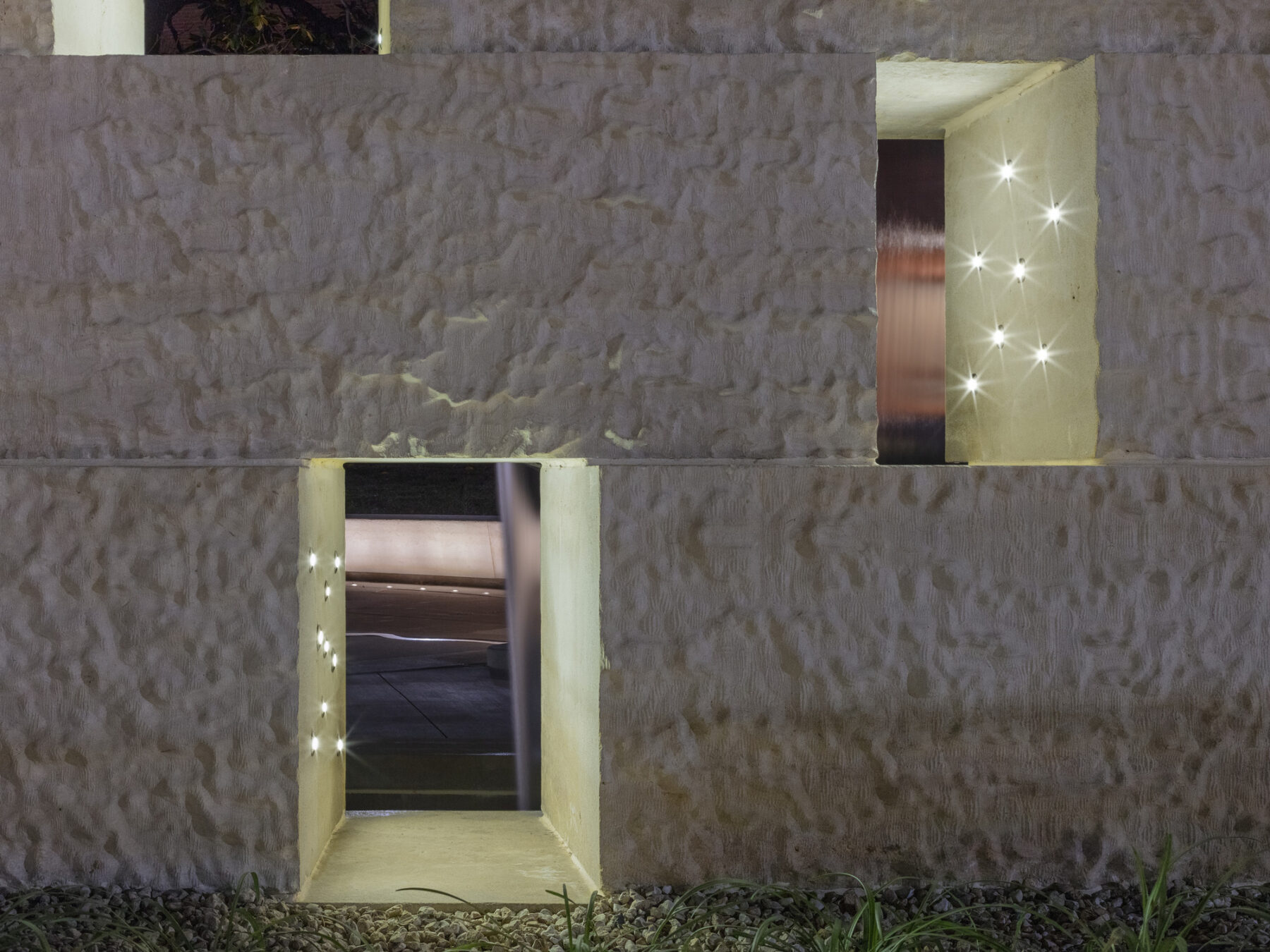
The Memorial’s textures, voids, and fountains are most experienced from the back of the Outer Ring.
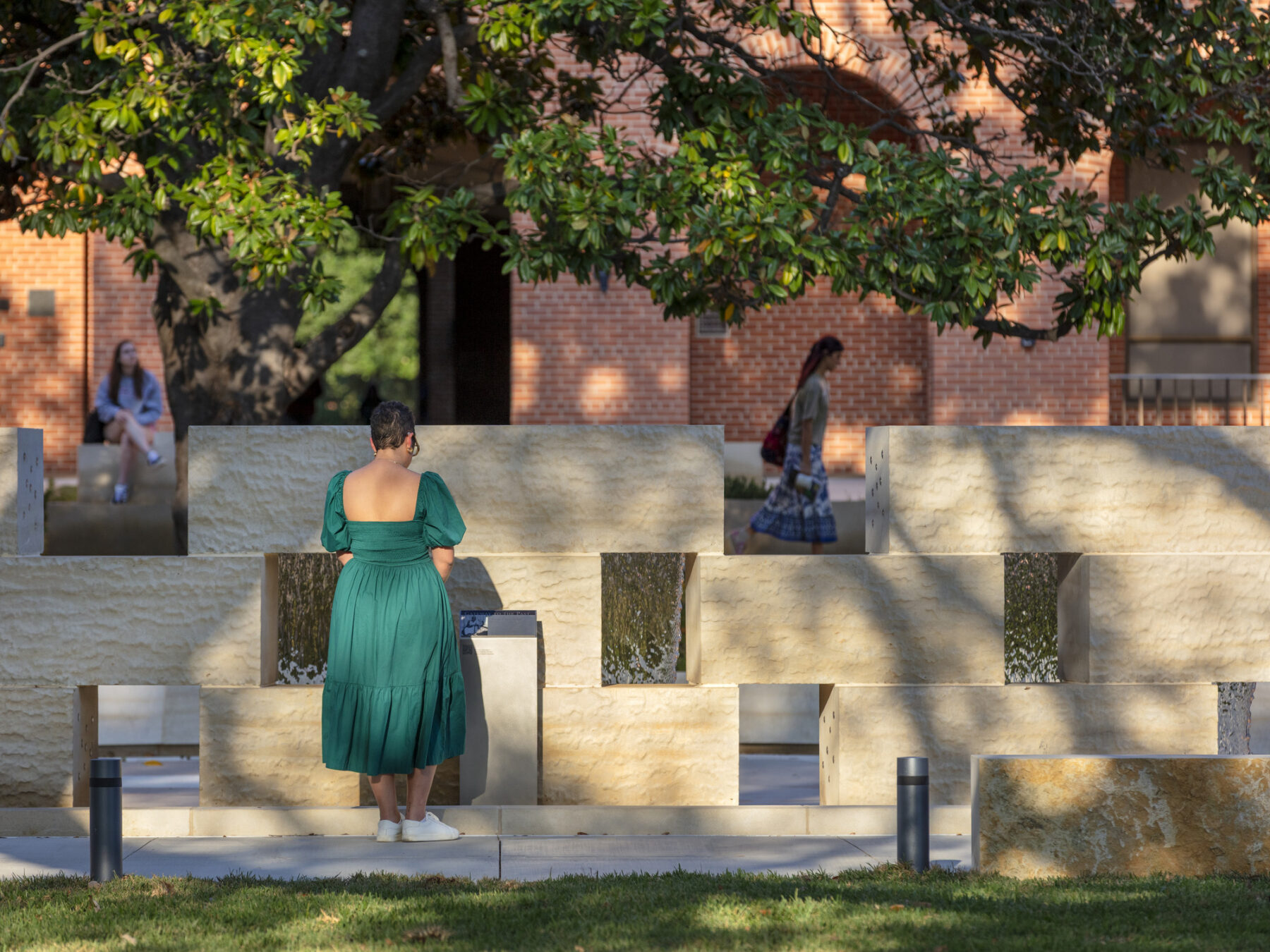
Throughout the day, the changing light and shade reveal new qualities and moments of reflection.
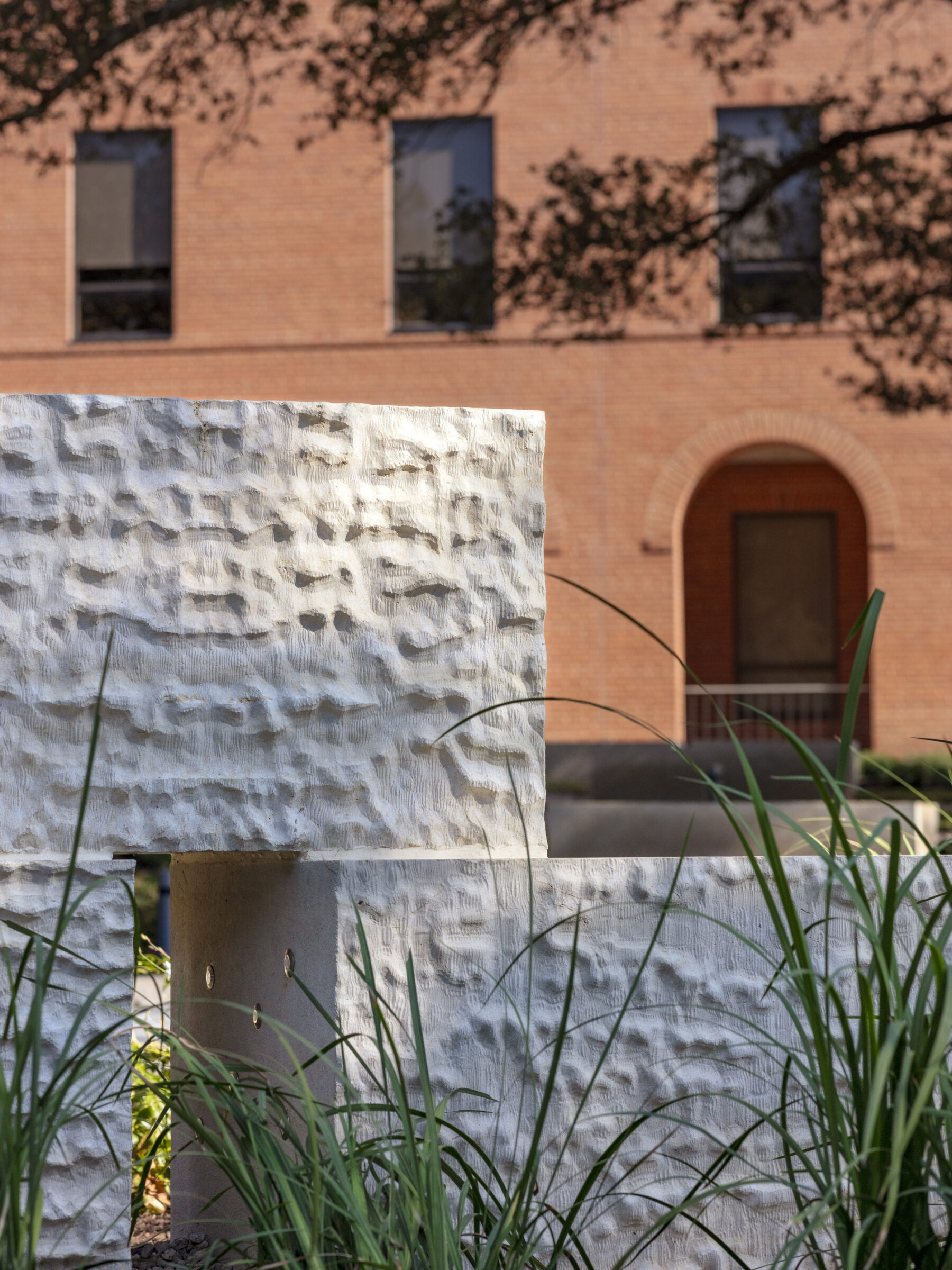
The CNC-fabricated texture is an interpretation of the hand-carved textures found on the original campus buildings in Independence.
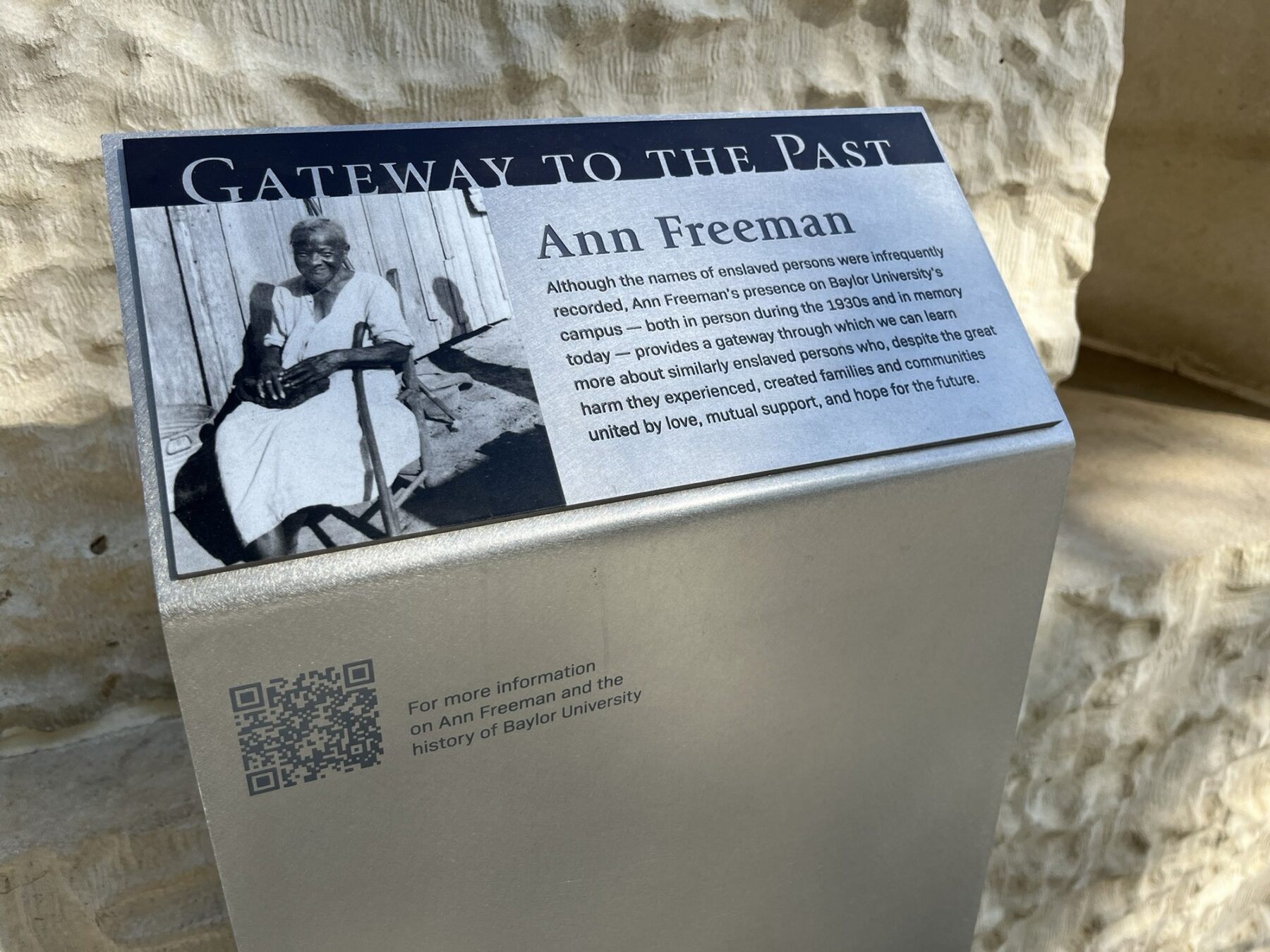
A plaque invites visitors to learn more about Ann Freeman, as of today, the only known person enslaved by Judge Baylor.
The Memorial’s textures, voids, and fountains are most experienced from the back of the Outer Ring.
Throughout the day, the changing light and shade reveal new qualities and moments of reflection.
The CNC-fabricated texture is an interpretation of the hand-carved textures found on the original campus buildings in Independence.
A plaque invites visitors to learn more about Ann Freeman, as of today, the only known person enslaved by Judge Baylor.
The Inner Ring
Under the shade of an 80-year old Southern Magnolia, the Inner Ring contextualizes the story of slavery at the time of the university’s founding in 1845. This outdoor room includes a limestone seat wall with engraved narratives describing the history of slavery relative to Central Texas, Baylor’s Founding, and the state’s role in Emancipation. The ground surface of the Inner Ring includes a large-scale representation of an 1860 United States Census heat map showing the enslaved population of each county along the Brazos River basin. Bronze inlays illustrate each campus location as well as the Brazos River, an important historical economic connector between the two places.
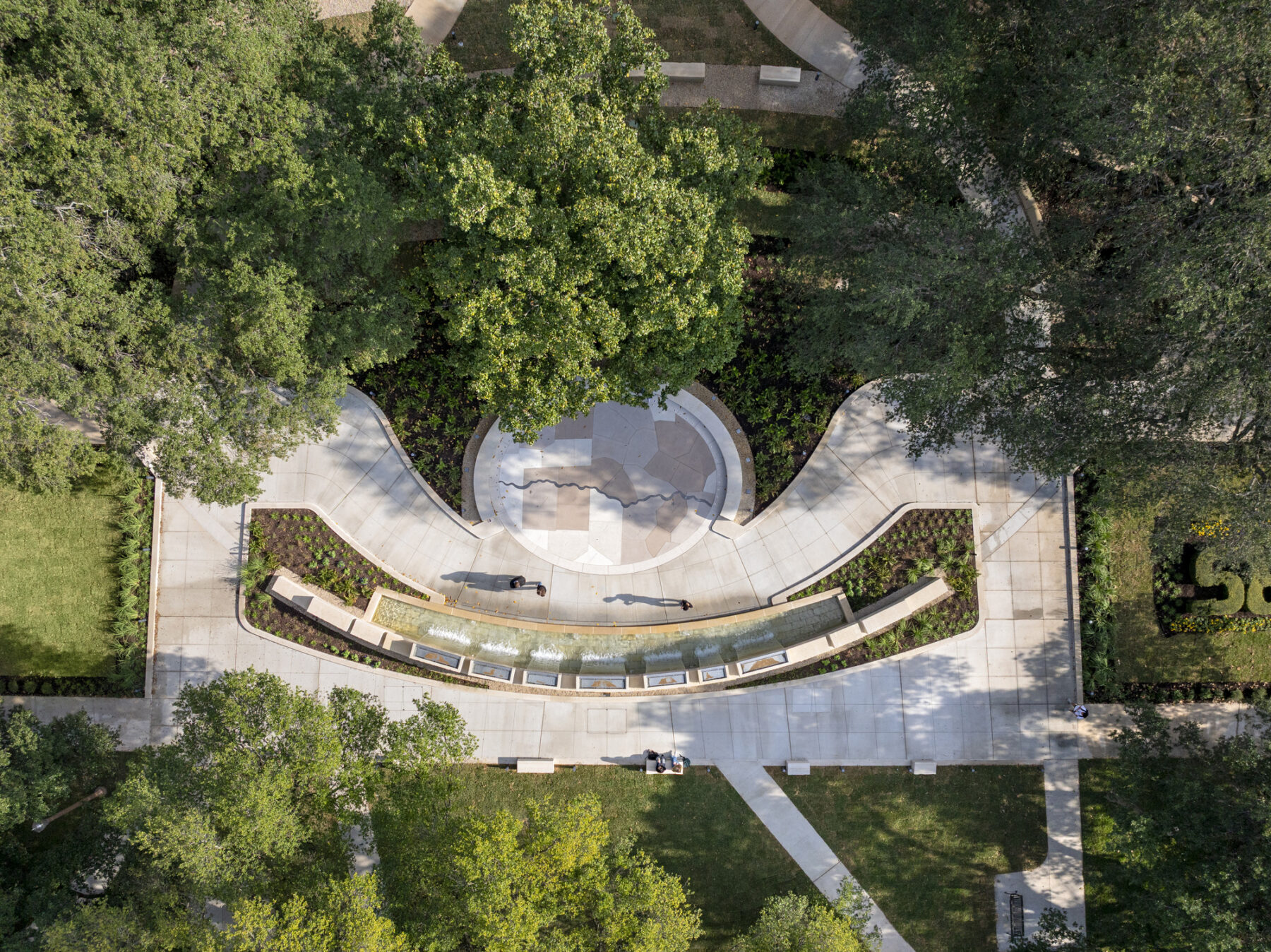
The Memorial’s Outer Ring and Inner Ring
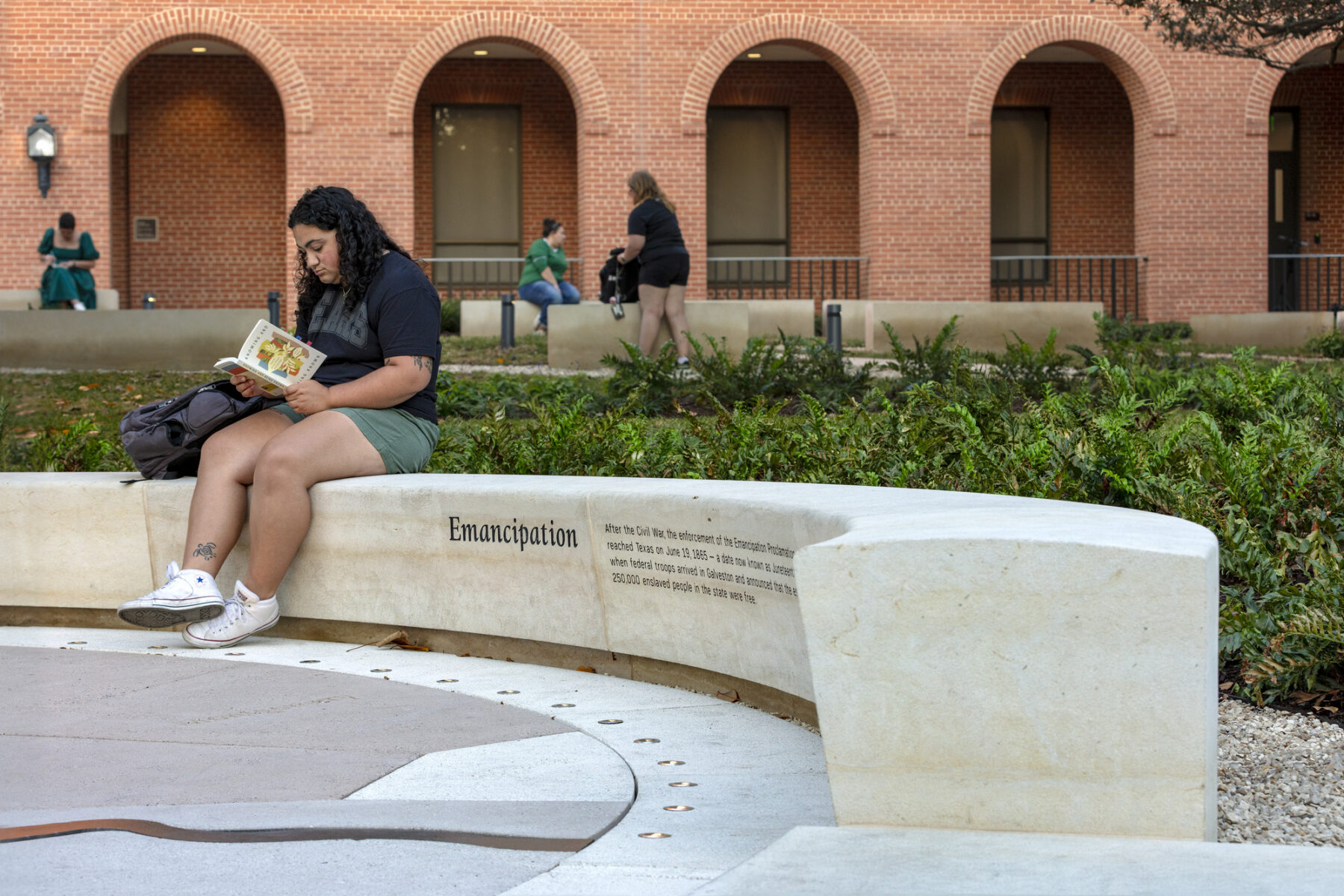
The Inner Ring’s seat wall includes narratives describing the history of slavery in Central Texas.
Resonance Garden
The Resonance Garden is a natural amphitheater and place for the Baylor community to gather under the shade of the Magnolia and Live Oak trees that are over a century old. Limestone seat walls, crushed limestone surfacing, lawns, grasses, and flowering native plants are arranged in concentric arcs and oriented back toward the Inner and Outer Rings. Each of these material textures are inspired by the textures and colors of Independence. This space invites day-to-day individual and small group use for students, faculty, and staff. With capacity for over 400 people, the Resonance Garden can also transform into a major gathering area for musical ensembles, speeches, vigils and other university events.
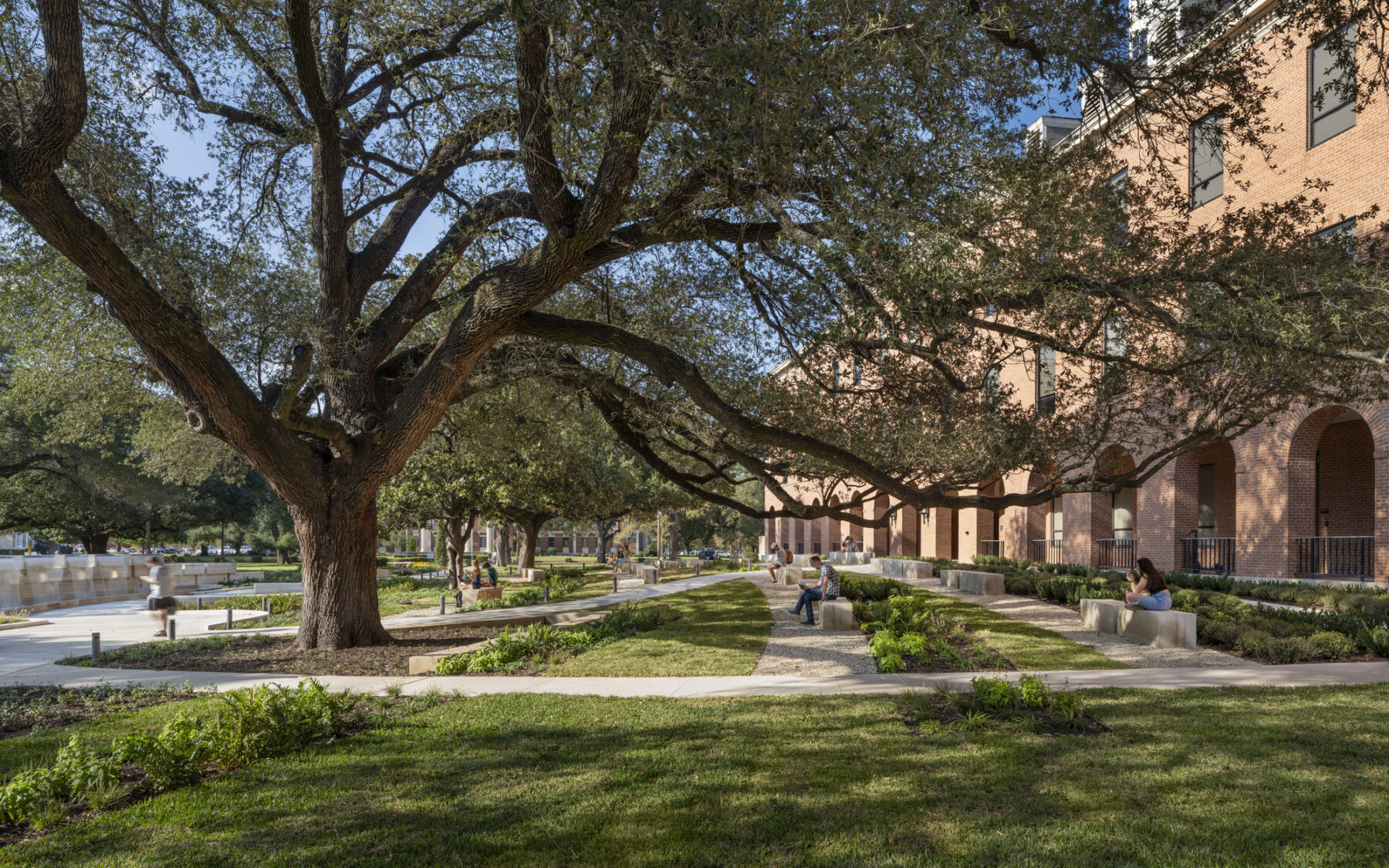
The Resonance Garden’s Live Oak trees are an inviting presence.
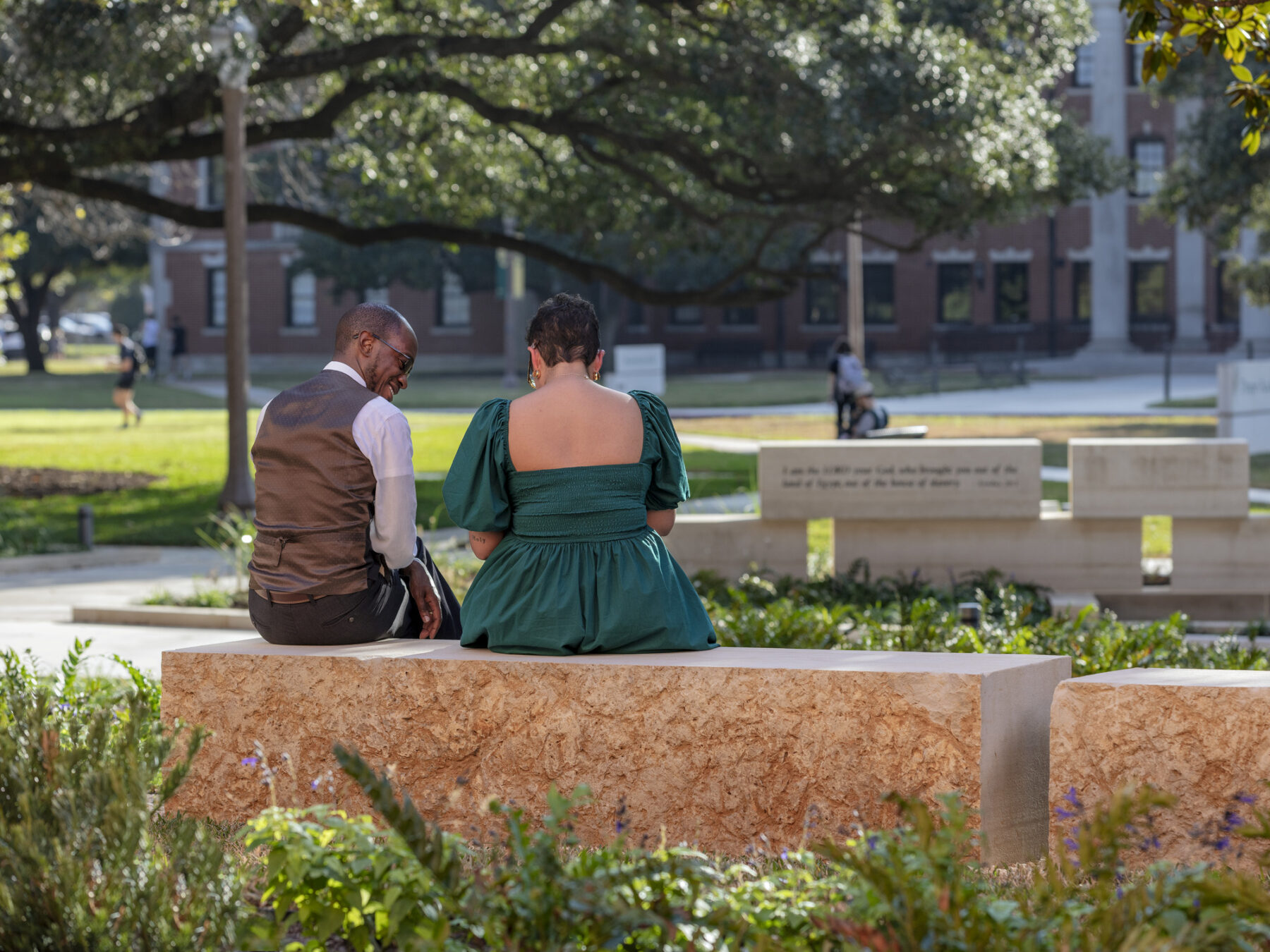
Day-to-day life within the Memorial
Anchoring the east end of Founders Mall within view of the Memorial to Enslaved Persons is the existing statue of Judge Robert Emmett Bledsoe Baylor. This Jim Crow-era bronze and granite statue (1939) is engraved with descriptions of the Judge as the university’s founder, religious leader, and constructive statesman. As an important and highly photographed component of the historic campus, Baylor desired to maintain the statue in its current condition while adding a foreground that recognizes a fuller and more specific story of the Judge’s role, as well as the role of other university founders, in the story of slavery and support of the Confederacy.
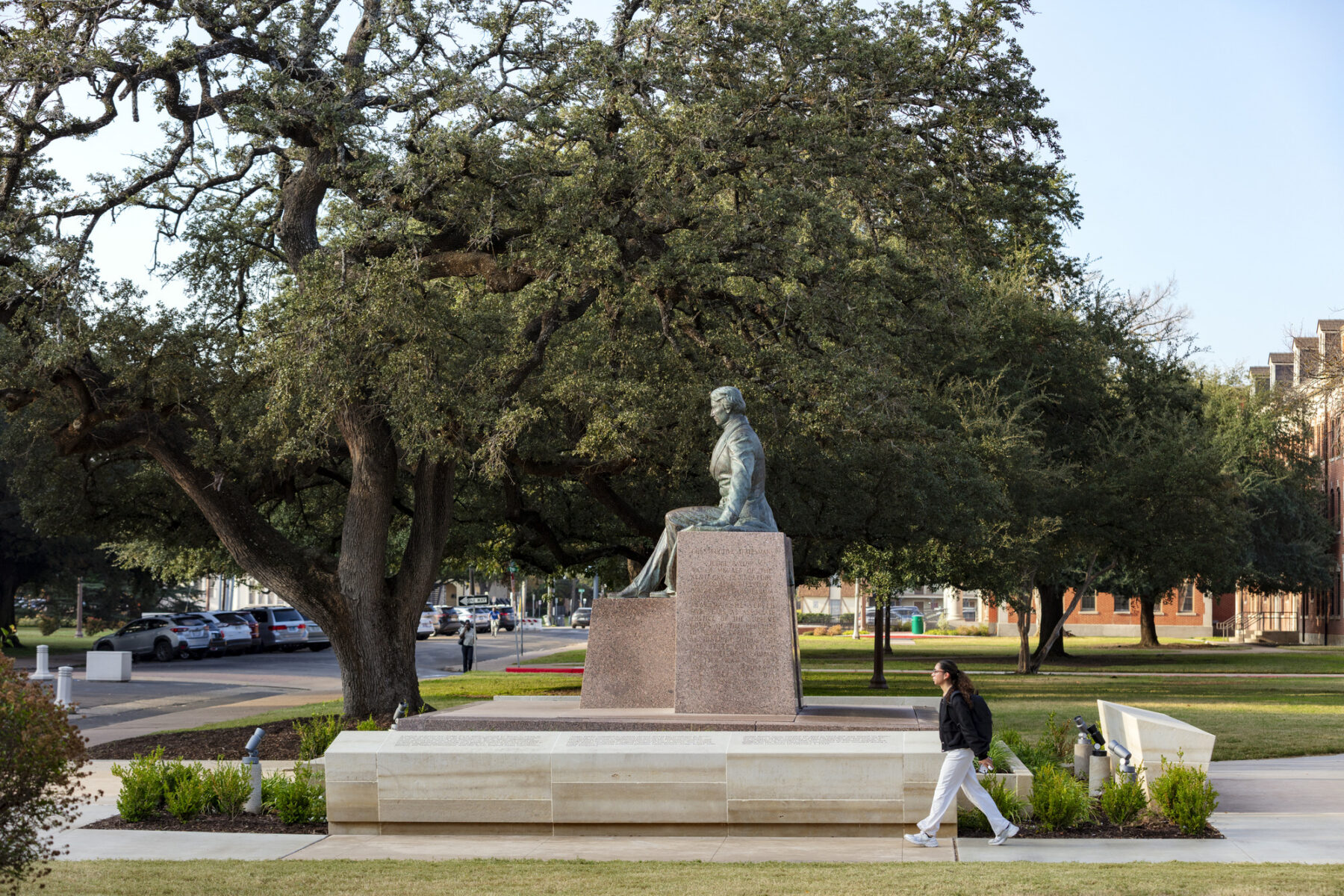
New limestone walls and a garden in the foreground of the Judge’s statue tell a more complete story.
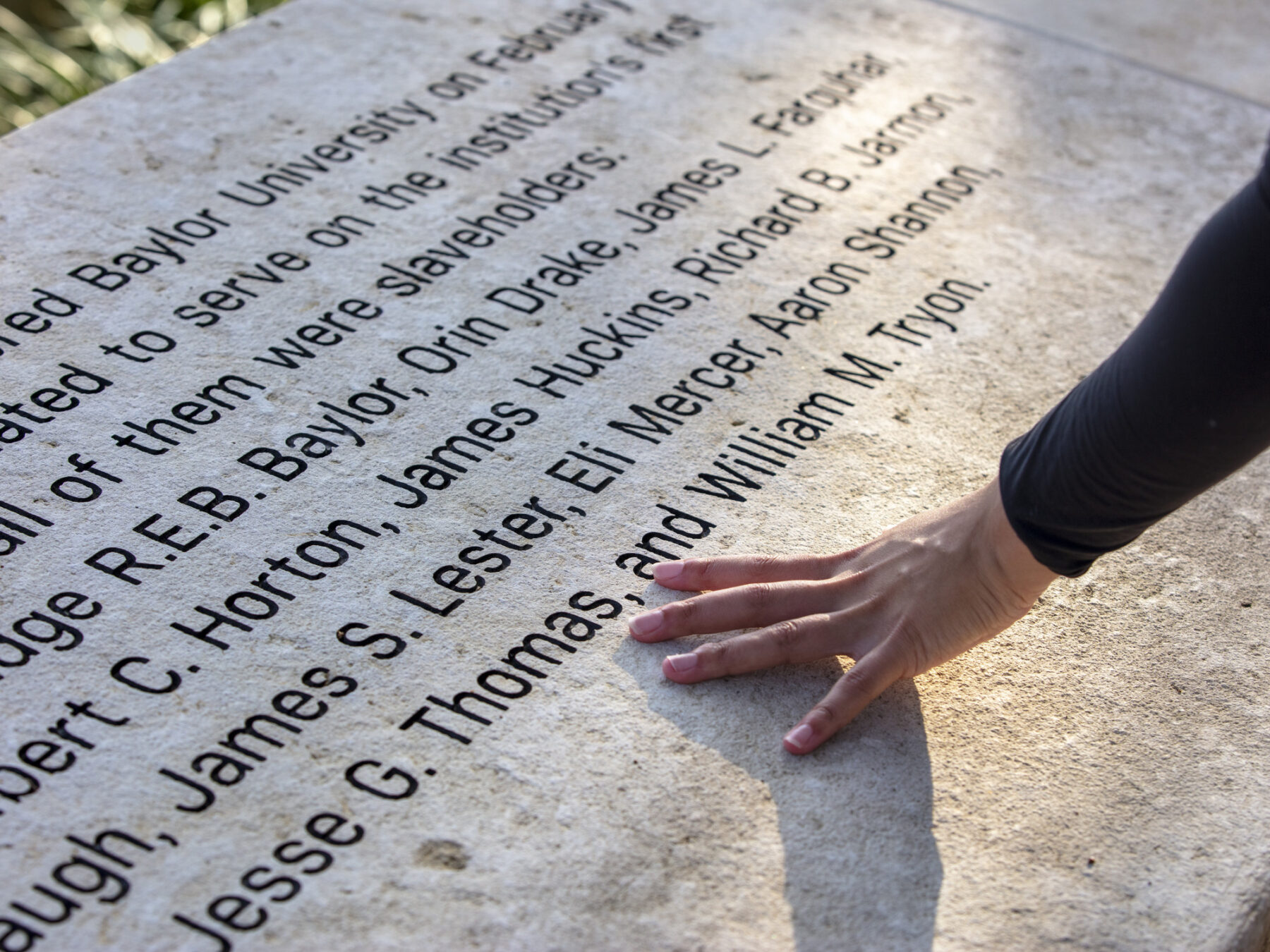
Interactive narratives, engraved in limestone, describe with specificity the university’s early connections to slavery and the Confederacy.
Through a deeply intentional and collaborative design process, the Memorial and statue reinterpretation transform the landscape into a powerful medium of remembrance—one that consecrates the land, gives presence to lives once unrecognized, and advances an ongoing institutional commitment to truth, reckoning, and healing.
想了解更多项目细节,请联系 Ian Scherling.