Elevating the Pedestrian Experience: Building Common Ground at 10 World Trade
10 World Trade's public realm creates new connections in Boston's Seaport.
 Sasaki
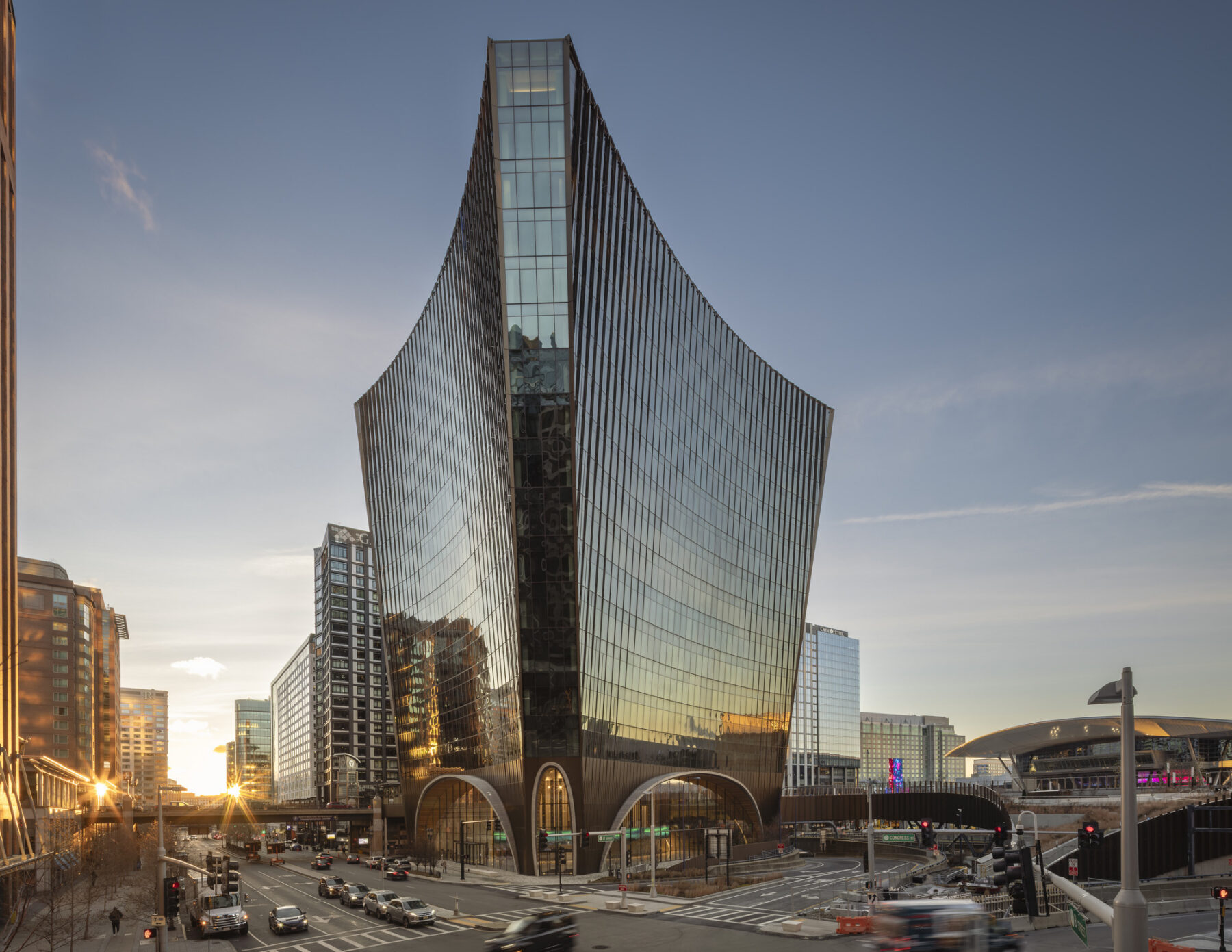
The new 600,000-square-foot office tower is sited on a former 1.1-acre surface parking lot, located adjacent to the MBTA World Trade Center Silver Line station in Boston's Seaport
Driven by the site context and complicated structural constraints, the design of 10 World Trade lifts the building mass up above the ground and opens the ground floor to the public, prioritizing public space at the ground level while expanding the workplace area above. Massport, Boston Global Investors (BGI)’s development team, and Sasaki worked together to transform this parcel into a critical node of connectivity for the area—linking levels, modes of transportation, and the public and private realms.
10 World Trade is sited at a unique location in the Seaport. It sits at multiple crossroads: the multi-story intersection of Congress Street and World Trade Center Avenue; the gap between the lower Seaport and the Summer Street corridor; the crossing of pedestrians and interstate traffic; the coming together of multiple modes of transportation; the juncture of public realm and the commercial world.
The building delivers over 200,000 square feet of new lab space, over 255,000 square feet of office space, 8,000 square feet for cultural uses, 6,500 square feet dedicated to retail, and 40,000 square feet of outdoor public realm and surface improvements along World Trade Center Avenue.
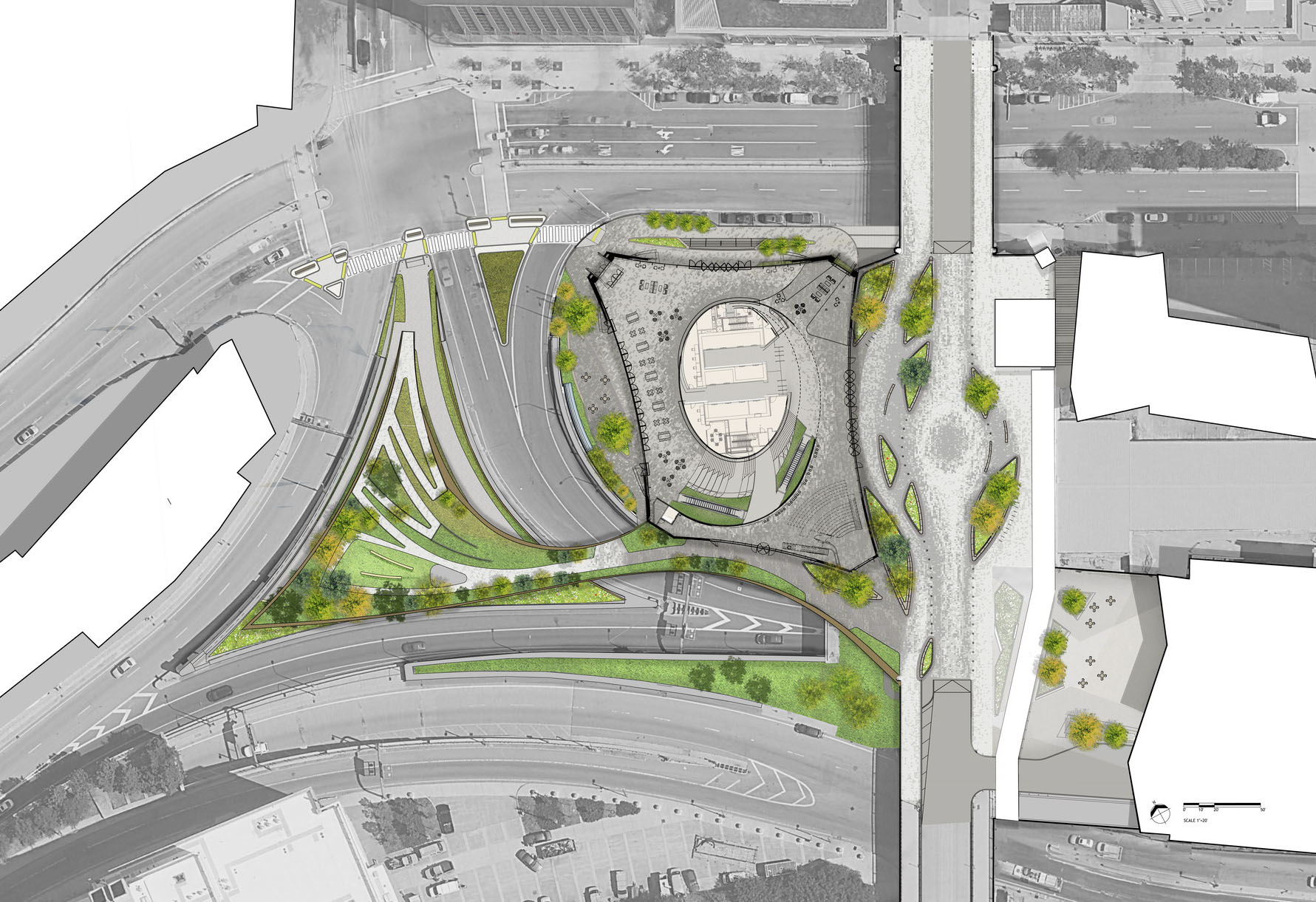
Unique site conditions helped shape the ground floor plan and adjacent outdoor public realm
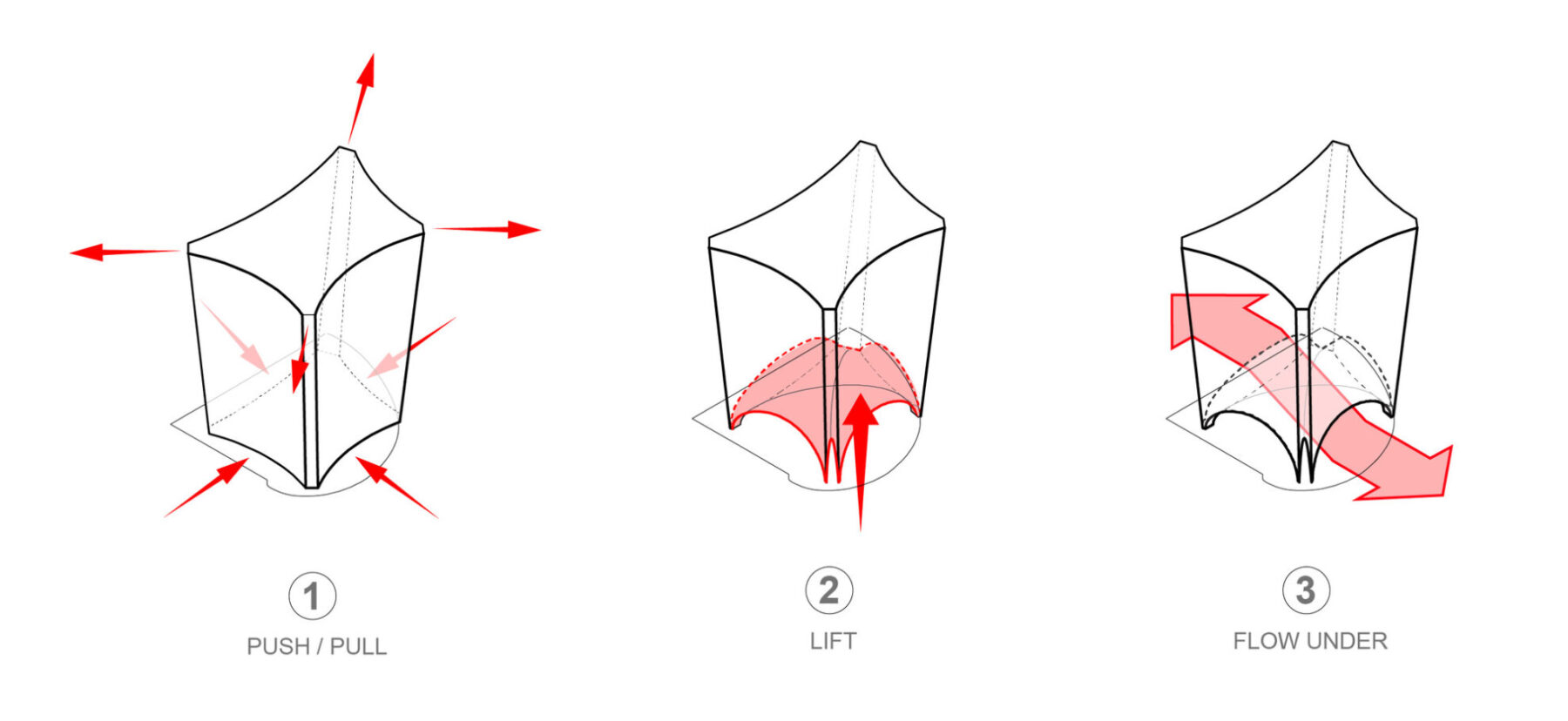
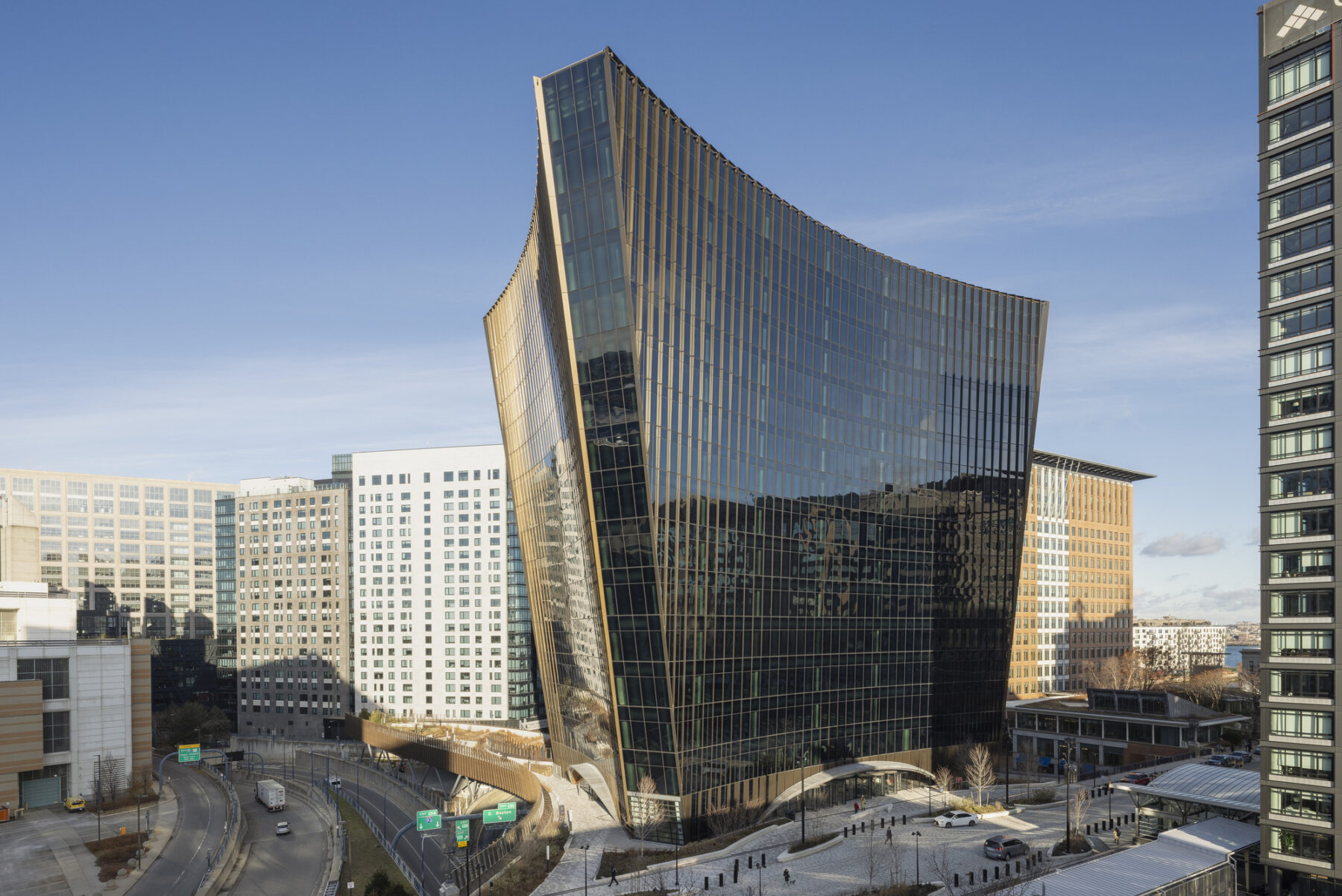
Rather than occupying the site edge-to-edge, the building lifts at the ground plane and touches down lightly on four sculpted corners, creating a porous threshold that extends public life into the interior.
The project rethinks the urban mixed-use program and fully capitalizes on the site’s potential, delivering over two acres of public space woven through and around the building. Arches offer the solution to complicated structural site constraints, lifting the building off the ground to create a completely public and porous ground floor that acts as a portal between adjacent site levels. This also further connects the district through a new pedestrian bridge to a public outdoor space. All four sides are front doors, blurring the lines between public and private space.
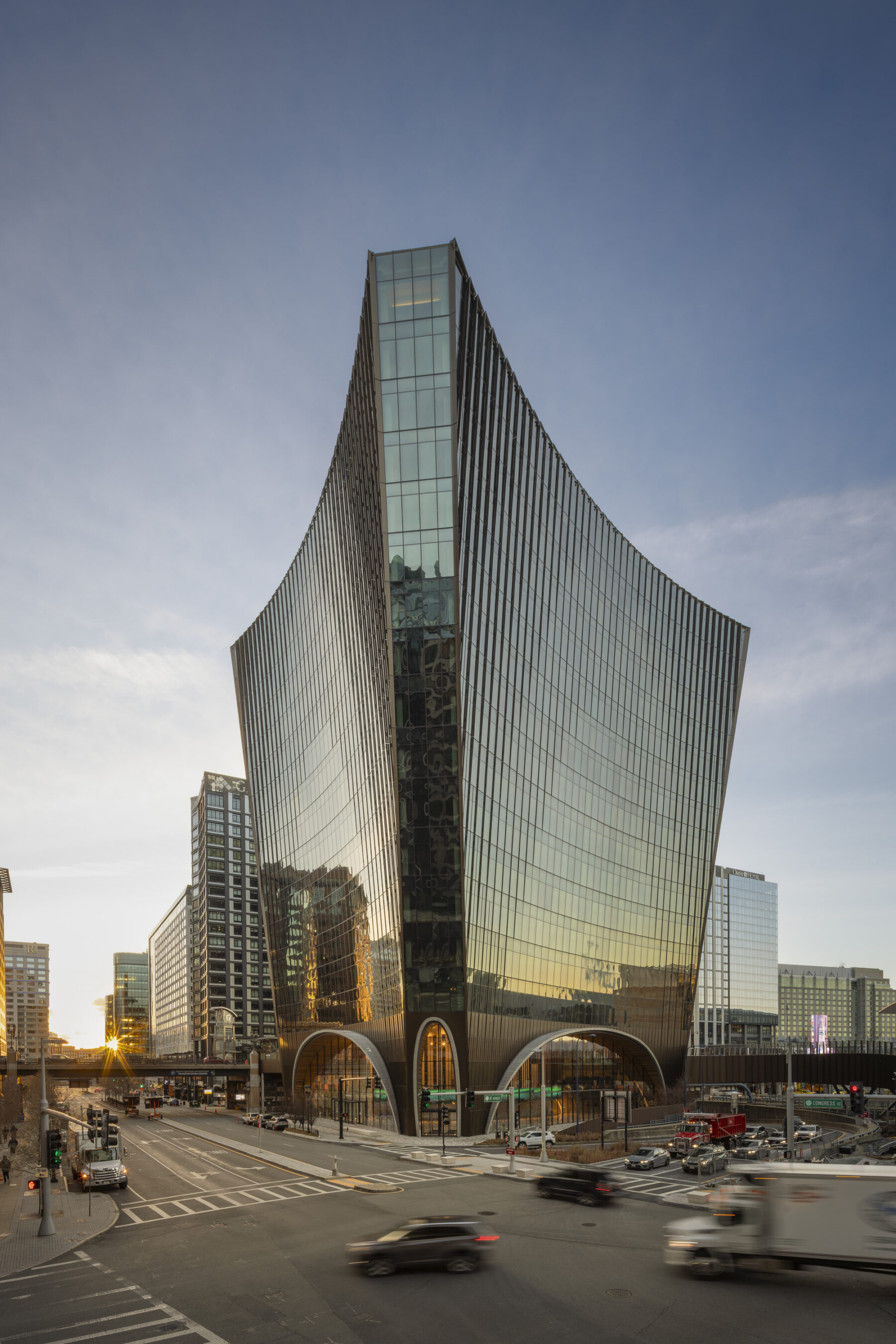
The design follows a series of gestures derived from the surrounding context, as well as the desire to create a robust and welcoming public realm
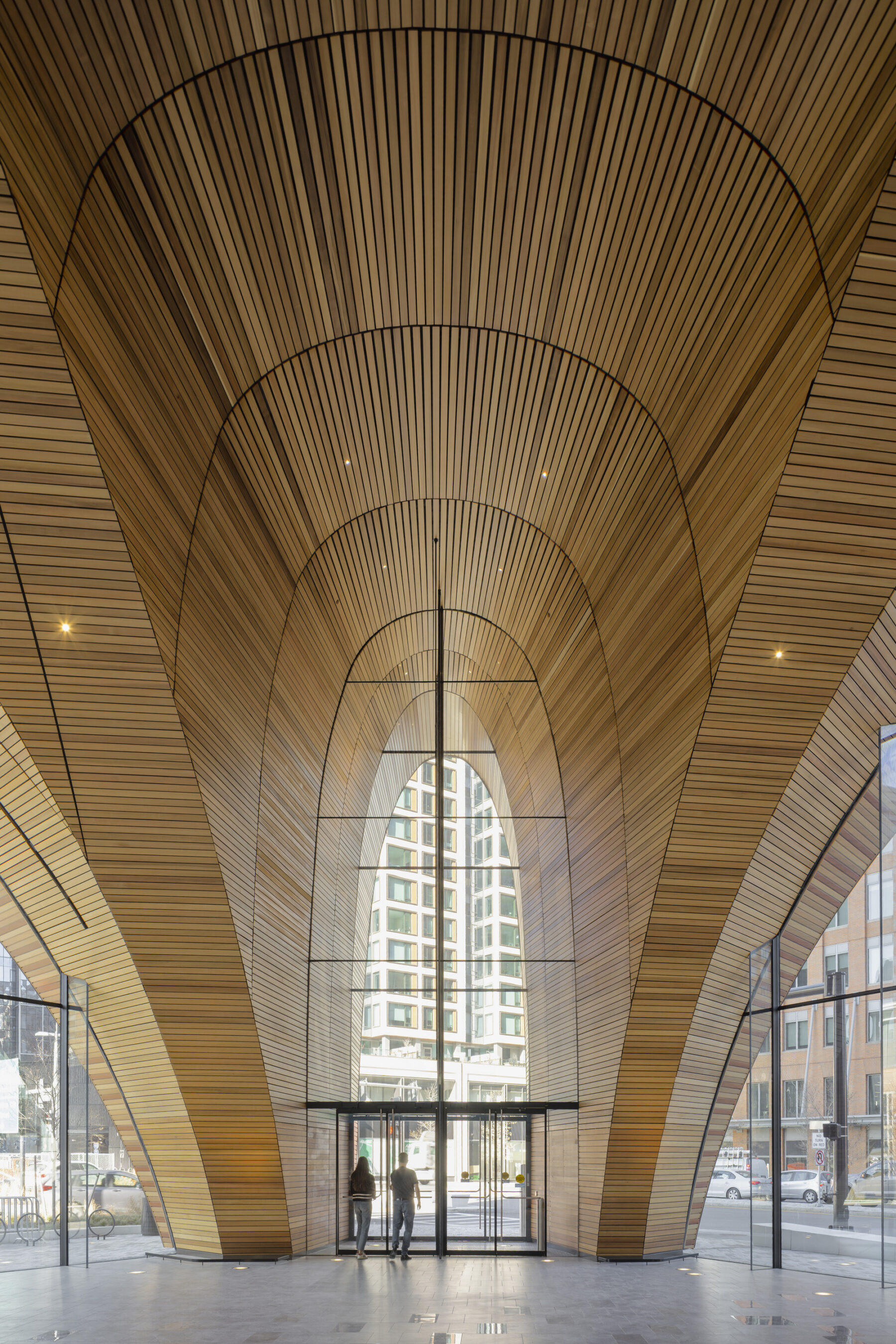
The first two floors are designed to be fully public, providing spaces for retail, community gatherings, and encouraging pedestrian access through the building.
Once a fragmented pedestrian condition at the convergence of vehicular infrastructure, 10 World Trade transformed the site into a continuous urban promenade that reconnects overlapping layers of the city and establishes a public realm that is active and energized twelve months a year. During the best days of summer it is open and airy, and during the worst days of winter it glows with greenery and warmth from within. It’s a design that delivers an office product offering a truly different and captivating tenant experience.
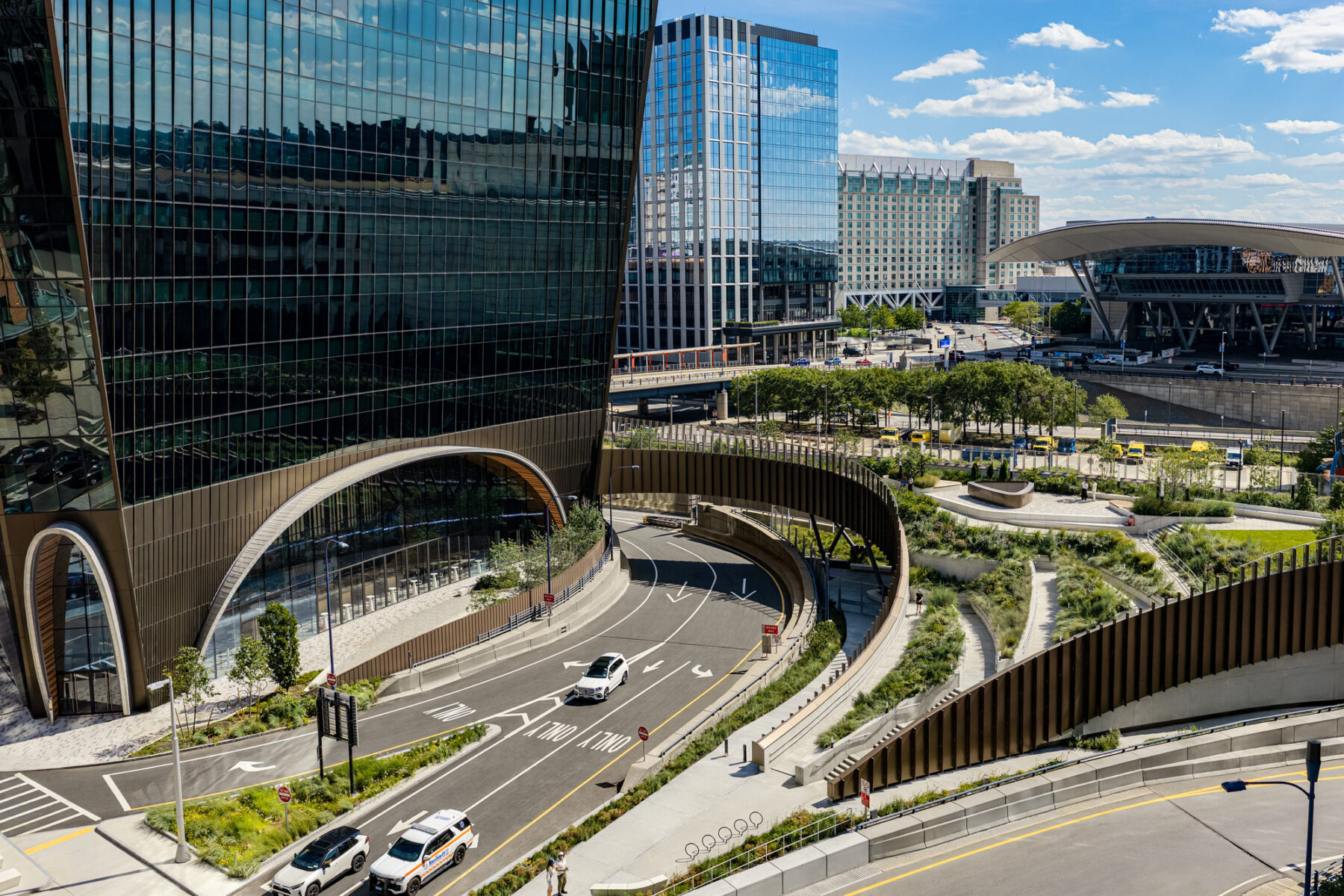
The public realm reaches over the highway and extends to the Triangle Parcel, bridging the divide of the project site
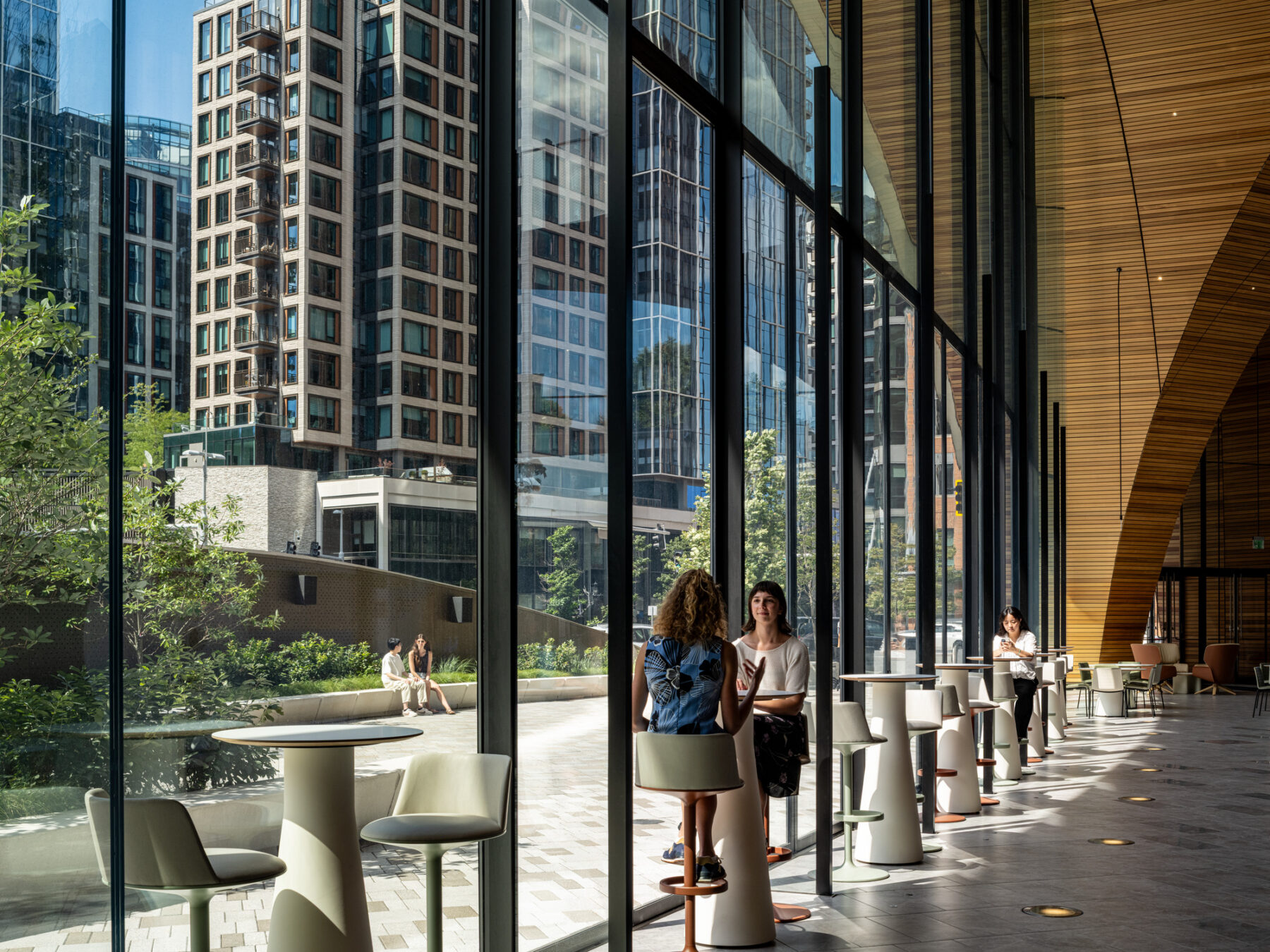
The warm and inviting Great Hall serves as a hub of activity while also traversing the significant elevation changes between World Trade Center Avenue and Congress Street
From a massing perspective, the design is a departure from the traditional multi-story podium built to the property lines with a tower set back above it. By pushing the main facades in at the center, the design gives space back to the city at the ground level, and tapers outwards as the building ascends to capture more leasable floor area.
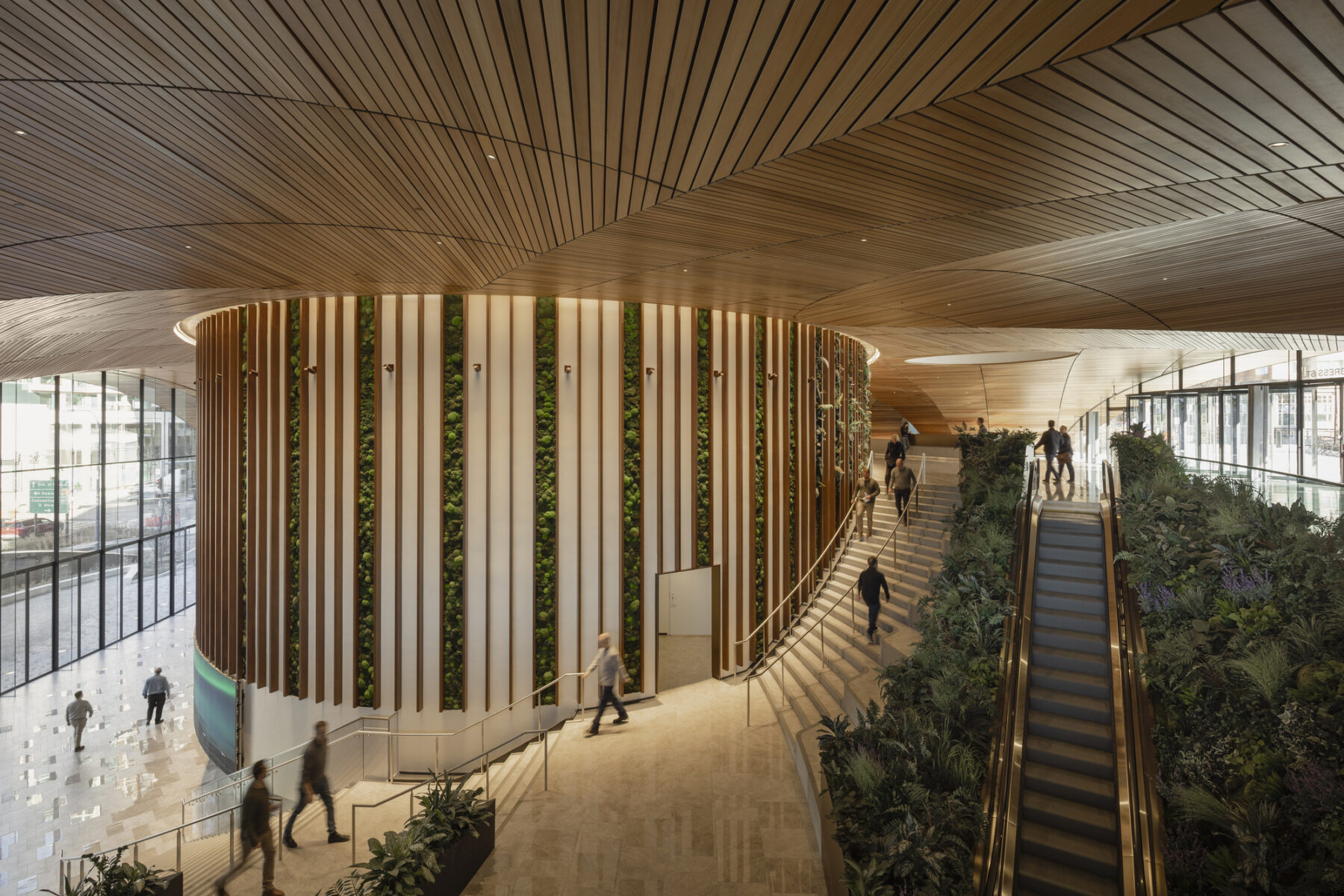
The Great Hall is 45-feet tall, column free space that serves as the lobby as well as a vibrant public thoroughfare, connecting the lower Congress Street to the upper World Trade Center Avenue.
The architecture is defined by the sweeping structural arches and a column-free central volume that dissolves the boundary between inside and outside. Conceived as “a door for the city,” the building establishes a strong visual identity from every vantage point while enhancing the pedestrian experience at street level. Above, expanding floor plates accommodate over 450,000 square feet of flexible lab and office space alongside cultural programming, culminating in a panoramic indoor running track overlooking Boston Harbor and the skyline beyond.
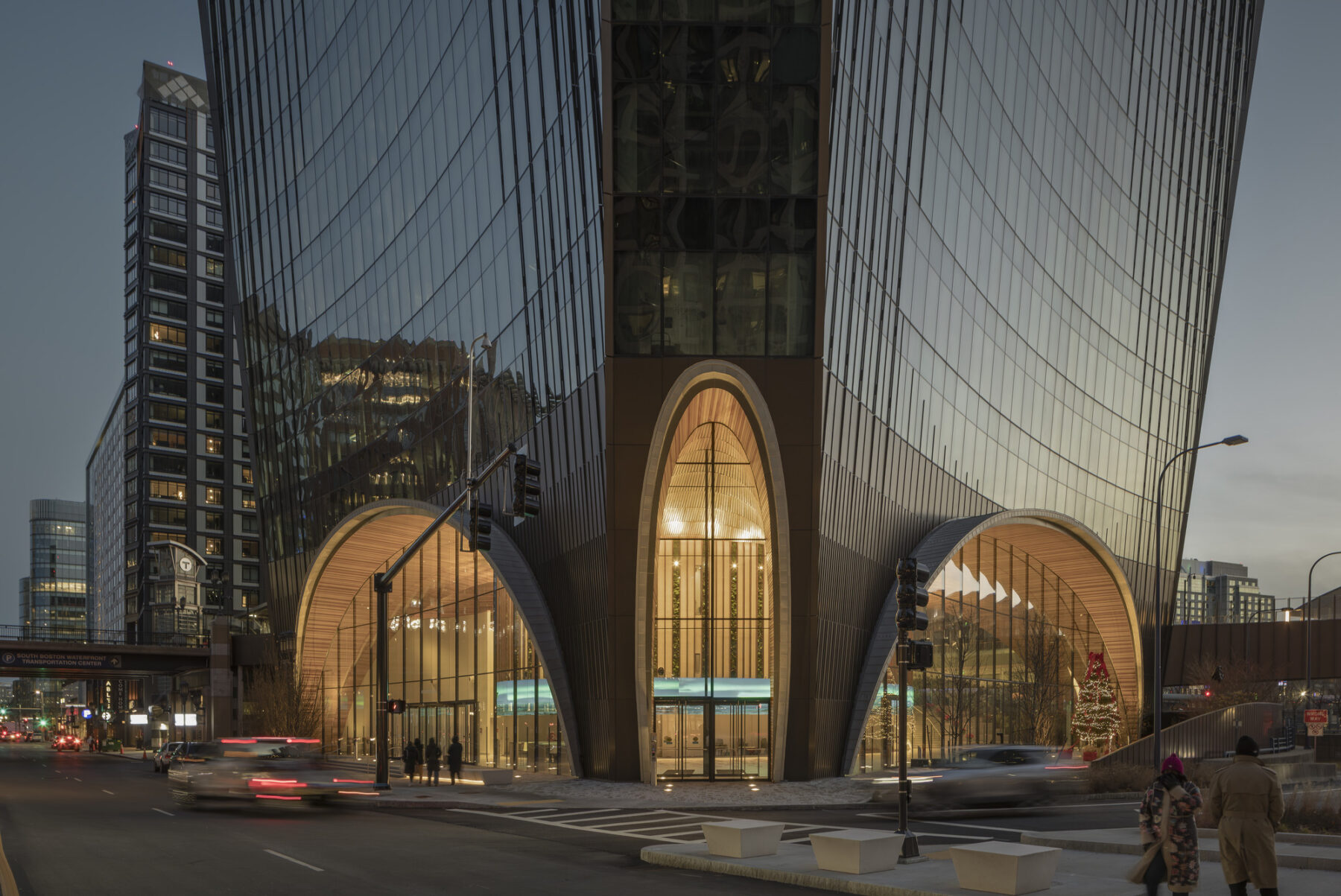
The arches reveal a transparent, welcoming and warm interior, inviting the public in and through the building.
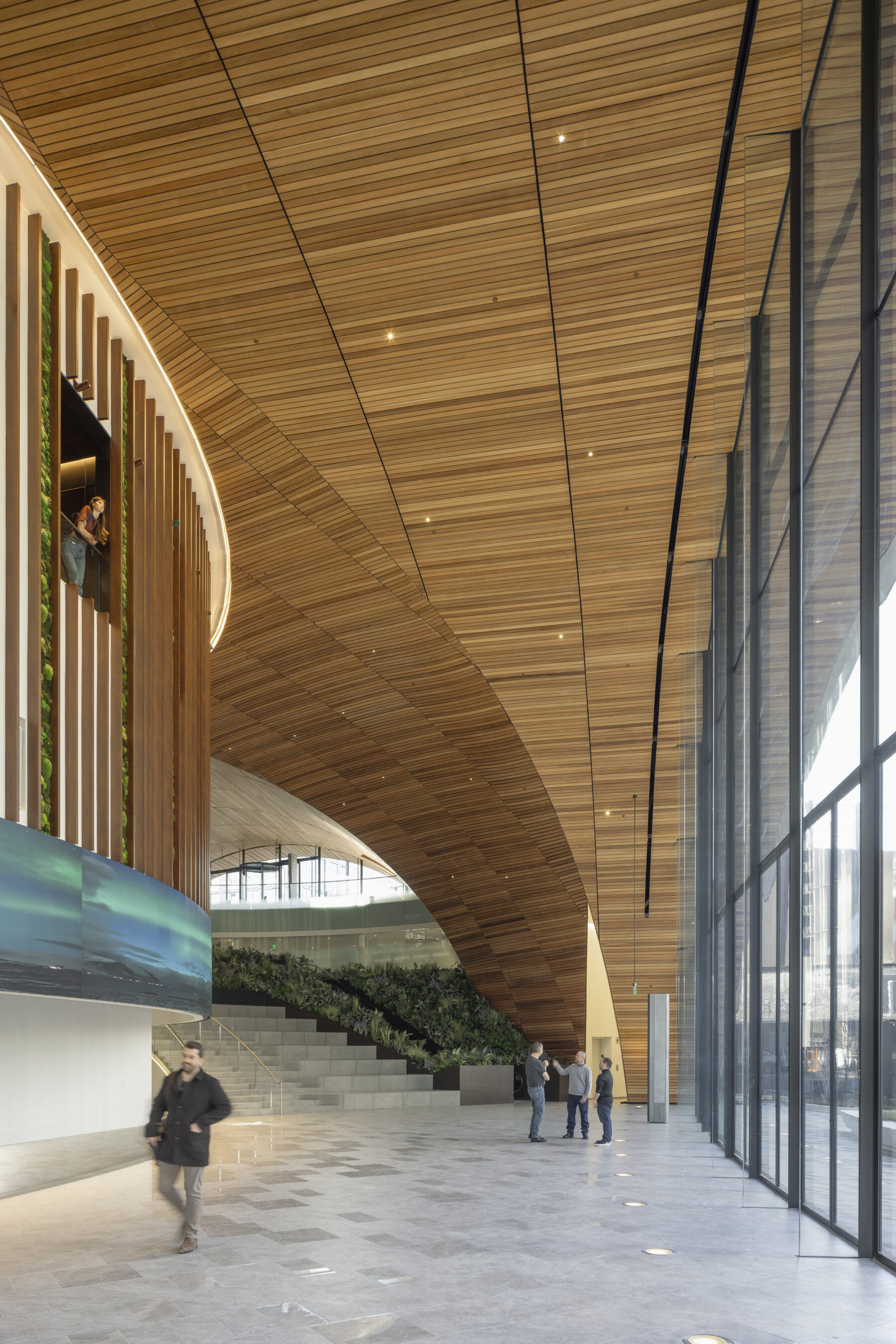
The Great Hall is a vast and dynamic public space designed to support year-round event programming.
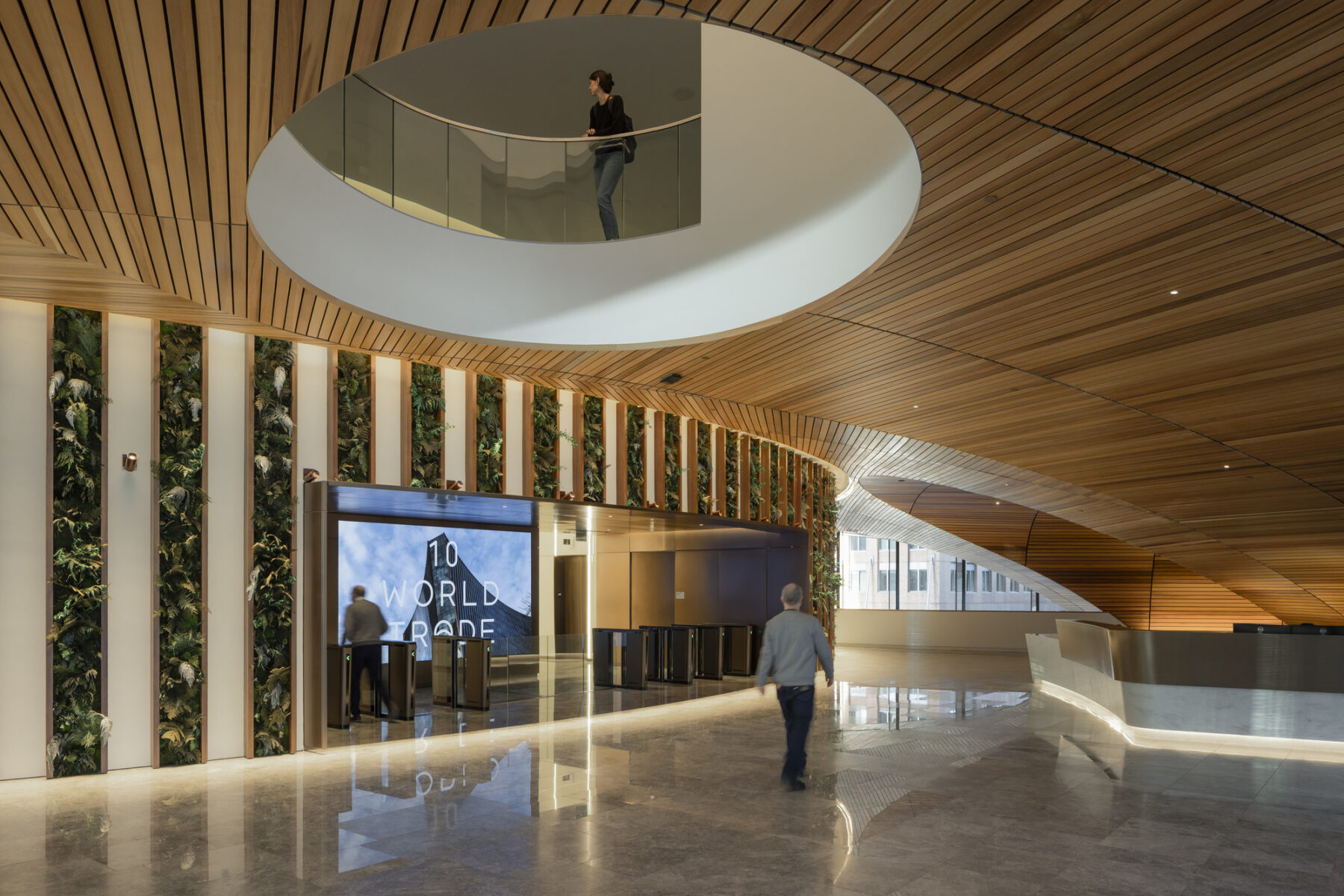
The lobby reveals an oculus, that further connects the private and public space.
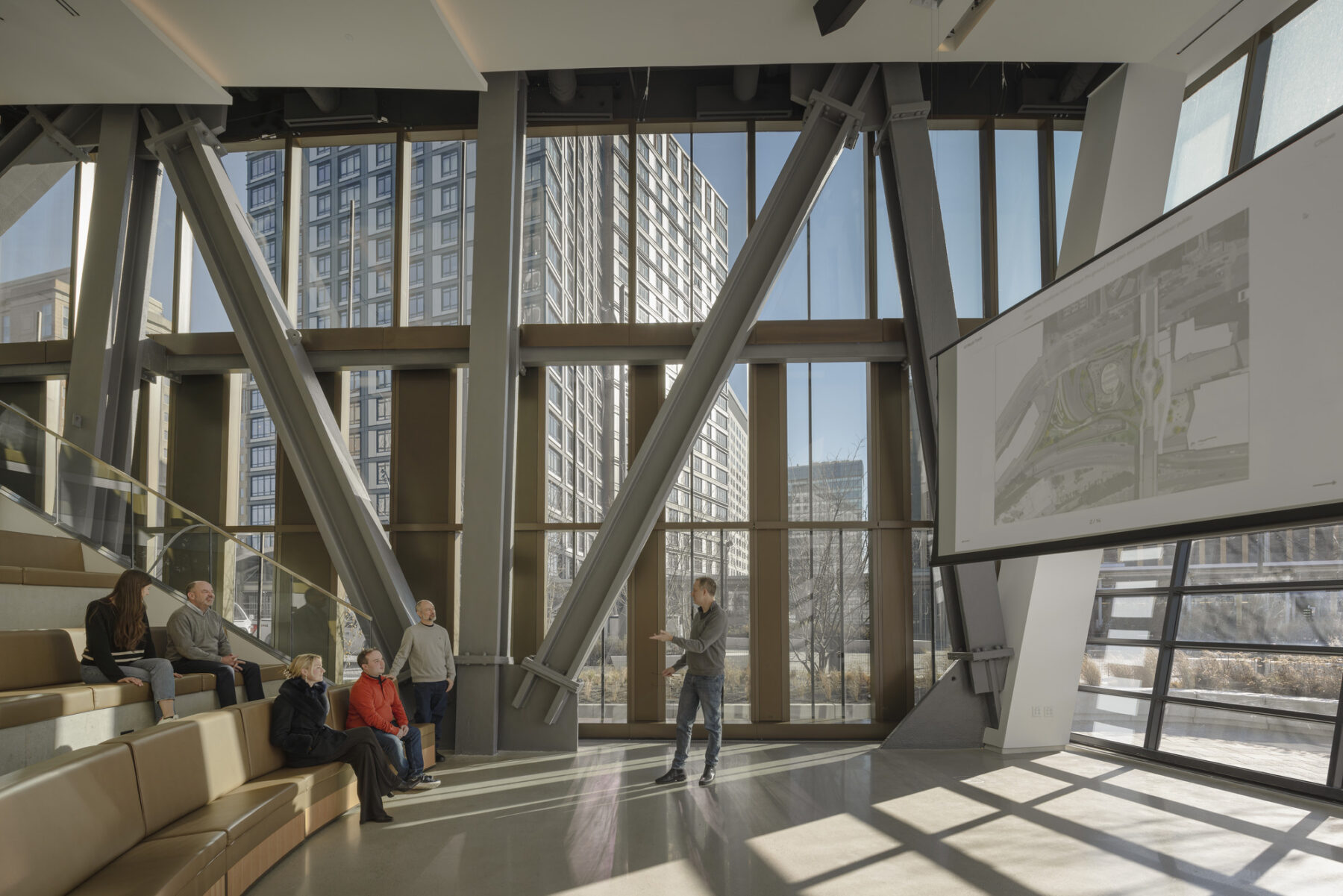
The design yielded several leftover or “found” spaces including the 150-seat auditorium and event space, which is open to public programming.
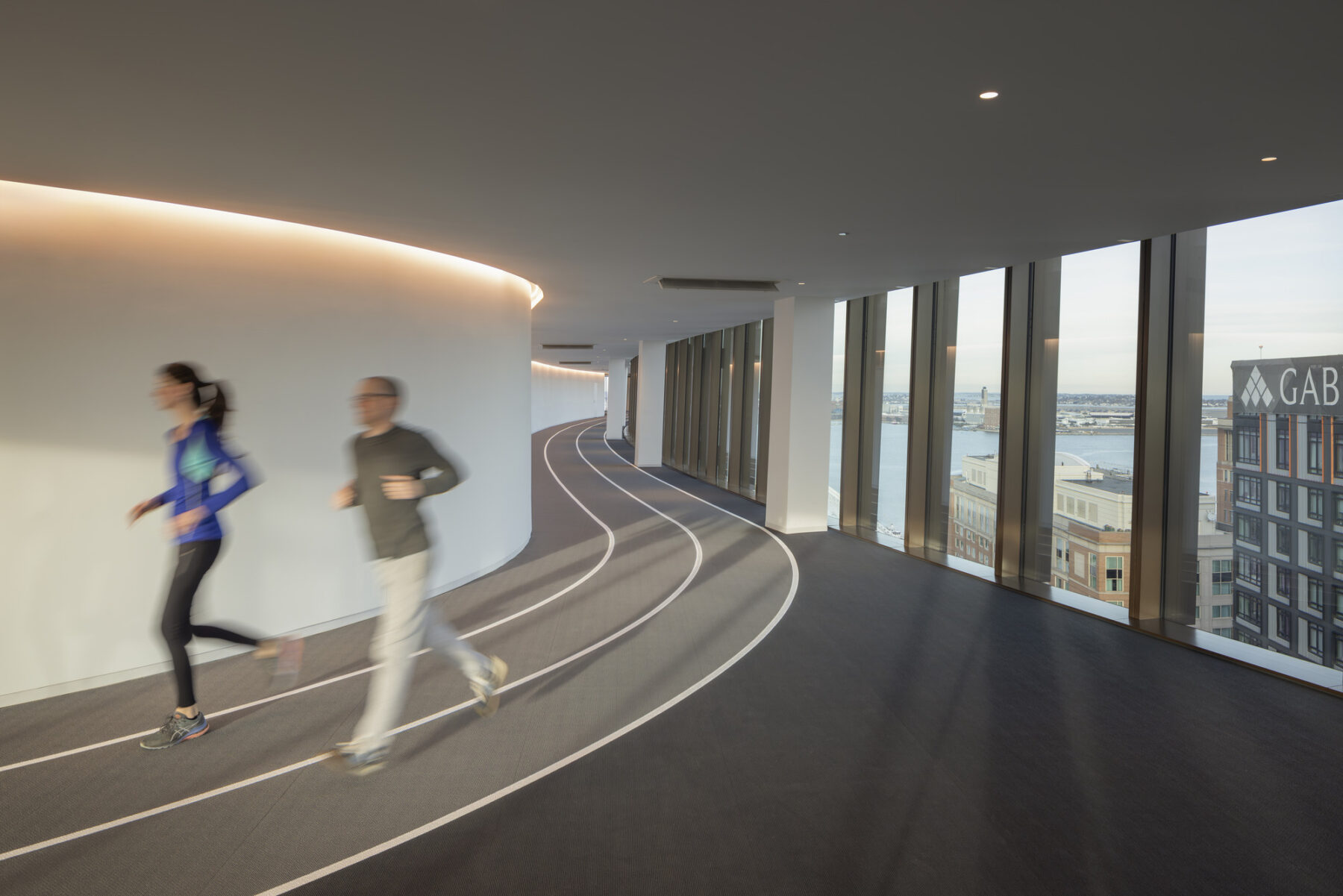
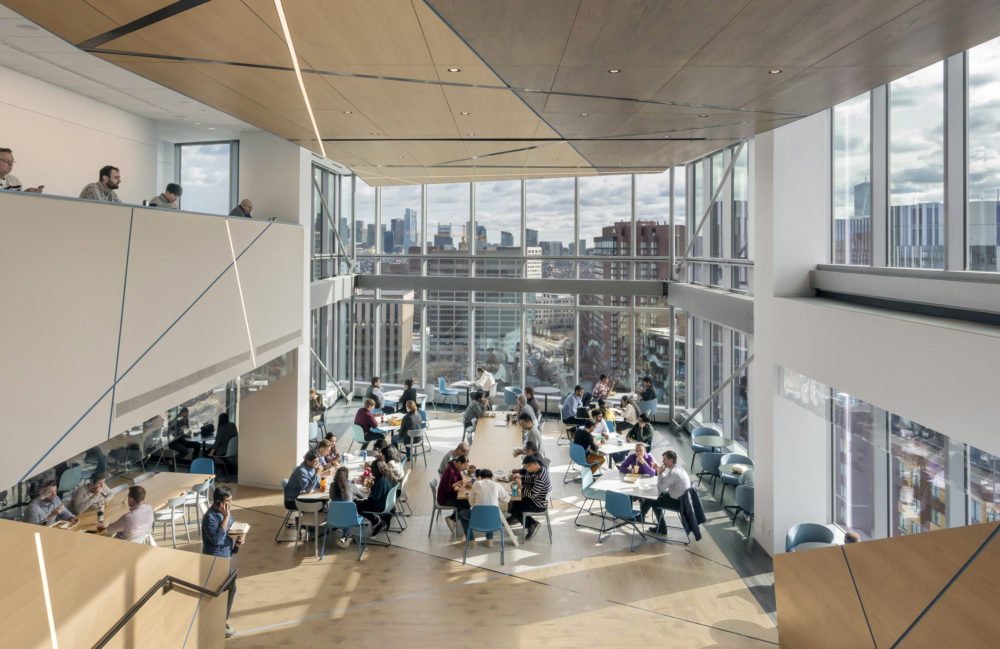
The top floor culminates in an indoor running track with panoramic views of the city and Boston Harbor.
The arches reveal a transparent, welcoming and warm interior, inviting the public in and through the building.
The Great Hall is a vast and dynamic public space designed to support year-round event programming.
The lobby reveals an oculus, that further connects the private and public space.
The design yielded several leftover or “found” spaces including the 150-seat auditorium and event space, which is open to public programming.
The top floor culminates in an indoor running track with panoramic views of the city and Boston Harbor.
The first project in Boston to receive SITES pre-certification, 10 World Trade has achieved Gold certification for SITES, LEED, and WELL, and Platinum certifications for WiredScore and SmartScore. Also a first in the city for commercial work, the building facades utilize ViewGlass, electrochromic glazing that adjusts to sunlight, solar gain, and glare in real time, reducing energy usage across building systems. The triple glazed curtain wall further improves building performance, reducing the energy usage by keeping heat out in the summer, and in during the winter. Densely vegetated landscapes and native species store rainwater in heavy rain events without requiring additional irrigation systems, removing the use of potable water and eliminating polluted stormwater runoff to the ocean.
The articulation of the curtain wall was studied in relation to both the verticality and elegance of the design as well as the self-shading impacts of the fins.
10 World Trade sets a new precedent for the Seaport: a commercially ambitious building that simultaneously acts as public infrastructure, civic space, and urban connector.
For more information contact Victor Vizgaitis or Philip Dugdale.
10 World Trade's public realm creates new connections in Boston's Seaport.
The newest addition to Boston’s skyline finds its form within its context.
In Boston's bustling Seaport, Sasaki recognized a unique opportunity to integrate architecture and landscape
“This is not just a community-accessible space outside, but also a community-accessible space inside. We want this to literally be a doorway that connects in and through all levels for people to come and enjoy this site,” says Vizgaitis of the project’s larger goal
Senior Associate Kate VanHeusen joins a panel on building diverse project teams
Senior Associate Kate VanHeusen speaks on a panel at Bisnow’s Boston Seaport Annual Conference
Press including Metropolis, World Landscape Architecture (WLA), and Boston Business Journal have recently featured Sasaki’s life science building and site at 10 World Trade, which will break ground in Boston’s Seaport District in late 2021