The Evolving DNA of an Independent School
A conversation between Sasaki principal Vinicius Gorgati and Lawrenceville School Head Master Steve Murray
 Sasaki
The Frederick Gunn School was founded in 1850 by Frederick William Gunn, an educator, abolitionist, and advocate for the outdoors responsible for great innovations in the institution’s curriculum and overall student development. Honoring his conviction that character and citizenship are shaped through one’s relationship to the natural world, Sasaki worked with the Frederick Gunn School to design the Center for Innovation and Active Citizenship, a new hub for learning and student life on campus.
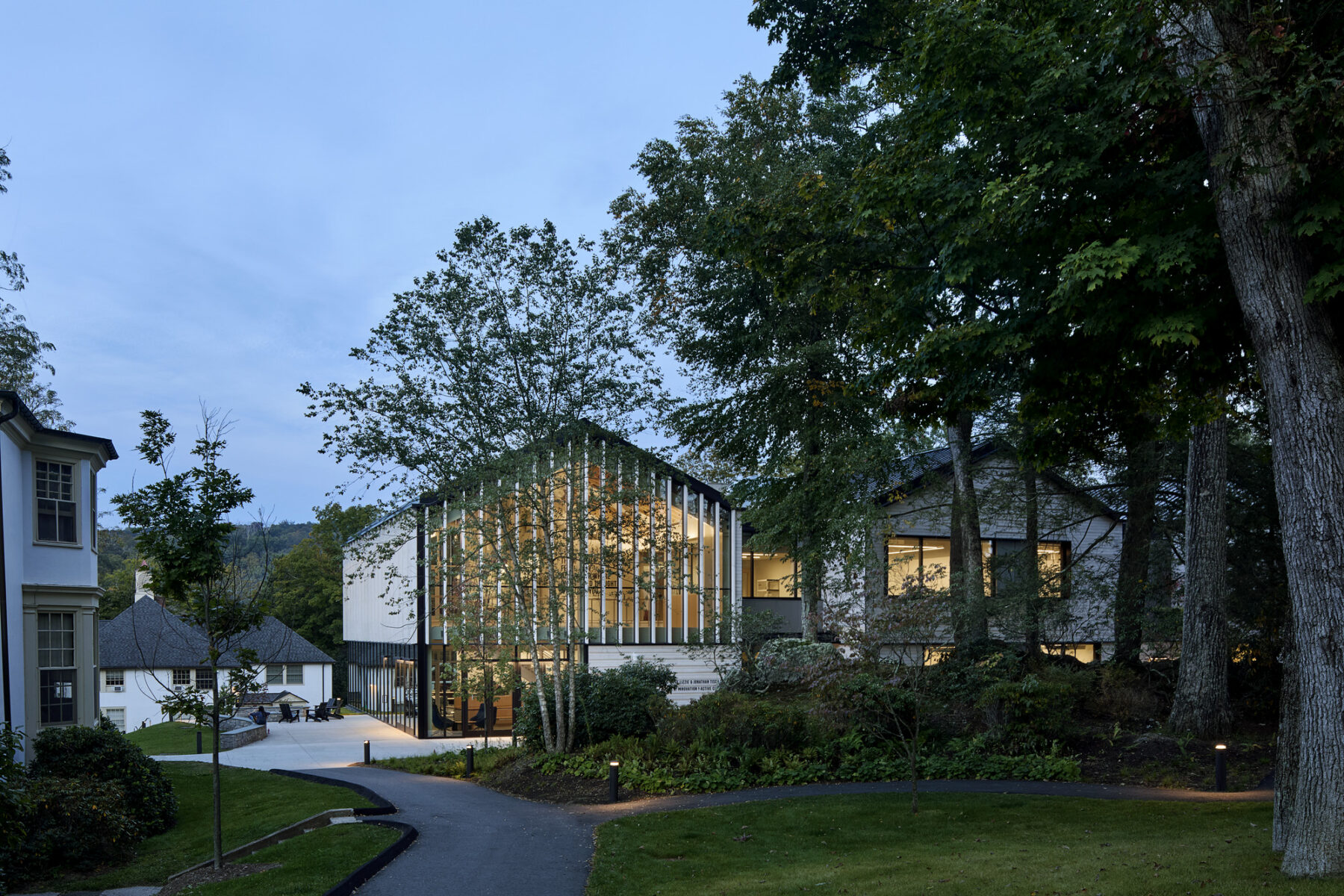
The Center for Innovation and Active Citizenship is conceived as a next‑generation, integrated learning environment that translates the school’s 19th‑century civic ideals into a contemporary pedagogy of place. Uniting a range of learning environments together in one integrated building, the design brings a contemporary expression to campus while maintaining the scale and integrity of its surrounding context of the campus quad and close proximity to the campus’ main historic buildings.
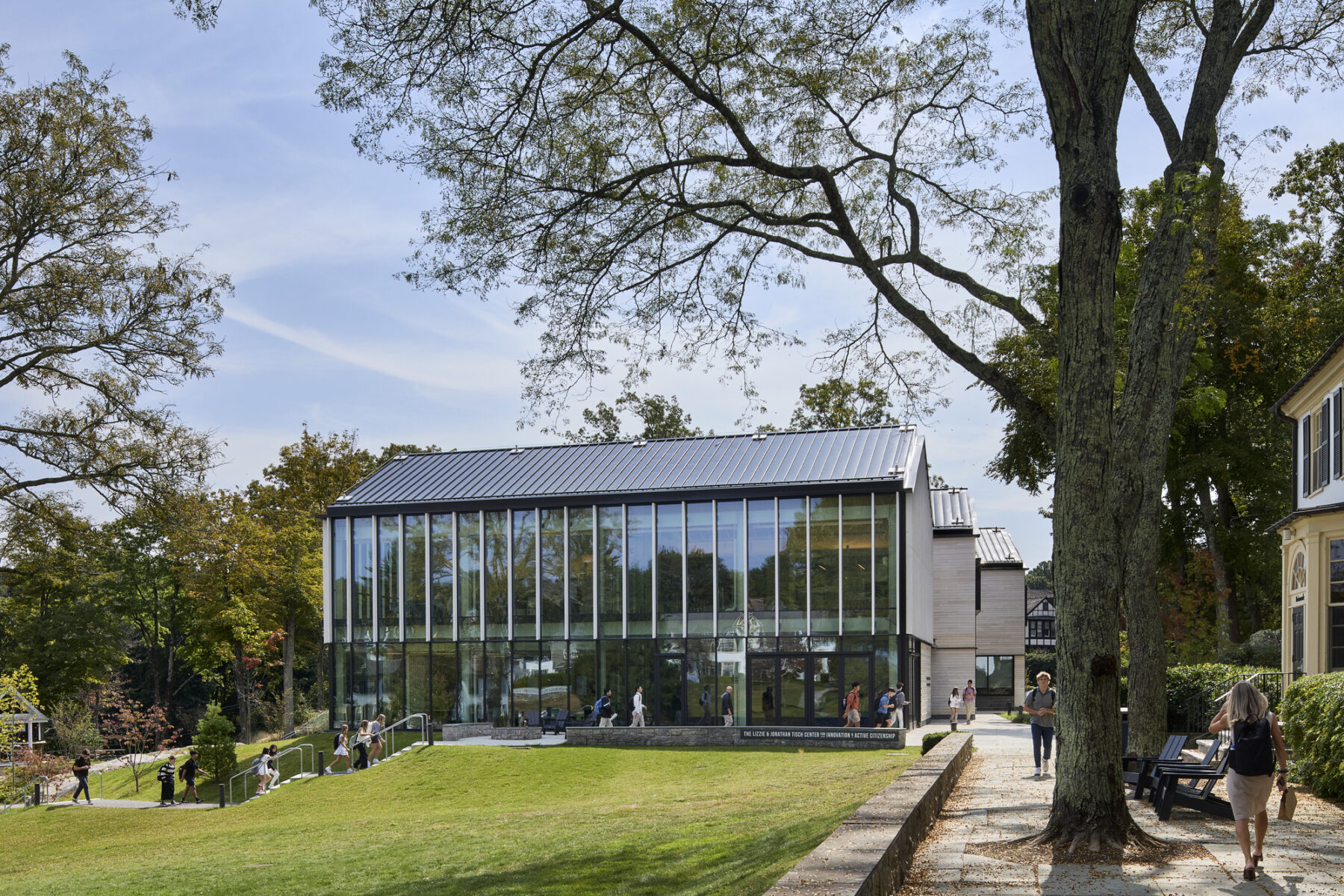
The Tisch Center is a transparent, interdisciplinary hub that frames the campus’ main open space
Three interconnected pavilions shape the building’s massing and organize the program into three primary zones. This approach mediates between residential, academic, and administrative areas and reduces the building’s perceived scale in relation to the adjacent historic buildings. Materiality is inspired by the wooded and rocky nature of the site and the vernacular architecture of the campus and region, with a focus on a simple palette, uniformity of colors, and weathered, treated materials.
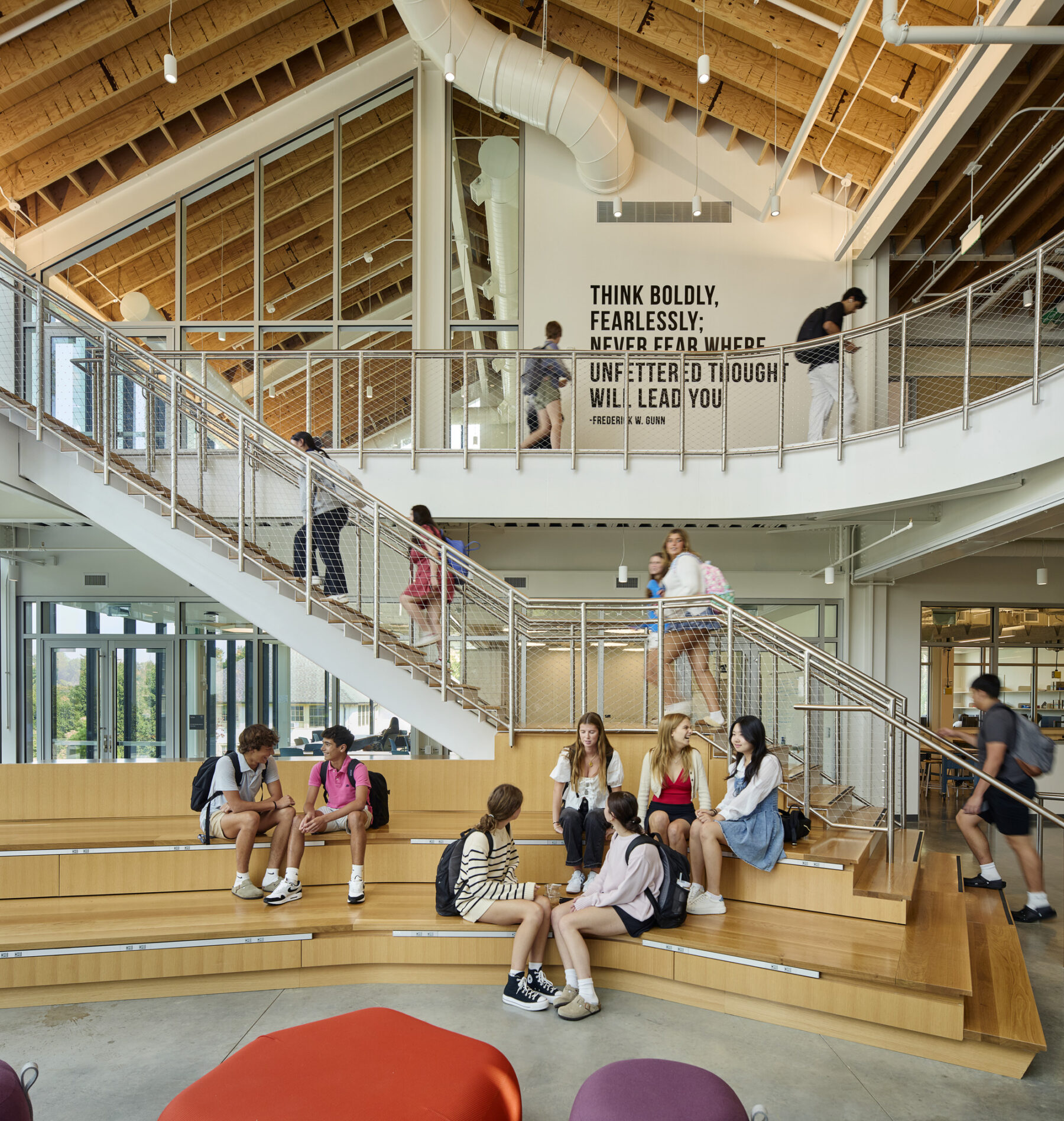
The Living Room functions as a flex room for the school community where planned and impromptu activities bring people together in a space maximized for daylight, transparency, and comfort.
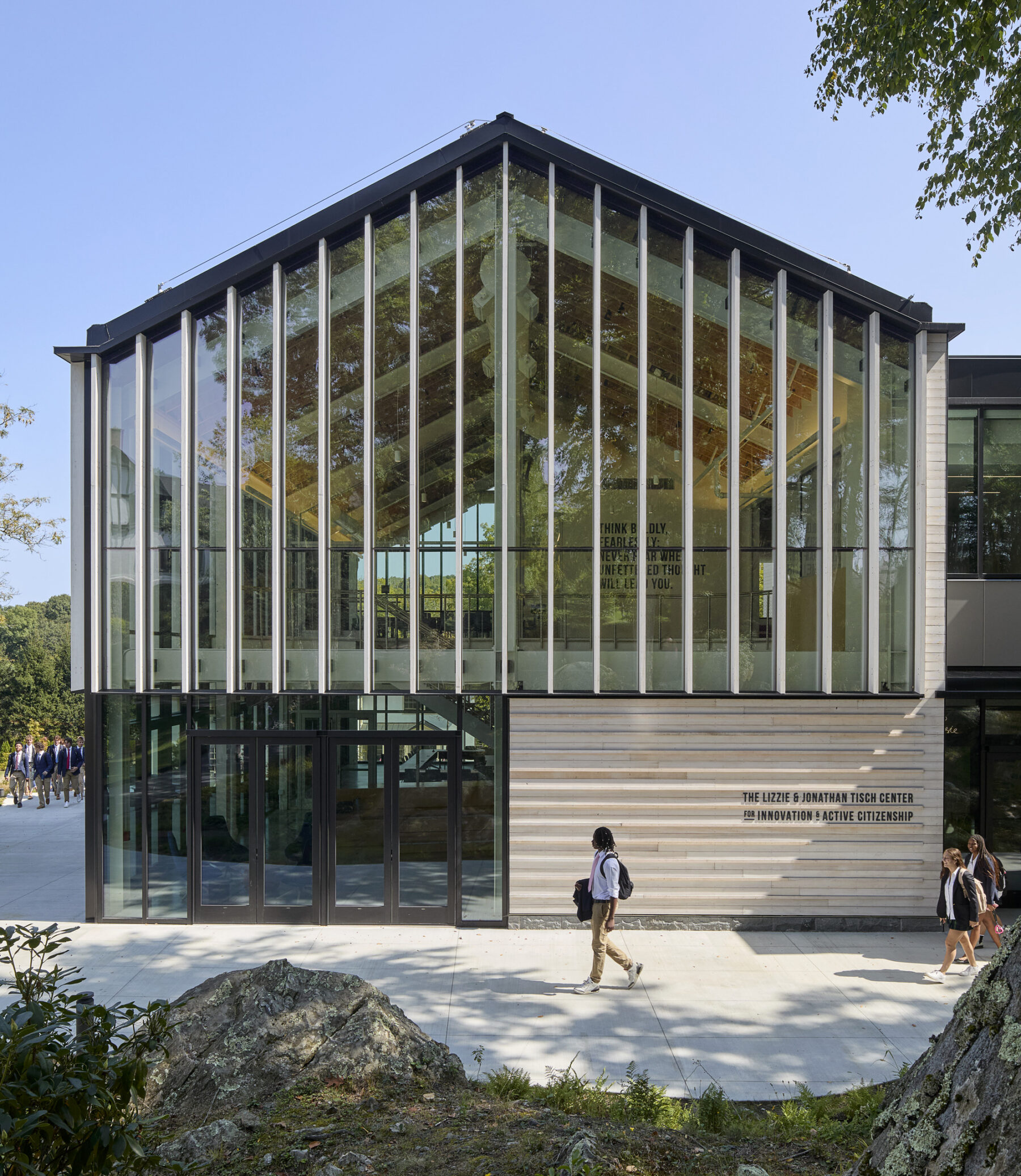
Respect for nature guided every design decision, and the project intentionally minimized site disturbance while enhancing long-term ecological health and resilience. Inside, the building fosters a daily awareness of its natural context and is organized to make learning visible and social. A double-height “Living Room” at the main entry serves as the communal heart—a daylit forum that links academic areas and invites curiosity, collaboration, and informal exchange. Large expanses of glazing frame the surrounding wooded campus and bring the seasonal change into the daily rhythms of the building with daylighting, material warmth, and visual transparency.
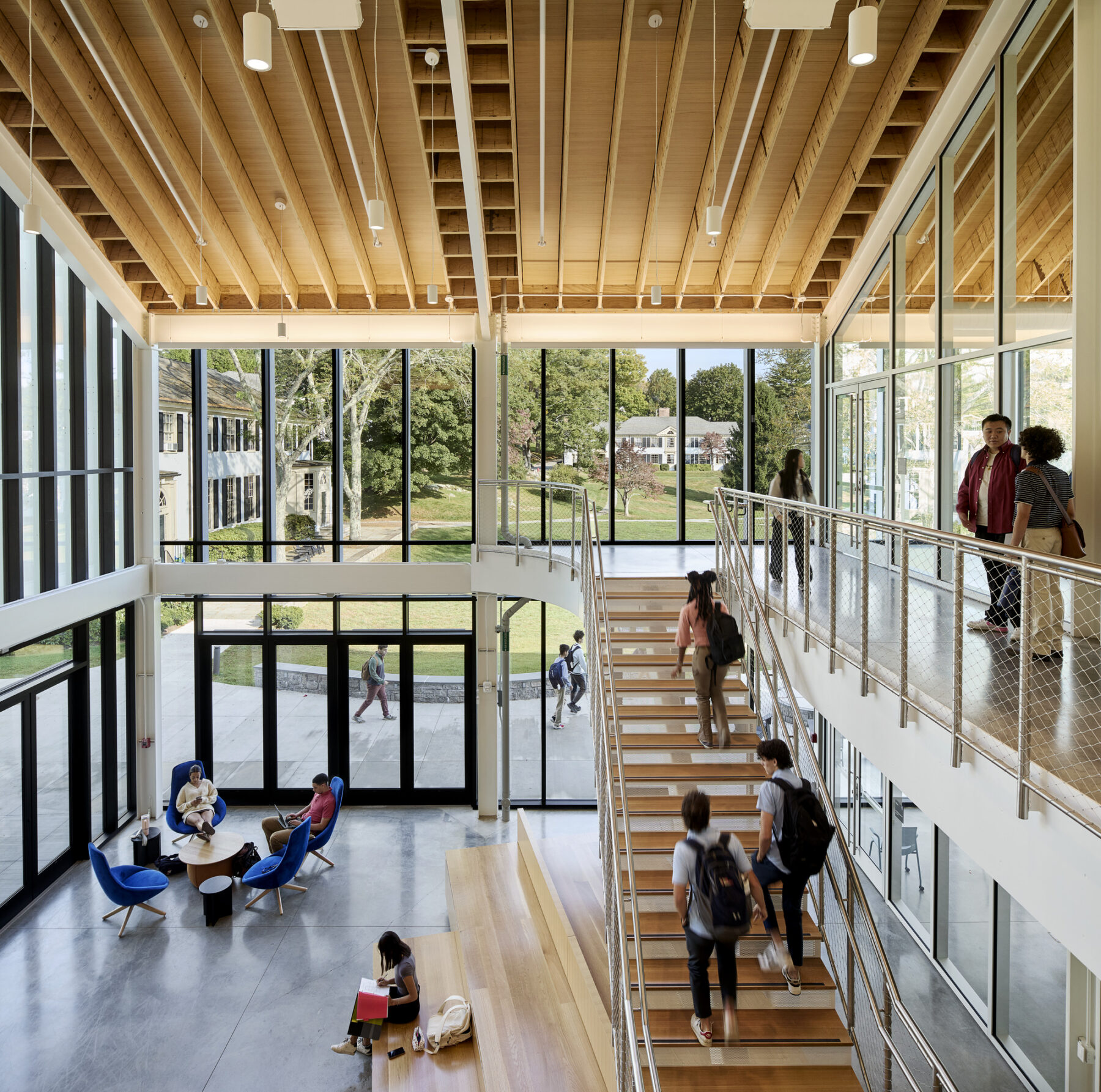
The Living Room frames views of the campus and brings nature inside
The impressive trees and rock outcrops are important campus features that distinctly informed the design and material choices. The unique footprint and siting of the building was carefully shaped to preserve adjacent rock outcrops and mature trees, maintaining continuity of the woodland canopy. A two-story, slab-on-grade structure eliminated the need for a basement, which reduced excavation and conserved soil integrity. The new footprint, only slightly larger than the previous building, minimizes disruption while improving environmental performance.
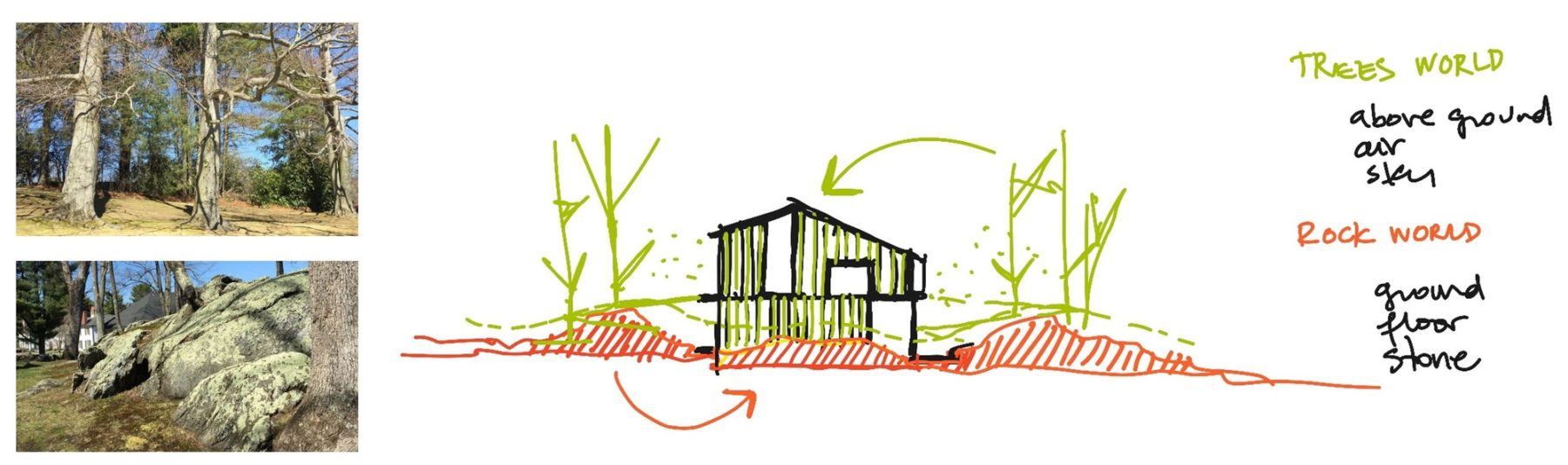
The building’s envelope at the ground floor is influenced by the site’s rocky outcrops; upper floors reflect the wooded nature of the campus
The program includes classrooms, the IDEAS Lab, the Entrepreneurship Center, and the Center for Citizenship and Just Democracy. Program flexibility makes its way from South to North, culminating in the Living Room: a flexroom for everyone, where events and activities bring the community together.
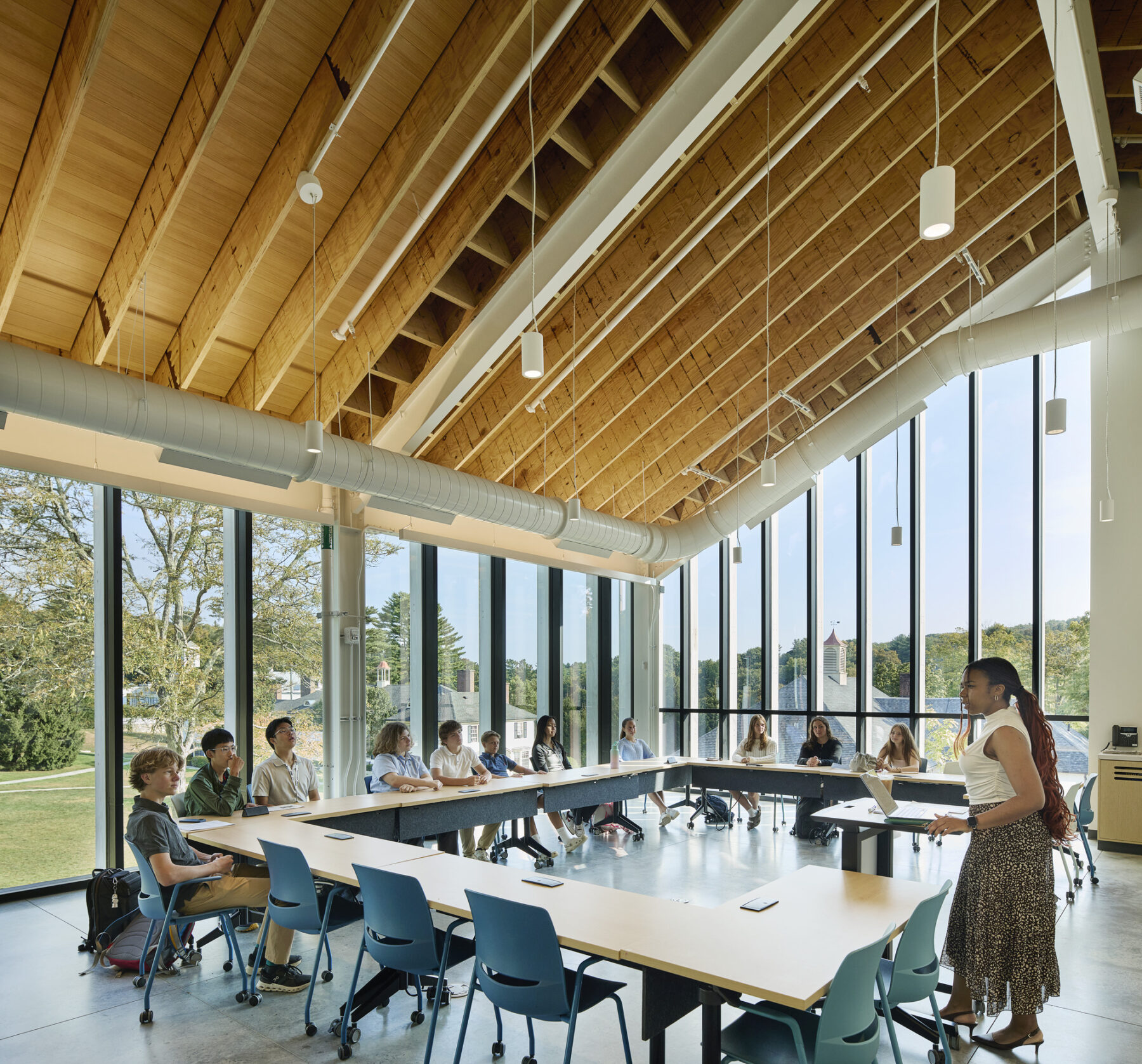
The Center for Just Democracy is a flexible, transparent learning space immersed with views out to the campus
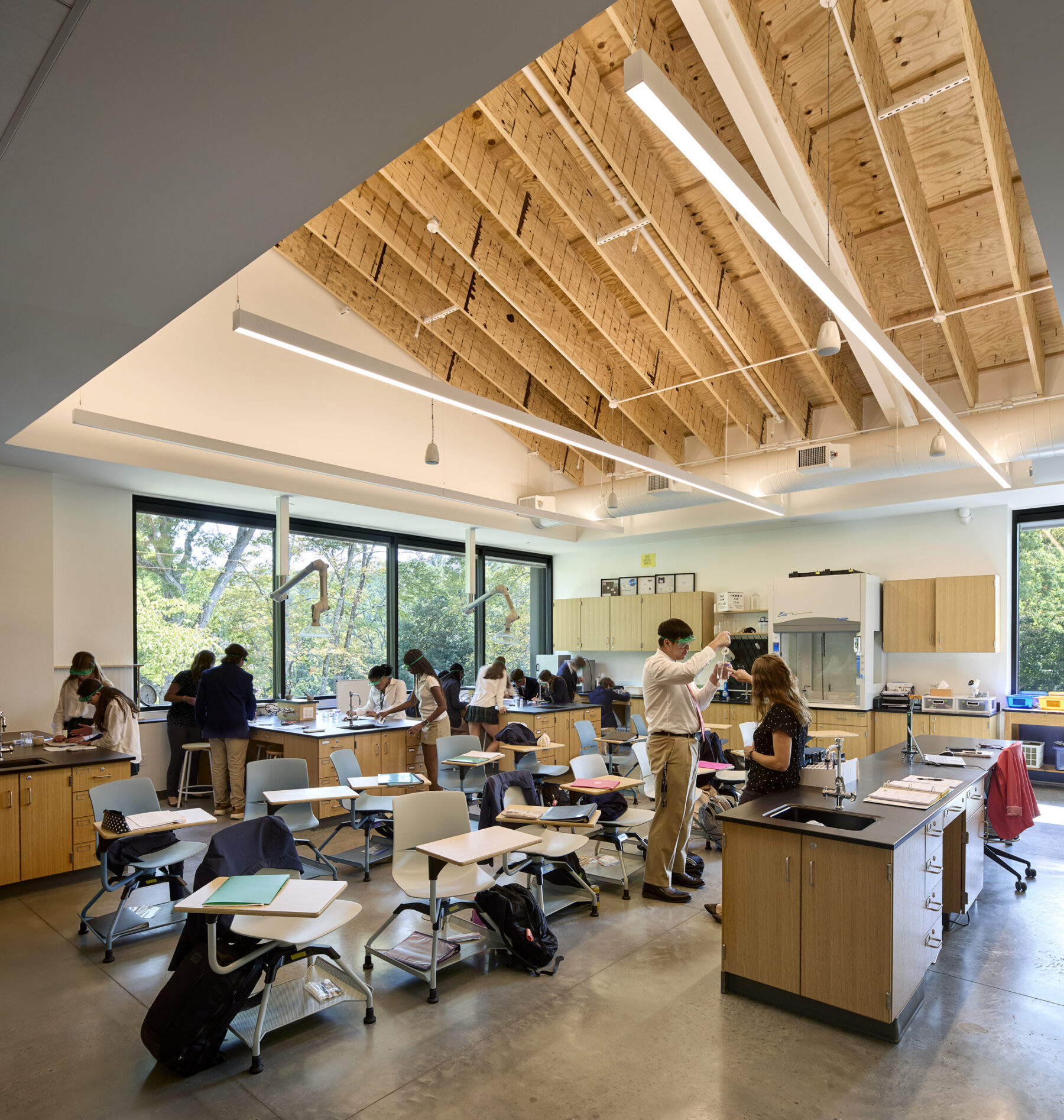
Purpose-built spaces like chemistry, biology, and physics labs are efficiently housed in the south pavilion
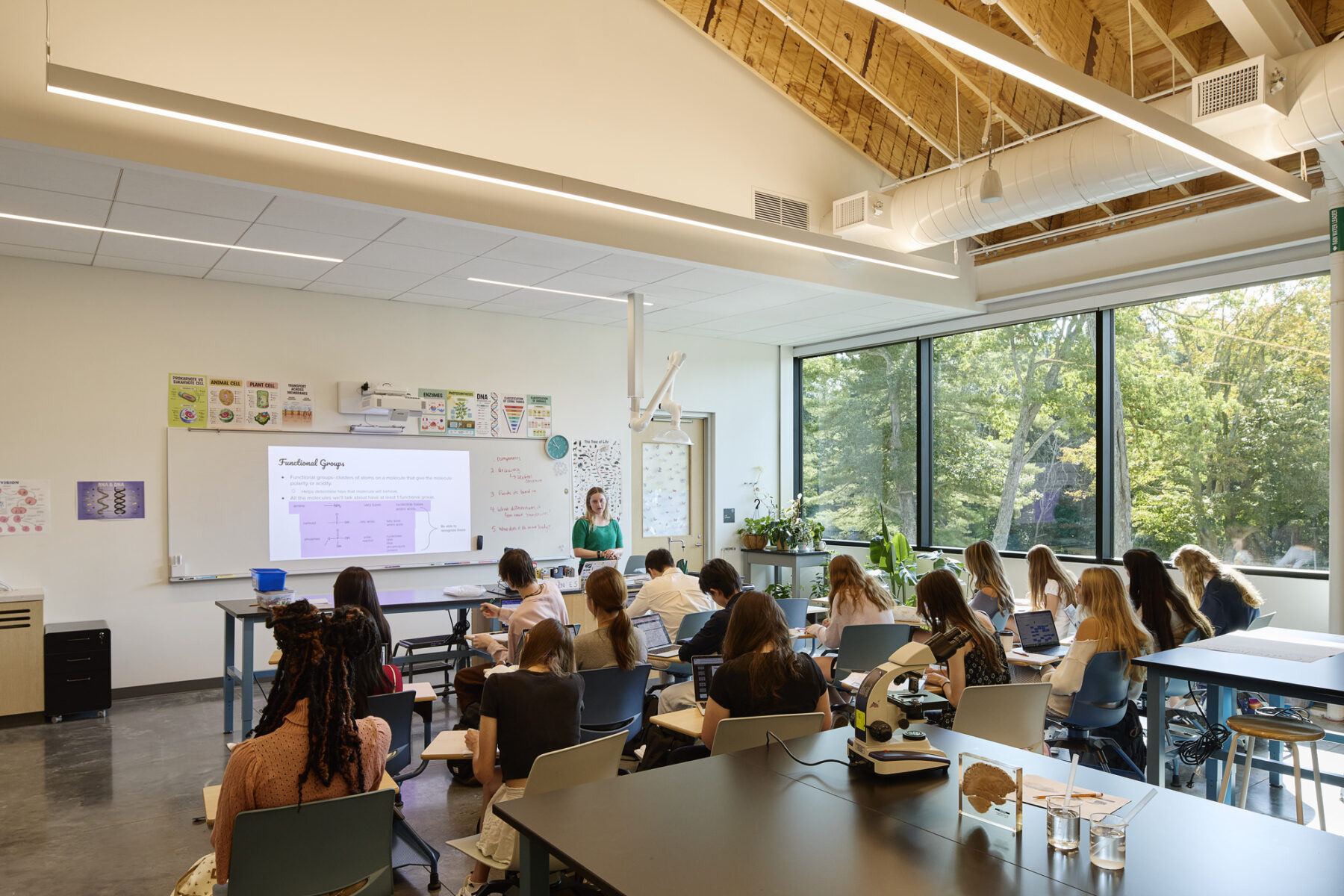
Biology Lab
The Center for Just Democracy is a flexible, transparent learning space immersed with views out to the campus
Purpose-built spaces like chemistry, biology, and physics labs are efficiently housed in the south pavilion
Biology Lab
An important aspect of the program is the integration of student engagement areas for informal meetings. The building includes smaller breakout spaces distributed throughout the main circulation areas to allow for spontaneous interactions. Surrounding the building are landscape plazas, open spaces, and multiple connections between the indoors and the outdoors.
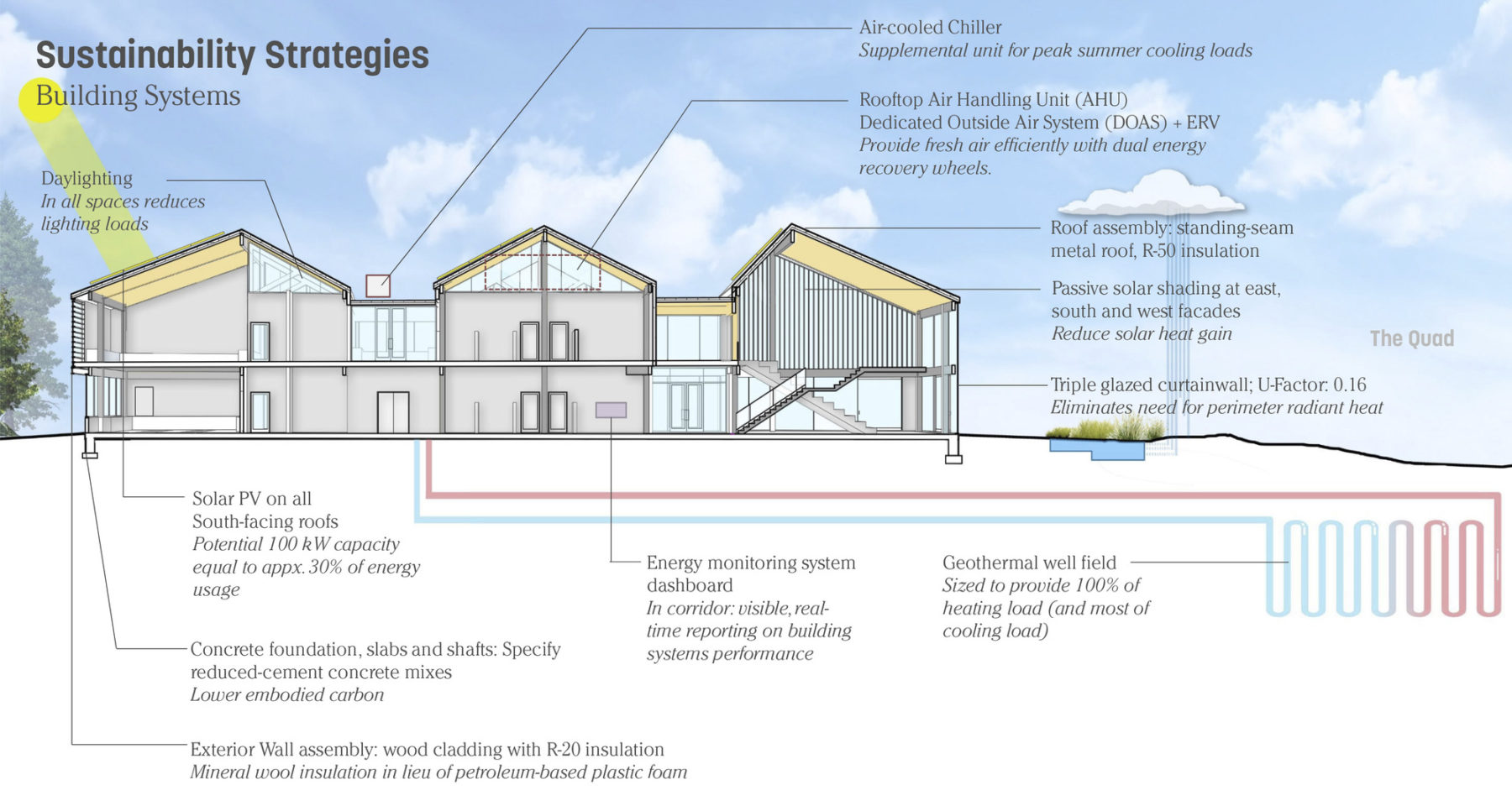
Minimizing the impact on the environment was a top priority in the design process. Nearing Net-Zero performance, the project integrates high-efficiency systems, passive design strategies, and real-time energy monitoring to reduce operational and embodied carbon. A geothermal well field provides 100% of heating load and the majority of cooling load, while rooftop solar PV supplies roughly 30% of total energy use. The all-electric building features a high-performance envelope, an insulated metal roof, triple glazing, and passive solar shading to minimize HVAC loads. The roof structure, combining light wood and steel, reduces embodied carbon by 10%, saving 31 metric tons of CO₂, equivalent to 40 acres of U.S. forest. An interactive energy dashboard in the corridor displays real-time data, making sustainability visible and educational.
Sasaki also designed the building’s landscape, which creates new circulation paths from the campus’ two primary open spaces, the Glade and the Quad. The geothermal installation was carefully coordinated to protect the quad as an irreplaceable open space, and vegetation and permeable surfaces were restored after construction to preserve infiltration and groundwater health. Stormwater is managed on site through bioswales that slow and filter runoff, while native plantings and habitat restoration reconstitute a resilient Connecticut woodland that supports pollinators and wildlife.
After more than a year of occupancy, the building has evolved into a true hub for academic and reflective engagement and is a source of pride and inspiration for the community.
For more information contact Vinicius Gorgati or Marta Guerra-Pastrián.
A conversation between Sasaki principal Vinicius Gorgati and Lawrenceville School Head Master Steve Murray
The Center for Innovation and Active Citizenship will bring several learning environments together in one integrated building