Sasaki to Support Initiative Investigating Thermal Energy Networks in Boston
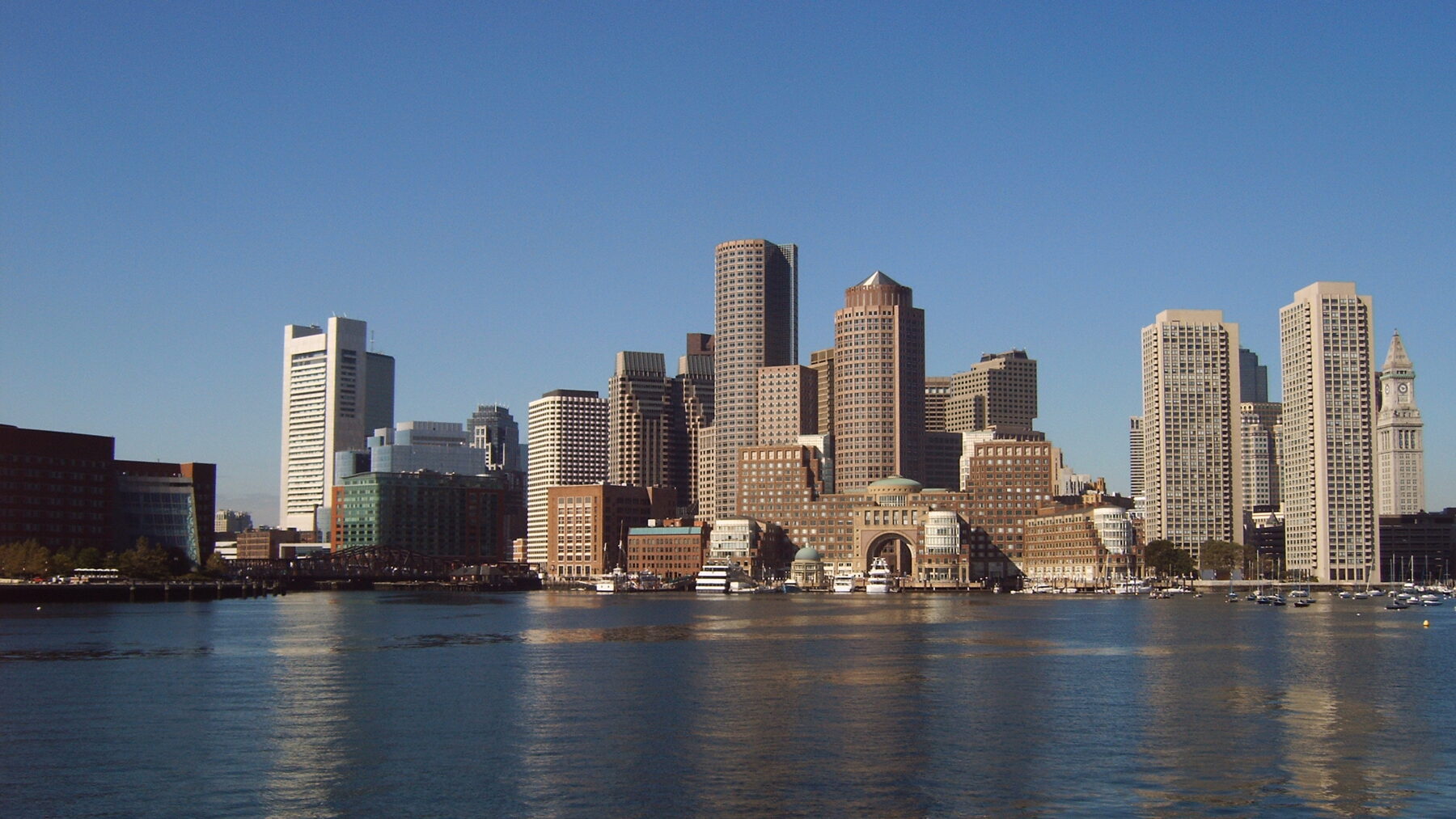
Credit: Willem van Bergen
 Sasaki
Boston, MA, August 6, 2026 – Sasaki is honored to be part of the Boston-area Thermal Energy Network (BosTEN), a groundbreaking project to explore how Boston’s waterways could be leveraged to develop a large-scale thermal energy network and help reduce carbon emissions across greater Boston.
The year-long study will examine the potential of Boston Harbor, Fort Point Channel, the Charles and Mystic Rivers, and bedrock beneath the rivers as renewable thermal energy sources that can be used to heat and cool buildings in a closed-loop network connecting hospitals, universities, commercial and residential buildings, and other large-energy users across greater Boston.
As part of a multidisciplinary team selected by the Boston Green Ribbon Commission (GRC) and led by Salas O’Brien, Sasaki will lead engagement efforts for the 60-person Stakeholder Advisory Group, which includes representatives from state and city governments, local universities and hospitals, developers and property owners, utility companies, and labor unions, as well as providing planning guidance for the selection of catalyst thermal-energy networks.
“We are excited to bring our expertise in decarbonization at the campus planning level to help envision a more resilient future for Boston,” said Tamar Warburg, Director of Sustainability at Sasaki. “Just as Sasaki has been able to leap in scale from carbon-neutral buildings to carbon-neutral campuses, we now have the opportunity to envision clean thermal energy networks at the broader urban scale. In this landmark effort, Boston will be the first city in the United States to plan municipal district energy based on renewable resources.”
In this landmark effort, Boston will be the first city in the United States to plan municipal district energy based on renewable resources.
Tamar Warburg, Director of Sustainability, AIA, LEED AP BD+C, Sasaki
Working alongside engineering, environmental, and financial specialists, Sasaki will help leverage collective expertise and balance diverse needs to determine how these systems can be implemented through measures that are reliable, sustainable, and economically and technically feasible to ensure long-term success.
With its rich system of waterways, Boston is uniquely poised to serve as a practical and scalable model for helping cities work towards reducing reliance on fossil fuel heating and build climate resilience using existing natural assets and efficient modes of resource sharing.
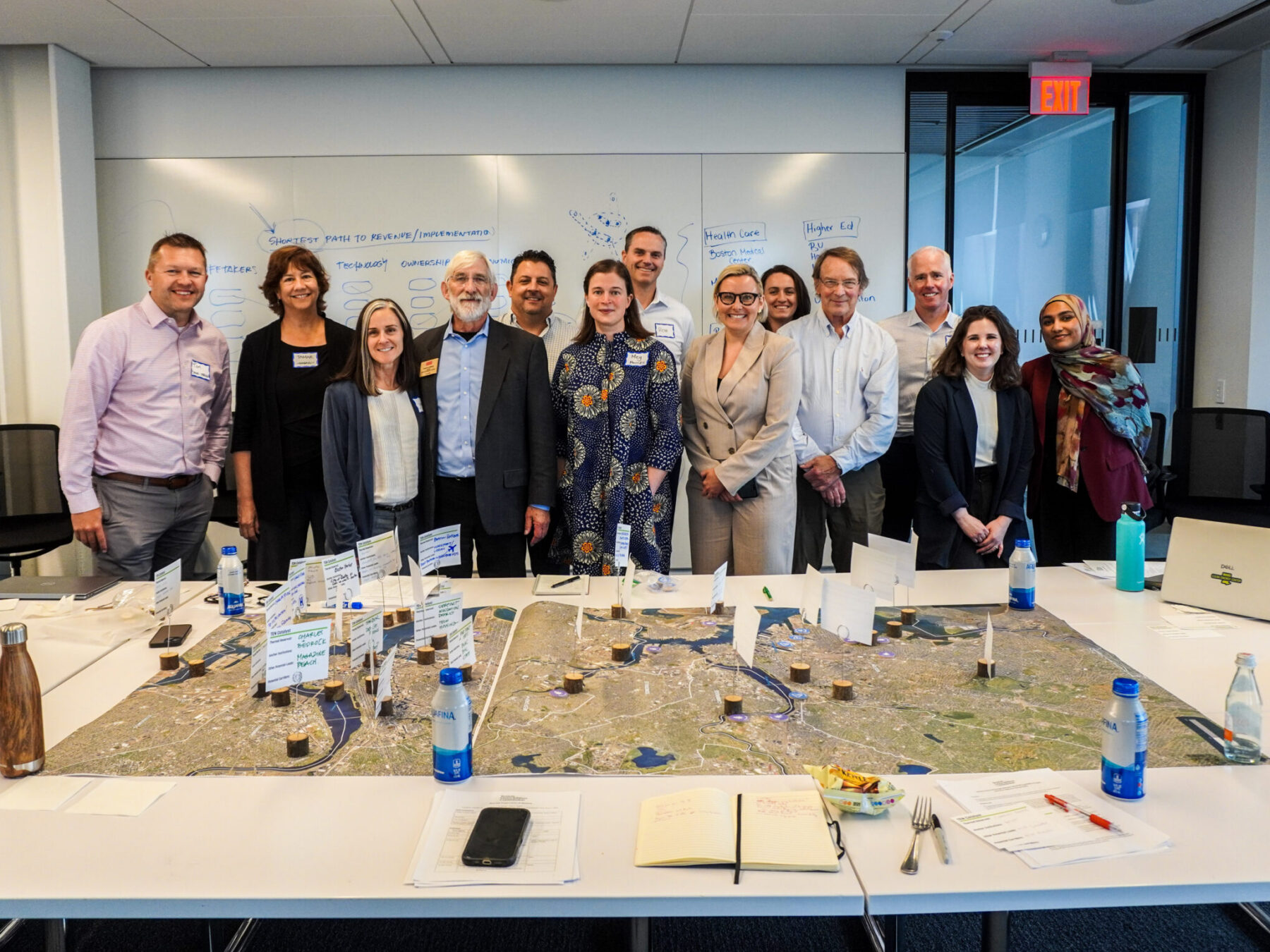
Project team kickoff meeting in early July
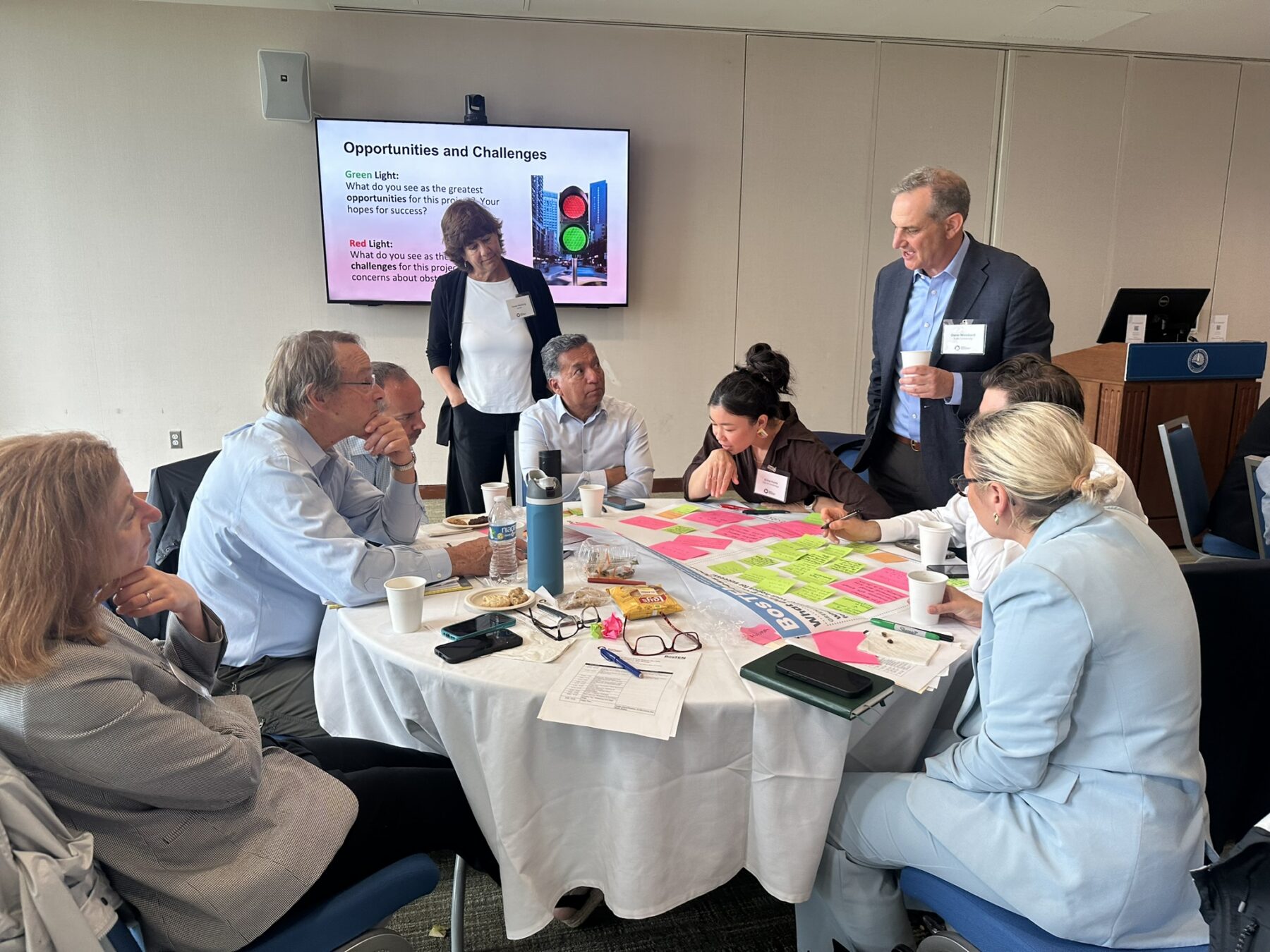
Stakeholder Advisory Workshop
The project is jointly funded by the Massachusetts Clean Energy Commission (MassCEC) and the City of Boston, and represents a collaborative effort across public and private sectors to fulfill both the Commonwealth and the City’s ambitious carbon neutrality goals. A public launch on July 29 was held at UMass Boston, with a day-long program that included a tour of the university’s seawater cooling system, remarks from Mayor Michelle Wu, as well a Stakeholder Advisory Group workshop with engagement led by Warburg. In addition to Sasaki, the project team includes Synapse Energy Economics, VHB, Sherwood Design Engineers, and GeoSource.
The study is slated to be completed in summer 2027.
About Sasaki:
Sasaki has been a leader in the design industry for 70 years. The firm is known for blending disciplines, engaging with clients and communities, drawing on history and context, and using data and emerging technologies to shape the built environment. With offices in Boston, Denver, New York, Los Angeles, and Shanghai, Sasaki’s 350 professionals partner with education, civic, and commercial clients around the world. Sasaki’s integrated services include planning and urban design, landscape architecture, civil engineering, architecture, interior design, and space planning.
Media Contact
Kevin Derrick, Director of Communications and PR