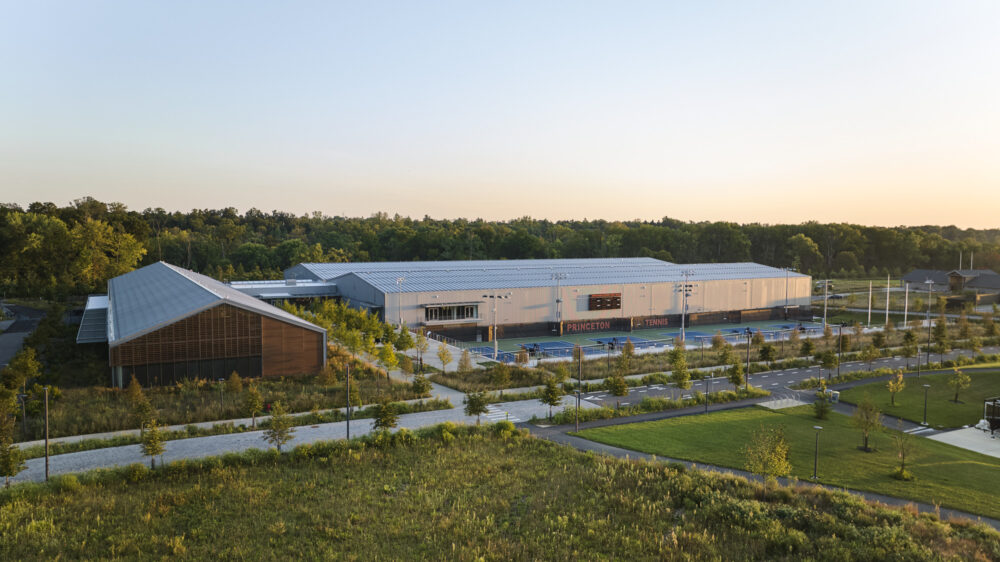
普林斯顿大学球拍类运动康体馆
美国新泽西州西温莎镇
 Sasaki
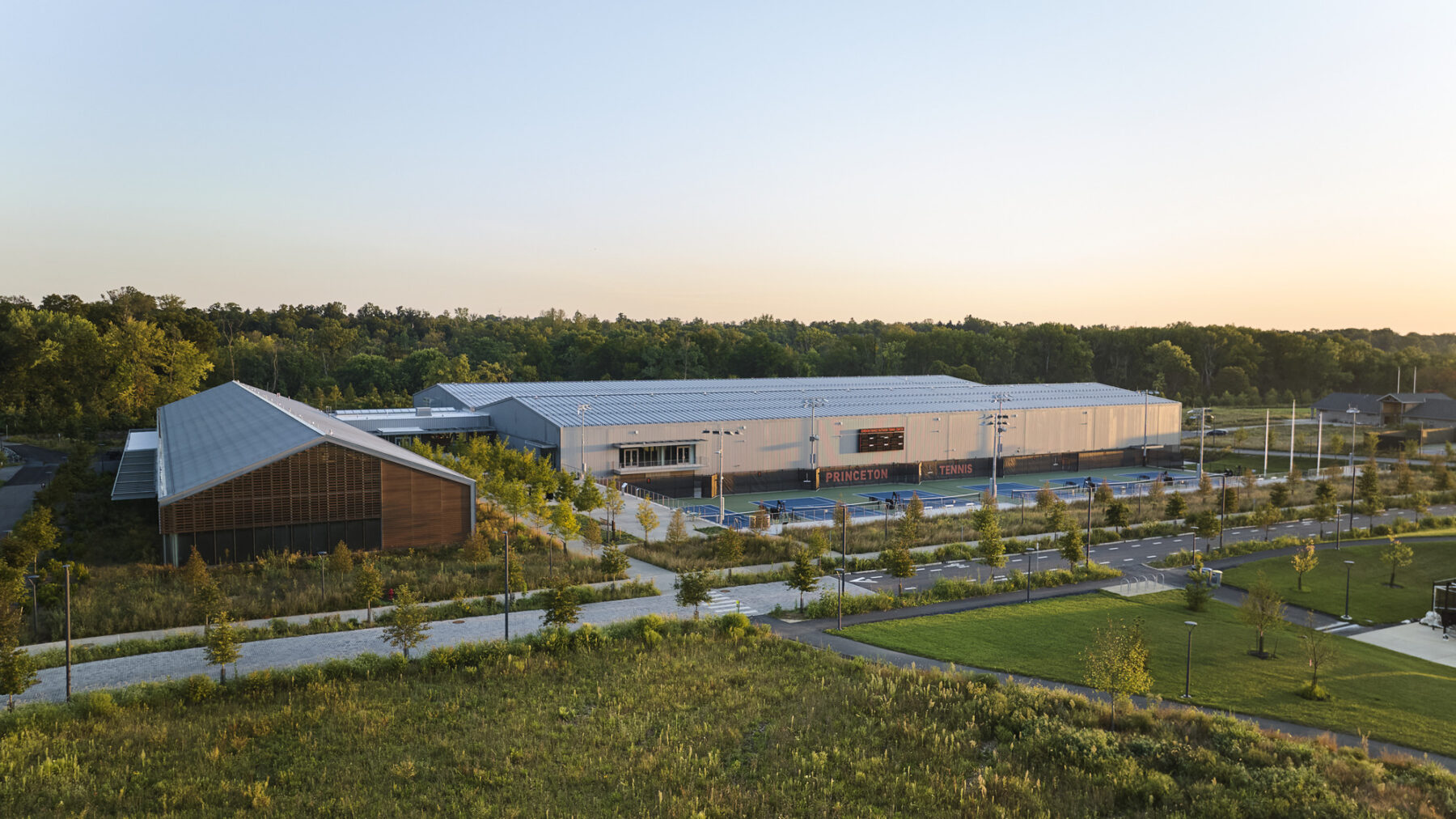

Division I tennis and squash facilities demand precise playing conditions and a high degree of environmental control. Large clear-span volumes, carefully calibrated lighting levels, and strict thermal and humidity regulation are essential for both competition and training. These performance requirements often challenge conventional approaches to energy efficiency and sustainable design. At the Racquet and Recreation Fieldhouse in the Princeton University Meadows Neighborhood, the Sasaki design team treated this tension as a fundamental opportunity rather than a constraint, resulting in a LEED Gold certified and net-zero ready facility where sustainability is embedded in the architecture itself.
The Racquet and Recreation Fieldhouse at Princeton is a new, 180,000-square-foot athletic and community hub situated in the heart of the University’s Meadows Neighborhood. Designed to serve as both a premier home for Princeton’s varsity tennis and squash programs and a vibrant recreational center for the broader campus, the facility brings together nine indoor and outdoor tennis courts, 14 squash courts, varsity strength and conditioning spaces, sports medicine, coaches’ offices, and a fitness center open to all students, staff, and faculty.
The project had two main drivers. The University prioritized sustainability metrics and long-term environmental stewardship, establishing an aspirational benchmark of achieving LEED Gold certification. Princeton Athletics required uncompromised playing conditions and a facility capable of supporting elite competition and athlete development. Together, these priorities defined the guiding principles for the project: supporting student-athletes at the highest level; reflecting Princeton’s standards of excellence across academics and athletics; fostering inclusion and collaboration; and advancing the University’s sustainability ethos through the creation of a vibrant and healthy built environment.
These principles directly informed design decisions at every scale. Building program and organization, materiality, environmental systems, lighting, and landscape were evaluated based on their ability to deliver athletic performance, long-term functionality, and a healthy, sustainable campus environment. Instead of relying on a single system or gesture, the project’s sustainability approach is defined by a series of coordinated architectural decisions.
Sasaki collaborated closely with VanZelm Engineers and Thornton Tomasetti to align architectural intent with high-performance building systems and measurable sustainability outcomes. The following sections outline the core strategies that emerged from this integrated process, including passive strategies, envelope and systems design, daylighting, and solar PV readiness.
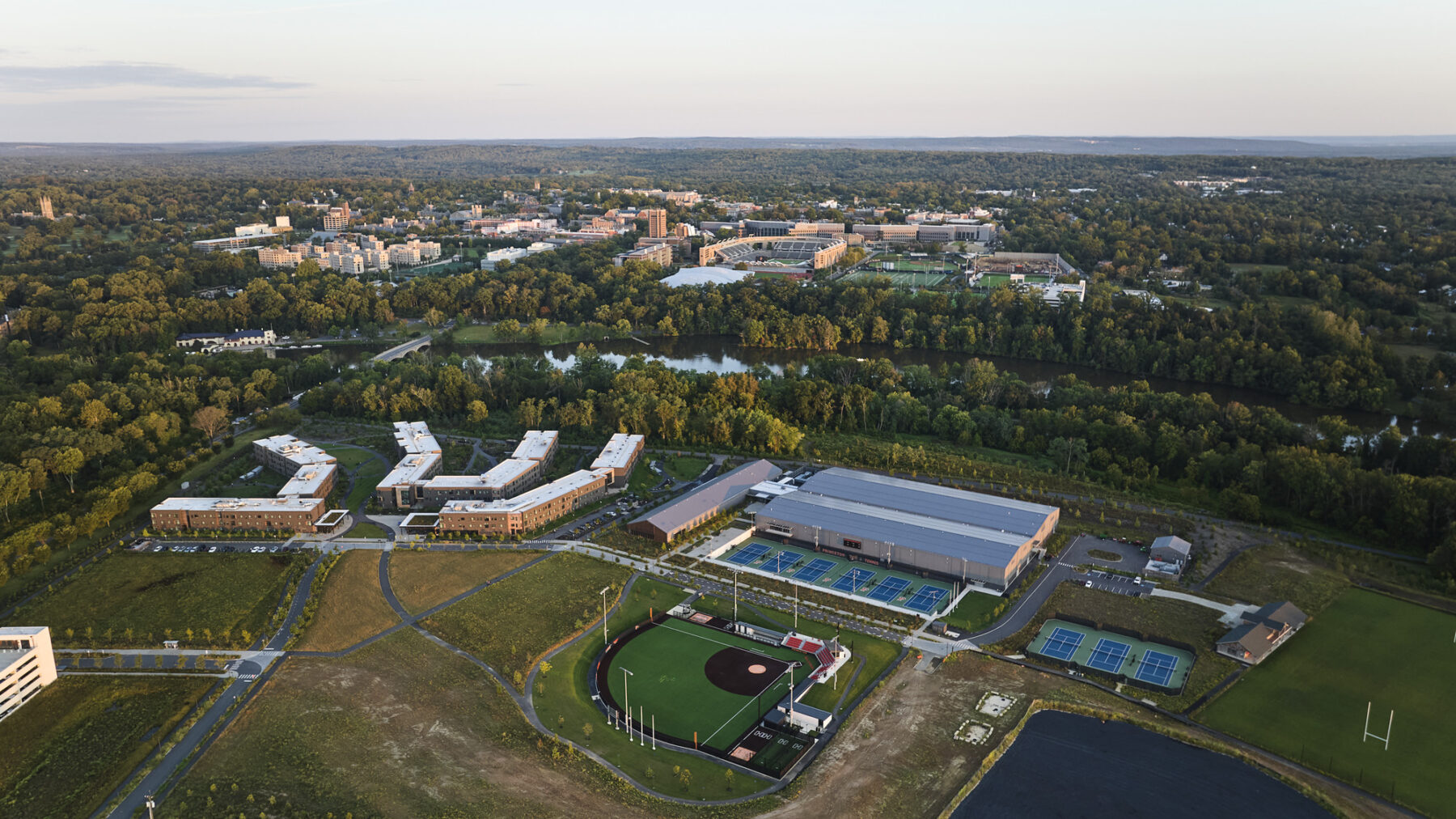
The Racquet and Recreation Fieldhouse is integrated into the topography of Princeton’s Meadows Neighborhood.
The Fieldhouse is located within Princeton’s Meadows neighborhood, a new, energy efficient athletics district on the southeastern side of campus. The siting of the Fieldhouse promotes walkability and supports efficient service and operations. The primary entrance is aligned with key pedestrian, bicycle, and transit routes, reinforcing campus connectivity, while the east end of the building is positioned in proximity to Court Drive, allowing for efficient access for buses, service vehicles, and daily deliveries without disrupting pedestrian circulation.
The building program was organized into distinct volumes, responding to their functional and environmental requirements. The ‘Bar’ building, consisting of the main entry and large glazed openings, is positioned along the primary pedestrian path. In contrast, the pre-engineered buildings housing the tennis and squash courts are set further back and embedded into the topography to moderate scale and minimize the perceived mass of the long-span volumes along the adjacent Delaware and Raritan Canal State Park and Lake Carnegie. The placement and massing of these buildings also help shield Lake Carnegie from light spill and sound associated with the outdoor tennis courts.
As part of the Princeton Meadows initiative, which seeks to reduce the University’s greenhouse gas emissions and achieve net-zero carbon by 2046, the project relies on a district-based heating and cooling system powered by geo-exchange wells and high-efficiency heat pumps. The geo-exchange well field is located beneath the Sasaki-designed Cynthia Paul Softball Field and serves multiple campus facilities.
Stormwater management is similarly integrated into the site strategy. Runoff from the expansive roof areas is collected and diverted to a network of bioretention ponds providing on-site ecological stormwater treatment while reinforcing existing watershed patterns.
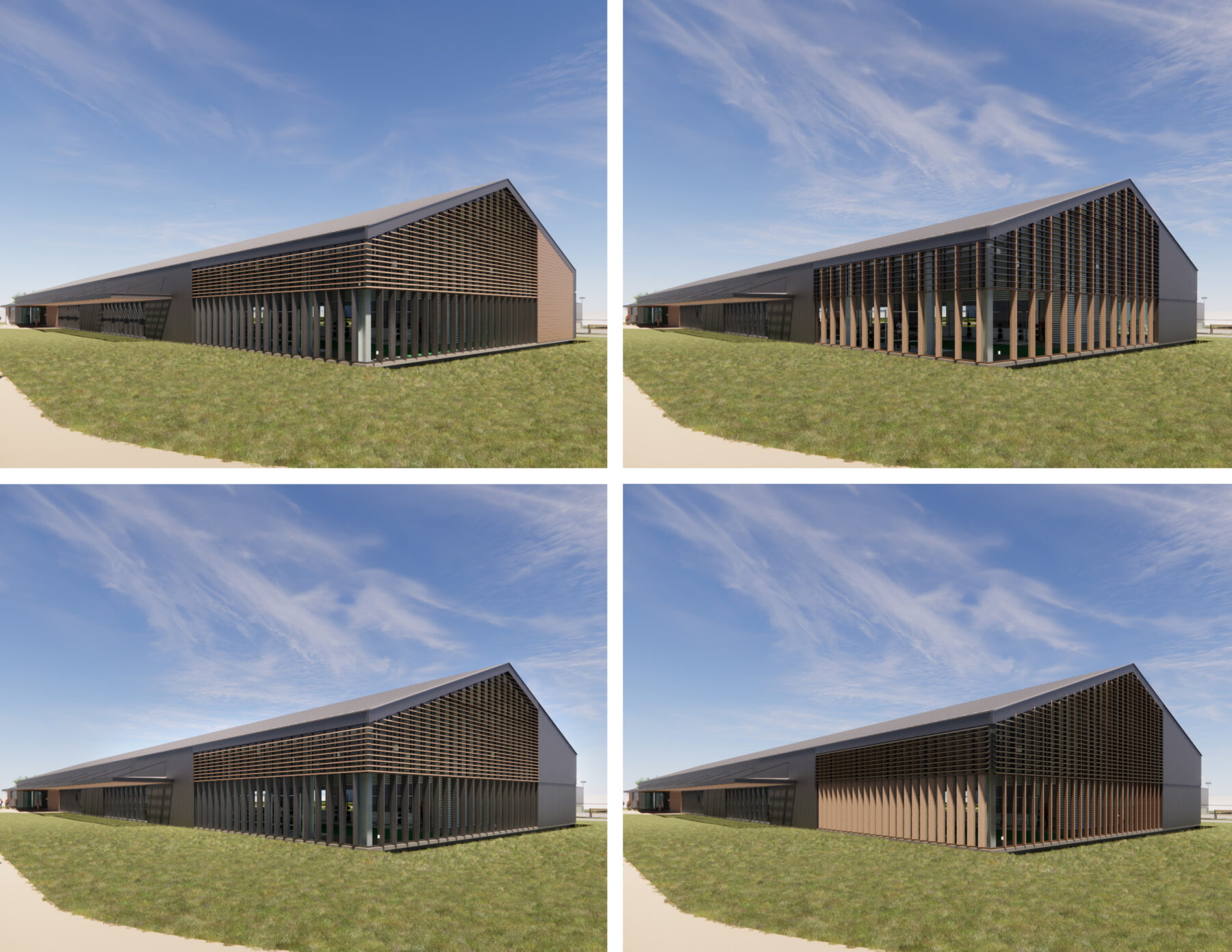
Sasaki studied many facade variations to find the optimal orientation for exterior elements.
The building employs a high-performance thermal envelope that significantly reduces heat loss and gain across the large-volume spaces. Exterior wall and roof assemblies achieve effective R-values ranging from 32-40. The slab-on-grade incorporates a continuous R-10 insulation, exceeding ASHRAE baseline requirements, improving thermal performance, and supporting efficient radiant heating in the athletic spaces. High-performance triple-glazing (U-0.26) at large glazed openings reduces heat loss and eliminates the need for perimeter radiant heating, reducing demand on the mechanical systems.
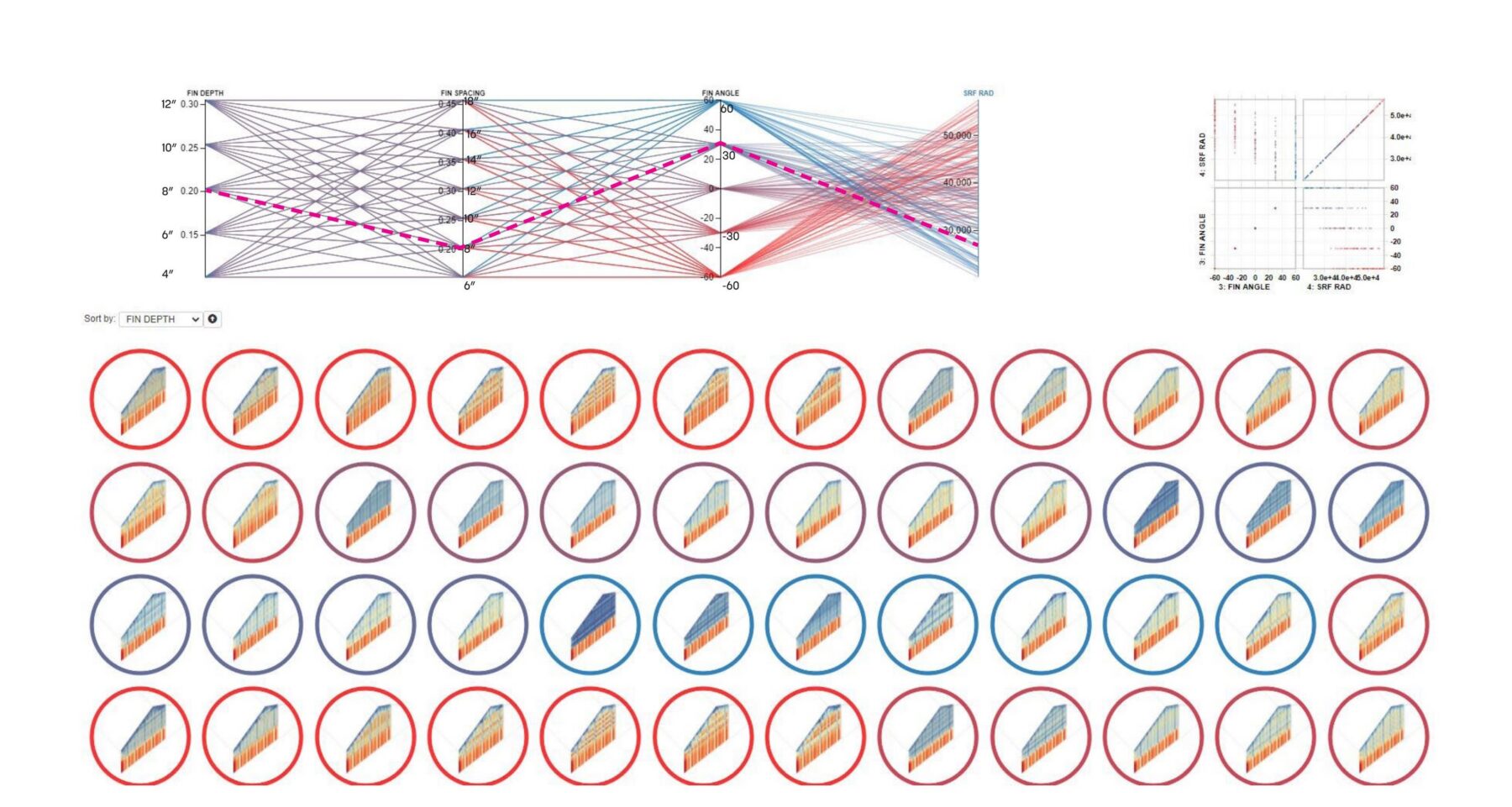
Solar radiation and daylighting analysis informed how louvers, fins, and trellises were integrated into the facade.
Daylighting was carefully calibrated to enhance occupant comfort without compromising the precise lighting conditions required for competitive play. Sasaki’s solar radiation and daylighting analyses optimized the system of composite wood louvers, fins, and trellises integrated into the façade. These elements reduce glare while providing daylight and transparency and frame views to the Meadows campus beyond. Strategically placed skylights introduce daylight into the student-athlete lounge, reducing reliance on supplemental lighting in a heavily used social space.
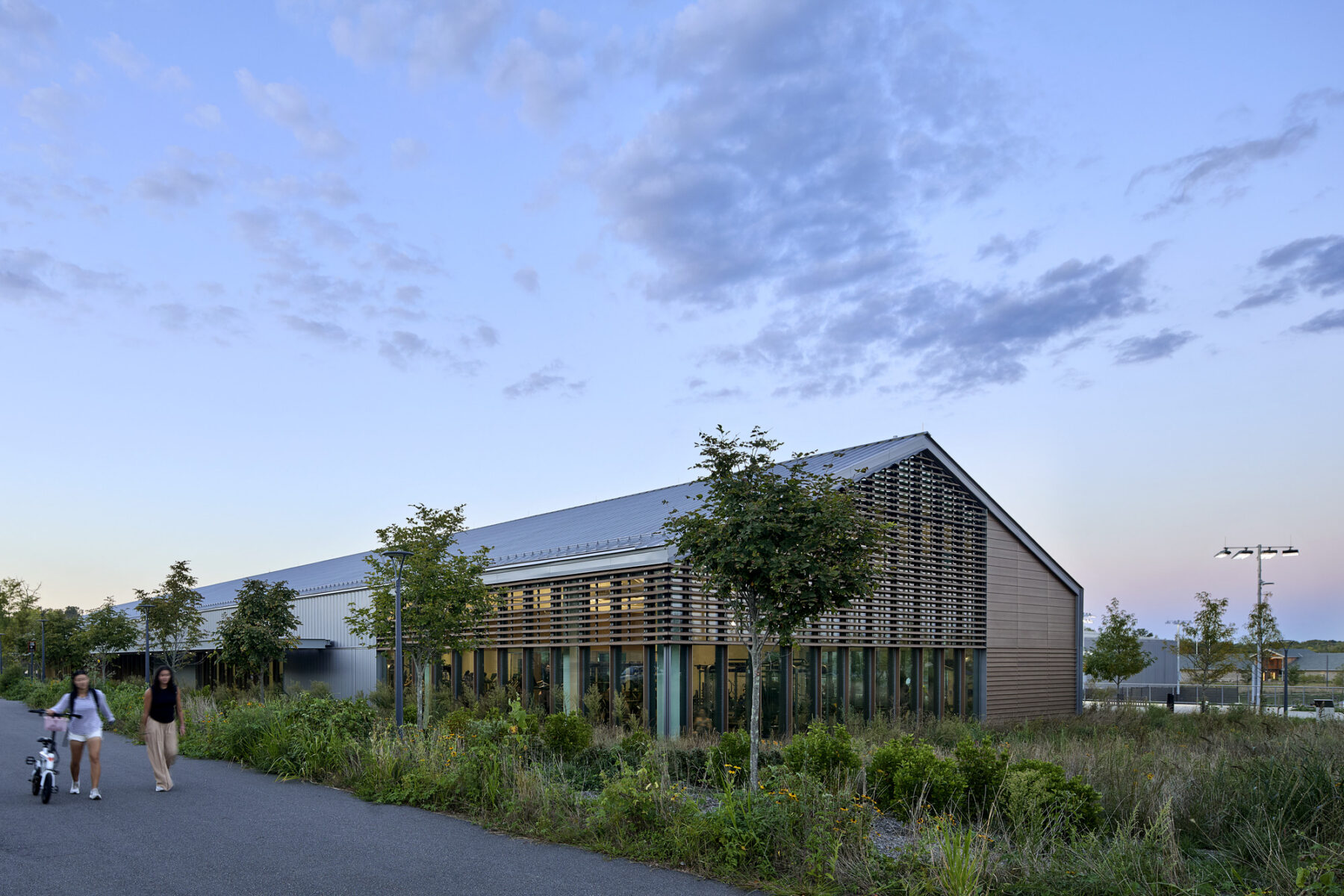
Daylighting is strategically incorporated into the design to minimize the need for supplemental lighting.
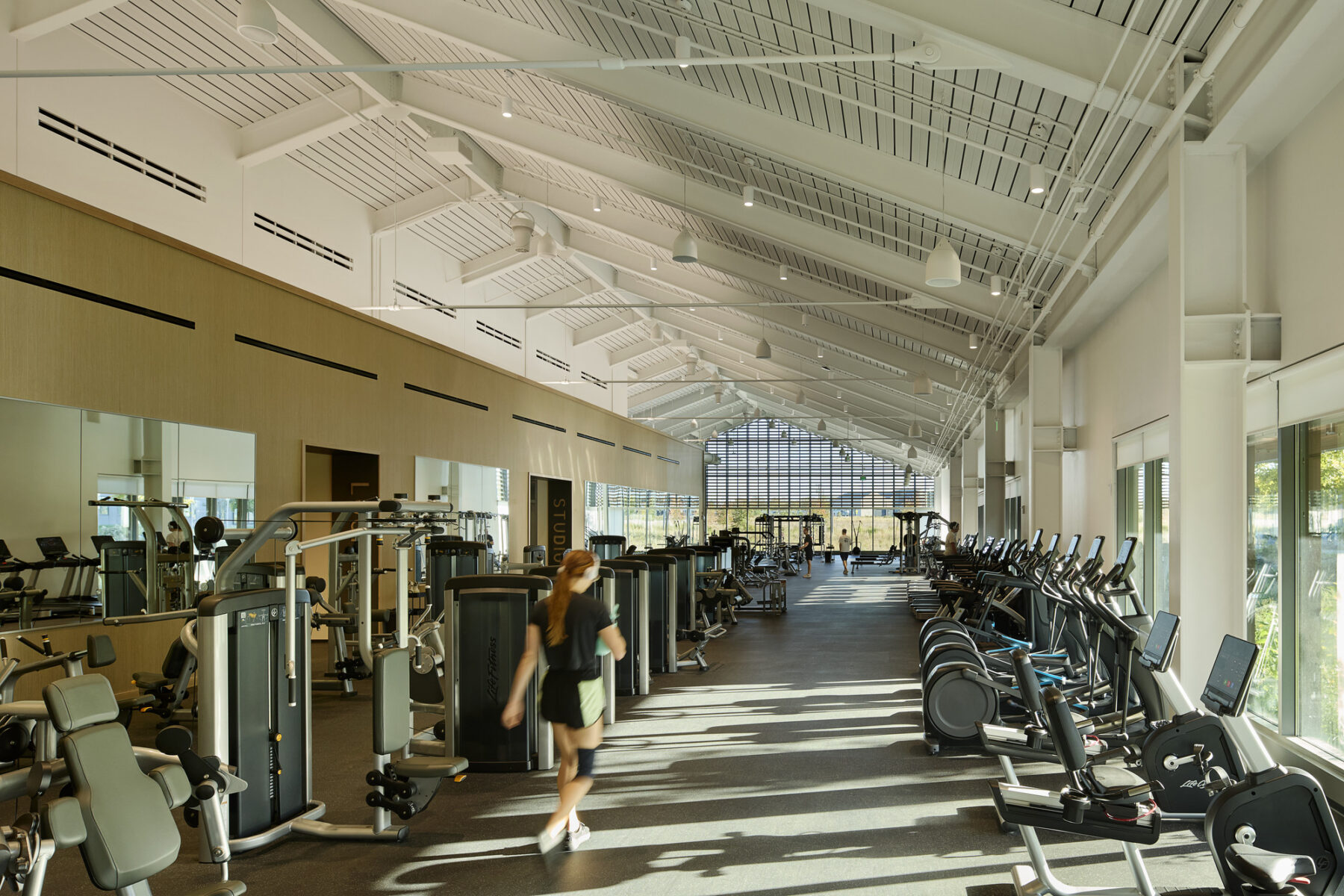
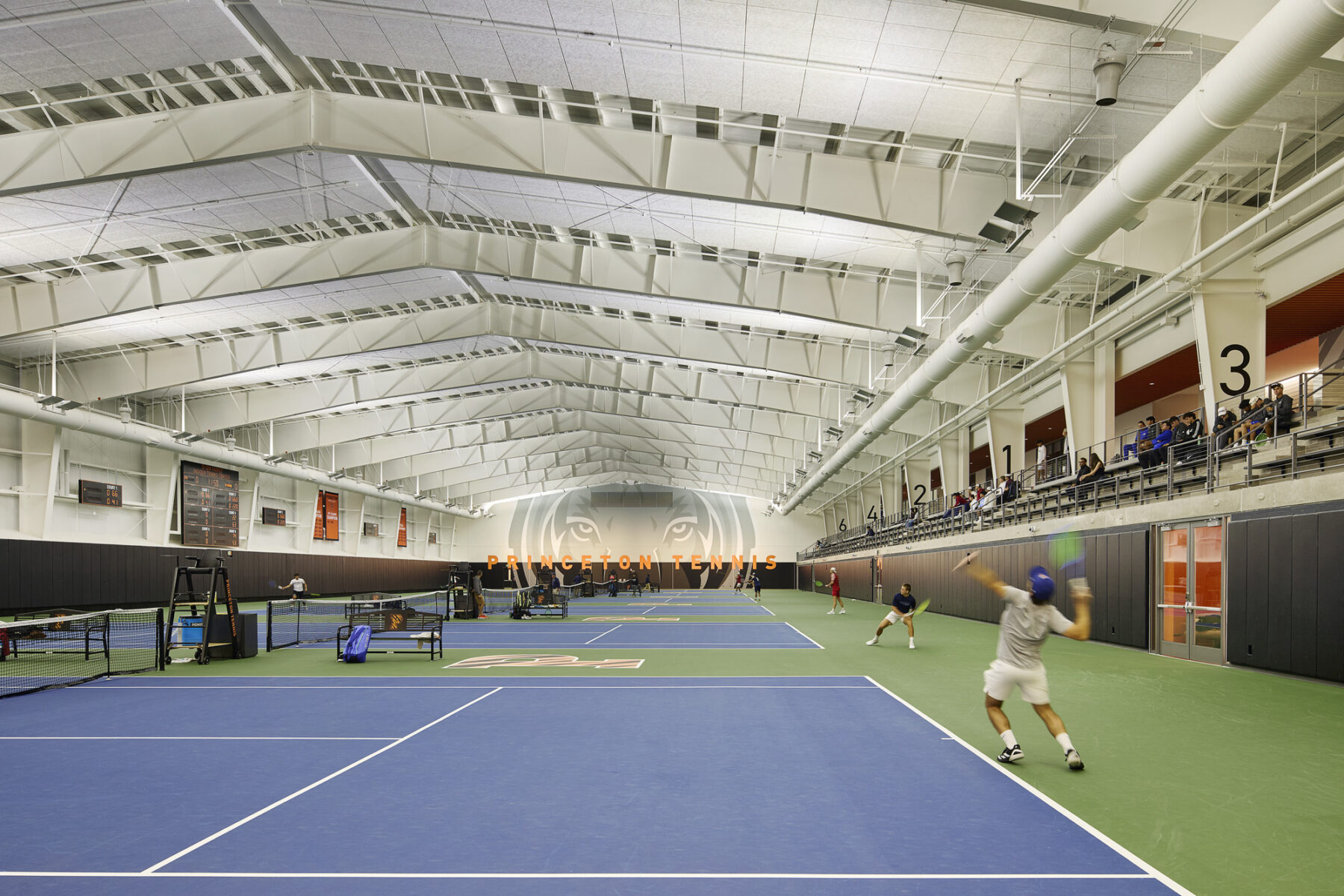
Indoor tennis courts require a 100-foot-candle illumination level across a playing surface. The design team utilized high-reflectance white to help achieve this.
Tennis and squash courts require precise lighting levels and carefully calibrated lighting conditions. Lighting in the tennis courts was designed to meet NCAA national broadcast requirements. Indirect lighting was required to minimize glare and ensure a uniform 100-foot-candle illumination level across the playing surface, which increased lighting power density (LPD) relative to conventional athletic facilities.
To improve overall lighting efficiency, interior walls, ceiling surfaces, and mechanical systems were finished in high-reflectance white. Acoustic treatments were similarly optimized for dual performance. Acoustic decks and sound-absorptive panels were tested to maintain high reflectivity while reducing ambient noise levels, supporting both spatial and acoustic comfort within the large-volume court spaces. This approach improved light distribution, informed lighting calculations, and reduced the total number of fixtures required for optimal illumination levels.
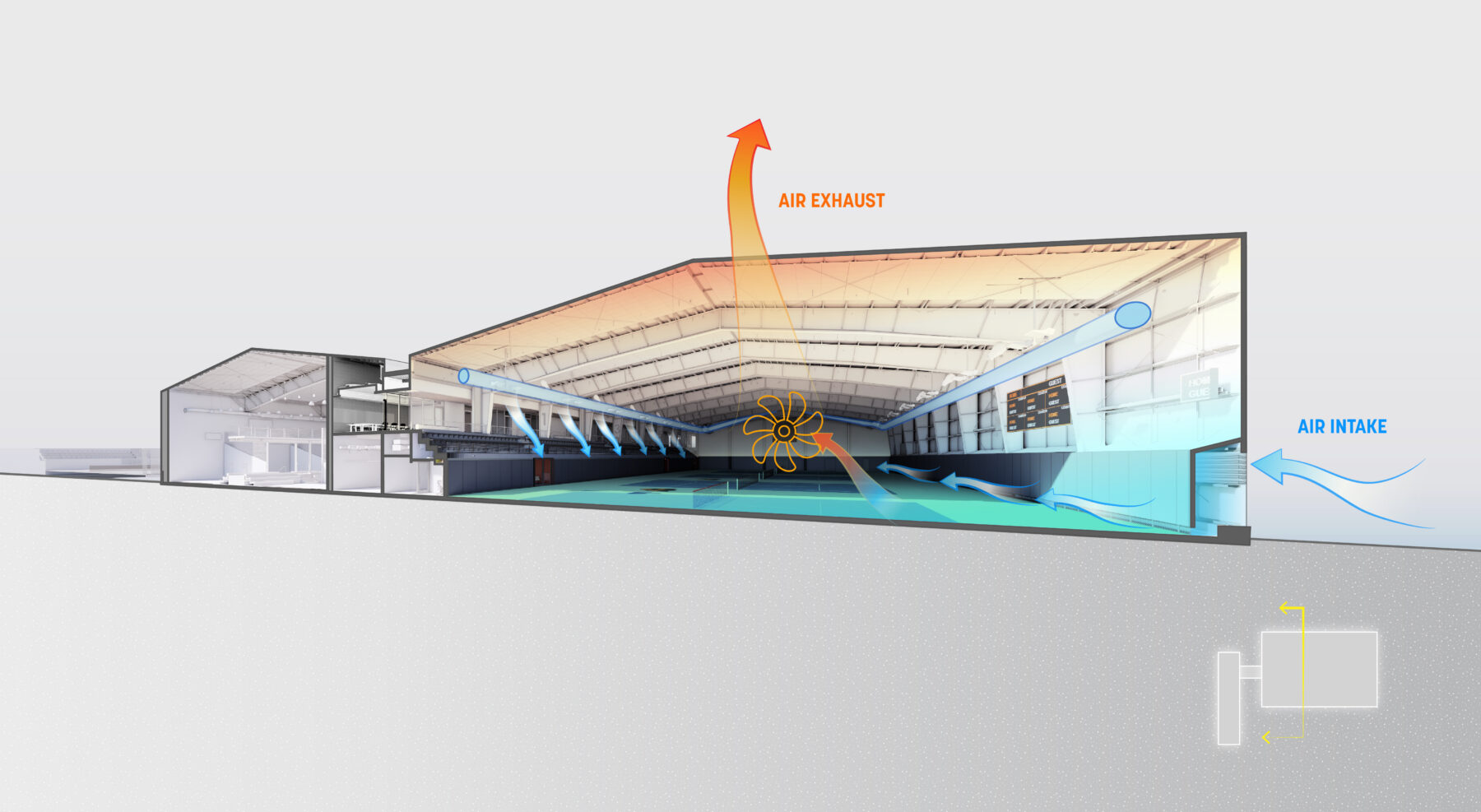
The advanced mixed-mode ventilation system relies on real-time occupancy and allows the courts to operate without mechanical cooling.
While envelope performance and daylighting reduce baseline energy demand, achieving ideal playing conditions ultimately depends on mechanical systems capable of precise control and adaptability. The mechanical systems in the Fieldhouse employ multiple strategies to support a wide range of uses, from daily training to tournaments and large convening events, without relying on a single, oversized system.
The indoor tennis courts employ an advanced mixed-mode natural ventilation strategy. Mechanically operated louvers positioned low along the envelope, combined with high-level exhaust fans, enable maximum natural airflow and dynamic response to outdoor conditions. The system allows the courts to operate without mechanical cooling, using night flushing to precondition the space, with dedicated outdoor air systems (DOAS) that use demand-controlled ventilation (DCV) to deliver fresh air based on real-time occupancy and use. High-efficiency enthalpy heat recovery wheels reclaim energy from exhaust air, substantially reducing heating and cooling loads.
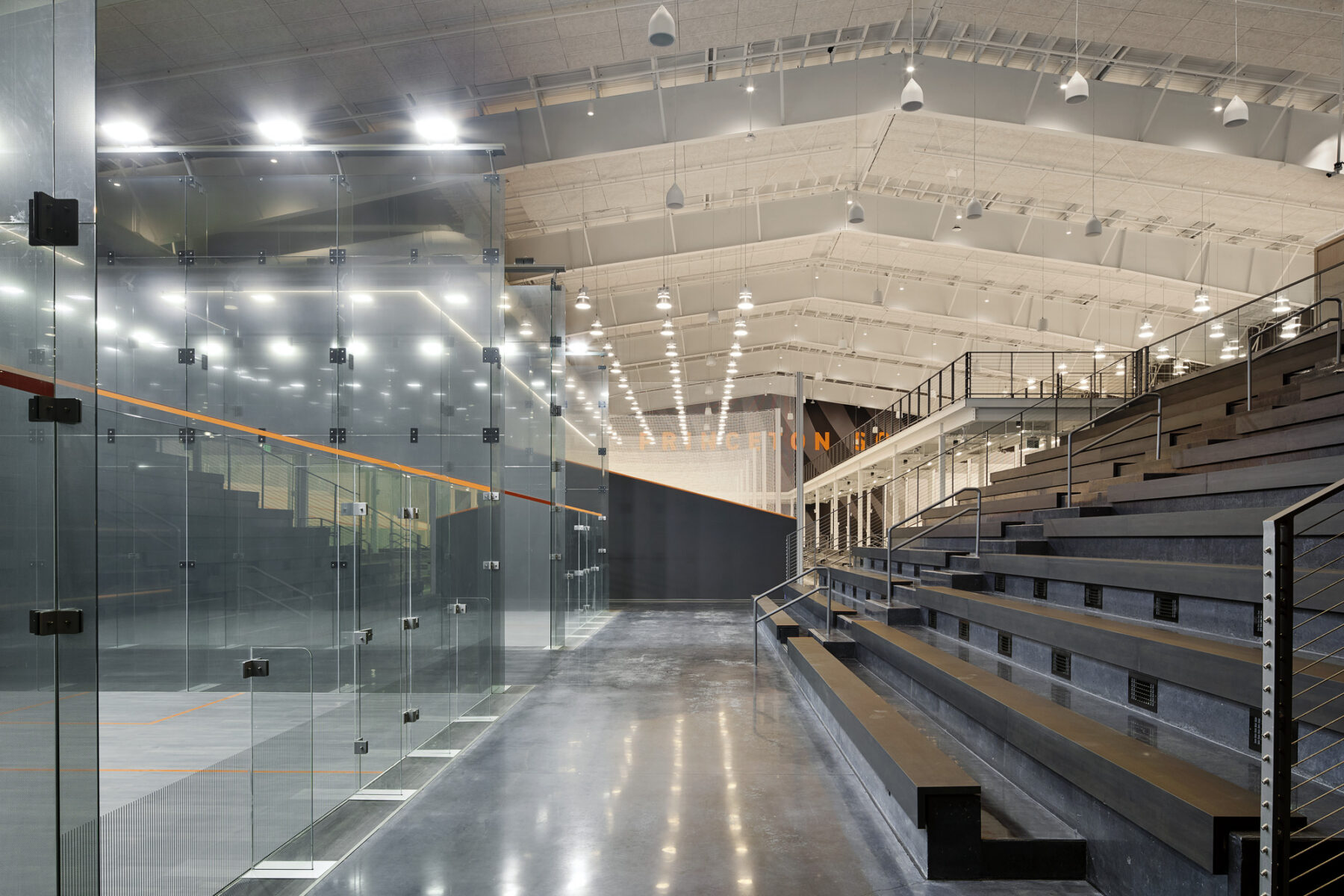
Supply grilles on the seating risers are part of a displacement ventilation strategy, which allows for quiet delivery of fresh air for players and spectators.
The three-court tennis space, which also functions as a convening venue, is served by a dedicated mechanical system sized for higher occupant loads. During peak summer conditions, this system can supplement cooling in the adjacent six-court tennis space, providing flexibility without oversizing the base system.
Within the squash courts, hardwood playing surfaces are particularly sensitive to fluctuations in temperature and humidity, which can affect both playability and long-term durability.
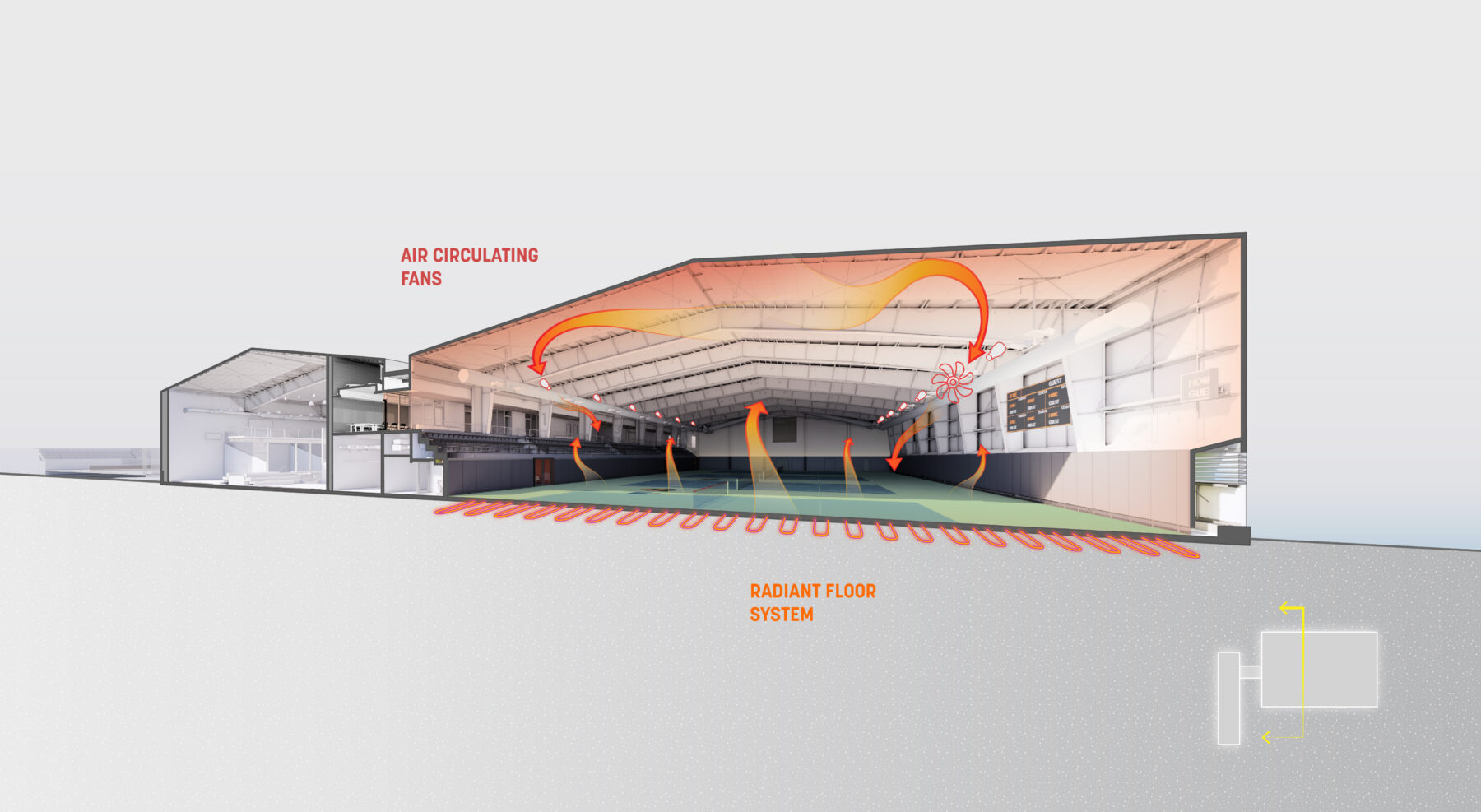
In colder months, radiant floor heating keeps the lobby and indoor tennis courts comfortable, with destratification fans circulating warm air within the larger court volumes.
To meet requirements, the squash courts are served by a dedicated air-handling system designed to deliver precise control while operating efficiently. Using a displacement ventilation strategy, low-velocity conditioned air is supplied low in the space, and below the tin line, allowing fresh air for both players and spectators without the noise or energy demands of high-velocity systems. Variable Air Volume (VAV) systems and occupancy sensors allow multiple courts to be zoned and maintained at consistent conditions.
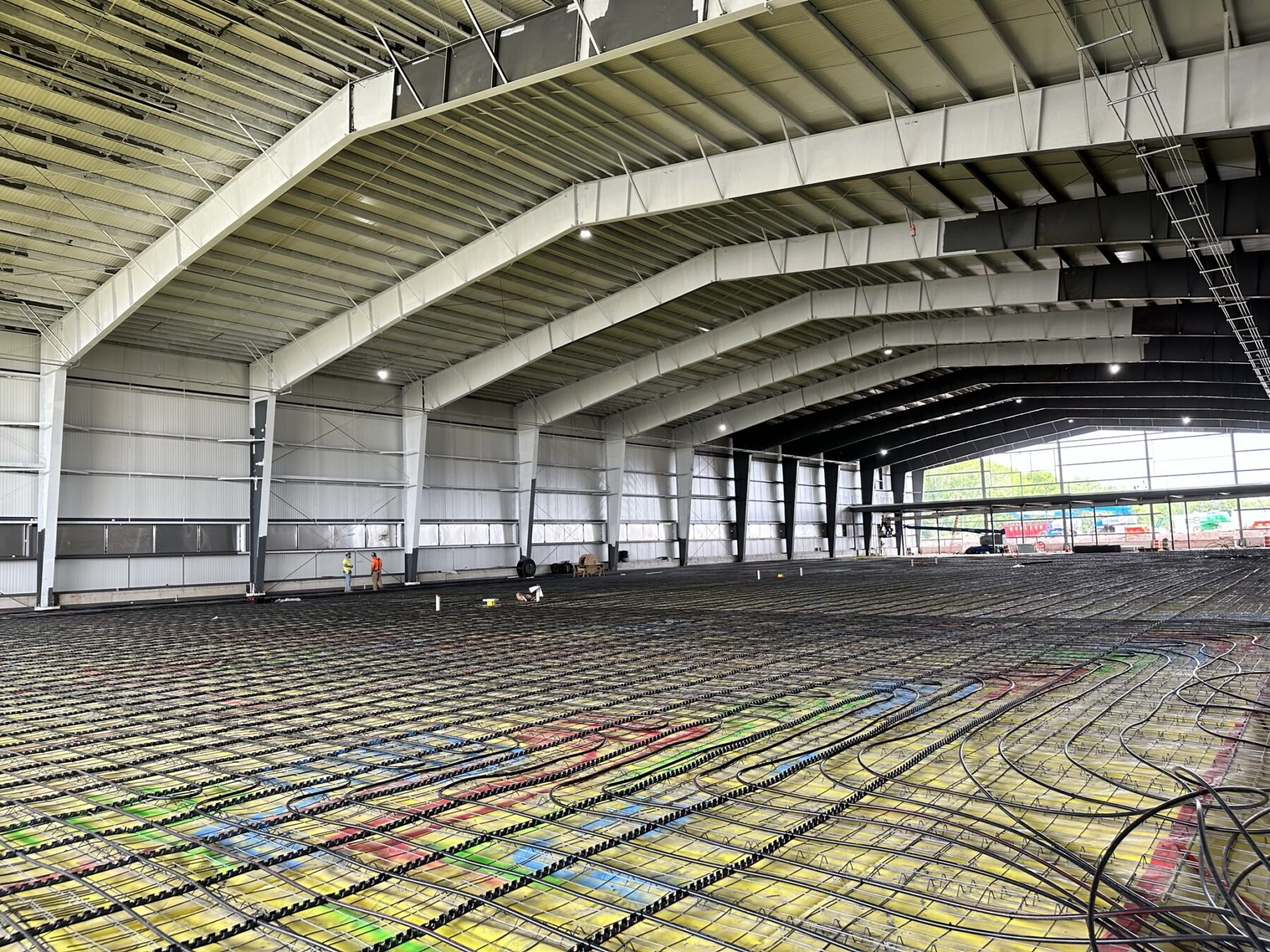
Hydronic radiant floor piping being installed during construction.
During colder months, approximately 65,000 square feet of radiant floor heating serves the lobby and indoor tennis courts, providing low-temperature, hydronic heating across the large-volume spaces. By utilizing the thermal mass of the concrete slab, the system delivers uniform heat at the occupant level, particularly effective during low-occupancy practice conditions. Destratification fans are employed to redistribute warm air within the tall court volumes, maintaining consistent thermal conditions throughout the space. This approach also minimizes the energy use and background noise typically associated with air-based conditioning systems of large athletic spaces.
The building was designed to be PV-ready to align with Princeton University’s long-term goal for net-zero carbon by 2046. The roof structure, access pathways, and equipment rooms can accommodate a future photovoltaic system to meet the building’s annual electrical demand for net-zero operation.
The Racquet and Recreation Fieldhouse at Princeton reflects an approach to design in which sustainability and athletic performance are addressed together, from the earliest planning decisions through detailed systems integration. By treating the exacting environmental demands of Division I tennis and squash as an opportunity rather than a constraint, the project leverages architectural form, envelope performance, lighting, and mechanical systems to deliver a world-class athletic environment with reduced energy use and long-term operational resilience.
For Sasaki and the design team, this project reinforces the value of integrated, performance-driven design, where close collaboration with clients, consultants, and users allows ambitious sustainability goals to be met without compromising experience or function. The result is a facility that supports elite competition today while positioning Princeton University to meet its broader campus sustainability objectives over time.