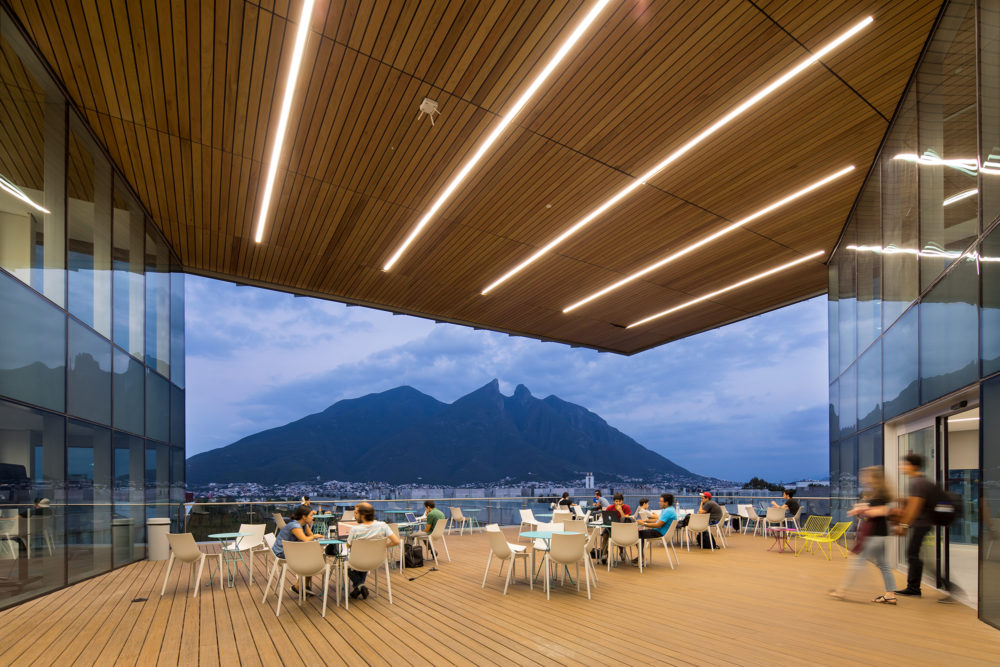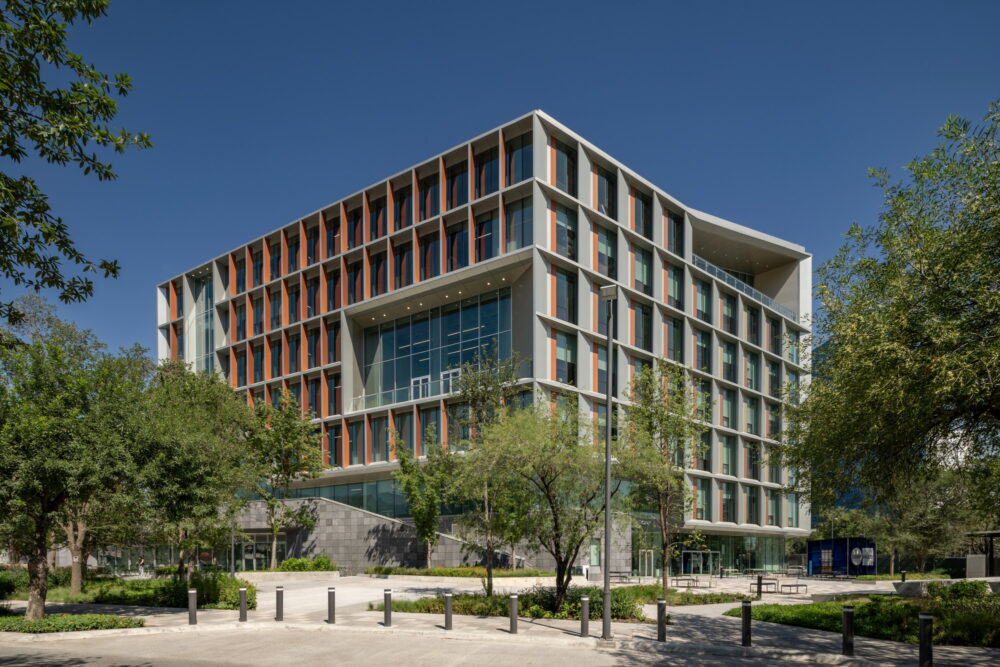
墨西哥蒙特雷科技大学远航大楼
墨西哥蒙特雷市
 Sasaki
Over the past decade, Tecnológico de Monterrey has undergone a remarkable transformation that bridges its architectural legacy with a forward-looking vision for innovation, community, and global impact. At the heart of this evolution is a comprehensive urban regeneration plan led by Sasaki, which reimagines the campus not as an isolated institution but as a dynamic engine of academic, civic, and economic vitality.
The 2014 master plan, updated in 2024 to reflect the significant first phase of implemented projects, has led to the creation of vibrant new learning environments and renewed connections with Monterrey’s surrounding neighborhoods. At the center of this plan was an investment in a new innovation core that would spur and support Tec’s partnerships with industry and R&D enterprises.
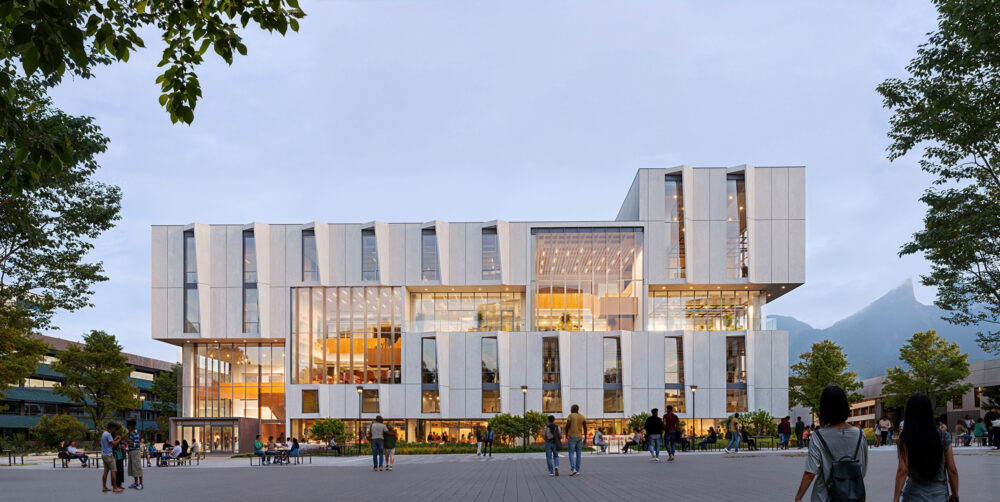
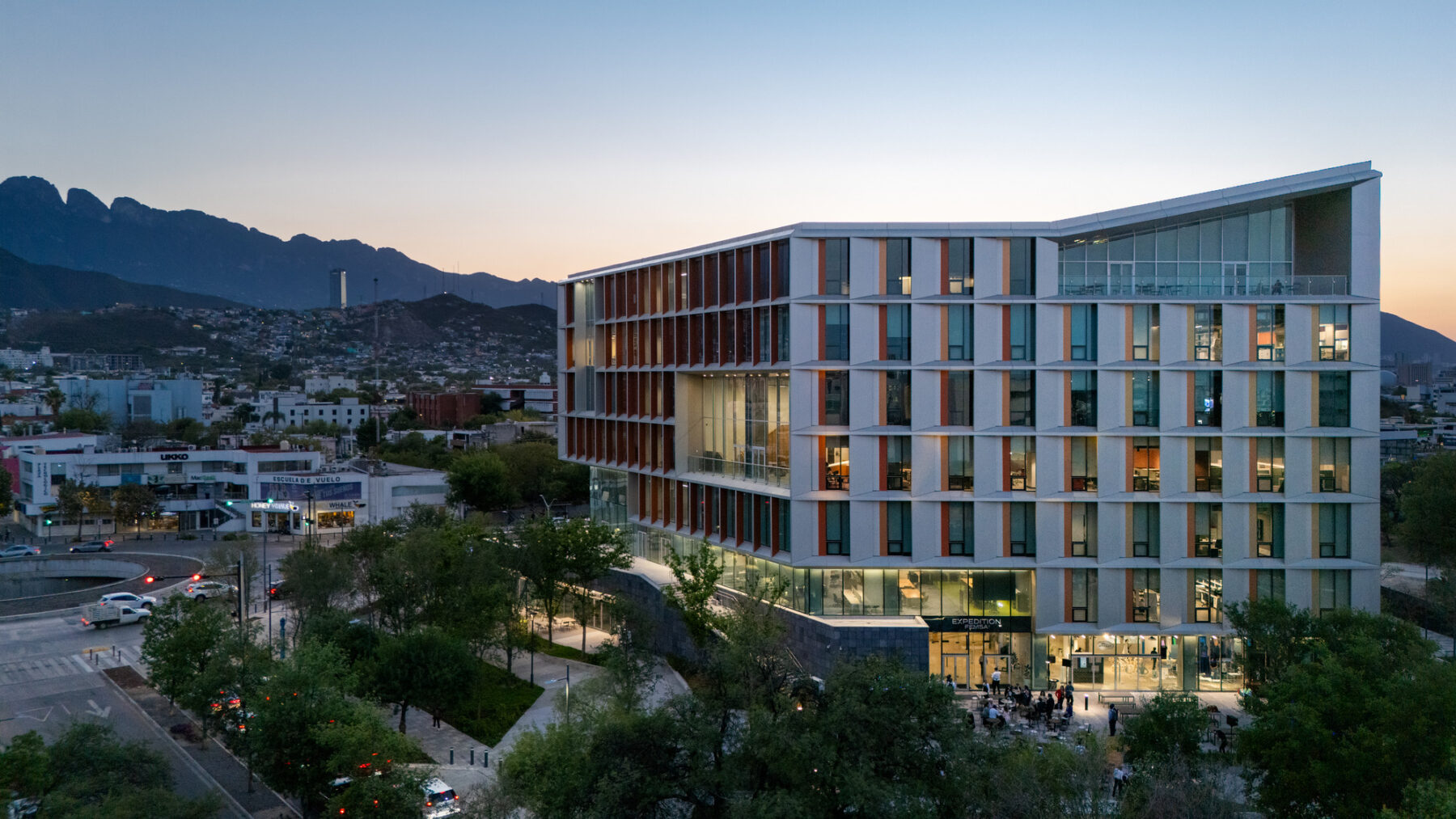
In the last ten years, Sasaki has designed and delivered a new main library, a renovation of the historic La Rectoria in the academic core, La Carreta Pavilion, and most recently, the Expedition Building in the new Innovation District.
In the coming years, the district will see the completion of the Innovation Hub and the academic core will be home to the new Center of Design and Engineering. Moving from planning to the realization of this ambitious vision was possible through close collaboration between designers and the university.
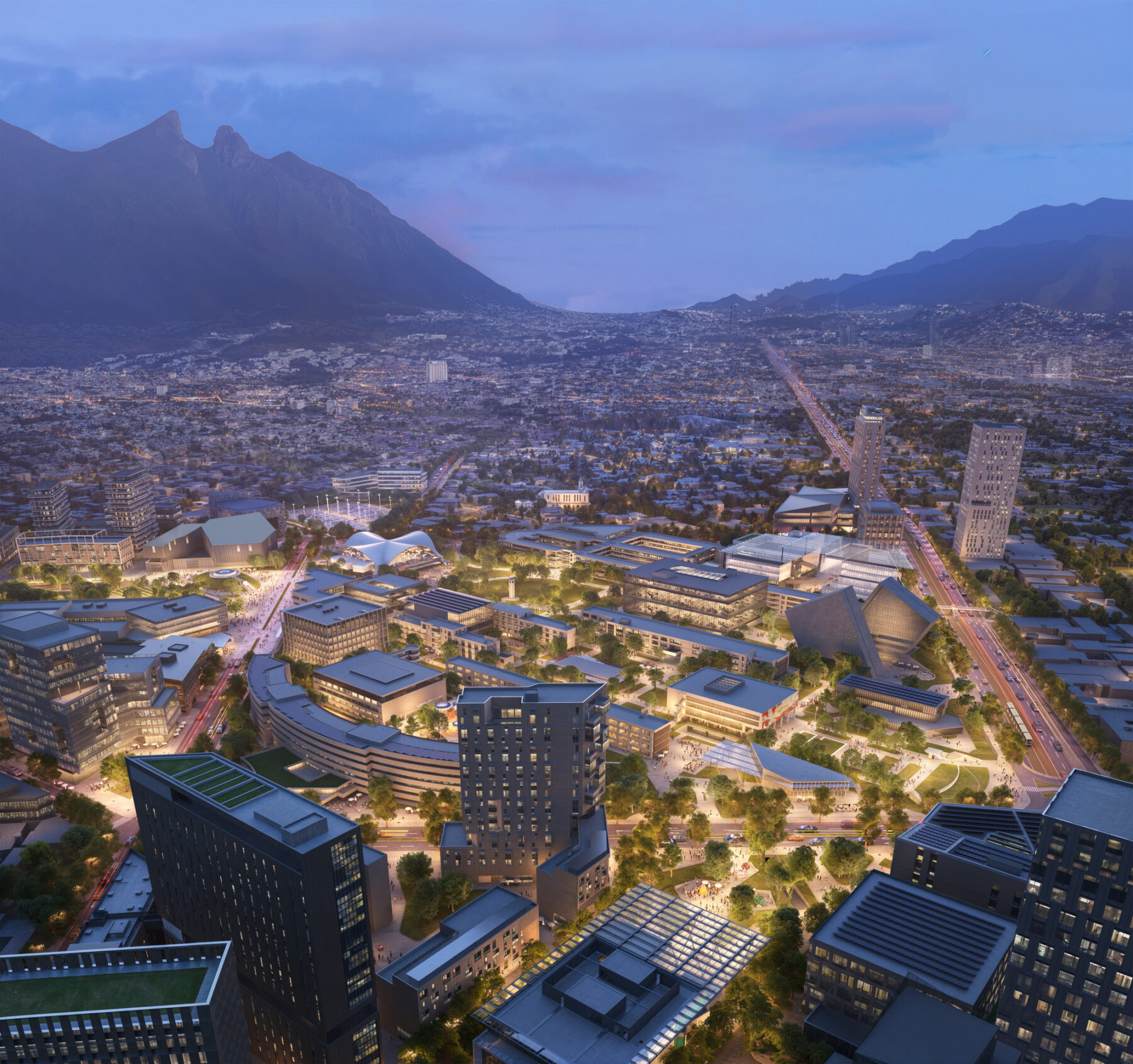
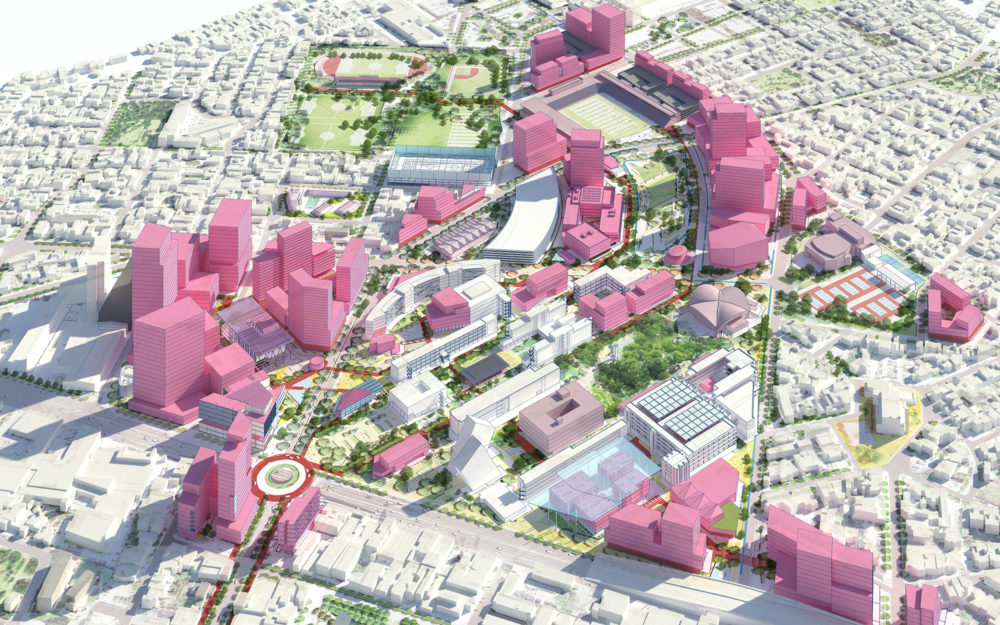
Rendering from Tecnológico de Monterrey Urban Regeneration Plan
Situated in the heart of the city against the backdrop of the Cerro de La Silla mountain, Tecnológico de Monterrey is a private non-profit research university with competitive programs in economics, marketing, biotech, and business. Founded by MIT-educated industrialist and philanthropist Eugenio Garza Sada in 1943, the university has grown to 29 campuses across 25 cities in Mexico. The main campus in Monterrey was designed in the late 1940s by Enrique de la Mora and Mario Pani and is lauded as the first university campus in Mexico and one of the first in Latin America. The campus has a rich architectural history and is widely seen as a beacon of Mexican modernism.
Over the decades as the university grew, it became more insular and detached from the surrounding neighborhoods due to growing public safety concerns in the city. In approaching the master plan, Sasaki sought to balance preserving this rich cultural and educational heritage while paving the way for Monterrey Tec to achieve its twenty-first century vision. A key part of this plan was restoring relationships with the 17 neighborhoods surrounding the campus.
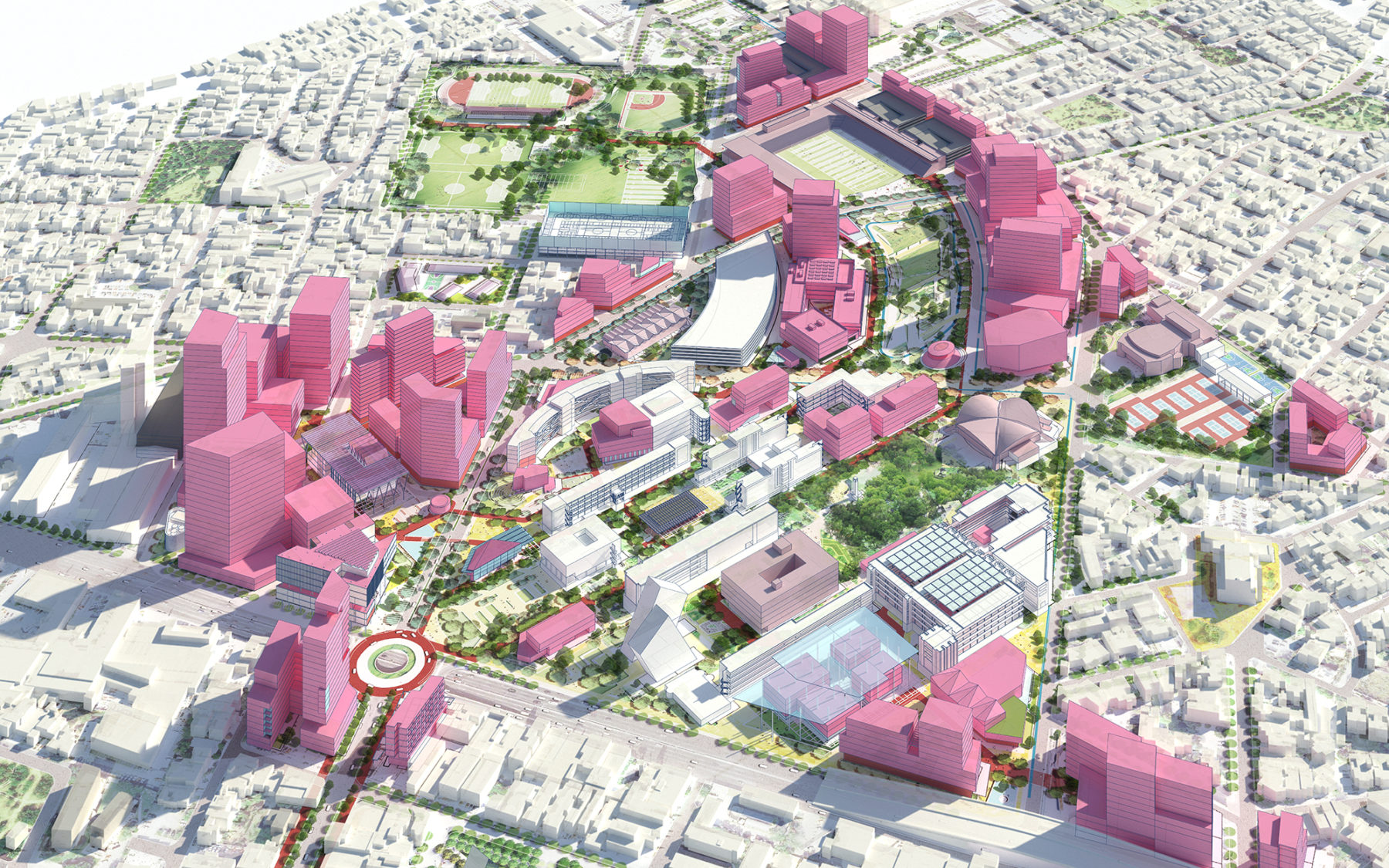
Tecnológico de Monterrey Urban Regeneration Plan
As Tec eyed an expansion that would place it in the ranks of the top 100 global universities, it also sought specific interventions that would revive its academic core and encourage cross-pollination of people and ideas.
To meet the university’s strategic goals, the master plan supports key initiatives that give Tec a competitive edge: establishing new research and graduate programs, attracting top faculty and students from around the world, and investing strategically in innovative learning spaces. The university owned additional land adjacent to the historic campus that Sasaki integrated in a physical reorganization to achieve greater interdisciplinary collaboration. This reorganization created a new innovation district designed to support partnerships with local and international businesses and industry professionals while encouraging investment from the private sector.
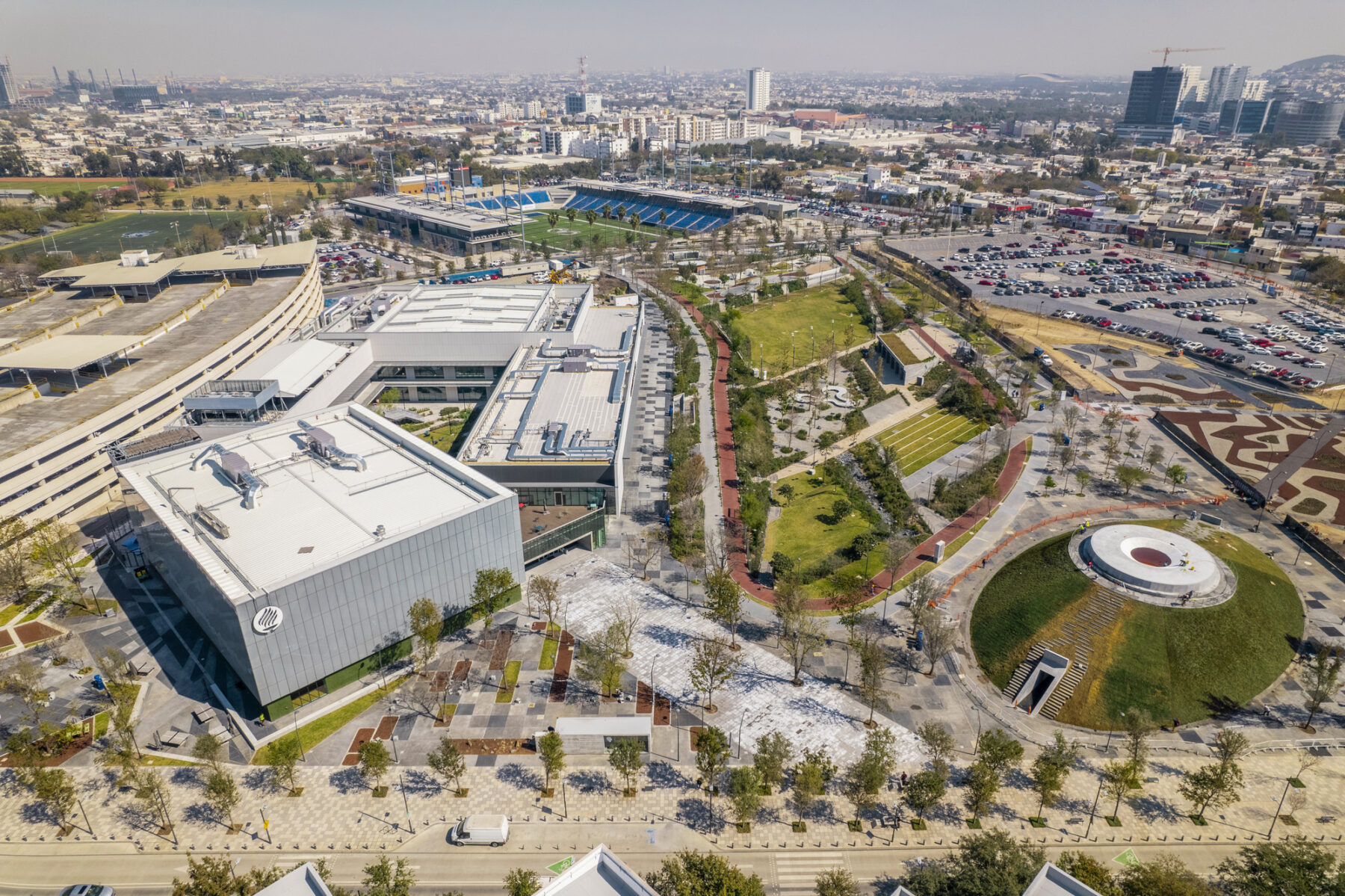
The master plan reorganized and consolidated existing programs, like the athletics stadium, which opened up space for more public space and new academic programs.
To support the flow of people and ideas, the master plan creates a new open space spine that moves through Avenida del Estado and links the campus’s distinct hubs. This street connects the academic and innovation cores for better integration between programs across campus.
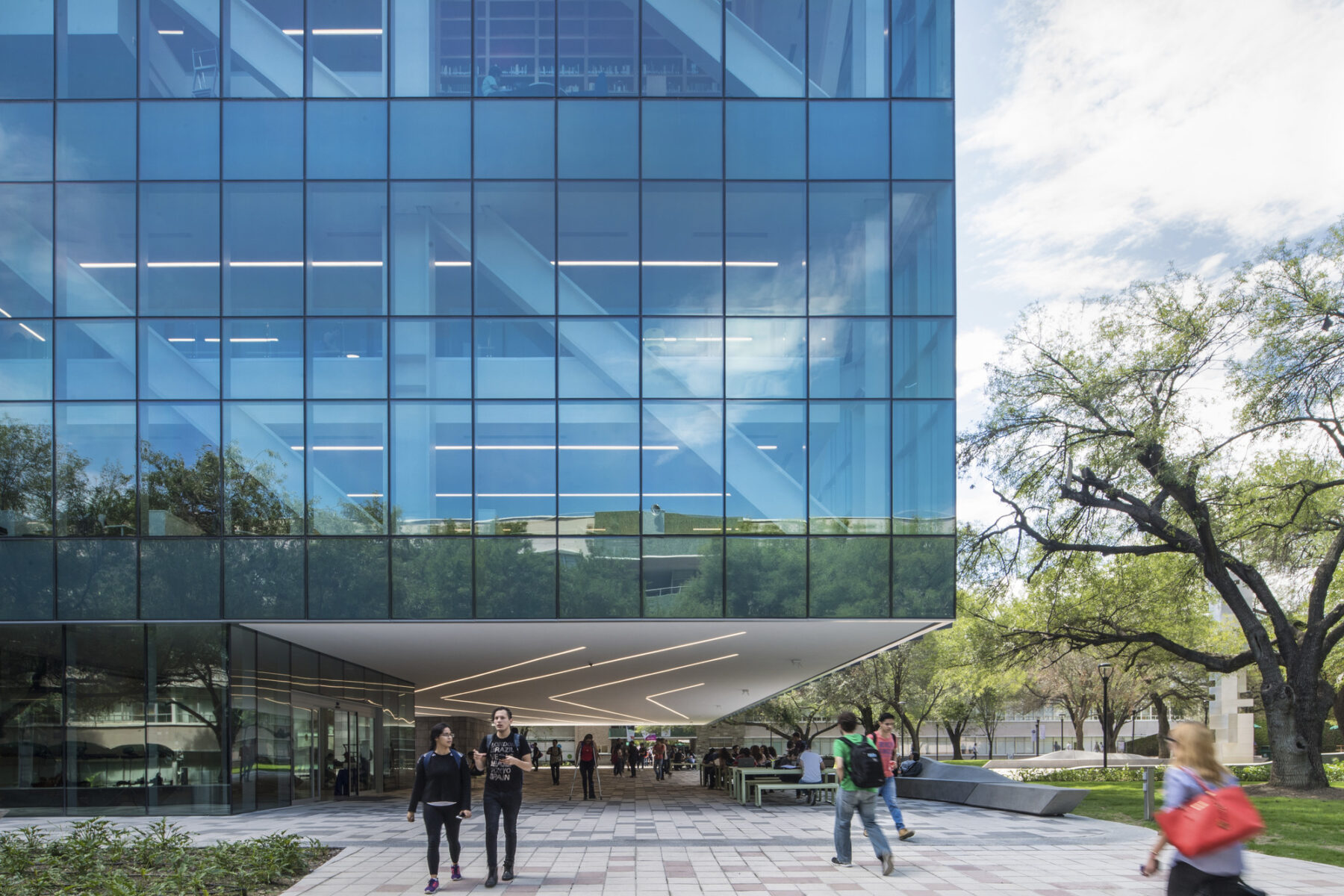
Tecnológico de Monterrey’s Main Library
When it came to implementation, Sasaki worked with the university to move from campus core to the periphery, beginning with renovation projects before moving to new, pivotal projects like La Carreta and the new library, which replaced unsuitable existing structures. The reorganization has also improved mobility, created new green spaces and landscape destinations, and increased recreational programming for students.
Major academic projects within the master plan that have been implemented or are in progress include:
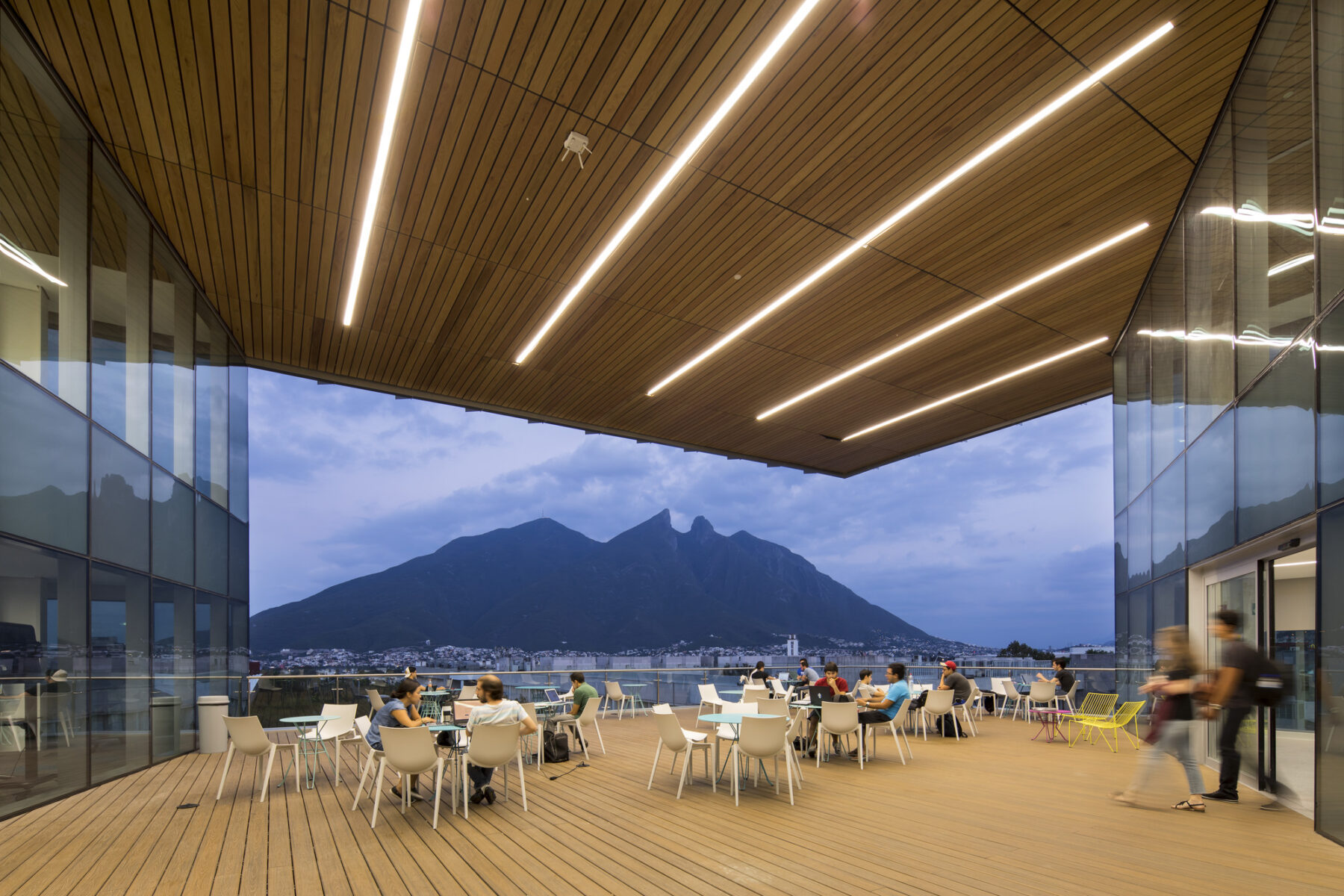
Tecnológico de Monterrey’s Main Library
A new main library: A 21st-century collaborative crossroads within the academic core. Initially, Sasaki was tasked with updating the original 1969 library, but our study revealed that the building required significant seismic upgrades that would prove cost prohibitive and limit program development. In response, Sasaki worked with the University to design a library with a larger building program within the same footprint. The new library provides ample huddle spaces for individual and group study, makerspaces, food and beverage options, as well as housing for 150,000 book volumes.
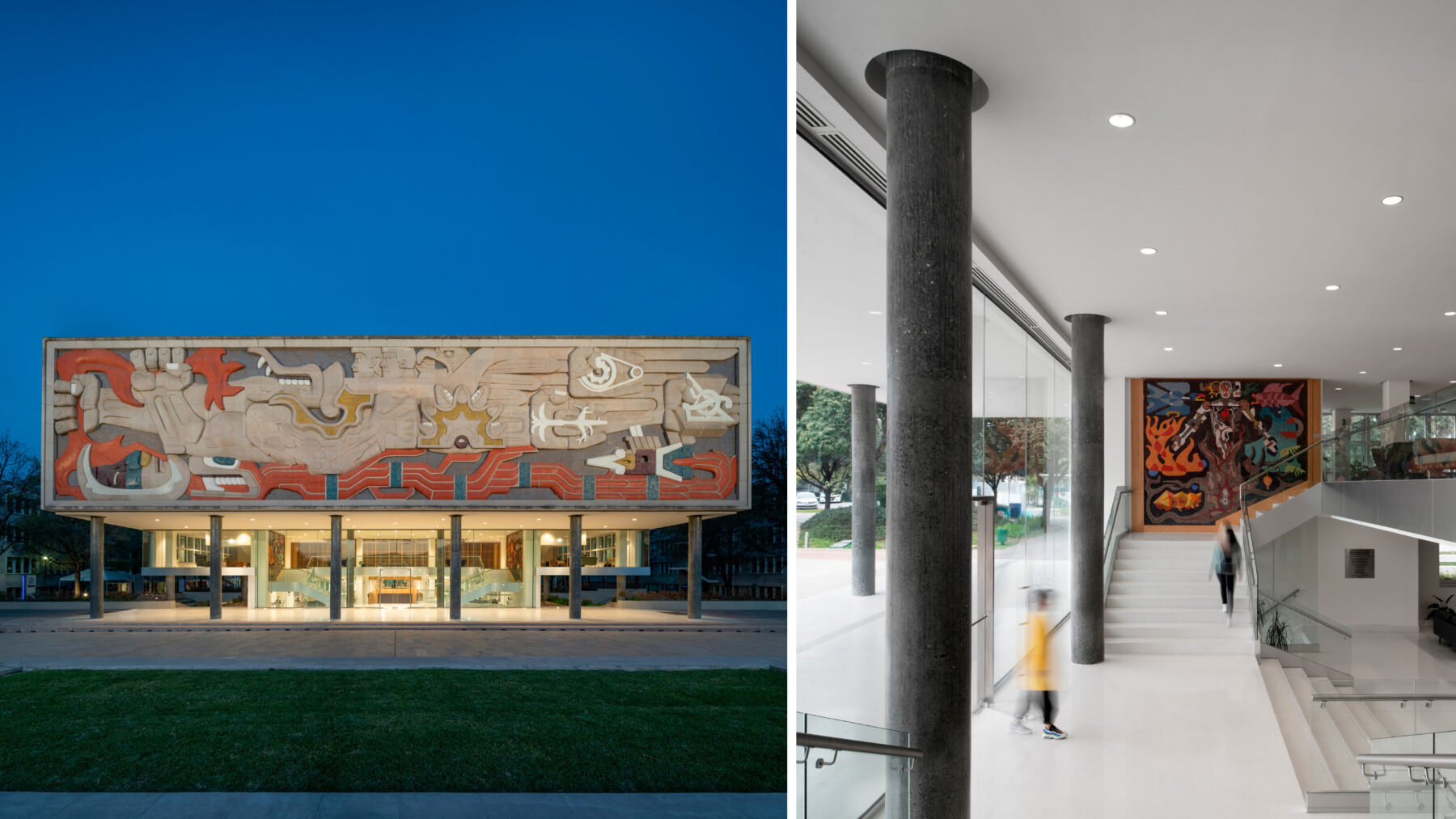
Tecnológico de Monterrey La Rectoría Renovation
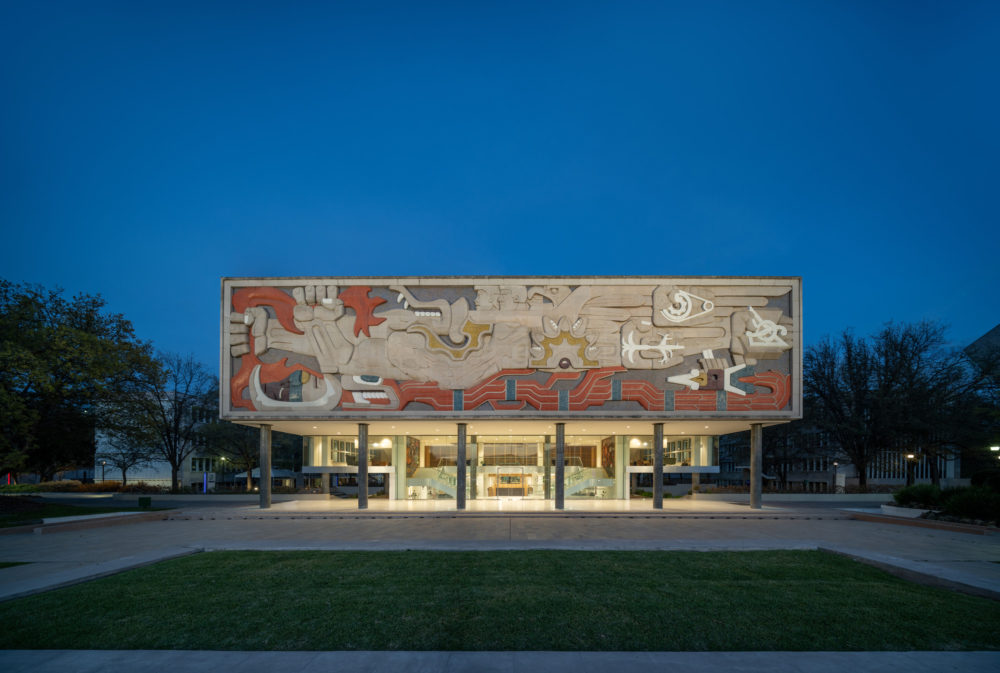
Tec’s historic Rectoría building is an iconic structure at the heart of the academic core. Designed by Enrique de la Mora and Mario Pani and completed in 1954, it originally housed the library, offices, and teaching spaces. The renovation adapted it to meet contemporary needs, including an upgraded and accessible lobby, galleries, multipurpose rooms, and an amphitheater.
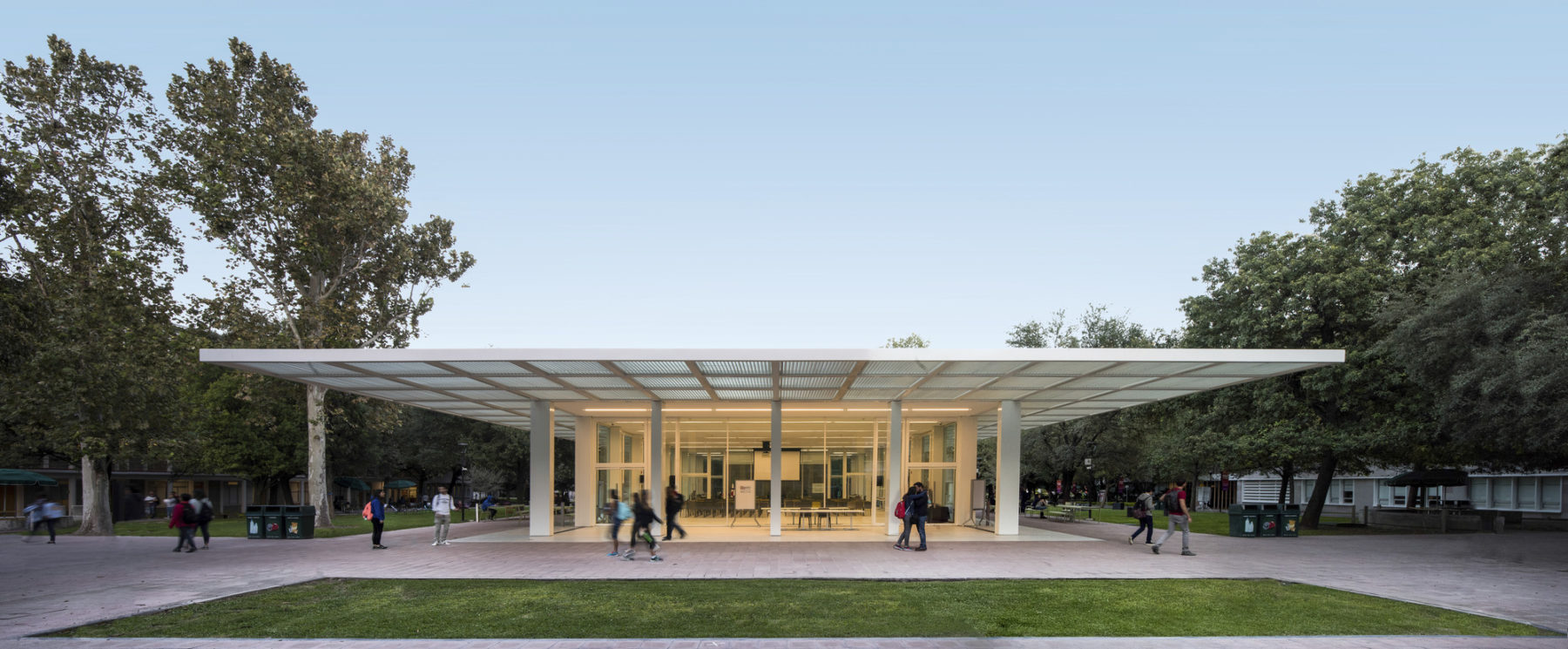
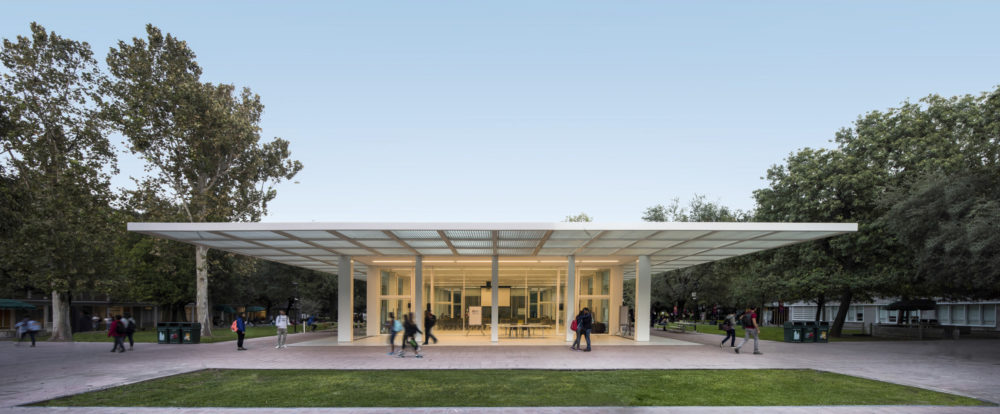
La Carreta is situated at the symbolic and historic core of the campus. The pavilion is a place for students, faculty, staff, and the broader community to engage with one another, to collaborate, and to share ideas. At the same time, it serves as a point of arrival to campus and the first impression for visitors, conveying both the rich traditions and history of the university while also expressing its dynamic and innovative future. Placed within a shaded garden, the pavilion is designed as a highly flexible, open and transparent, minimal structure, approachable from all sides.
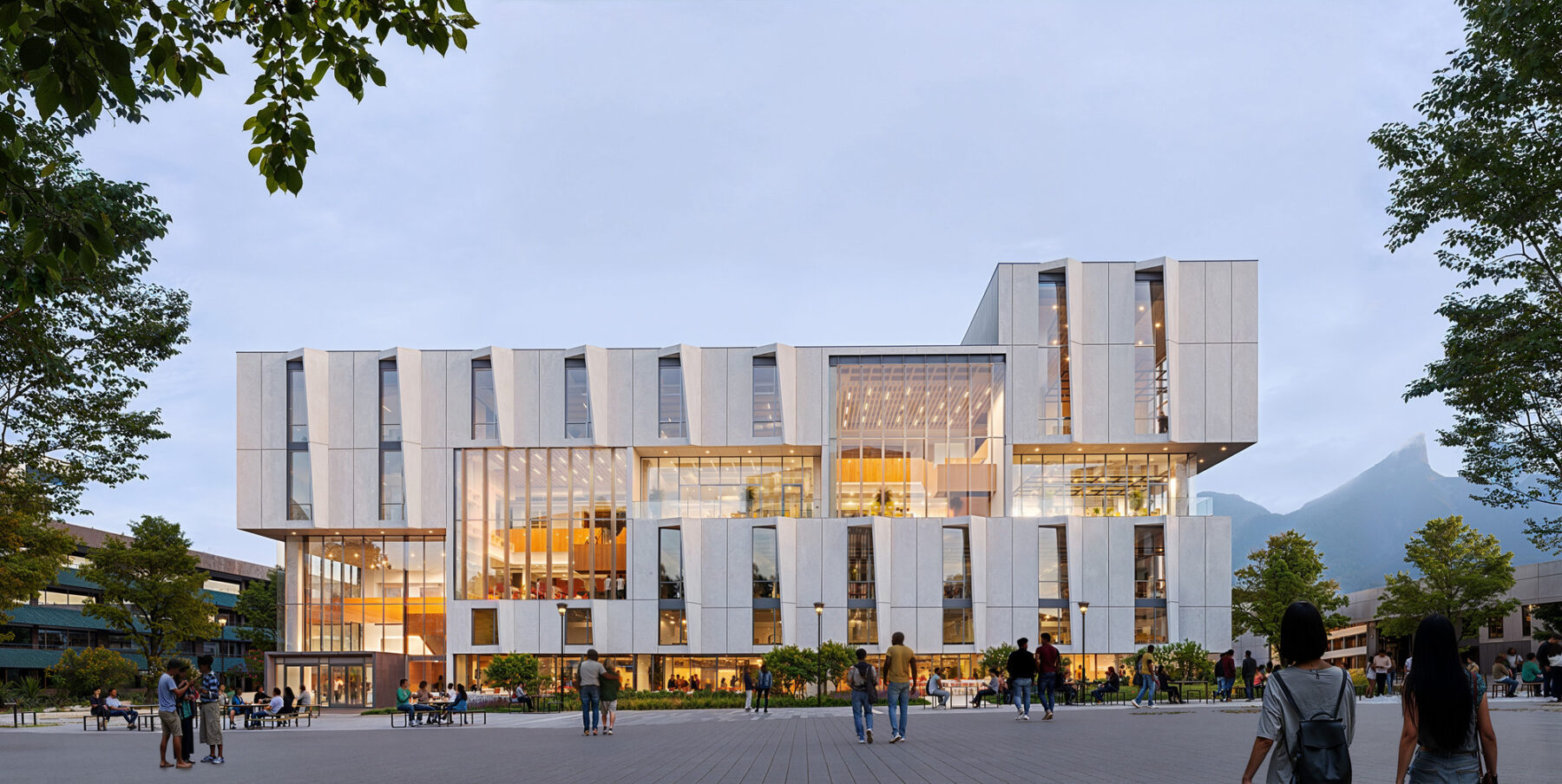
Center for Design and Engineering Rendering
The campus’s new Carlos Alvarez Design and Engineering Center will leverage Monterrey’s fabrication and manufacturing industries while integrating design and engineering. It will include spaces for prototyping, destruction testing, fabrication, among other overlapping programs. The building’s design is driven by an ethos of experimentation and problem-solving in the open—glazed openings in the facade will show the activity inside the building with an ascending series of spaces that culminate in a “pitch space” for presentations.
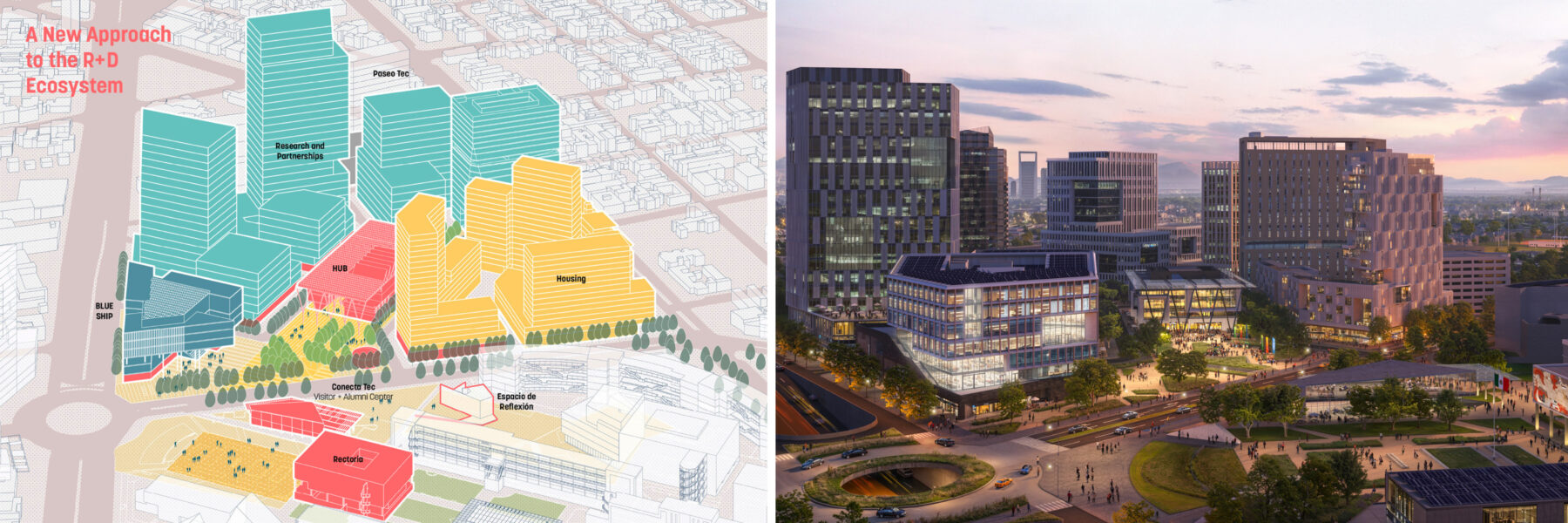
Tecnológico de Monterrey Innovation District
The innovation core is designed to complement the academic core, opening the campus up literally and figuratively. Connected to the academic core by a main artery that has become a thoroughfare for pedestrians and cyclists, the two hubs share a free-flowing network of people and ideas.
Placemaking is central to a successful innovation district. These neighborhoods thrive on spontaneous interactions and gathering like-minded people. Activating the ground floor through programming like cafes, bookstores, and other retail, connected by generous public space, gives the district a distinctive feel and draws people to the site.
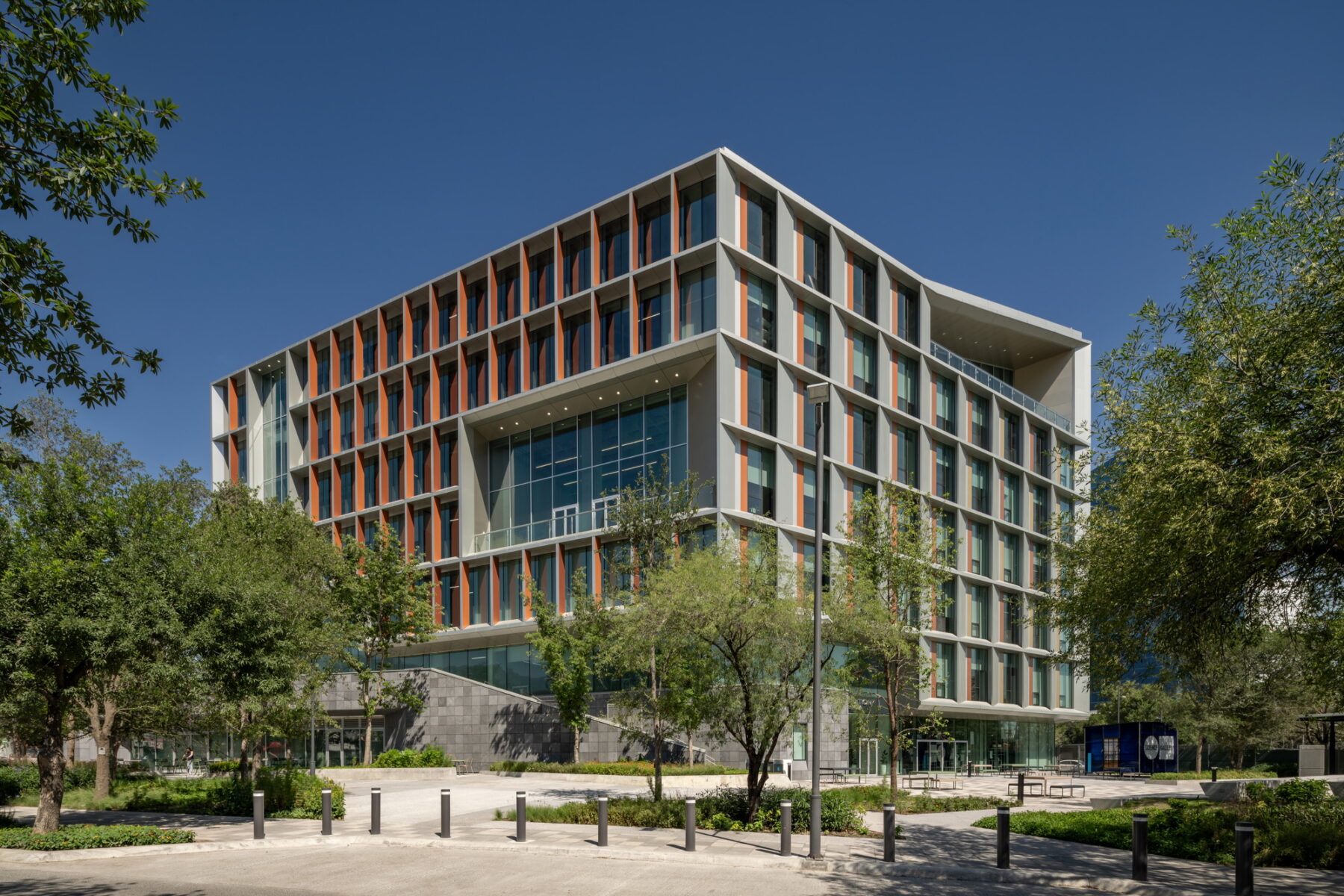
Tecnológico de Monterrey Expedition Building
To signal this new chapter for Monterrey Tec, the Expedition building opened at the edge of the new district. Expedition houses multidisciplinary learning and working spaces that promote exchanges between students, industry professionals, and the city at large. The first two levels are open to the public, complete with a full-service restaurant and cafe, a gallery space, an incubator, and a makerspace. Floors three through seven contain workspaces dedicated to knowledge generation across disciplines.
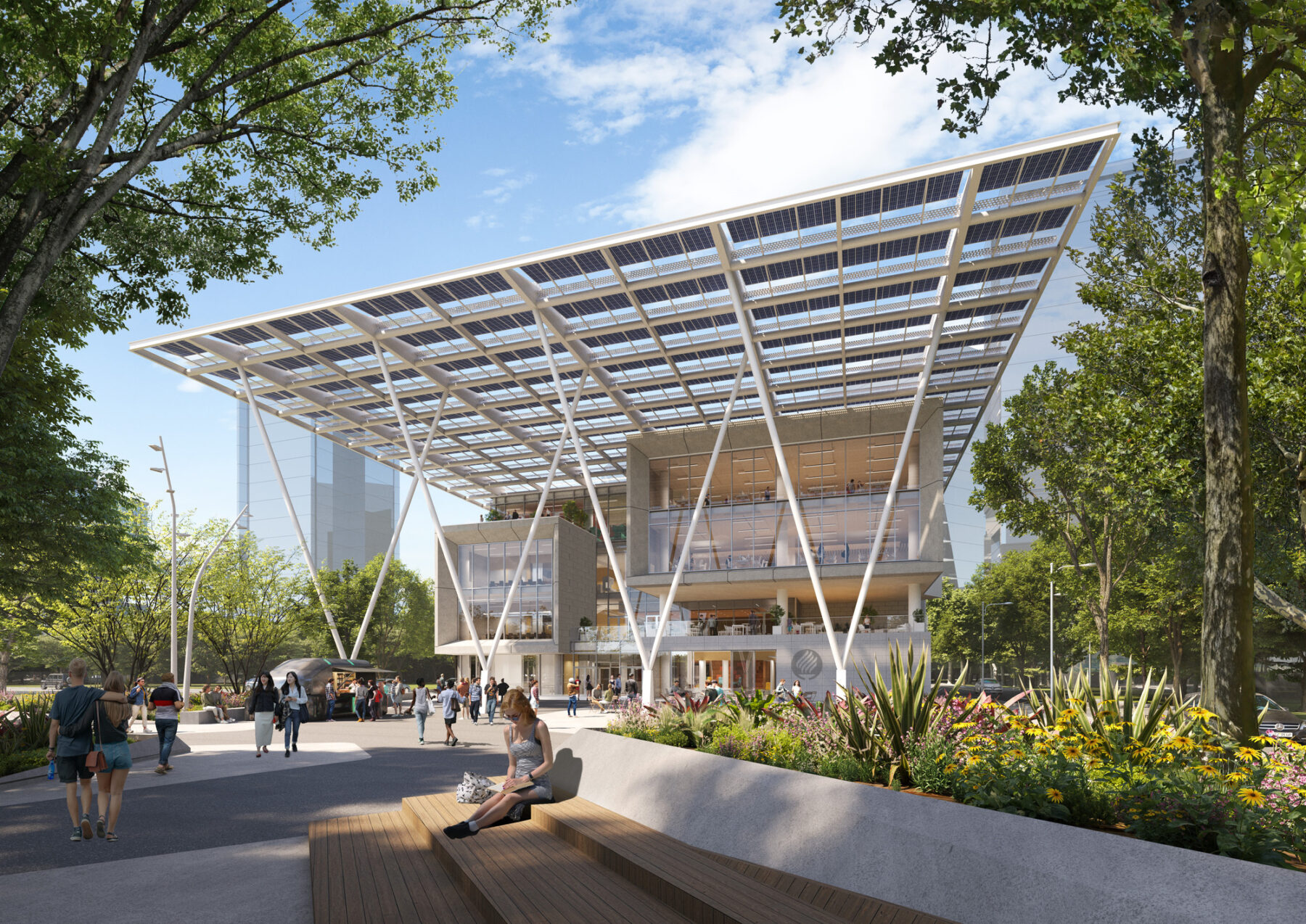
Tecnológico de Monterrey Innovation Hub
The beating heart of the new district will be the Innovation Hub. The Innovation Hub is designed to be a civic-like building on campus with a dynamic architectural form. The central component of the Hub will be its forum-like space for presentations, pitch nights, launches, and informal events, making it a place where the public and private overlap and interact within Monterrey Tec’s innovation ecosystem.
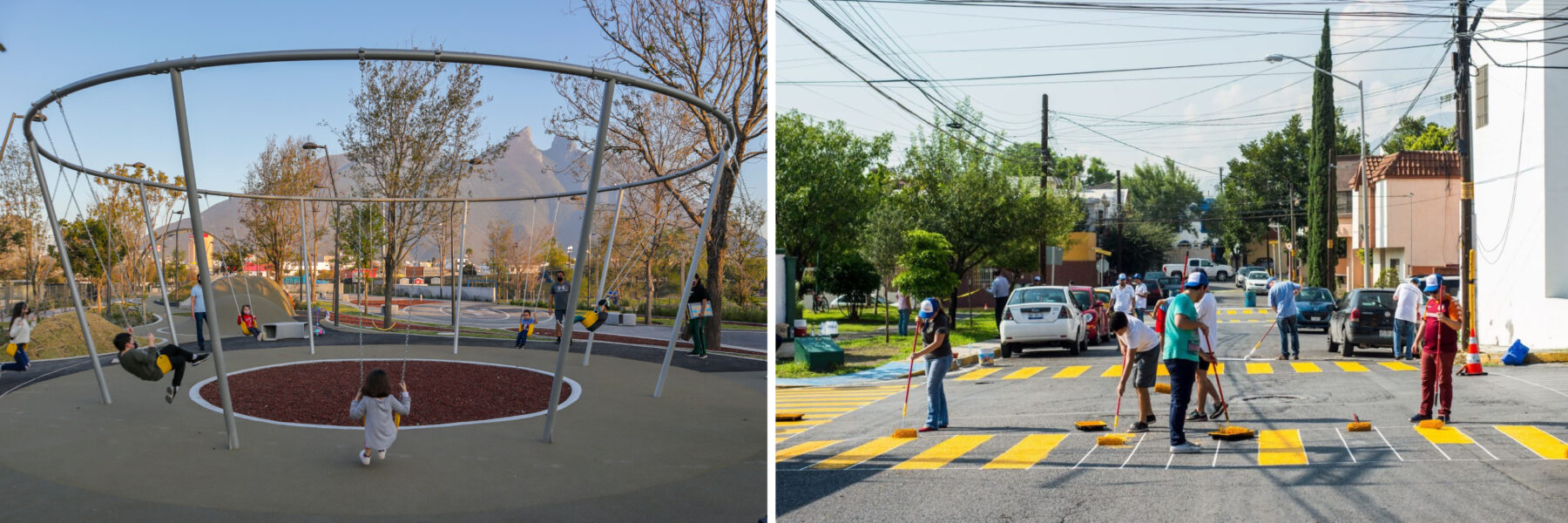
Streetscape improvement across campus and its neighborhoods improve amenities for all.
When considering major changes to the campus, it was critical to understand the university as a large organism operating within the city’s ecosystem. Sasaki’s approach to transforming the campus acknowledges that people and ideas can and should flow freely between campus and city. The master plan focuses on seventeen neighborhoods around the campus and advocates for an ongoing community outreach process that benefits both Tec and its neighbors. While each neighborhood has distinct interventions based on its existing urban realm, the plan focuses on improving park infrastructure, security, and safer streets to support alternative modes of transportation like walking and biking.
Monterrey Tec’s commitment to its campus and relationships with its neighbors has brought $500 million in new investment from the business community and a renewed sense of connection between the city and Tec’s academic mission. This work has also spurred the creation of 14 new neighborhood committees, 17,000 square meters of renovated public parks, and 3 kilometers of new complete streets.
As Tec’s surroundings continue to evolve, this neighborhood-level investment will make these areas more sustainable and desirable for working and living.