
A vision for the country’s second oldest higher education institution for the next 100 years
William & Mary Campus Comprehensive Plan
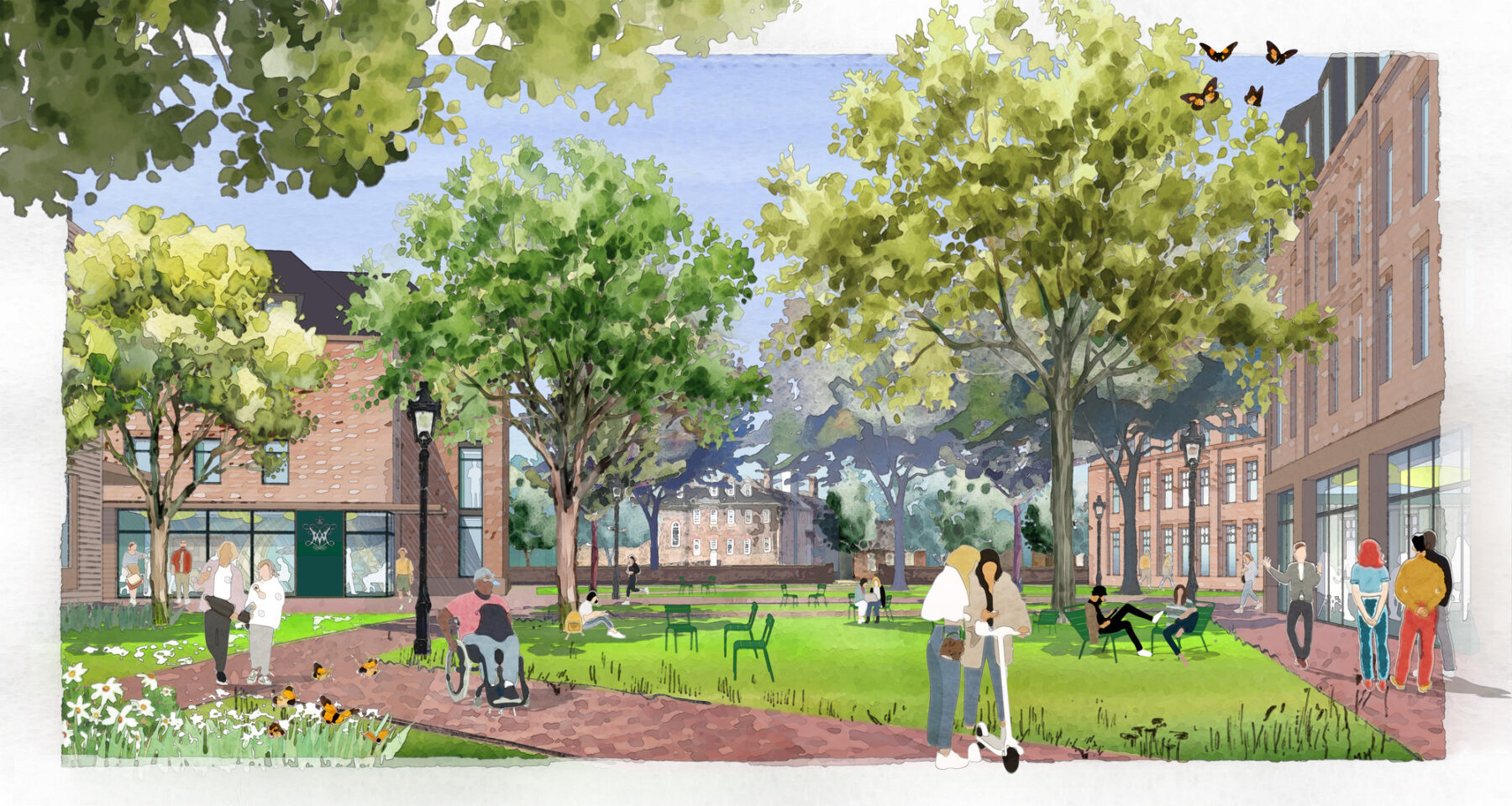
A view from the redeveloped Corner Campus looking back to the historic Wren Building
Founded in 1693, William & Mary carries a rich legacy of learning and research, and its Williamsburg campus reflects the layered histories that shape the character of the university. Driven by the university’s desire to sustain key campus assets while instilling flexibility and resilience to support future development, the William & Mary Campus Comprehensive Plan proposes both near and long-term visions that aim to ensure academic excellence, support student success, enhance land and space use, improve accessibility and sustainability, and help the university steward the use of its campus and resources for future generations of learners.
The Plan focuses on the main Williamsburg campus as well as the resilience goals and needs of the Batten School, a center for marine science located along the York River in Gloucester Point, VA.
The Campus Comprehensive Plan is composed of three focused plans: the Framework Plan, the Learning Space Plan, and the Landscape Plan. Initiated in Spring 2024, the 18-month planning process brought together over 1,500 stakeholder voices and detailed analyses conducted across scales and contexts to craft a holistic plan that encompasses the university’s diverse facilities and campus neighborhoods.
The Framework Plan
As the foundational element of the Campus Comprehensive Plan, the Framework Plan provides an overall structure to guide future decision-making for investment in the campus’ physical assets.
The plan identifies strategic opportunities for physical expansion and infill on the Williamsburg campus. The recommendations outlined for these areas focus on reinforcing existing campus neighborhoods, enhancing campus character, improving wayfinding and mobility, and promoting efficient and sustainable campus development
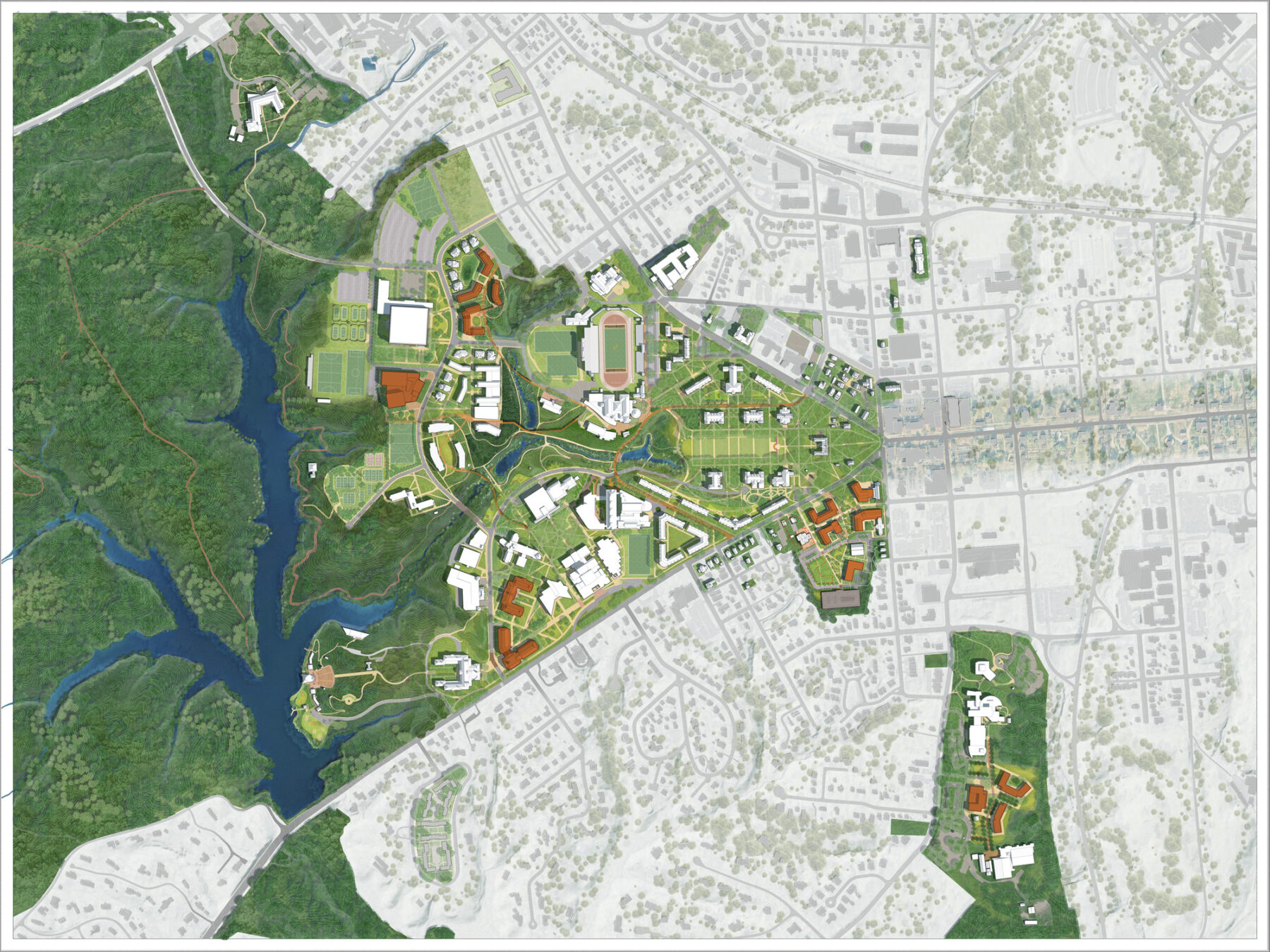
Aerial view of the Williamsburg campus, with existing buildings indicated in white and proposed future development indicated in orange
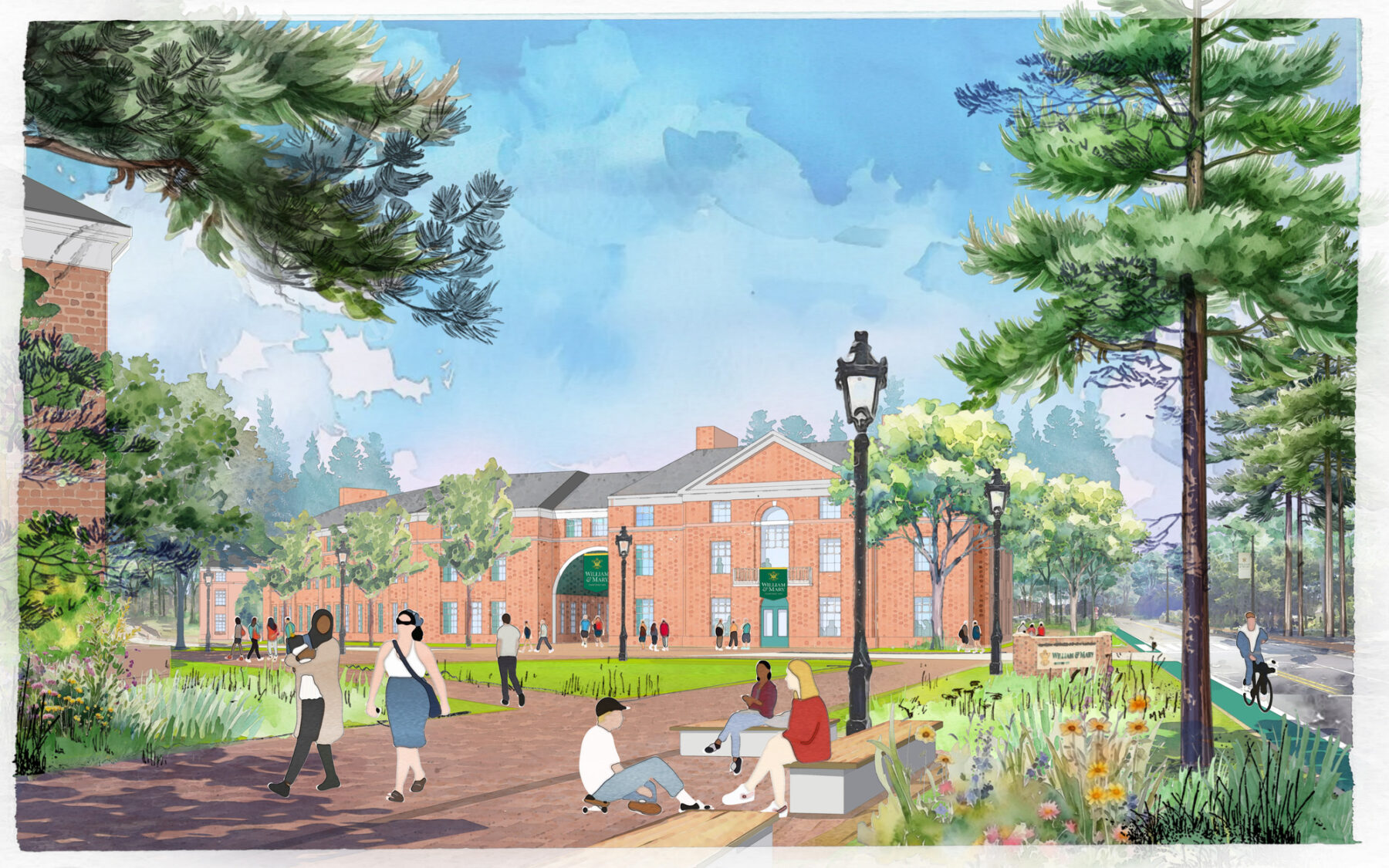
The plan reimagines Corner Campus as a new front door for the East Campus by articulating an entry plaza and prioritizing the pedestrian experience
Among the opportunity sites, the Plan focuses on three key areas: the site of the current Boswell and Jones Buildings, Corner Campus, and Green & Gold Village, These areas are largely located at the campus edges, where improvements can help establish new gateways, as well as more welcoming and efficient corridors that lead into and integrate with the well-established historic campus core.
The Boswell and Jones site offers an opportunity to build a new academic hub, at a key campus gateway, to replace two aging buildings and develop an entry plaza at the eastern corner of campus that will feature upgraded pedestrian-friendly infrastructure. At the Corner Campus, recommendations focus on strengthening the link between the university and Colonial Williamsburg through public-facing resources. The Green & Gold Village proposes a new model for a neighborhood of student-life buildings that focus on enhancing connections with the surrounding woods and natural landscapes.
The 10-Year Learning Space Plan
Guided by the Framework Plan, the Learning Space Plan codifies principles and guidelines, leverages capital investment, and establishes instructional neighborhoods to optimize the quality and quantity of learning space on campus over the next ten years.
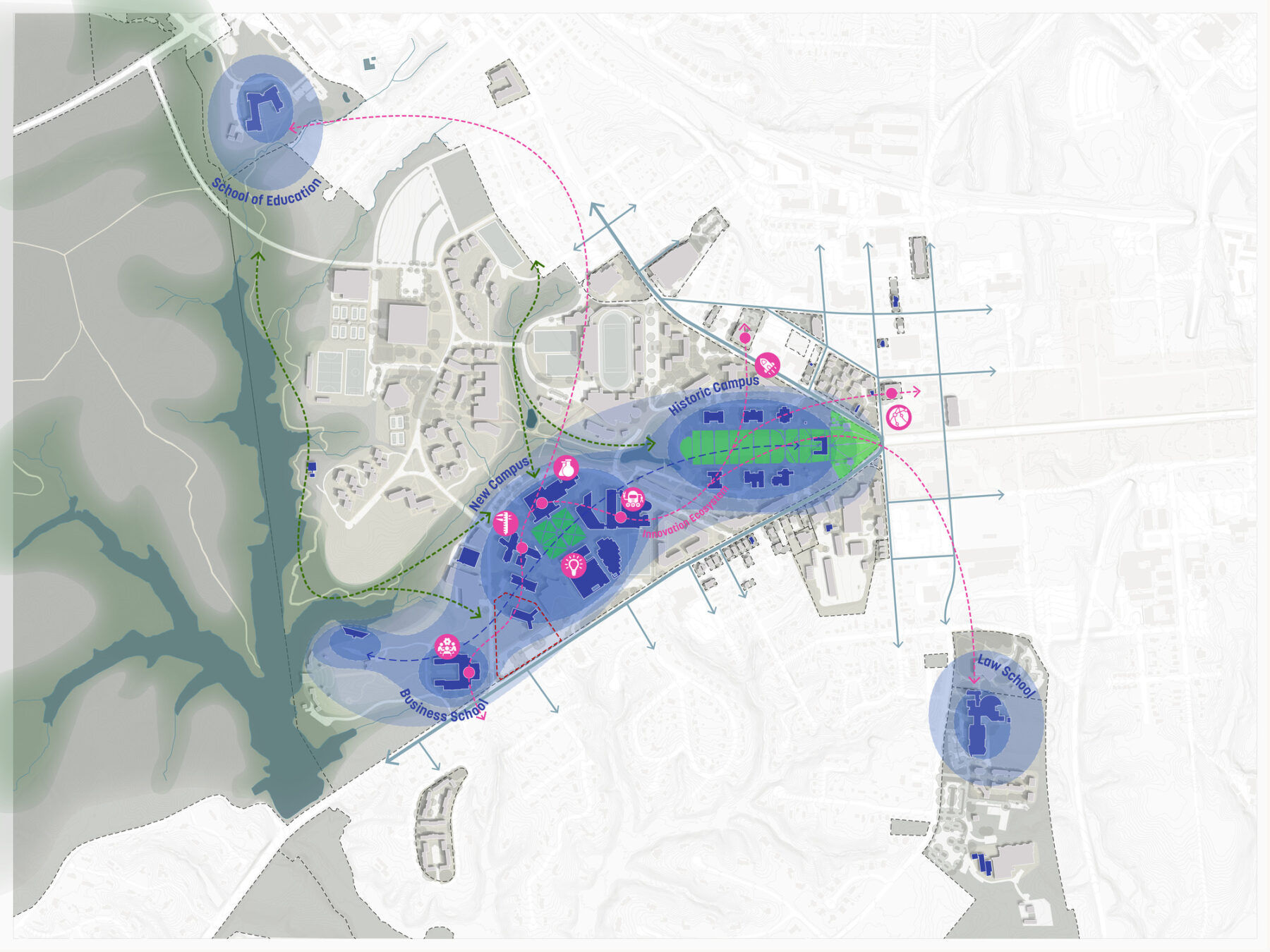
Instructional neighborhoods in the academic core
The plan is shaped by input from faculty, students and staff across departments, using data gathered from interactive surveys. Classroom condition assessments and utilization analysis were also conducted to develop both quantitative and qualitative evaluations of existing limitations and teaching and learning needs.
Analysis findings reveal that while William & Mary has a sufficient overall quantity of classrooms, the size, configuration, and quality of those rooms does not align with current and desired section sizes. The current rooms also struggle to flexibly accommodate a range of pedagogical styles.
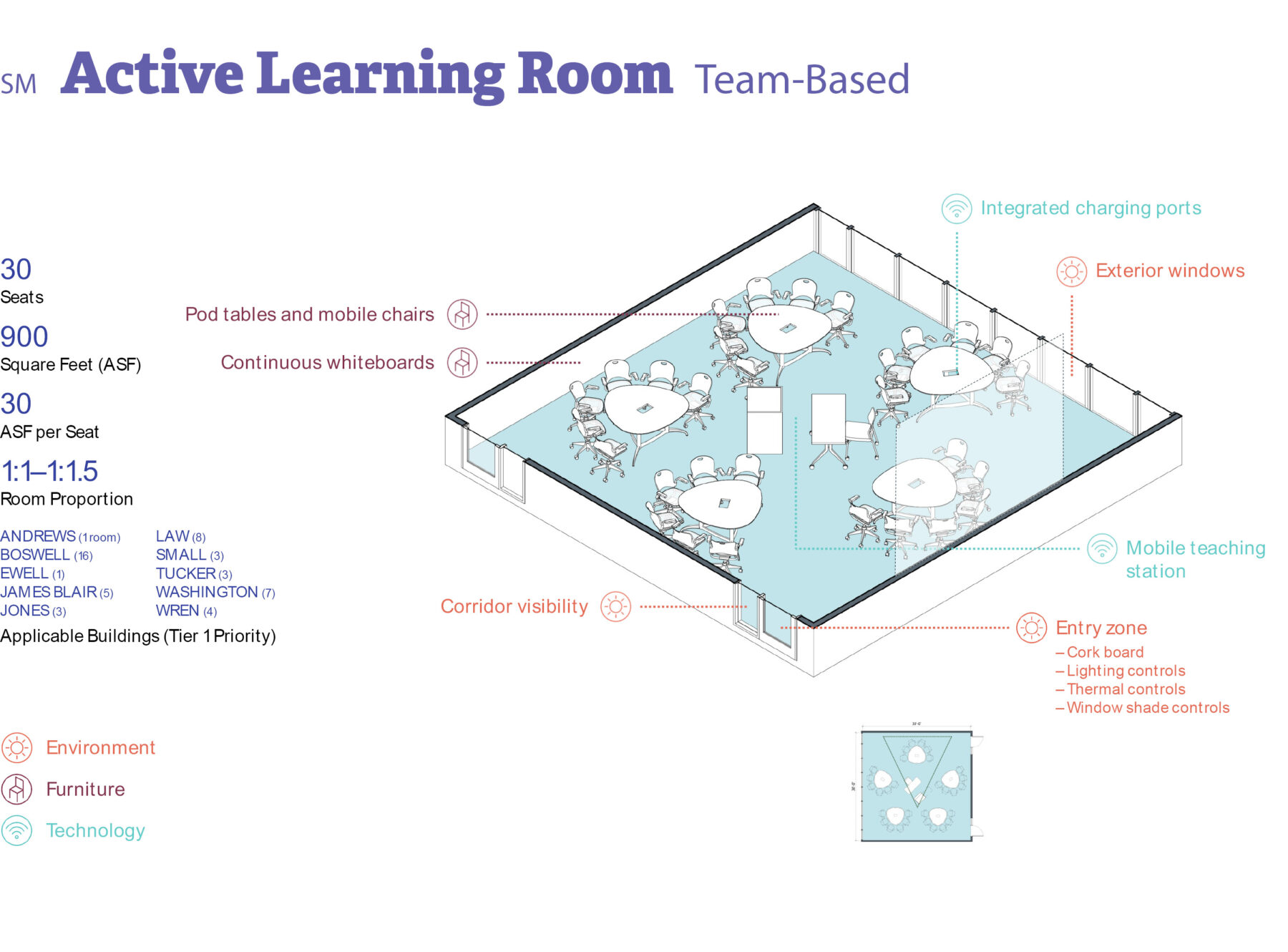
Classroom prototype for a small room focused on team-based learning
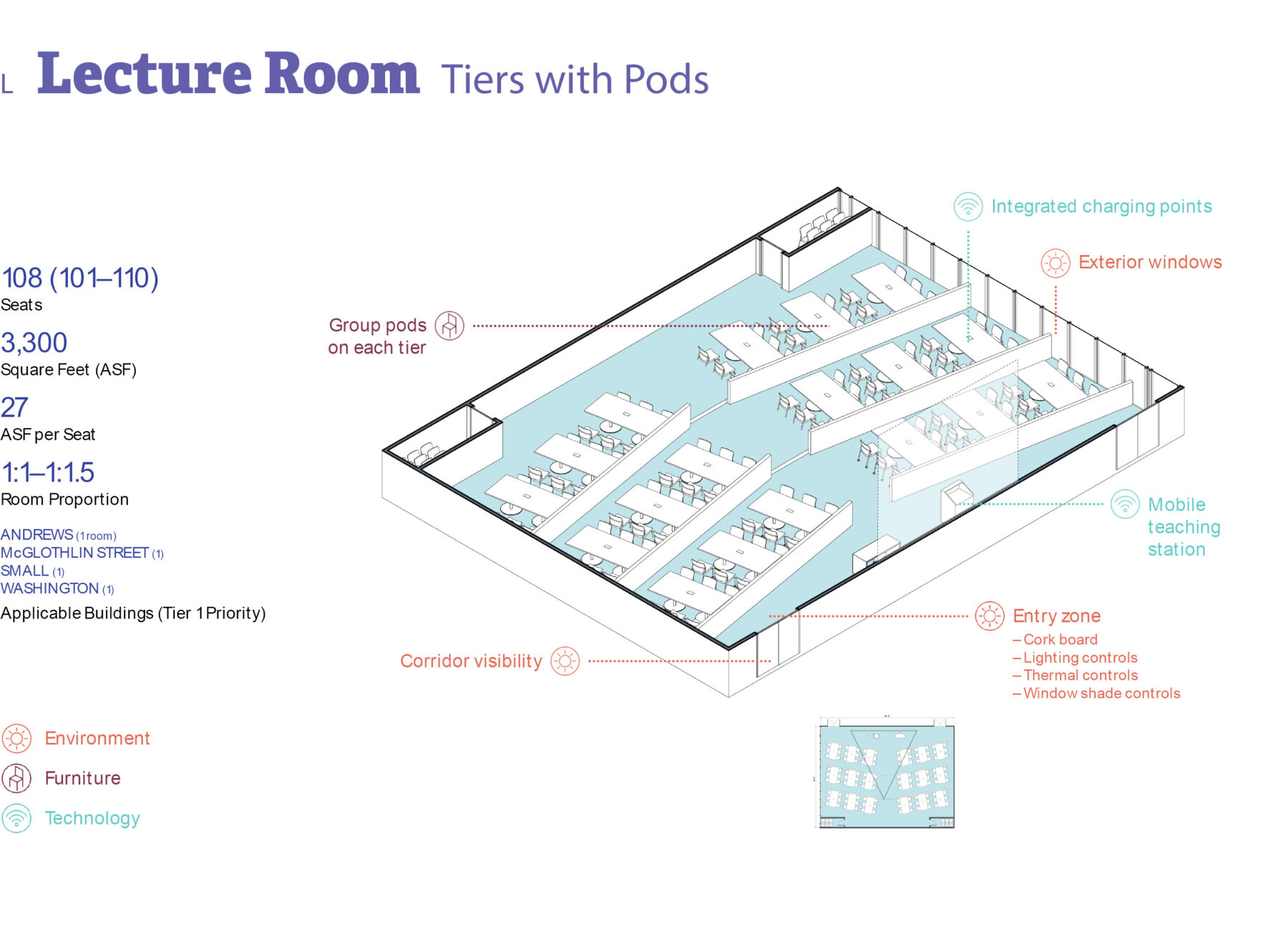
Classroom prototype for a lecture room that facilitates group activities within a larger class
The 100-Year Landscape Plan
The Landscape Plan provides guidance to steward the university’s landscape and open spaces on the Williamsburg and Gloucester Point campuses over the next 100 years.
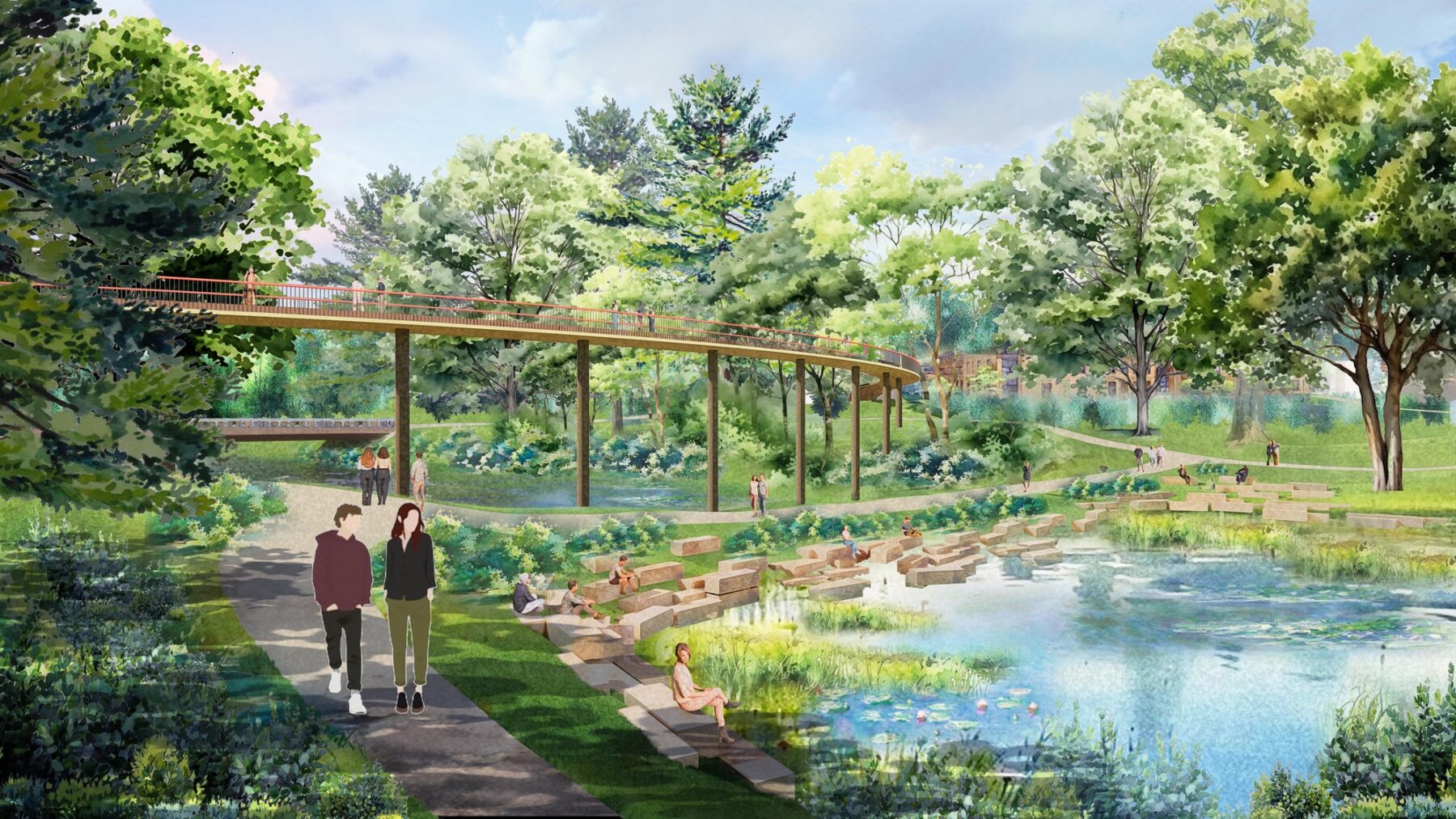
New pedestrian connections along the Dells
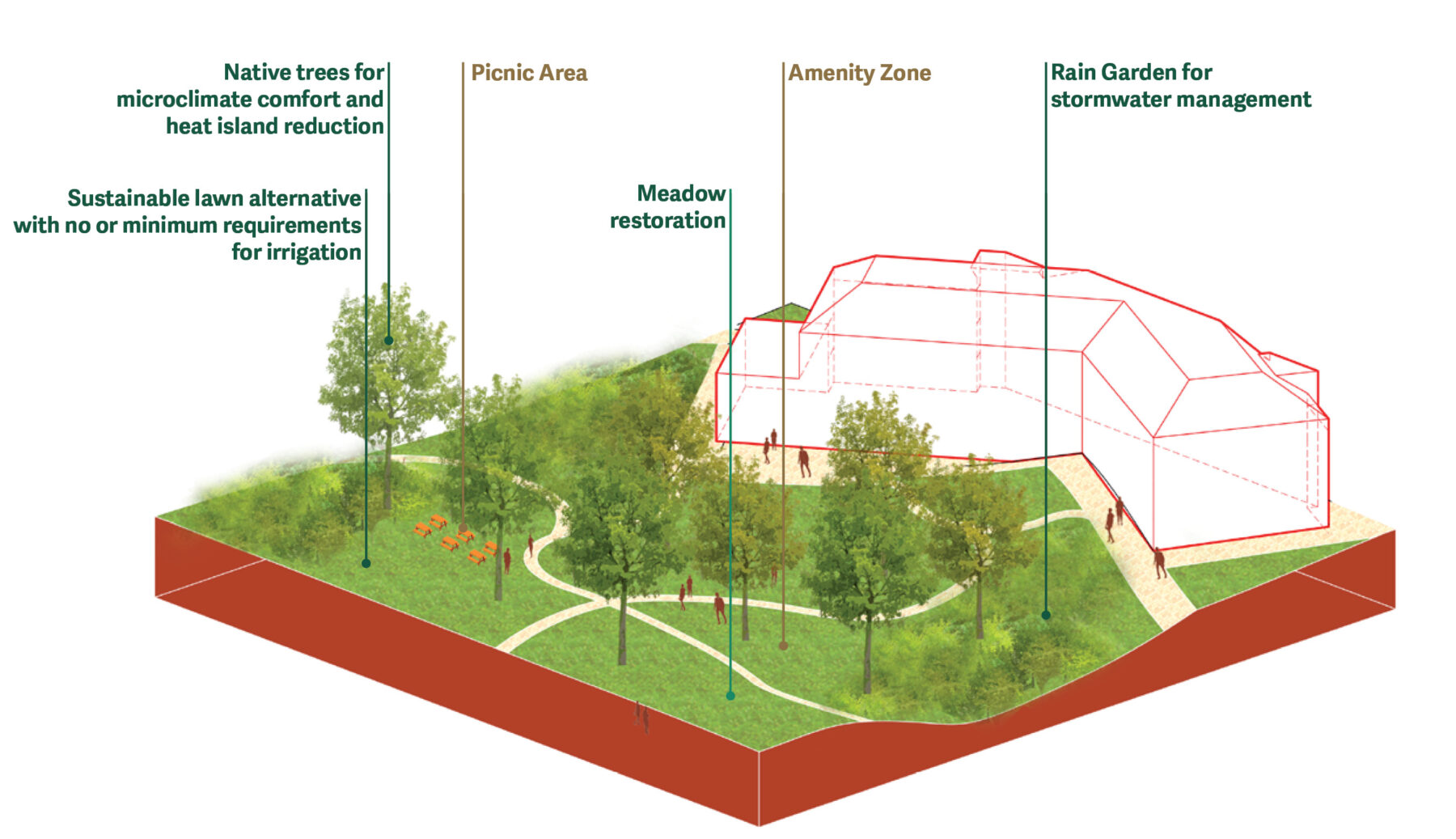
Residential garden landscape typology
The Plan takes a cohesive approach to understanding the landscape through cultural, natural and social lenses, drawing from community members’ relationship to the historical elements of campus, its environmental features, and the ways in which people move through and learn across the landscape.
The recommendations weave together these three threads to develop unity and improve accessibility across the campus without sacrificing the unique character of the diverse neighborhoods and environments that comprise it. A preliminary carbon footprint assessment was also conducted using Carbon Conscience to identify areas of high carbon embodiment, as well as those with the greatest sequestration potential, to help guide the course of future development. The plan also focuses on protecting and improving connections to ecologically dense areas like the Central Woods and Matoaka Edge to help recenter the campus’ natural assets in the orbit of student life.
Overall, the Framework Plan and the associated detailed plans for learning spaces and landscape provide William & Mary with an actionable implementation plan. Over the next several years, the university will advance capital projects that align with the values and principles articulated in these documents. In addition, Sasaki is currently working with the university to update a set of design guidelines that will provide recommendations for maintaining quality and consistency throughout William & Mary’s built and open space environments.

Corner Campus development and Jamestown Road streetscape improvements
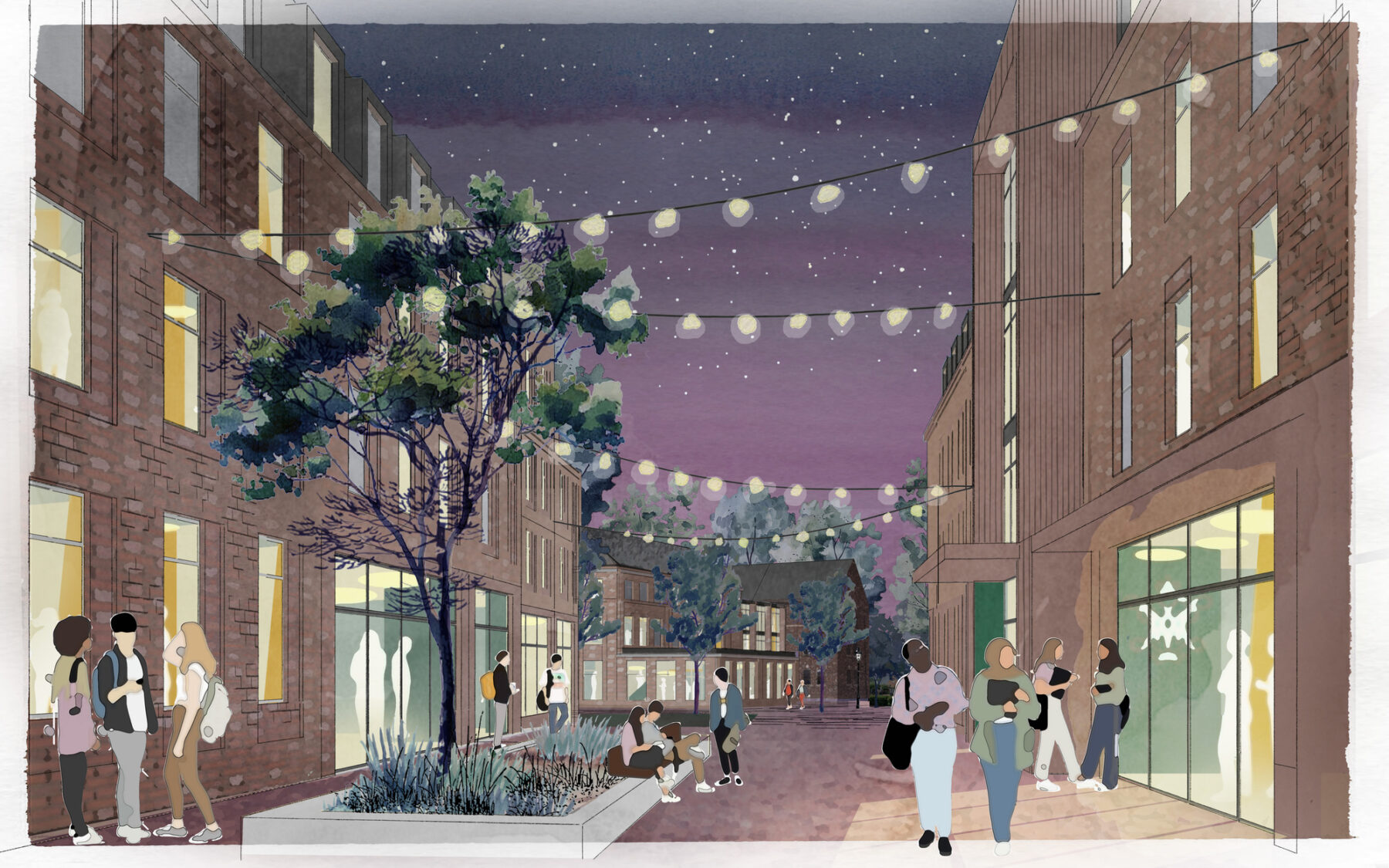
Corner Campus development
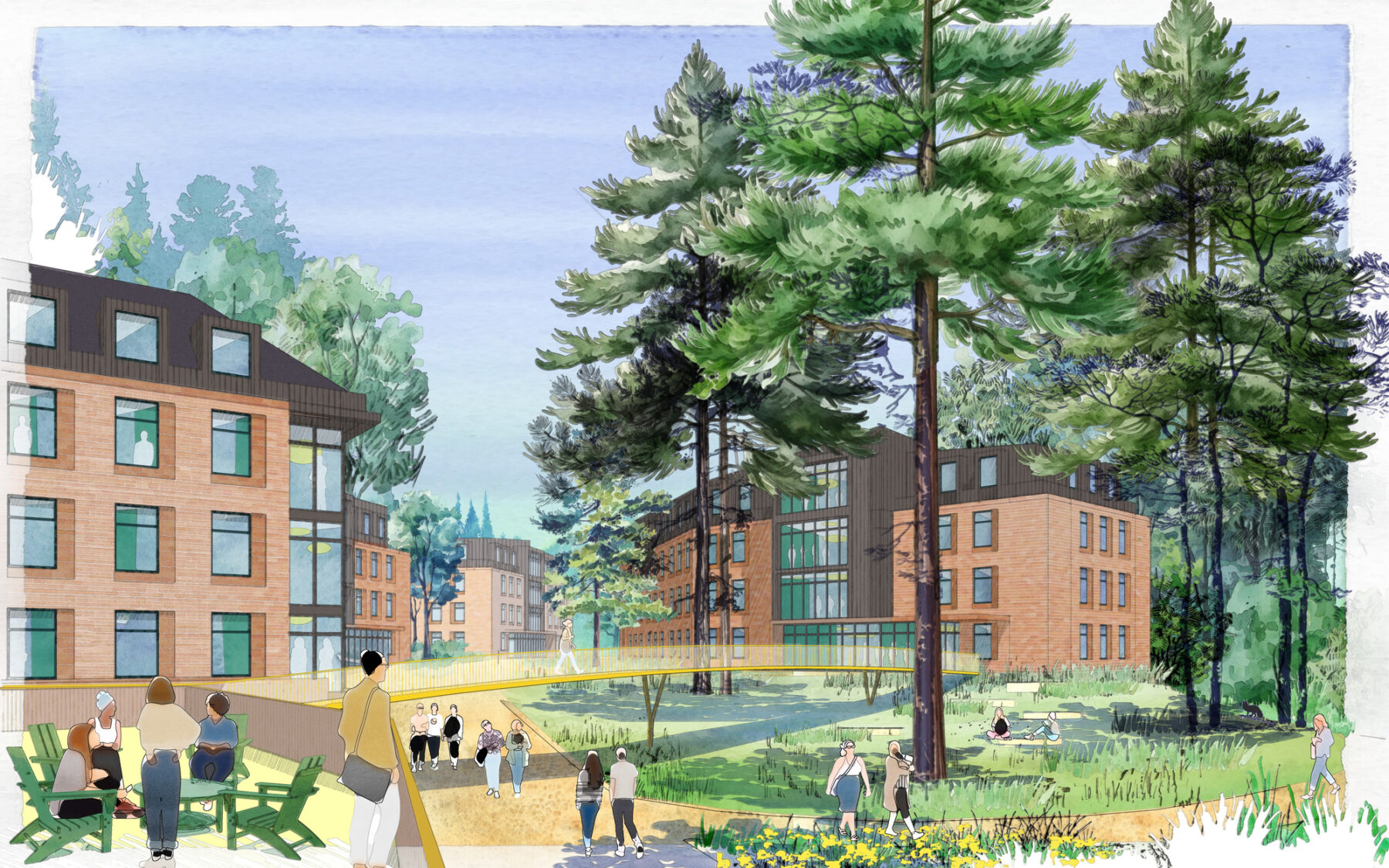
Redevelopment of Green & Gold Village
Corner Campus development and Jamestown Road streetscape improvements
Corner Campus development
Redevelopment of Green & Gold Village
想了解更多项目细节,请联系 Tyler Patrick.