Anchoring Chinatown’s Edges: Community-Led Design with ponnapa prakkamakul
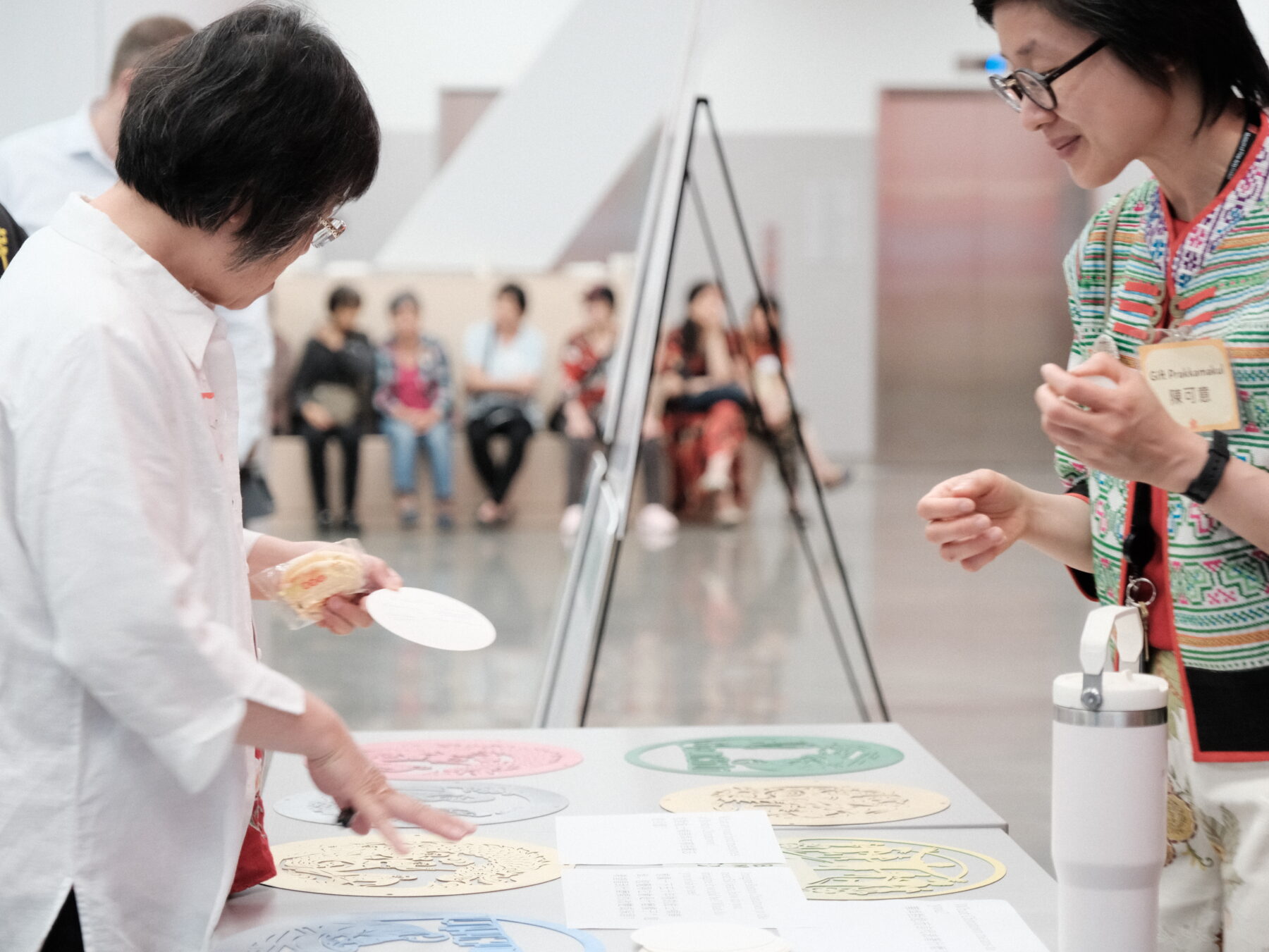
Landscape architect ponnapa prakkamakul (gift) meets with community members at an open house event for Phillips Square.
 Sasaki
In Boston’s Chinatown, Sasaki is working with community members to reshape two prominent public spaces. Reggie Wong Memorial Park, a beloved but underserved sports park straddling Chinatown and the Leather District, and Phillips Square, a slice of streetscape that serves as the neighborhood’s northern border, are important anchor points and thresholds for the community. They also present opportunities to address longstanding environmental inequities while creating more comfortable, welcoming spaces that reflect the diversity of this neighborhood.
To create spaces that meet the expectations and ambitions of the community, our teams of landscape architects and urban planners led tailored processes for each project that invited residents and visitors along for the journey. Engagement events often took the form of pop-ups, focus group meetings, work sessions, and charettes, meeting people where they live, work, shop, and play. To reach monolingual residents that spoke Cantonese, Toisanese, or Mandarin, the project teams worked with interpreters embedded within the Chinatown community.
To learn more about how our teams approached this work, we sat down with ponnapa prakkamakul (gift), landscape architect and project manager for both sites, to learn more about what it means to design with the community.
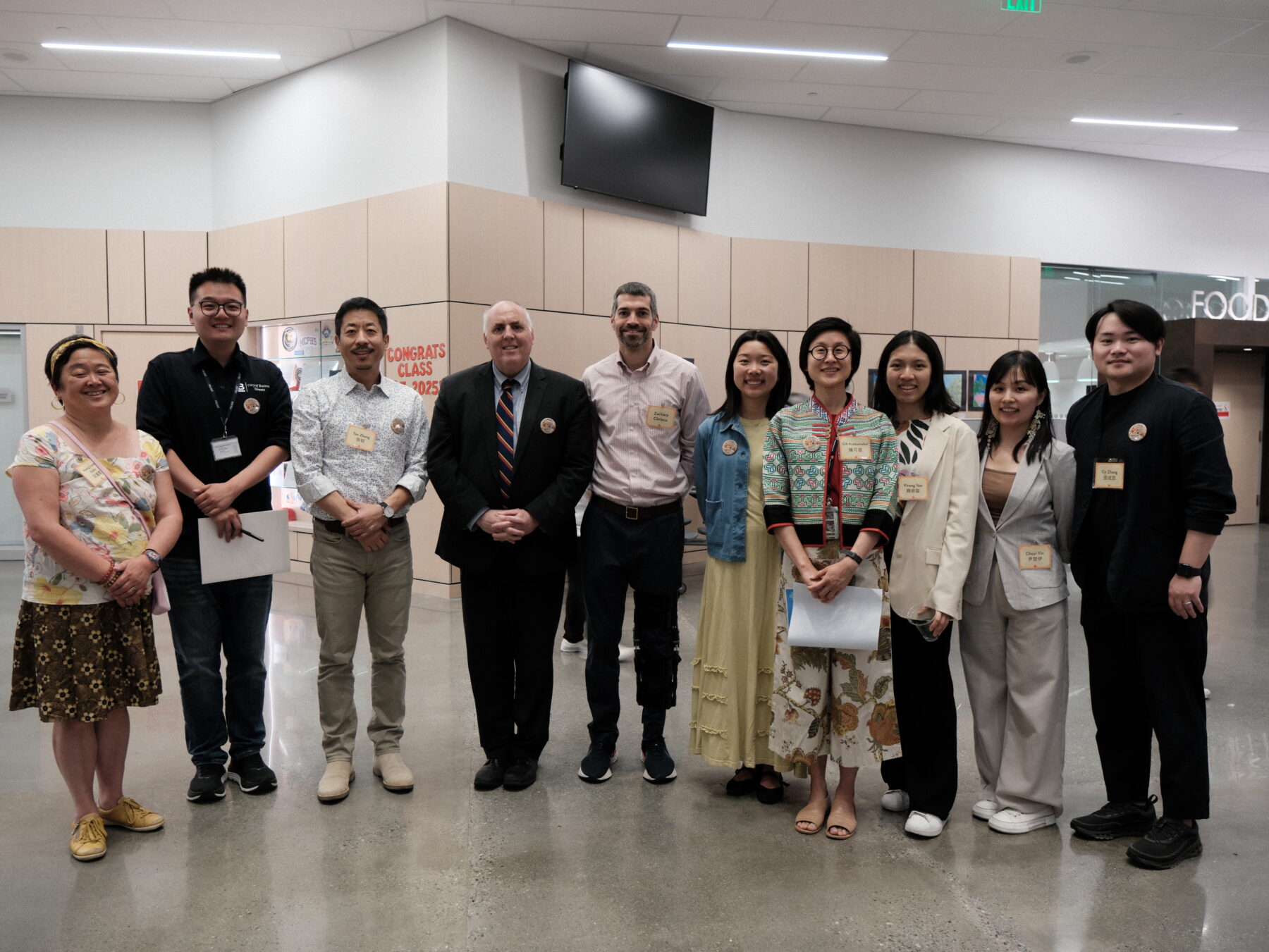
The Phillips Square project team poses for a photo at a community design celebration.
When I was in school, I was taught to design for a community. We learned to conduct site analysis and research to come up with ideas that fit the site, but they might not always reflect people’s lived experiences or the unique cultural contexts we were working in.
I find designing with a community more effective. The community knows the site better than I do. They tell us what the real issues and challenges are, and how they want to use the space. The design ends up more aligned with what they actually need. And at the same time, it empowers the community. They have agency over what changes in their own neighborhood.
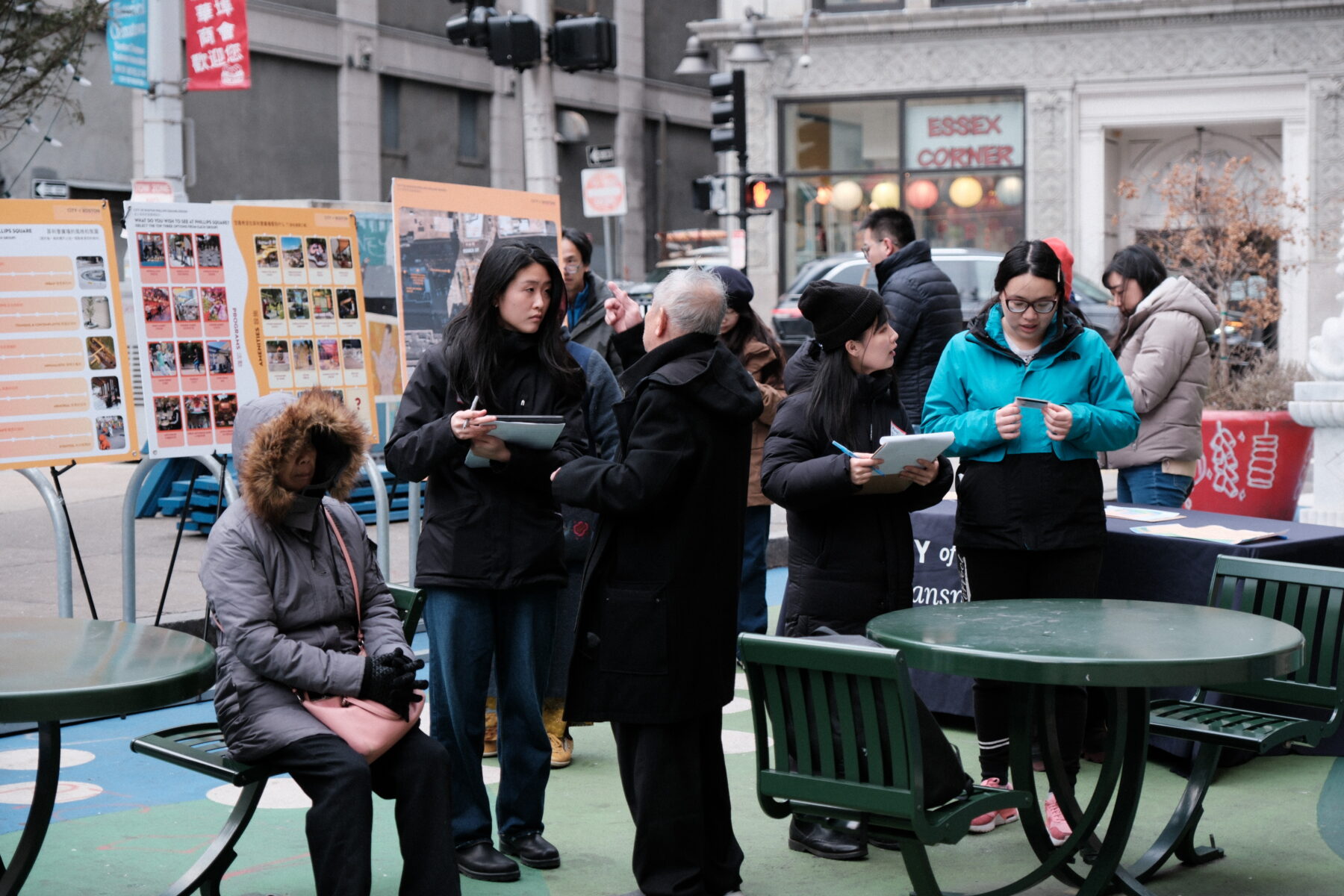
The design teams met people where they were, hosting pop-up events through the winter and spring.
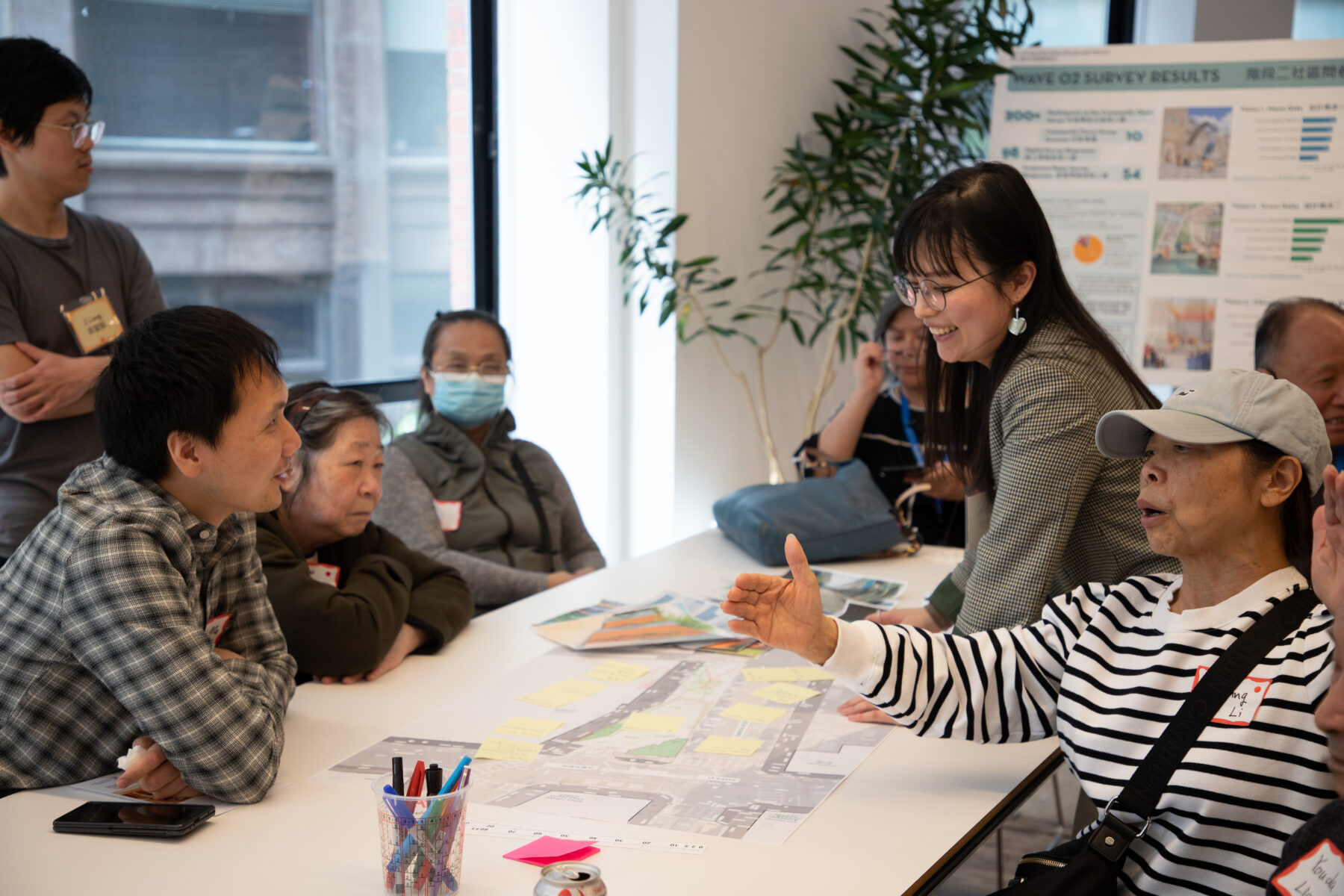
Community groups were invited to Sasaki’s office in Chinatown to participate in a day-long design charrette.
The team wanted to celebrate the cultural and historic value of these spaces. It’s hard to see it in their current condition, but these are important places in the history of Boston’s South Cove neighborhood. We want to preserve these as safe spaces for multicultural residents to proudly call their cultural home.
We would also like to use the design to tackle environmental issues. I had an opportunity to collaborate with Professor MyDzung Chu at Tufts University on the Chinatown Heat Equity and Resilience in Open Spaces (HEROS) project that looked at the current environmental conditions of 13 open spaces. Both sites are among the most challenging ones in the neighborhood. Reggie Wong Park is one of the hottest open spaces in the area. It’s covered with asphalt, with very few trees—it’s basically a parking lot where people play sports. Phillips Square also used to be part of a roadway, so it’s another one of those open spaces with a lot of hard surfaces.
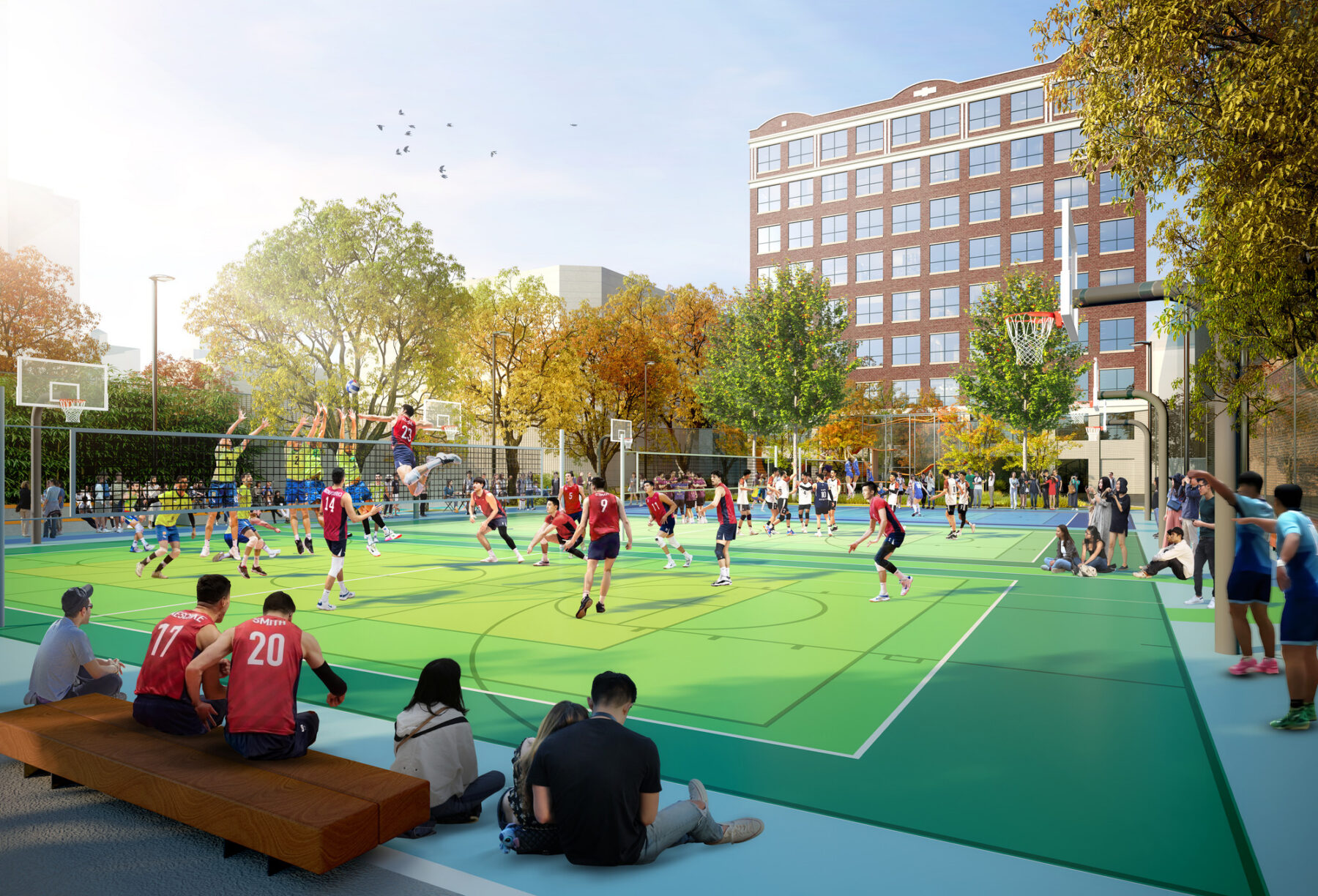
Rendering of the reimagined Reggie Wong Memorial Park.
Reggie Wong is truly community-led. It’s the only active sports area in all of Chinatown and the Leather District, which has no parks at all. Our client, Friends of Reggie Wong Memorial Park, raises the funds for planning, design, and construction. Everyone involved is volunteering because they genuinely want to improve their neighborhood and fight for what they deserve. Once built, it will be a good example of what a community can achieve. It’s already bringing neighbors from Chinatown and the Leather District together. This is a park where people from both communities can gather, share the space, and talk to each other.
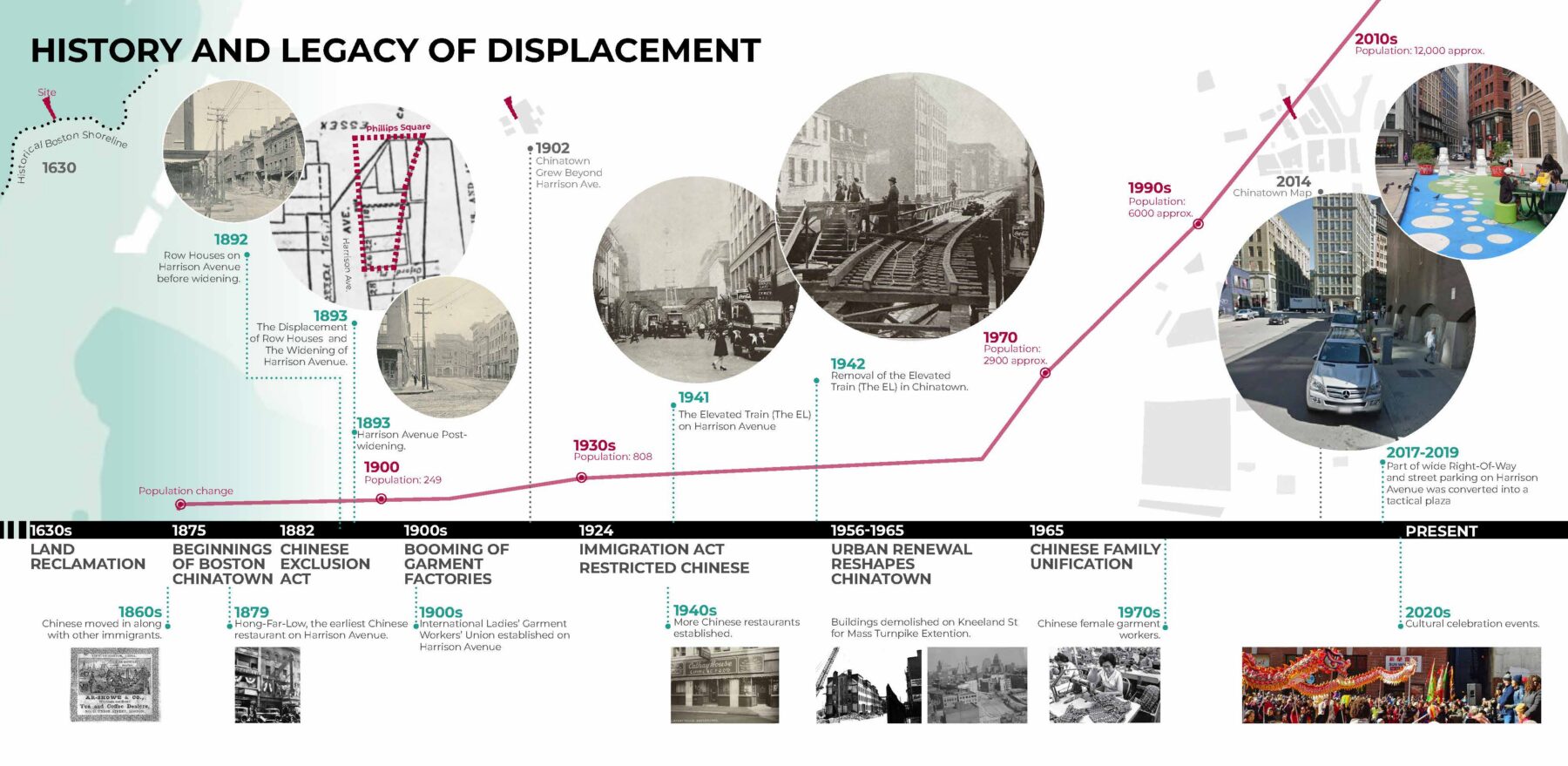
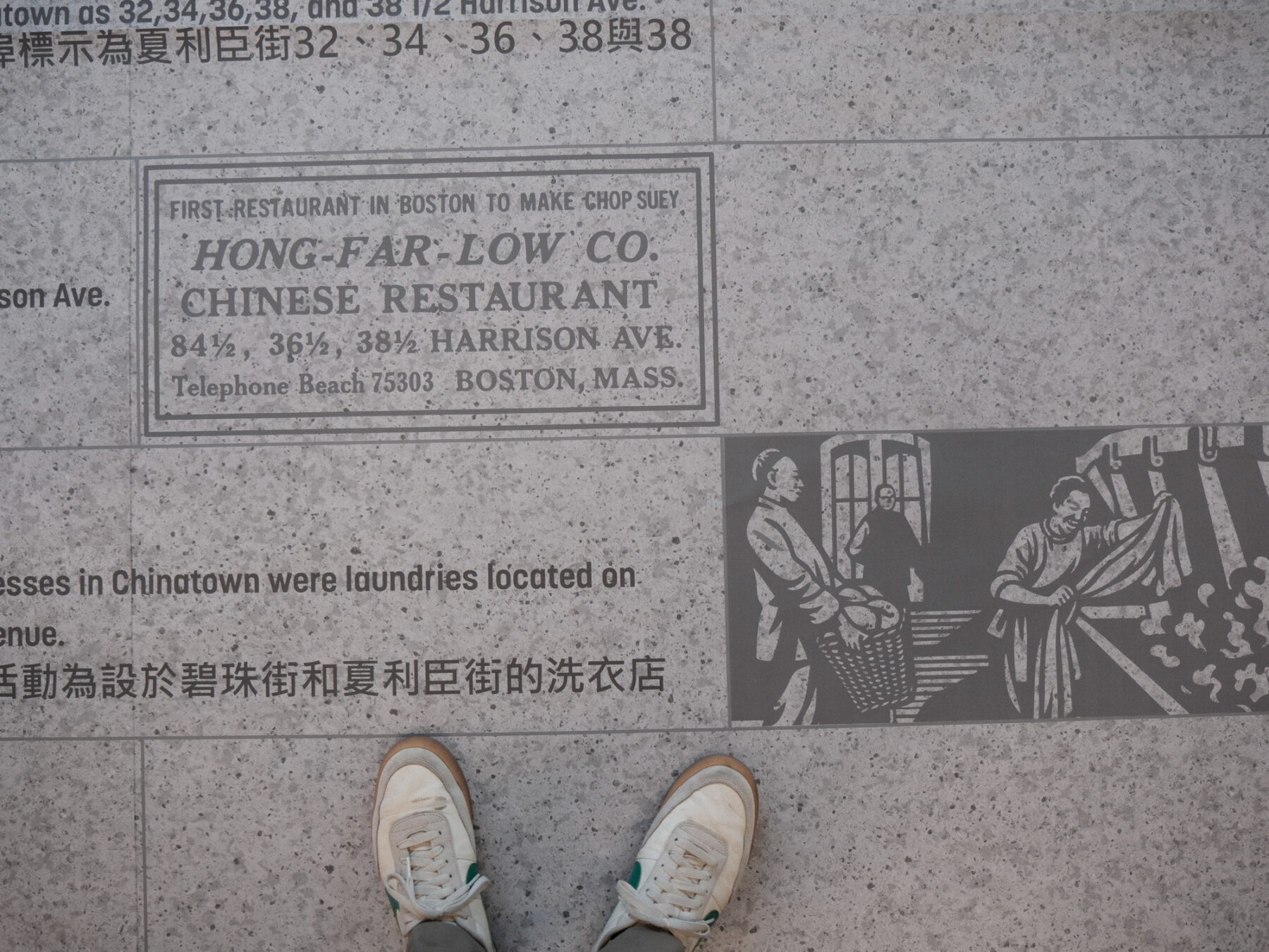
Timeline of Boston’s Chinatown, from its early history to present day.
Each project required a different approach because the clients and project origins were distinct.
For Reggie Wong Memorial Park, the client is a very active local group, including community members from Chinatown and the Leather District. Reaching out to residents was not difficult with the client’s help. The Chinatown community has a long history of using the site for nine-man volleyball—a sport originated in Toisan, China and adapted by Chinese immigrants in North America during the 1930s as a vital community-building and cultural touchstone. They call this space their spiritual land. So we held a focus group with the team leaders who’d been playing there, and we also conducted intercept surveys during their annual Boston August Moon Festival Volley Ball Tournament. The team asked people as they went to play, “Do you want to take a look at the park designs?”
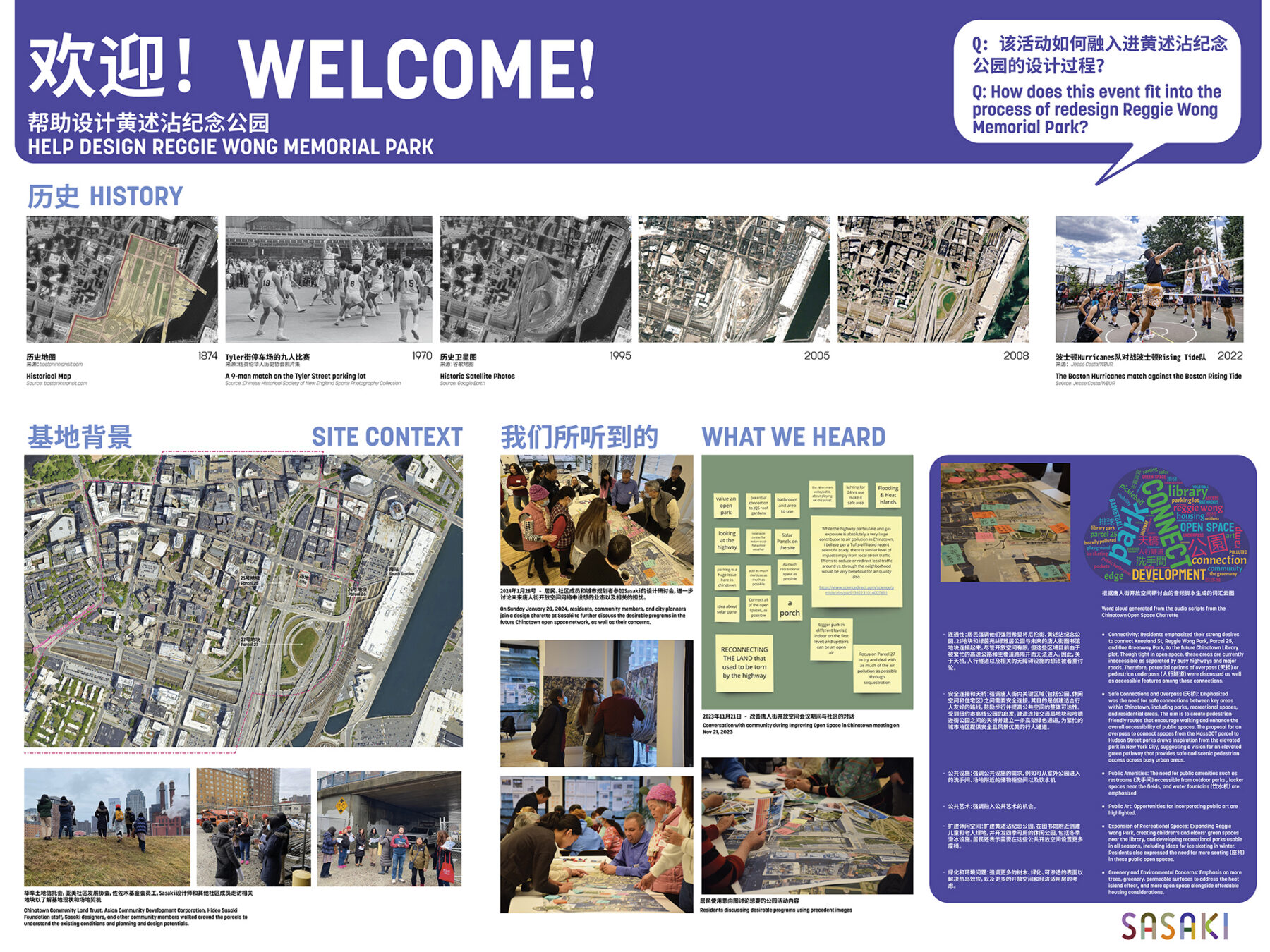
Board from an early engagement session for Reggie Wong Memorial Park, where the team summarized the history of the site and what they’d heard so far from the community.
For Phillips Square, the plaza is positioned to be a northern gateway for Boston’s Chinatown. The stakeholder groups are broader and include Chinatown and adjacent neighborhoods. The engagement process was more extensive, spanning multiple phases. The first phase focused on introducing ourselves—meeting with community organizations and local businesses, conducting surveys, and running pop-up intercepts on site to capture passersby and tourists. Two groups that are always hard to reach are seniors, who are often monolingual, and youth, who tend to have busy schedules. We partnered with local organizations like Asian Community Development Corporation (ACDC), Boston Chinatown Neighborhood Center (BCNC), Greater Boston Chinese Golden Age Center (GBCGAC), Josiah Quincy Upper School, and Pao Arts Center that already have those relationships.
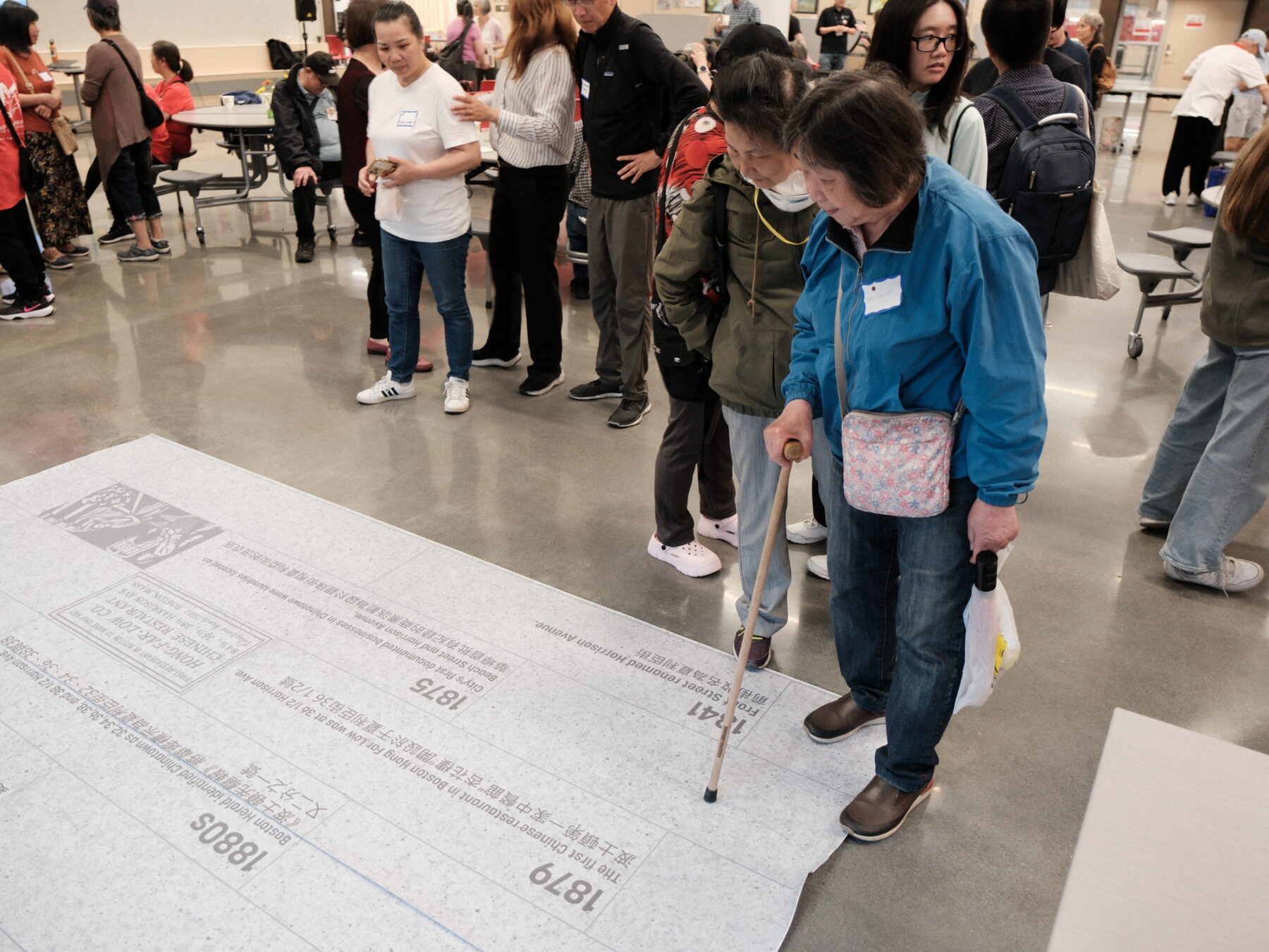
At a community design celebration, attendees could see their ideas come to life, including a full scale mock-up of paving design.
By the second phase, we invited community members to Sasaki’s office for a design charrette and to sketch together. Being close to the project site made it easy for people to participate, and it was really empowering for them to have that kind of agency to make changes in their neighborhood. After this charrette, we hosted a final community meeting where we created three-dimensional work that allowed the community to visualize the new space. We printed out paving patterns for people to stand on and created models they could interact with. It was exciting to bring the community into the designed space and show them how their ideas evolved from survey to final design.
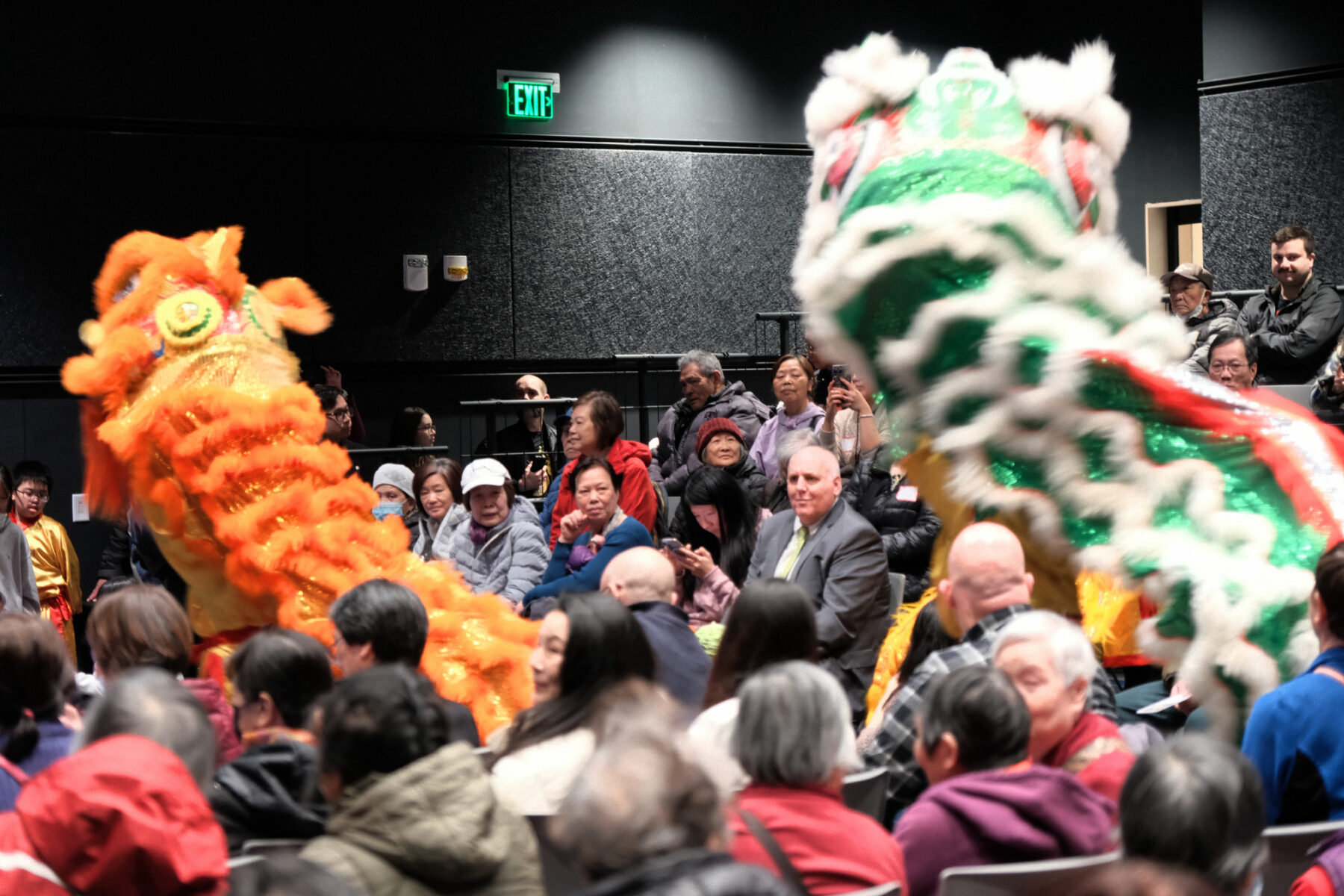
Events throughout the process featured performances by community groups, turning public engagement events into community celebrations.
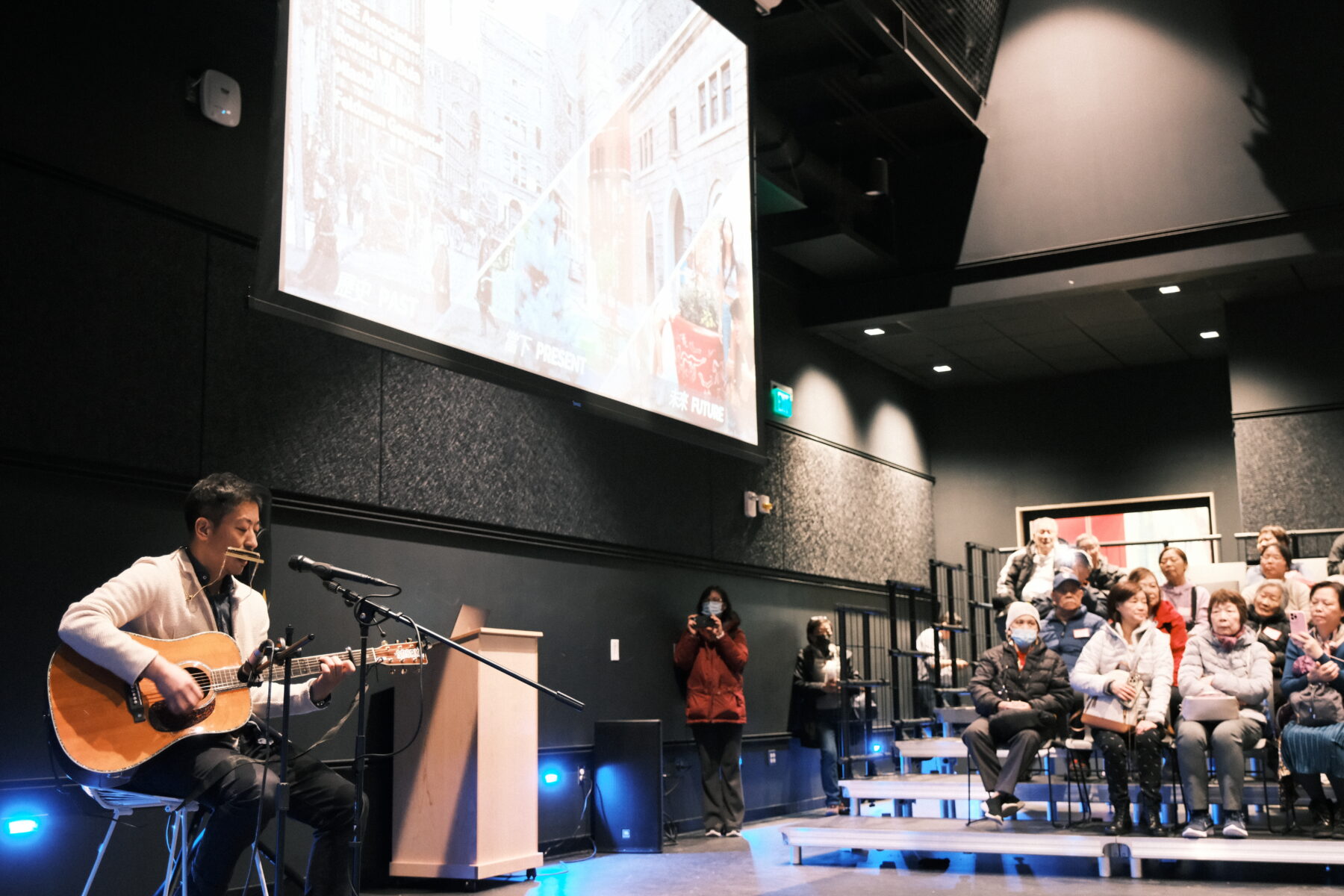
Principal and landscape architect Tao Zhang performs during one of the community celebration events.
Phasing is important for building momentum and preventing engagement fatigue. We don’t want to go in right away and say “Let’s draw together.” Starting with an introduction and following up through phases allows participants to build trust in the team and shows them how their input can guide design decisions.
Because our team members also volunteer at local community events, we could start building relationships with individuals, and it felt less like working for the community but more like reconnecting with friends. With Phillips Square, we aimed to make our events feel like a party—for example, at one open house, local residents, community members, and even members of the design team performed, shared cake, and exchanged design ideas.
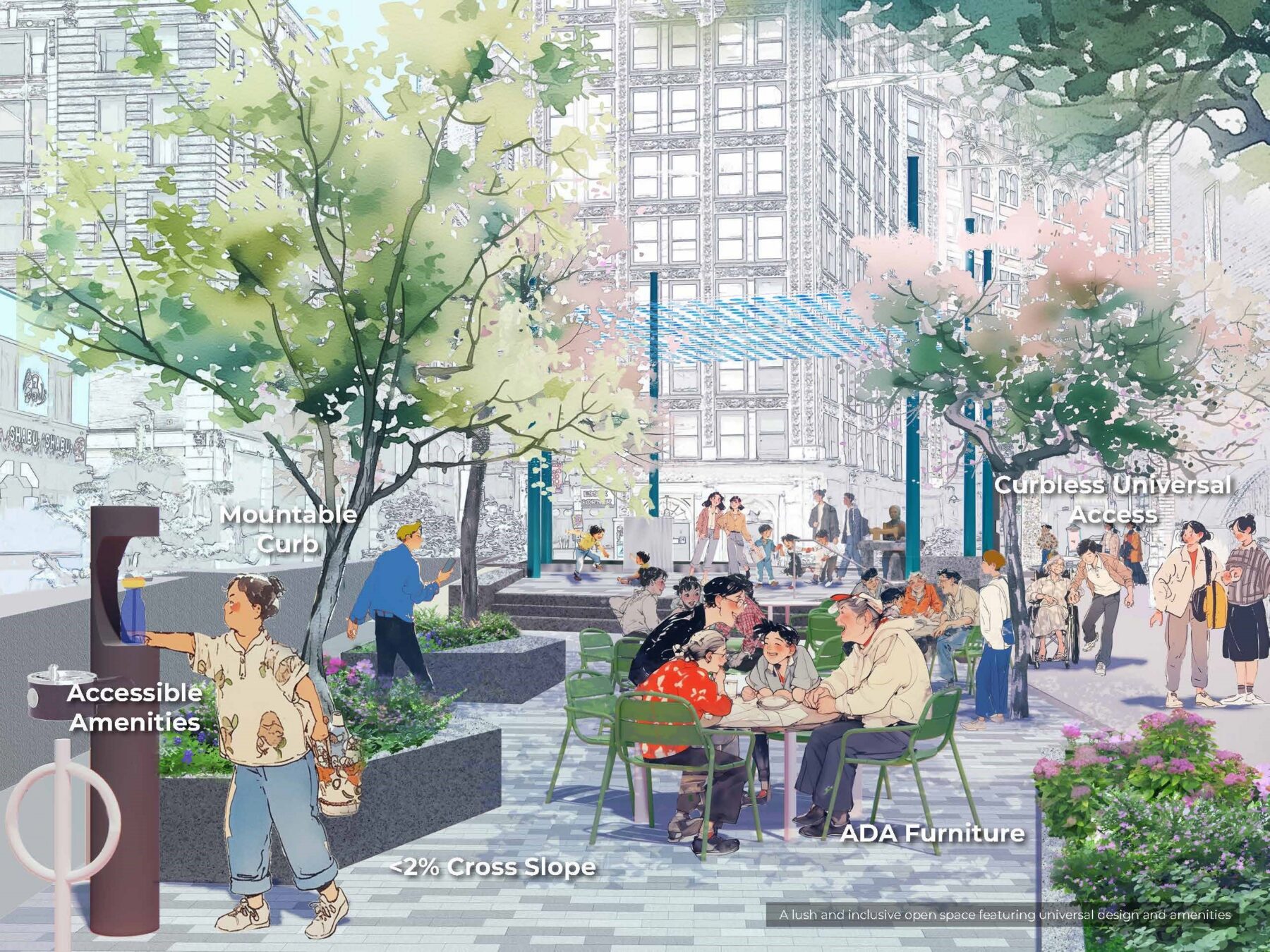
Rendering of the reimagined Phillips Square.
When we engaged with senior residents, we assumed they would want things that reminded them of home. They love the Chinatown gate, that traditional aesthetic, and they wanted Phillips Square to express their cultural identity. We assumed that youth would want something more modern, more contemporary. Surprisingly, the responses were quite mixed, with some elders favoring very contemporary expression while the youth chose traditional representation. Ultimately, we tried to balance the contemporary context with elements related to the cultural identity people were looking for.
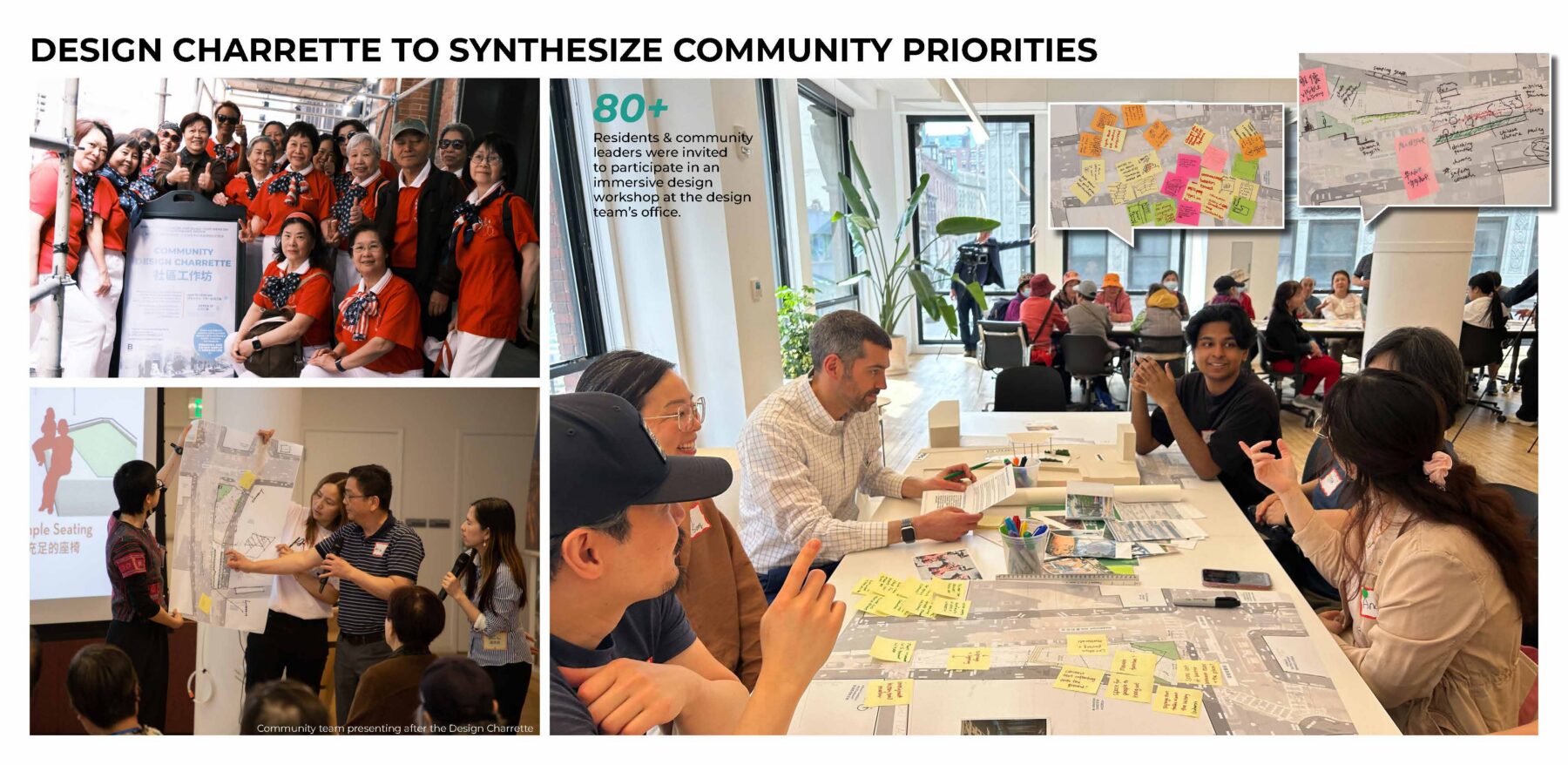
Summary of design charette at Sasaki’s Boston office.
For Phillips Square and Reggie Wong Memorial Park, the strategy was to anchor the edges of Chinatown. With development and gentrification, Chinatown is shrinking, and the boundary of downtown keeps creeping in. So having culturally expressive open spaces along those edges defines the boundary of the neighborhood—it says, you are arriving somewhere, this is a unique place. I think how we design spaces at those edges is really how design can help preserve a neighborhood and push back against gentrification.