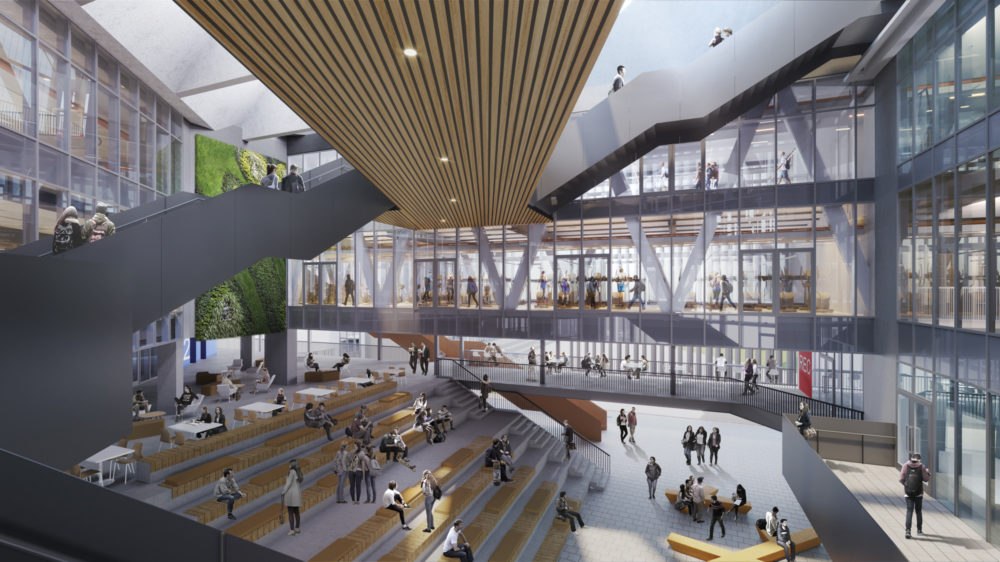
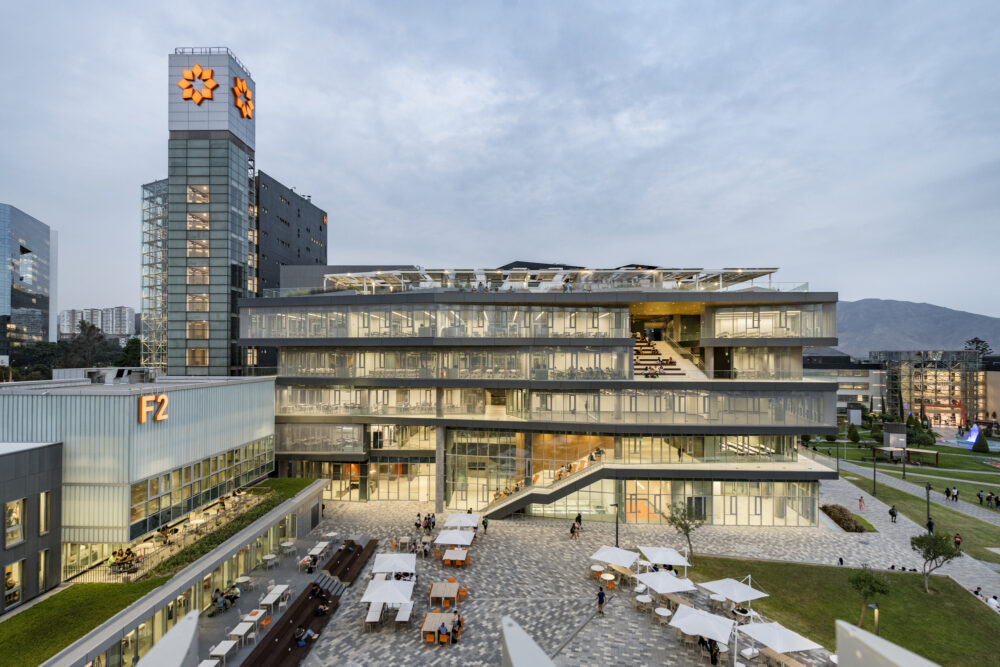
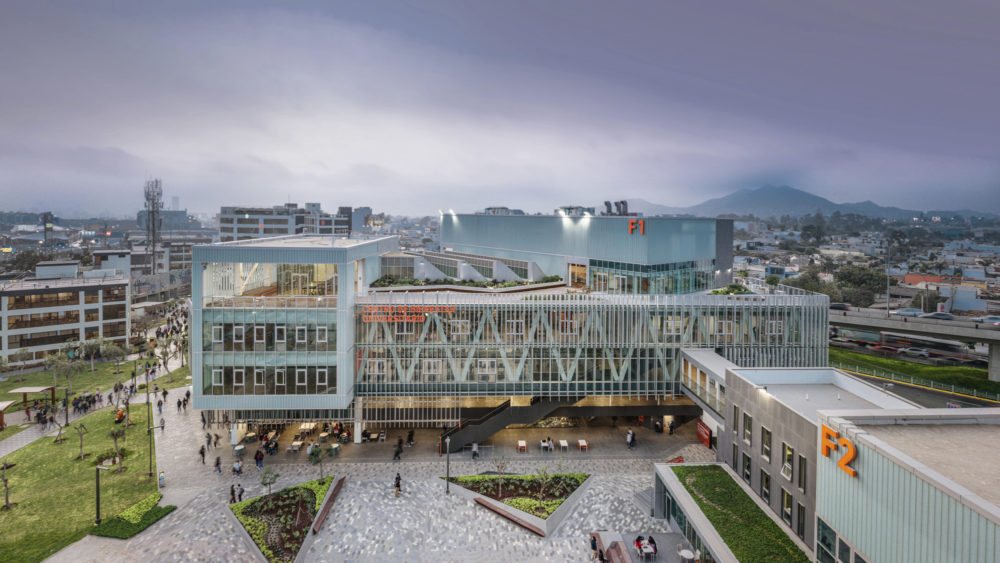
Passive Frontiers: Lessons from ULima Wellness Center
In temperate Lima, the fluidity of interior and exterior drove the design of the Wellness Center, which preserves an expansive and continuous plaza level that centers the campus public realm.
 Sasaki
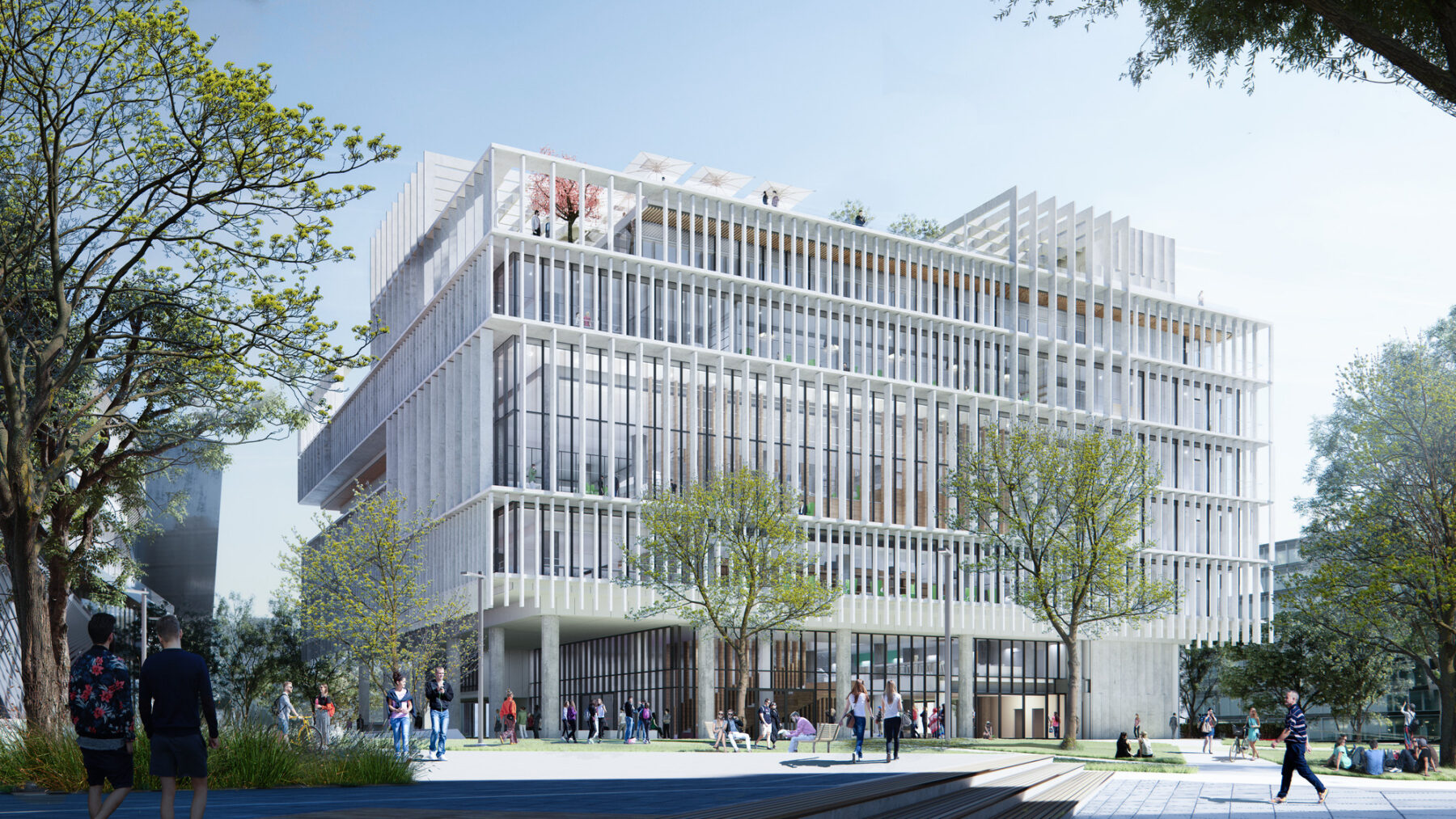
The new Academic Library at the Universidad de Lima represents a pivotal moment in the evolution of the campus—architecturally, academically, and socially. Conceived as the third building implemented from Sasaki’s long-term Master Plan, the project advances a broader vision for growth while responding to rapid and unforeseen change. More than a traditional repository of books, the building redefines the idea of a library as a flexible, inclusive environment for learning, collaboration, and student life.
Strategically positioned within the campus, the Library establishes strong visual and spatial connections to its surroundings. The building is intentionally transparent and fully glazed on all four sides, reinforcing its role as a shared resource for students, faculty, and visitors alike. At ground level, it connects directly to the existing parking garage, an essential link within a predominantly commuter campus, ensuring accessibility and seamless daily use. This openness continues vertically across its eight floors, with interior spaces visually connected to the campus and city beyond, reinforcing the Library’s role as a central, collective space.
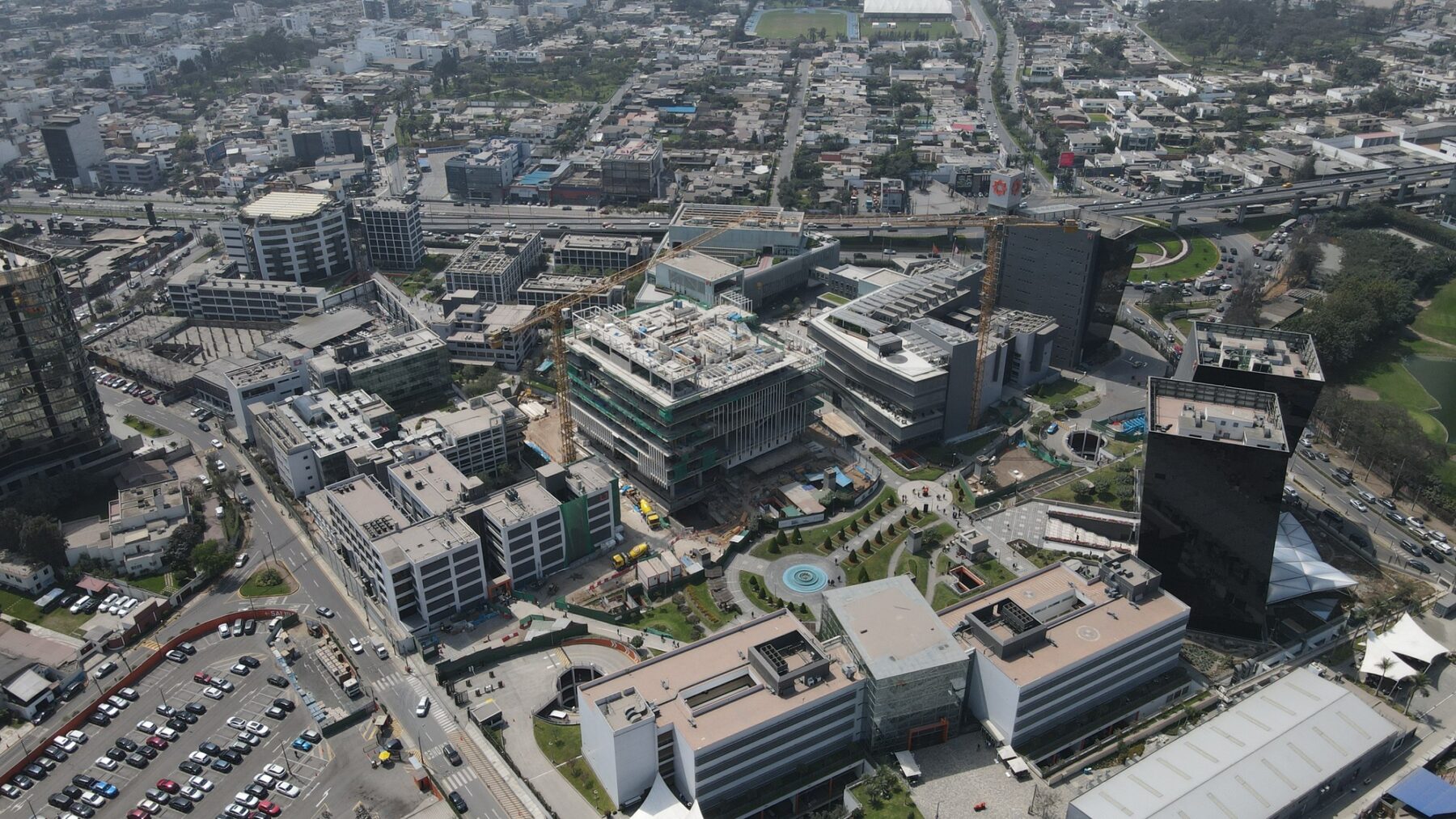
Aerial view of the Student Hub as established by the 2018 Master Plan
The project was shaped by the University’s extraordinary growth. Following the master plan which was completed in 2018, enrollment stood at approximately 18,000 students, with a projected goal of 36,000 over 25 years—a milestone that was reached in just five years shortly after completing the Recreation, Wellness, and Student Life Center. During this period, leadership changes, evolving academic priorities, and the implementation of new building codes required the design team to remain agile. Despite these changes, approximately 95% of the original design intent was preserved, demonstrating the resilience of the initial concept.
Flexibility is the defining principle of the building’s program, with the capacity to accommodate 2,800 people, an increase from the existing library which can host 750 users. Only a fraction of the total area is dedicated to conventional library functions, with open stacks and research spaces distributed across two levels beginning on the third floor. The remainder of the building supports a wide range of academic and social uses: a gallery and conference spaces on the second floor; six flexible classrooms integrated into the upper levels; an architecture studio located in the basement; and informal learning and lounge spaces throughout.
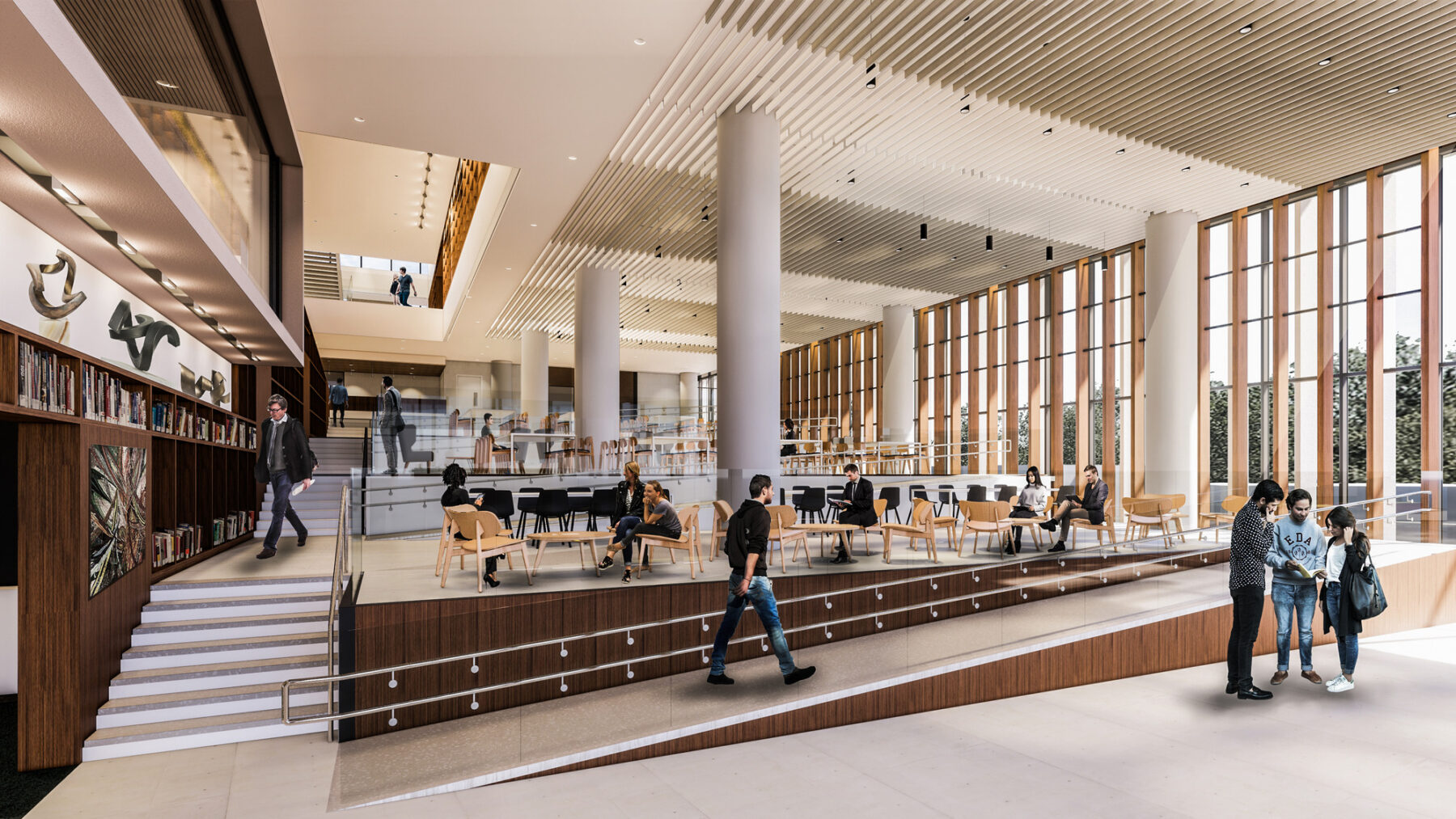
View of terraced learning commons on 4th floor looking west.
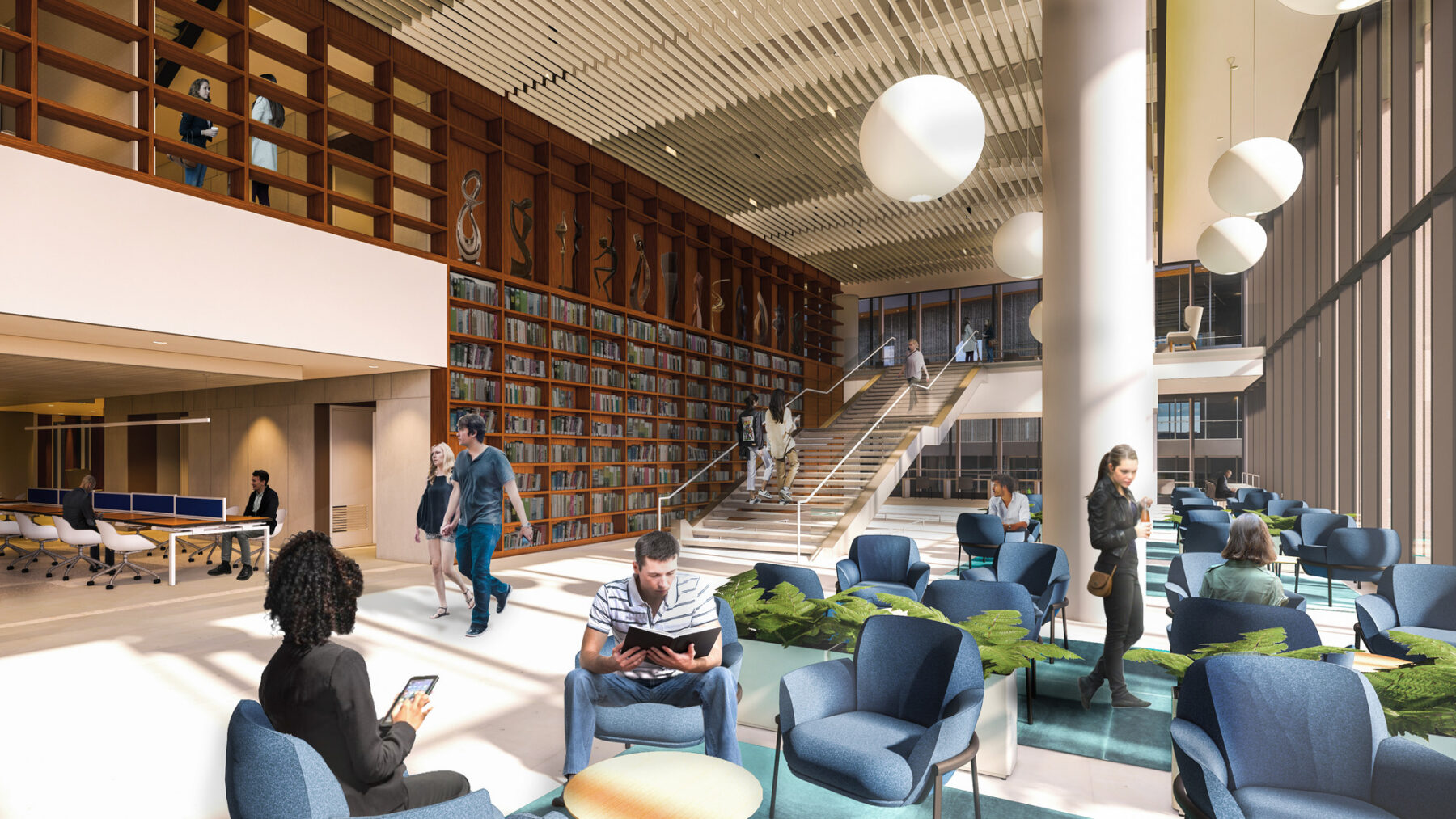
View of Main Lobby on the 3rd floor with lounge spaces, research and periodicals.
A cafeteria on the eighth floor opens onto a 360-degree terrace, offering panoramic views of the campus and city and establishing the Library as a destination beyond academic study. An additional terrace on the seventh floor further extends learning and social activity outdoors.
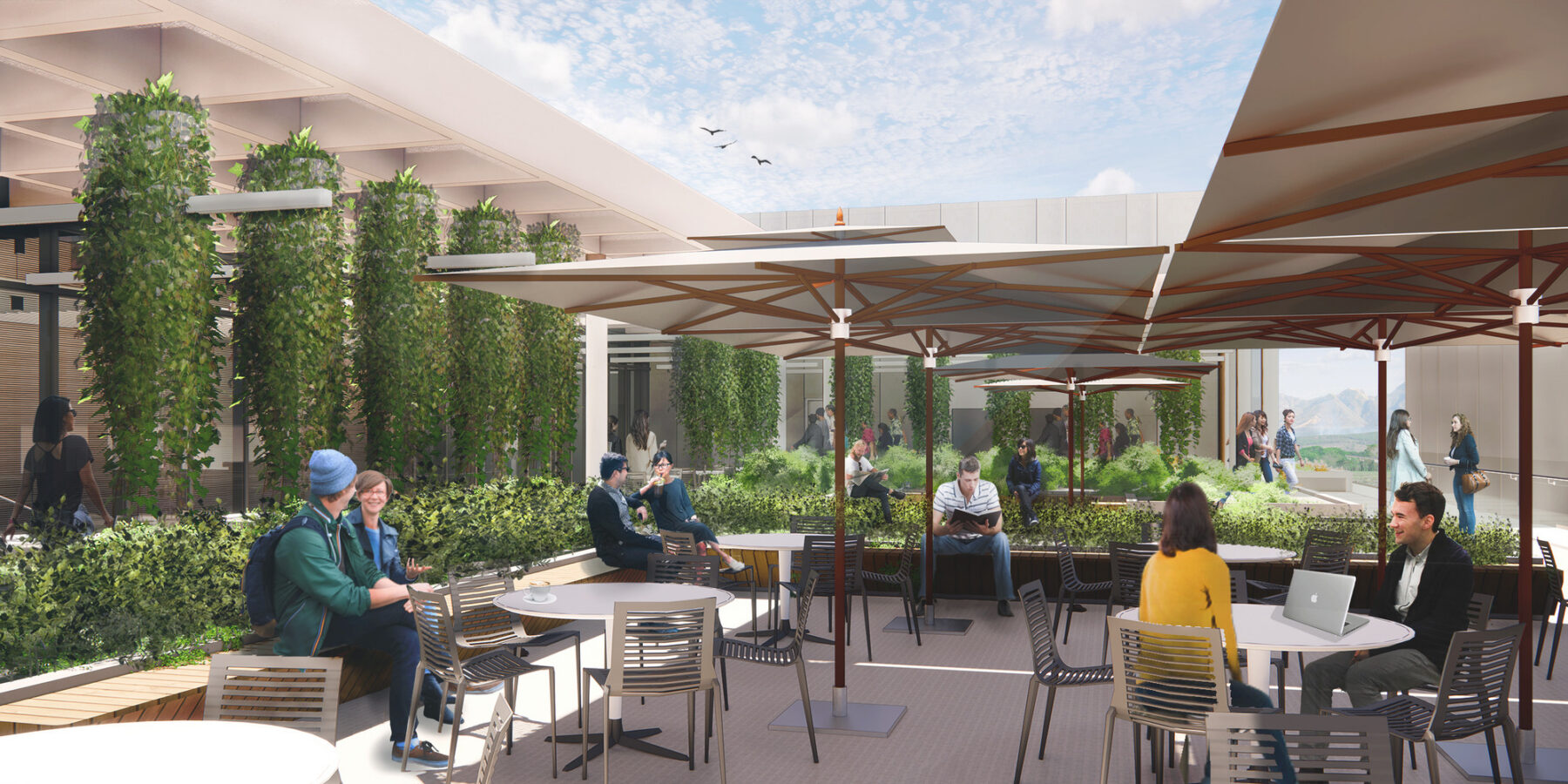
Level 7 terrace
The design reflects a commitment to long-term performance and innovation. The Library is the first building on campus—and among the first in the country—to employ a Glass Fiber Reinforced Concrete (GFRC) façade system. Selected through extensive material testing, the façade offers durability, low maintenance, and resistance to Lima’s dusty environment, representing a strategic investment in the building’s lifecycle. Structurally, the building sits on seismic isolators, with layered steel and rubber components positioned between beam and pedestal systems above the basement, significantly enhancing seismic performance.
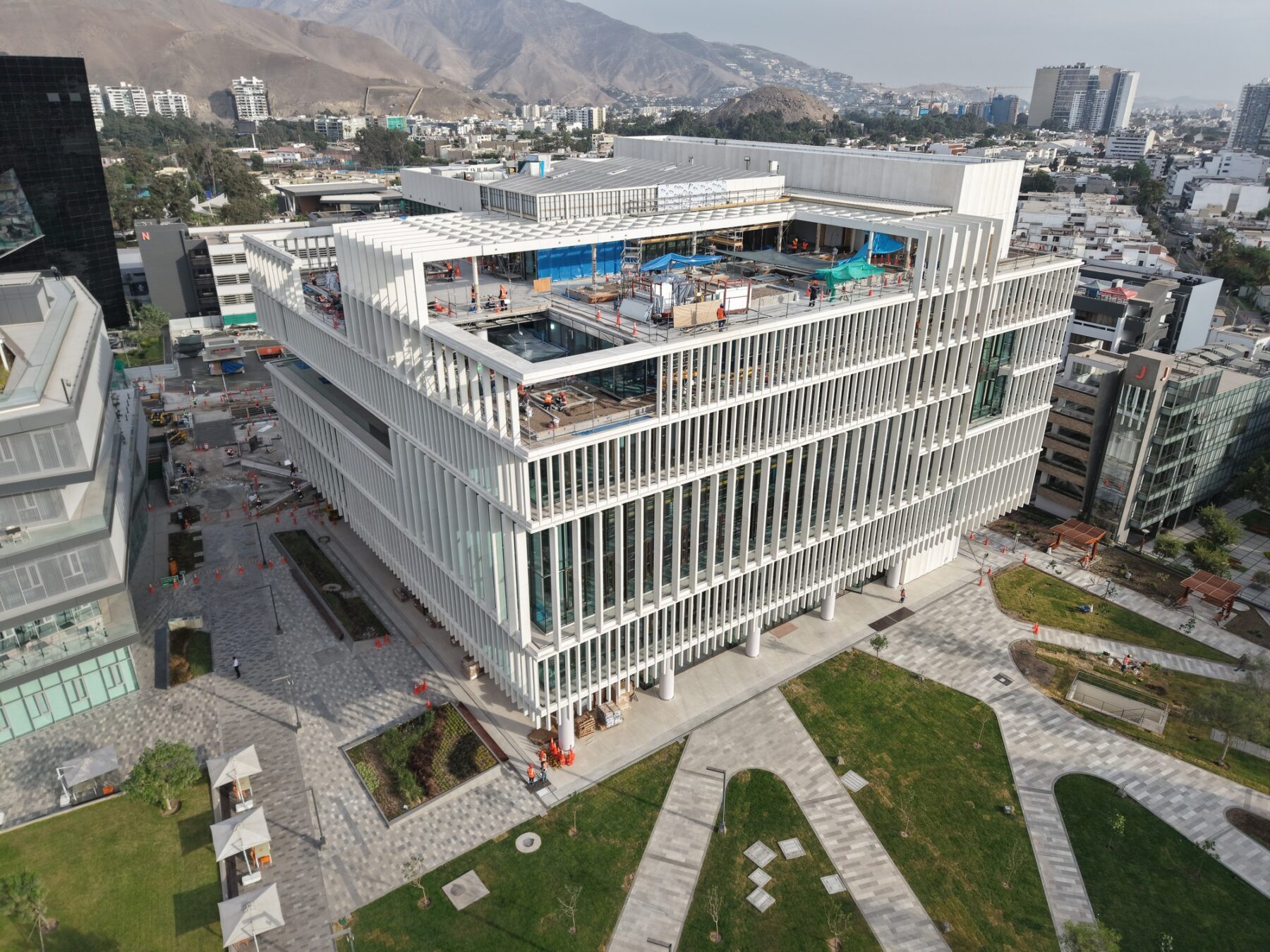
Construction progress from March 2026
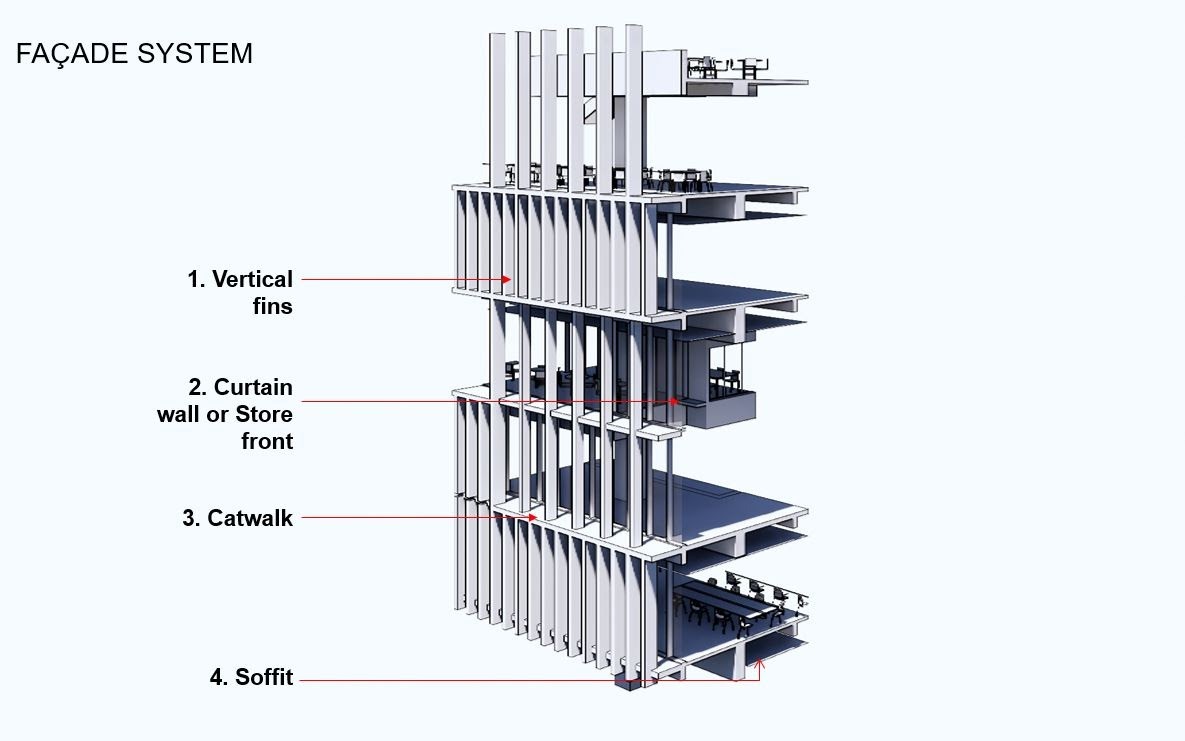
Facade elements of the solar radiation mitigation strategy
Construction efficiency was another critical consideration. To minimize disruption to campus life and accelerate delivery, the project incorporates prefabricated structural elements, including beams, slabs, and select concrete stair components. This approach reduced construction time by an estimated 20%, aligning with the University’s urgent spatial needs.
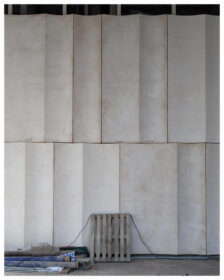
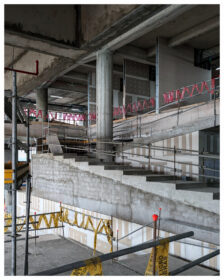
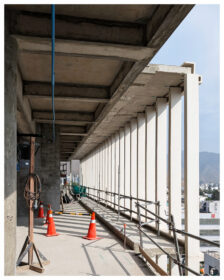
Prefabricated structural elements
Originally designed as a fully enclosed building from levels three through eight, the project underwent a significant transformation during the COVID-19 pandemic. The design was adapted to incorporate operable windows, enabling natural ventilation for up to nine months of the year and substantially reducing energy consumption—an important step toward the project’s goal of achieving LEED Gold certification.
Scheduled for substantial completion in mid-2026, the Universidad de Lima Library is poised to become a new academic and social heart of the campus. Adaptable, resilient, and forward-looking, the building reflects both the University’s rapid growth and its evolving vision of learning in the 21st century.
For more information contact Pablo Savid-Buteler or Antonio Furukawa.