Sasaki in Colorado: Then and Now
A look at projects in the state from the 1960s to today
 Sasaki
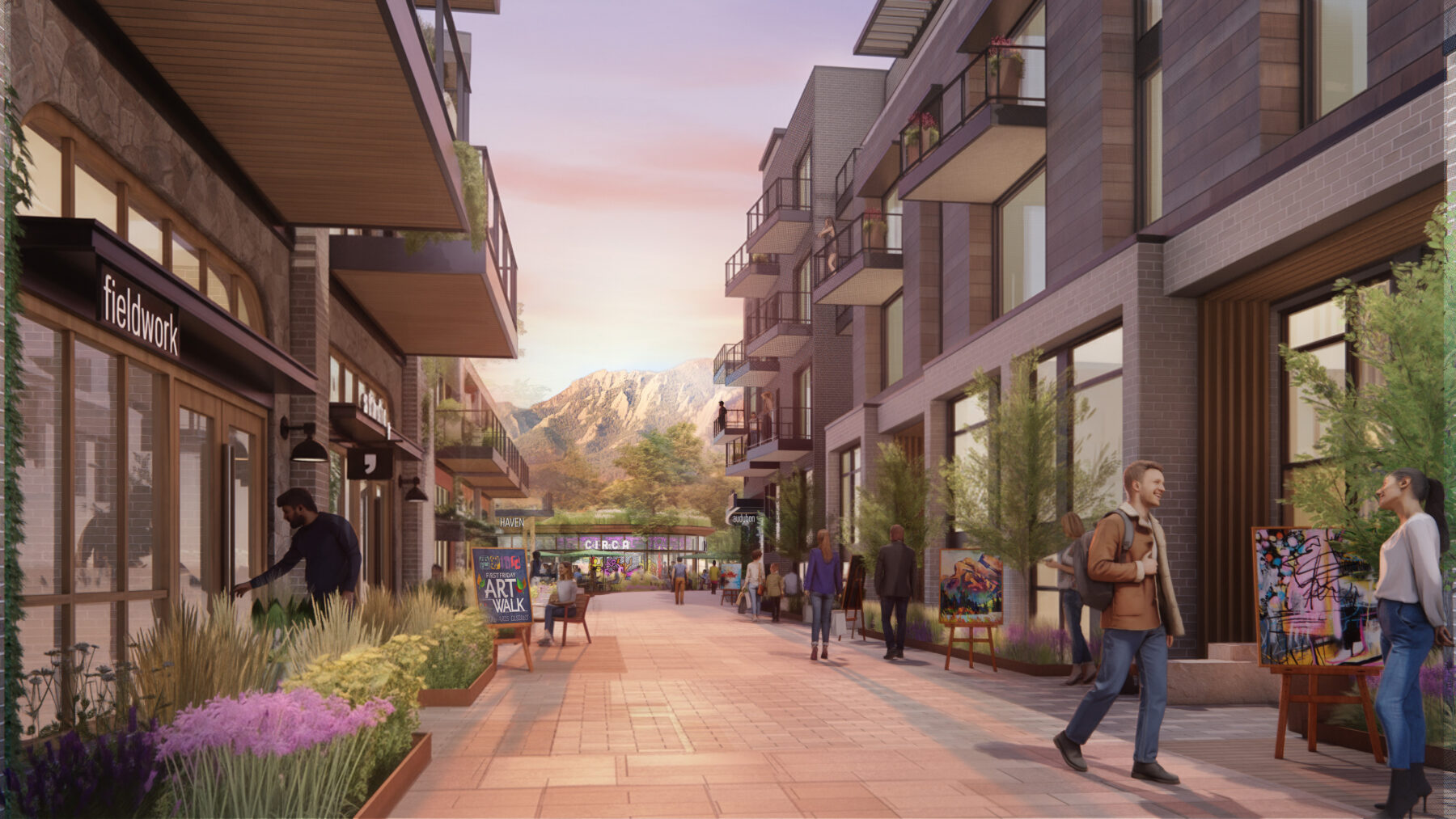
Located in the rapidly changing neighborhood of East Boulder, the Pearl Arts District proposes a 15-minute neighborhood that includes a new performing arts venue for Sundance, touring performers, local creators, and Boulder’s growing arts community.
The Pearl Arts District is envisioned as a new, walkable neighborhood that strengthens connections between culture, mobility, public life, and Boulder’s incredible natural setting. Building on the city’s Transit Village Area Plan (TVAP), this district represents a bold step in realizing Boulder’s goals for transit-oriented development and resilient urbanism.
Sasaki was selected as the master planner through a competitive design process to shape the vision for Pearl Arts District. Guided by a process that was grounded in structured analysis and sustained engagement with the client and stakeholders, the plan uplifts Boulder’s unique characteristics while creating new opportunities to celebrate the vibrancy of the city’s community and culture.
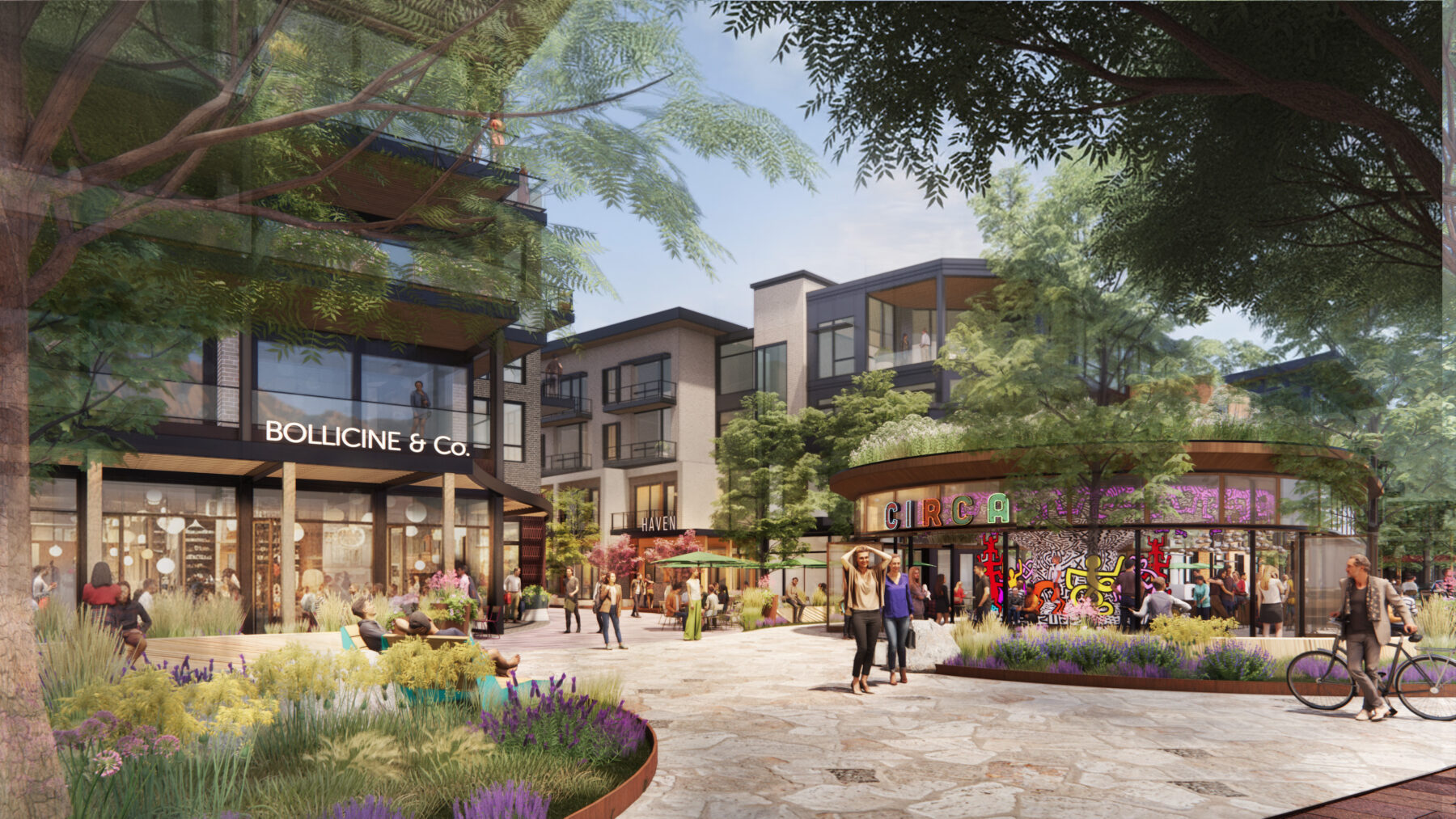
The Pearl Arts District will include an active public realm with 30,000 sq ft of ground floor retail, as well as pavilions and public art.
Located in the rapidly changing area of East Boulder, the site is currently a mix of light industrial uses that have been shaped by logistics. The master plan seeks to re-center the site around culture, entertainment and a connection to nature. Rather than treating culture solely as a programmatic element, Sasaki’s plan positions cultural activity as infrastructure of place.
A key anchor of the master plan is a 2,500-seat performing arts venue conceived as a neighborhood amenity, a regional destination and a generator of daily urban life. As existing venues in the city are capped at around 1,000 seats, and other larger spaces being housed within the university, the new building fills a critical gap for a large, community-oriented entertainment venue that will also serve as a new home for Sundance as the festival makes its move to Denver.
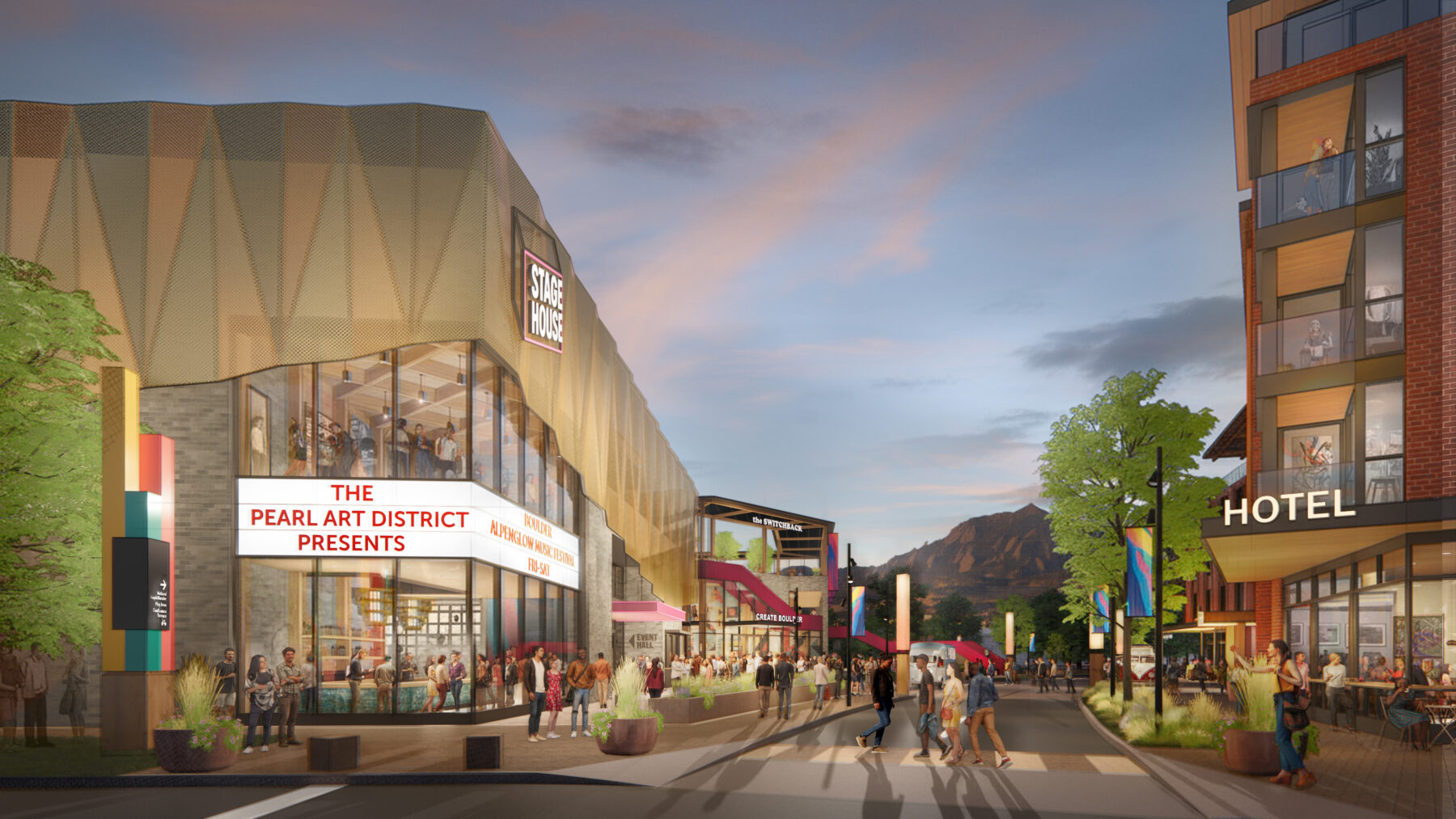
The performing arts venue will become an anchor for the site and bolster the cultural ecosystem of the district.
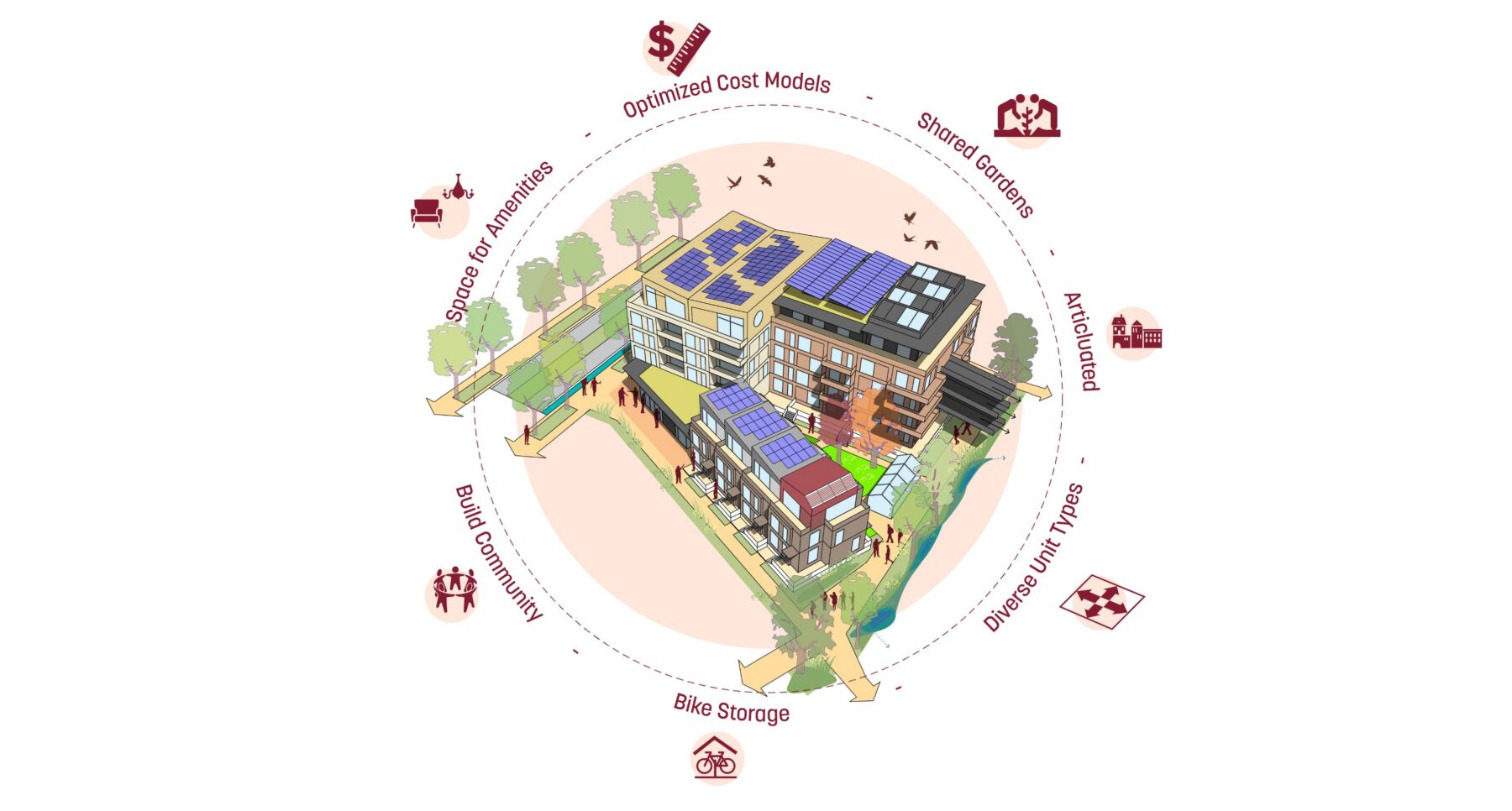
By weaving rehearsal spaces, flexible gathering zones, and streetscape activation into the fabric of the plan, the design advances a model in which cultural activity extends into everyday life.
The parks and plazas are envisioned as multifunctional spaces designed to host informal performances, markets, community events, and daily social interaction. Materials, planting strategies, and seating are selected to reflect Boulder’s environmental context while creating comfort and usability throughout the year.
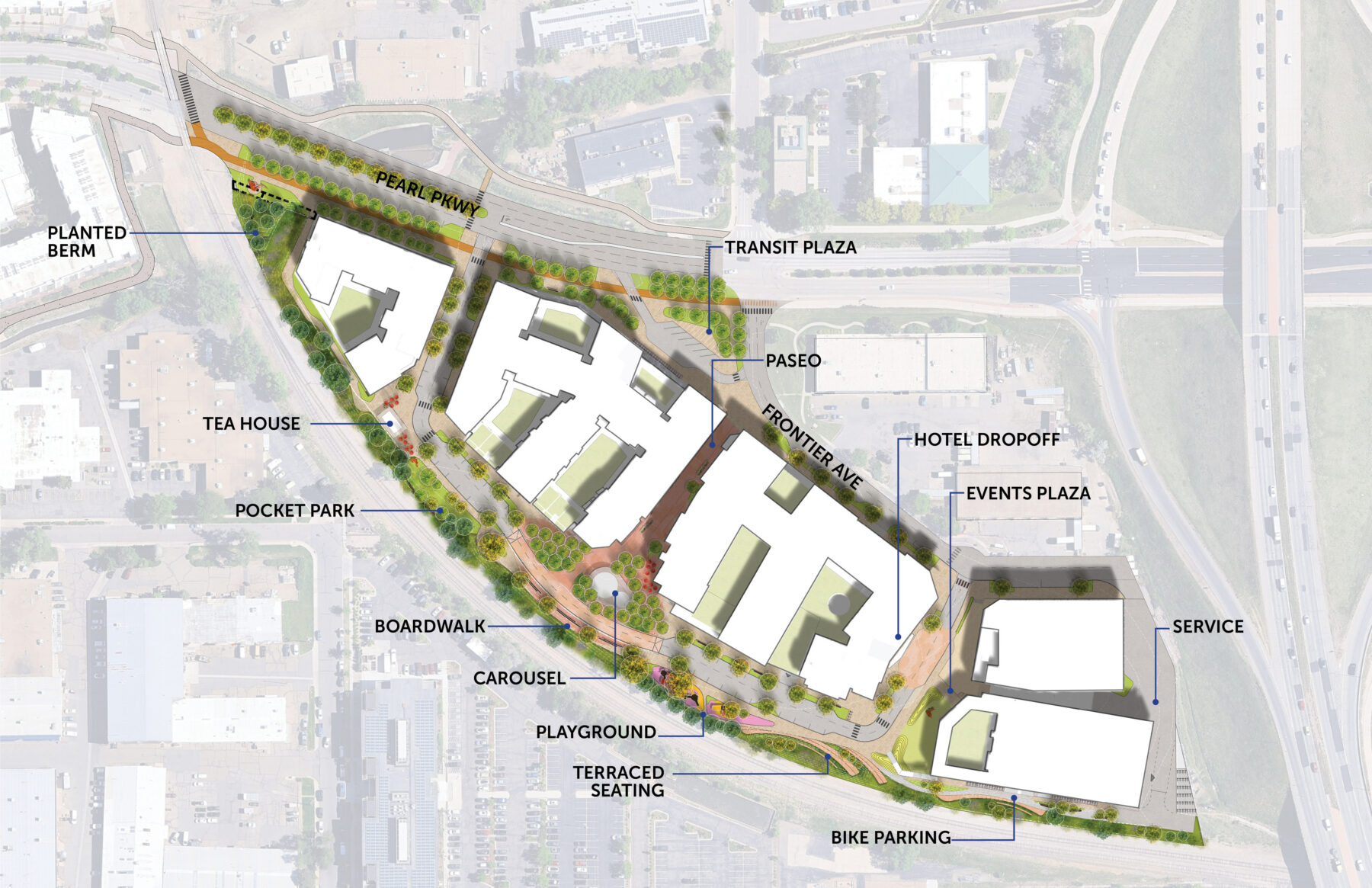
The site is defined by a linear park that runs the length of the entire district. Programming along the west, where housing is concentrated, is quieter and more neighborhood-focused, while hospitality and entertainment are more concentrated in the active and dynamic east side of the district.
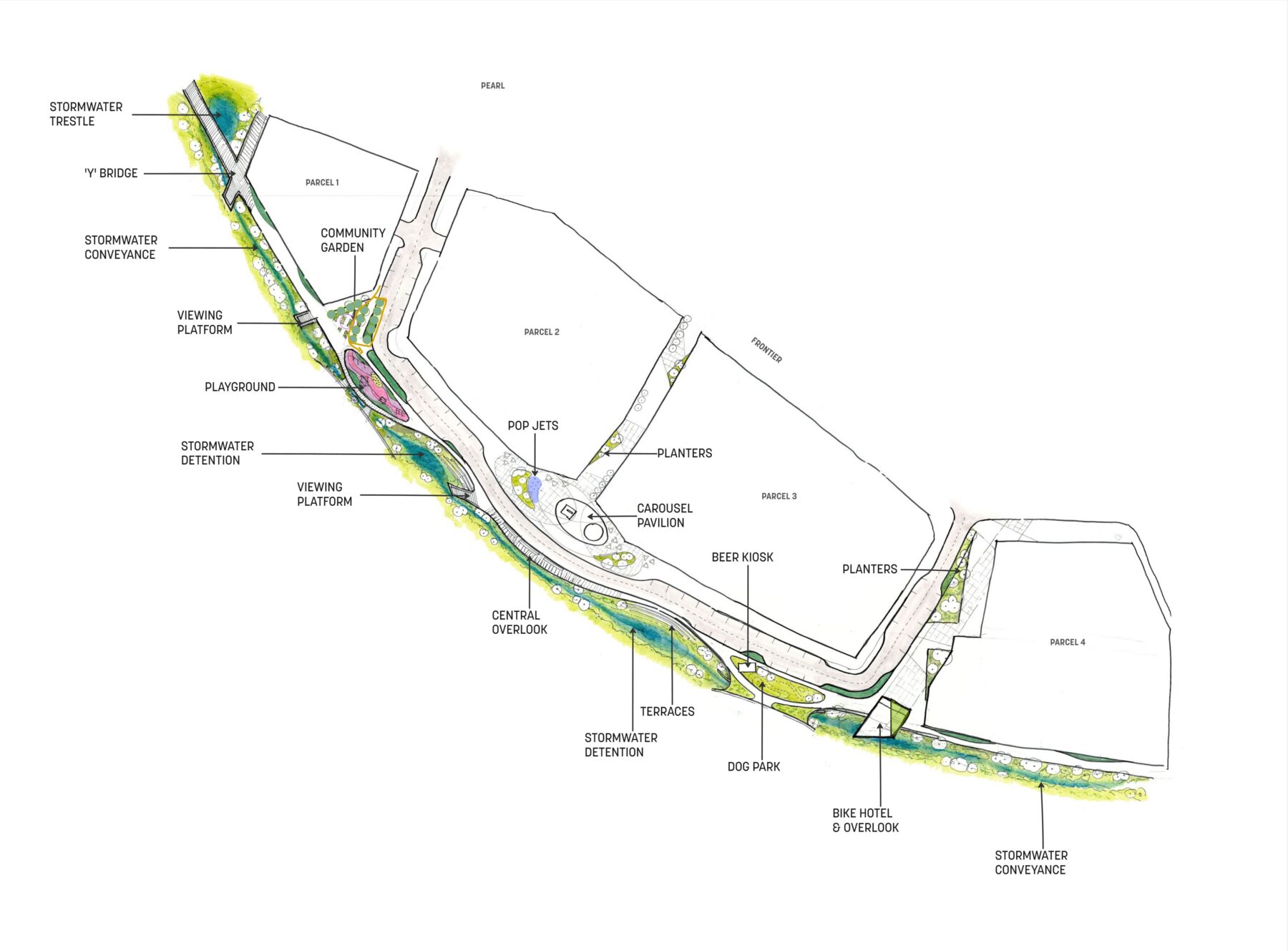
The linear park acts as stormwater infrastructure, managing all runoff and mitigating flooding.
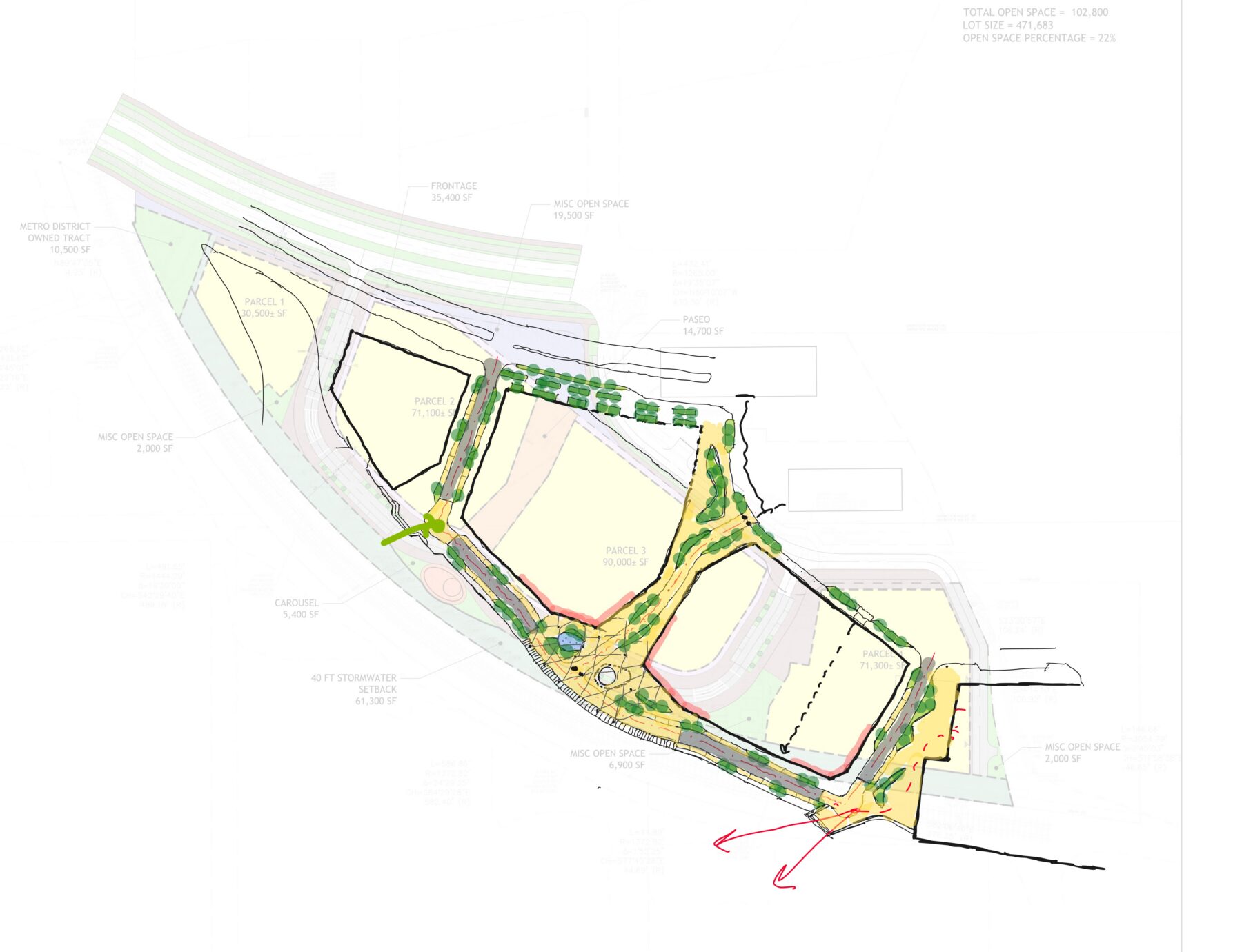
The public realm carves its way into the site, with plazas and a paseo that orient views towards the Flatirons.
The Pearl Arts District is shaped by its natural setting — particularly the iconic views toward the Flatirons that define Boulder’s landscape identity. Sasaki’s planning methodology leveraged massing studies and view corridor analysis to ensure that long-range vistas are preserved and reinforced through intentional building orientation and height transitions. This translated into shaping block structure, pedestrian patterns, and the spatial logic of public spaces.
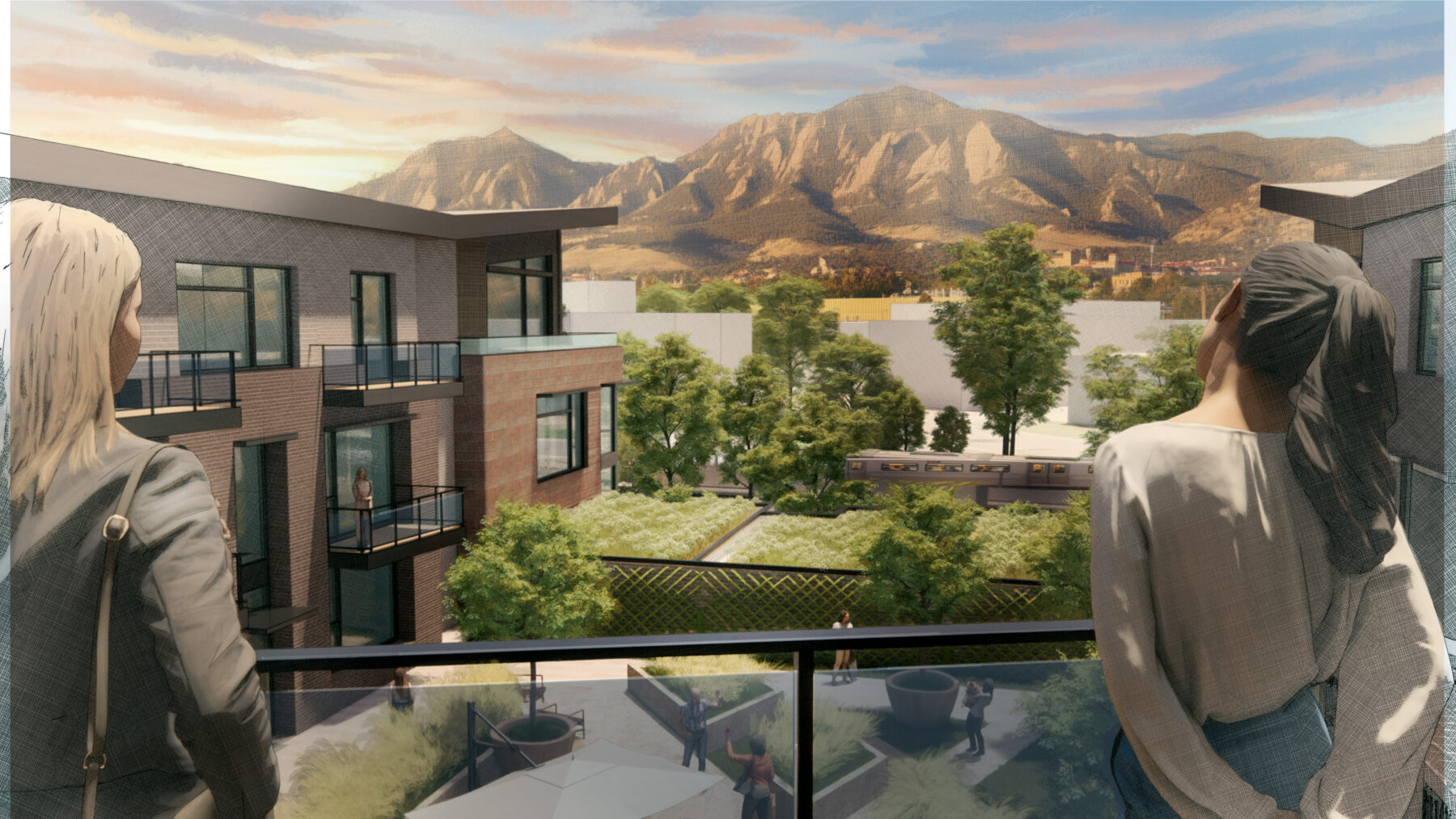
The grading strategy for the site articulates clear vistas of the Flatirons.
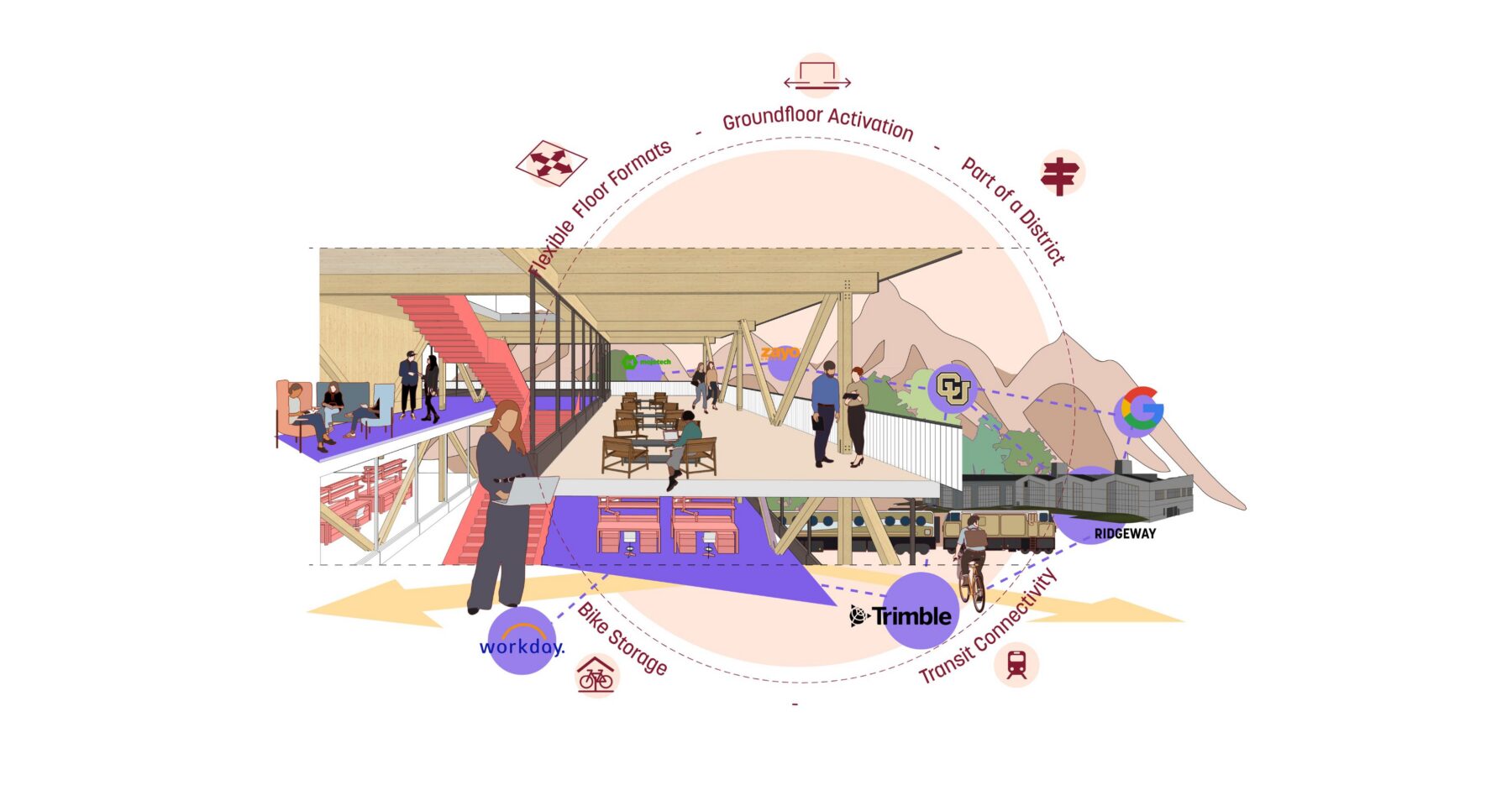
By implementing strategic building heights, stepped terraces and articulated edges, the buildings mediate between the active urban life at the street level and the expansive natural horizons beyond, creating an experience that feels rooted in place.
The plan’s organization around multi-modal transit reflects a deeper belief that mobility frameworks shape everyday life. Located just steps from the future Front Range Passenger Rail Station and bolstered by active mobility networks, the site is a true 15-minute district where amenities are easily accessible without dependence on automobiles. Over 500 housing units and 30,000 square feet of retail space, connected by a network of walkable and bike-friendly plazas and linear parks, are planned for the site. The park-once strategy, combined with investment in multi-modal connections, helps advance the project’s broader goals for equity, resilience, and environmental stewardship.
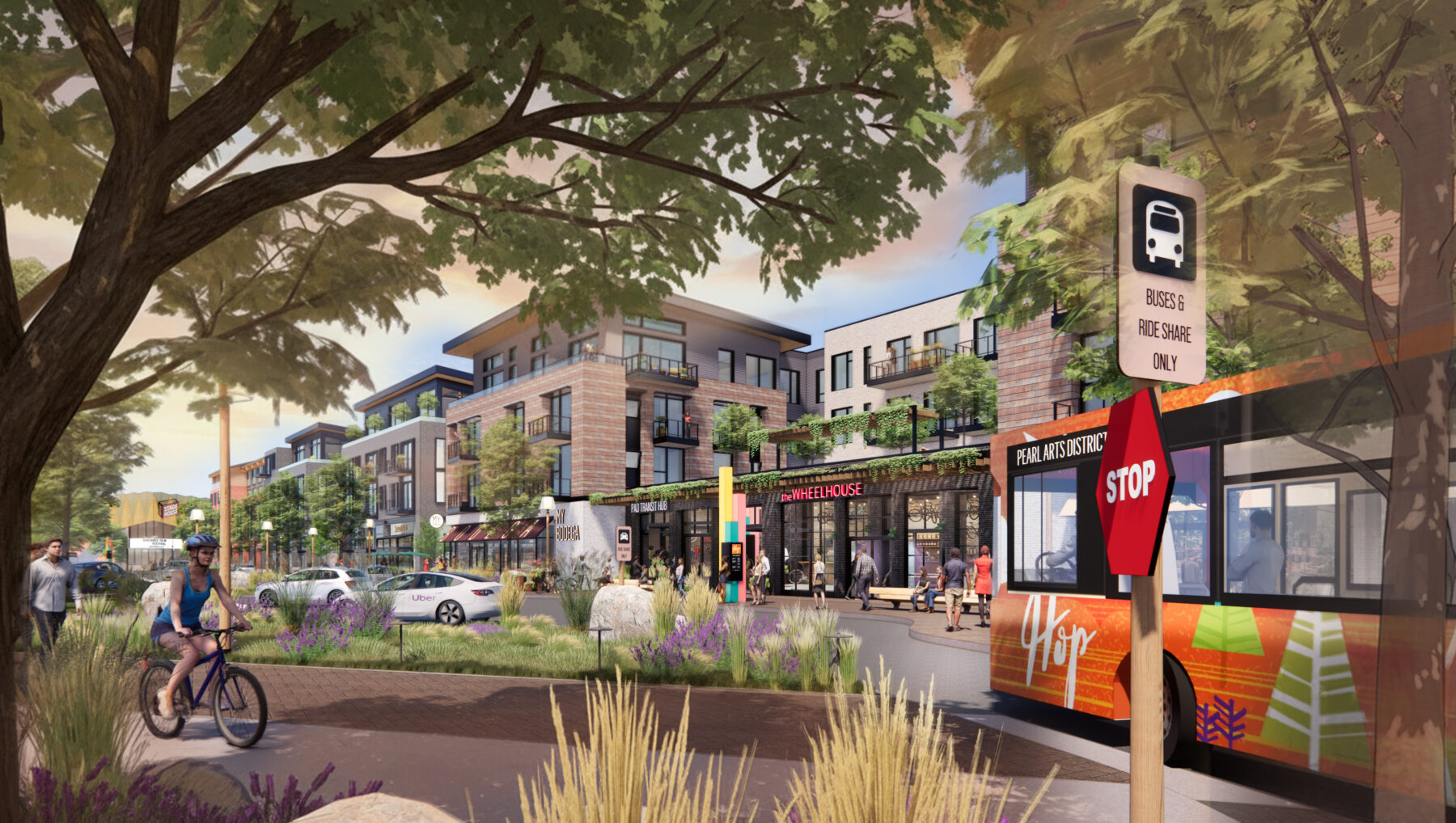
The transit-oriented neighborhood will reduce car dependency and encourage pedestrian and bike activity.
Environmental performance, stormwater management, flooding reduction, ecological enhancement and long-term adaptability are integral to the framework of the master plan. Rather than operating as discrete technical layers, these systems are woven into the larger urban strategy, reinforcing connections between landscape performance, spatial organization, and civic life. These strategies work together to address the pressures of extreme heat and drought Boulder has been facing in recent years, mitigating the urban heat island effect.
Sasaki worked closely with the client and technical experts to develop a grading strategy for the site that takes the entire development area out of the 100-year floodplain. The linear park that articulates the district doubles as green space and stormwater infrastructure, collecting runoff that is recycled and reused to support functions throughout the site.
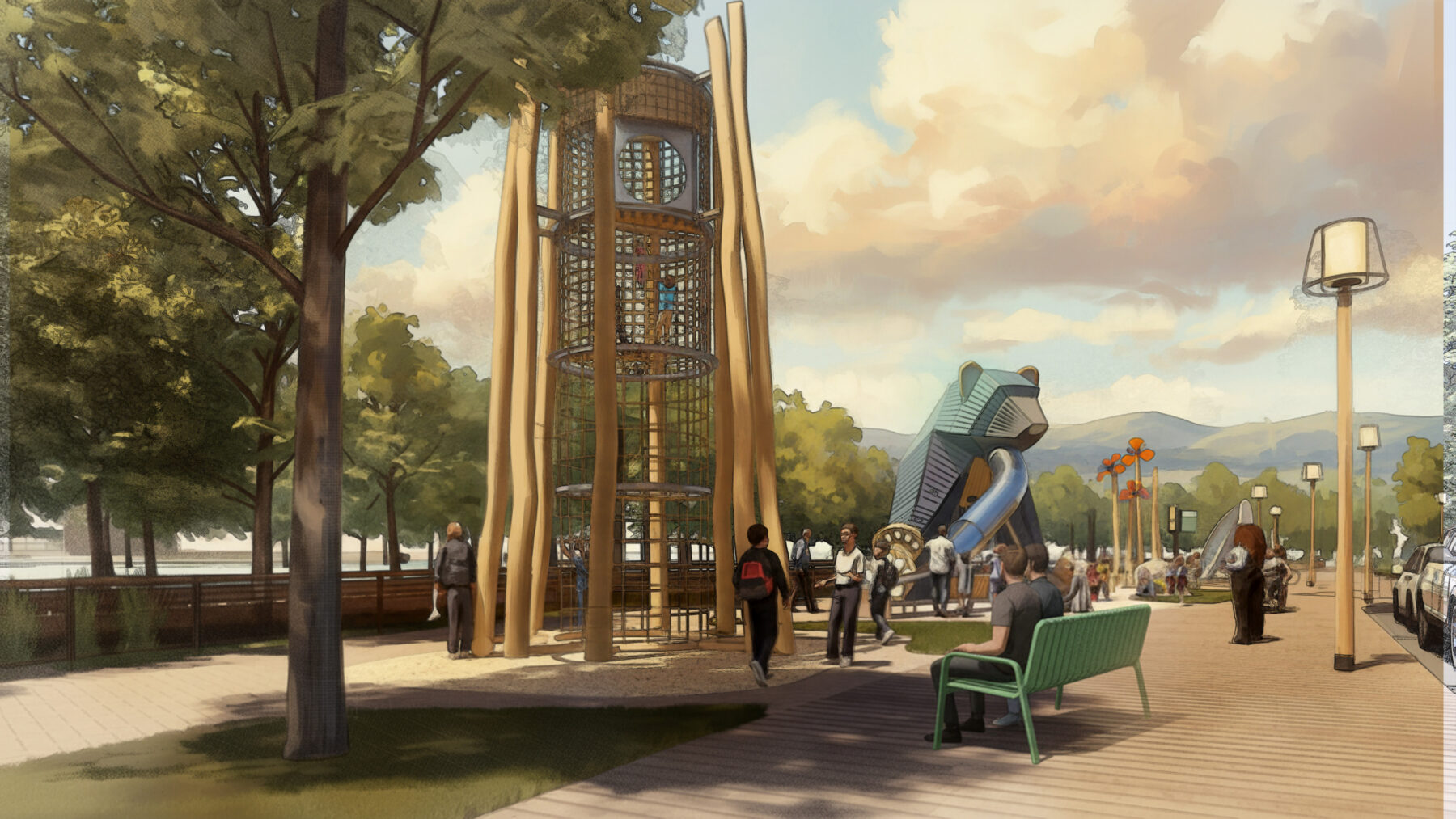
A network of plazas, courtyards, and recreation spaces invites people to linger and play.
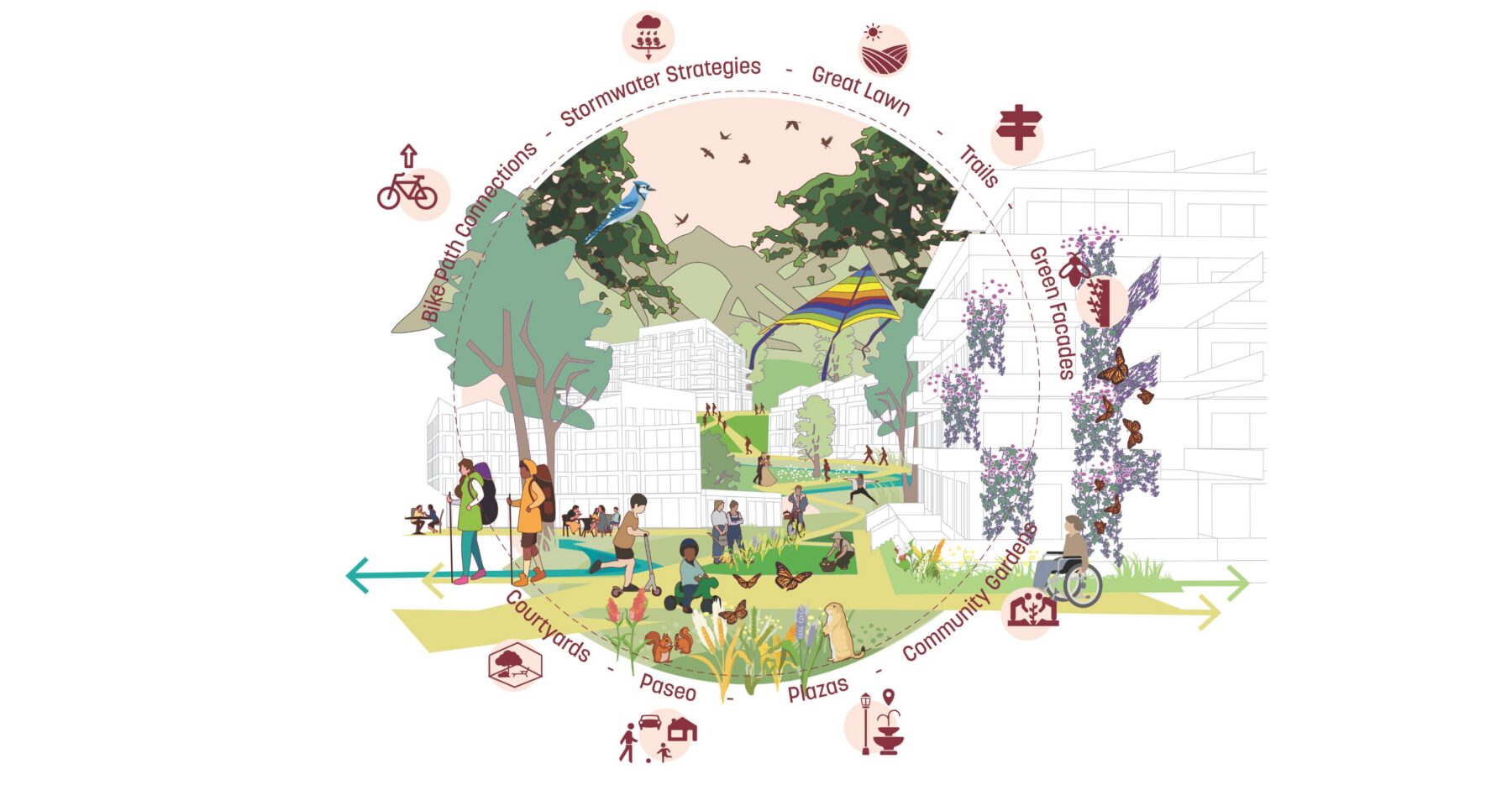
Beyond its physical components, the Pearl Arts District is designed to deliver long-term economic and social value, and projected to provide $2.5 billion in economic impact to the city of Boulder and Boulder county. The project strengthens Boulder’s position as a cultural hub, supports local artists and businesses, and introduces new housing supply within the city.
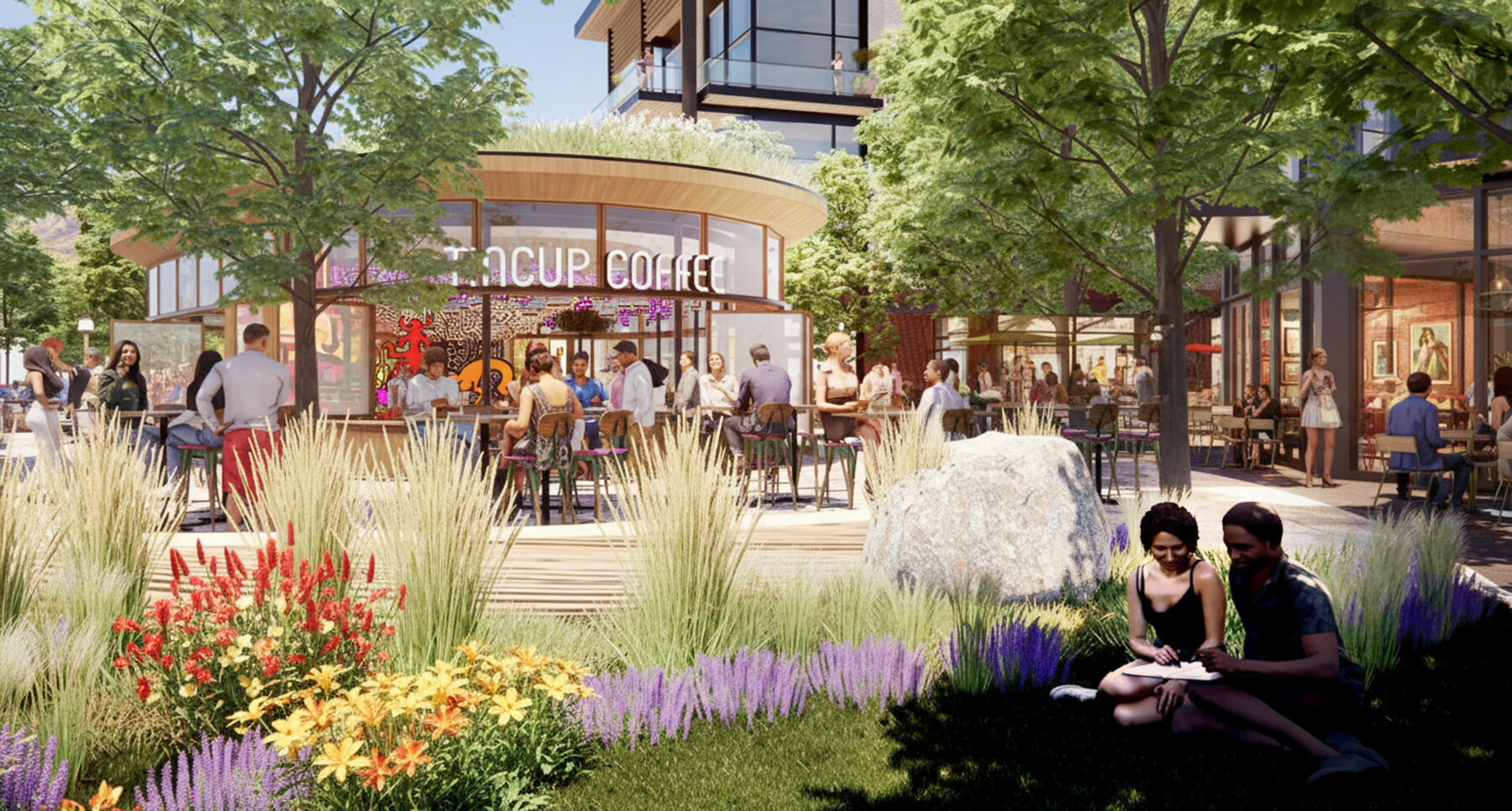
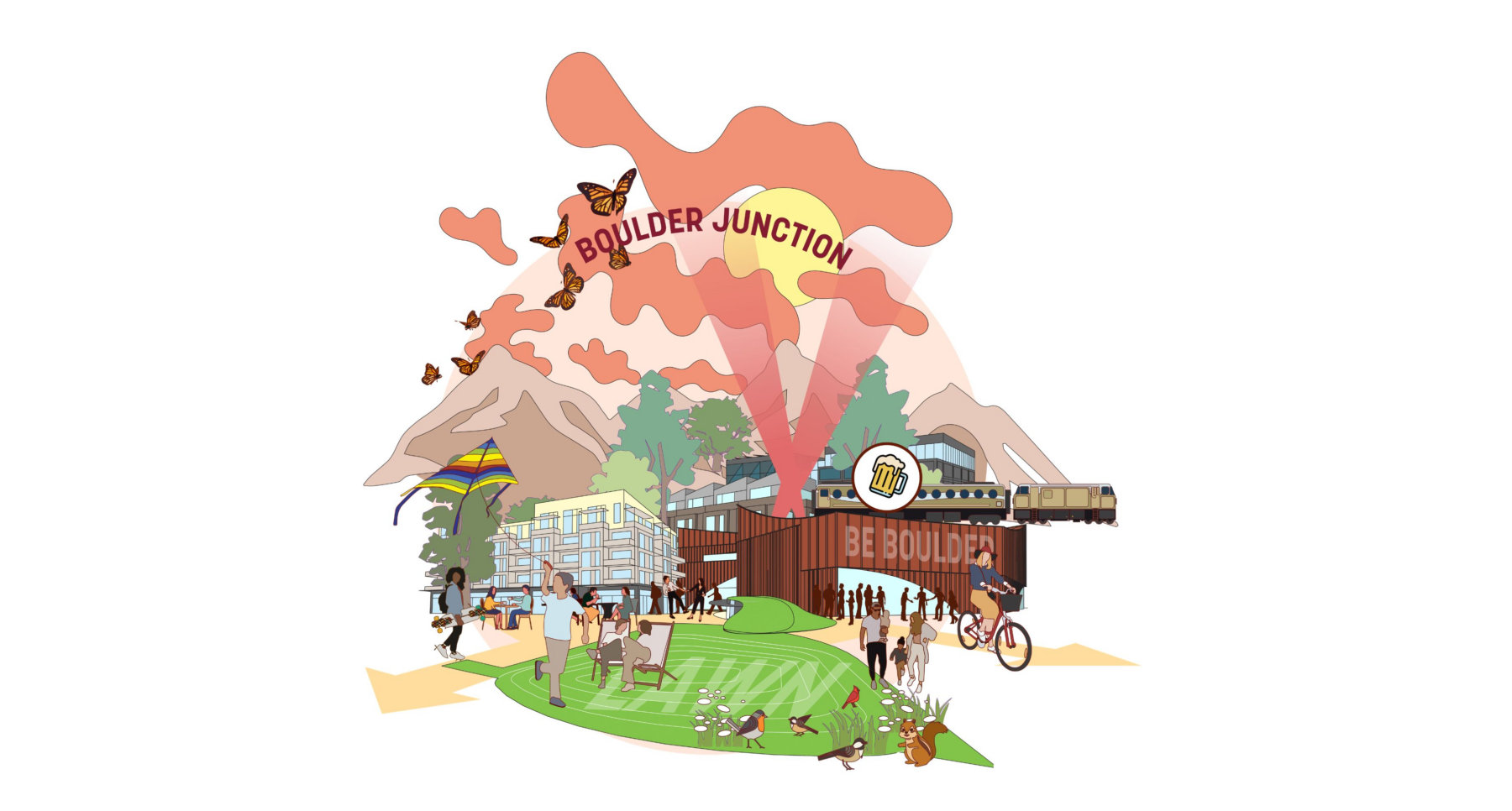
Ultimately, the objective has been to create a district that is both ambitious and grounded — a place where cultural expression, daily life, and environmental stewardship coexist.
The project is progressing into the implementation phase, laying the groundwork to produce a premiere performing arts district that will play host to Sundance as the festival moves to Boulder in 2027.
For more information contact Joshua Brooks.