Auraria Higher Education Center Campus Framework Plan
Denver, CO
 Sasaki
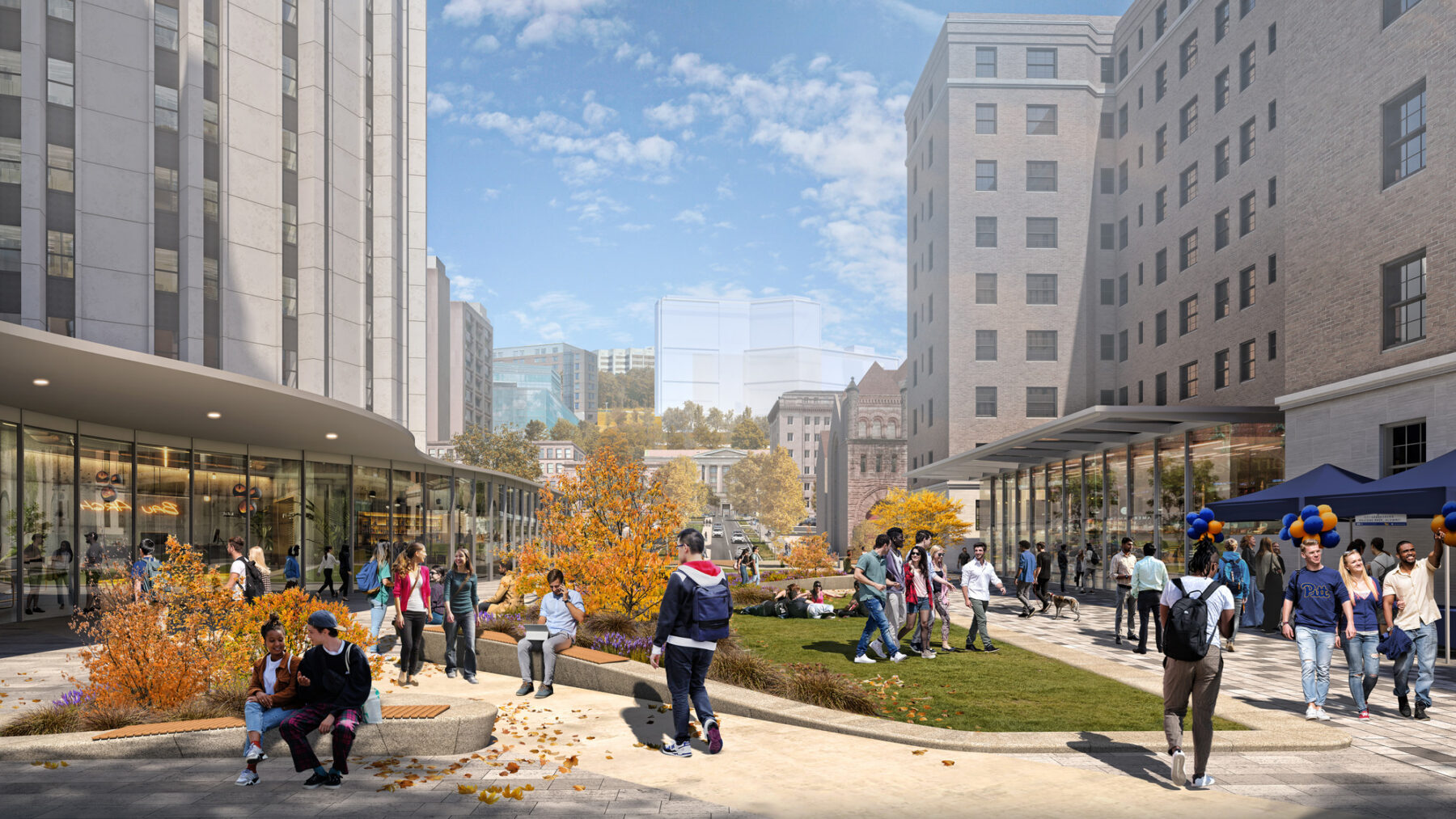
Located in Pittsburgh’s historic Oakland neighborhood, the University of Pittsburgh’s (Pitt) flagship campus is a vibrant nexus of urban life and innovation. Pitt engaged Sasaki to develop a Campus Master Plan that builds upon the strengths of its urban legacy and uplifts its pride of place while adapting the campus to the evolving needs of its academic community. The Campus Master Plan serves as a strategic roadmap for campus-wide renewal and growth, balancing visionary goals with what can be realistically achieved and implemented within the existing urban context.
Sasaki’s approach began by establishing a set of planning principles shaped through extensive engagement with university stakeholders. Together, the design team agreed to prioritize elevating the campus experience by putting the public realm first; enhancing campus identity by embedding the spirit of Pitt within the physical campus; bolstering a sense of belonging through accessible and inclusive spaces for community engagement; strengthening connections through improved mobility networks; engaging the broader community by contributing to the economic development of the neighborhood and city; and building a sustainable future through a flexible framework that accommodates long-term growth and resilience.
Click here to view an interactive map explores concepts from the Campus Master Plan.
The Campus Master Plan serves as a living document providing flexible frameworks for future investment aligned with Pitt’s strategic plan, the Plan for Pitt, and building on the momentum of the 2021 Institutional Master Plan.
The framework plans create a comprehensive guide for incremental change. To elevate the campus experience, enhance campus identity, and bolster a sense of belonging, the plan responds to Pitt’s academic and research mission through an organizational structure that advances learning and knowledge exchange, and defines a dedicated campus experience framework for shared spaces that support campus life. To strengthen connections and build a sustainable future, the plan integrates mobility and sustainability frameworks that prioritize multimodal movement and translate institutional and citywide sustainability goals into tangible solutions for the built environment.
Public realm framework
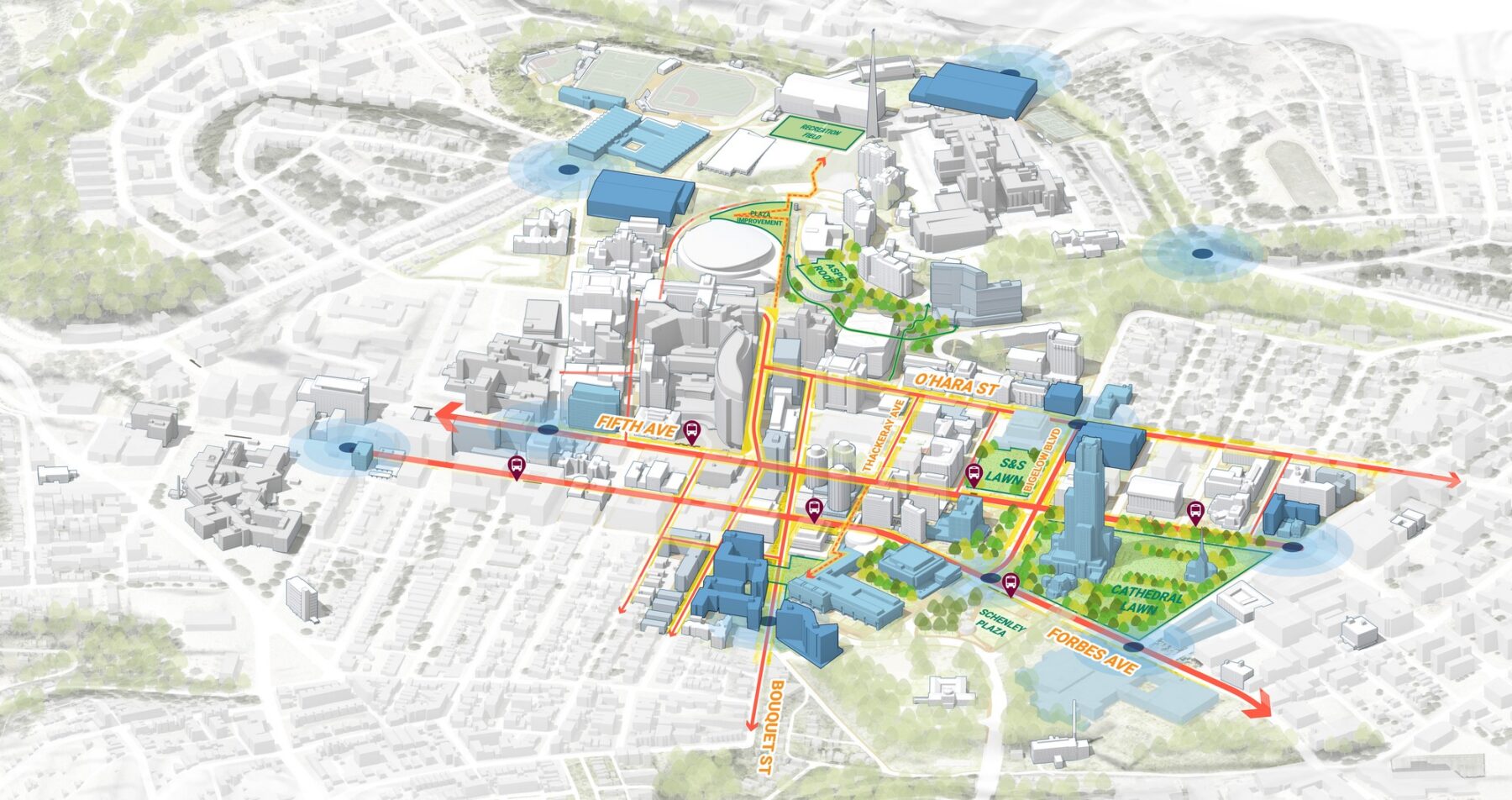
Lastly, the public realm framework serves as the unifying element that ensures all planning principles work together cohesively. By contributing to the urban context established by Oakland’s streetscapes, open spaces, and cultural assets, Pitt positions itself as a beacon within the neighborhood, establishing a new standard not only for the campus experience, but also for broader Oakland.
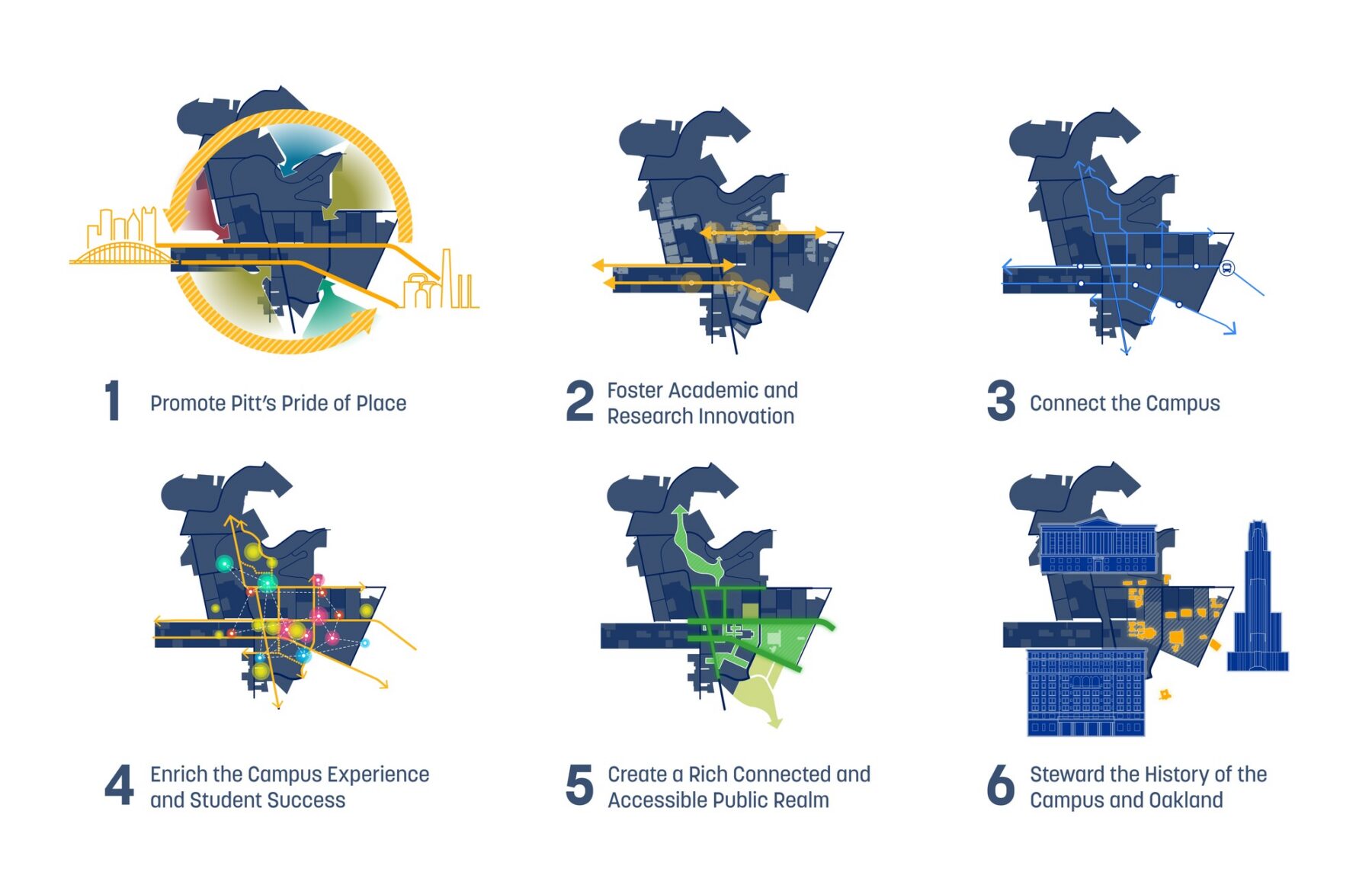
The plan’s six big ideas draw from the framework plans and supplement the planning principles with specific guidelines for physical development.
1. Promote Pitt’s Pride of Place
Enhancing a sense of place in both Oakland and the City of Pittsburgh, the Campus Master Plan integrates architectural and public realm improvements of the campus with those proposed in the surrounding context. Upgraded streets, campus gateways, and restoration of iconic public spaces contribute to the overall quality of place in Oakland.
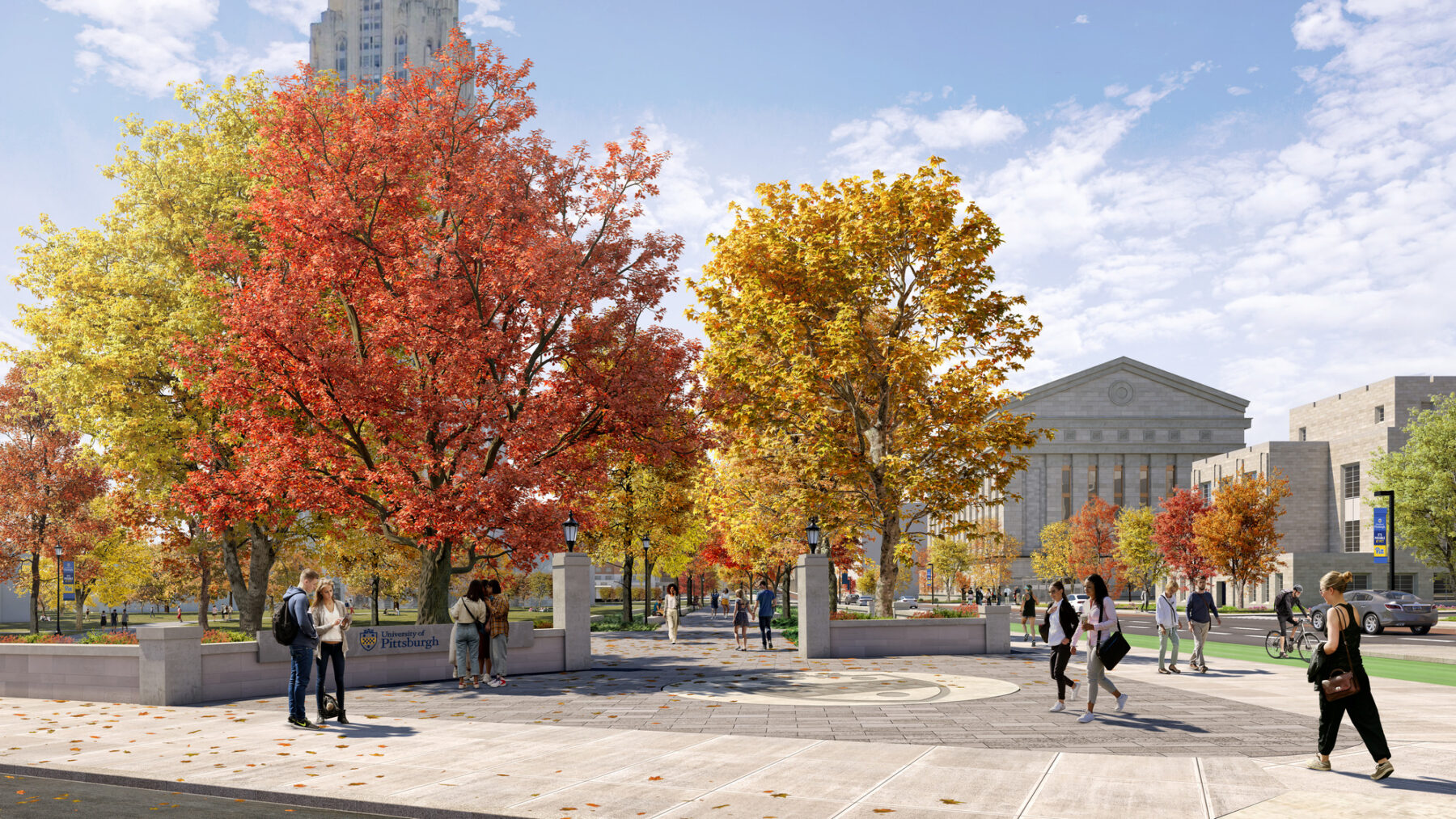
Proposed Cathedral Lawn Gateway
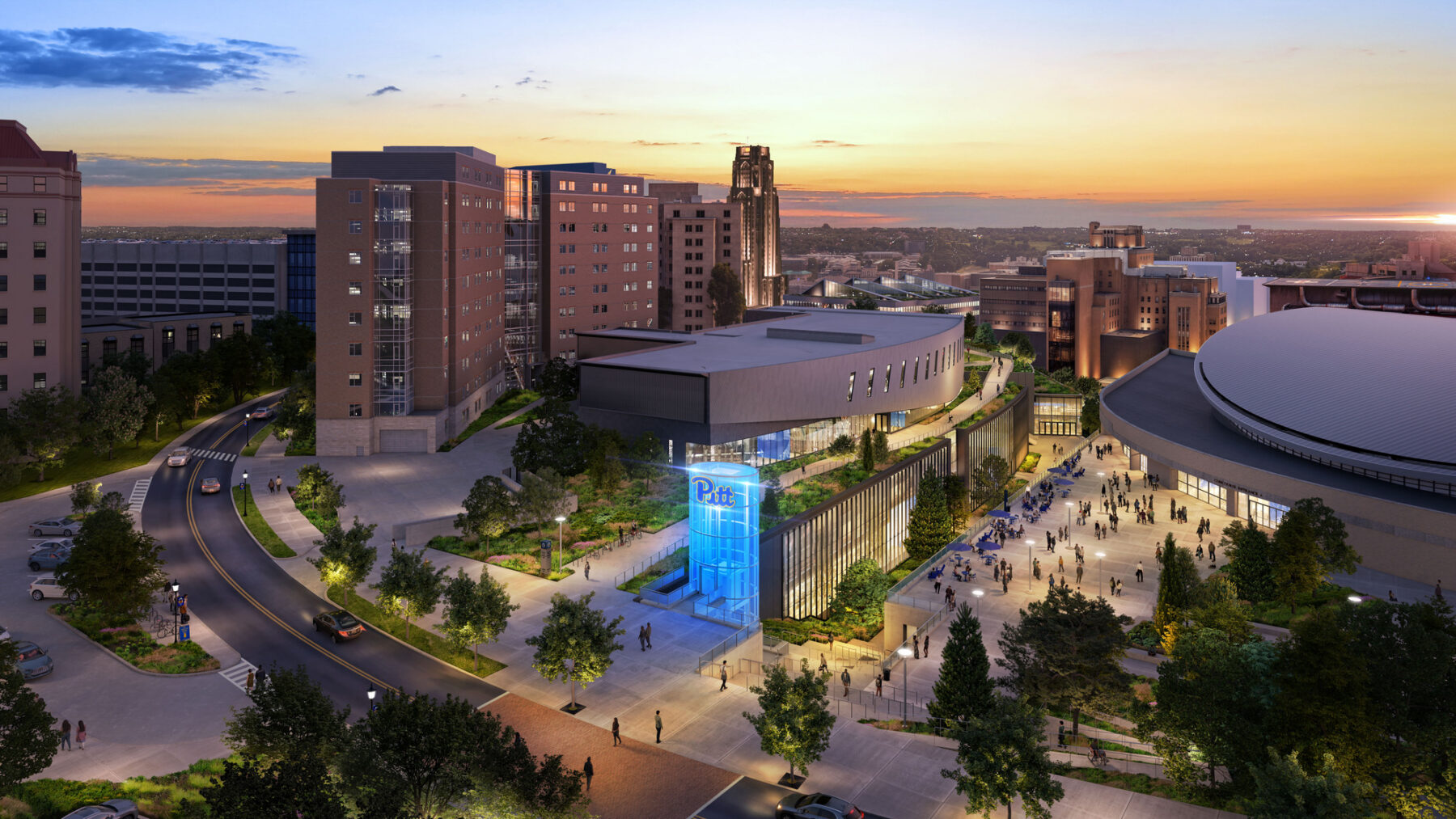
Proposed Victory Heights Gateway
2. Foster Academic and Research Innovation
The Campus Master Plan recommends stronger links between academic buildings as well as new and expanded facilities for key academic programs. It also identifies locations for student support services and collaboration hubs across the campus in a variety of academic buildings and proposed renovation projects, including in several historic buildings.
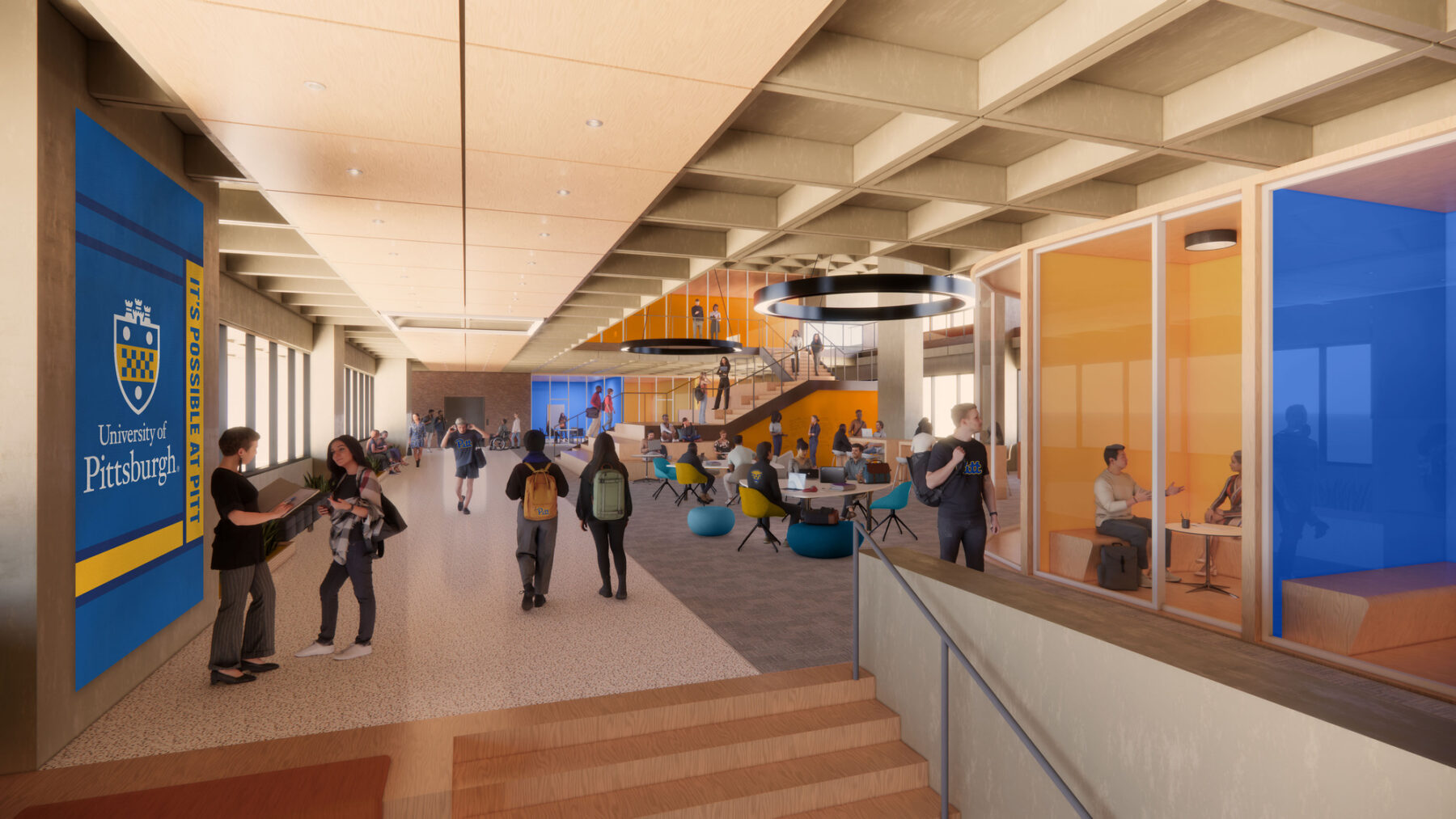
Proposed Posvar Academic Support Hub
3. Connect the Campus
The Campus Master Plan offers accessible routes to major campus destinations and aligns public realm improvements with transit connections, incorporating pathways that connect people to planned bus stops. It emphasizes interconnected academic, residential, and communal spaces to ensure that Pitt can accommodate growth while enhancing campus cohesion and promoting collaboration across the Oakland campus. Improved gateways and traffic calming measures feature landscape enhancements and clear wayfinding cues that contribute to the experience of moving through the campus and surrounding context.
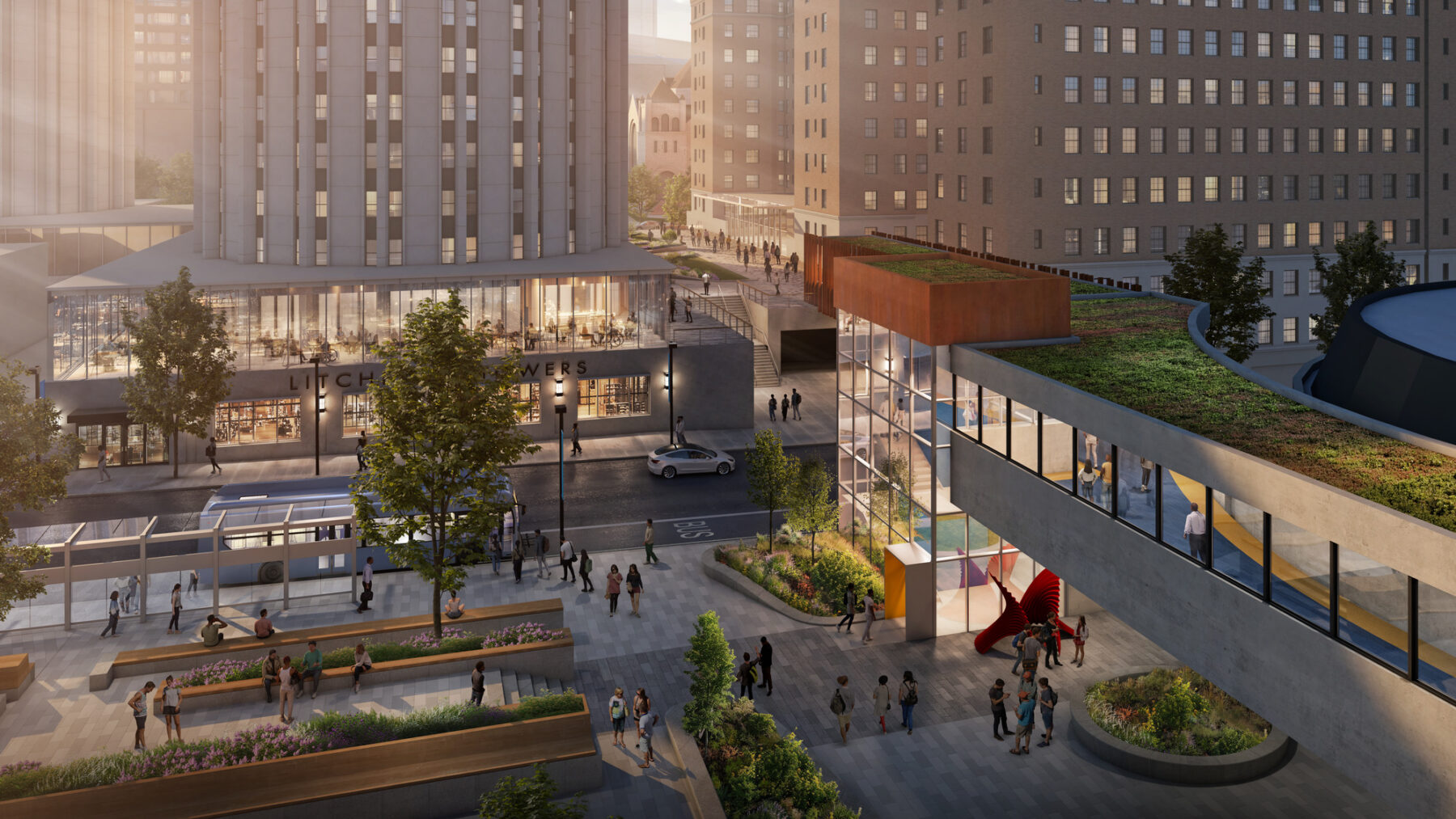
Public realm and mobility improvements at Barco Plaza
4. Enrich the Campus Experience and Student Success
The Campus Master Plan calls for the renewal and expansion of campus housing and the transformation of the Pittsburgh Athletic Association building into a new student center enriching the student and community experience at the heart of campus. It also calls for the creation of new student engagement and social hubs on the ground floors of residence halls, especially those located at the heart of the campus.
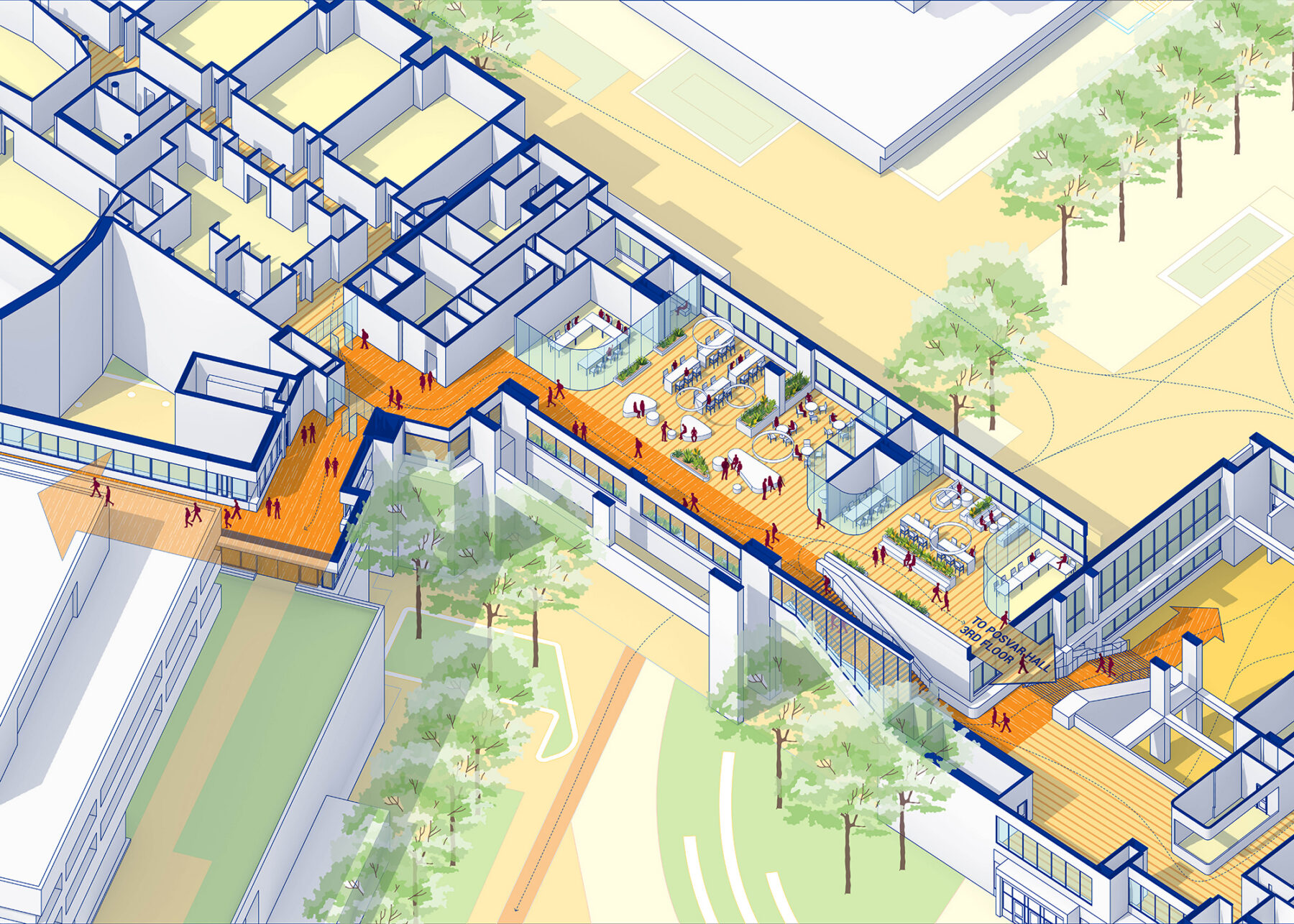
Posvar Academic Support Hub activates underutilized space.
5. Create a Rich, Connected and Accessible Public Realm
Balancing growth with better connectivity in the urban context, the plan recommends public realm investments focused on building a cohesive, inclusive, and accessible environment through enhanced streetscapes, pathways and open spaces. Improvements also prioritize accessibility challenges, ensuring that all Pitt community members, regardless of ability, can navigate the campus. The plan includes expanded pathways, elevator and ramp additions, and enhanced wayfinding strategies throughout the campus, ensuring that Pitt remains a place where diversity is celebrated, and all students feel a strong sense of belonging.
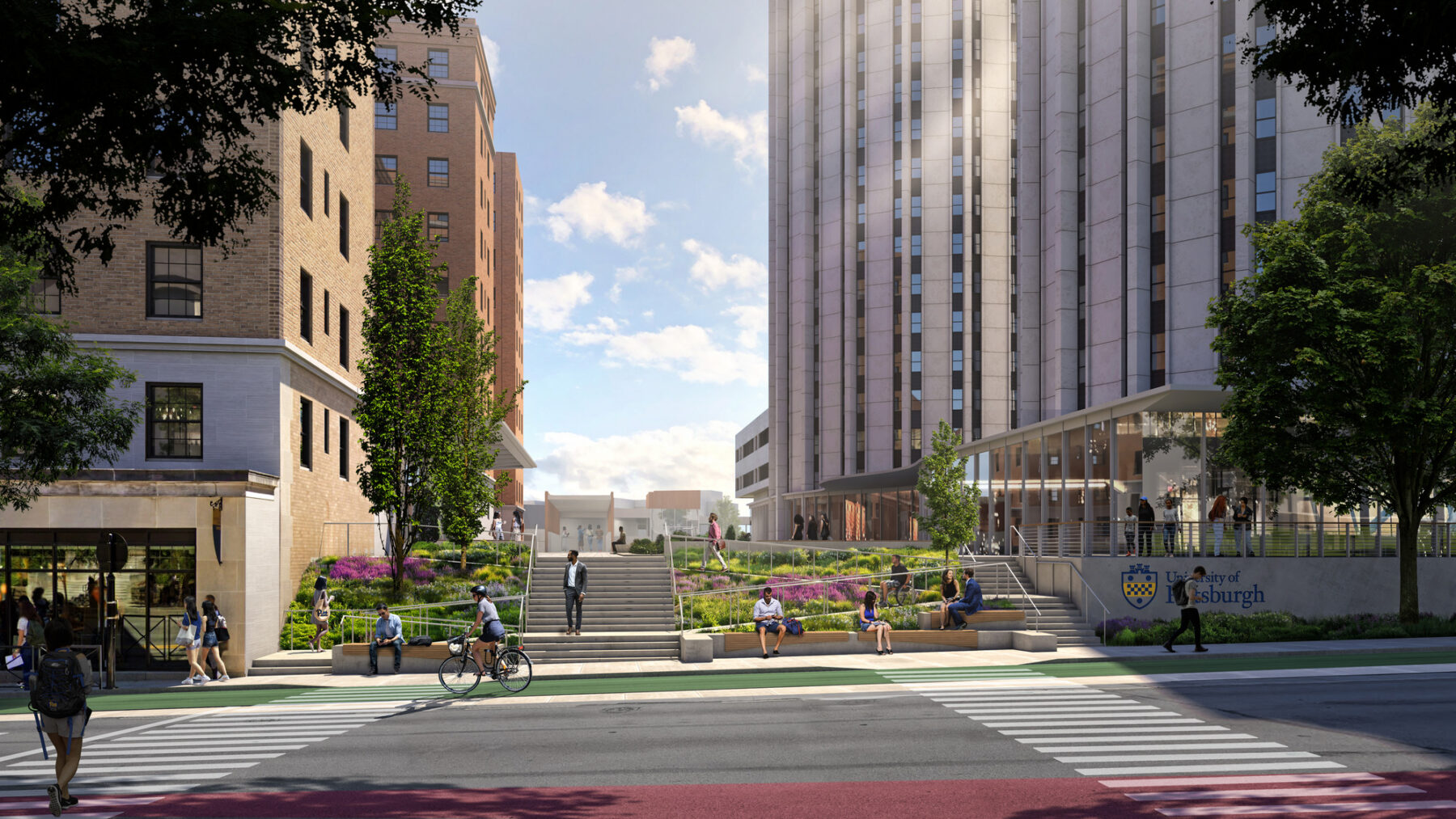
A renewed Litchfield Plaza connects to Fifth Avenue via an accessible ramp.
6. Steward the History of the Campus and Oakland
The Campus Master Plan examines the evolution of the campus, dating back to the early 20th century “City Beautiful” vision for Oakland. Pitt’s location in the heart of Oakland and the historic buildings which shape the context ties the campus to its surrounding community and historic urban fabric. Many of Oakland’s historic buildings define the campus character today, including recent acquisitions that contribute to improving and expanding student life and housing facilities. The plan reinforces Pitt’s vibrant urban context, drawing on the history and traditions of the university and strengthening its role as a community anchor, supporting collaboration between students, staff, faculty, local businesses, and residents.
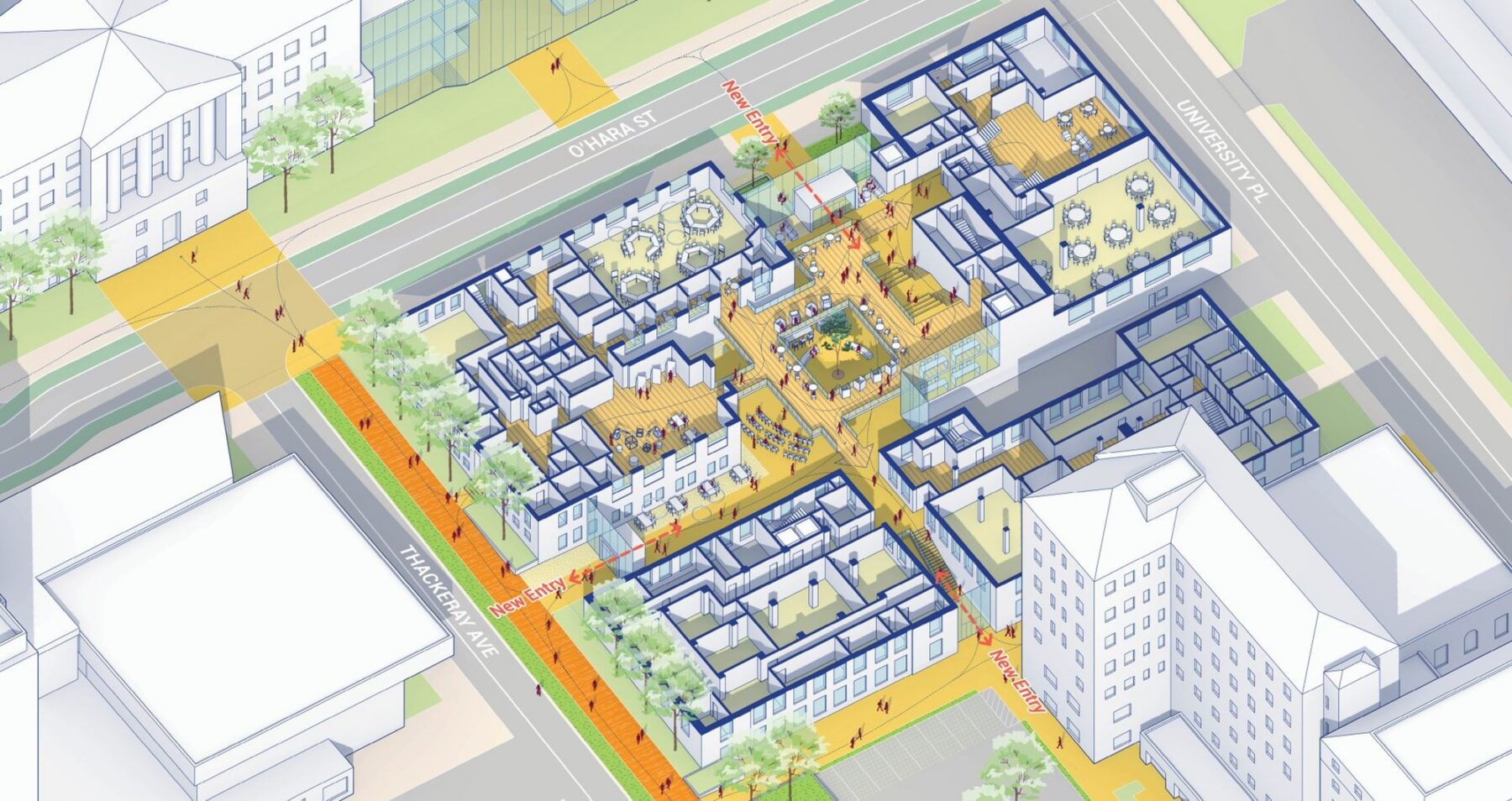
The proposed infill development connects three existing buildings to enhance accessibility and promote interdisciplinary collaboration.
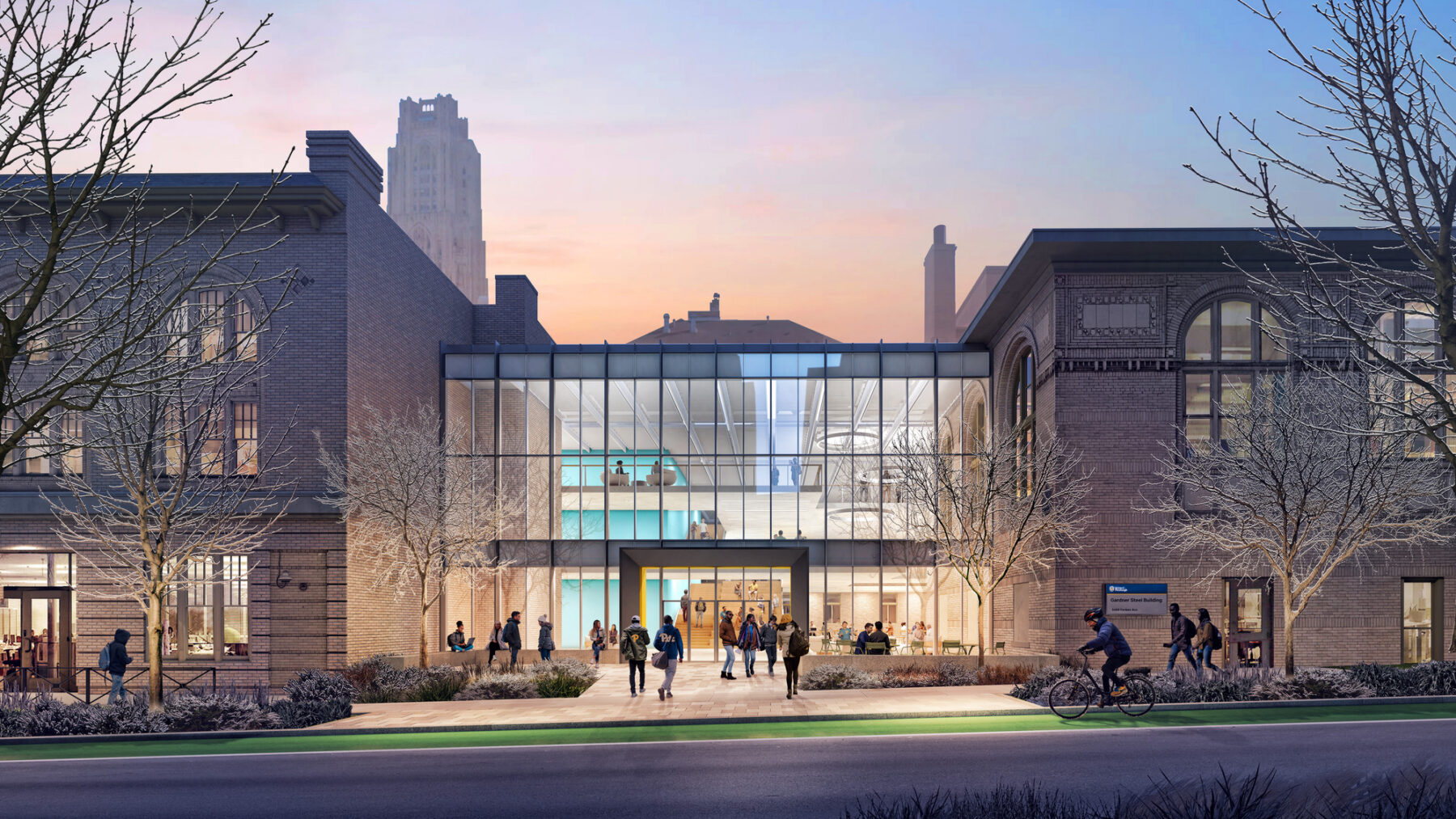
O’Hara & Gardner Steel Collaboration Hub
As academic and research needs evolve, the Campus Master Plan offers flexibility to meet new demands. The proposed vision for Pitt’s campus ensures long-term adaptability, providing a flexible foundation that supports changing academic and research environments. The campus layout allows for future growth through intervention and redevelopment while supporting changing educational trends and technological advancements, ensuring Pitt can continue to evolve over time.
For more information contact Greg Havens.