Margit Liander on Thinking Big and Small
 Sasaki
As a planner and associate principal at Sasaki, Margit knows how to look at the big picture without losing sight of the details that matter most. From downtown urban districts to university campuses and park systems, Margit moves deftly across scales, taking stock of immediate community needs and balancing them with strategies for long-term resilience and growth.
Let’s start with your background. You studied sociology in college–how did that path lead to where you are today?
Ever since I was a kid, I’ve always loved being in cities, in really chaotic, crowded places. Like many, I thought this meant that I wanted to be an architect. I soon realized that I wasn’t passionate about the individual buildings in isolation, but rather the people that occupied these urban spaces and how they interacted within them. I then gravitated toward sociology as an undergrad given my interests in issues of social class, class reproduction, and immigration/assimilation, which led me to an urban sociology course and the discovery of urban planning as a field.
I think my background in sociology guides how I approach many aspects of our planning and urban design projects at the firm. Being at a design firm, our initial analysis naturally emphasizes the physical place and context, but I first really want to understand who the people are, who the community is, where they are coming from in terms of lived experience, and how the place has evolved demographically, socioeconomically, and politically. There’s the physical realm, with its regulatory, and environmental constraints that we have to work within, but what we really want to be doing is designing places for the people in the community. If you don’t understand that, it’s not going to result in something enduring that meets people’s needs.
I also think my background has been critical to how I approach community engagement in the sense of reading people, connecting people, synthesizing ideas, and communicating complex analysis.
You’ve worked on a wide range of campus plans at the firm – what aspect of this work are you most interested in?
I’m really interested in the role institutions play in the broader urban system. Urban or anchor institutions, whether higher ed or medical, are intricately tied to a city’s identity, landscape, and economic development in so many ways. Being based in Boston and working with several local institutions, I’ve enjoyed learning about the City’s Institutional Master Plan (IMP) established as part of their Article 80 process.
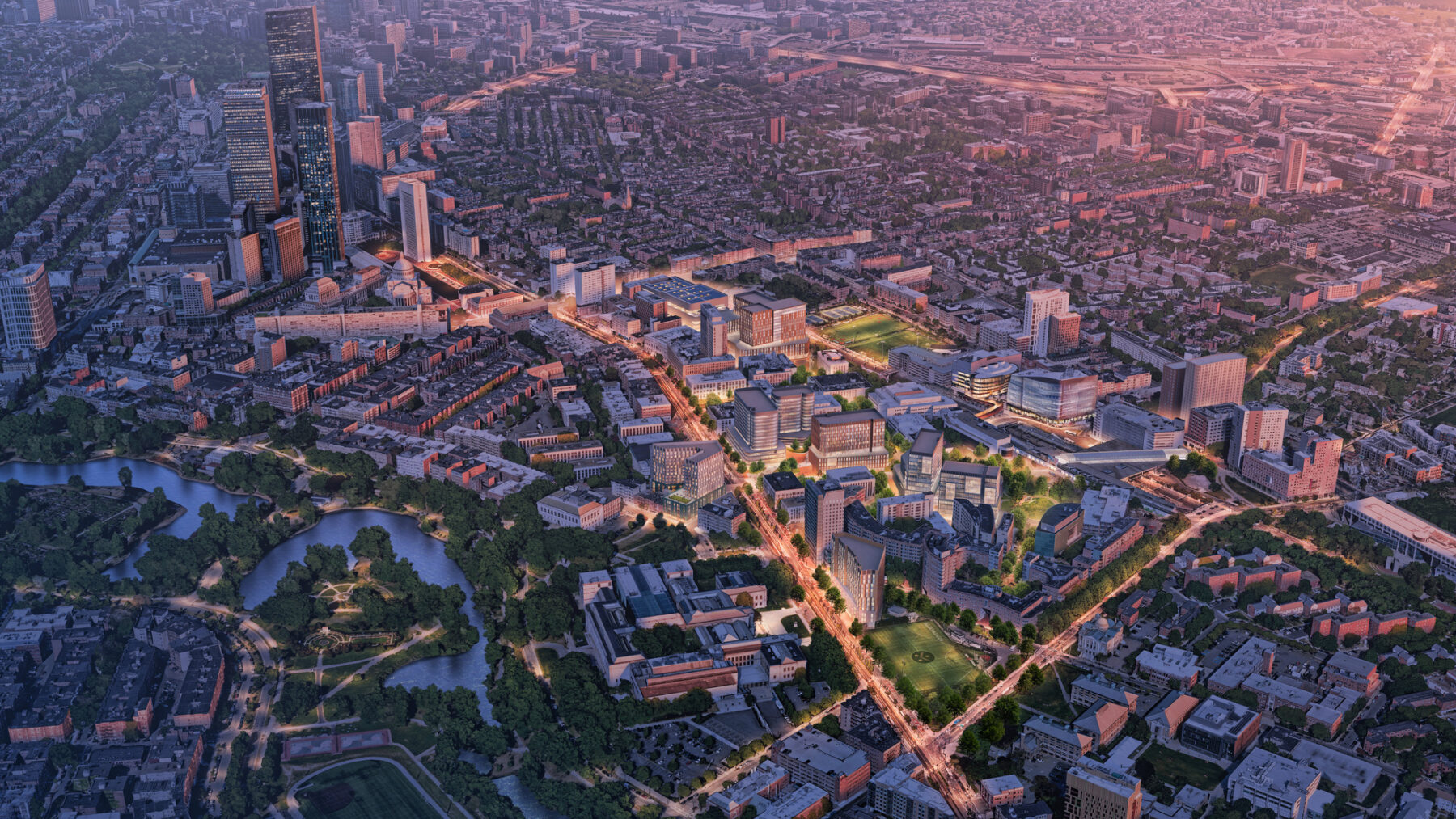
Aerial view of Northeastern University illustrating the campus vision outlined in the university’s Institutional Master Plan.
Getting to see how institutions navigate this process to define their growth and development has been fascinating. It’s also been particularly interesting to experience how the City is reimagining their overall review process, which includes IMPs, and how this process can be more transparent and ensure that institutional growth is aligning with broader City goals of resilience, affordability, and equity. The City has done a great job in rethinking what used to be a very formulaic process, where IMPs themselves were very piecemeal project-specific, rather than considering a holistic view of a campus’ growth and trajectory. It’s exciting to see that institutions are sitting down with their host city to think through shared goals and potential mutual benefits.
How have you seen the relationships between institutions and urban contexts change in recent years?
One area where we really see the merging of these two worlds is in downtowns and how they’re evolving post-Covid, especially in large cities. Cities and anchor institutions are much closer partners and more dependent on one another these days, especially given the current economic climate and the decline of activity in the commercial sector.
We’re also seeing more suburban or even rural campuses starting to realize the value of having a downtown presence. They’re thinking about how certain graduate programs would benefit from having the potential adjacencies – cultural, economic, and social – that a downtown has to offer. And downtowns love it because these institutions are helping them re-invent themselves and breathe new life into areas that may be struggling post-Covid. It’s been interesting getting to see this play out on some of the non-urban campuses that I’ve worked on.
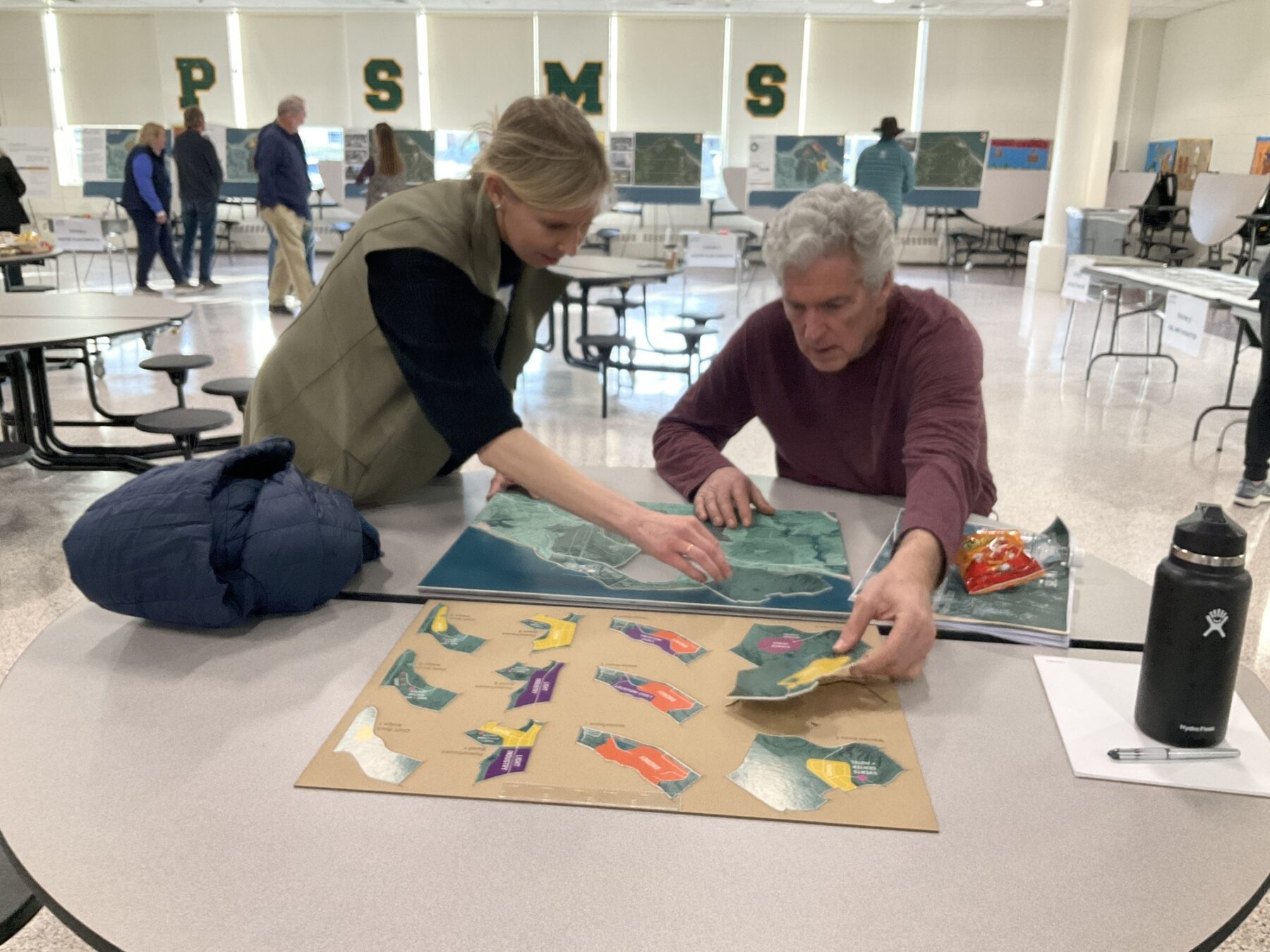
Margit working with Plymouth community members at an engagement session for the Pilgrim 1600 Acre Area Plan.
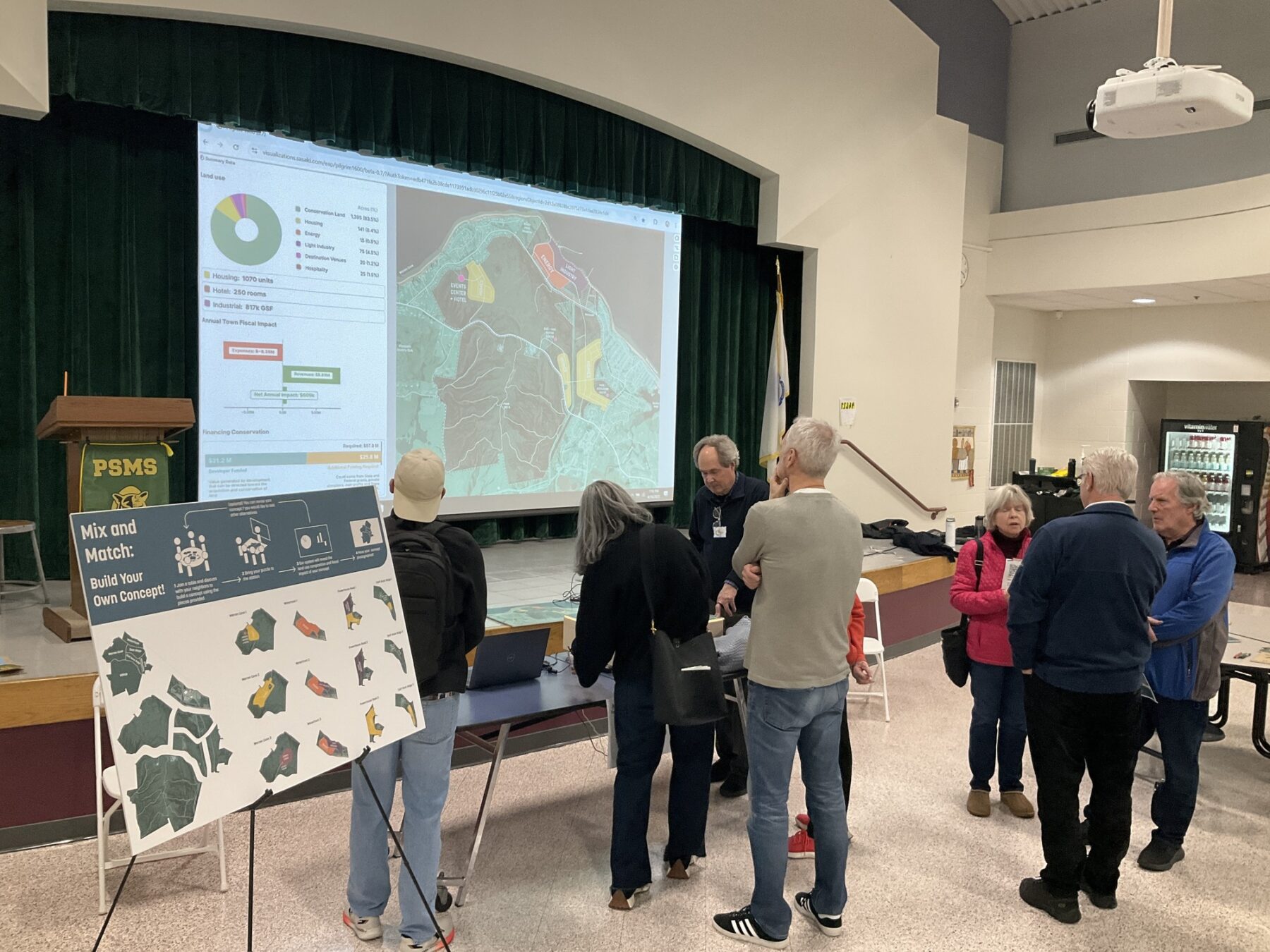
The live dashboard visualizes different land use concepts and potential town fiscal impacts.
Looking ahead, what trends or innovations in urban and campus planning are you most excited about, and how do you see Sasaki contributing to these advancements?
Hyperlocalism – we’ve seen that across cities a lot. How do we address this as a firm that works both locally and globally? I think it comes down to doubling down on work where we have a physical presence and building up a team of trusted collaborators that bring local history and context of the place. We also need to continuously question how we approach work to ensure a balance of best practices with contextually appropriate practices.
The other thing that comes to mind is the desire to collaborate beyond traditional design boundaries as part of our planning process. The complex, interrelated challenges that cities and universities face today—around housing, mobility, climate and limited financial resources—demand new models of integrated thinking and working. We’re seeing more and more partnerships with the social and natural sciences, as well as with local historians, artists and other nontraditional collaborators who bring fresh perspectives. As a firm, I think our continued investment in data-driven decision making and interdisciplinary collaboration, whether through partnerships or hiring unique expertise in-house, positions us to lead effectively in addressing these evolving challenges.