Six Sasaki Projects Honored by 2023 SCUP Awards
The Society for College and University Planning (SCUP) has honored a total of six Sasaki projects across three award categories
 Sasaki
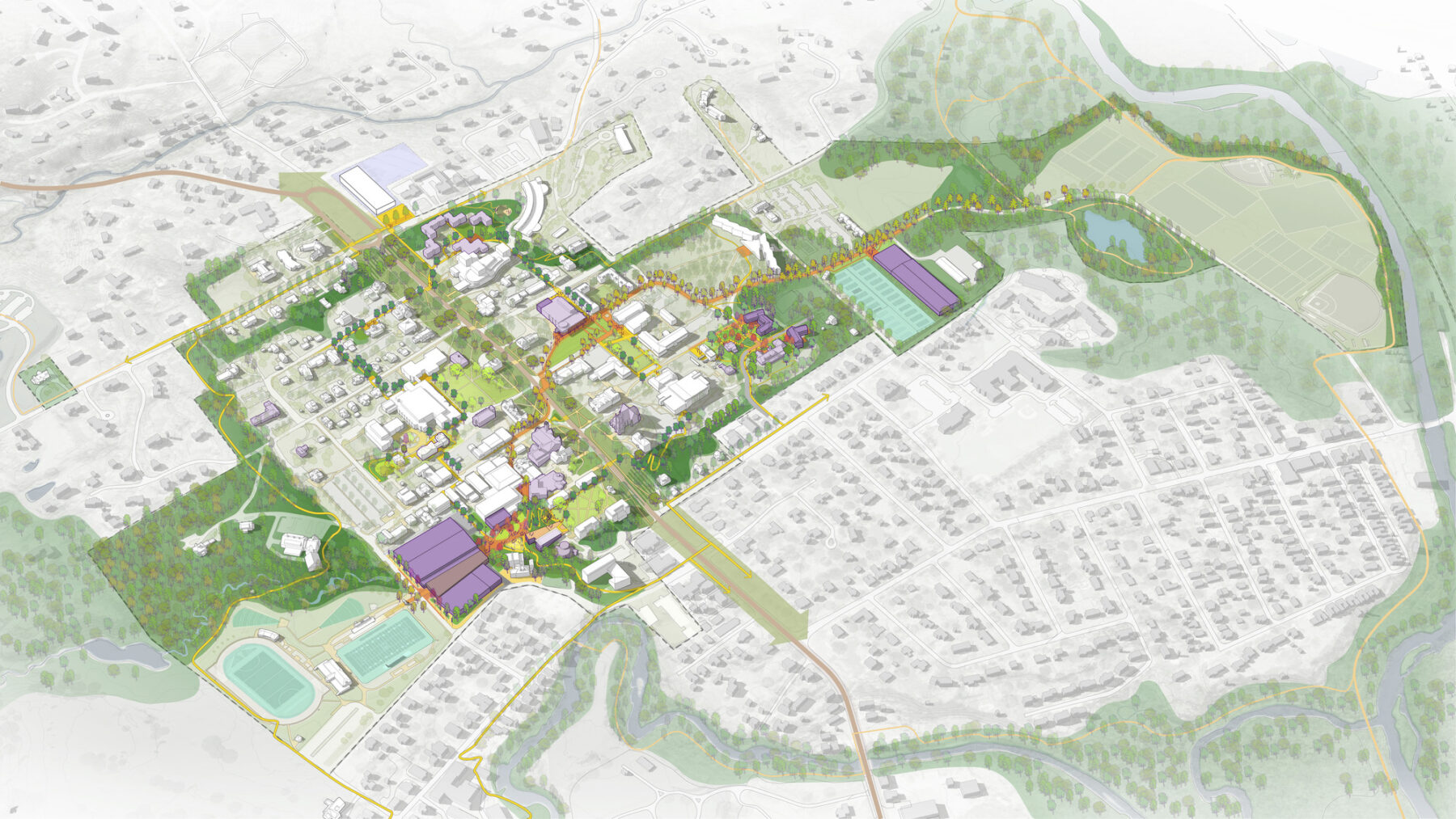
The Campus Plan framework identifies opportunity areas based on location and programmatic need, targeting public realm investments along key circulation corridors
A private liberal arts college founded in 1793 in Williamstown, MA, Williams College articulated the need for a campus plan that is flexible and rooted in community input. The Williams College Campus Plan designed by Sasaki touches the full spectrum of college activity by organizing the college around an integrated planning process that ensures maximum return on limited resources and provides the best outcomes for the institution as a whole.
The ultimate purpose of the planning framework is to enable agile decision-making that provides flexibility while aligning to a broader vision for the future campus. As such, the plan establishes an organizational structure to frame potential locations for future development and direct investment in the public realm. Enabled by robust engagement with the campus community, key outcomes of the planning process included a set of principles that articulate how the strategic plan can be realized within the physical environment; an integrated and holistic strategy for health and wellness facilities; a reimagined public realm and mobility network; and recommendations for the reuse of the campus’s historic building assets to support emerging programmatic needs.
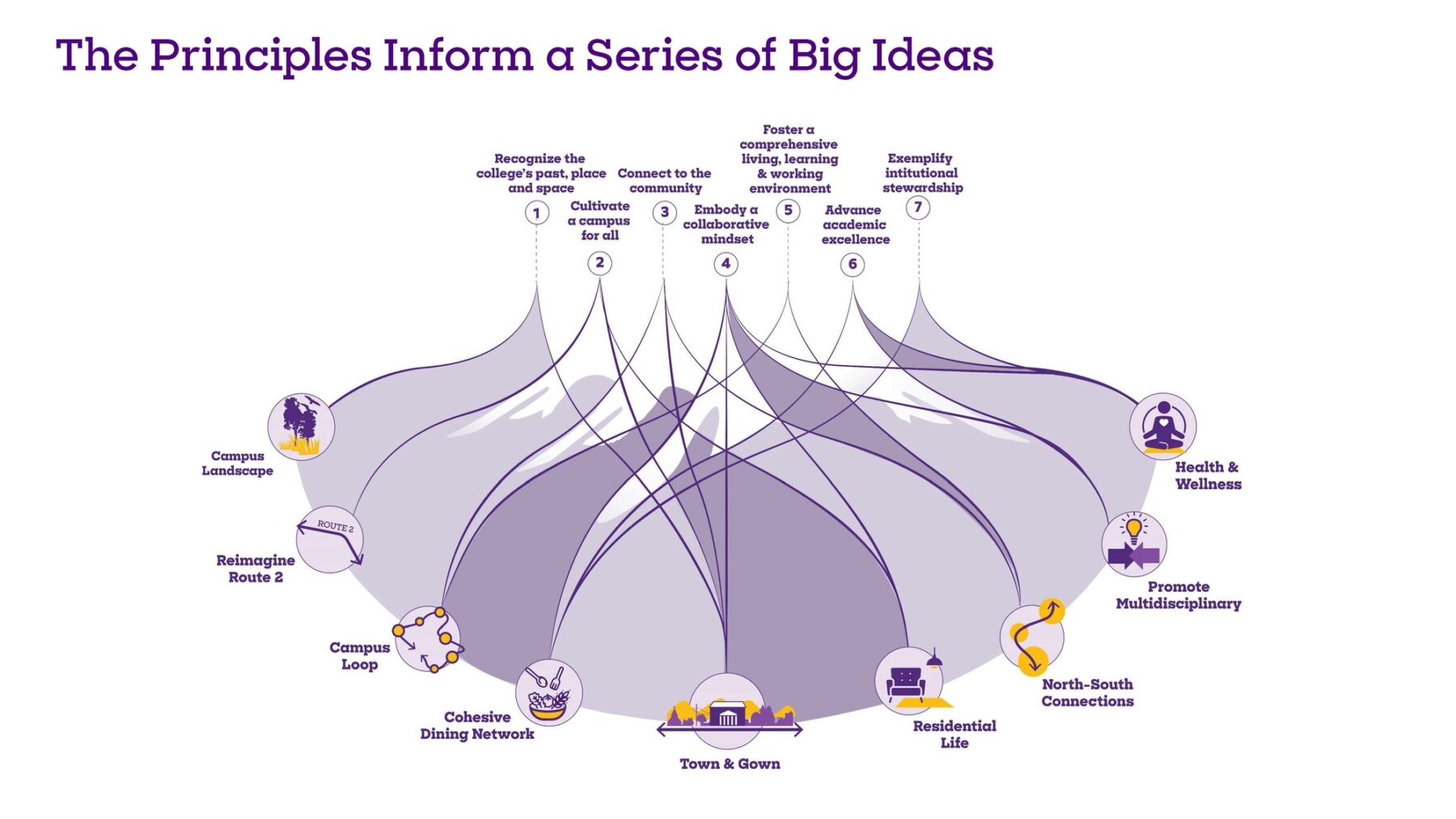
A set of “big ideas” that stem from the core planning principles reflect the programmatic needs and design opportunities as articulated by the campus community during the engagement process
The campus plan envisions a new, centrally-located Health and Wellness district that physically links medical services, integrative wellbeing services, and fitness and athletic facilities. This approach acknowledges the importance of mind-body wellness for the health of the broader Williams community. The proposed centralization of these facilities ensures the services they offer are accessible, and visibly demonstrates Williams’ commitment to the whole student. Planned new facilities include fitness studios, an indoor event space, an NCAA standard-sized indoor track, ice arena, locker rooms, and other support spaces. A new accessible corridor would be introduced to negotiate grade change and link Latham Street and the proposed Wellness Plaza to the Berkshire Quad to the north.
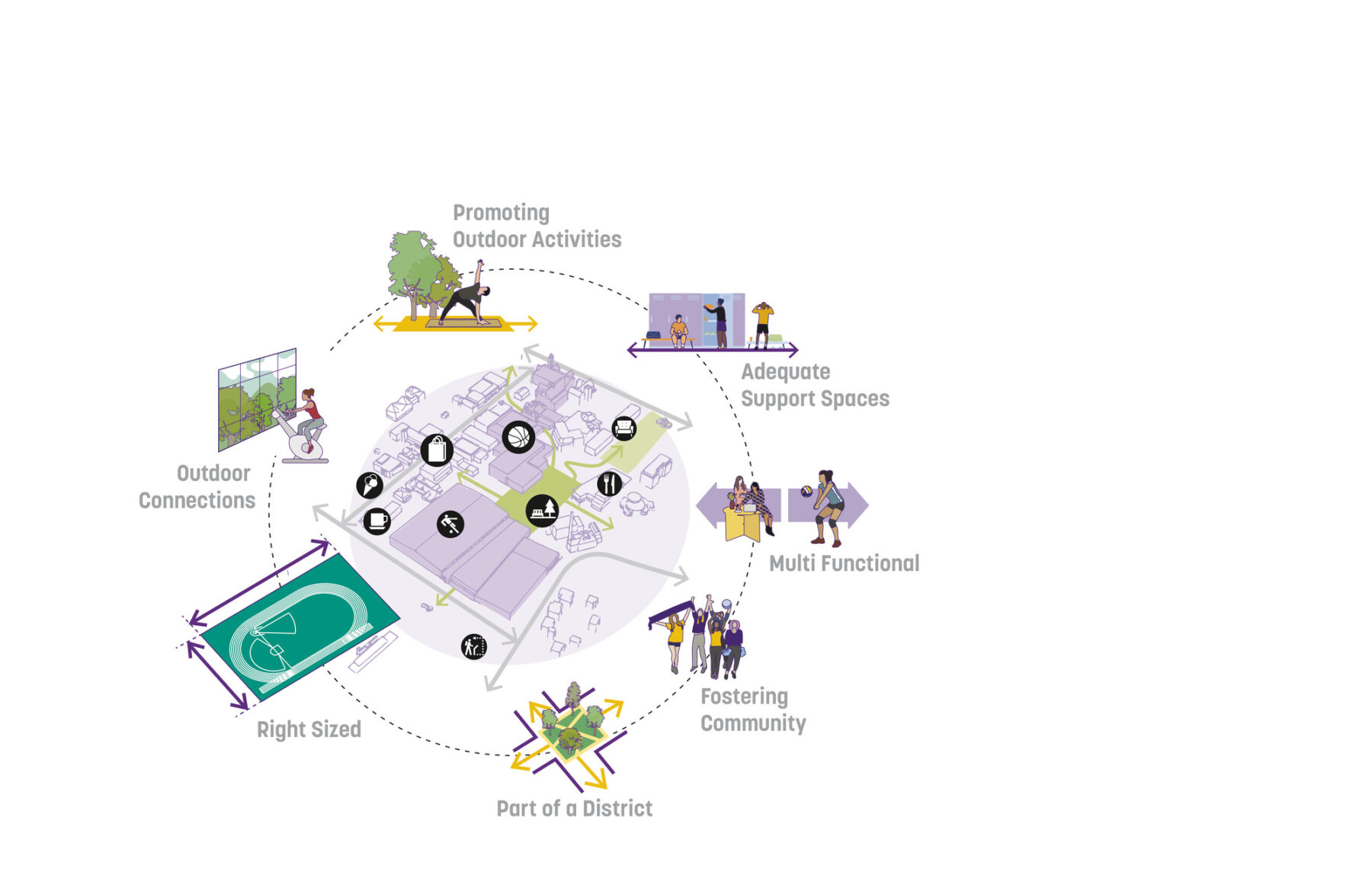
Physically repositioning medical and integrative wellness spaces helps elevate their visibility and better integrate these resources with athletic facilities and the campus at large
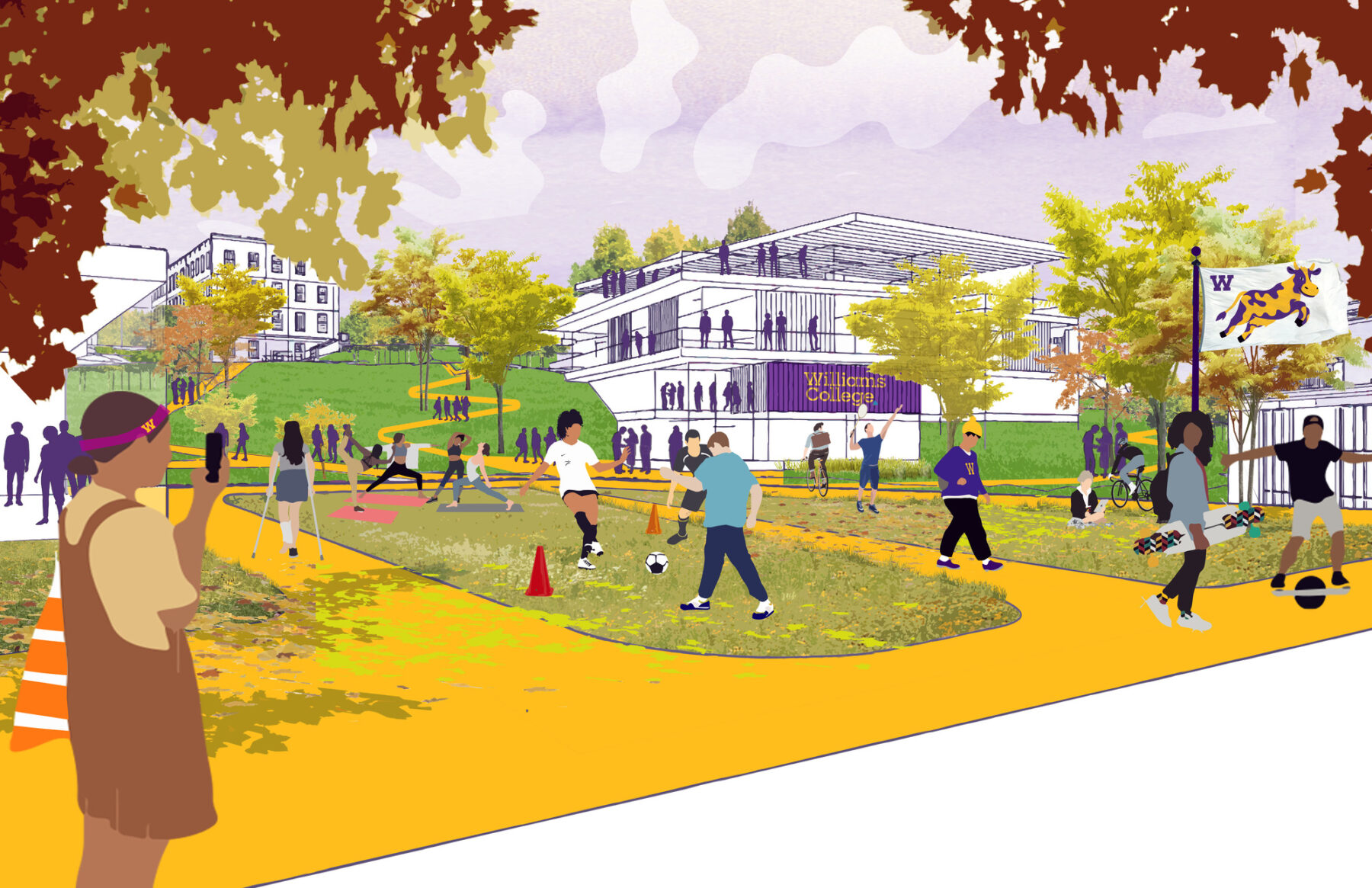
The Wellness Plaza provides new opportunities for outdoor programming in a flexible, multi-season space
The Wellness Plaza, situated north of the new Health and Wellness Facility and east of Chandler Athletic Center, would be a flexibly programmed public space that would support activities year-round. Benefiting from adjacencies to residence halls, fitness facilities, and a new dining hall, this space would be an outdoor hub that introduces new life to this campus precinct—a place for gathering, not simply passing through.
The Campus Plan prioritizes an approach to student housing that improves accessibility, energy efficiency, and comfort of residence halls while maintaining the character and scale of existing buildings. It also presents opportunities for improving the experience and operation of campus dining venues, recognizing the pivotal role these spaces play in building community.
Dodd House, an iconic, historic campus building and popular residence hall, would be renovated to improve accessibility and energy efficiency while retaining its unique character, while two new residence halls of complementary scale and character would be introduced on the northern edge of Dodd Circle to increase overall housing capacity. Reducing the amount of paving and parking at Dodd Circle provides the opportunity to reinvigorate Dodd Green, an outdoor gathering space for students to socialize year-round.
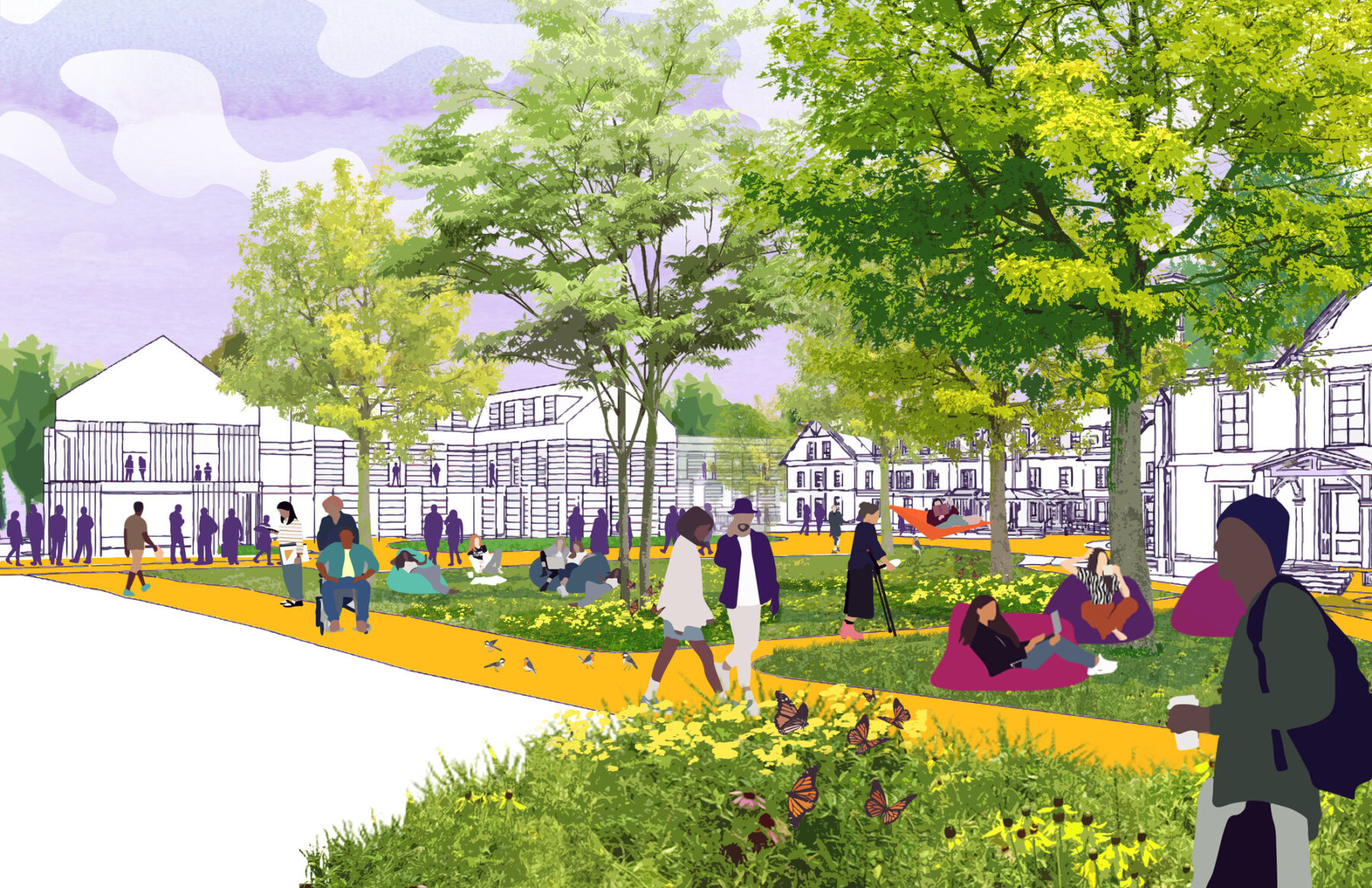
Proposed new residence halls on Dodd Circle increase student activity in this precinct of campus, while remaining consistent with the established character that distinguishes Dodd House today
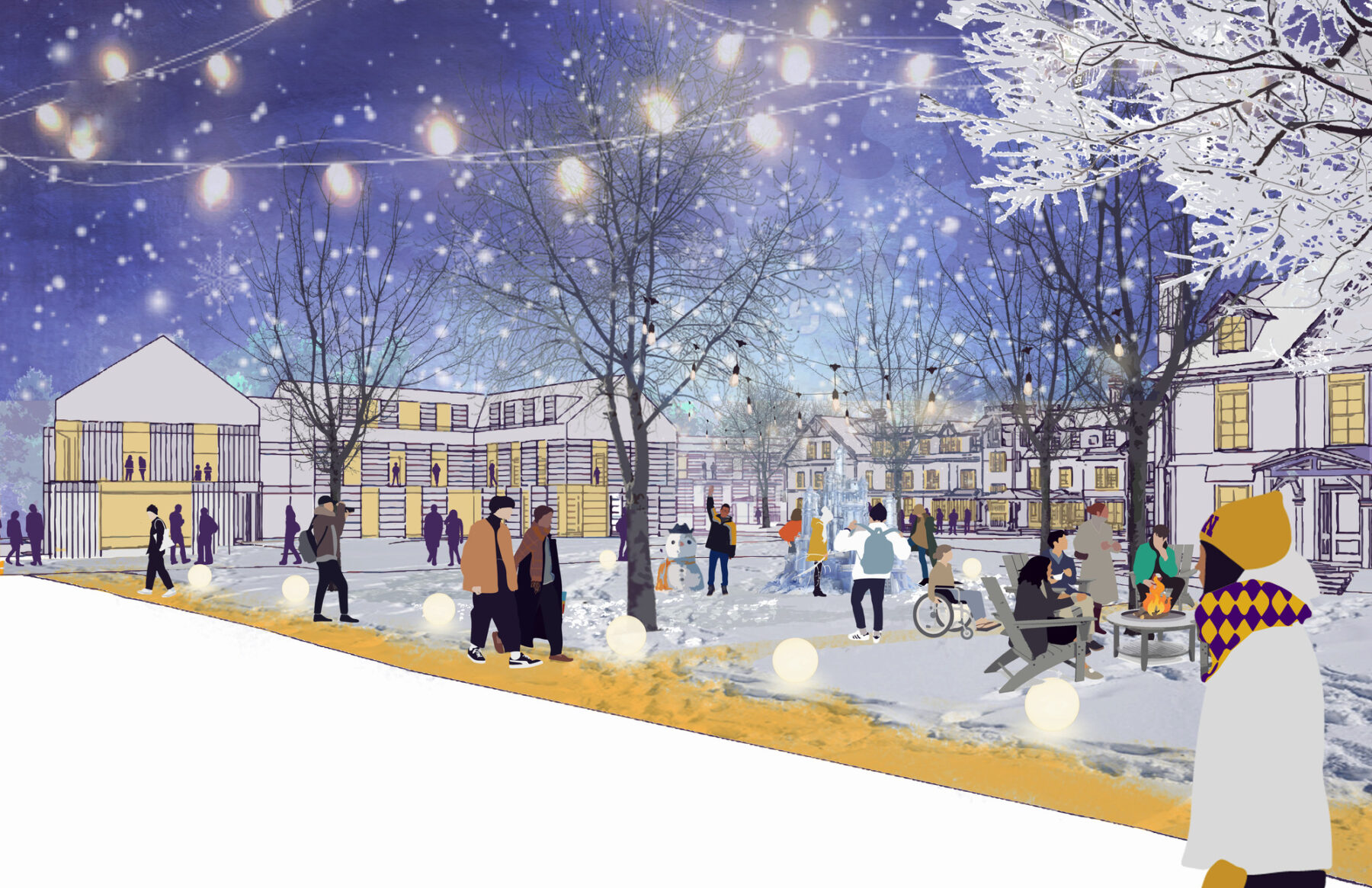
Reducing the amount of paving and parking at Dodd Circle provides the opportunity to reinvigorate Dodd Green, an outdoor gathering space supporting programs and uses that change with the seasons
The plan also proposes two primary dining hubs, both within close proximity to academic and residential facilities. A new dining hall, situated on the Berkshire Quad, opens views to the south while increasing overall campus dining capacity. Strategically located on the southern edge of the quad, the dining hall traverses the grade change between the Berkshire Quad and the plaza below, serving as an accessible link between the two spaces and improving general campus circulation.
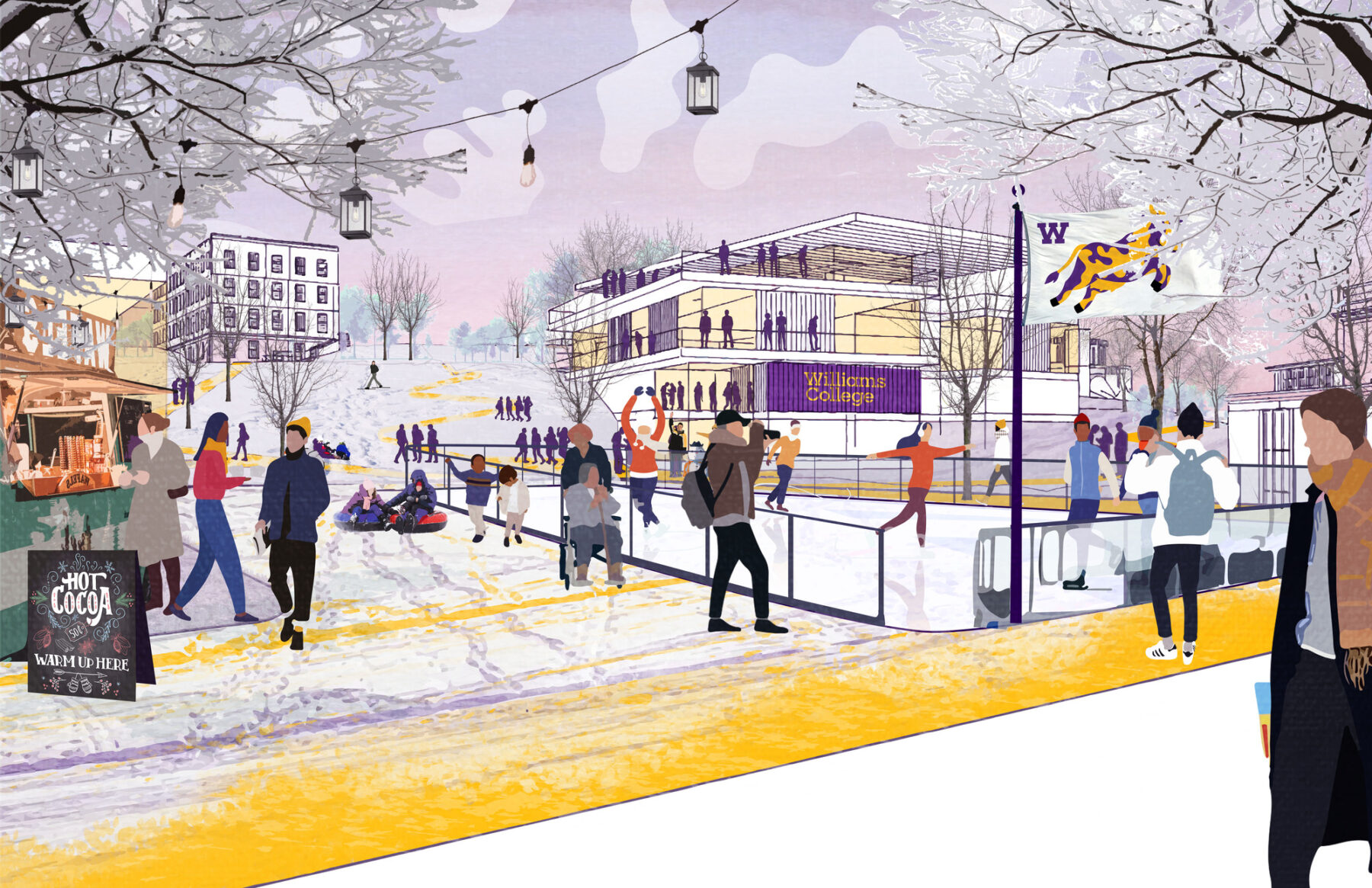
Viewed from the south, the proposed new dining hall in Berkshire Quad creates a new, accessible connection between the residential quad and the Wellness Plaza below
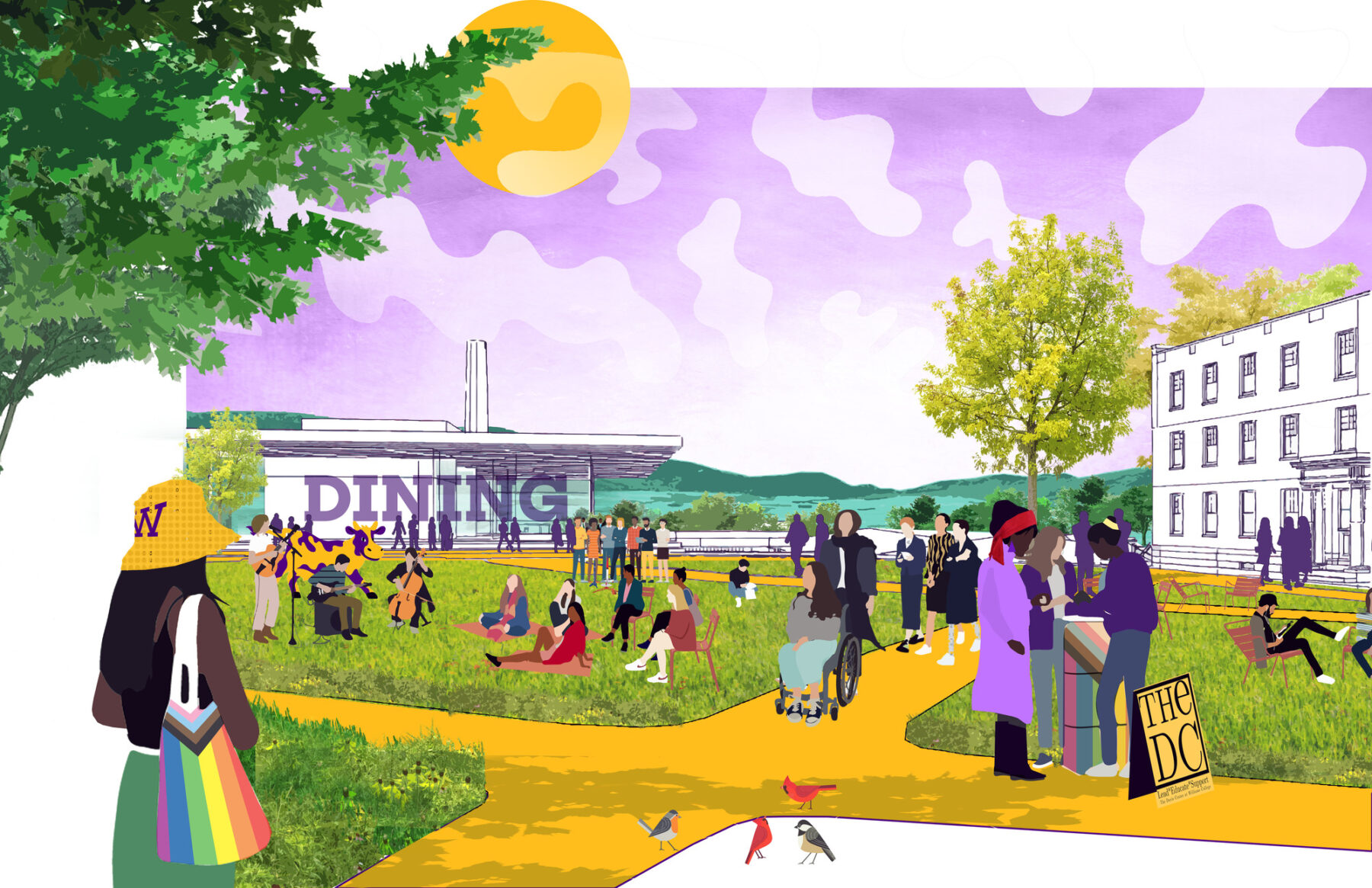
The dining hall would replace an existing residential hall, re-opening views of the mountain range to the south while introducing new programming opportunities on the Berkshire Quad
Existing dining space within the Paresky Center is renovated and expanded to provide students, faculty, and staff with enhanced opportunities to connect while sharing a meal. A modest addition provides the needed kitchen and operations space necessary to meet increased demand.
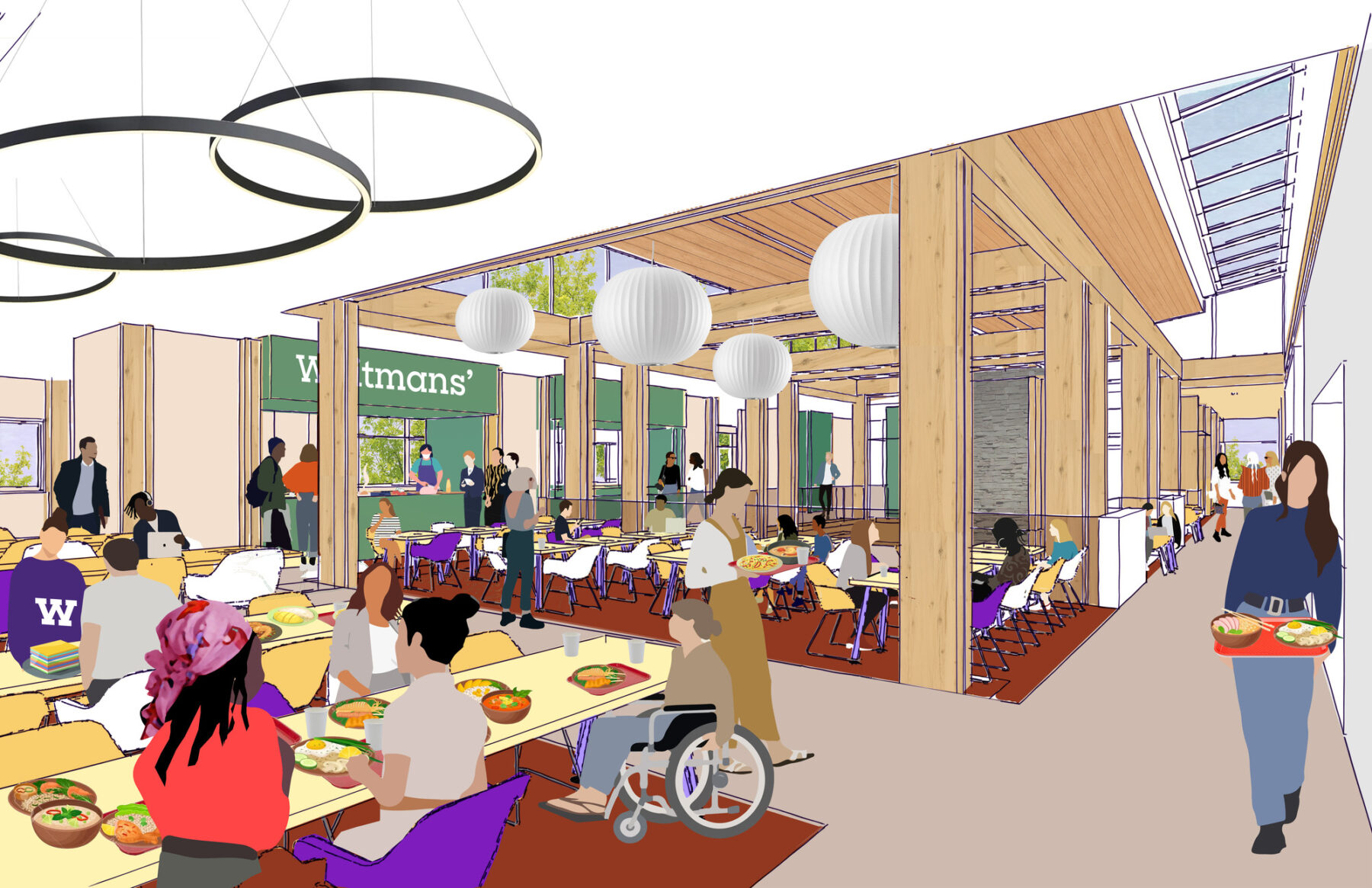
Expanding dining to the second floor of the Paresky Center increases overall capacity, and allows retail dining operations to remain on the first floor
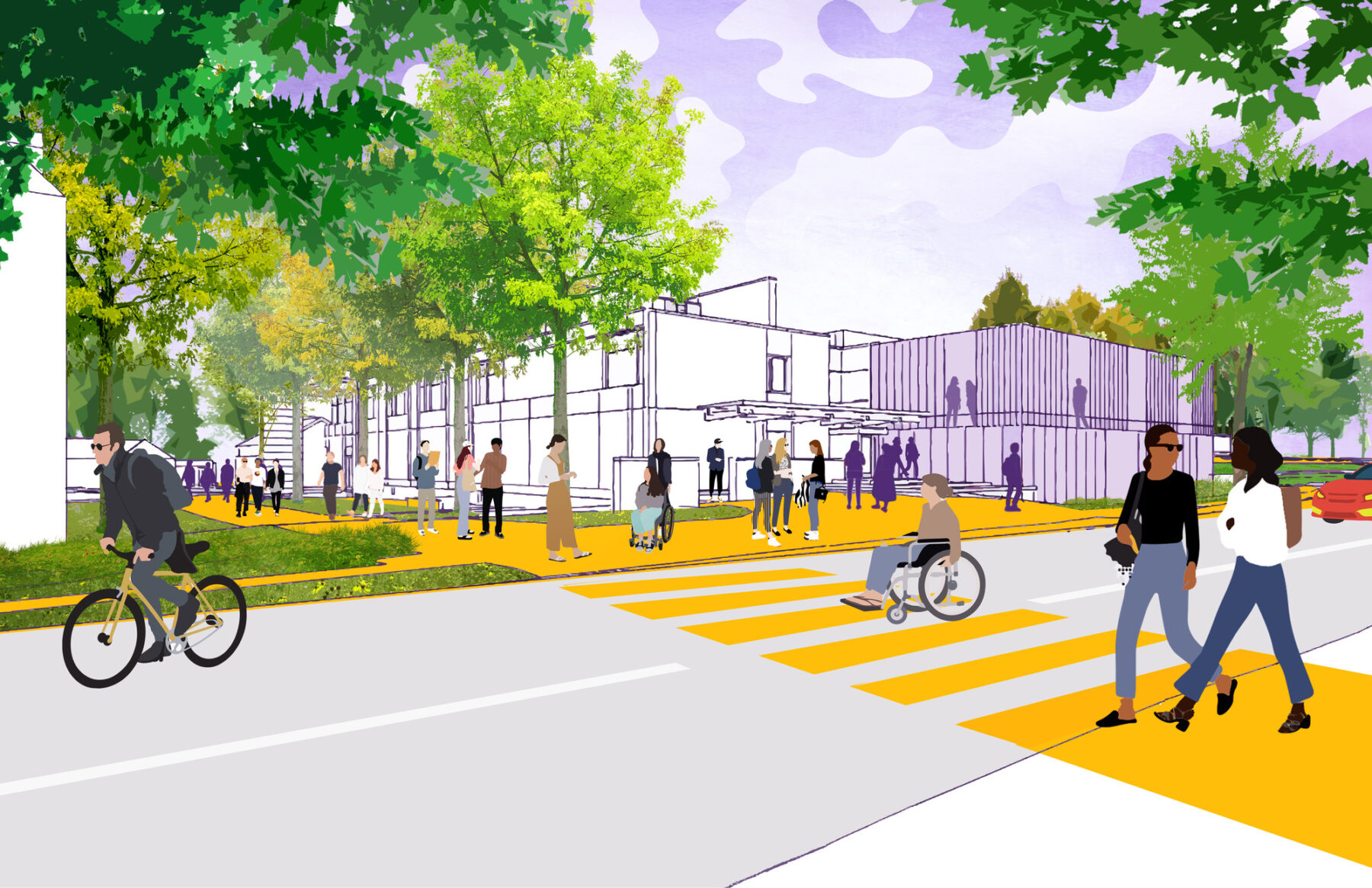
A modest addition to the Park Street side of the building would provide the kitchen and operations the space necessary to meet increased demand
A core element of the Campus Plan is a circulation network that provides intuitive and legible links between points on campus. This framework suggests a hierarchy of routes aimed at improving accessibility, activating underutilized areas of campus, and enhancing connections to the surrounding community. The ultimate goal of this circulation system is to foster an inclusive campus while celebrating the natural beauty of the Berkshires and reducing the use of personal vehicles.
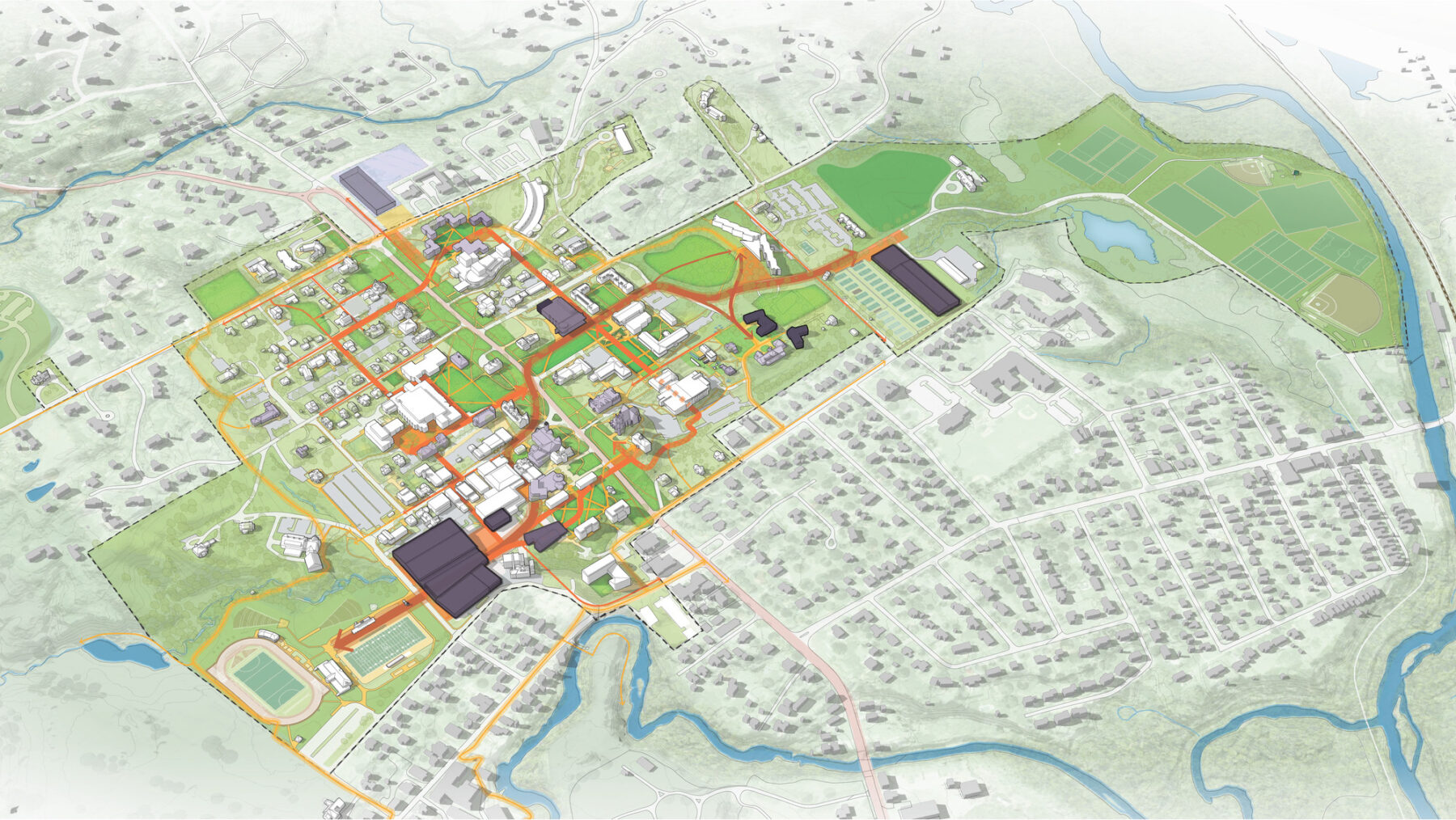
The Central Spine is an accessible corridor that spans the north-south axis of campus
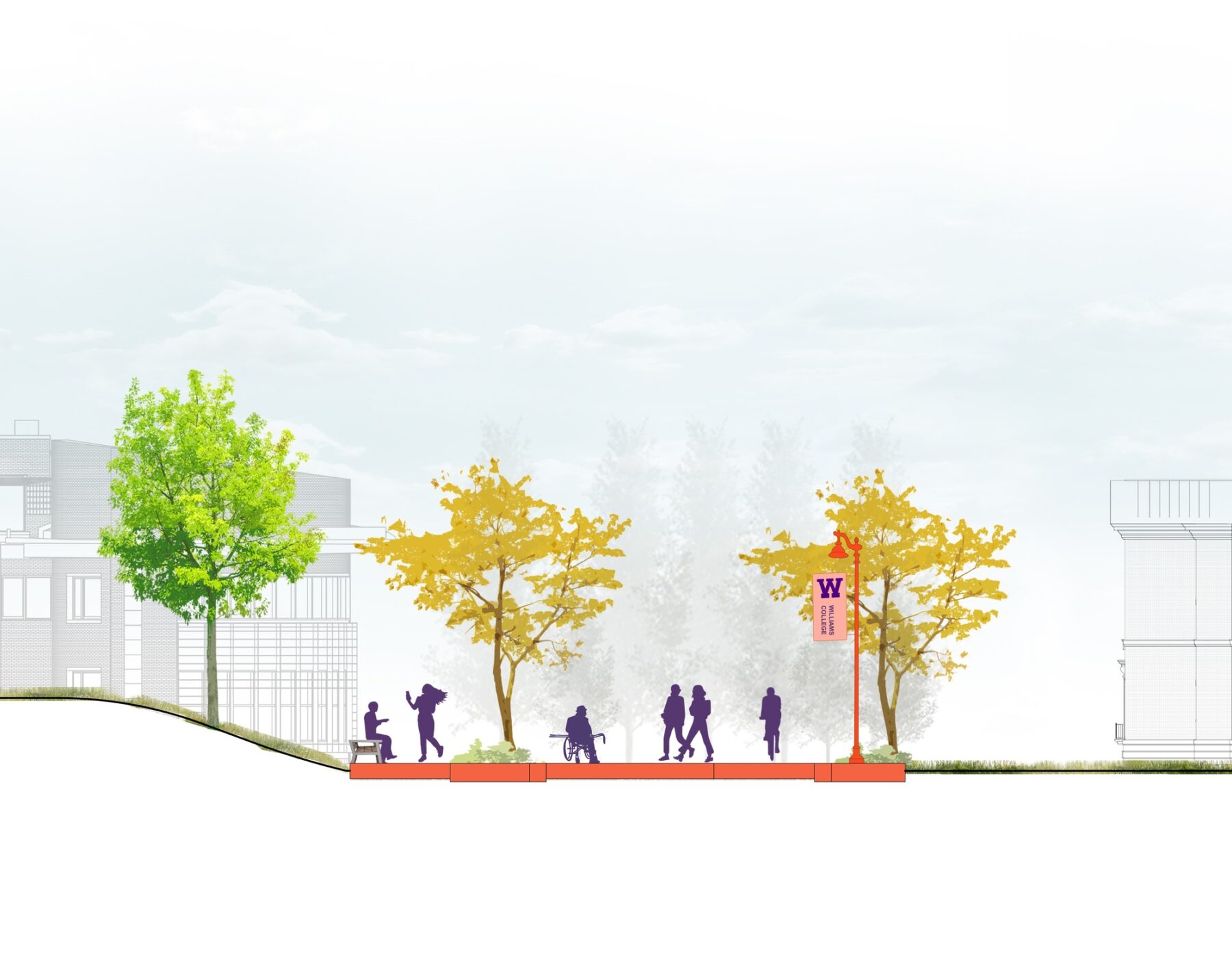
The Central Spine is an accessible corridor that spans the north-south axis of campus
The Williams Campus Plan solicited input from a diverse array of community members and was critical to understanding what challenges the campus faces today as well as identifying future opportunities for meaningful and impactful improvements. Resource groups included key stakeholders and subject-matter experts, who advised on an array of topics relating to the campus environment, ranging from accessibility and human resources to information technology and integrated wellness.
The broader Williams community contributed to the planning process through a variety of in-person and virtual methodologies. These included more traditional methods, such as a project website, map-based survey, intercept tabling, and community open houses, to unique activities such as the Campus Cup (a competition between residence halls) and a virtual campus concept tour.
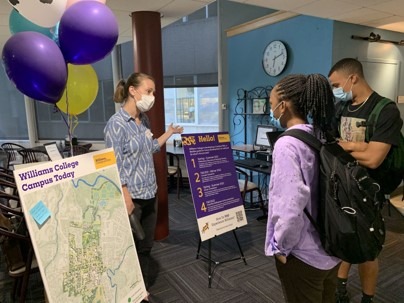
Tabling at a student dining hall
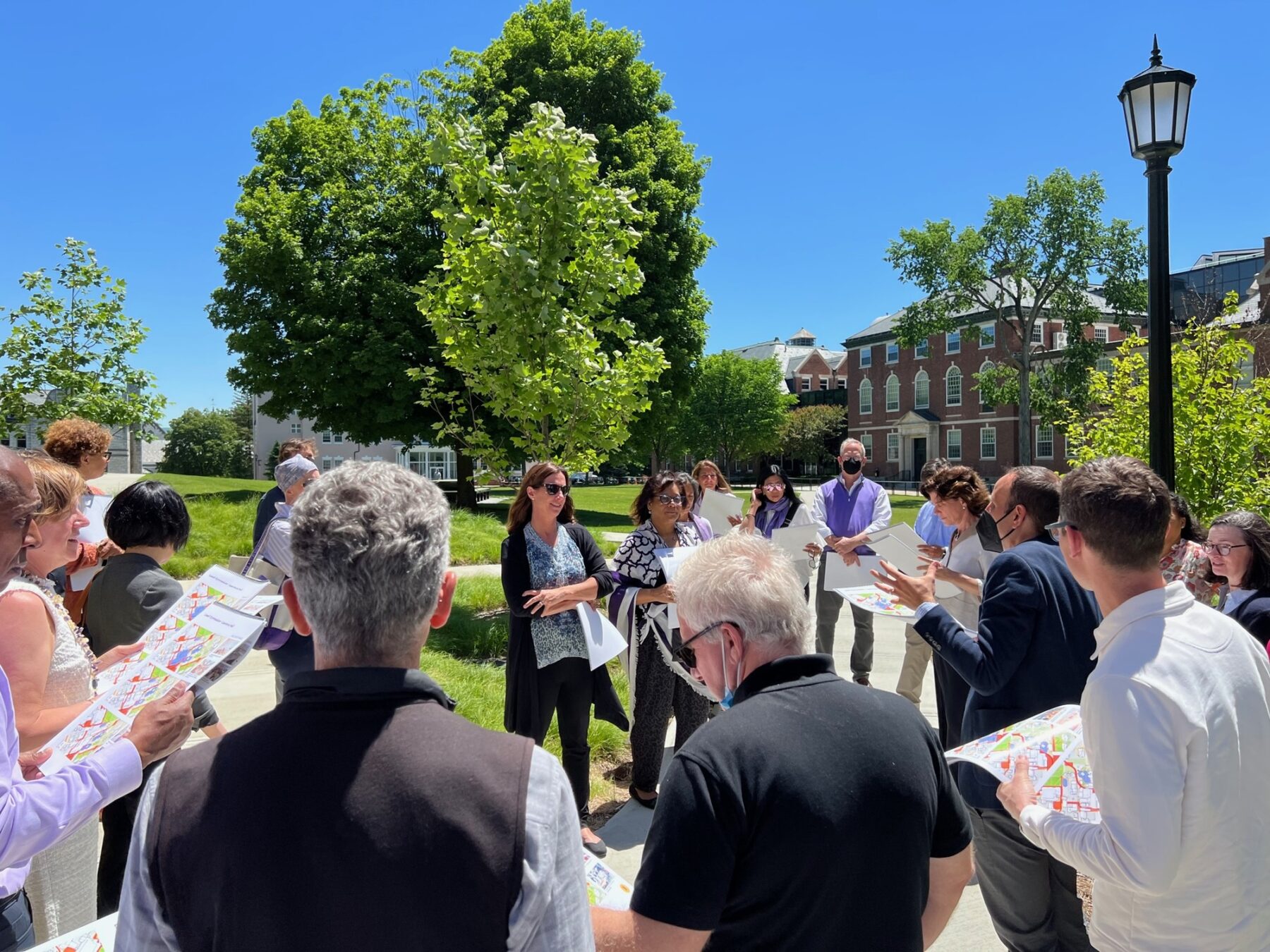
A guided tour of proposed concept scenarios with campus leadership
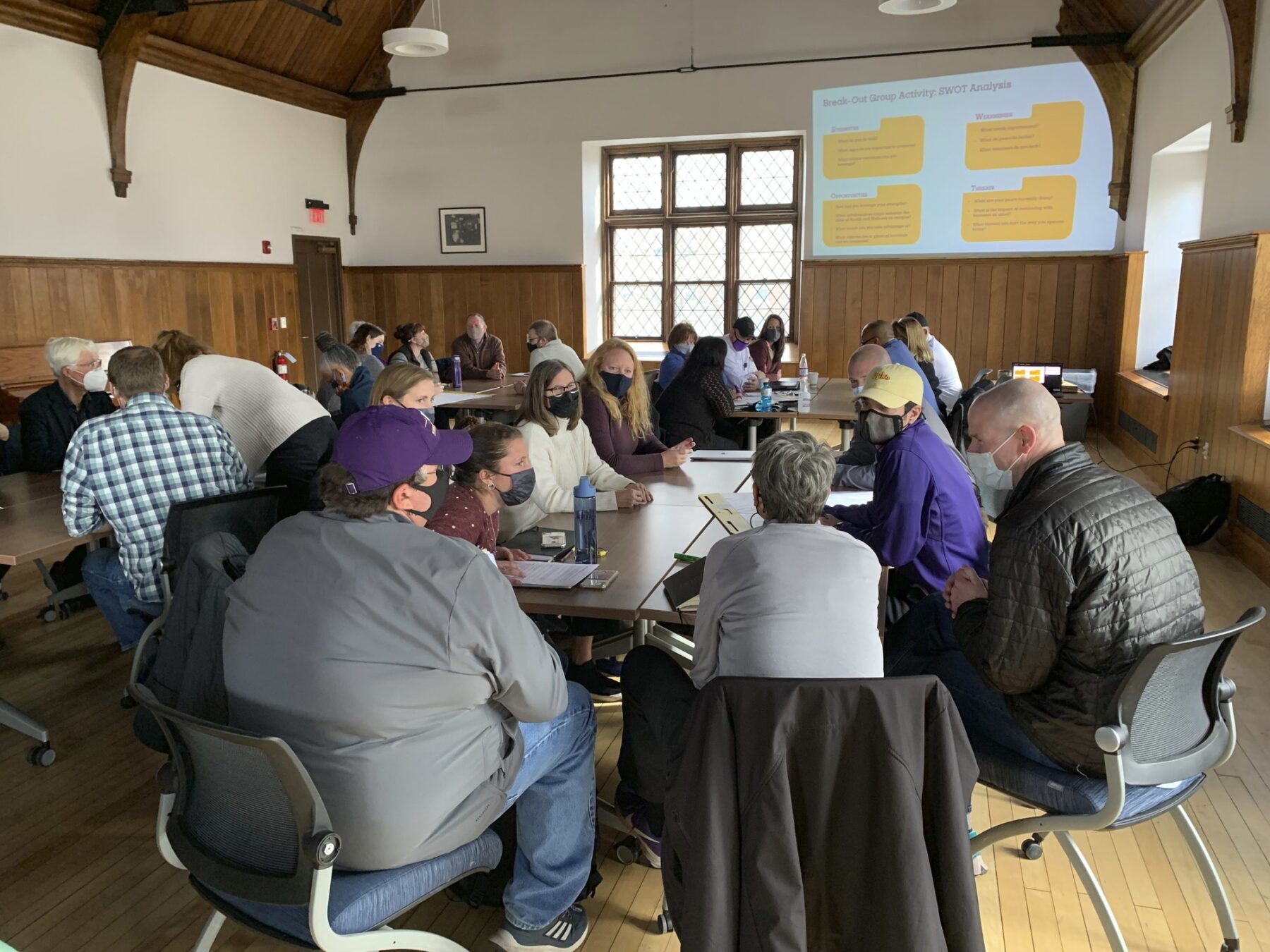
A focus group workshop on campus wellness
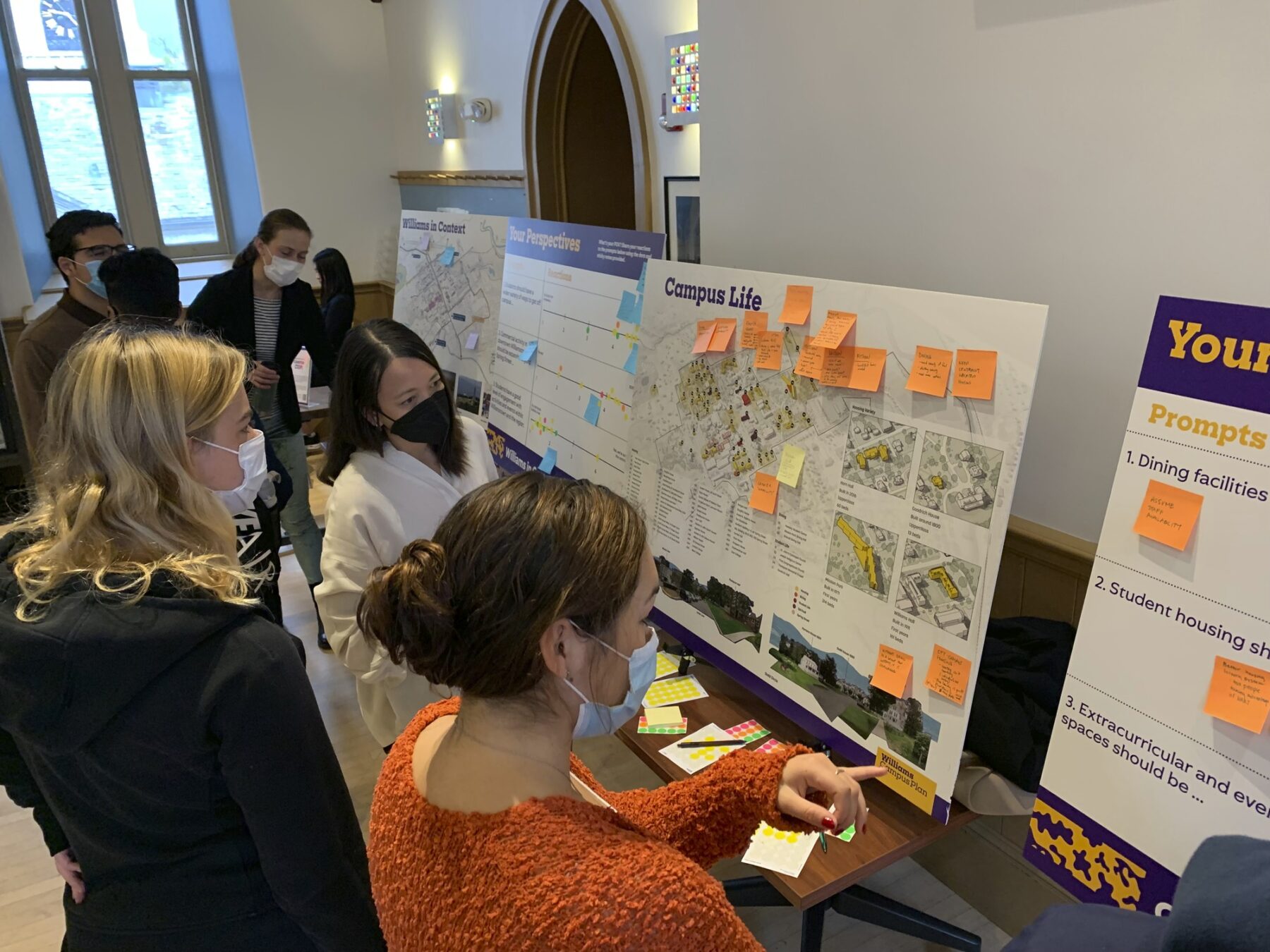
Collecting feedback at a Campus Plan Open House, held at the student-run cafe
Tabling at a student dining hall
A guided tour of proposed concept scenarios with campus leadership
A focus group workshop on campus wellness
Collecting feedback at a Campus Plan Open House, held at the student-run cafe
The Campus Plan differs from a traditional master plan in that its prescriptive elements focus on principles, processes, and big ideas in order to form a broad long-term vision that can guide the growth of the campus over the coming decades. These ideas draw from the full spectrum of campus life to create a framework that reframes capital planning as an ongoing–rather than annual–process that is integrated with academic, physical, and operational decision-making.
For more information contact Tyler Patrick.