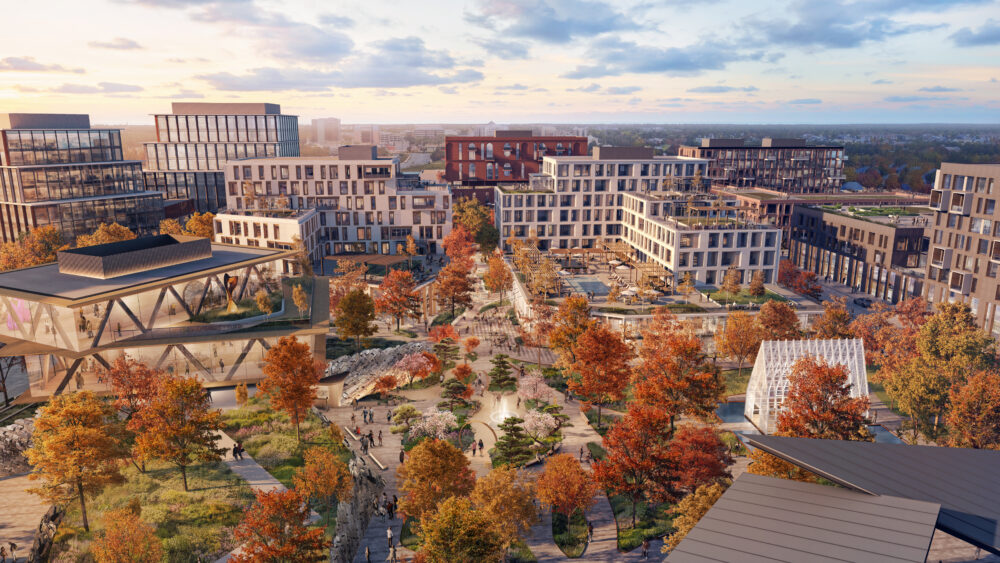
Pier 6 Master Plan
Rogers, Arkansas
 Sasaki
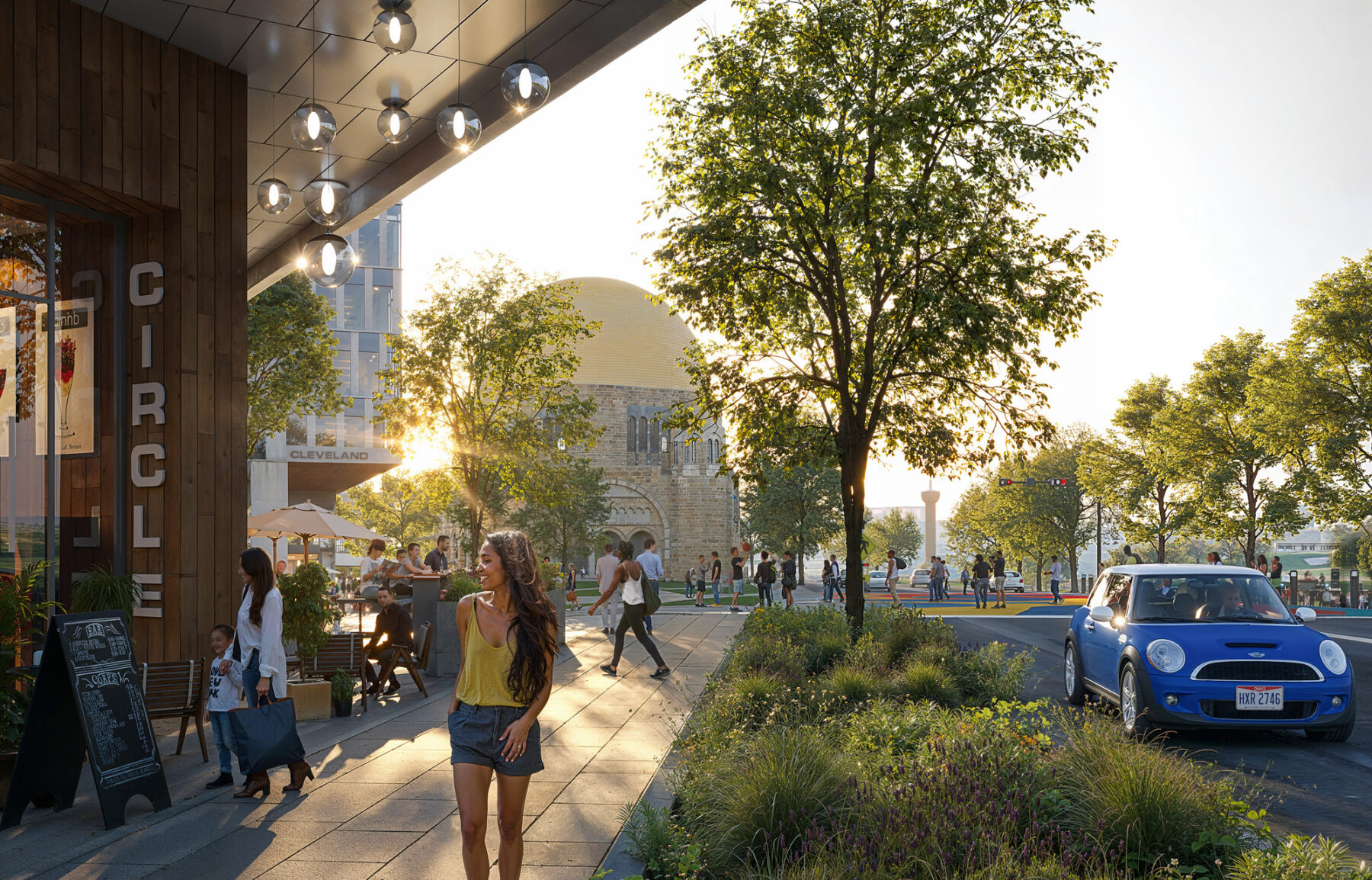
Committed to reshaping the University Circle into a unified and inclusive civic landscape, the non-profit University Circle, Inc. partnered with Sasaki to develop the public realm and land use master plan. The Plan reimagines the gap between prominence and everyday experience as the district’s defining civic opportunity.
University Circle is one of the most significant cultural districts in the United States. Within a remarkably compact geography, it unites world-class museums, universities, hospitals, and public landscapes that collectively shape Cleveland’s identity as a center of knowledge, healthcare, and culture. Yet for all of its institutional significance, the spaces between destinations in the district like parks, streets, pedestrian routes, roadway crossings, trails, and thresholds have not always reflected the stature of the places they connect.
The master plan, Connecting the Circle, responds by recasting University Circle not as a collection of exceptional institutions separated by infrastructure, but as a coherent civic landscape shaped by connection, dignity, and shared use. It treats the public realm as the civic ground through which the district is understood, navigated, and shared. Streets, parks, plazas, and paths become the framework through which culture is made visible, movement becomes intuitive, and public life becomes more fully shared. It is guided by the conviction that one of the country’s great cultural districts should be experienced with as much clarity, generosity, and distinction between destinations as within them.
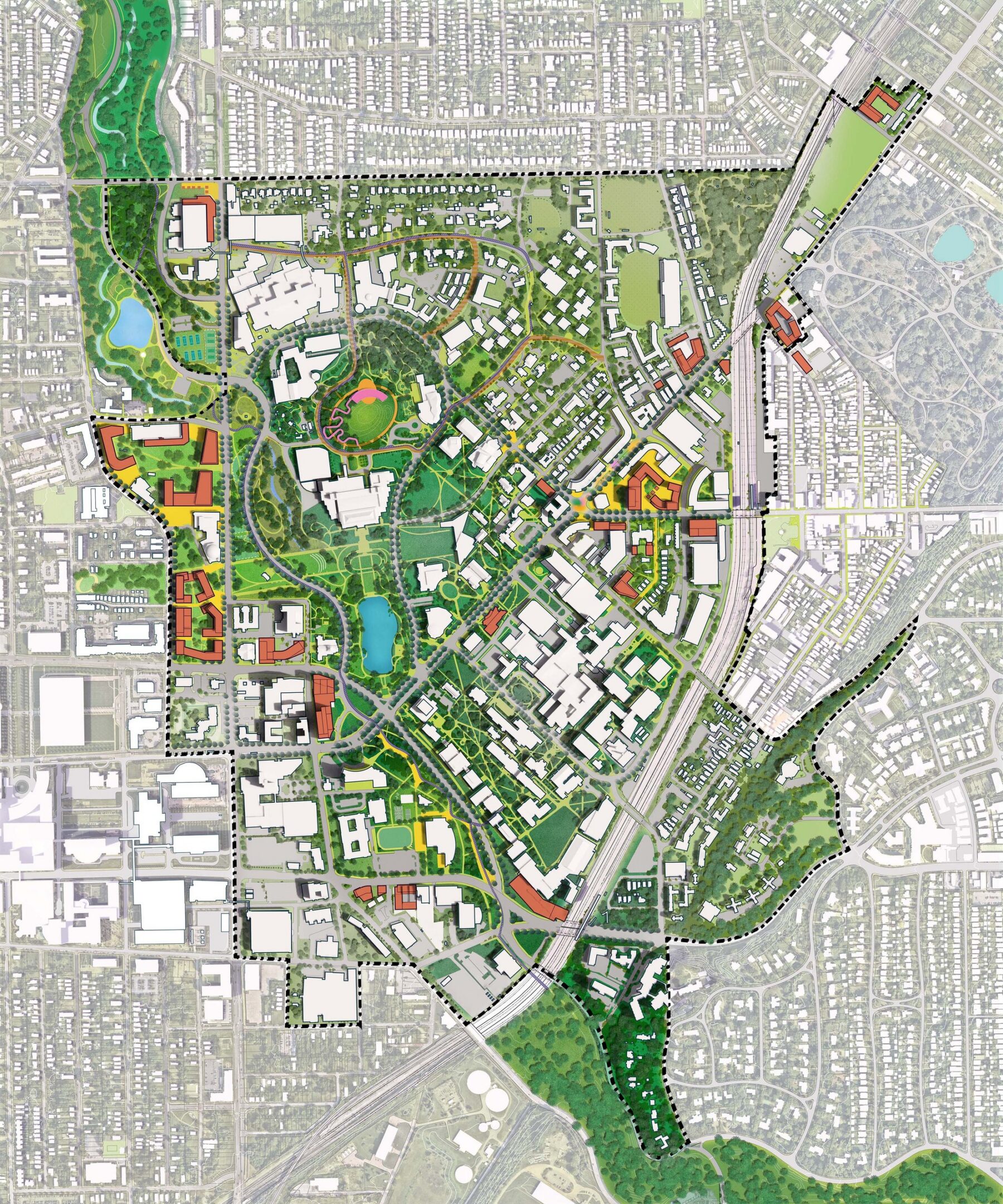
Master Plan Vision
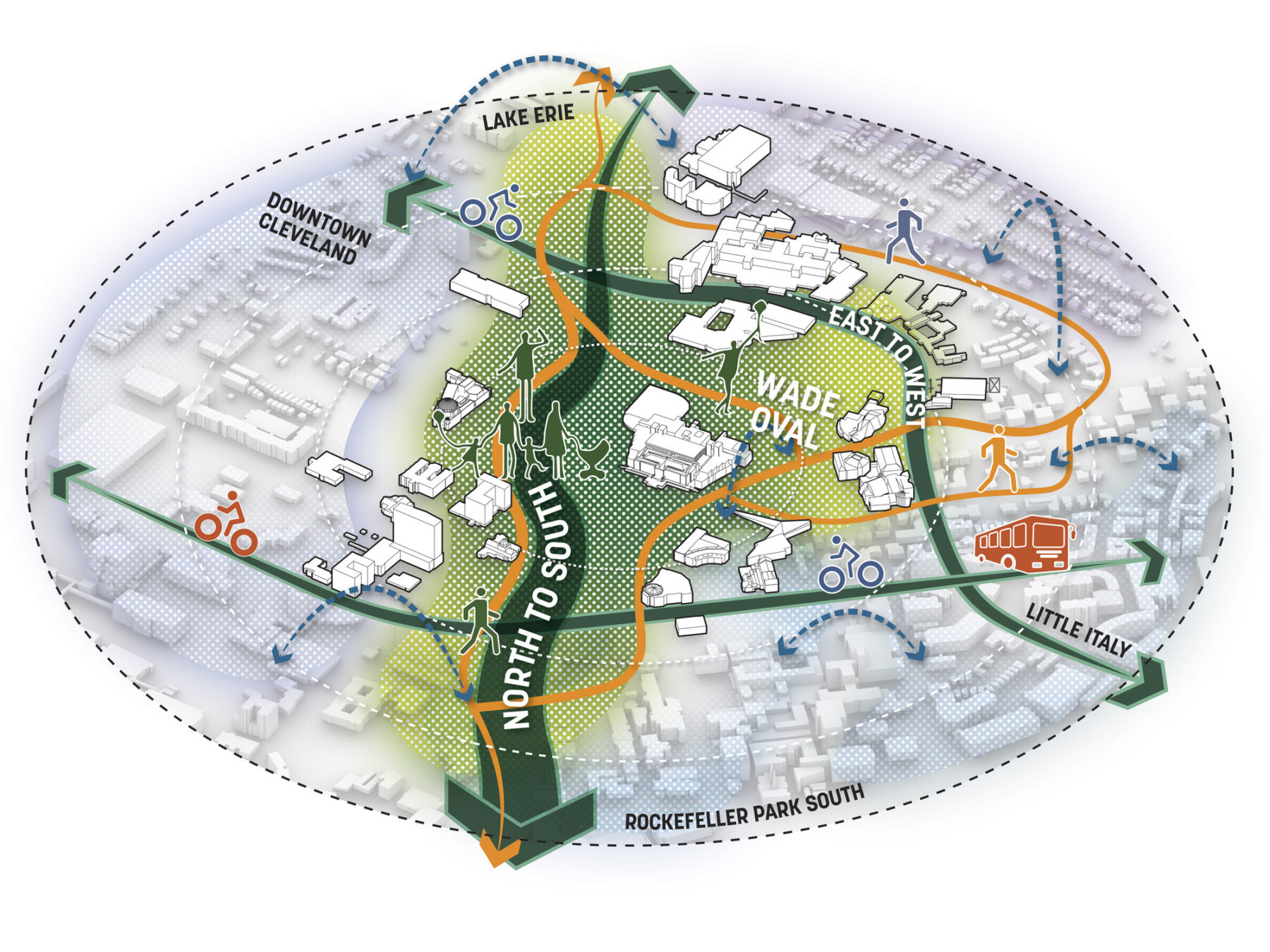
The plan organizes public realm investment around three complementary roles that together define how a civic commons functions.
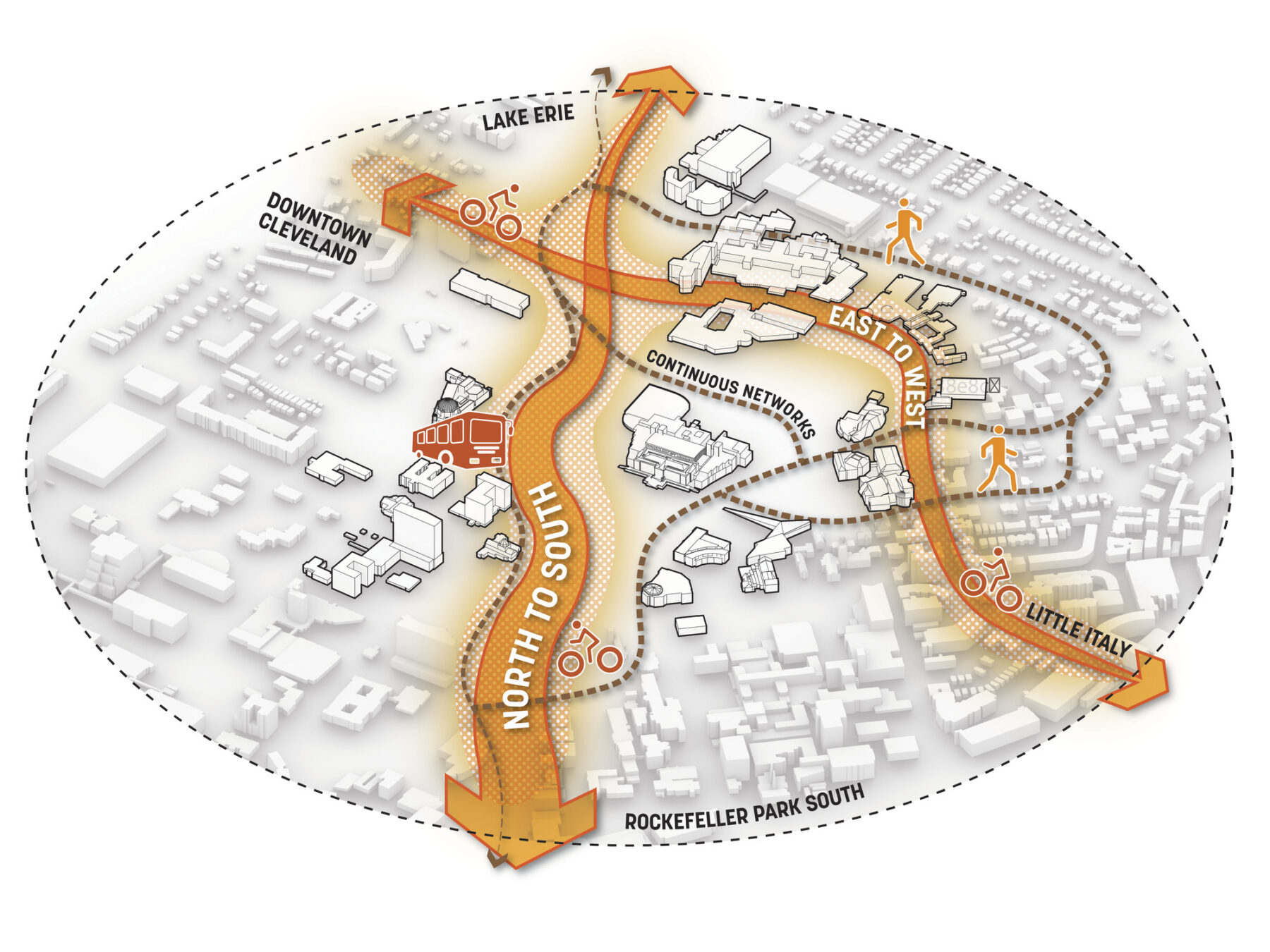
Connections
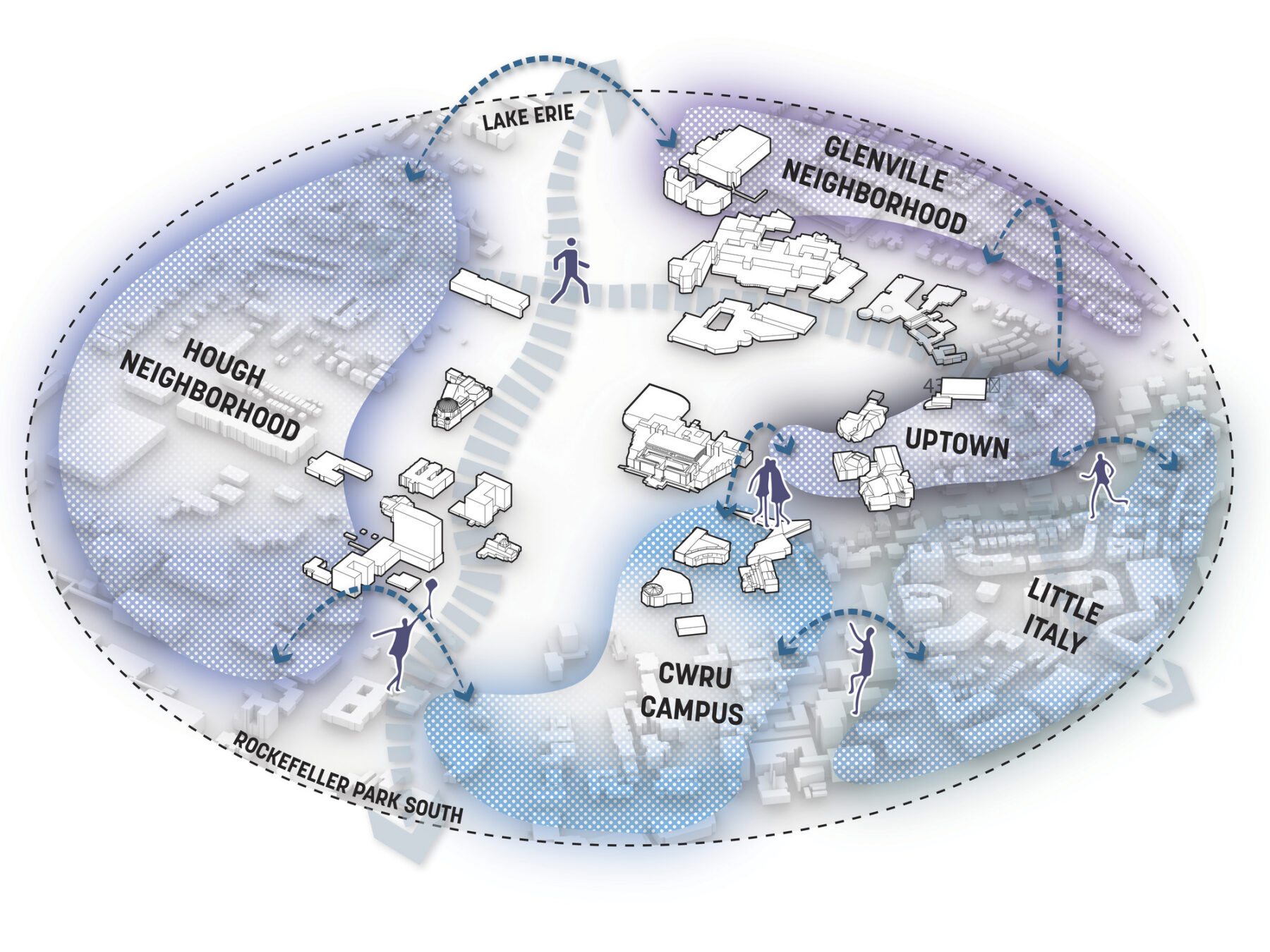
Thresholds
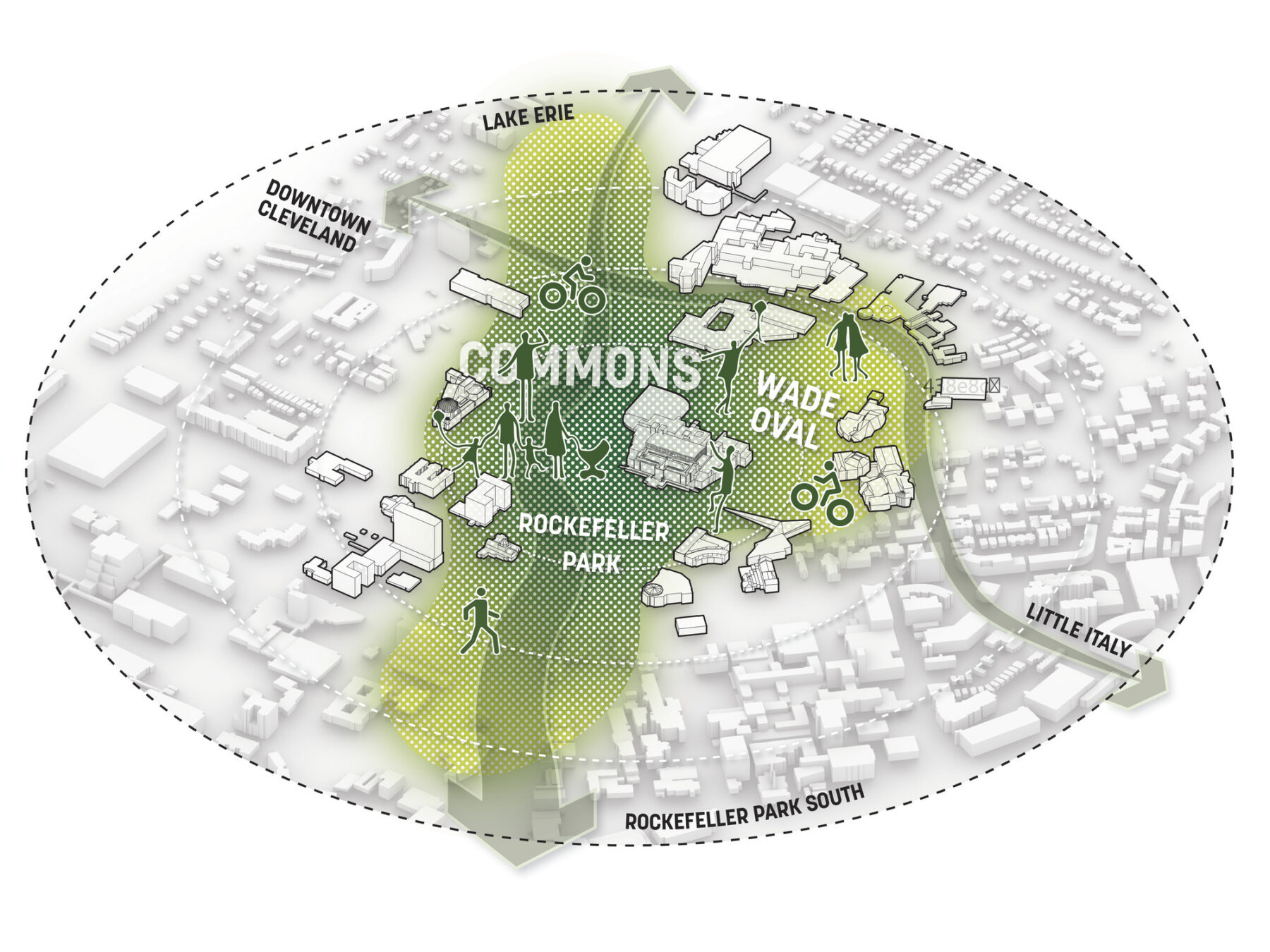
Green Commons
The plan organizes public realm investment around three complementary roles that together define how a civic commons functions.
Connections
Thresholds
Green Commons
Through a robust engagement process grounded in lived experience, the planning process yielded a deep body of public insight. That process spanned major public engagement events, workshops, walking and cycling audits, online tools, intercept conversations, and sustained neighborhood dialogue. Through it all, residents, students, employees, visitors, institutional leaders, and community partners helped define not only what University Circle is, but how it feels to move through it day to day.
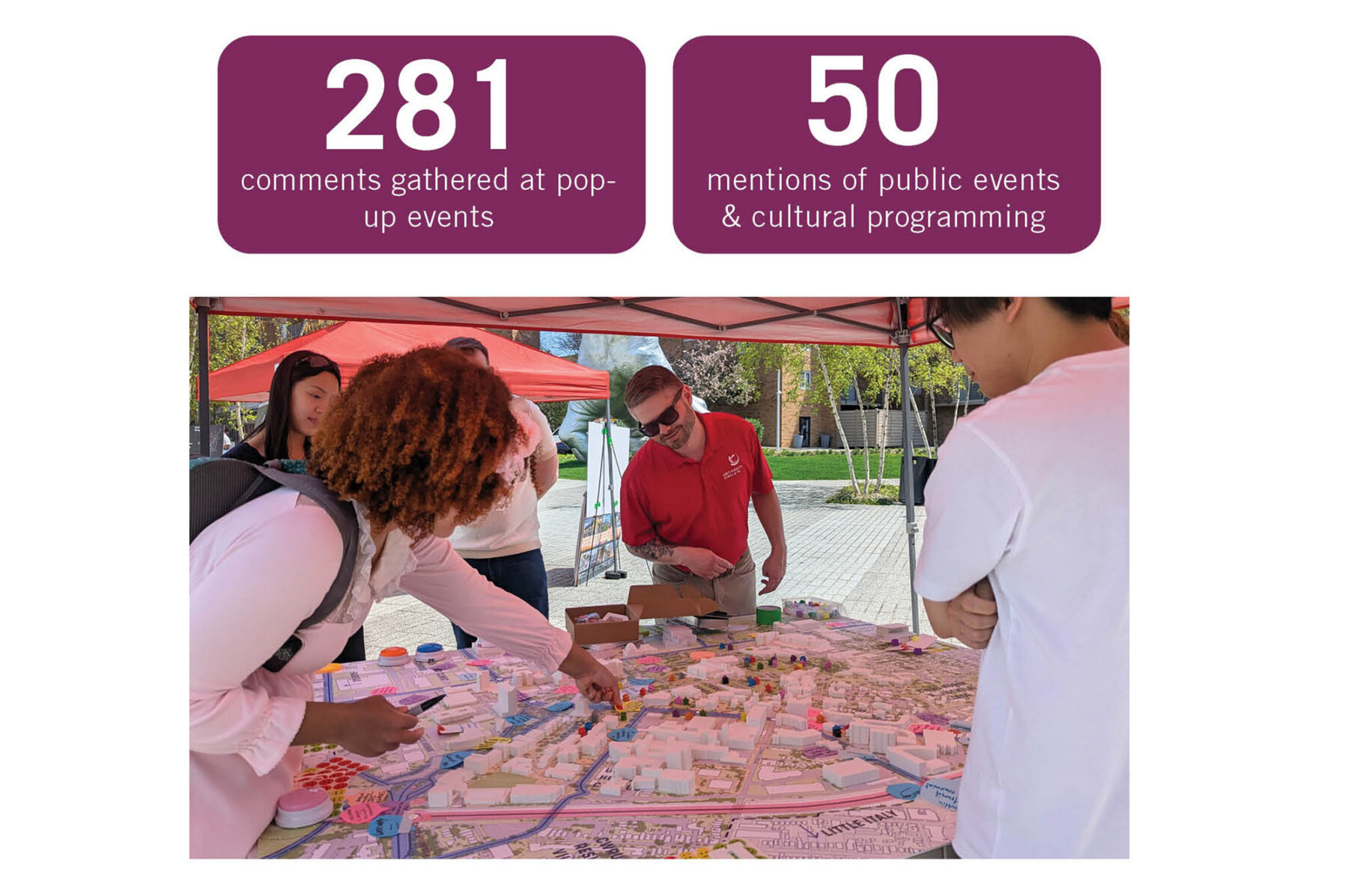
Pop-up activation at Toby’s Plaza/ moCa.
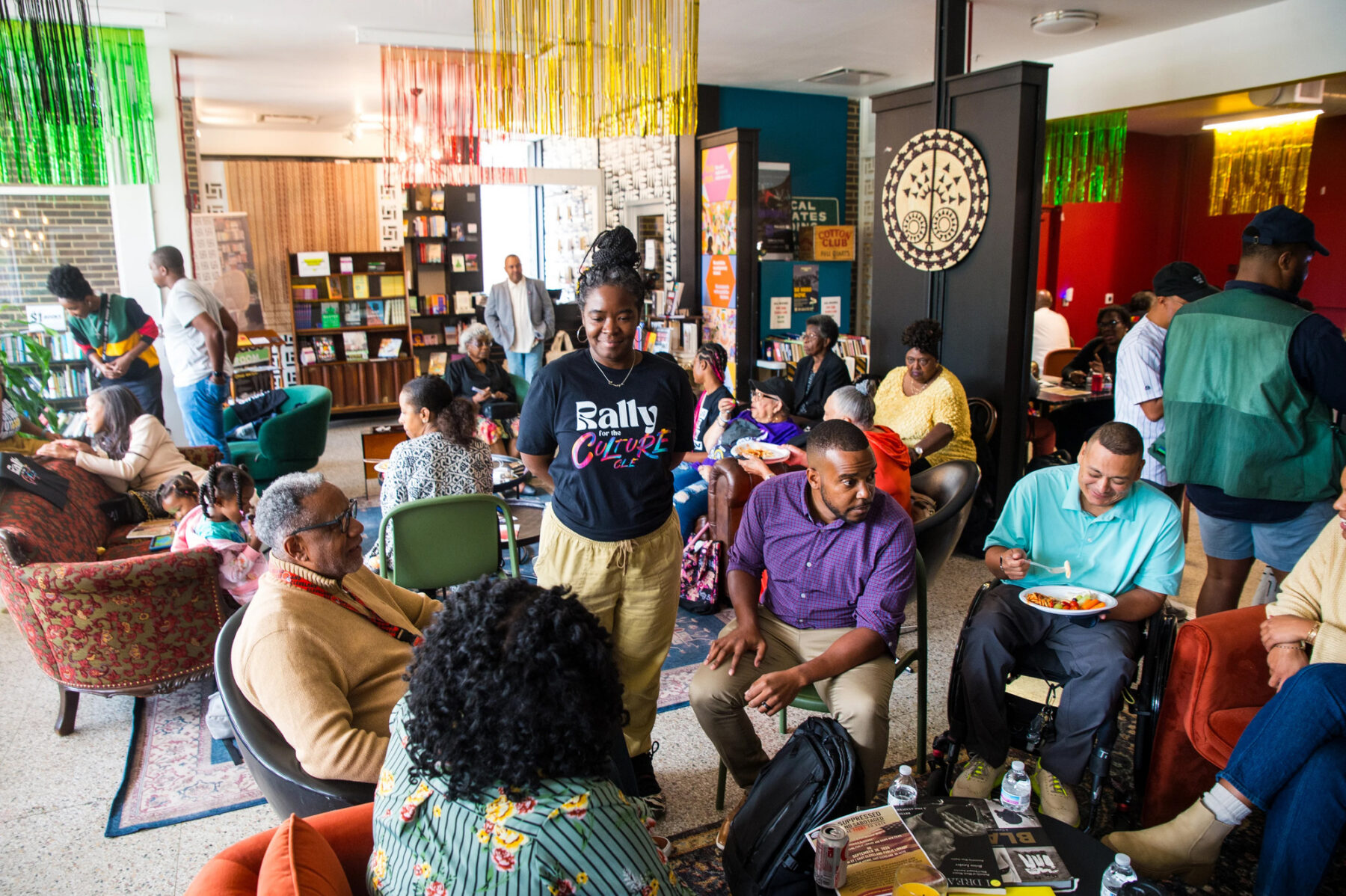
Intergenerational lunch with residents of adjacent neighborhoods.
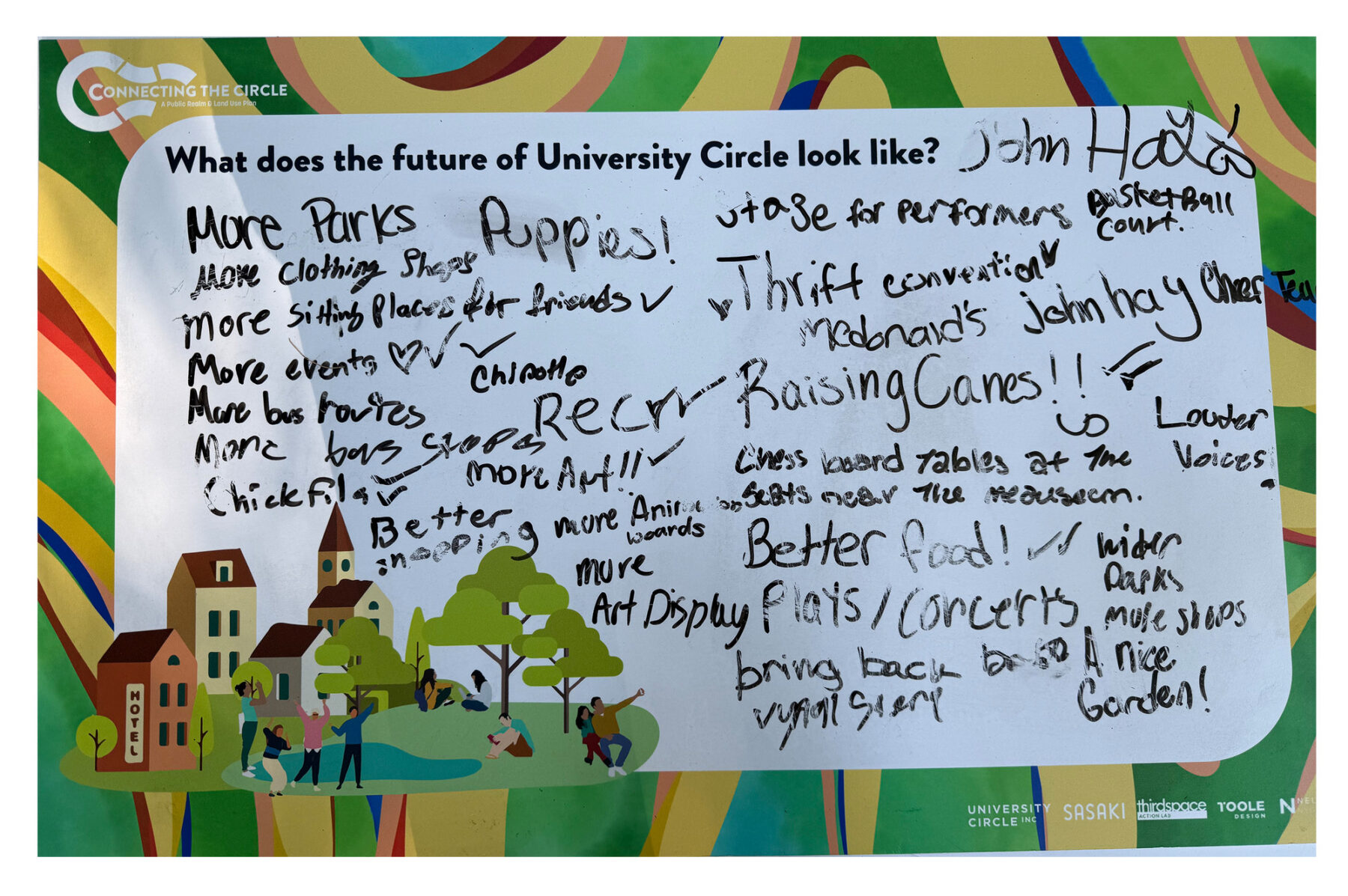
Comment cards with input from local high school students.
Pop-up activation at Toby’s Plaza/ moCa.
Intergenerational lunch with residents of adjacent neighborhoods.
Comment cards with input from local high school students.
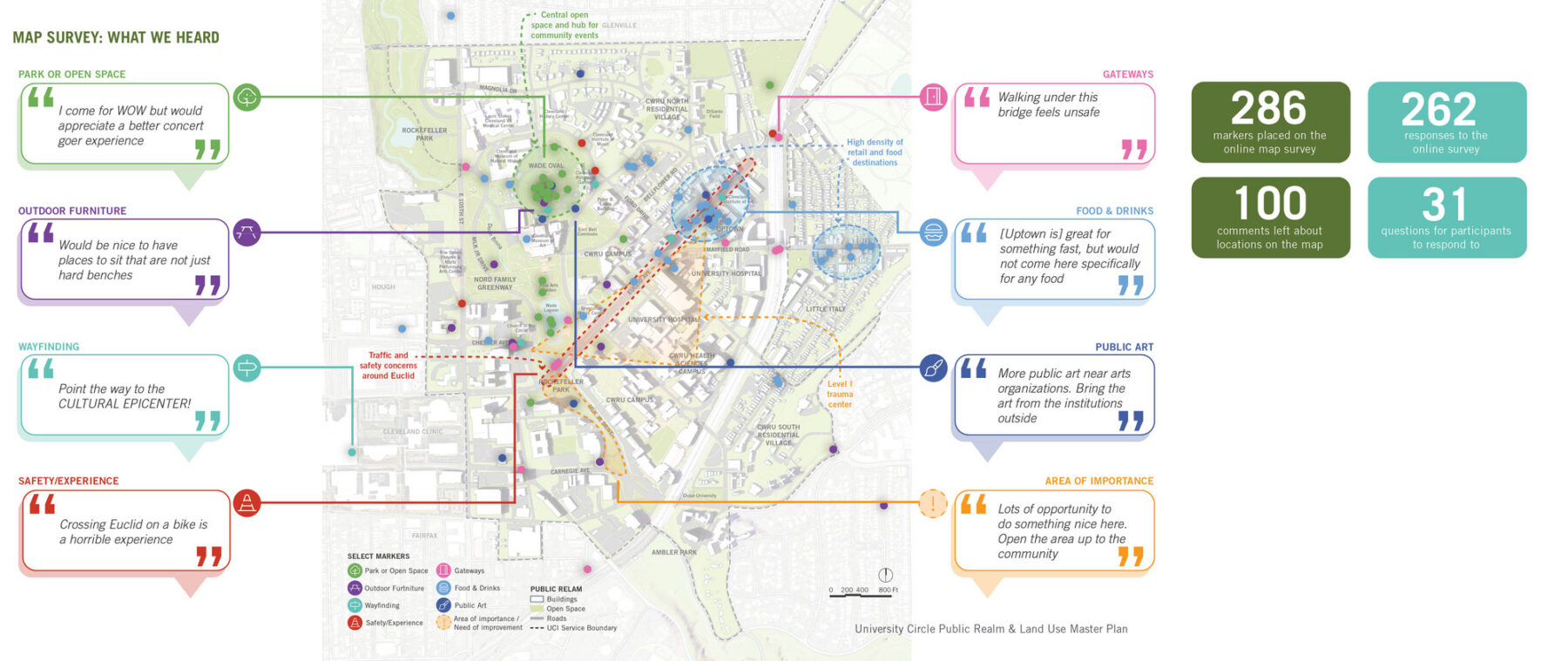
In parallel with in-person engagement, the planning process was supported by a dedicated project website designed specifically to collect input throughout the year.
The engagement process yielded insights that pointed outward as much as inward. Across conversations, audits, and dialogue, the community returned to the same friction points. That civic aspiration to unify is inseparable from University Circle’s relationship to its surrounding neighborhoods, including Hough, Glenville, Fairfax, Little Italy, and East Cleveland. Many of these are historically Black communities whose proximity to the district has been shaped by disinvestment, physical separation, and racialized patterns of exclusion.
The plan recognizes that barriers to access for these neighborhoods have been physical, but also perceptual and historical, shaped by oversized roadways, difficult crossings, fragmented edges, and inherited patterns of separation. In response, Connecting the Circle frames public realm investment as a means of repair. It strengthens continuity, improves access, and repositions the district as a place that feels more open, more reciprocal, and more fully shared with the communities around it.
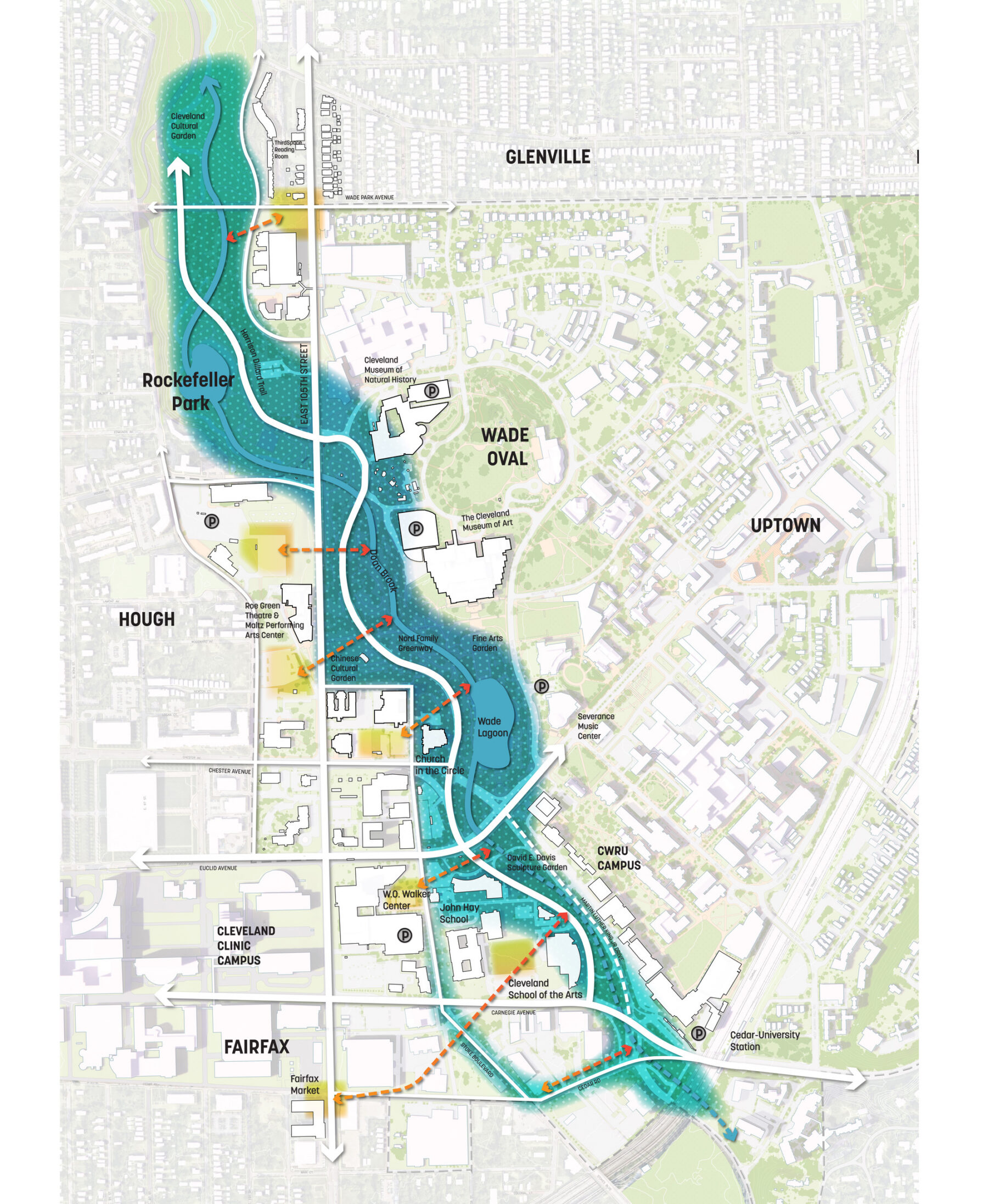
Rockefeller Park anchors University Circle’s public realm, linking institutions, neighborhoods, and open spaces into a continuous civic landscape.
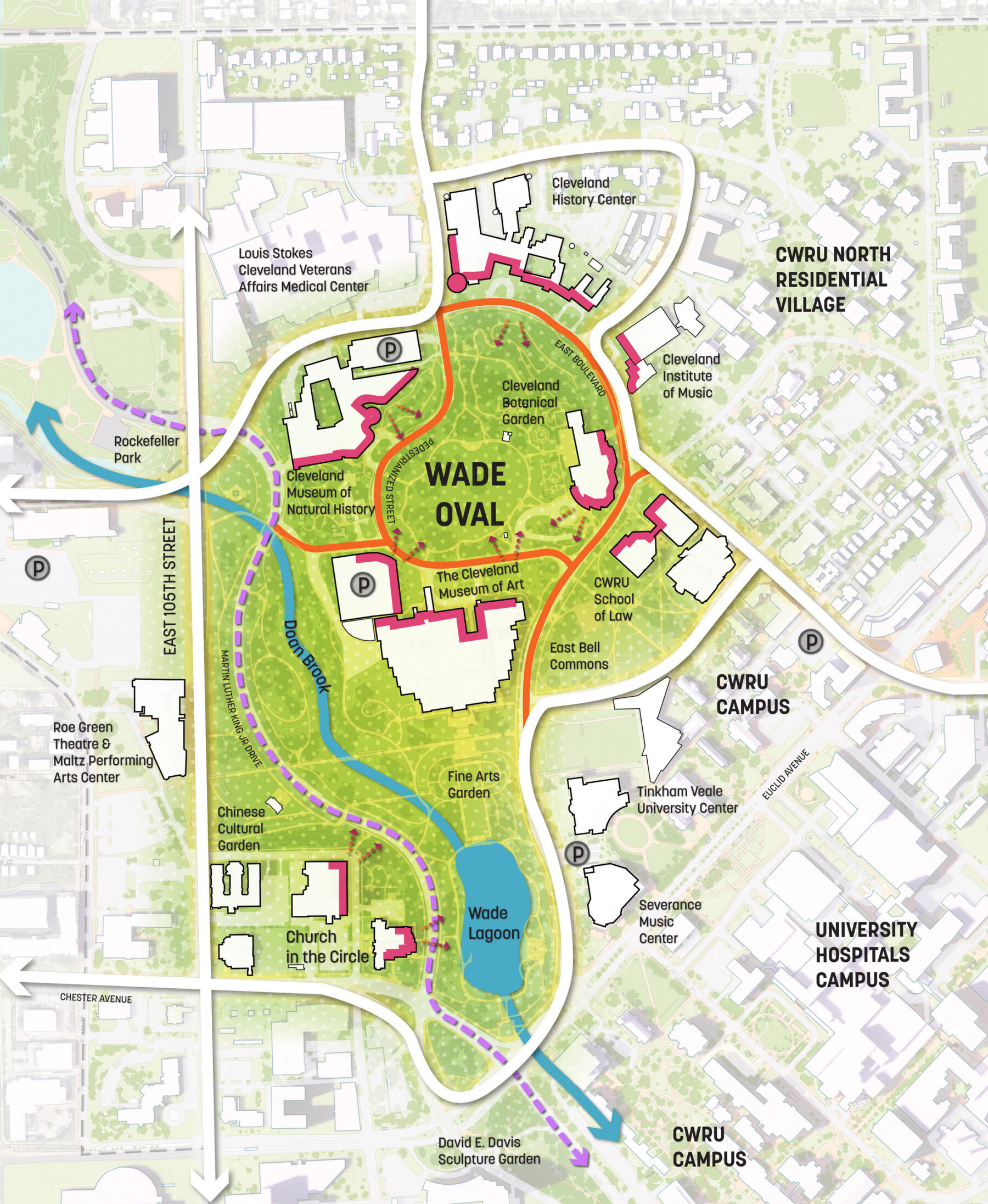
Wade Oval is reimagined as the cultural heart of University Circle, serving as a welcoming civic living room where culture, landscape, and everyday public life come together.
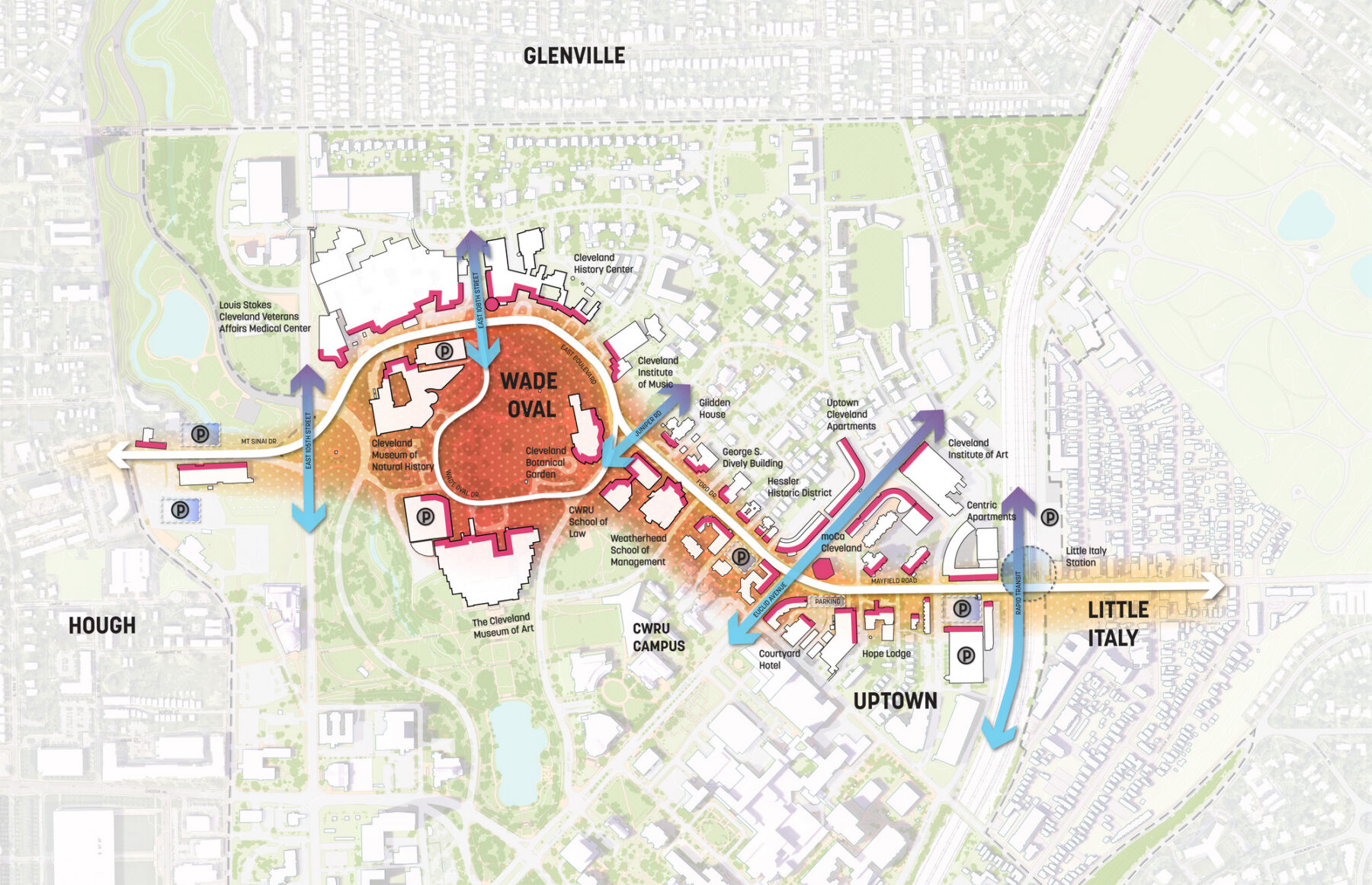
A strengthened east–west connection links Hough and Glenville through University Circle to Little Italy, making the district more continuous, accessible, and shared.
Connecting the Circle organizes University Circle as a connected civic commons, asking the public realm to do more than accommodate movement between destinations and stitch institutions to one another, extend welcome at every threshold, and support daily life with the same intentionality as major civic moments. This vision is carried through five signature design moves that give the plan spatial clarity across the district: East 105th Street as a civic seam, Uptown and the cultural corridors as the east-west spine, the Harrison Dillard Trail as an equity spine, Rockefeller Park South as a threshold between campus and community, and Wade Oval as the district’s civic living room.
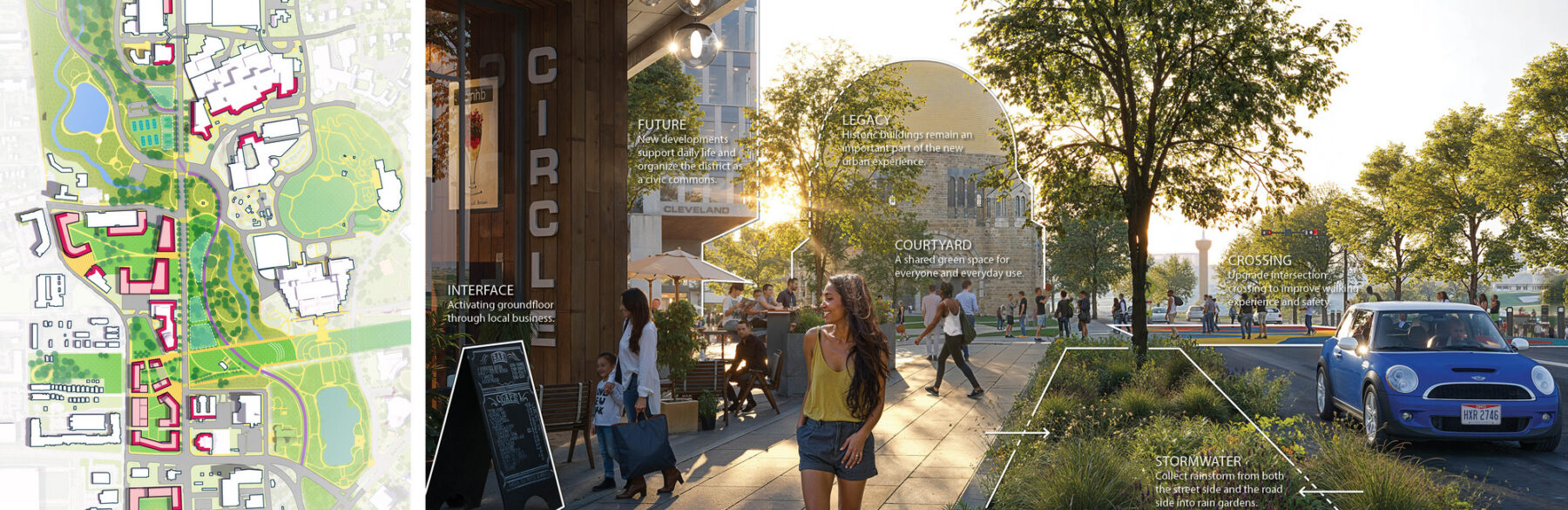
East 105th Street is reimagined as a vibrant urban corridor, with active frontages and community-centered ground-floor uses that strengthen daily life along the street.
Each signature move is calibrated to a distinct spatial condition within the district, providing University Circle with a more legible civic structure. Along East 105th Street, targeted crossings, strengthened edges, and neighborhood-serving infill transform an arterial corridor into a more humane seam between the district and the communities around it. In Uptown, improved intersections, active uses, and cohesive streetscape design strengthen an east-west spine of daily life, while along the Harrison Dillard Trail, redesigned underpasses and clearer crossings transform a fragmented route into a dependable north-south corridor.
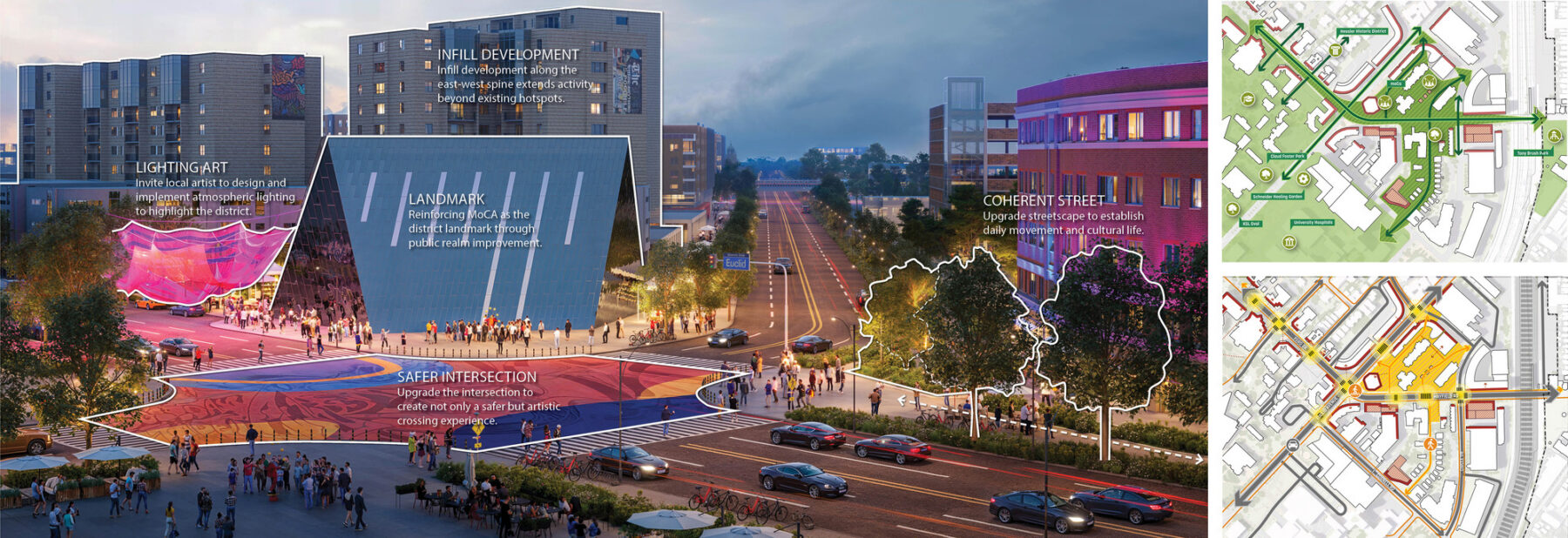
Infill development along the east–west spine strategically repairs gaps, reinforces a continuous walking experience, and extends activity beyond existing hotspots.
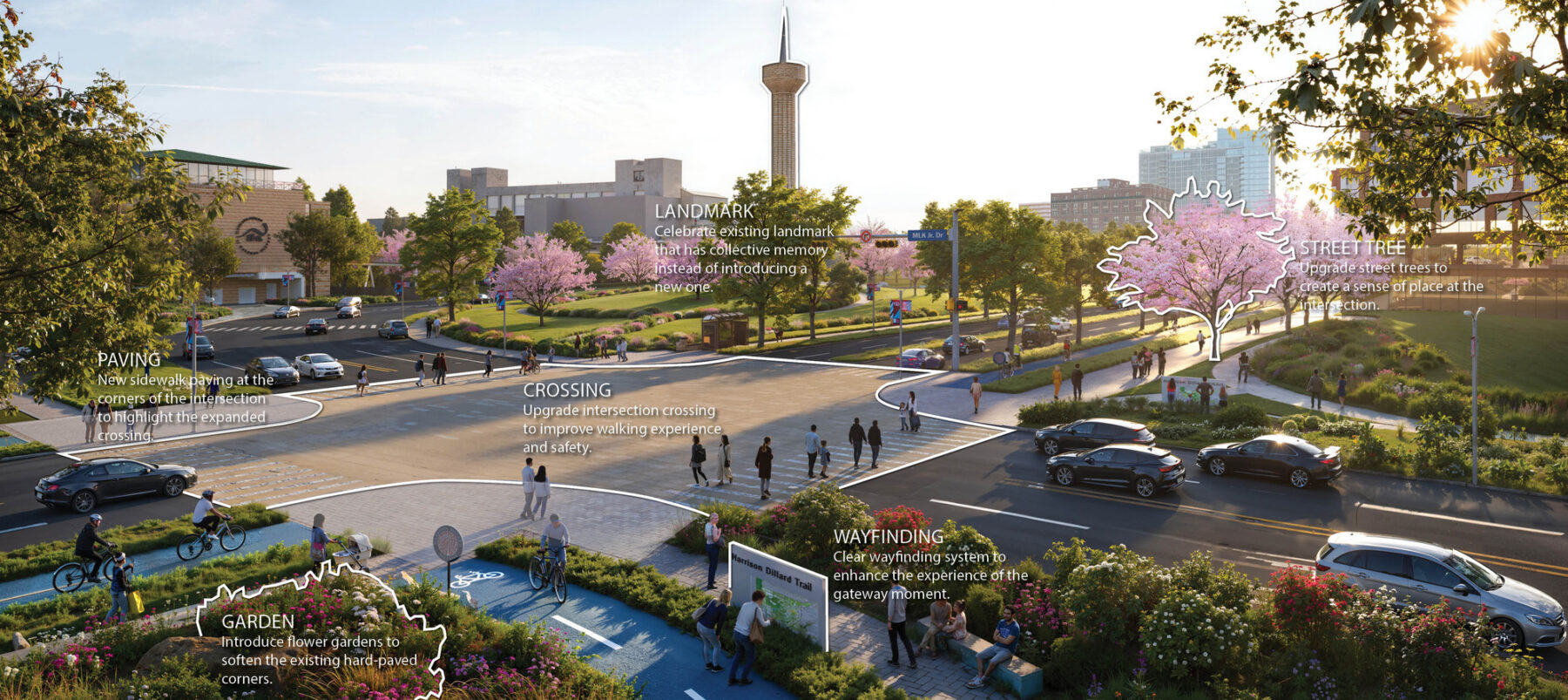
Districtwide streetscape improvements prioritize pedestrian and bicycle safety, calm traffic, and help make University Circle more walkable, comfortable, and connected.
At Rockefeller Park South, the removal and reconfiguration of redundant roadways reunify the landscape and create a safer, more generous public realm for students, residents, and visitors. At Wade Oval, a multipurpose pavilion, themed gardens, interactive playscapes, shade, seating, and a potential elevated canopy walk with views to the downtown skyline and sunsets over Lake Erie recast the district’s symbolic center as a park that functions on both the big day and the everyday. Together, these moves give University Circle a clearer structure, a deeper sense of welcome, and a public realm commensurate with the stature of its world-class institutions.
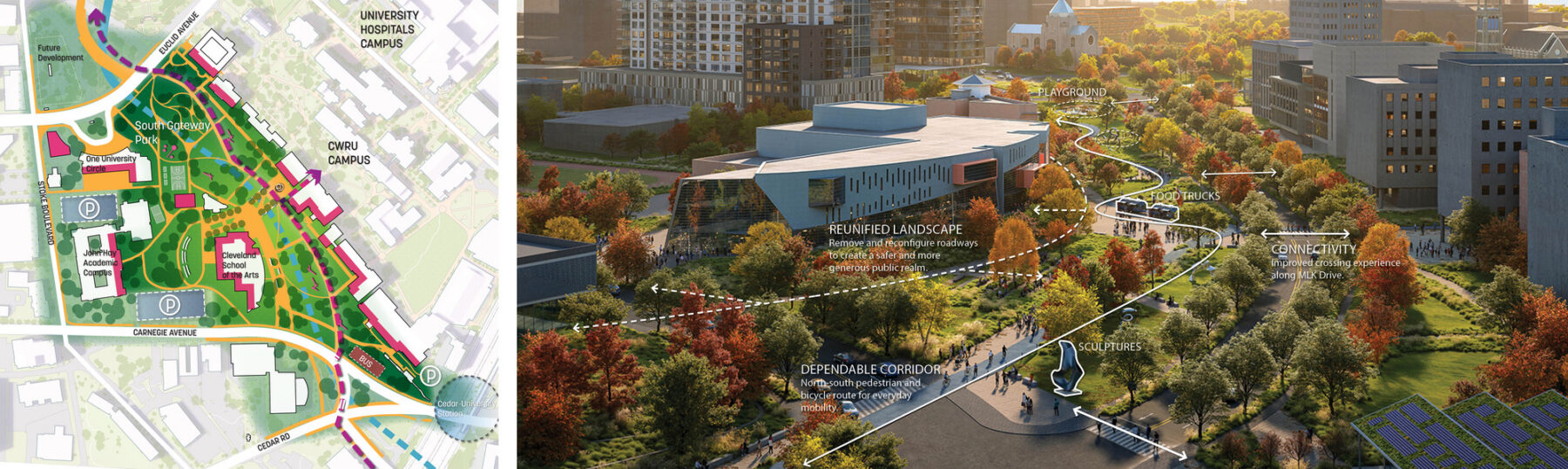
By reorganizing the roadway network, Rockefeller Park South creates more open space directly accessible to students at John Hay High School and the Cleveland School of the Arts.
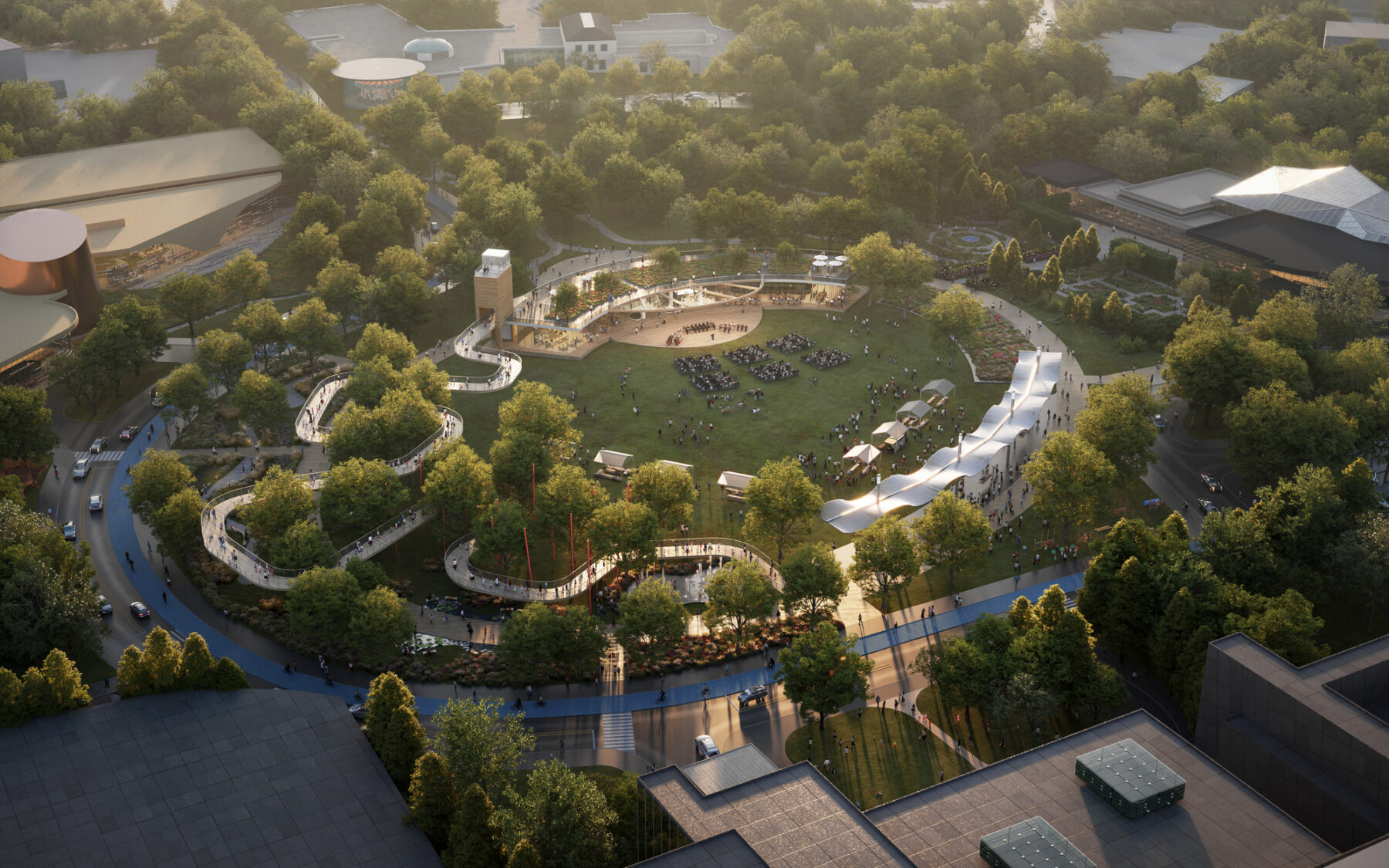
New amenities including a pavilion, dedicated stage, shaded seating, garden rooms, and a potential canopy walk with views to Lake Erie and the downtown Cleveland skyline support events and encourage people to linger in Wade Oval.
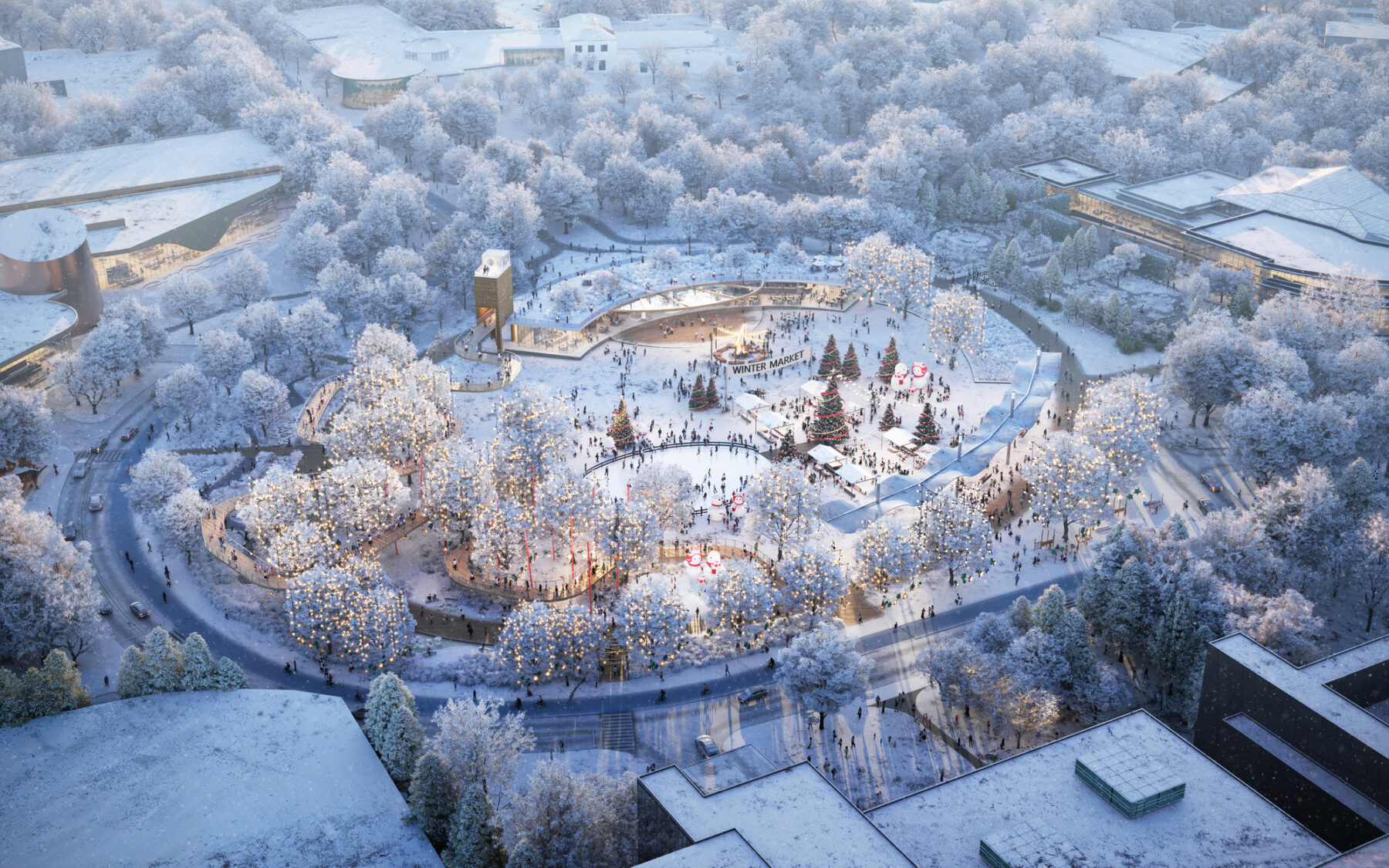
Designed for year-round use, Wade Oval remains active and welcoming across seasons, supporting winter gathering, cultural programming, and everyday public life at the heart of University Circle.
The plan offers more than a future image of the district; it sets the conditions for implementation, establishing a shared civic framework through which capital projects, public investment, philanthropy, operational decisions, and long-term stewardship can reinforce one another over time. What emerges is a path for University Circle to become more connected, more equitable, and more coherent, with a public realm commensurate with the stature of its institutions and a civic life more fully shared with the communities around it.

Near-term investments focus on catalytic sites and corridors where early action can spark visible change, strengthen daily life, and build momentum across the district.
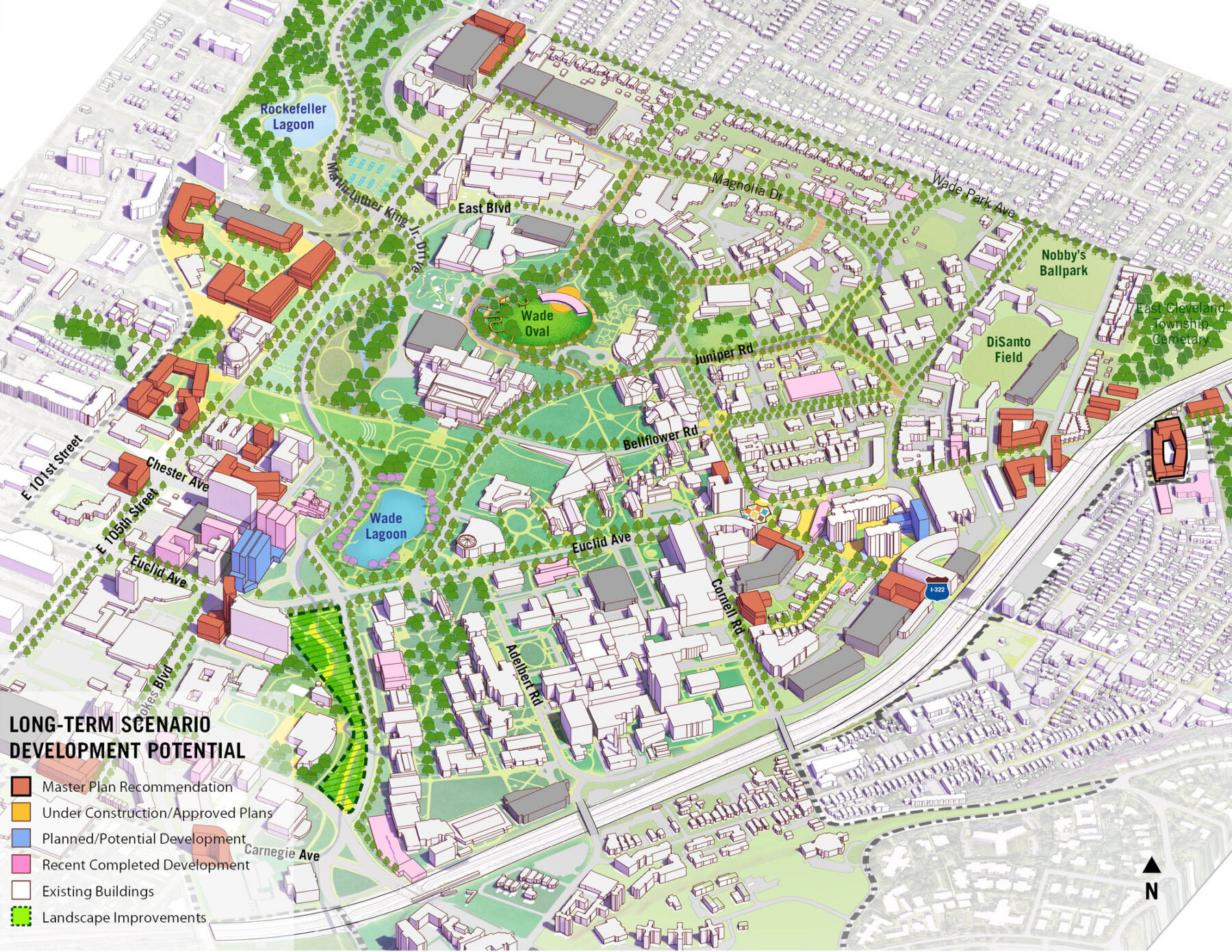
Long-term growth opportunities imagine a more complete University Circle, where sustained investment knits together neighborhoods, expands opportunity, and supports a more vibrant district over time.
For more information contact Michael Grove.