Empowering the next generation of leaders in technology and design through the power of “making”
Tecnológico de Monterrey Carlos Alvarez Design and Engineering Center
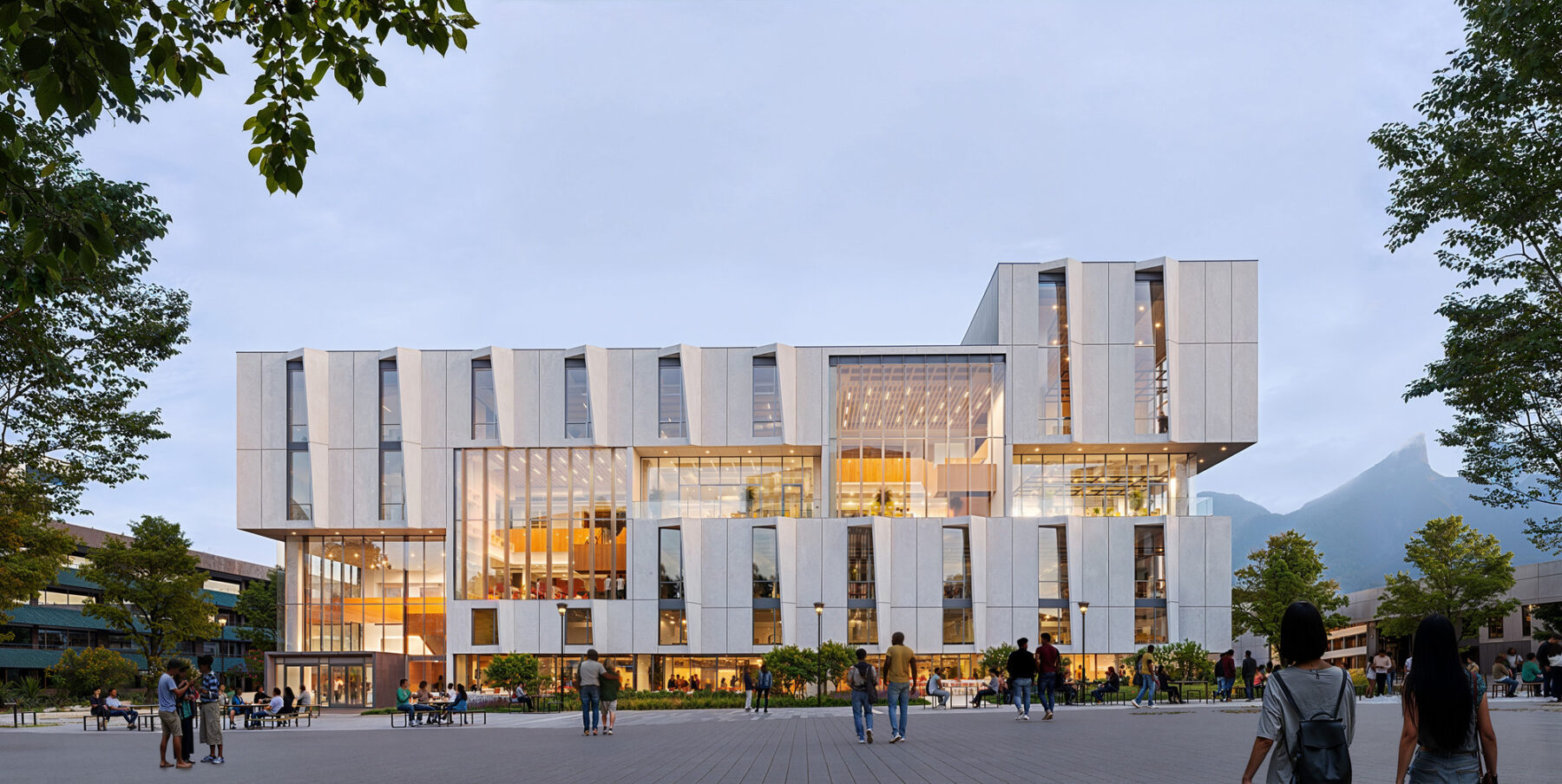
The new Carlos Alvarez Design and Engineering Center (CDI) at the Tecnológico de Monterrey is an innovative academic space that redefines collaborative learning. Centered around the ethos of “making” through experimentation, prototyping, and problem-solving, the project is set to inspire creativity, drive innovation, and empower the next generation of leaders in technology and design.
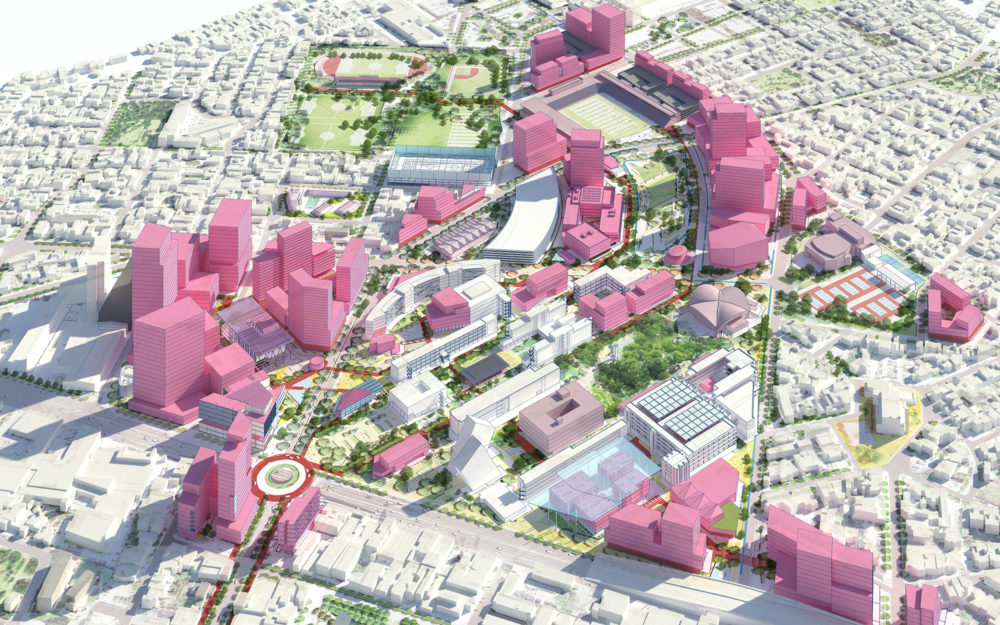
The Carlos Alvarez Design and Engineering Center was born out of the Sasaki-led urban regeneration plan. Completed in 2014, the plan aims to transform the campus into a pedestrian-friendly, sustainable, and community-centered environment, positioning the university as a driver of innovation and urban regeneration in Monterrey. One of the central initiatives of this plan was to create a new gateway at the southern end of campus and establish a hub for engineering and design. Anchoring this new gateway, the CDI brings together interdisciplinary labs and learning spaces to address real-world challenges.

Sasaki’s 2014 Urban Regeneration Plan outlined the vision for the campus’s long-term development and the transformation of its surrounding neighborhoods into a vibrant, dynamic district.
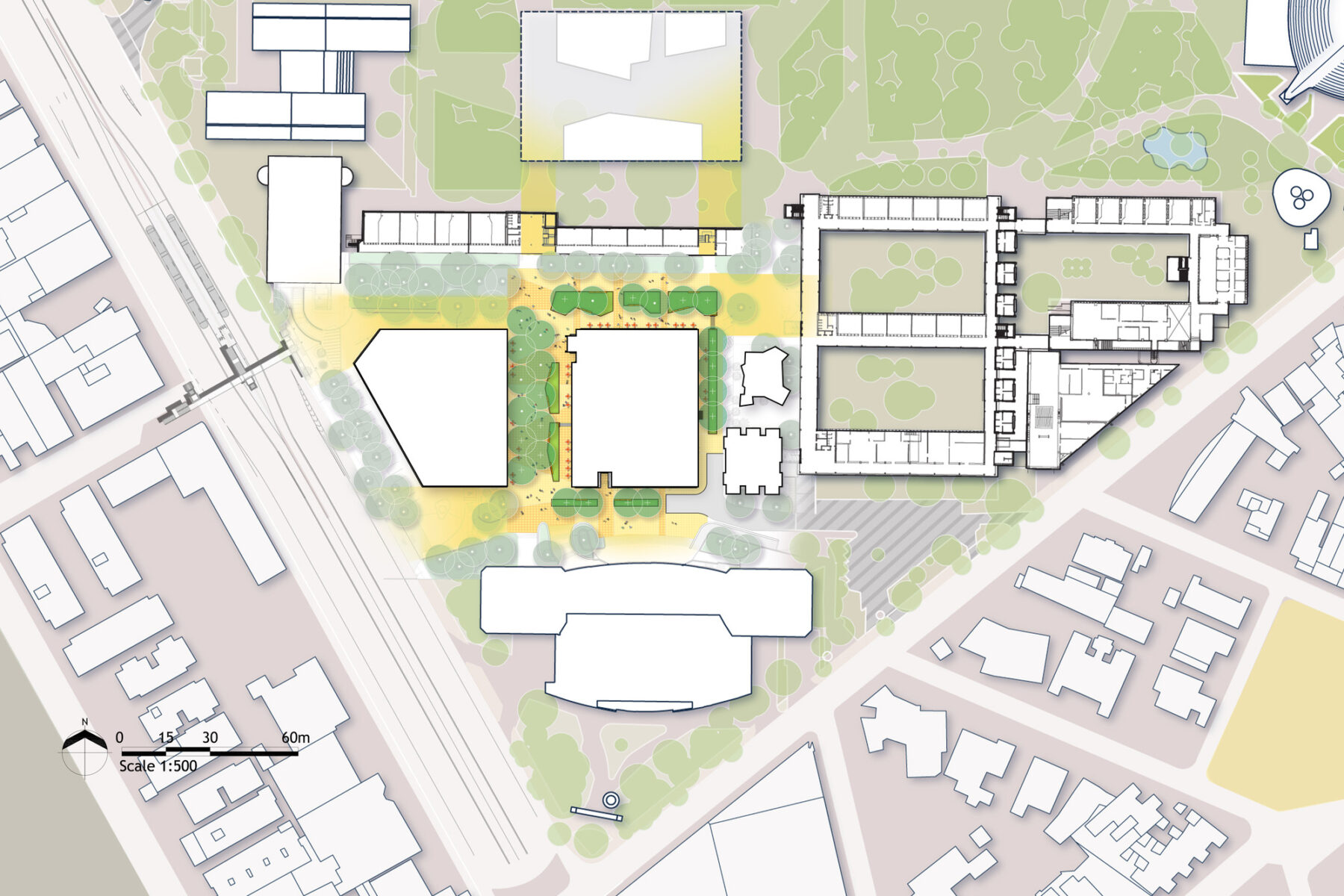
Phase 1 of the Carlos Alvarez Design and Engineering Center anticipates physical and programmatic connections to its Phase 2 counterpart.
The first phase of the Carlos Alvarez Design and Engineering Center anticipates physical and programmatic connections to its future counterpart, turning the building’s main address and exterior space into the center and crossroads of a larger campus complex. The 90,416 square foot building will leverage Monterrey’s fabrication and manufacturing industries while integrating design, sustainability, and engineering. It will include spaces for prototyping, destruction testing, fabrication, among other overlapping programs. The building’s design is driven by an ethos of experimentation and problem-solving. The glazed openings in the facade will show the activity inside the building with an ascending series of spaces that culminate in a “pitch space” for presentations.
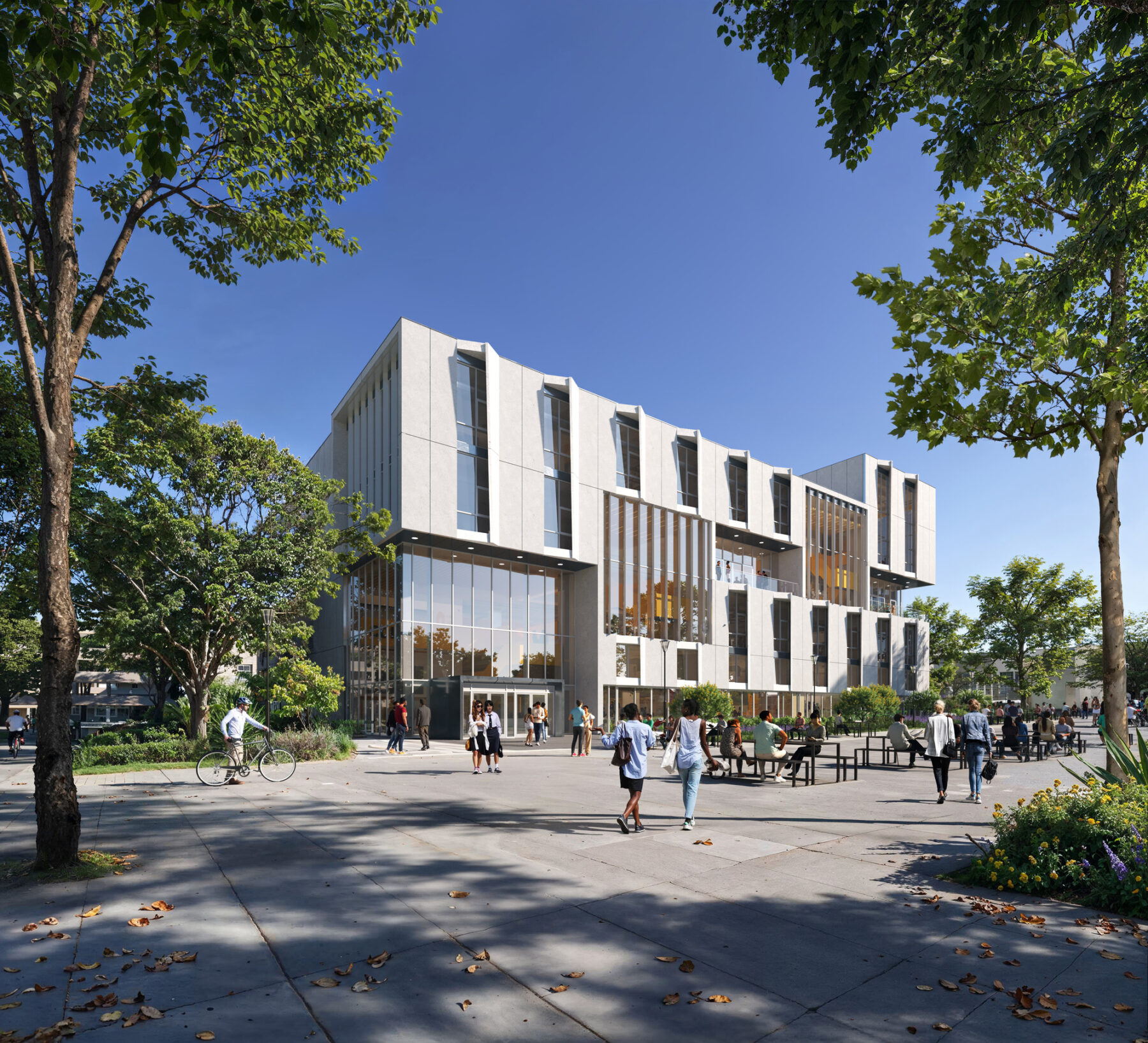
Expansive double-height glazed sections punctuate the elevation, revealing key interior spaces and providing framed views of the surrounding campus and mountains.
Embodying the ethos of experimentation
The multidisciplinary hub is made up of four levels, each offering dedicated spaces to a series of specialized labs. Its design is organized around a dynamic ribbon of public spaces that weaves upward through the building, linking shared amenities across levels and defining the public circulation sequence. The most active programs—prototyping labs, collaboration areas, and model shops—animate the facade along the public promenade, and reveal the energy within. Interconnected double-height volumes punctuate the building, their expansive windows offering glimpses within, while framing sweeping views of the campus, city, and surrounding landscape.
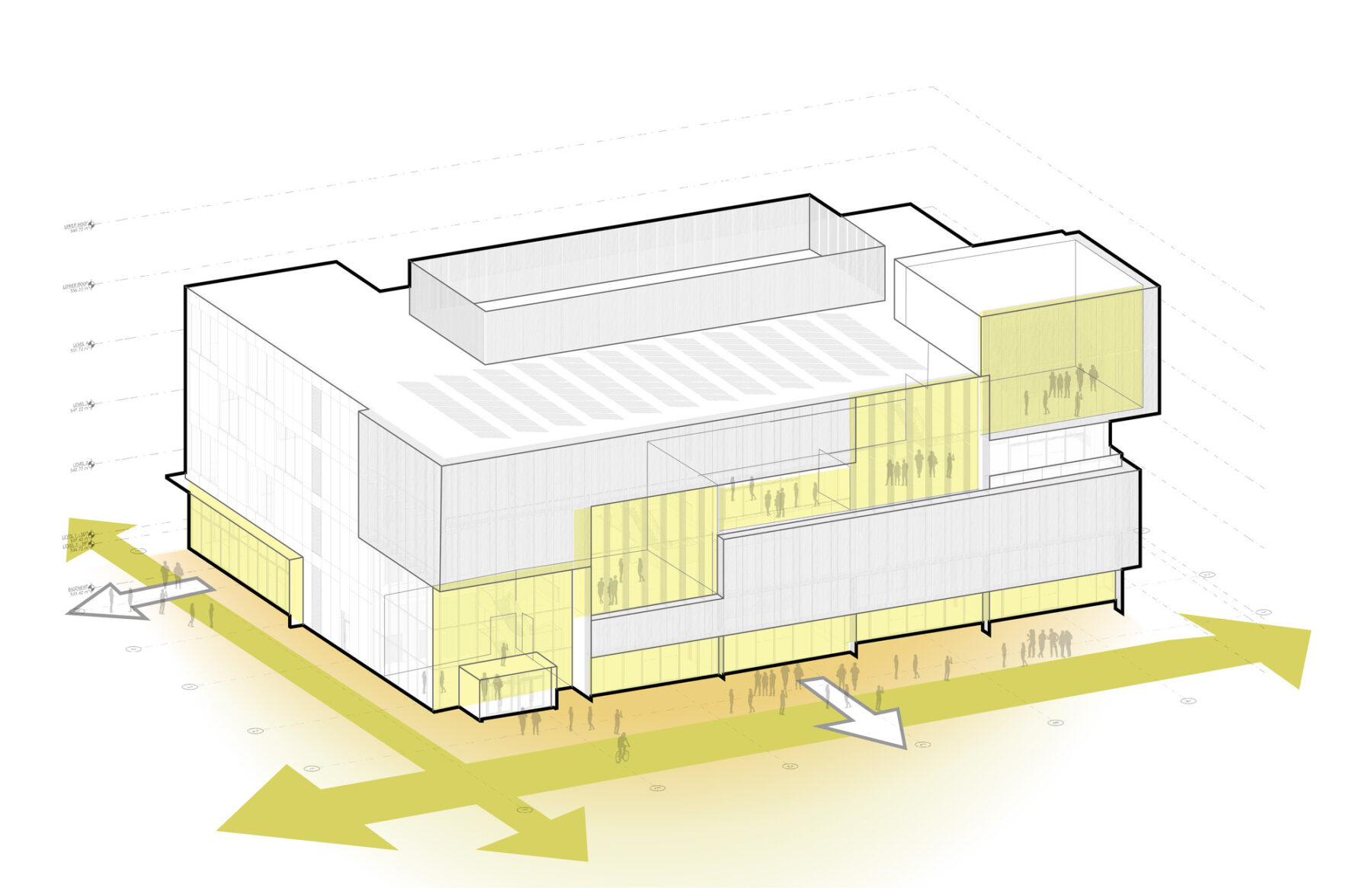
The most active spaces animate the facade of the building and showcase the activities inside.

From the exterior, an ascending ribbon of public spaces defines the building’s public circulation sequence tying shared resources across all floors.
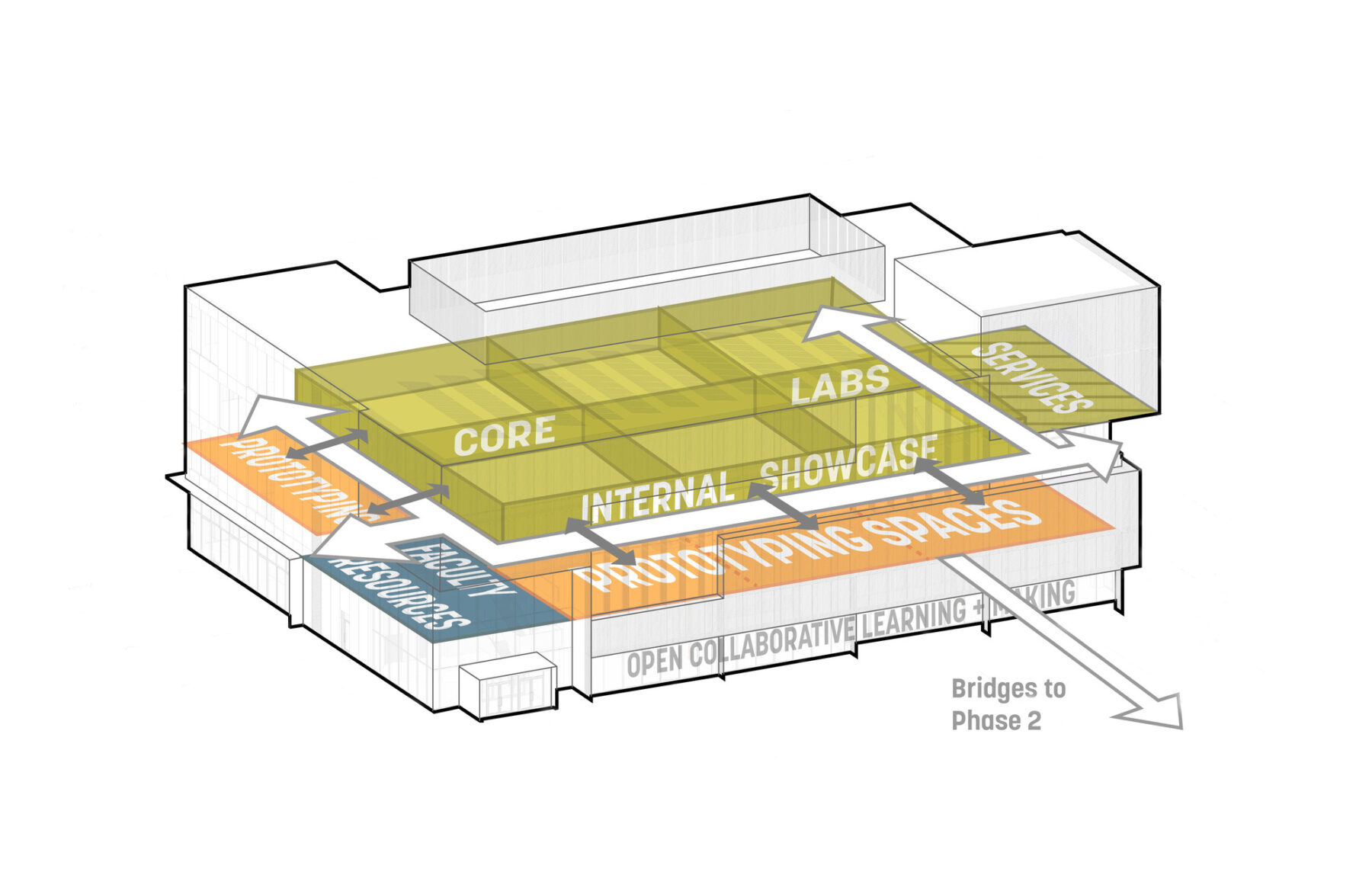
The building core labs constitute the heart of the building.
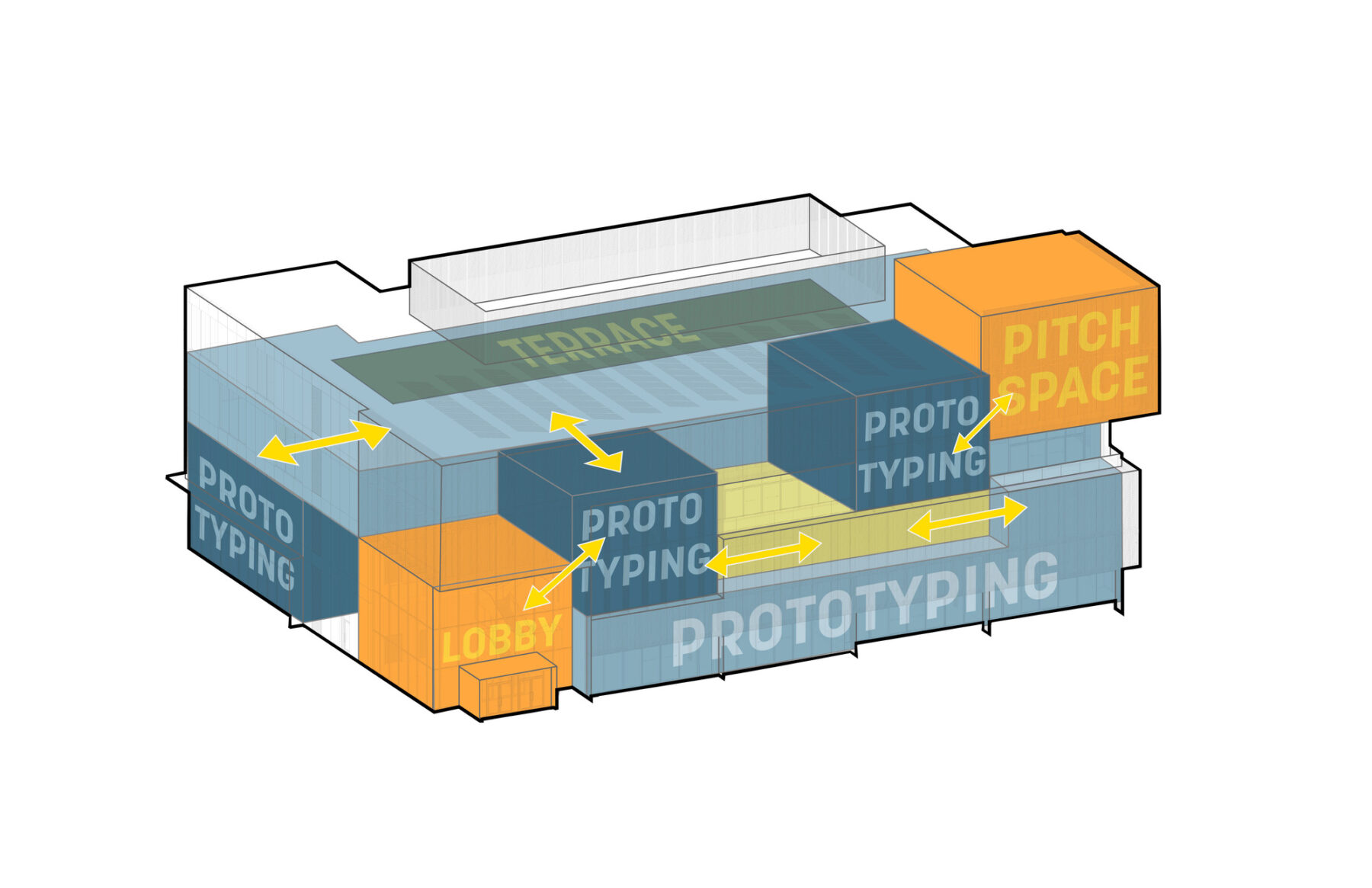
A series of interconnected 2-story spaces organize the largest program components providing oblique visual connections.
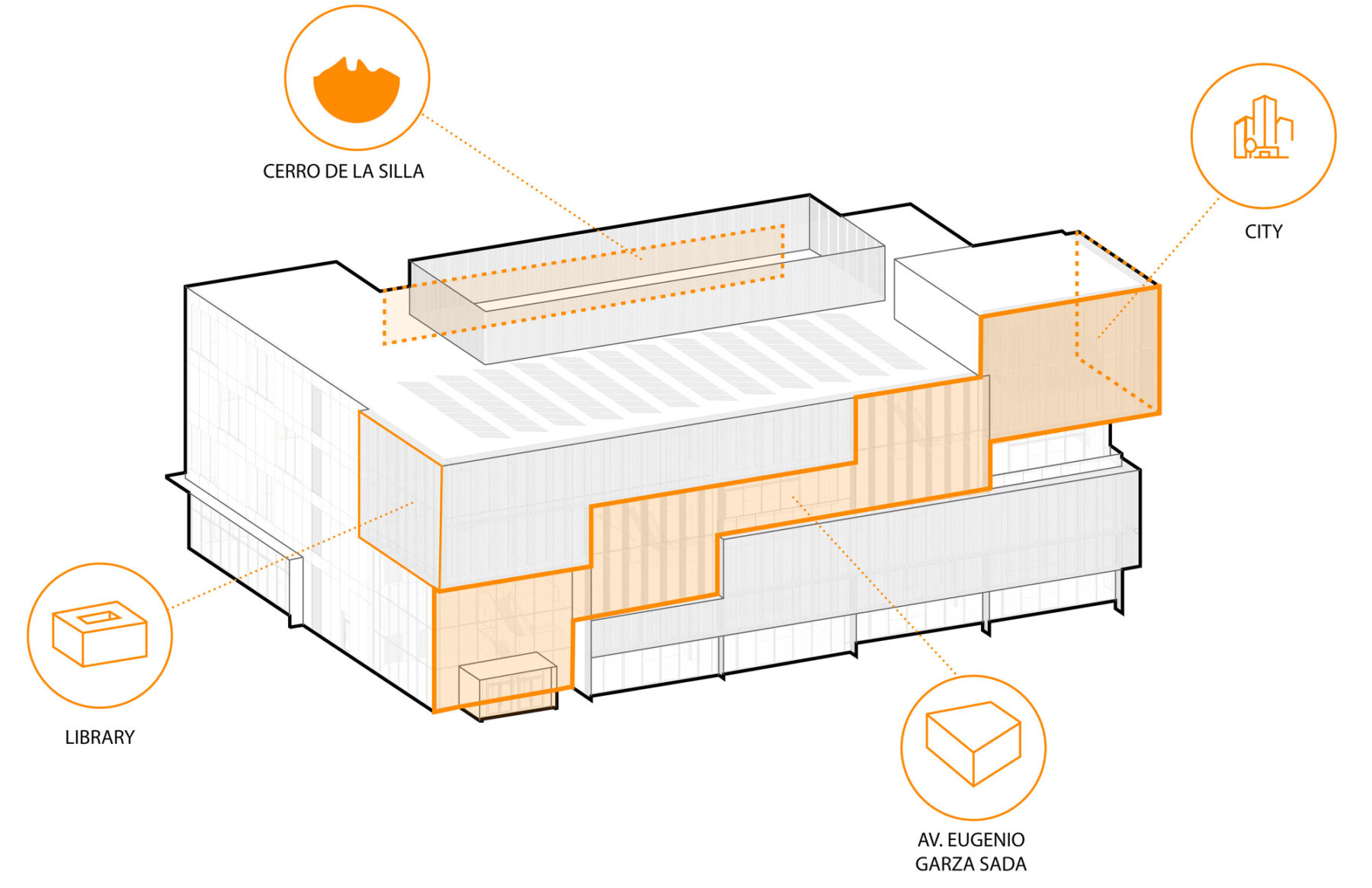
Key program and social areas located at multistory connective spaces are framed as oversized windows and portals that showcase the activity within them, looking back at the ecosystem, the campus, the city and the landscape backdrop beyond.
The most active spaces animate the facade of the building and showcase the activities inside.
From the exterior, an ascending ribbon of public spaces defines the building’s public circulation sequence tying shared resources across all floors.
The building core labs constitute the heart of the building.
A series of interconnected 2-story spaces organize the largest program components providing oblique visual connections.
Key program and social areas located at multistory connective spaces are framed as oversized windows and portals that showcase the activity within them, looking back at the ecosystem, the campus, the city and the landscape backdrop beyond.
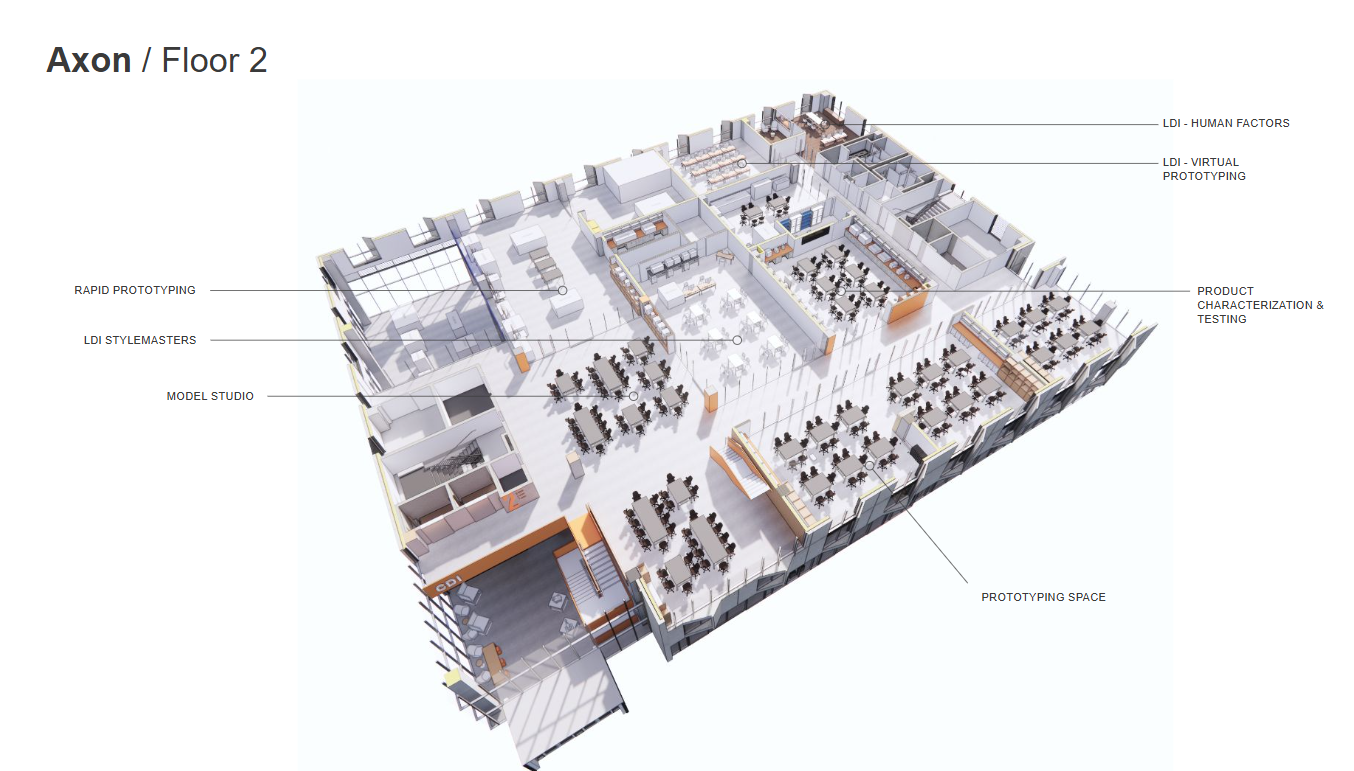

The lower two floors feature the fabrication and prototyping spaces. Designed as flexible, hands-on environments that foster creativity and experimentation, these spaces are arranged to support both fabrication and rapid prototyping, with careful attention to circulation, accessibility, and safety. On the upper floors, specialized laboratories form the building’s core and support spaces to foster a culture of experimentation and discovery. The result is an inviting, interconnected environment where learning, making, and innovation are both celebrated and put on display.
Sustainability
In order to respond to the hot and arid conditions present throughout the year, the exterior envelope will be a high-performing construction, and building massing will utilize passive design to reduce energy peak loads and the size of mechanical systems. Locally sourced products are prioritized, with a heavy focus on reductions to embodied carbon and durability. Building life-cycle and embodied carbon modeling are used to inform decision-making and to achieve higher quality construction while mitigating emissions.
Prioritizing renewable energy and water conservation, PV panels will be located on the roof and low-flow fixtures will be utilized to reduce building water consumption. Stormwater management will be controlled through numerous rain gardens and storage cisterns in the nearby Expedition building, enabling these systems to be visible and part of the biophilic design strategy. Additional canopy coverage, site planting, as well as localized green roofs will all improve human comfort and reduce the heat island effect.

Inside, plywood shelving, pegboard walls, acoustic felt, and polished concrete floors establish a durable yet inviting environment that supports collaboration and hands-on work.
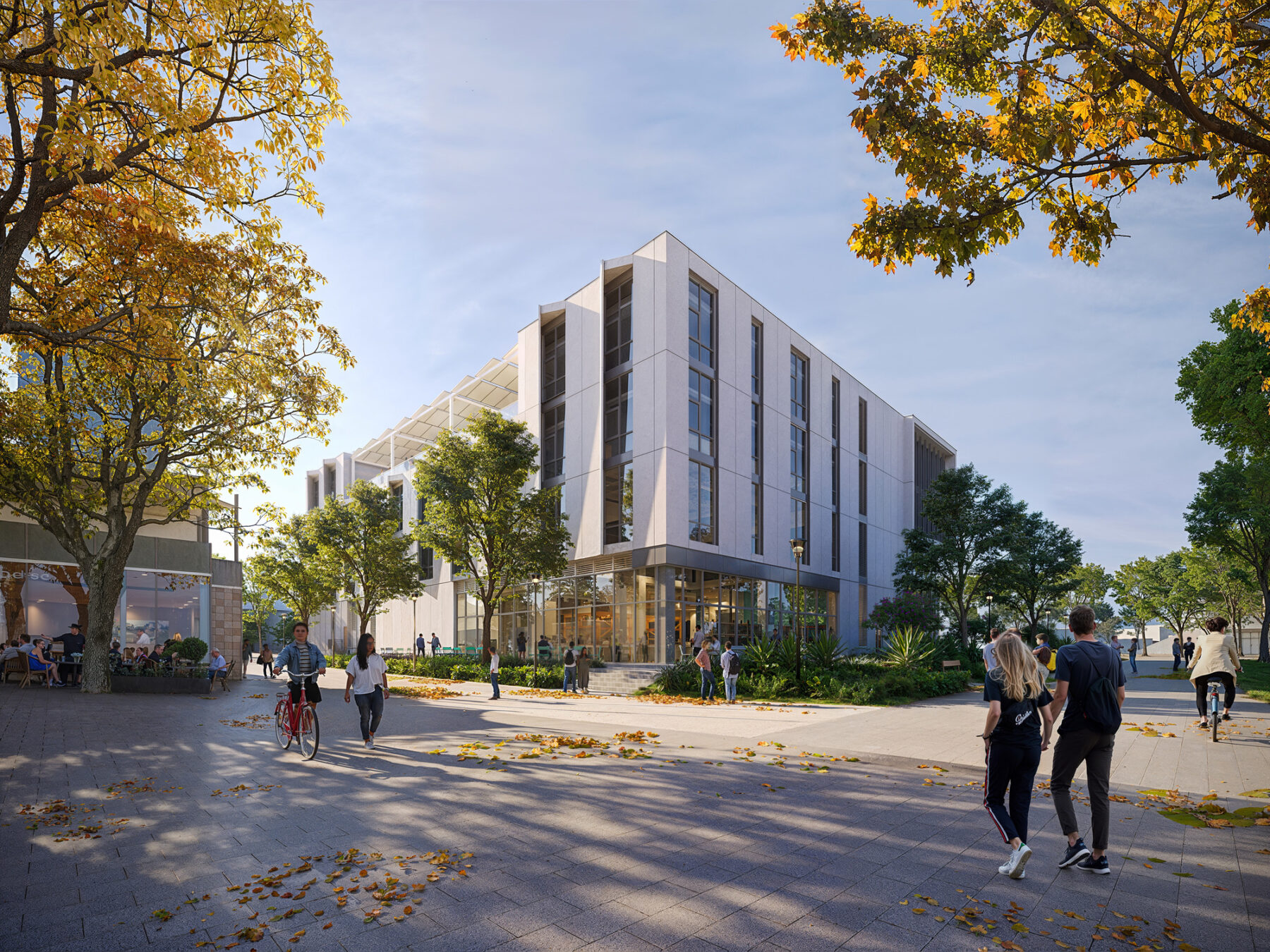
Prototyping spaces open directly to the terraces on the ground floor, extending activity and exhibition areas outdoors.
Integrating with the campus and beyond
The surrounding landscape encompasses the design of public areas within the complex, including a central pedestrian promenade, patios, pathways, gardens, and terraces, all contributing to the transformation of the surrounding campus landscape. The design will also introduce a future pedestrian entrance on the main campus thoroughfare Avenida Garza Sada, as well as the development of a new public transportation stop along the avenue.
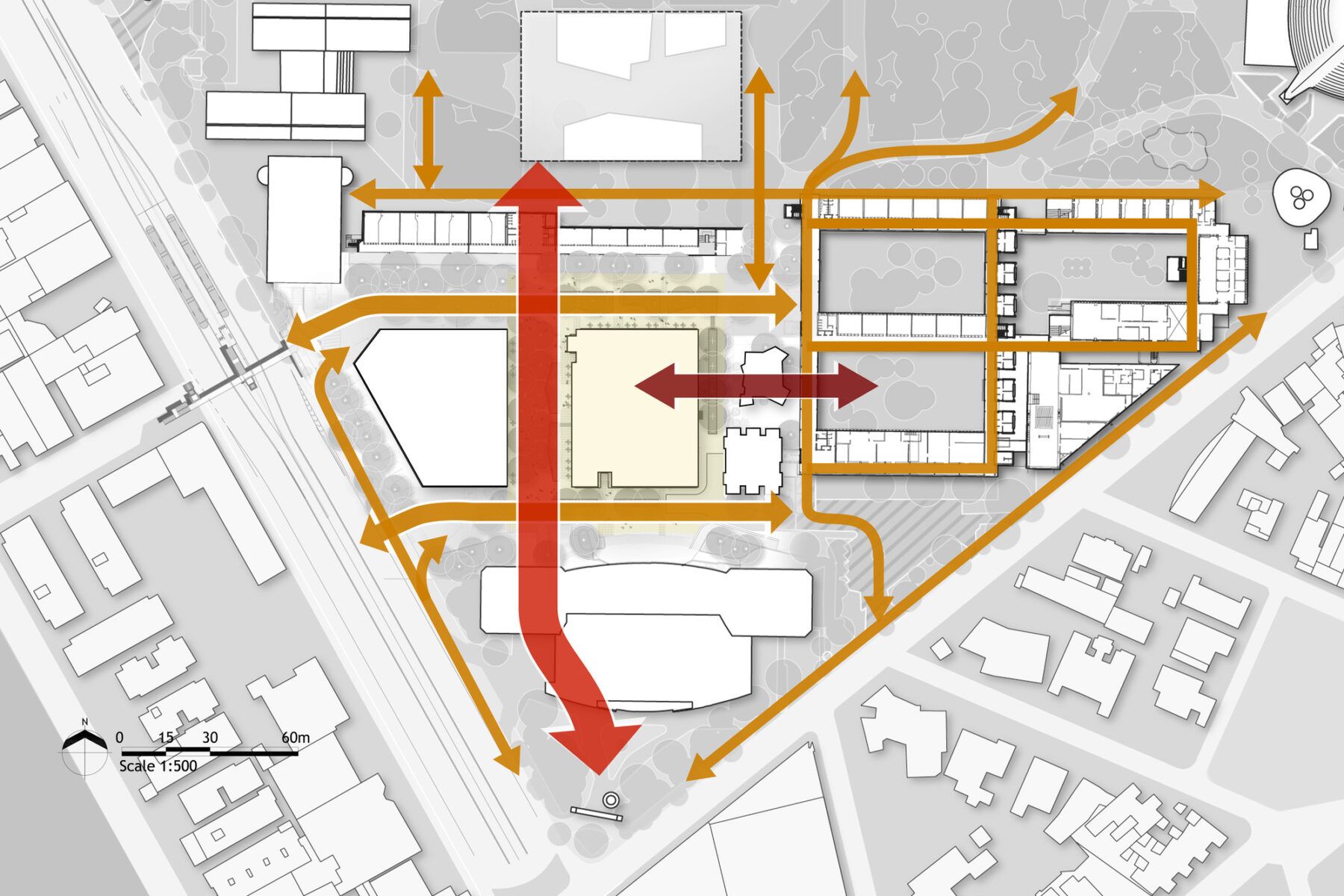
The two phases of the project are positioned on either side of the main north–south pedestrian promenade, with the landscape extending and reinforcing this central axis to unify the new development.

An extended and reinforced main pedestrian promenade will connect the library to the north with the student center to the south, providing a major north-south pedestrian circulation route and expanding outdoor gathering spaces. The promenade design combines paved surfaces with planting islands filled with lush, native vegetation, creating a vibrant and welcoming atmosphere. An east-west pedestrian corridor will extend the building landscape, creating unprecedented synergies between spaces and further enriching the campus’s outdoor experience. Outdoor terraces along the north and west sides expand the building’s activities outward, creating vibrant spaces for gathering and outdoor exhibitions.
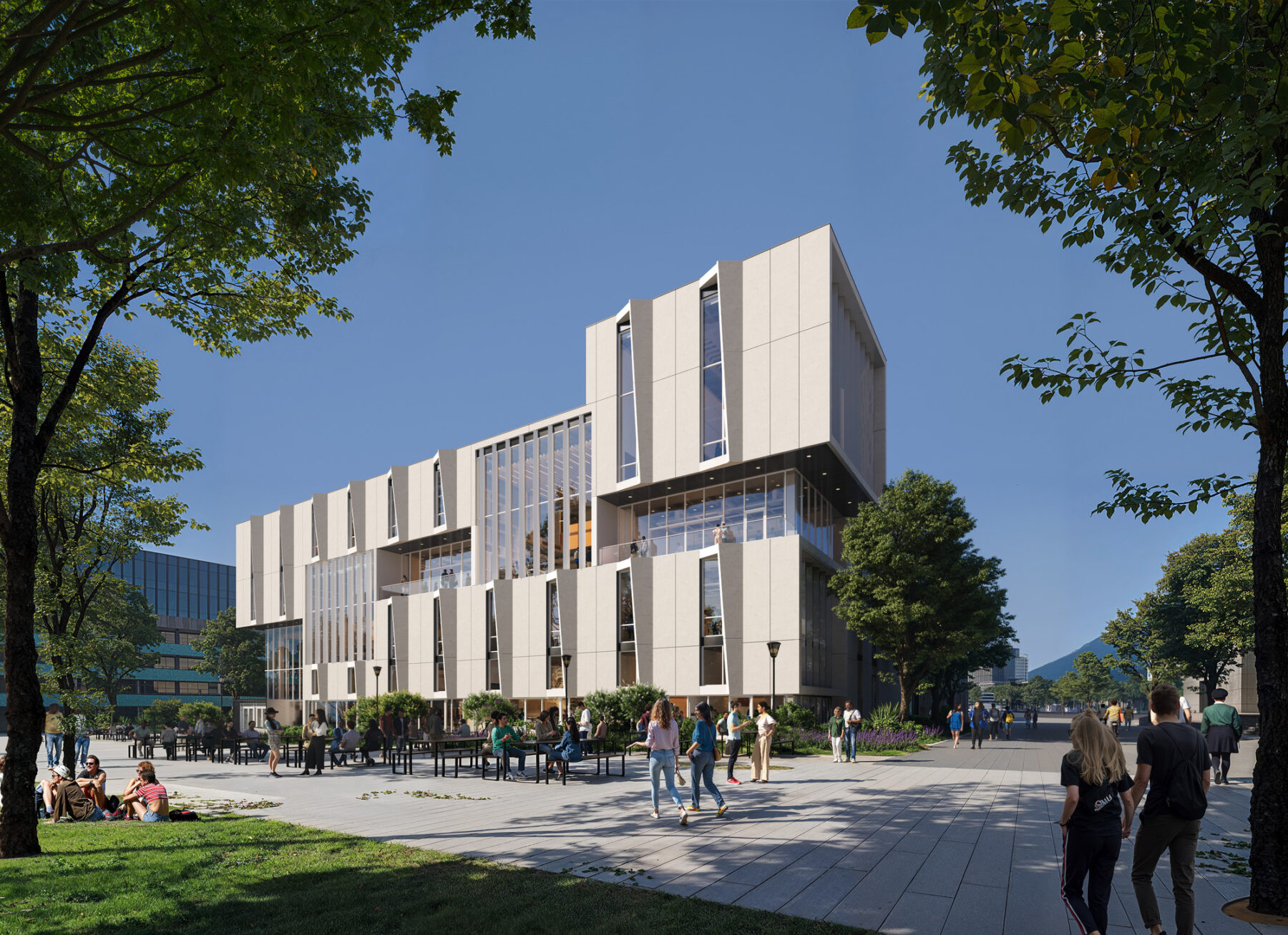
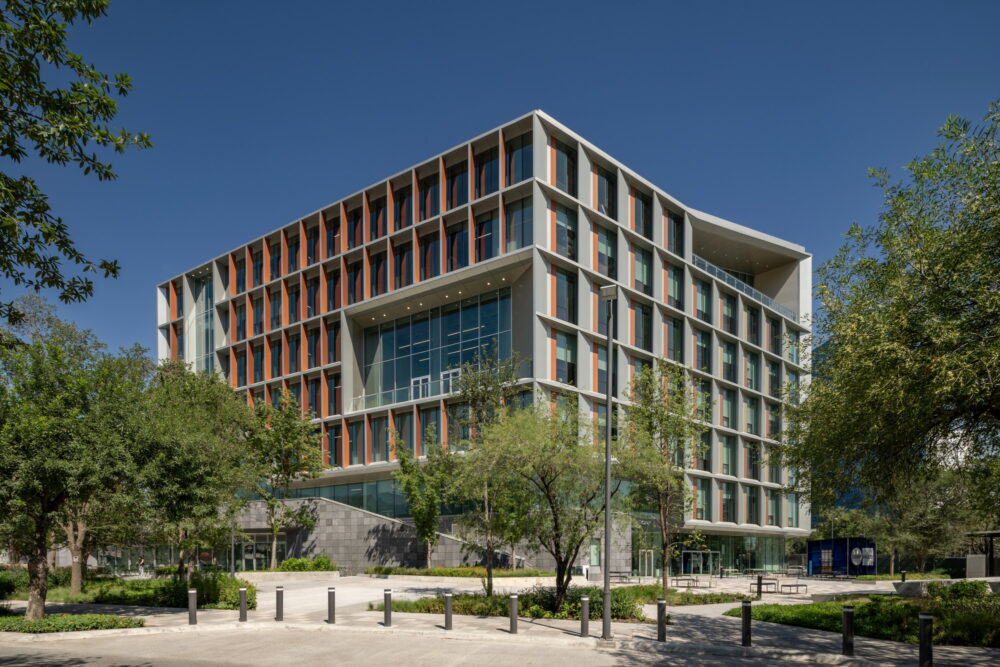
The facade is composed of alternating vertical precast concrete panels and slender glazed openings, creating a pattern that balances solidity with transparency.
This landmark building will embody the Tecnológico de Monterrey’s commitment to 21st-century education, research, and entrepreneurship. Designed with sustainability in mind, it will ensure adaptability for future academic needs and provide accessible spaces for research and engagement with campus, visitors, and beyond.
For more information contact Pablo Savid-Buteler.