Thinking Beyond Codes: Accessible Design with Alexa Vaughn
 Sasaki
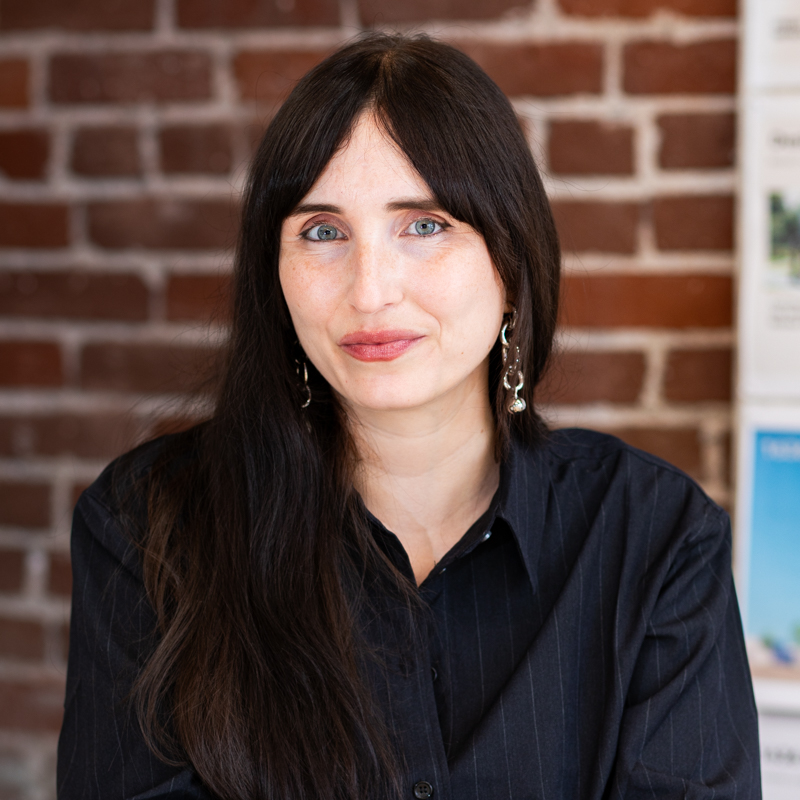
Alexa believes in designing inclusive campuses and landscapes that go far beyond meeting ADA codes. She approaches design as an act of creating joy, not just compliance.
Alexa Vaughn is a landscape designer and accessibility specialist at Sasaki, as well as a PhD candidate in Architecture and Urban Design at UCLA.
At Sasaki, Alexa works on campus planning projects and also helps develop our larger systems thinking and provide QAQC for various projects, all at the accessibility level. Alexa prides herself on being a non-conventional designer, combining formal training in landscape architecture, which she regards as her home discipline, with practice-based research and specialized expertise in accessibility. Sasaki’s integrated dynamic has allowed her to thrive in this interdisciplinary zone. She is able to work across scales, zooming in and out, and “mingle” amongst the different disciplines at Sasaki, enabling her to think creatively across almost every part of the design process.
Alexa attributes the rich nature of the landscape architecture profession to the diverse backgrounds and perspectives of the professionals who populate the field. “We have so many different people practicing with different experiences. I see myself as just one part of that compendium of specializations and Sasaki has been so supportive of that, allowing me to find a home in the profession.”
My work at Sasaki has largely been on the university level, with engagement and QAQC work mixed in. On the campus side I’ve worked on projects at larger research universities, as well as the Gallaudet Master Plan, which is a dream project for me. I also participated in the engagement efforts of the Santa Monica airport conversion and helped review the work on Primos Park in Denver. That project was really interesting because we were trying to retain its natural features while also making sure that it’s as accessible as possible.
The problem with a lot of offices these days is the fact that they work in isolation. That’s not really how projects work, especially the ones that we work on with campuses and large parks and public spaces. It really pays off to work together.
I’ve been a student for almost all my life, so I know how formative campuses are. They have a public nature to them, even in urban contexts. Applying system-based thinking to campuses allows me to zoom out, work between different disciplines, and embrace ambiguity. With campus planning, we treat the landscapes as a form of urbanism. The environment is regarded as a whole system and microcosm of space that is self-sufficient and unique. At Sasaki, we lead with landscape and acknowledge that it is a powerful force. Everyone can enter a building, but less people are using buildings as compared to the spaces in between them.
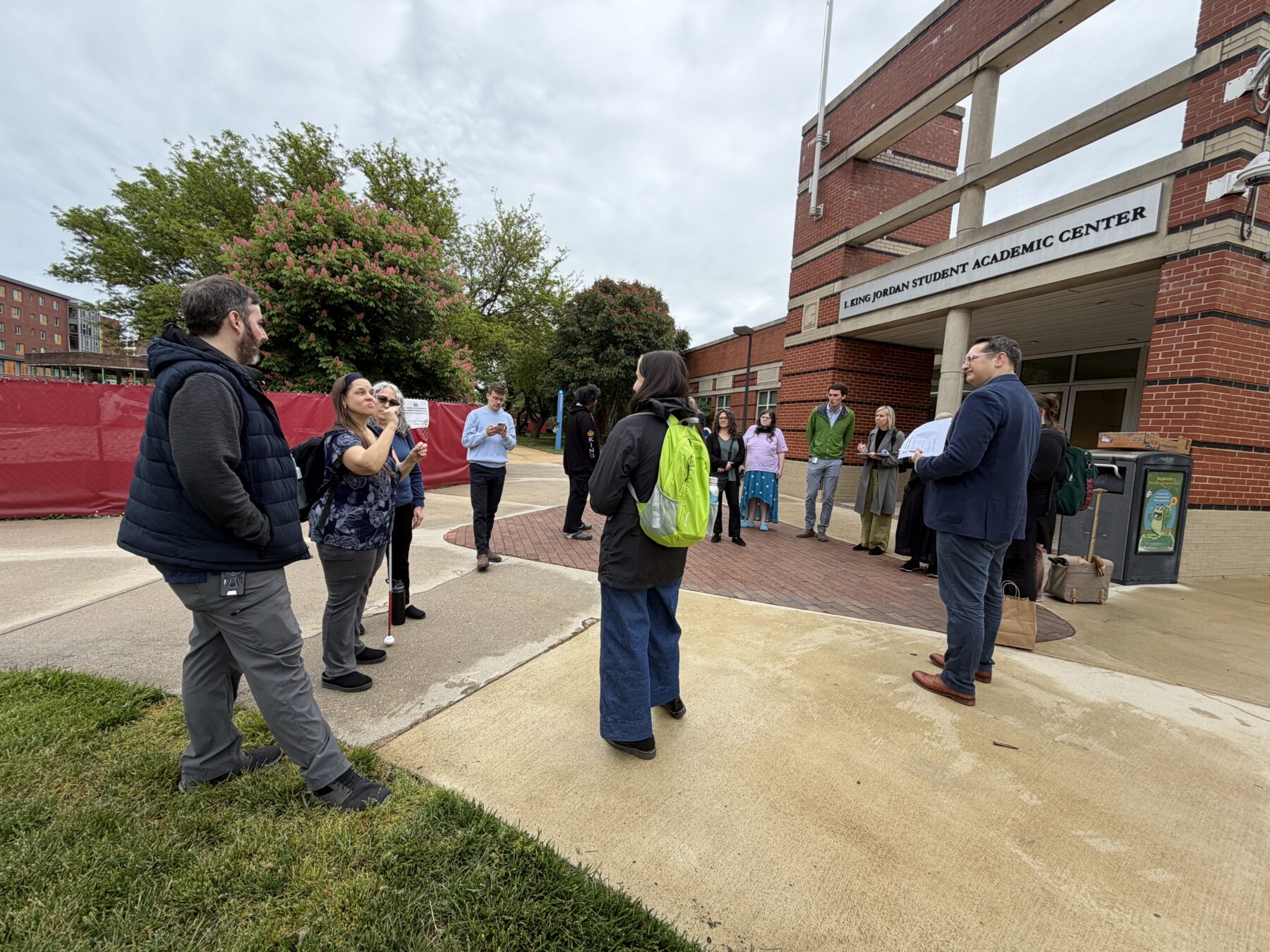
Alexa conducting an accessibility audit at Gallaudet University with Deaf, DeafBlind and DeafDisabled students and faculty.
Sometimes I have to grapple with the unconventionality of this position–I jump around a lot, making smaller contributions to larger projects rather than major contributions to a few. But even if the amount of hours I work on a project is small, focusing on accessibility and inclusion makes a huge impact on the entire project.
Sasaki as an office is prioritizing accessibility, and so are the clients that we are working with. In many of our campus planning projects, accessibility is being ingrained in the process from the start. It’s not something that exists as a separate document. Doing something like that was really powerful because a lot of the time accessibility is an afterthought, and committing to accessibility and inclusions as factors in the design process signifies quite a change. Folks that I’ve worked with in the office have been really eager to learn and I just share with them what I know. That feels like success.
A lot of what I share at these conferences are broad themes on disability and Deaf spaces. This year at ASLA I’m doing an education session and a field session, which will be an accessibility audit with five disabled designers, each with different backgrounds. The whole point is to bring in other disabled experiences and to illustrate what landscapes might look like when our voices are heard. It’s practical research because I want people to understand how to actually apply what I am saying to their own practice. At Sasaki there are so many designs that have accessibility embedded into them. I use these as case studies in my sessions because I want to show what inclusive and accessible design can look like when implemented thoughtfully.
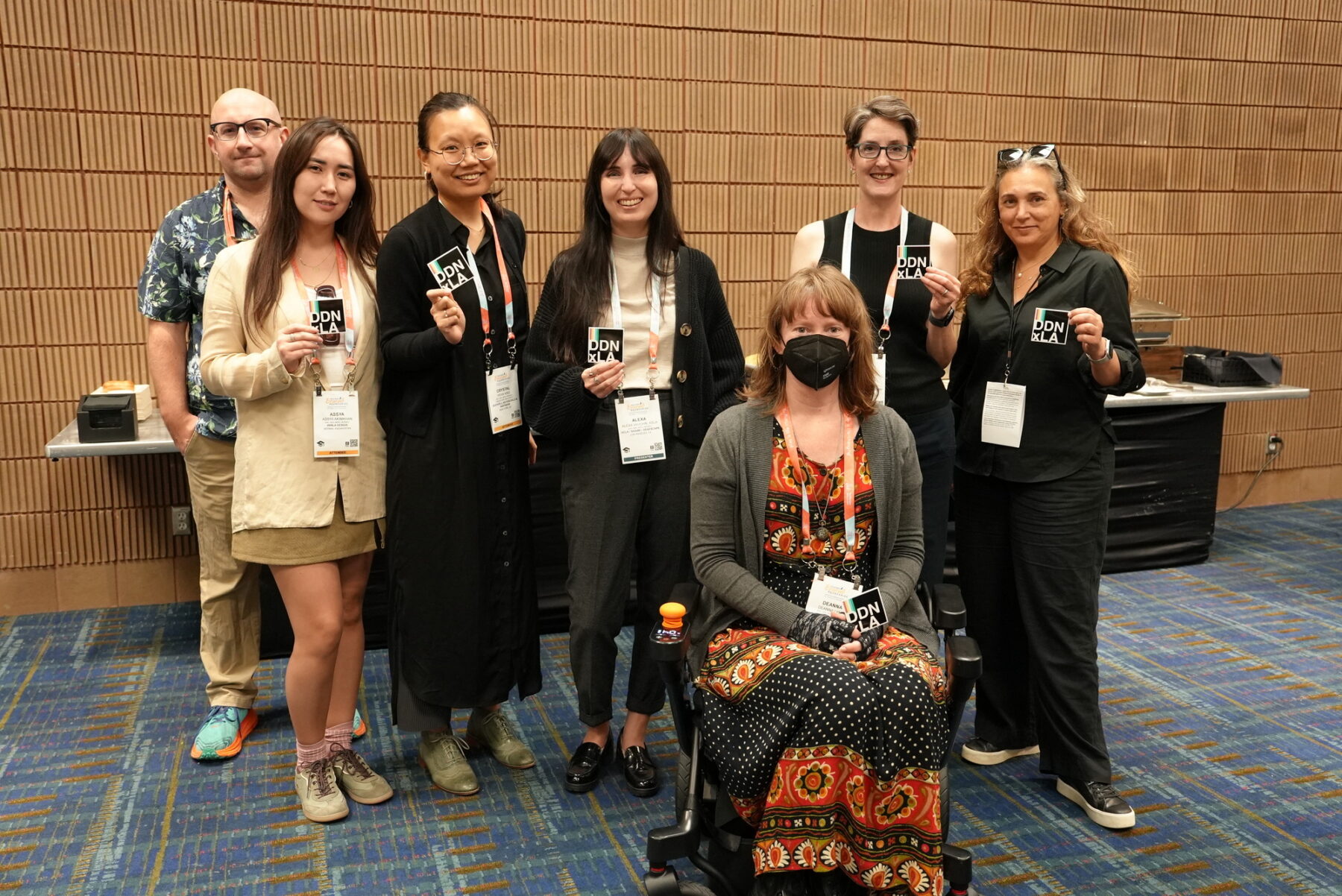
Alexa co-founded the Disabled Designer Network (DDNxLA) with Deanna Lynn, which launched at the 2025 ASLA conference in New Orleans.
The field session is a landscape audit which will explore the relationship between accessibility, joy, and well-being. I am trying to shift the conversation from designing for compliance to designing for joy. Codes can be acts of care but they can also be impersonal. We can expand that act of care by going beyond those codes. Step one is compliance. My work builds upon that compliance with non-legally binding design theories, combined with feedback from the disabled community.
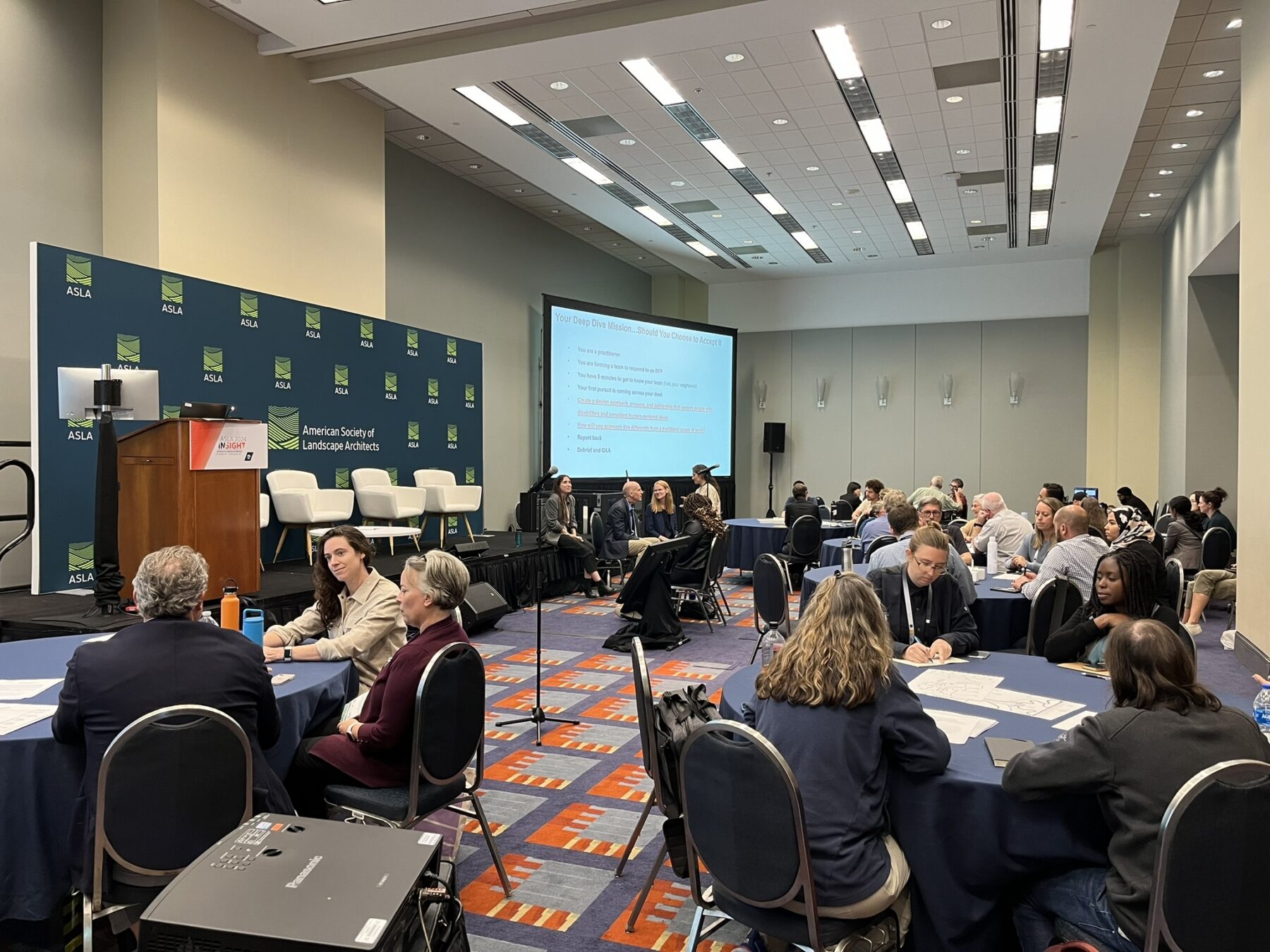
Alexa leading a Deep Dive ASLA session with Ian Scherling, Caitlyn Clauson, and Chris Downey, principal at Architecture for the Blind, on best practices for accessibility and inclusion in the design process, using the Berkeley Accessible Paths and Places master plan as a case study.
I want to encourage other Deaf and disabled designers and landscape architects to come forward and share their experiences. It’s very personal for me. Growing up, I didn’t have any role models to look up to in disability and design so it was really difficult to imagine myself in these spaces. I push myself to look like I’m at the top of my work because I’m so passionate about it, but also because I’m trying to prove that I belong in these spaces.
Designers hold a lot of agency. The built environment affects underrepresented communities more than anything else. We are literally shaping how that environment manifests. There is not much that is more powerful when it comes to creating access.
We need to think about accessibility as a defining factor, not treat it as an afterthought or something that we have to begrudgingly throw into the budget. I hope accessibility trends continue to shift in the direction I’ve seen at Sasaki, with the ultimate goal to think about disability as a social identity rather than as a medicalized condition. We design for so many stakeholders. The Deaf and broader Disabled communities are not an exceptional group, but another group that should be viewed as another stakeholder in the process.
Through my PhD I’m studying the historical forced spacialization of disabilities in medical landscapes. I hope to translate this research into something that is digestible so as to shift the way designers think about disabled people and where we “belong.”
I want to make a more accessible and inclusive world that accepts all sorts of differences and creates spaces where all of us can feel welcome in some way. University design is not a one-size-fits all approach and that’s not the point. The point is to share the table with disabled people, disabled stakeholders, and disabled experts like myself to find solutions that fit more needs than we currently do.