A Fresh Approach to Decarbonizing Design: Start with Planning
Sasaki's new tool allows users to estimate embodied carbon during crucial early design stages
 Sasaki
The University of Minnesota Duluth Campus and Climate Action Plan
The University of Minnesota’s recognition of the mounting impact of climate change on Minnesota and its communities was a key catalyst for the combined Campus and Climate Action Plans. With the Midwest facing warmer temperatures and more frequent extreme weather, a resilient approach to planning is no longer optional. Following the state’s commitment to net-zero greenhouse gas emissions by 2050, Sasaki’s combined Campus and Climate Action Plans align the future of four campuses with the systemwide MPact 2025 Strategic Plan to meet this and other University goals.
Recognizing that a singular, one-size-fits-all approach is insufficient for a diverse state system, the Sasaki design team collaborated with the university and local leaders, campus employees, and UM students to create specialized plans that respond to highly localized variables. These include varying weather patterns, urban and rural contexts, enrollment trends, local infrastructure, and the utilization of existing climate resources. By tailoring infrastructure and design to these specific conditions and client priorities, systemwide goals are met through authentic, site-specific solutions. The combined Campus and Climate Action Plans target UM’s Duluth, Crookston, Morris, and Rochester campuses.
Overlooking Lake Superior and surrounded by natural areas and city parks, the UMD Campus and Climate Action Plan envisions a sustainable and carbon-neutral future. The plan leverages these distinctive and unique physical attributes with decarbonization and resilience strategies to enhance UMD’s mission while building long-term environmental resilience.
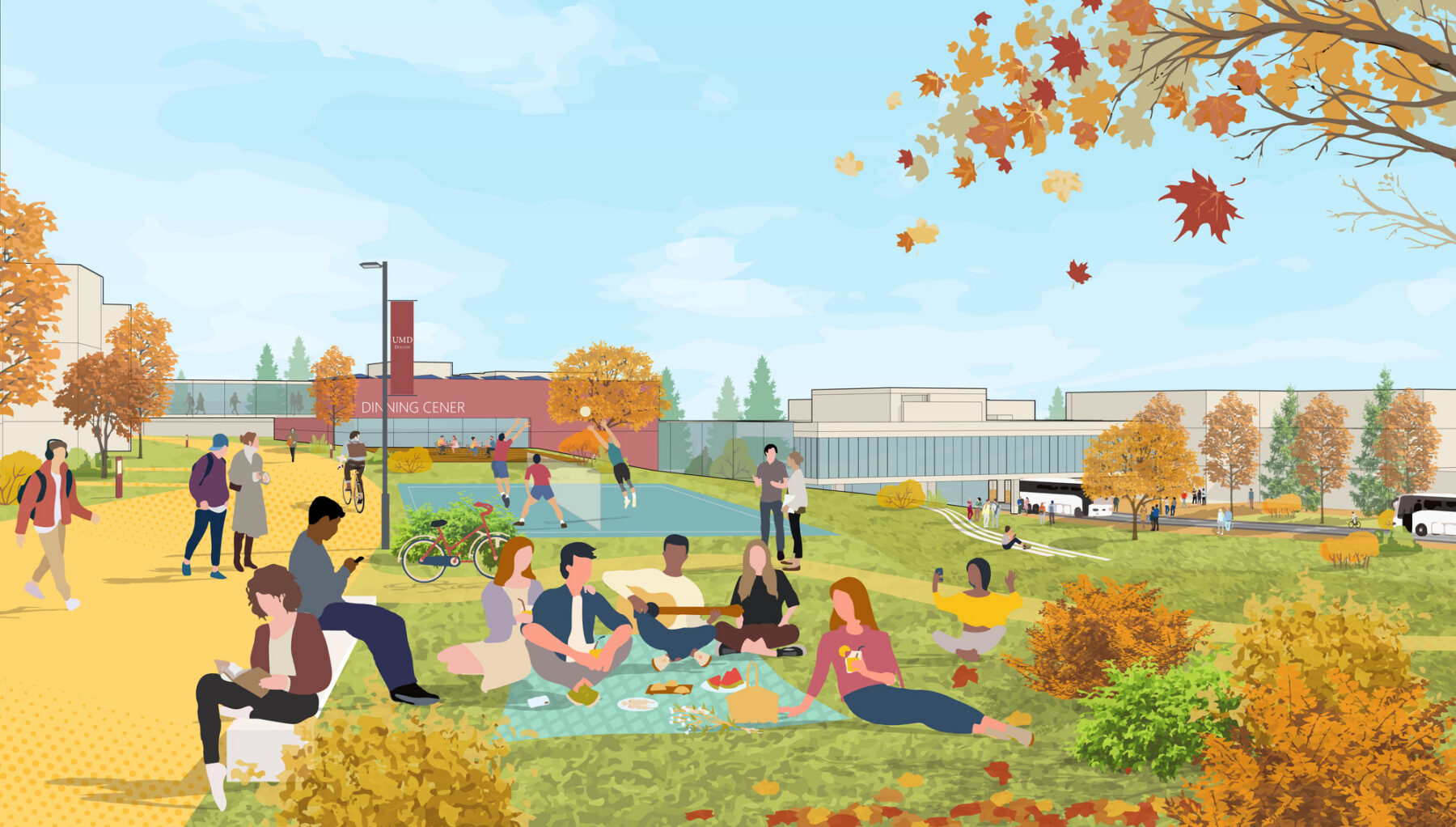
A central outdoor recreation area located over geo-exchange wells is a key feature of the Sustainability Corridor.
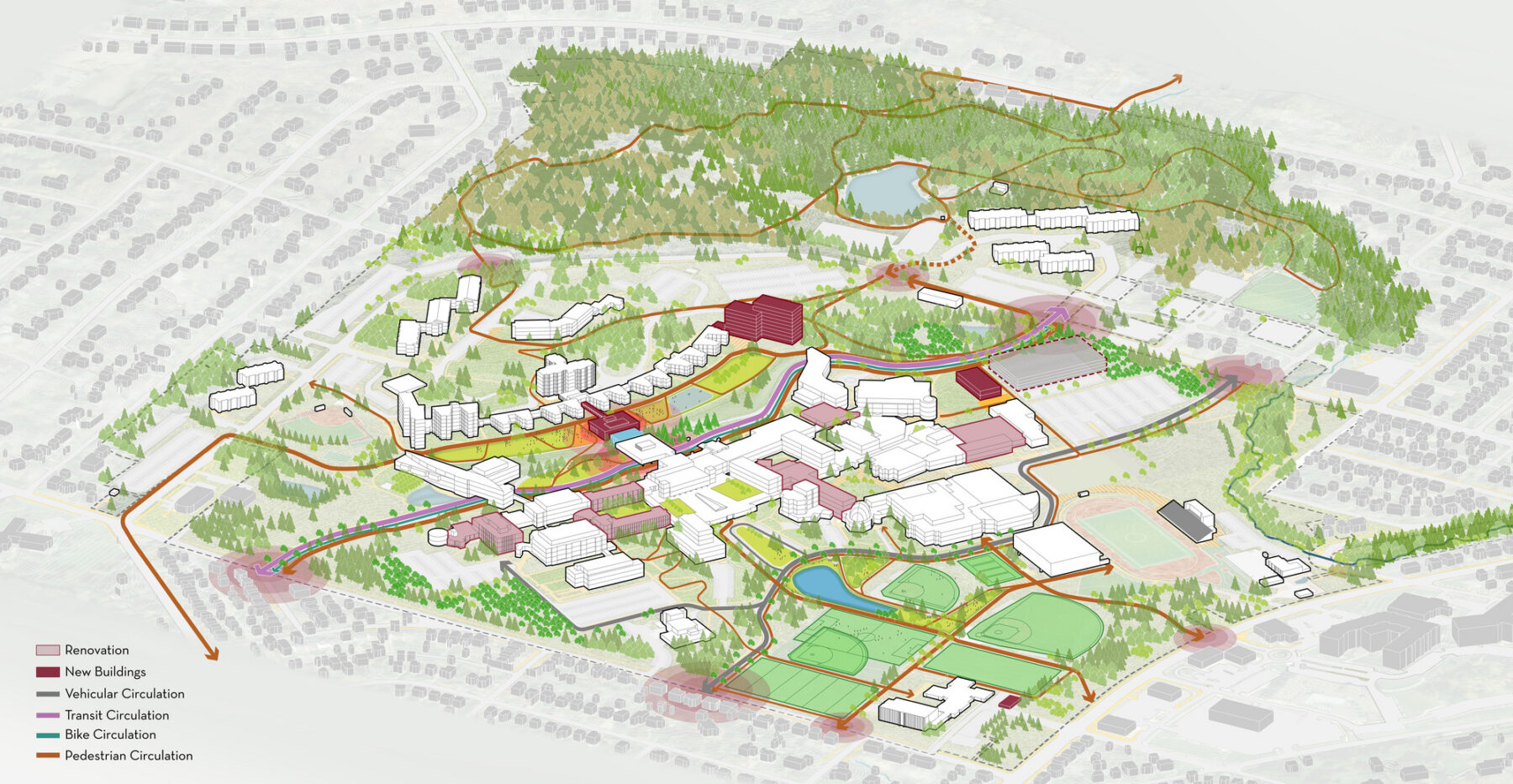
The campus transformation is guided by four “Big Ideas” consisting of programmatic, ecological, and sustainable strategies to move UMD towards a climate-ready future. First, the Sustainability Corridor serves as the campus’s central spine, integrating student recreation and active transit with green infrastructure, including solar, geo-exchange, and stormwater management. A revitalized dining hall serves as a core hub, featuring a transit center and winter garden. By replacing peripheral housing with new residential towers along this corridor, the plan creates a sustainable heart for the campus. Meanwhile, the Recreation Park blends athletic performance with environmental utility by placing geo-exchange wells beneath renewed sports fields to meet campus energy needs. This multi-functional landscape also integrates a fitness trail network to support student well-being, while a dedicated pond and specialized facilities manage stormwater to bolster regional resilience.
The third Big Idea of Greening Campus Edges reforests the campus periphery to drive carbon sequestration, habitat restoration, and improved stormwater management. By replacing underutilized parking lots and outdated residence halls with native forest, the plan reduces impervious surfaces. This transition also simplifies winter maintenance and creates a more scenic, naturalistic experience for those traveling the campus by foot or bike. Lastly, the Big Idea of Reinvesting in the Campus Core focuses on deep energy retrofits and renovations to existing buildings to meet decarbonization goals. By opening interior spaces, the plan creates visual and physical links between internal courtyards and the Sustainability Corridor. These connections introduce winter gardens in indoor green spaces that bring the exterior landscape deep into the campus core and enhance the year-round student experience.
To achieve carbon neutrality by 2050, UMD will explore a transition from a central steam plant to a modern, electrified system featuring low-temperature hot water, thermal storage, and geo-exchange. Expanded transit and improved bike and pedestrian pathways will reduce commuter emissions and reliance on single-occupancy vehicles.
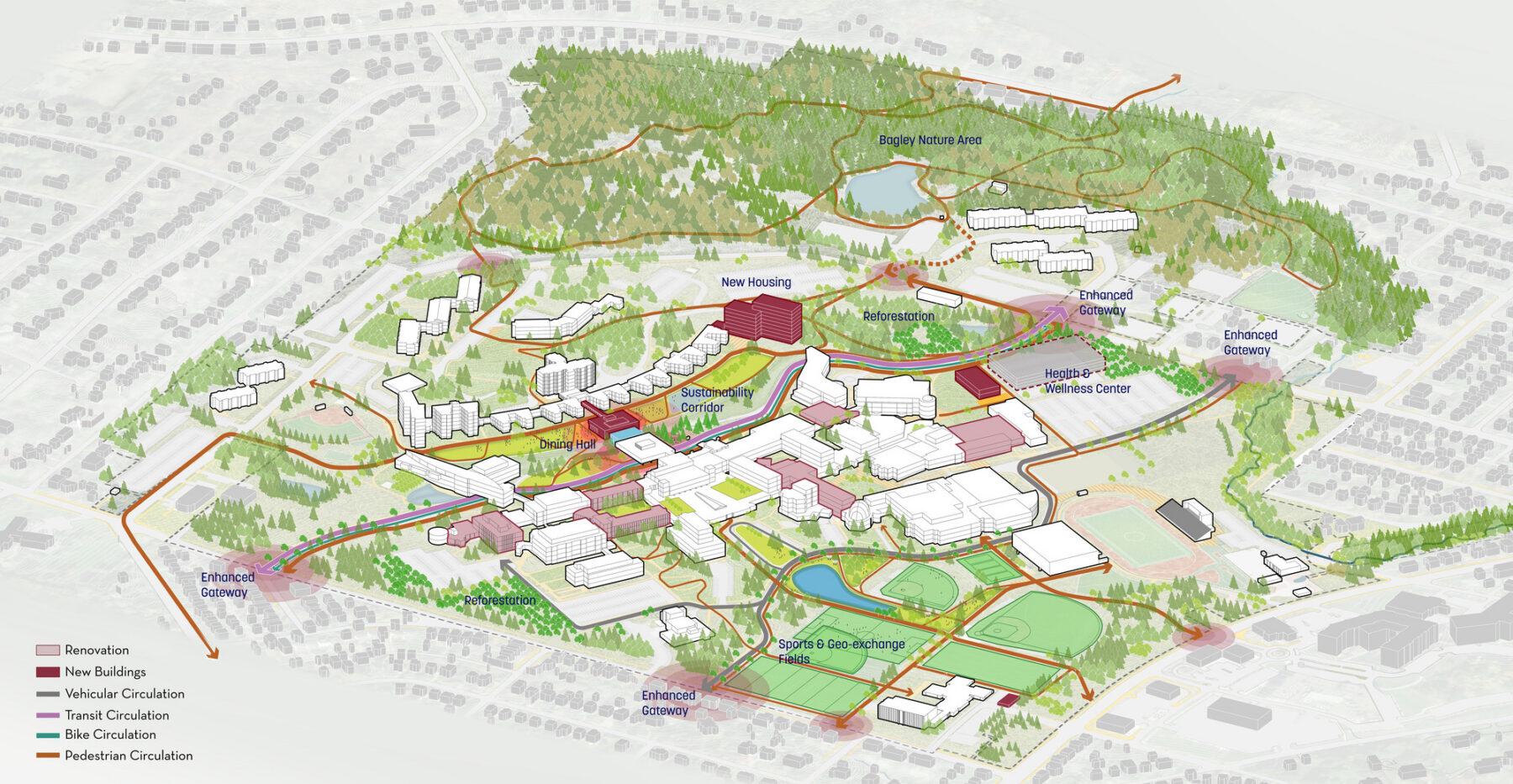
The UMD campus envisions a sustainable and carbon-neutral future. Oriented to the views of Lake Superior, and connections to nature areas and city parks, structure the recommendations of the plan.
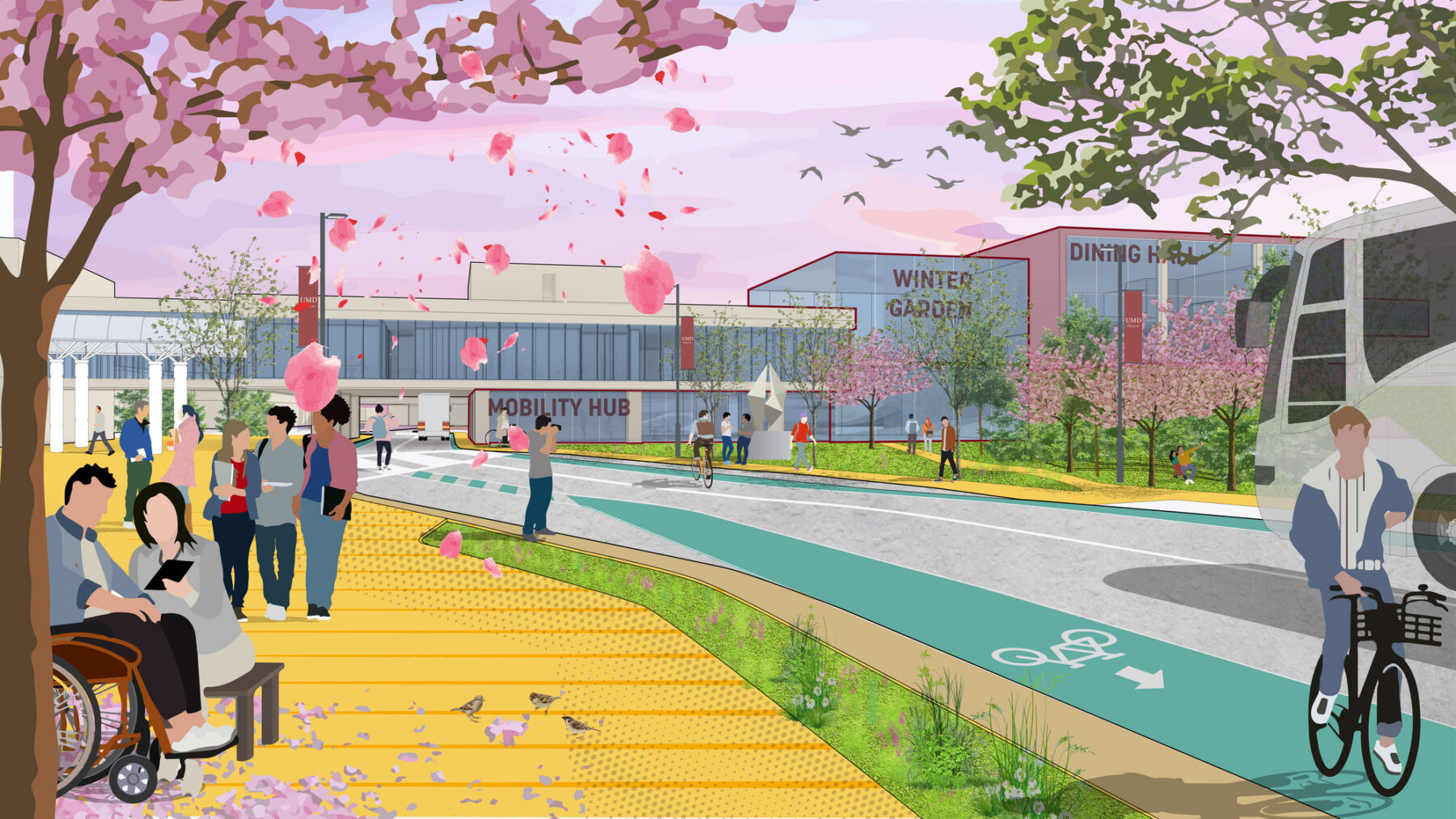
A new Mobility Hub, expanded dining hall, and winter garden define the heart of the Sustainability Corridor.
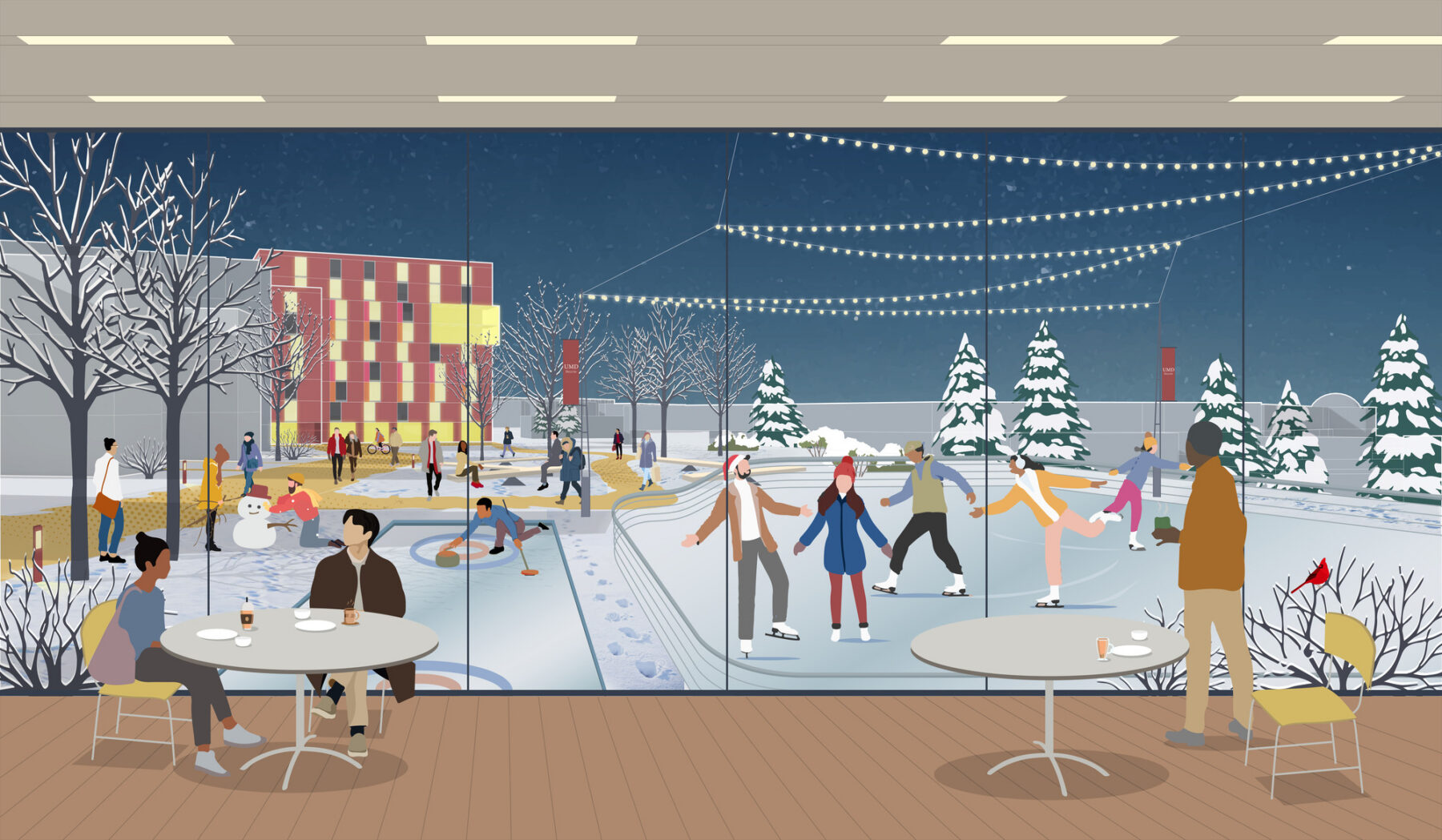
View from the expanded dining facility offering views of the Sustainability Corridor and proposed recreation facilities.
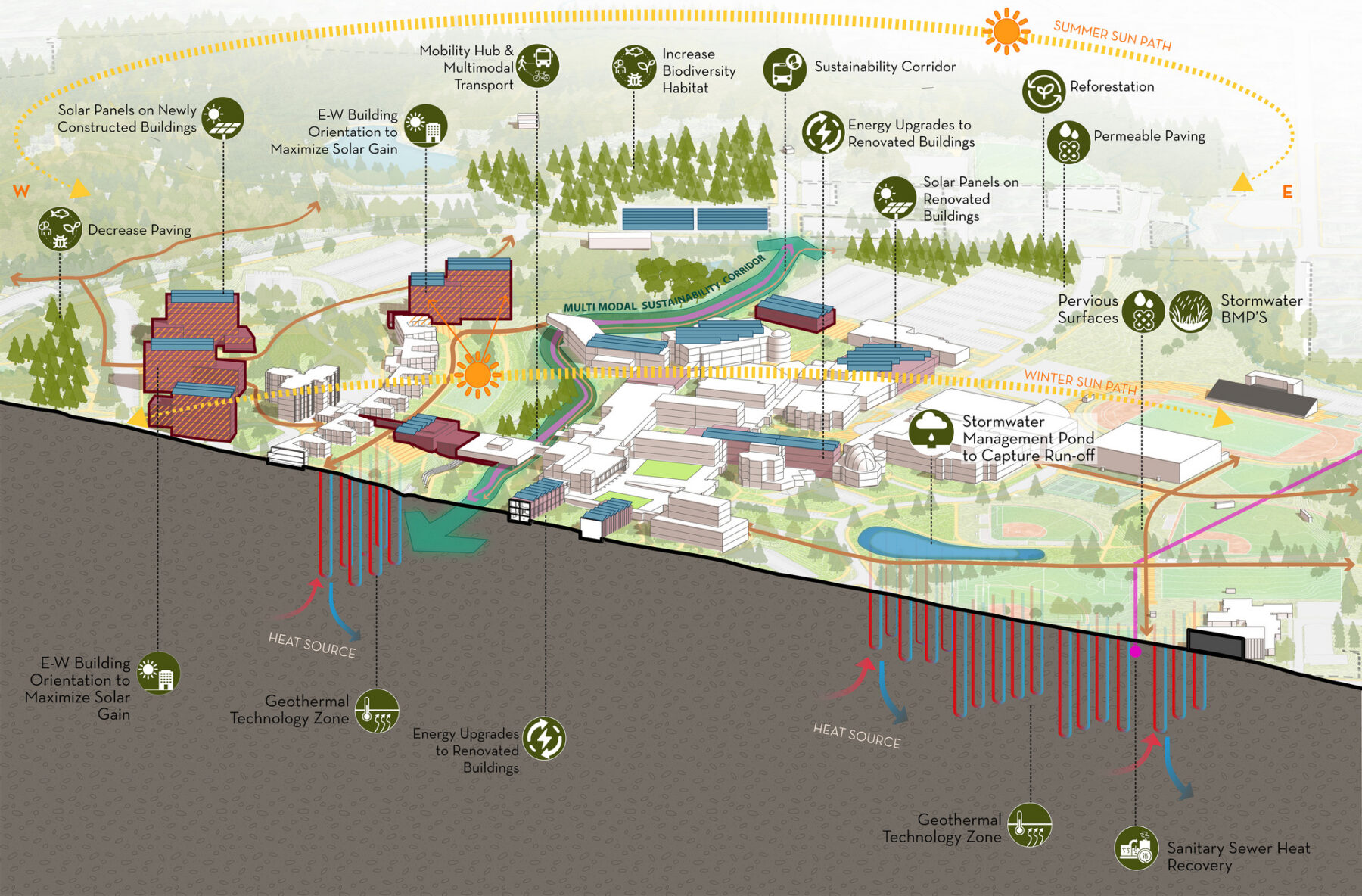
The decarbonization plan targets carbon neutrality through electrification, renewable energy, building retrofits, geo-exchange systems, and expanded pedestrian, bicycle, and transit infrastructure.
The UMD campus envisions a sustainable and carbon-neutral future. Oriented to the views of Lake Superior, and connections to nature areas and city parks, structure the recommendations of the plan.
A new Mobility Hub, expanded dining hall, and winter garden define the heart of the Sustainability Corridor.
View from the expanded dining facility offering views of the Sustainability Corridor and proposed recreation facilities.
The decarbonization plan targets carbon neutrality through electrification, renewable energy, building retrofits, geo-exchange systems, and expanded pedestrian, bicycle, and transit infrastructure.
Located in rural northwest Minnesota, UMC’s plan focuses on hands-on learning and year-round success. The framework focuses on transitioning from an aging coal-powered heating plant to a more efficient and low-carbon district system while investing in energy conservation and on-site energy production. Additionally, the UMC plan enhances the campus’s unique rural character through a flexible approach to space optimization and decarbonization. By improving outdoor spaces for year-round community use and reinvesting in existing facilities, the plan creates a resilient landscape that supports both traditional and non-traditional students in every season.
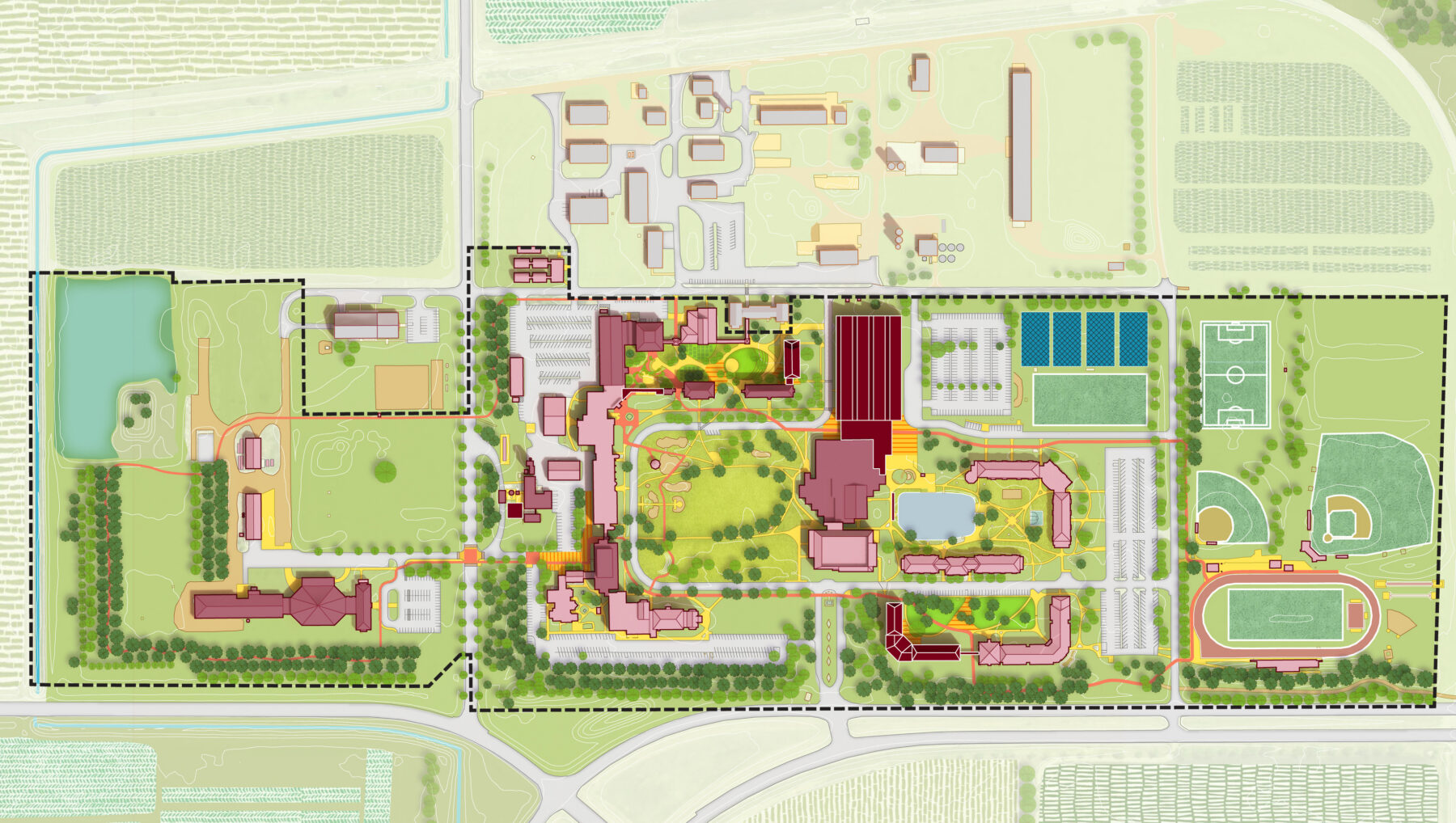
The combined UMC plans enhance the unique physical features of the campus and address programmatic needs while integrating strategies for decarbonization.
UMC focuses on modernizing and reinvesting in facilities to resolve deferred maintenance issues while meeting programmatic and energy goals. The plan enriches the campus quads with shade and wind mitigation to improve thermal comfort, while restoring century-old windbreaks to contribute to the working landscape and sequester carbon. Landscape improvements will enhance campus connections and gateways, while a reimagined athletic space (including a Sports Center addition and a long-term field house) will support year-round training and the fan experience.
Additionally, a next generation electrified heating system replaces the existing coal plant, featuring thermal storage, supplemented by heat pumps for peripheral buildings. The campus will integrate up to one megawatt of on-site solar and target net-zero operations, adhering to B3 and SB2030 energy standards.
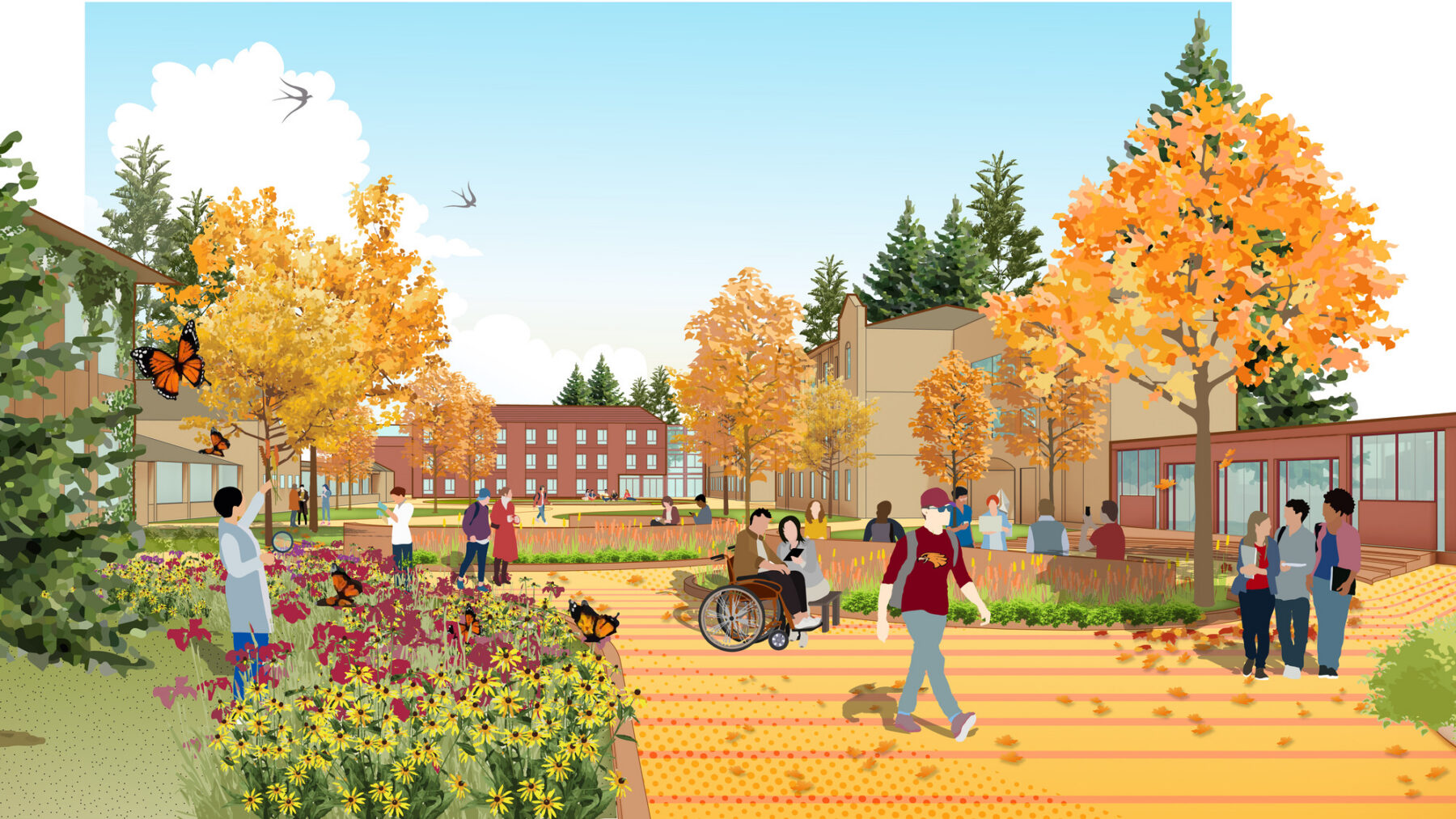
An enhanced native butterfly garden and outdoor learning quad contribute to the student learning experience.
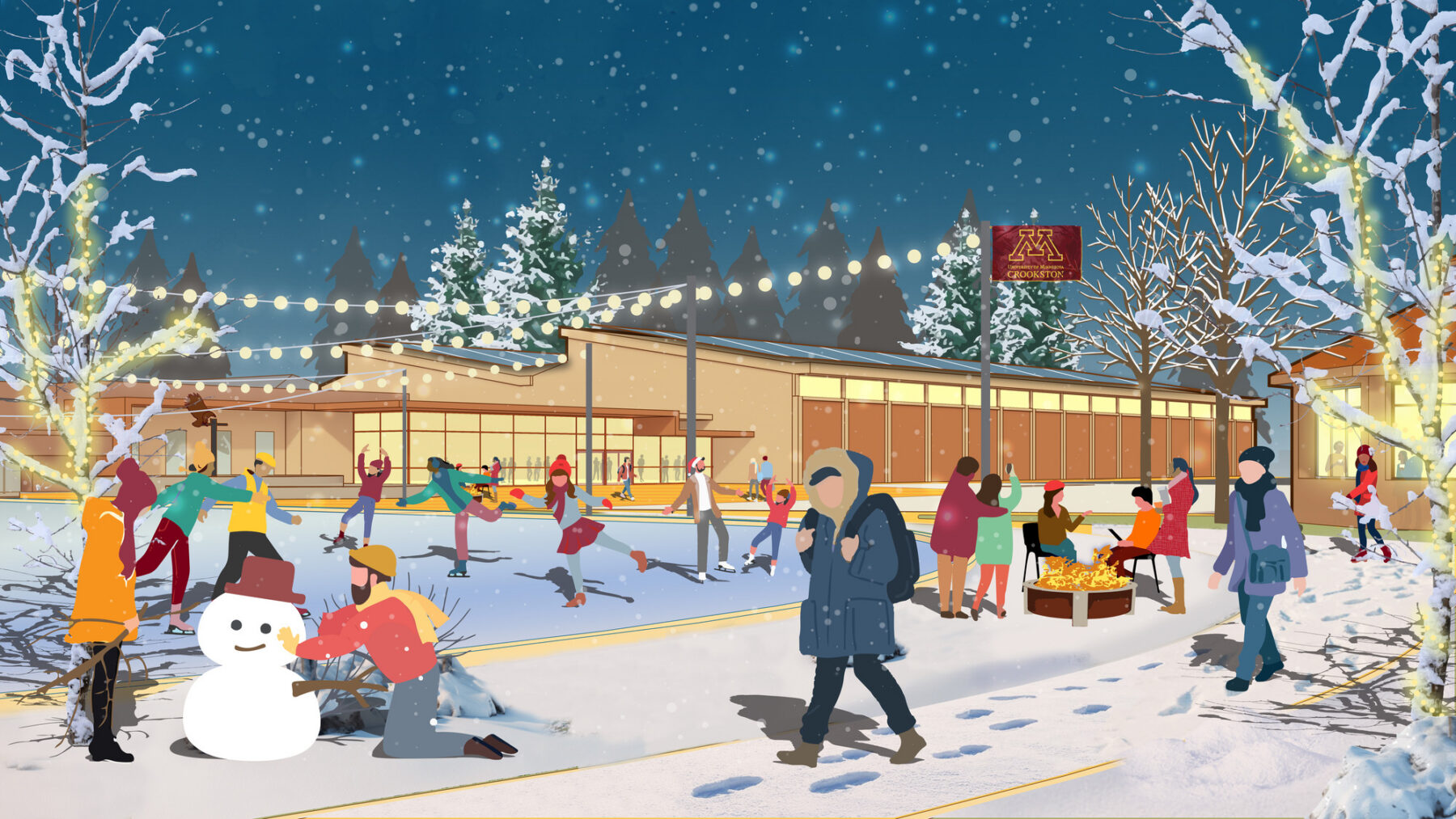
A four-season Student Residential Quad and new field house fosters opportunities for all seasons while meeting Minnesota’s B3 building standards.
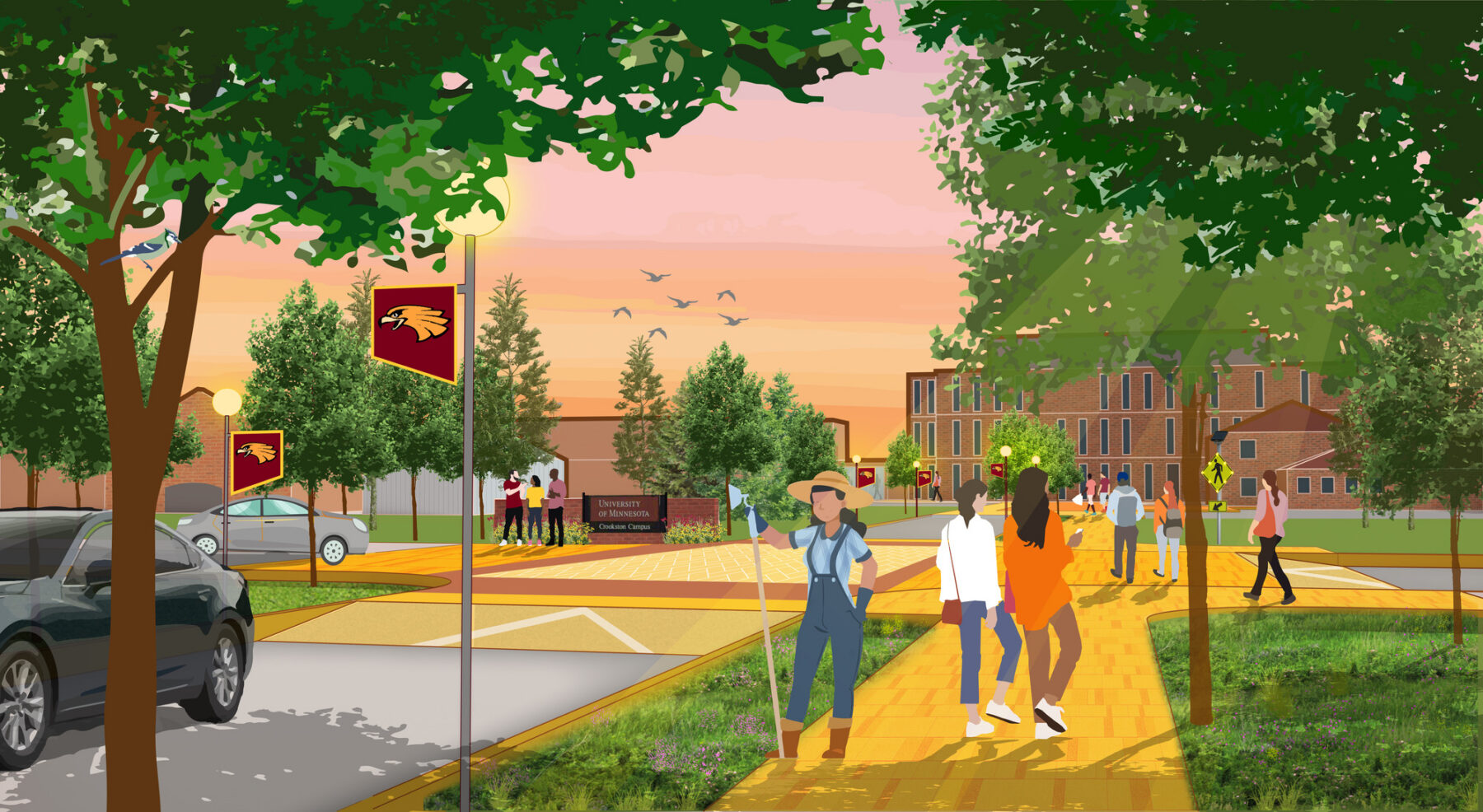
New pedestrian crossings featuring raised tables connect the campus districts.
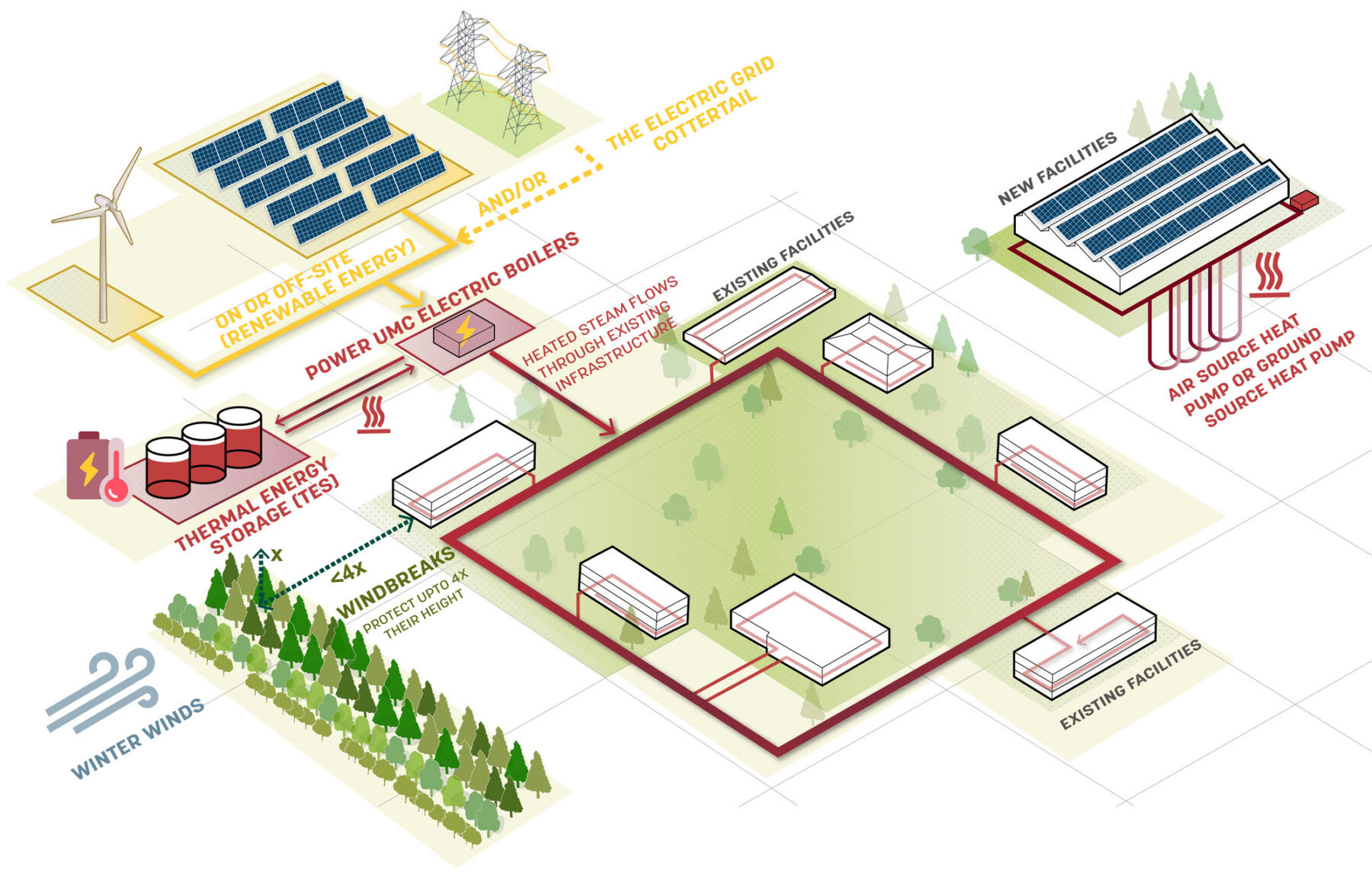
The campus achieves decarbonization by using renewable electricity to power boilers and thermal storage for existing steam-loop buildings, while utilizing independent heat pumps for all other facilities.
An enhanced native butterfly garden and outdoor learning quad contribute to the student learning experience.
A four-season Student Residential Quad and new field house fosters opportunities for all seasons while meeting Minnesota’s B3 building standards.
New pedestrian crossings featuring raised tables connect the campus districts.
The campus achieves decarbonization by using renewable electricity to power boilers and thermal storage for existing steam-loop buildings, while utilizing independent heat pumps for all other facilities.
UMM serves as the public liberal arts institution in Minnesota with a long history of sustainability and resilience planning. The campus currently generates over 60% of its electricity through on-site wind turbines and solar arrays, the highest renewable electricity generated per student in America. The plan’s primary challenge is balancing evolving programmatic needs with deep energy conservation while transitioning to a new, sustainable energy source for the campus heating plant.
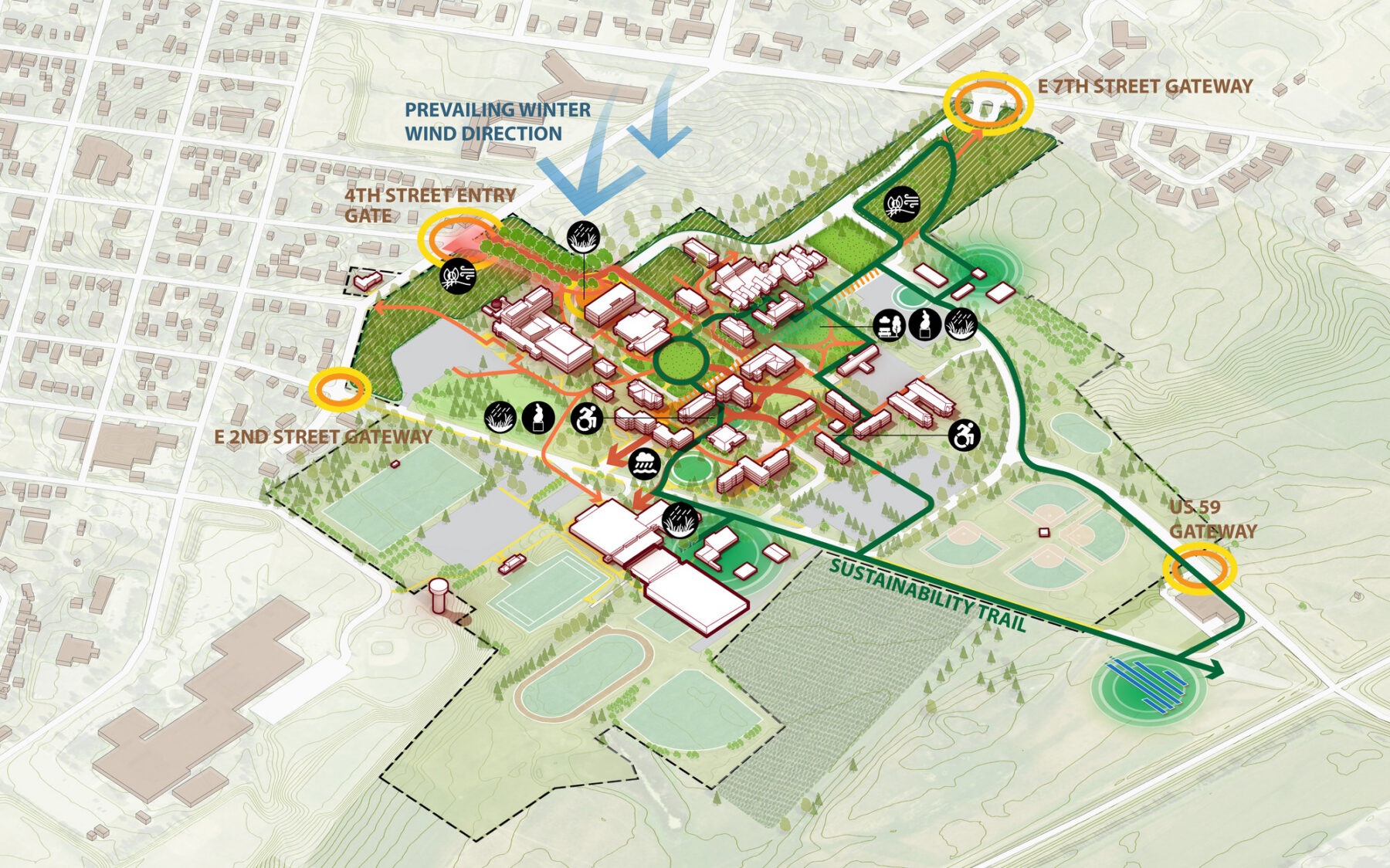
Landscape improvements focus on wayfinding and accessibility, restoration of historic circulation and landscape features, and enhancements to existing windbreaks
Building on its leadership in green infrastructure, UMM focuses on making sustainability visible and functional. The plan prioritizes reinvesting in the core campus by modernizing historic buildings to meet programmatic needs, deferred maintenance, and energy goals. To support a vibrant student experience, new hubs for wellness, technology, and career services will foster social connectivity and a sense of belonging. The initiative also seeks to put sustainability on display, replacing the iconic wind turbines and altering the heating plant to showcase decarbonization technology along a new “sustainability trail.” Finally, the landscape will be improved for all through enhanced accessibility, the restoration of historic circulation, and the strengthening of campus windbreaks.
UMM will explore a transition from natural gas to electrified heat paired with high-temperature thermal storage and recommissioning its biomass plant. A critical component includes replacing two aging wind turbines with new 5 MW models and integrated battery storage to maintain its leadership in renewable production. The strategy further addresses transportation through EV fleet conversion and a mission-driven carbon offset program for university travel.
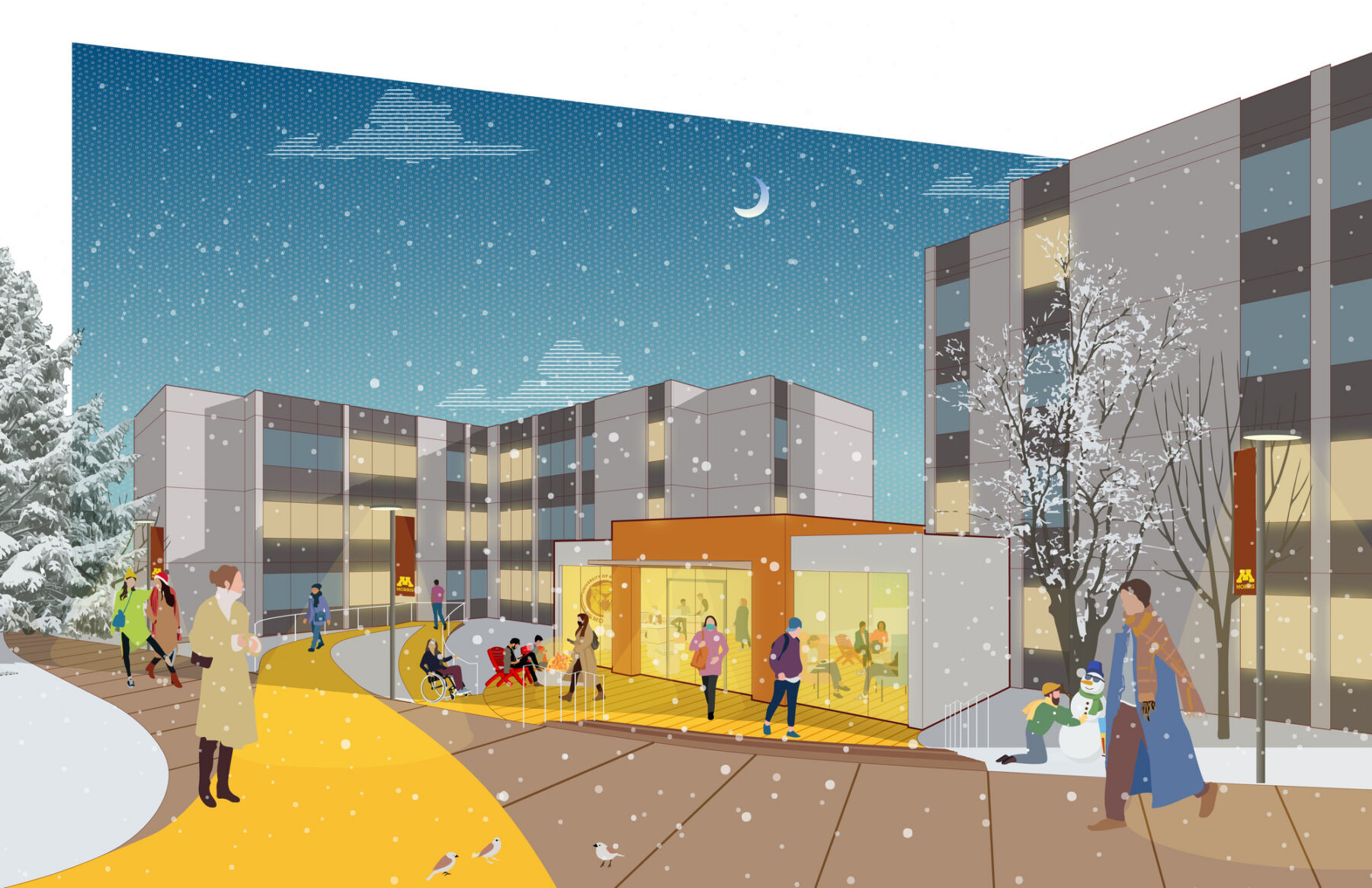
Efforts to centralize several student support resources and enhance opportunities for social connectivity, wellness, and collaboration foster a stronger sense of community and belonging—components of a vibrant student experience.
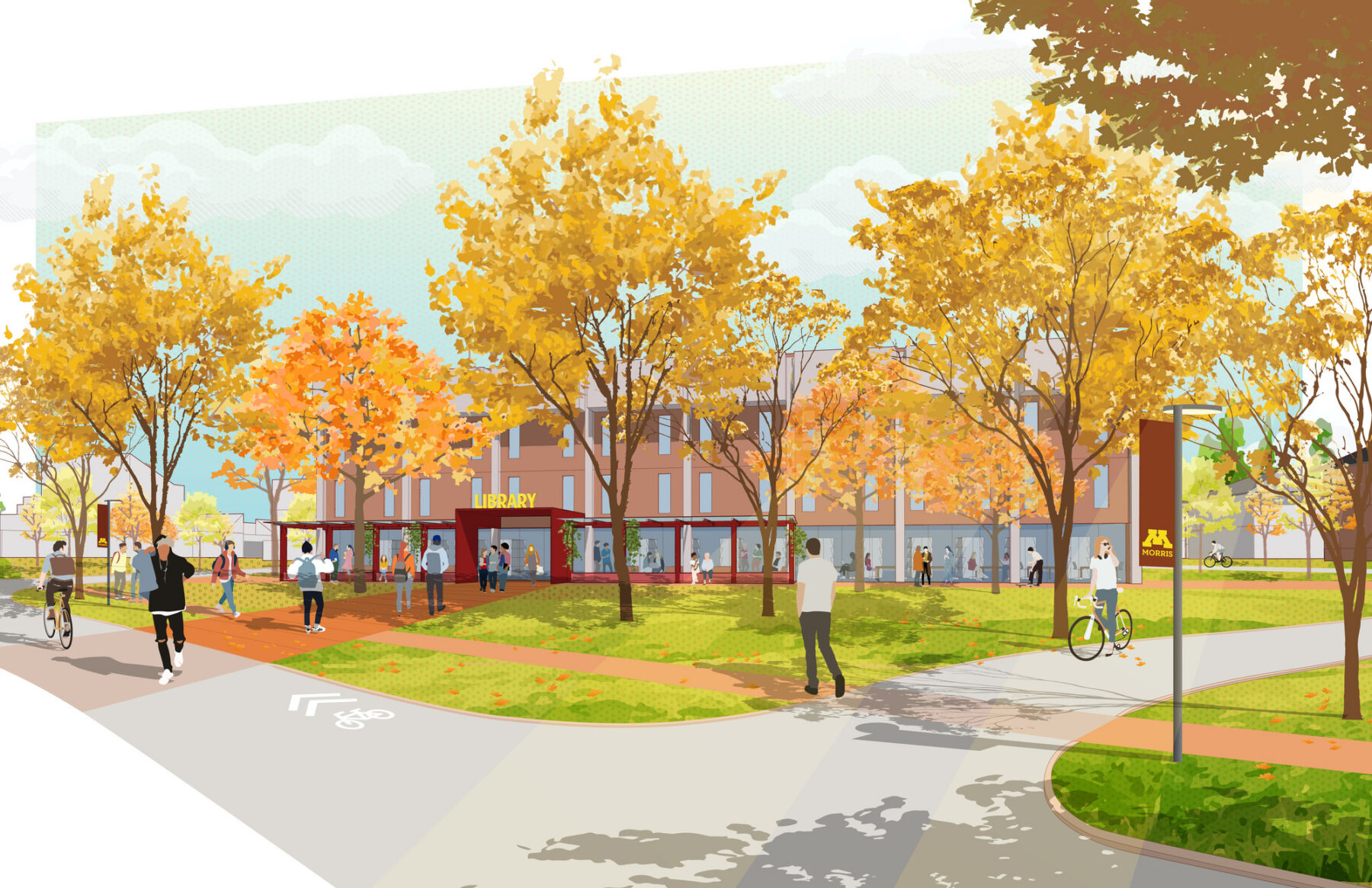
The plans focus on the modernization and reinvestment in existing facilities to support programmatic needs, meet energy efficiency goals, and address deferred maintenance.
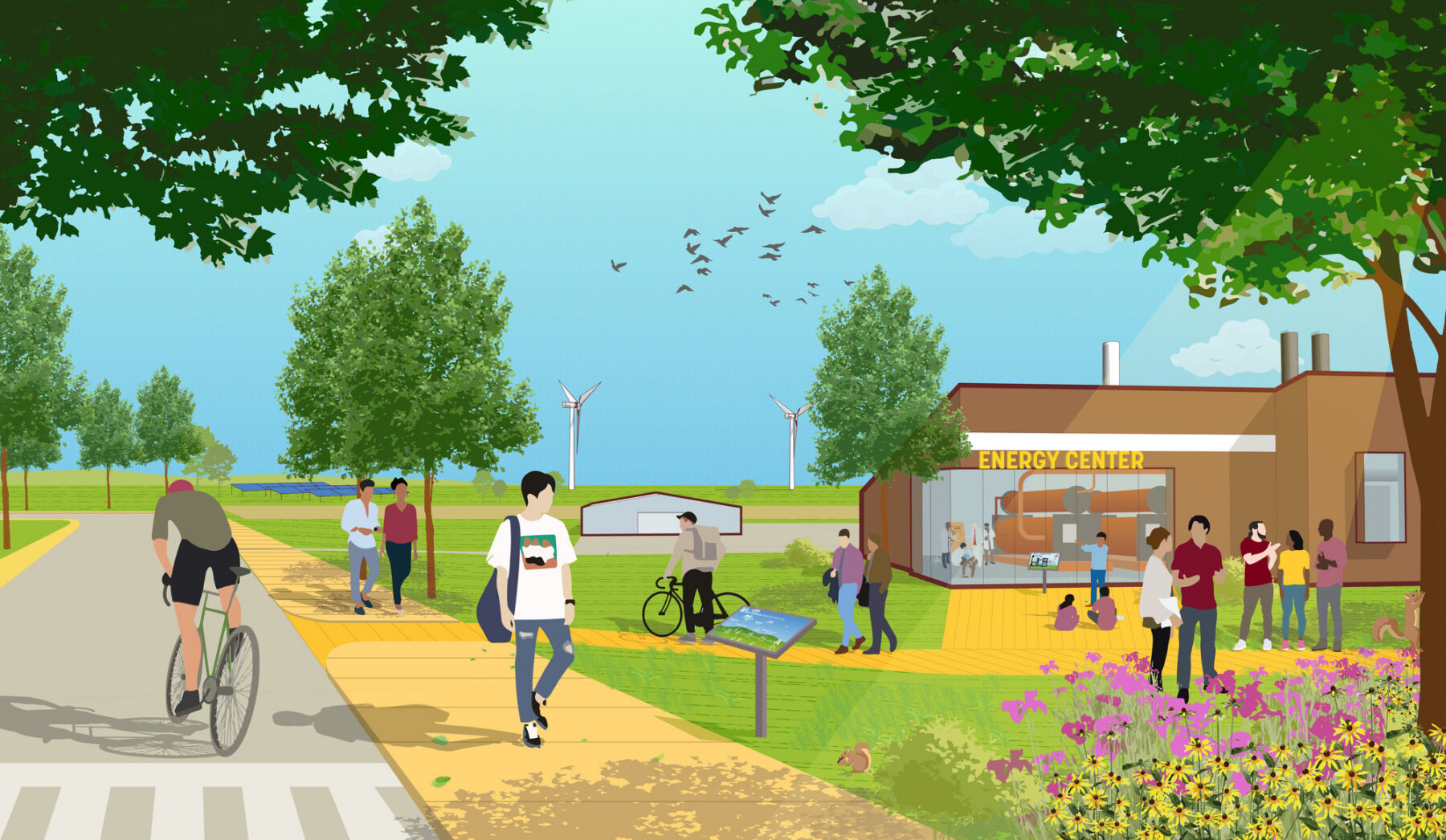
UMM’s energy plant puts infrastructure on display. Windows and educational signage shed light into the biomass plant and boiler system – allowing the campus to monitor consumption.
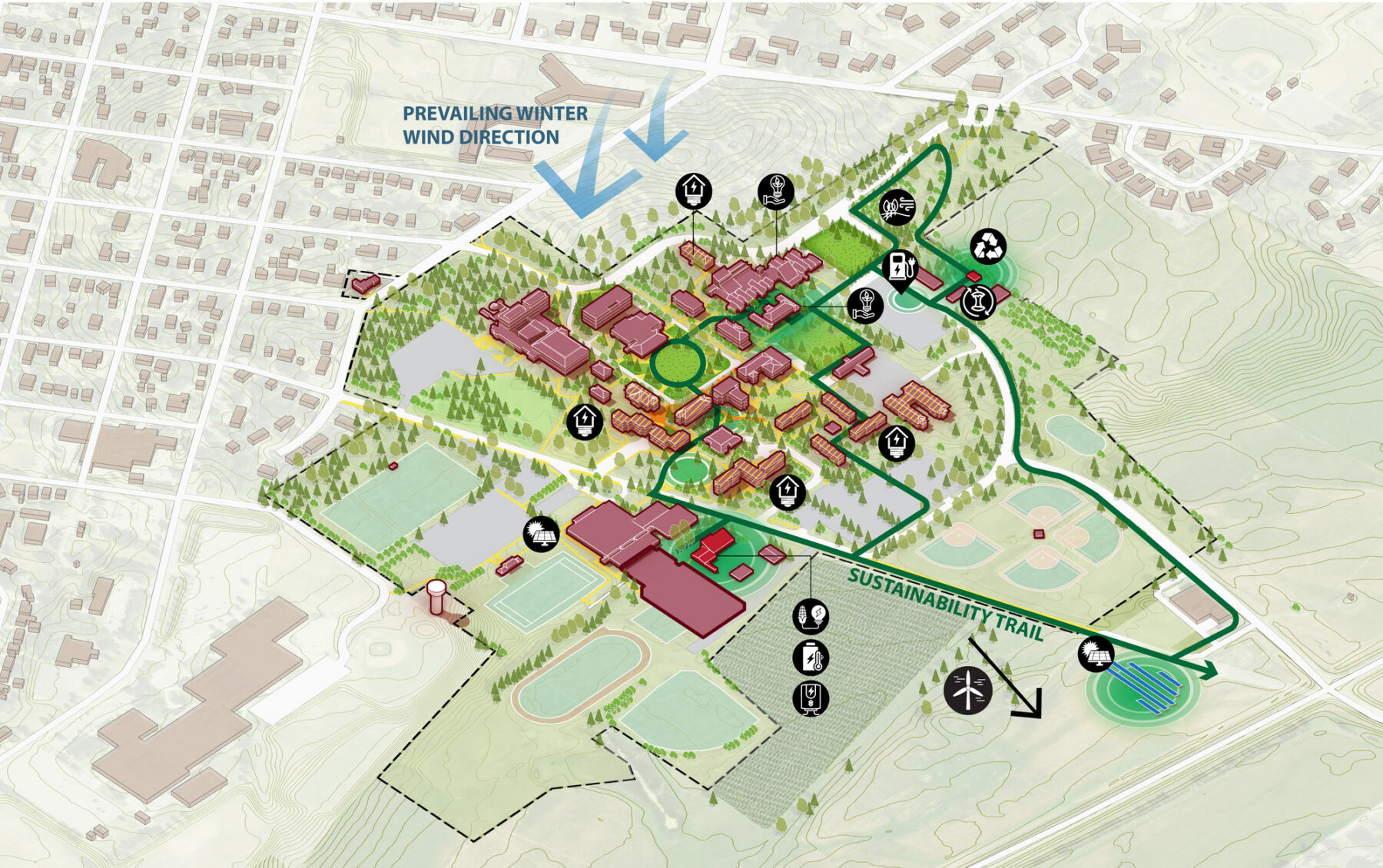
The carbon neutrality plan combines renewable energy, electrified heating, energy conservation, EV infrastructure, and resilient campus systems to achieve net-zero emissions by 2050.
Efforts to centralize several student support resources and enhance opportunities for social connectivity, wellness, and collaboration foster a stronger sense of community and belonging—components of a vibrant student experience.
The plans focus on the modernization and reinvestment in existing facilities to support programmatic needs, meet energy efficiency goals, and address deferred maintenance.
UMM’s energy plant puts infrastructure on display. Windows and educational signage shed light into the biomass plant and boiler system – allowing the campus to monitor consumption.
The carbon neutrality plan combines renewable energy, electrified heating, energy conservation, EV infrastructure, and resilient campus systems to achieve net-zero emissions by 2050.
Adjacent to the Mayo Clinic, UMR’s plan integrates strategic growth in health sciences with a commitment to carbon neutrality by 2050. Operating in primarily leased downtown spaces, UMR’s path to sustainability relies on unique partnerships with the City of Rochester and local organizations.
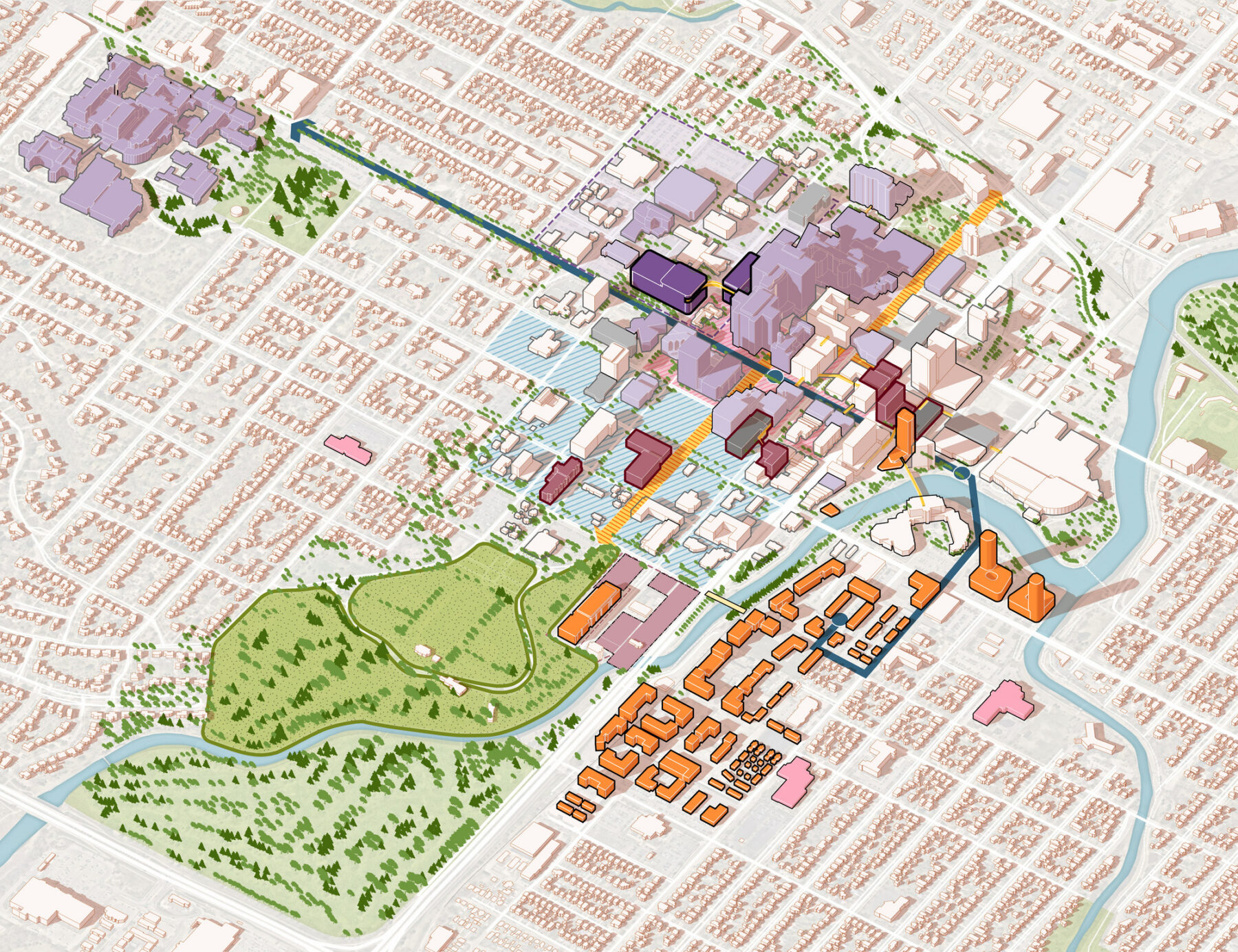
UMR advances carbon neutrality through green leases, shared energy goals, and flexible development strategies integrated with Rochester’s urban infrastructure.
UMR’s sustainability framework centers on a flexible framework that aligns leased facilities and future purpose-built spaces with carbon-neutral goals. Through “green leases” UMR and its landlords will commit to shared energy efficiency targets through integration with city infrastructure to drive collective success. Ultimately, UMR’s Big Ideas balance a set of tailored strategies for its unique operating model and urban context to achieve collective environmental and academic success.
To support expanding enrollment and student life, the plan prioritizes the creation of functional, healthy, and accessible spaces through innovative learning environments and the development of a dedicated Education District. Central to this strategy is a “smart lease approach” to guide space use along the downtown skyway network and prioritize buildings connected to the City’s Thermal Energy Network.
Success relies on a collaborative ecosystem. UMR will explore partnerships to create specialty spaces and active learning opportunities at the Mayo Clinic to essential amenities like childcare and recreation. This spirit of partnership extends to decarbonization, as the university collaborates with landlords to electrify buildings and supports city-wide initiatives to reduce greenhouse gas emissions.
Beyond the physical campus, UMR is reducing its environmental footprint by favoring walking, biking, and transit to lower vehicular emissions. Sustainability is also being woven into the student experience by integrating climate resilience and mitigation directly into the curriculum. Ultimately, UMR is advancing community resilience through high-impact operational shifts—reducing water and waste consumption while sustaining an equitable, resilient food plan for the future.
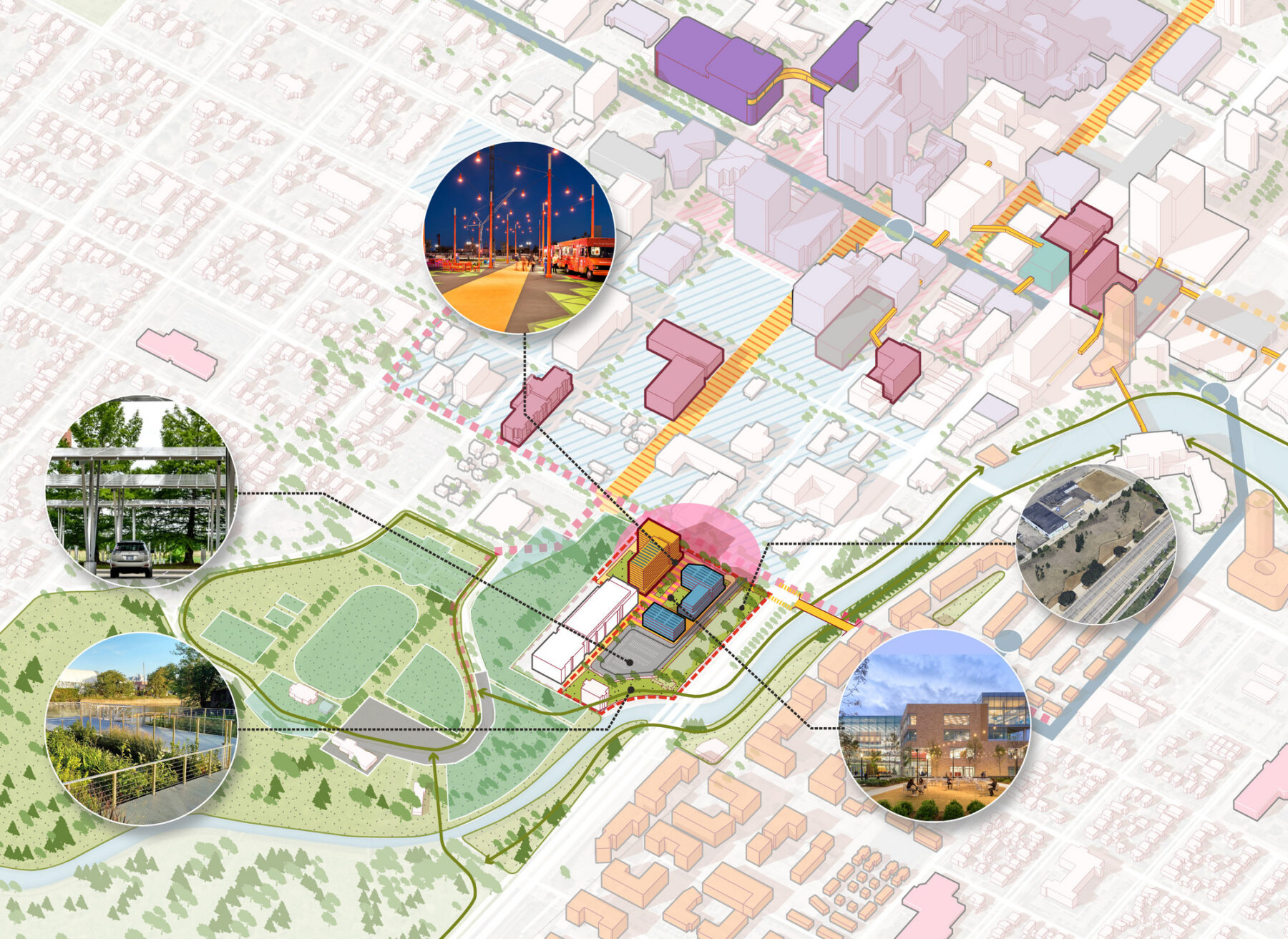
UMR’s Education District supports future expansion and partnerships, leveraging urban integration for environmental and academic success.
UMR’s Education District supports future expansion and partnerships, leveraging urban integration for environmental and academic success.
For more information contact Greg Havens.