A Decade of Transformation: Tecnológico de Monterrey’s Urban Regeneration
How a context-driven master plan created new opportunities for one of Mexico’s largest universities and its neighbors.
 Sasaki
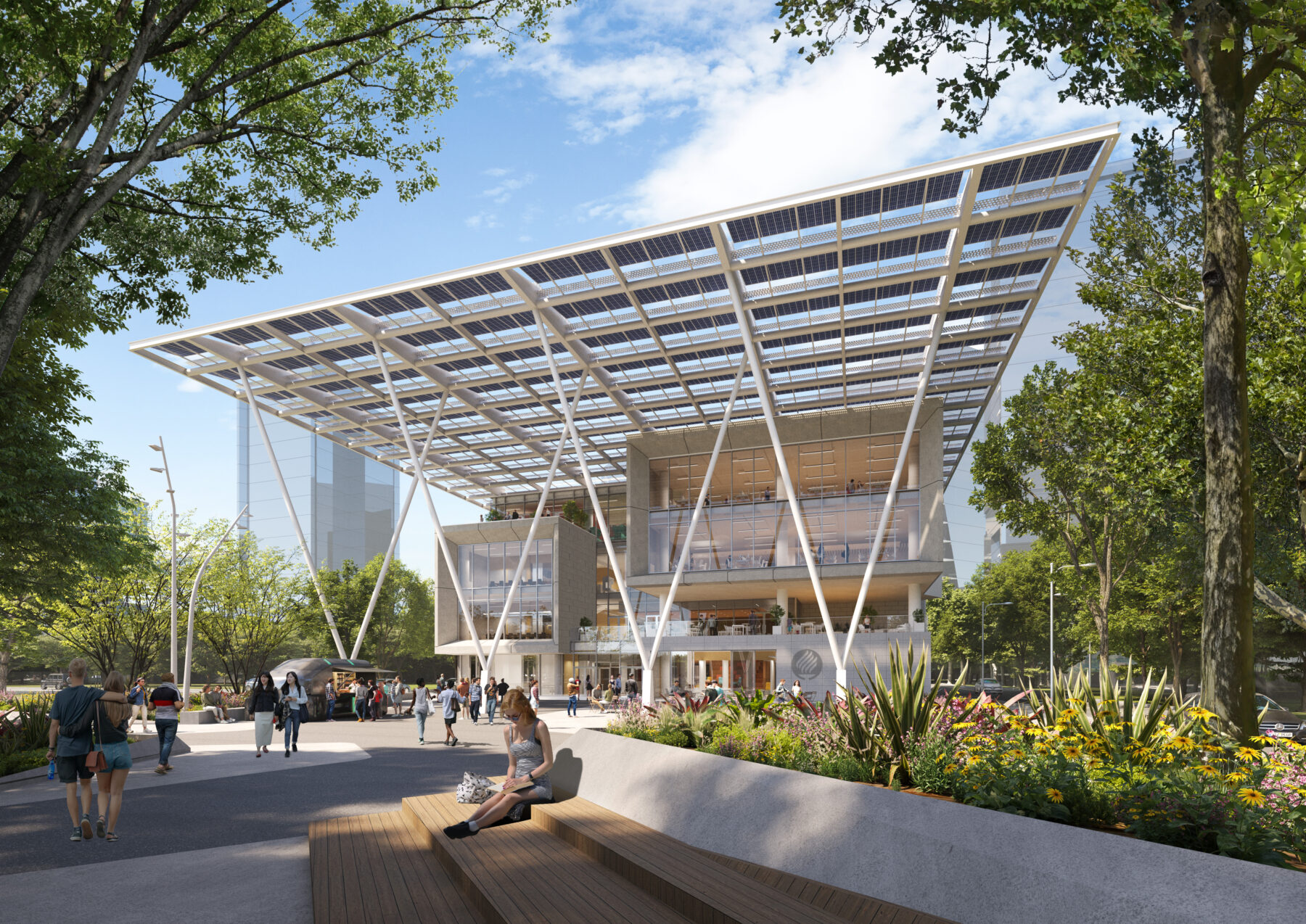
View of Innovation Hub from the Innovation Ecosystem Plaza
The Eduardo Garza T. Fernández Innovation and Entrepreneurship Hub at Tecnológico de Monterrey stands as a decisive architectural expression of the institution’s commitment to fostering knowledge creation, interdisciplinary collaboration, and impactful innovation. The second building born out of Sasaki’s Master Plan for the University’s Innovation Ecosystem and strategically positioned within the Monterrey Innovation District, the Hub is envisioned as a vibrant epicenter where research, entrepreneurial ambition, and real-world application converge, empowering students, faculty, startups, and industry partners to transform ideas into sustainable solutions.
Spanning approximately 8,400 square meters, the Innovation Hub’s design reflects a purposeful balance between spatial efficiency and experiential richness that evokes the role of the historic Rectoria in the academic campus as the centerpiece, flagship building and gathering place at the heart of the Innovation Ecosystem. The architectural concept emphasizes visibility, permeability and adaptability—principles that promote social exchange, cross-disciplinary interaction, and iterative prototyping, where each space is interconnected through visual transparency, fluid circulation paths, and a cohesive material language that speaks to both functional clarity and forward-looking identity.
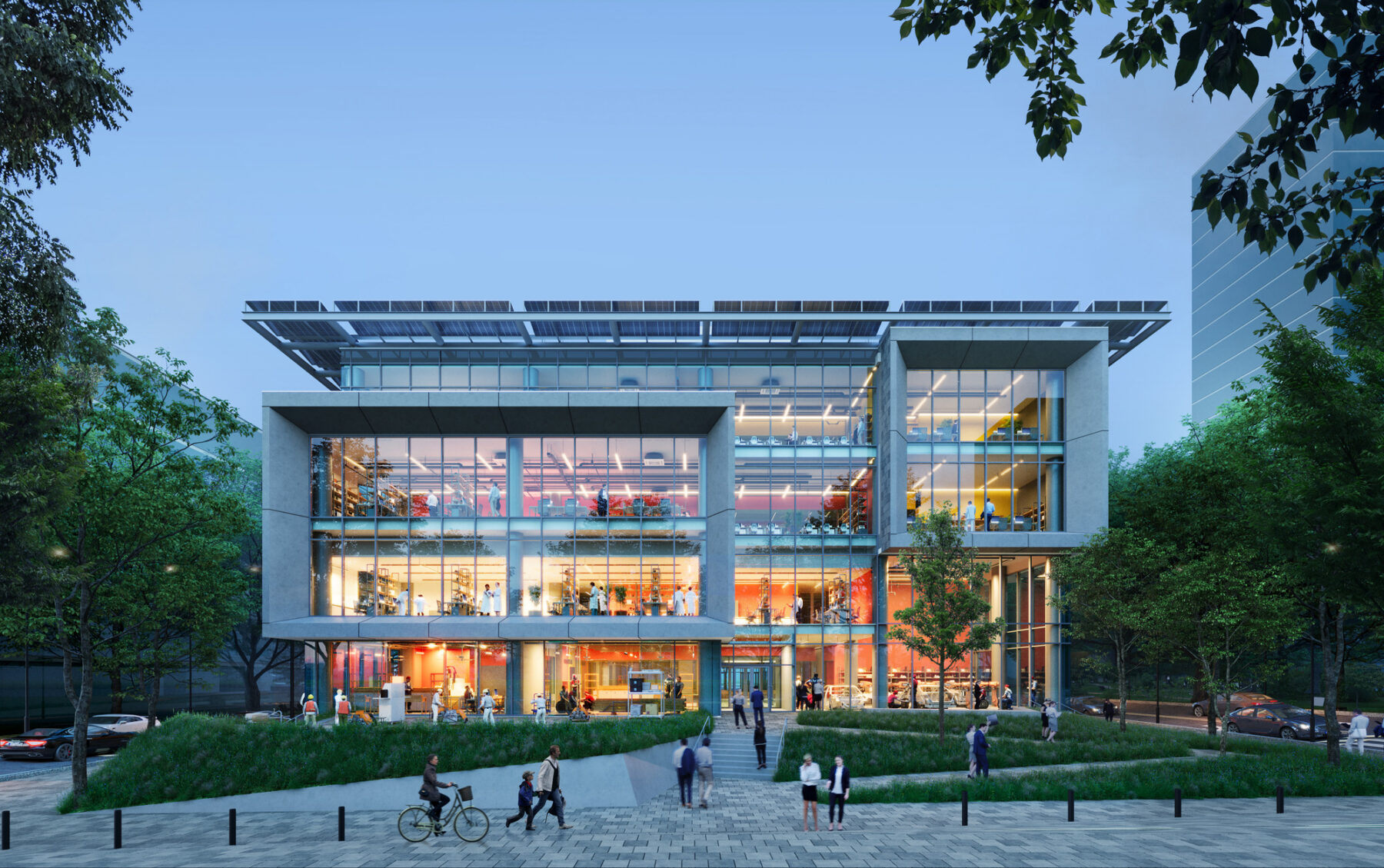
View of Innovation Hub’s maker terrace, biolab and validation lab
Located in a hot arid climate, the building’s façade plays as crucial a role in performance as defining its architectural presence. Generous expanses of glazing are strategically located at north and south facades to create visual porosity and dynamic views between interior laboratories, workspaces, and public zones, encouraging curiosity and signaling the activities within to the broader campus community. This openness is contrasted by the more monolithic east and west facades featuring sculptural precast panels that shield the working spaces from the most demanding solar orientations.
A large overhead pergola integrated with bifacial photovoltaic panels creates a major portico and gathering space at the entrance to the building, providing on-site energy generation while reducing direct solar heat gain and improved outdoor comfort.
At the interior, the Hub responds to the diverse needs of innovation practice through a mix of specialized and flexible environments. Dedicated prototyping laboratories and biotechnology development spaces support rigorous research and experimentation. Collaborative garages and startup suites provide incubatory environments where emerging companies can grow, iterate, and test new concepts. Informal coworking areas, open terraces, and a prominent event space designed to accommodate upwards of 200 participants foster spontaneous interaction, community building, and knowledge exchange.
The plan is organized around a large central forum space that brings program components together visually and physically. Known as the Master Stage, this space helps to activate the central lobby, promotes strong connections between the different levels of the project, and access to daylight from tall clerestories that are centrally located in the building. On a daily basis this room functions as a large and informal lounge and coworking space, but during events it may be partitioned by curtains to create a formal auditorium with an elevated viewing gallery in the manner of a total theater or theater in the round.
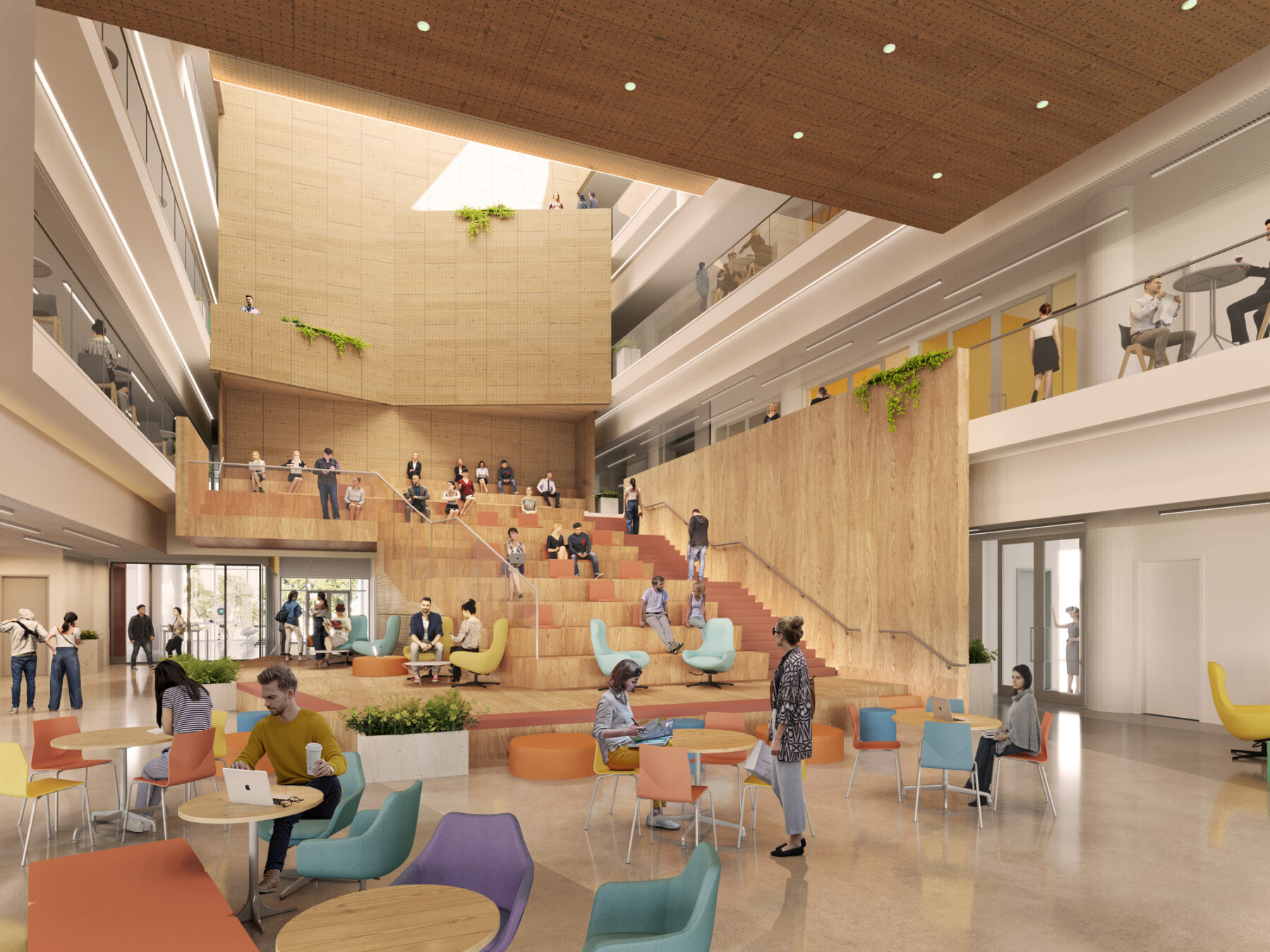
Entry lobby and Master Stage forum
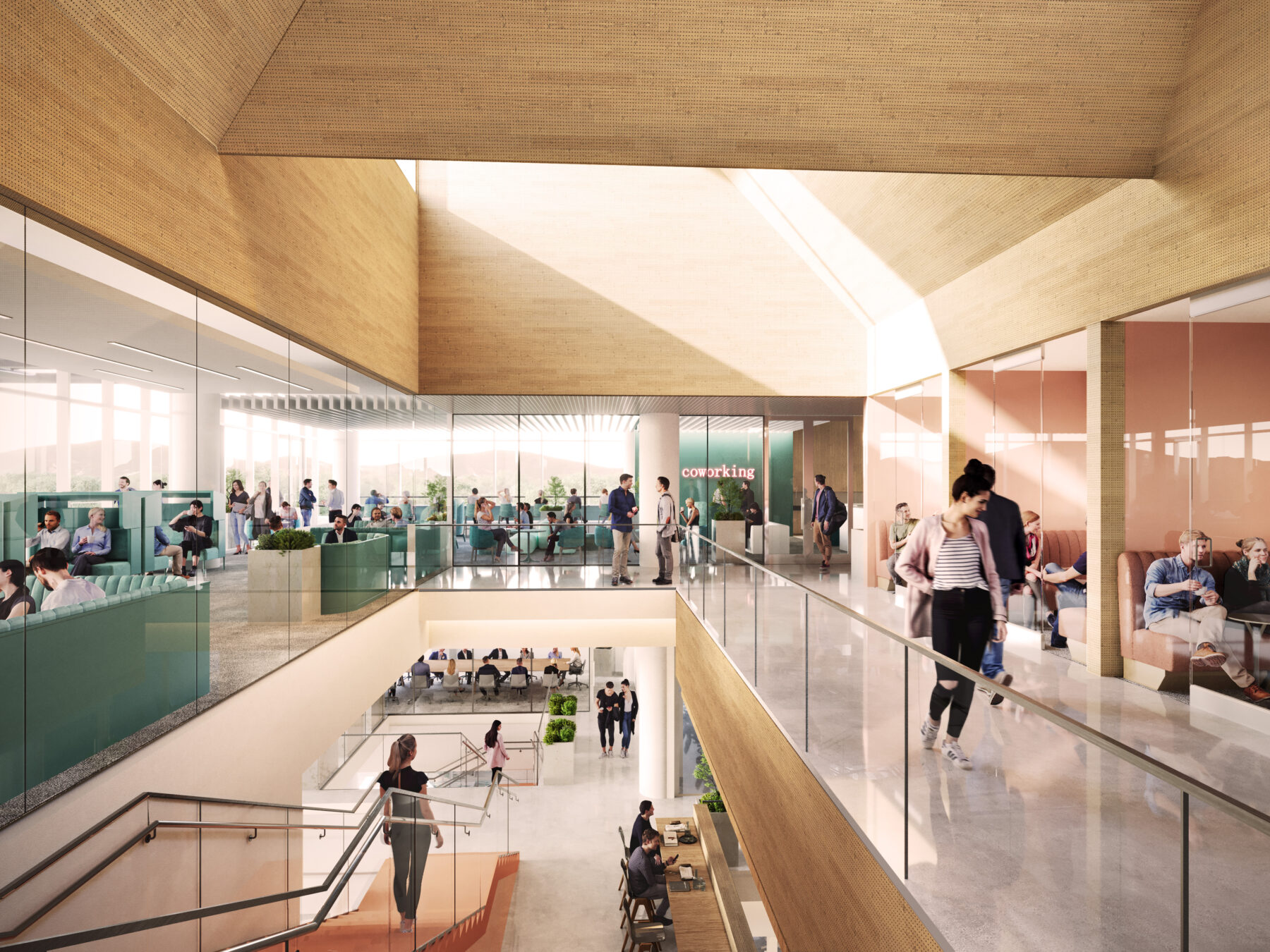
View towards coworking space
Circulation within the Hub is articulated to encourage discovery. Through the careful placement of public outreach programs and private working and ideation spaces, as well as indoor and outdoor relationships, the Innovation Hub creates a multitude of opportunities for chance encounters, focused collaborations, and a wide variety of communal activities, each calibrated to support different modes of work. Changes in light, material texture, and spatial volume reinforce these transitions, offering intuitive cues that guide users throughout the facility. This architectural choreography underscores the Hub’s role as a platform for creative exploration and collective achievement.
More than a building, the Hub is an integrative element of the broader innovation ecosystem that the Monterrey Innovation District aims to cultivate. Its physical proximity to research infrastructure and the adjacent Expedition FEMSA building and other district assets strengthens networks of collaboration spanning academia, industry, and civic partners. By extending vistas toward adjacent public spaces and opening its ground plane to pedestrian activity, the Hub contributes to an activated urban realm that blurs the boundaries between campus and community, a place of convergence where the best ideas are discovered, enhanced, and amplified.
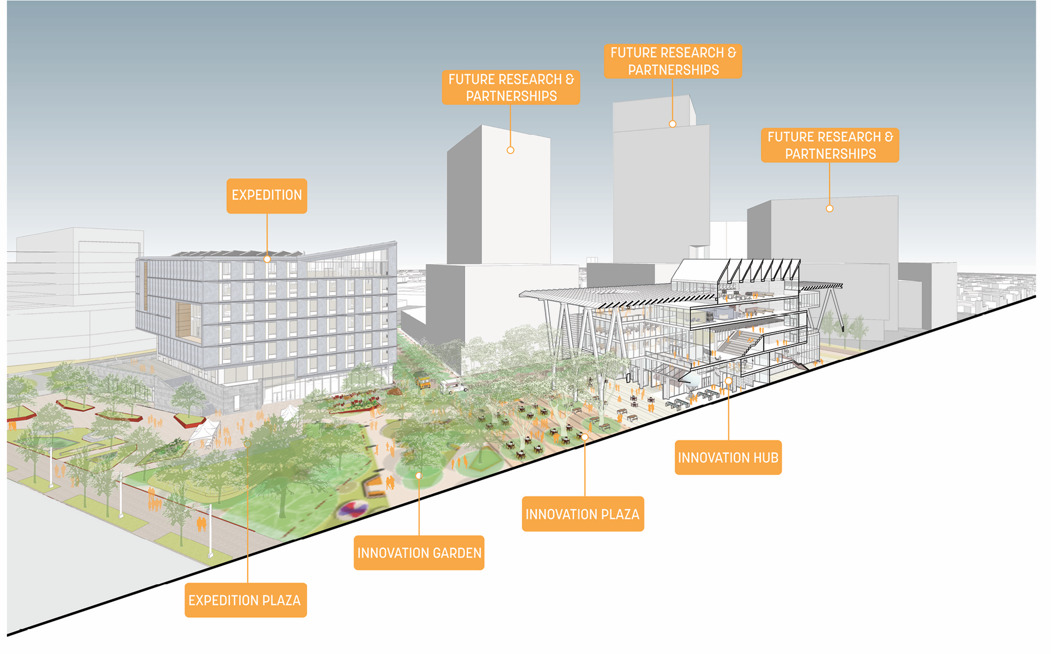
In design and purpose, the Hub embodies a new paradigm for an innovation showcase on campus, where form and program merge in support of collective ingenuity. As a catalyst for entrepreneurship, a connector of disciplines, and a vessel for societal impact, the Innovation and Entrepreneurship Hub is poised to redefine how built environments can inspire the next generation of innovators.
Pursuing LEED Gold certification, the project broke ground in 2024 and anticipates major construction completion in 2026.
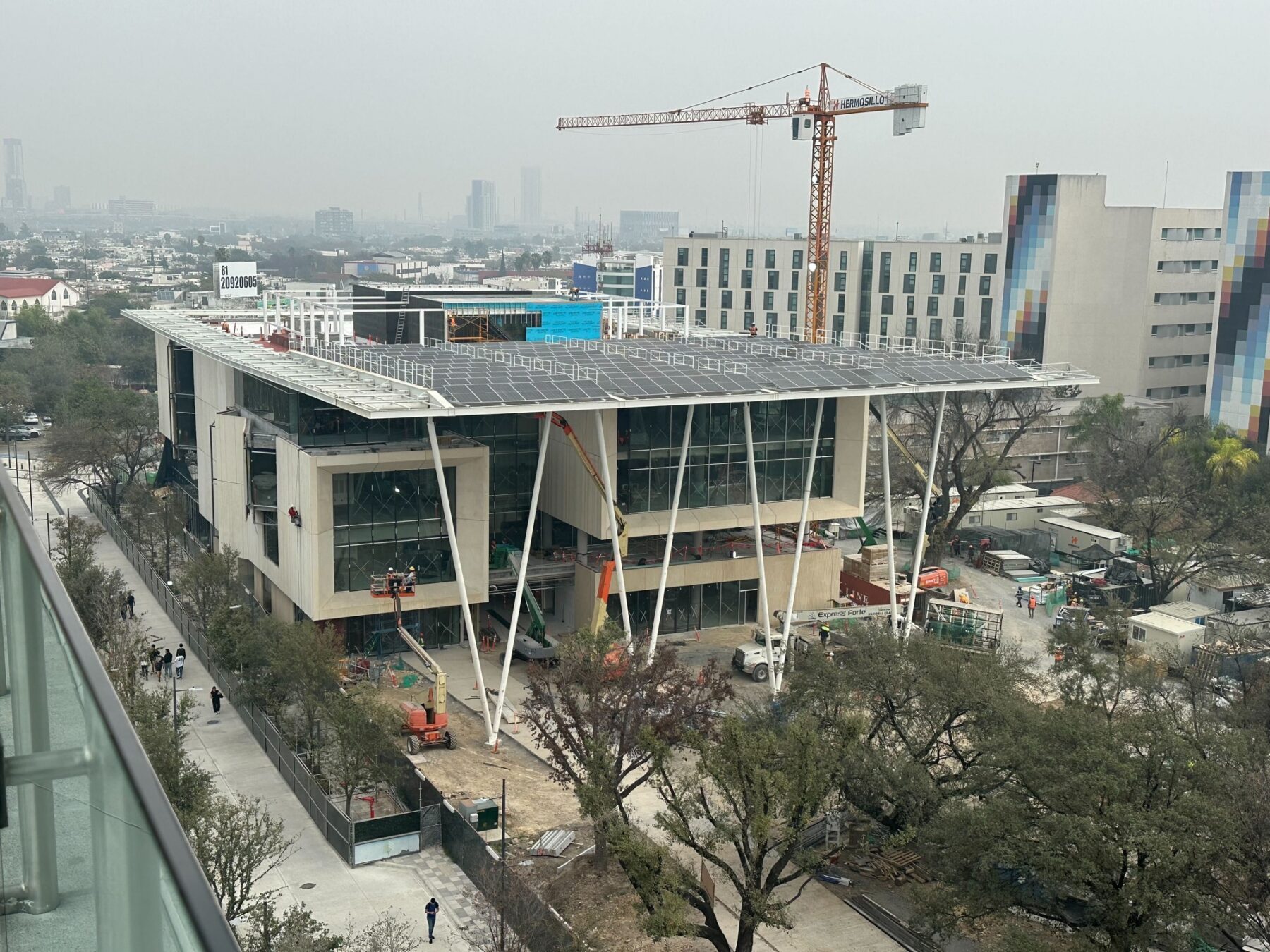
The large entry pergola references the existing tree canopy
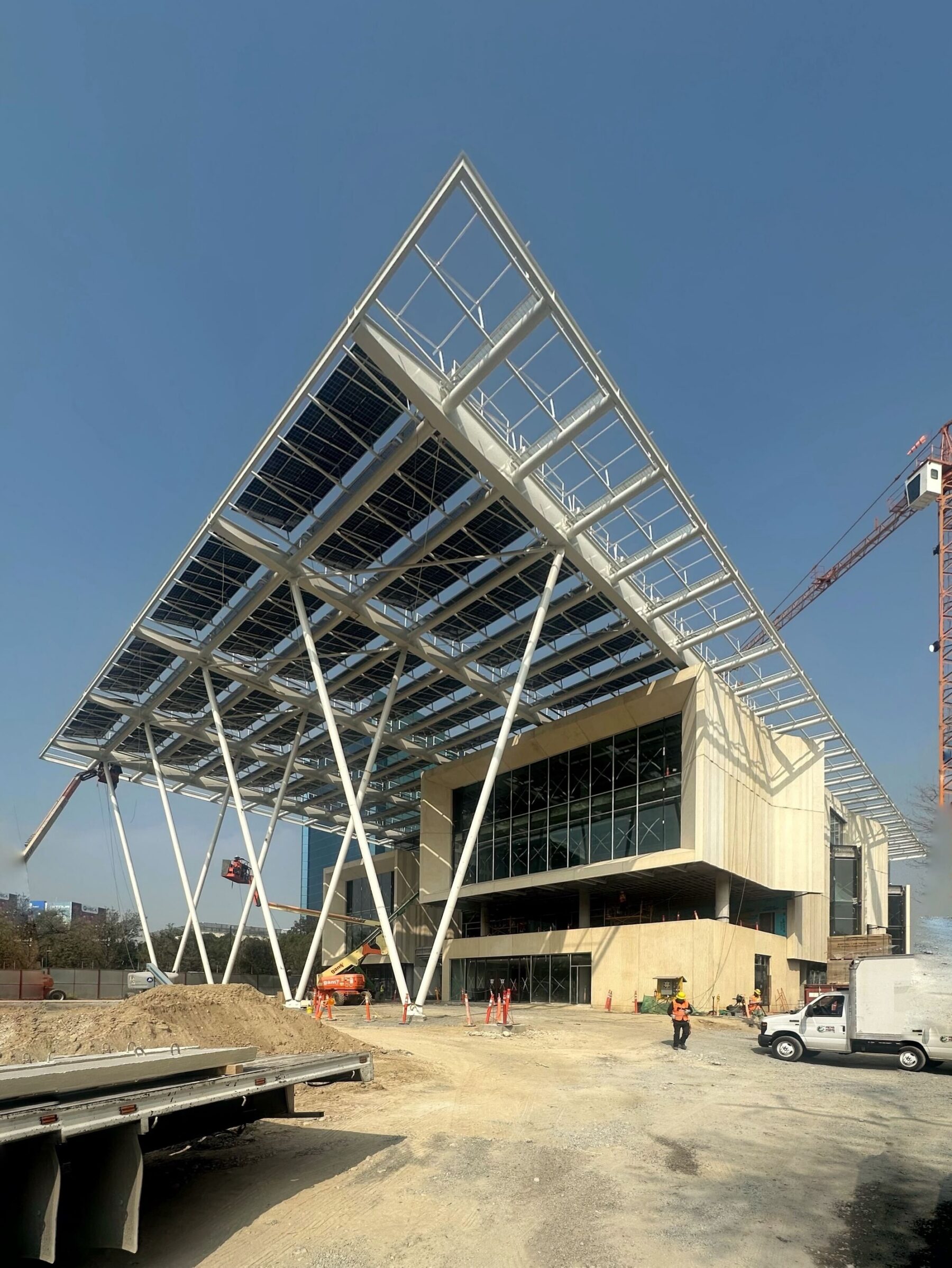
Diagonal columns support the pergola, providing shelter and identity inside and out
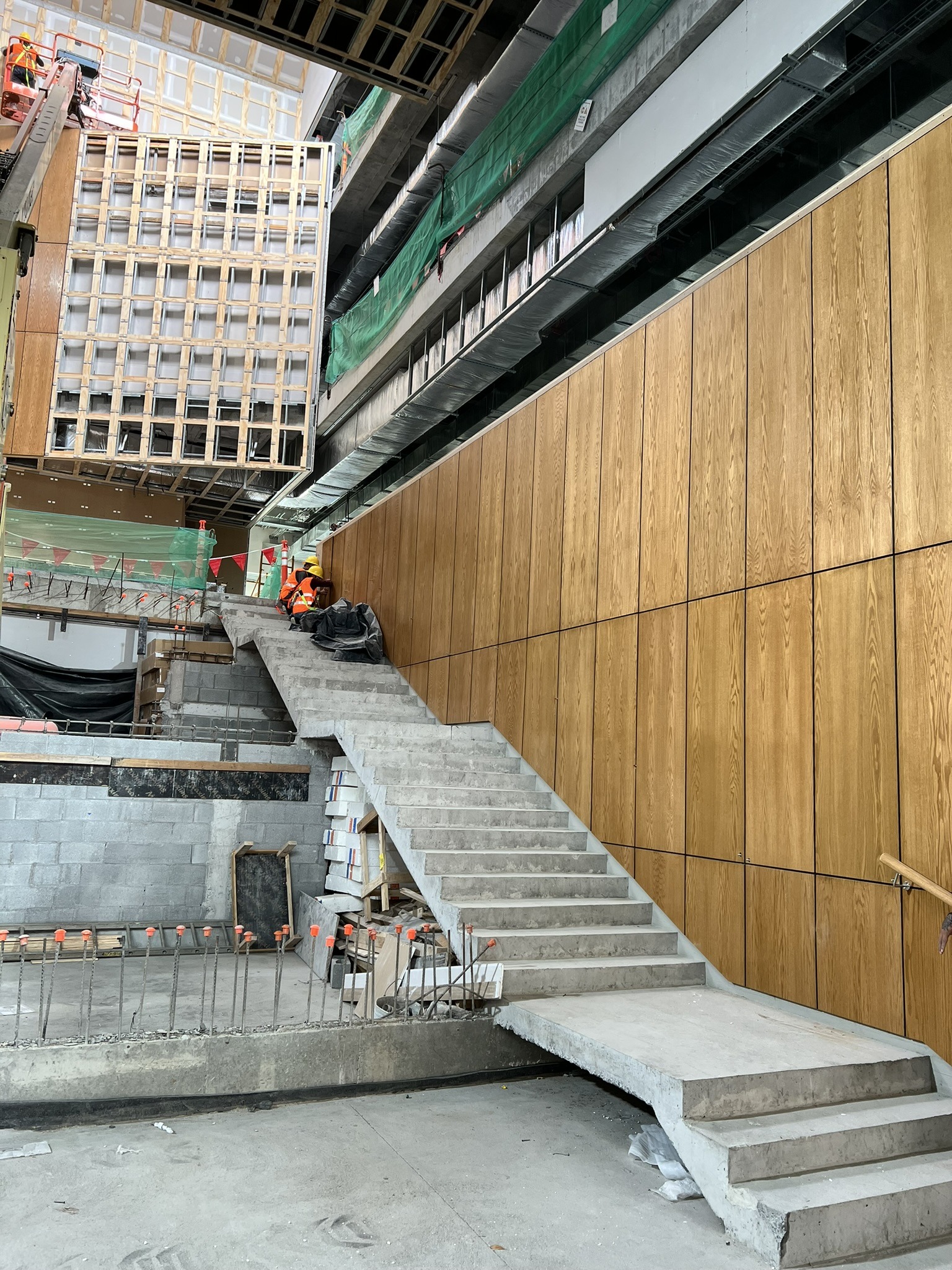
Master Stage acoustical wood paneling is installed
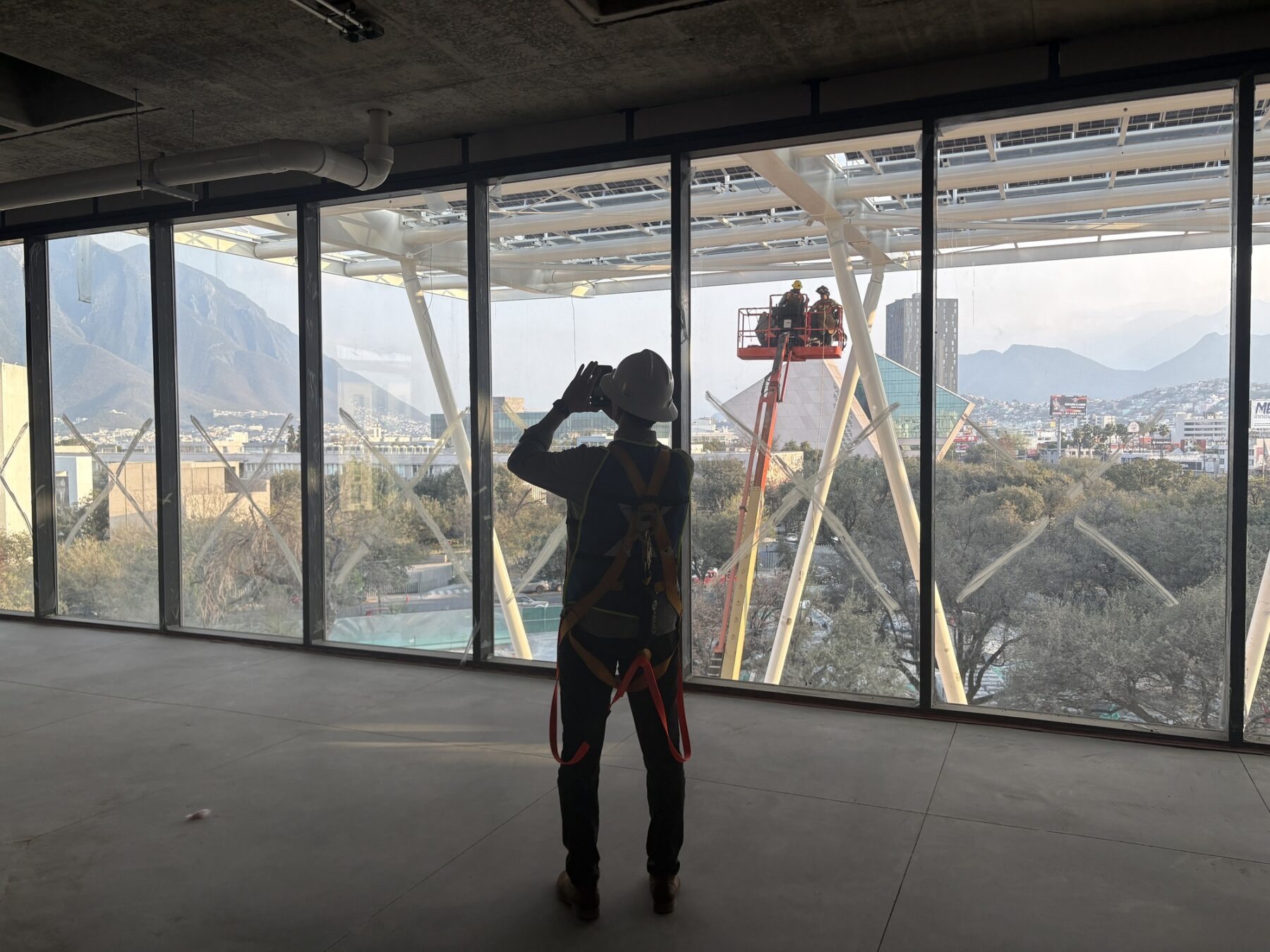
Views from coworking space back to core campus
The large entry pergola references the existing tree canopy
Diagonal columns support the pergola, providing shelter and identity inside and out
Master Stage acoustical wood paneling is installed
Views from coworking space back to core campus
For more information contact Pablo Savid-Buteler.