Strengthening Pipelines for Student Success: Health Sciences Campus Design
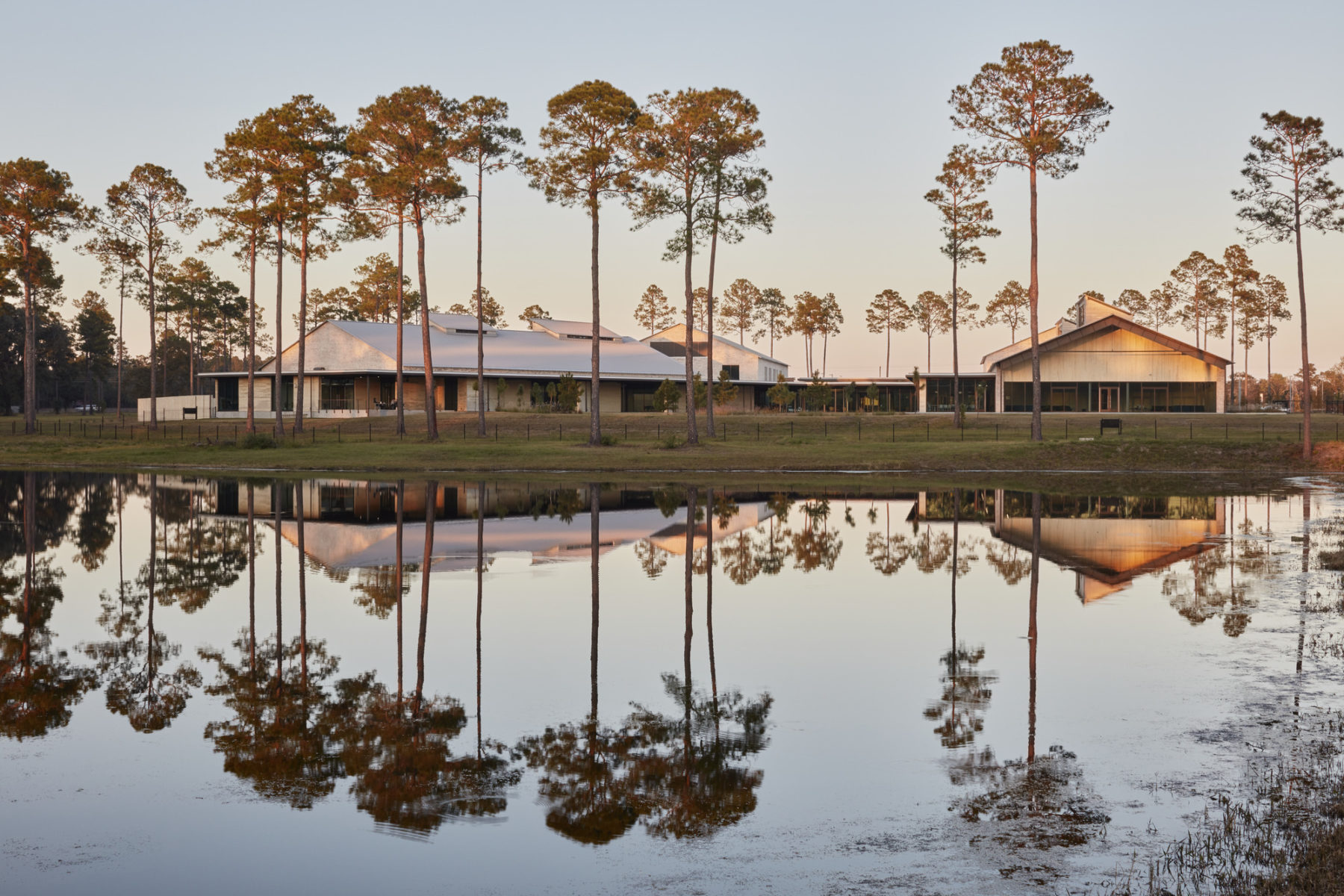
PCOM South Georgia opened in 2019 with a commitment to addressing the critical need for physicians in rural Georgia.

 Sasaki
Across the United States, growing shortages of healthcare workers are placing acute strain on urban and rural communities alike. Universities are stepping up to meet this crisis by investing in health sciences programs and their highly technical facilities.
But the most effective programs today are doing something more than housing straightforward classrooms and labs. They are making deliberate, impactful design choices: creating simulation environments that facilitate active learning, engineering flexible infrastructure that adapts to industry shifts, and designing shared spaces that foster true connection. By prioritizing access to the field, hosting state-of-the-art facilities for hands-on learning, and uplifting the student experience, these spaces attract new generations to the field and ensure communities can finally receive the care they need.
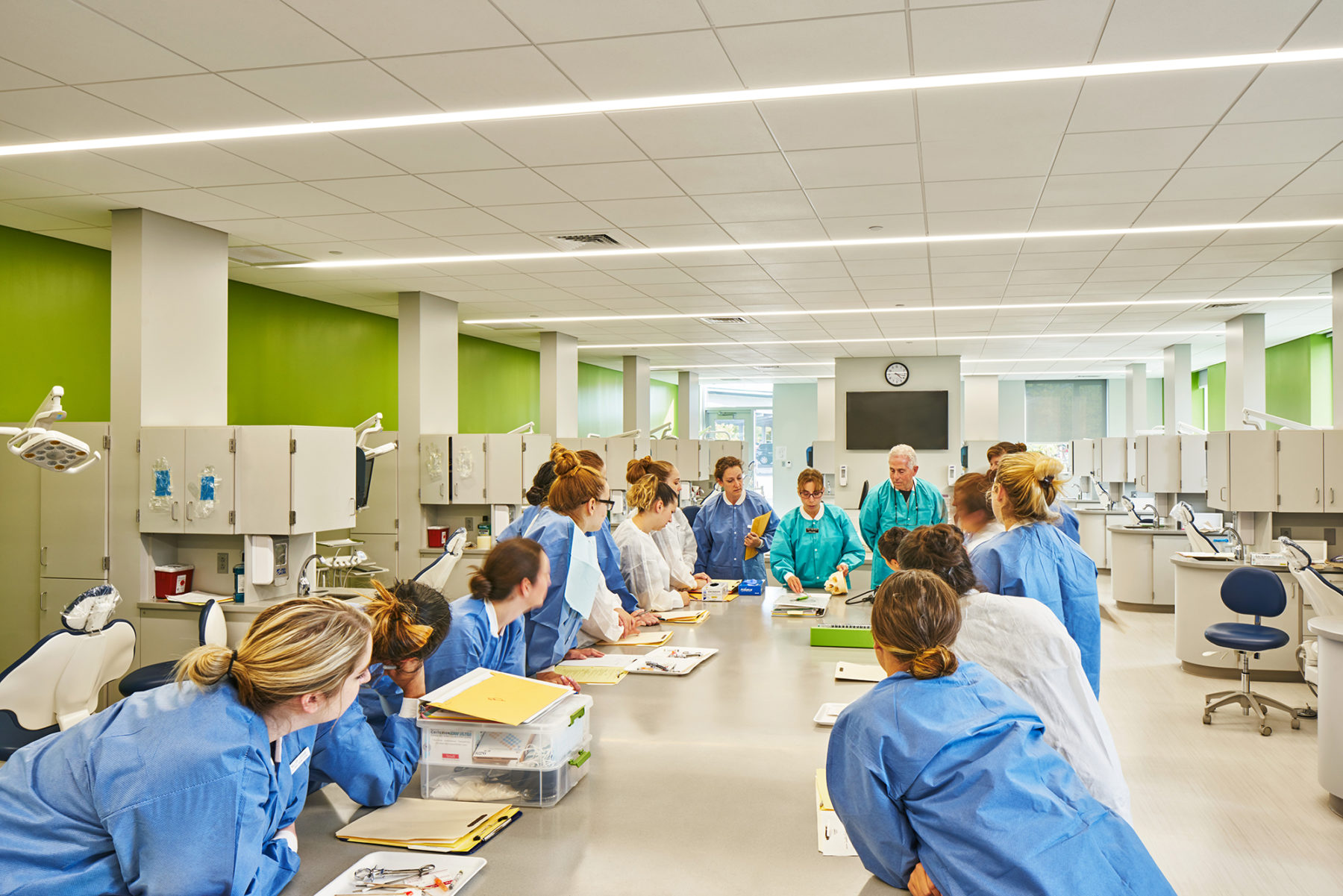
Bristol Community College John J. Sbrega Health and Science Building in Fall River, MA
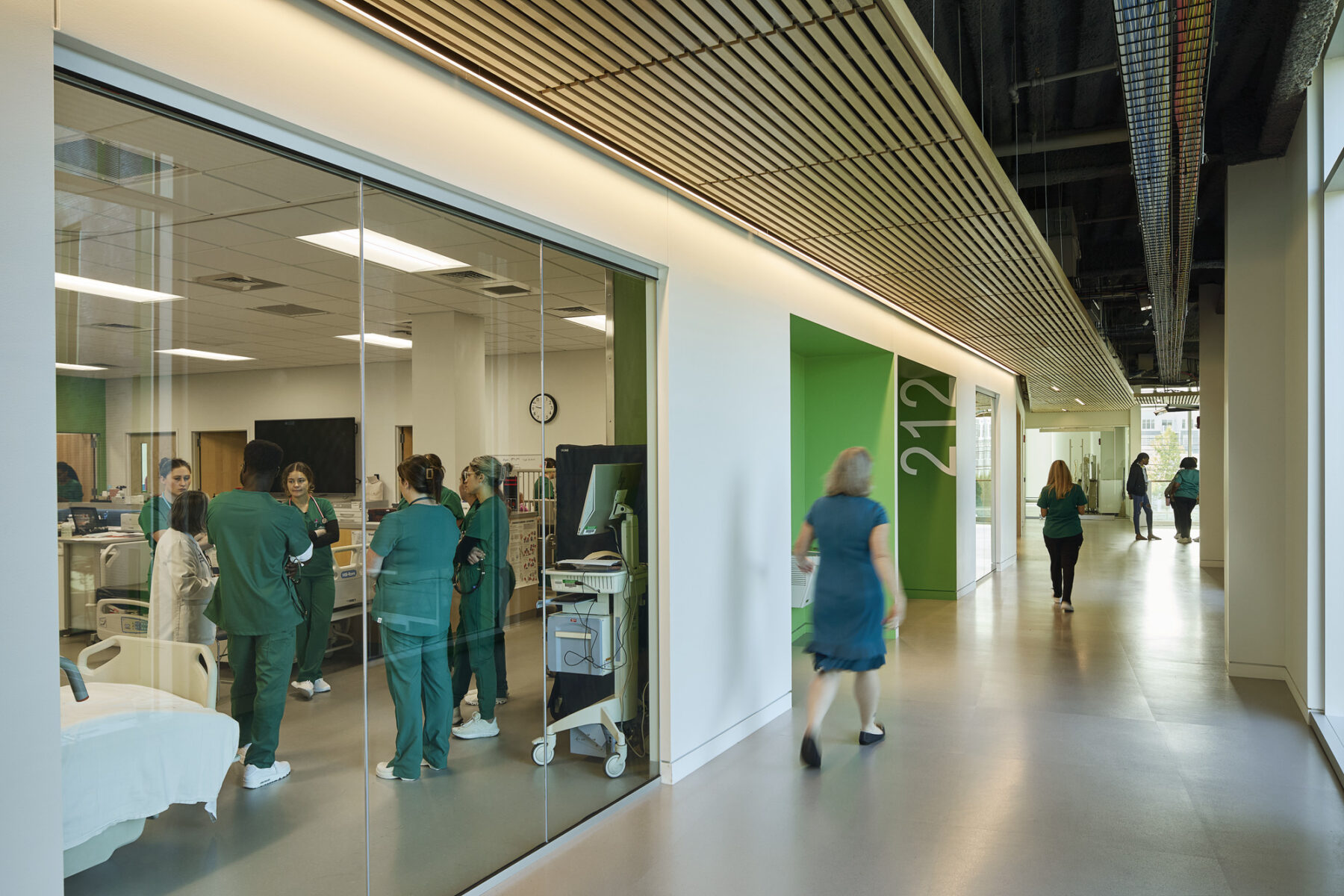
MassBay Community College Center For Health Sciences, Early Childhood, And Human Services in Framingham, MA
While architecture alone can’t solve the healthcare workforce crisis, thoughtful planning and design can deliver measurable returns:
When institutions align high-performance design with student needs, the compounding impact transforms not just the campus, but the future of regional healthcare delivery.
Modern healthcare education relies on spaces that bridge the gap between textbook theory and fast-paced clinical reality. By embedding realistic simulation environments directly into academic facilities, institutions facilitate high-stakes decision-making, mastery of complex equipment, and confidence-building in controlled, supportive settings.
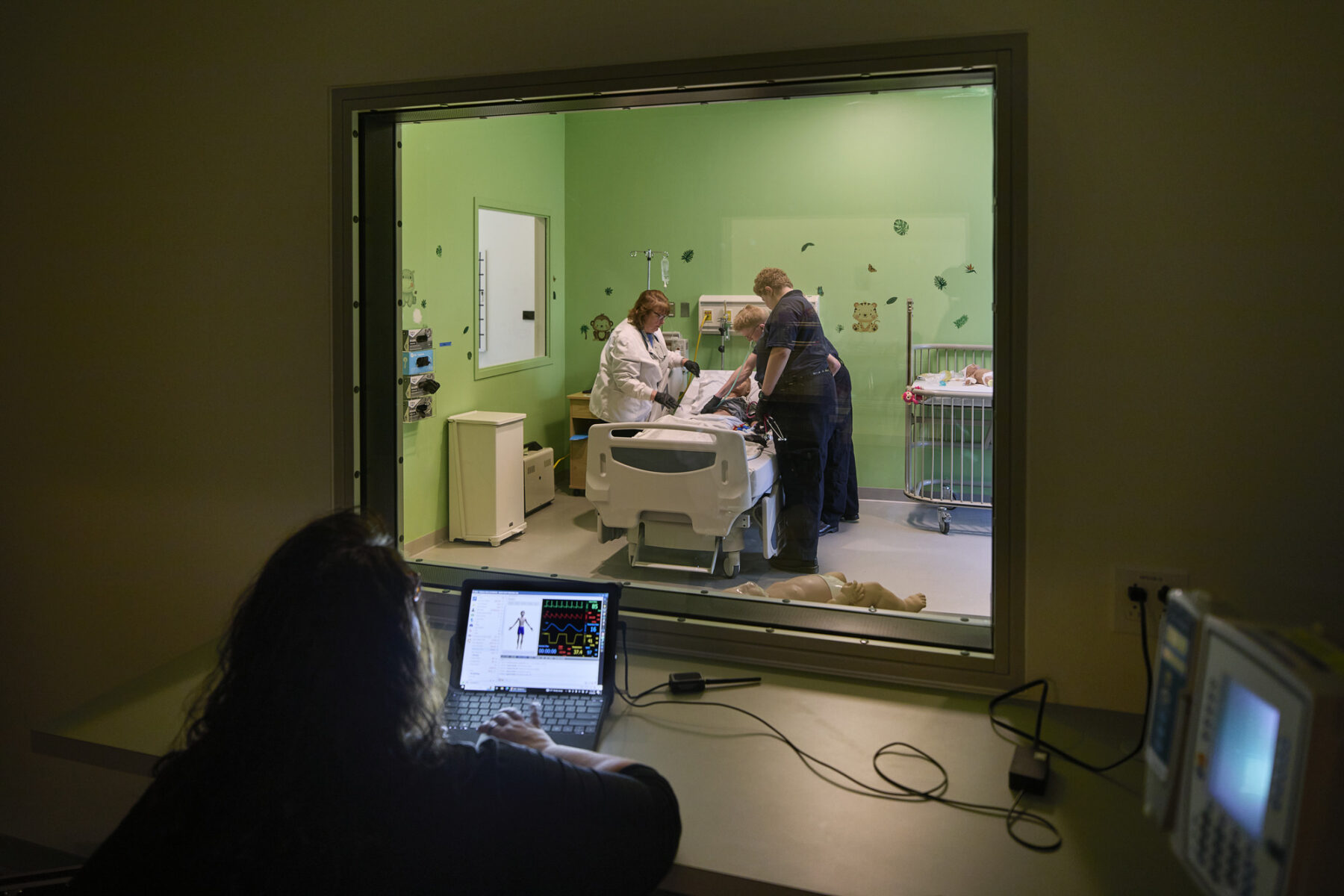
Simulation spaces like this pediatric room at MassBay Community College replicates the conditions of clinical situations to help students build hands-on skills in a controlled environment.
Hands-on learning is a priority at MassBay, where ten active-learning labs support specialized training opportunities in fields ranging from radiology, phlebotomy, and paramedicine. By housing these high-fidelity environments under one roof, the center delivers the exact infrastructure needed for real-time clinical training. As MassBay President David Podell noted, the building “symbolizes a new era in academic excellence.”
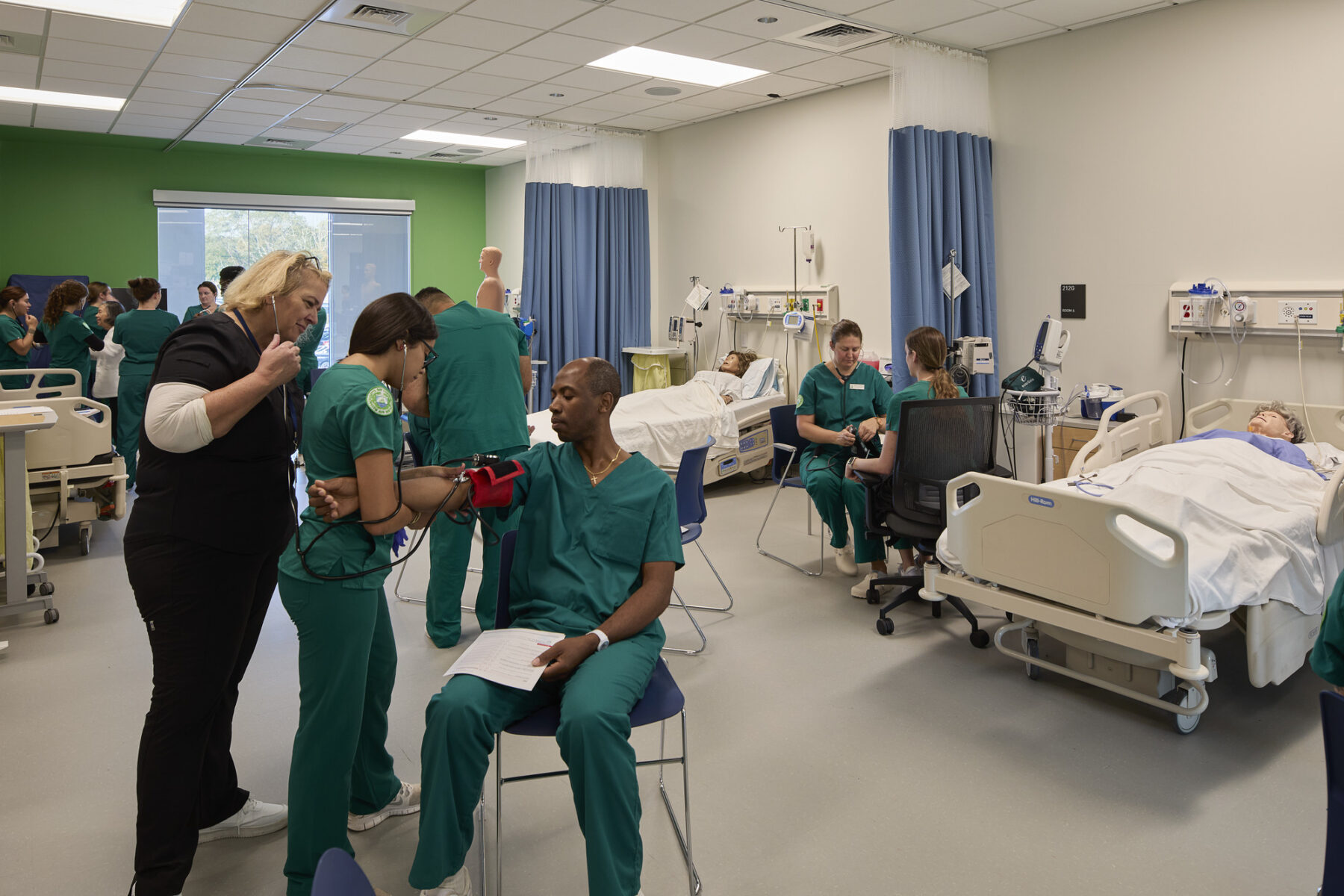
Phlebotomy lab at MassBay
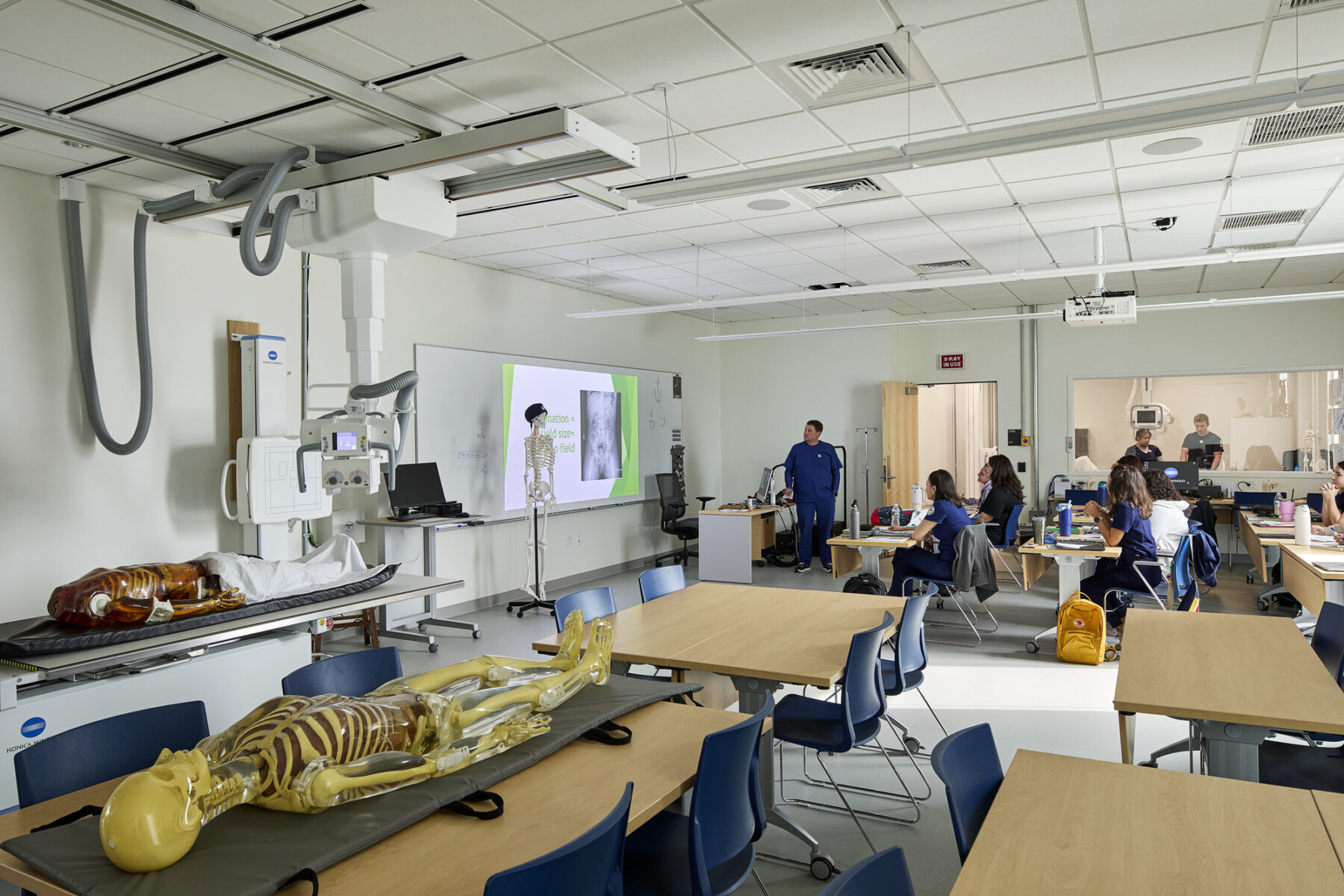
Radiology classroom at MassBay
While simulation environments provide the rigor needed for practice, health sciences education cannot remain static. By its very nature, the field is intrinsically interdisciplinary and people-centered, drawing from different specialized areas to solve problems and provide patient care. The health sciences are also rapidly evolving, absorbing new technologies to broaden the horizons of teaching and research.
Building facilities for specialized training doesn’t mean that learning spaces have to be constrained to singular instructional uses. To support a broad spectrum of teaching models, flexibility must exist across multiple scales within a building.
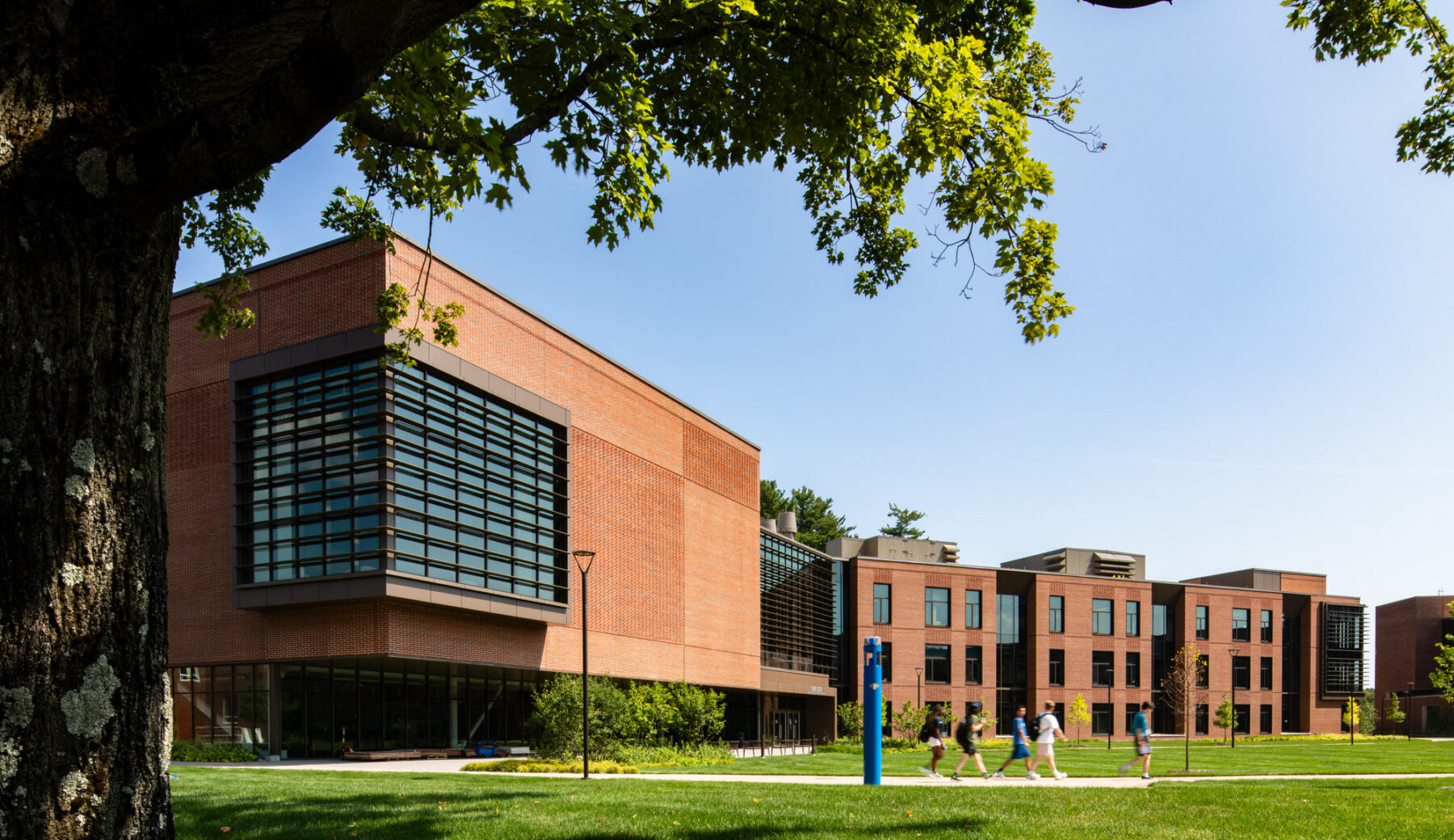
The Quinnipiac University Academic Building for Science, Innovation, Technology and Exploration (SITE) brings together previously siloed disciplines under one roof in an environment that encourages interaction and collaboration.
At Quinnipiac University, Sasaki’s design for a new STEM facility brought together traditional and health sciences under one roof, creating more organic zones of overlap and interaction to bring collaboration to the forefront of teaching and research.
Data-driven usage studies and participatory workshops helped shed light on existing areas of disciplinary collaboration, leading to a program that focused on shared lab types rather than subject-based divisions. Research and teaching labs exist side by side, connected by zones where equipment and resources can be shared. These spaces follow a modular design that allows them to be easily reconfigured over time, freeing up the possibility for adapting programs as the sciences continue to evolve in alignment with emerging technologies.
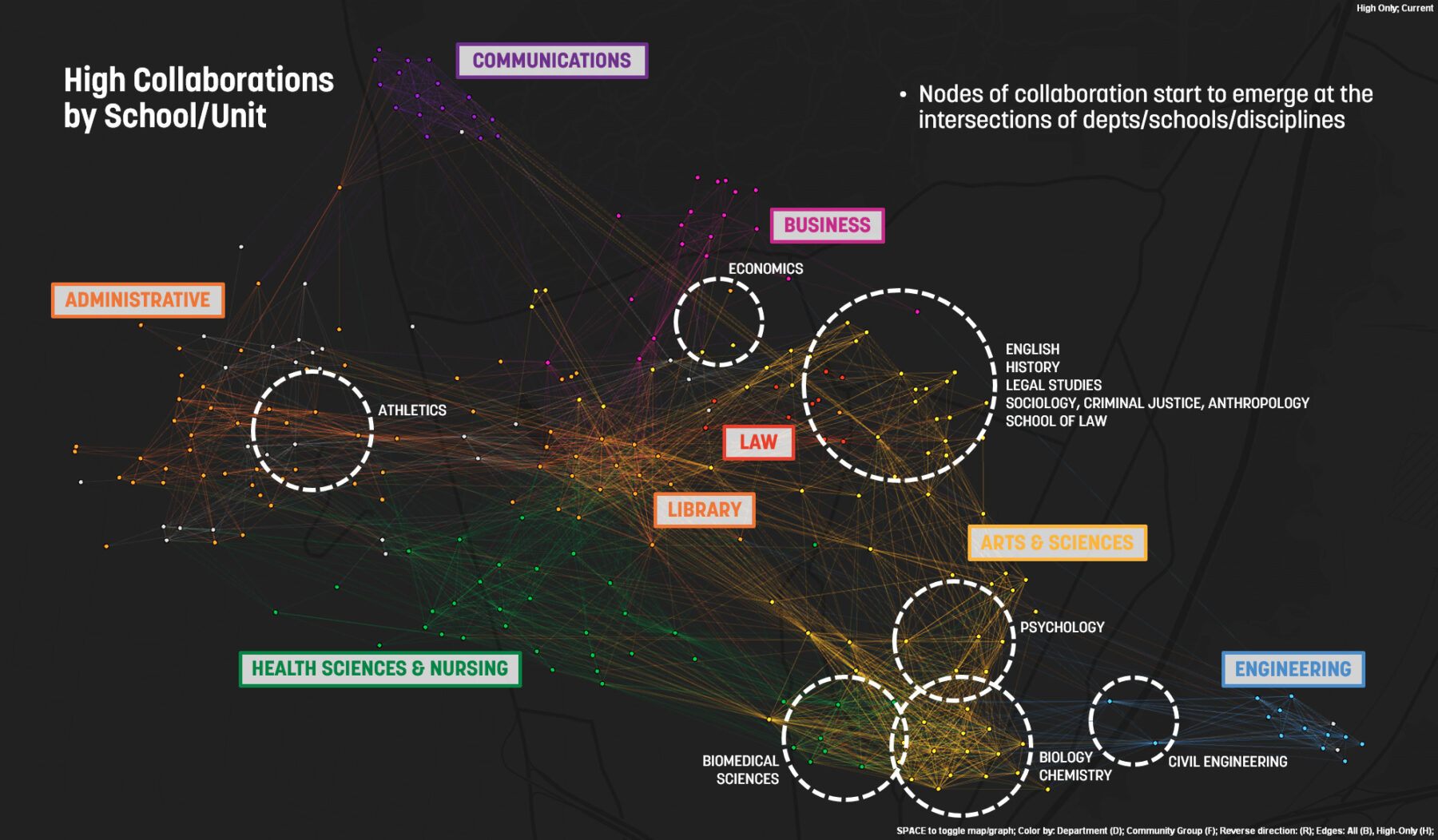
Sasaki’s in-house Collaboration Survey tool gathered information from faculty about their collaborations to inform the design at Quinnipiac.
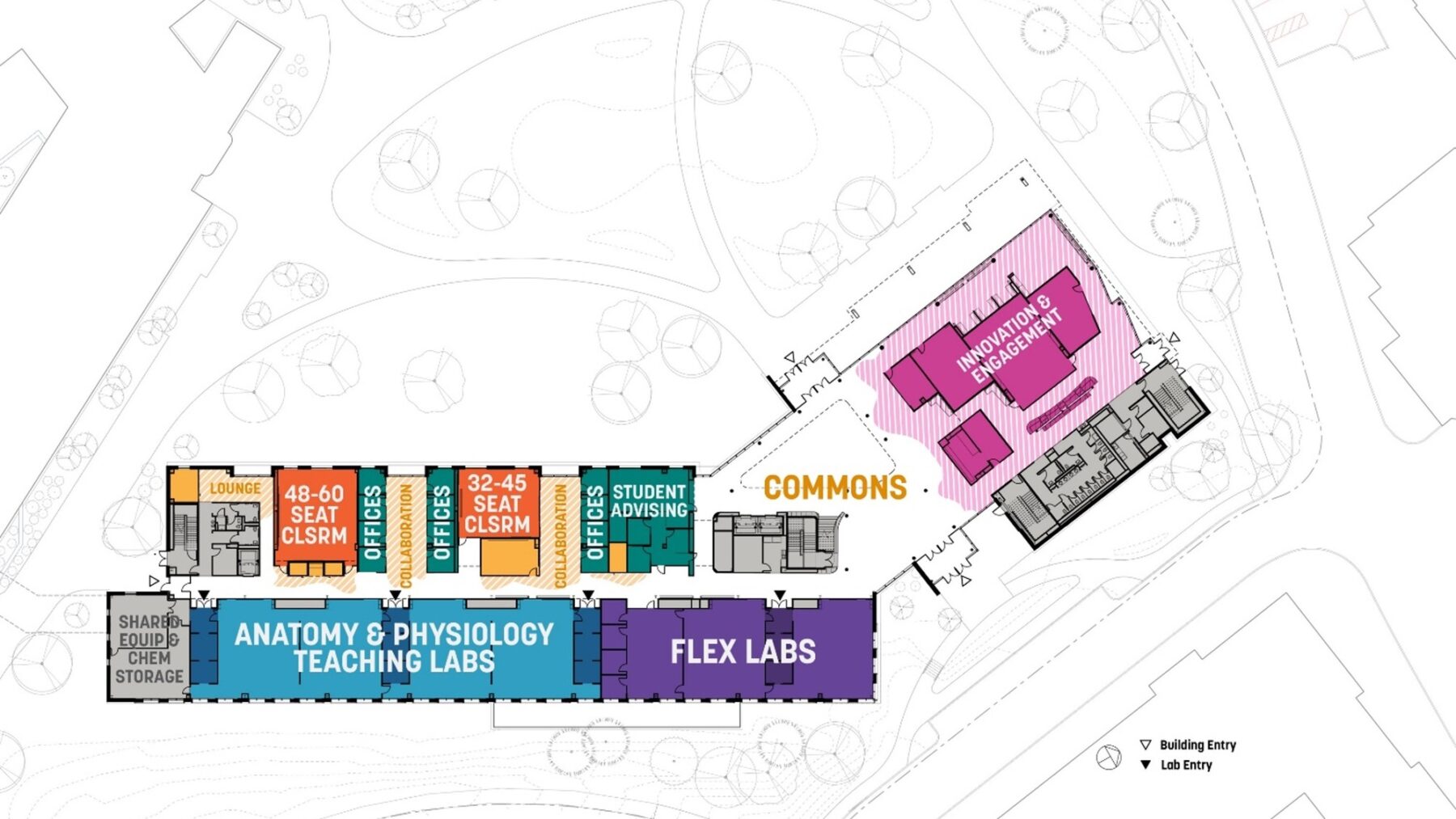
Labs, classrooms, faculty offices, and collaboration spaces are grouped together at Quinnipiac to encourage interaction among students and faculty from different disciplines.
Though health sciences facilities must be designed to support specialized equipment and mechanical needs, strategic space planning can help unlock opportunities even amidst constraint-laden environments. At MassBay, Sasaki’s planners and designers worked with college faculty and staff to identify areas of cross-program lab sharing to maximize the benefits of their new state-of-the-art facilities and create efficiencies. The Registered Nurse (RN) and Licensed Practical Nurse (LPN) programs, for example, which were originally planned to have separate labs, were instead combined in a larger, single lab with more robust shared resources like a central nursing station, patient bays, and patient rooms.
Flexibility can also trickle down to the scale of the classroom. In the Nursing Lab at Bristol Community College’s John J. Sbrega Health and Science Building, students and instructors move back and forth between specialized clinical beds with training mannequins and the open space in the center, where movable furniture easily adapts to the flows of hands-on work and prep and debrief discussions. Similarly, the college’s Dental Hygiene classrooms feature individual workstations where students can build confidence and hone their skills, while instructors can move easily between stations to provide tailored one-on-one instruction.
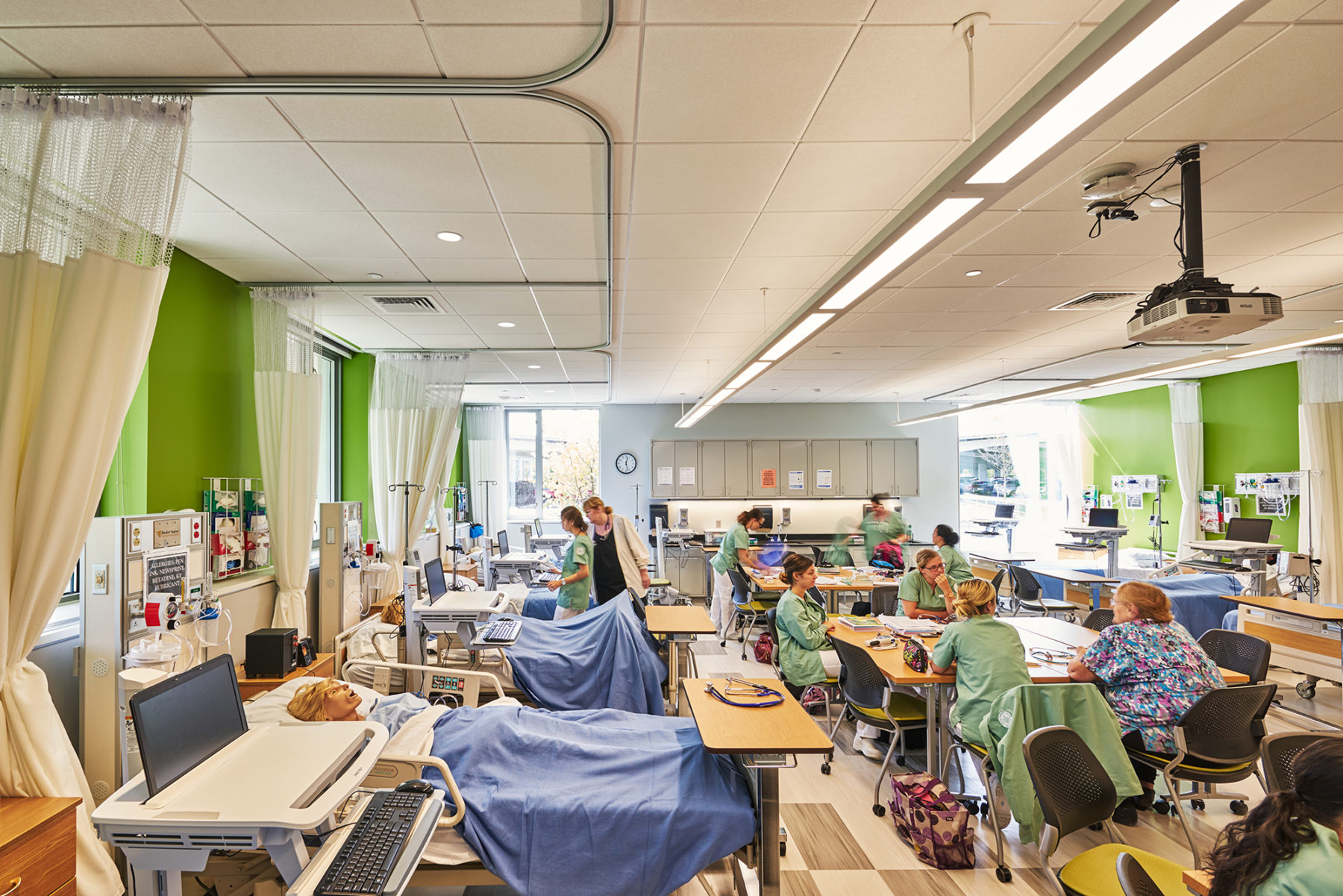
Nursing Lab at Bristol Community College
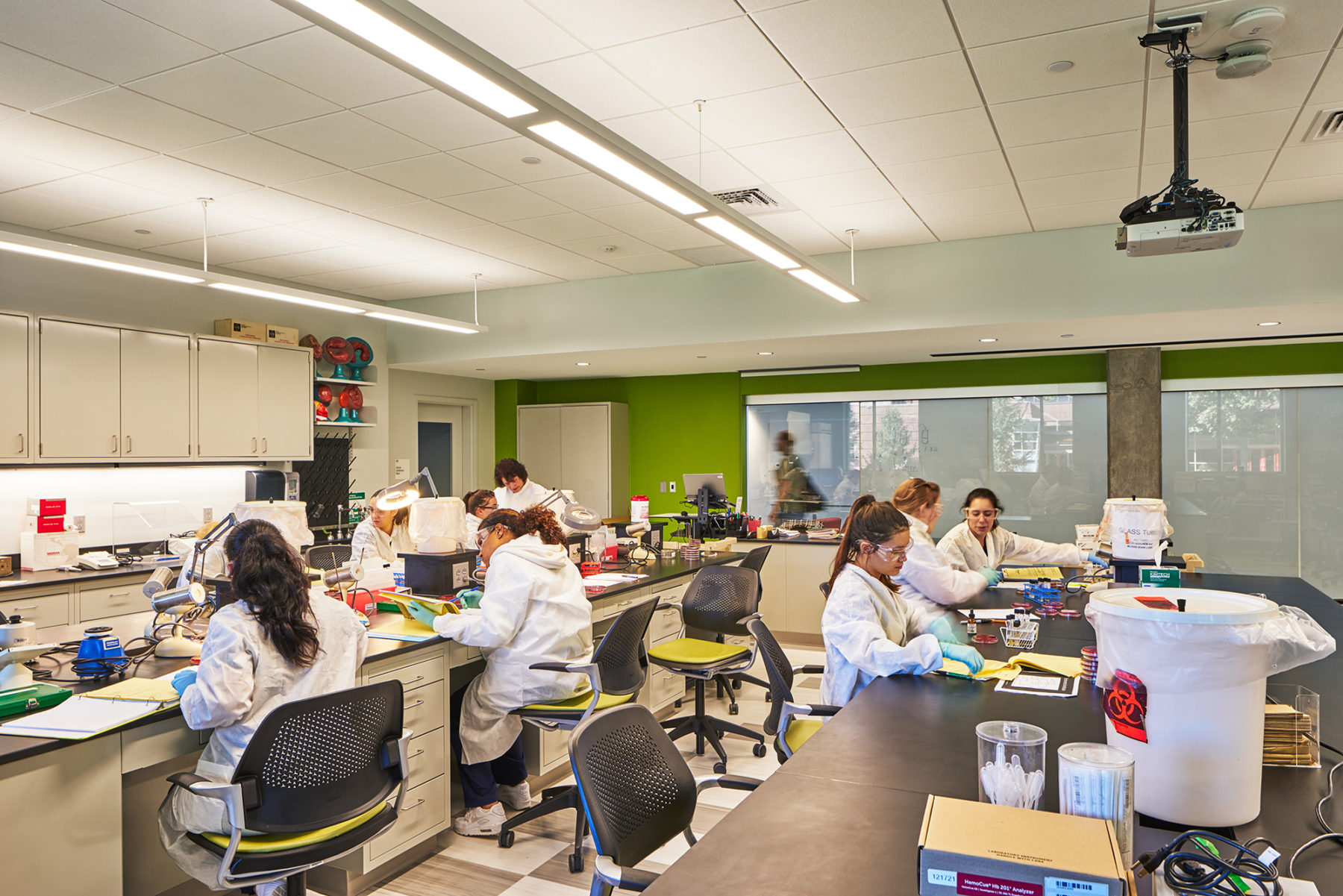
Clinical Laboratory Sciences at Bristol
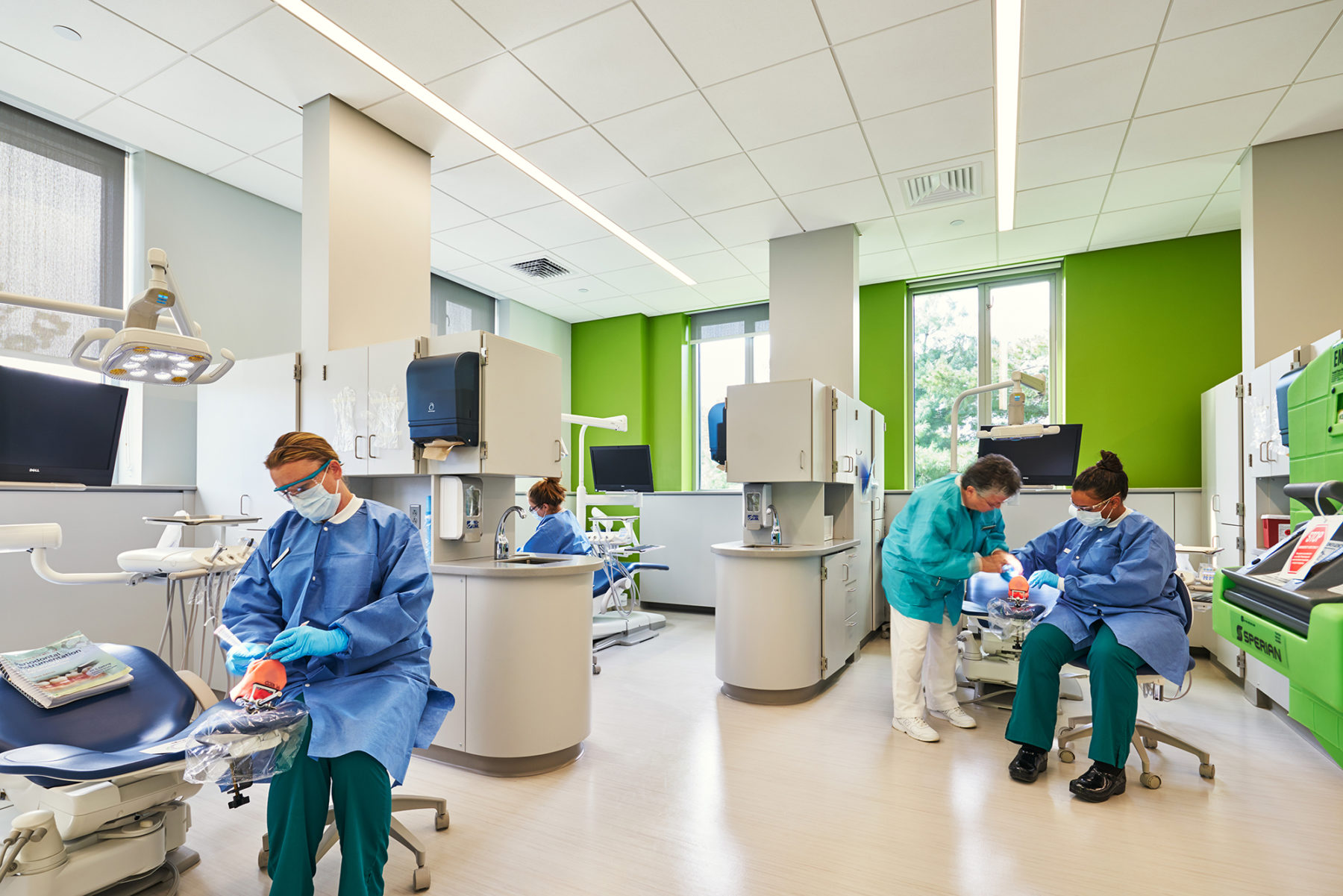
Dental Clinic at Bristol
Nursing Lab at Bristol Community College
Clinical Laboratory Sciences at Bristol
Dental Clinic at Bristol
Specialized labs and classrooms often come to mind first when considering the essential building blocks of a health sciences education. Yet learning doesn’t solely take place within the vacuum of the classroom. The entire environment of an academic complex, from its geographic context and landscape, to the flow of movement and light within its spaces, contours the ways we live and learn with one another.
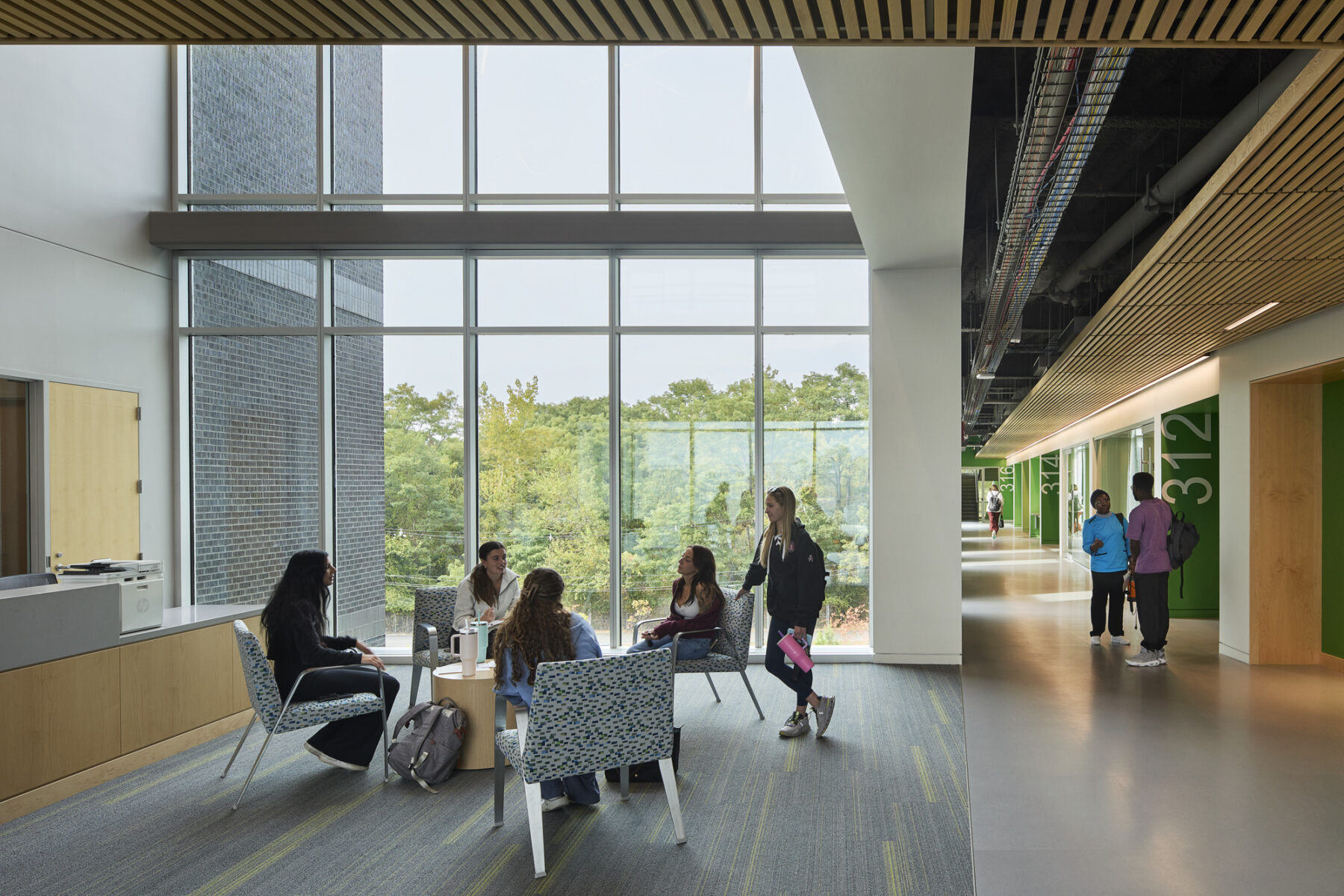
Informal gathering spaces help create an atmosphere of ease and community.
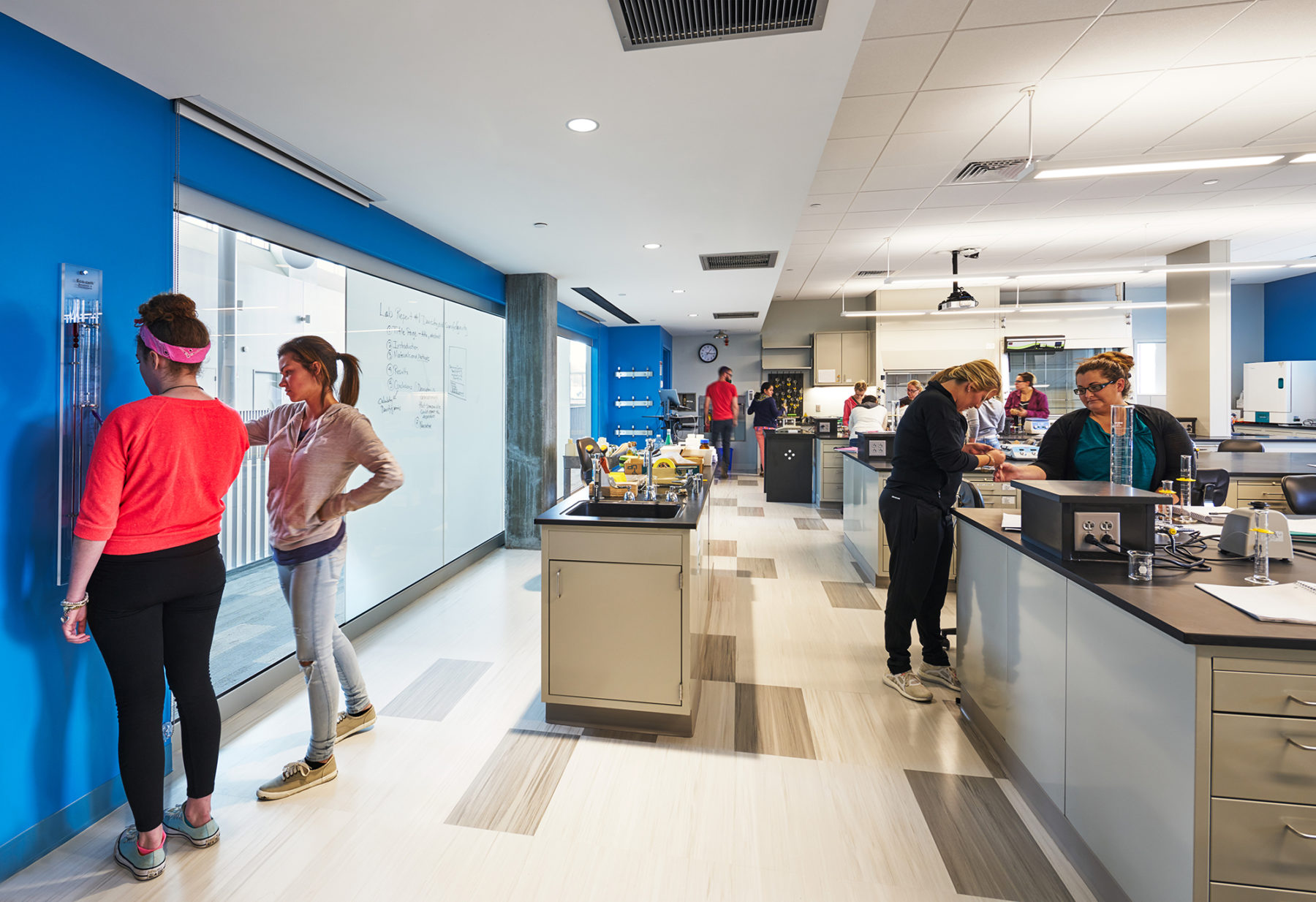
At Bristol, the glass walls separating the labs from the atrium activate the shared space by putting learning on display, while the partly opaque surface doubles as a whiteboard.
Social infrastructure is integral to student success, especially given the highly interpersonal and collaborative nature of the health sciences. The most successful programs recognize the diversity of student perspectives and treat community building and collaboration as central to the training experience. This includes spaces for respite and interaction, especially at community colleges, where many students balance coursework with full- or part-time employment. For these commuting students, informal spaces are vital, not only for quiet study, but also for socializing and resting between classes and other responsibilities.
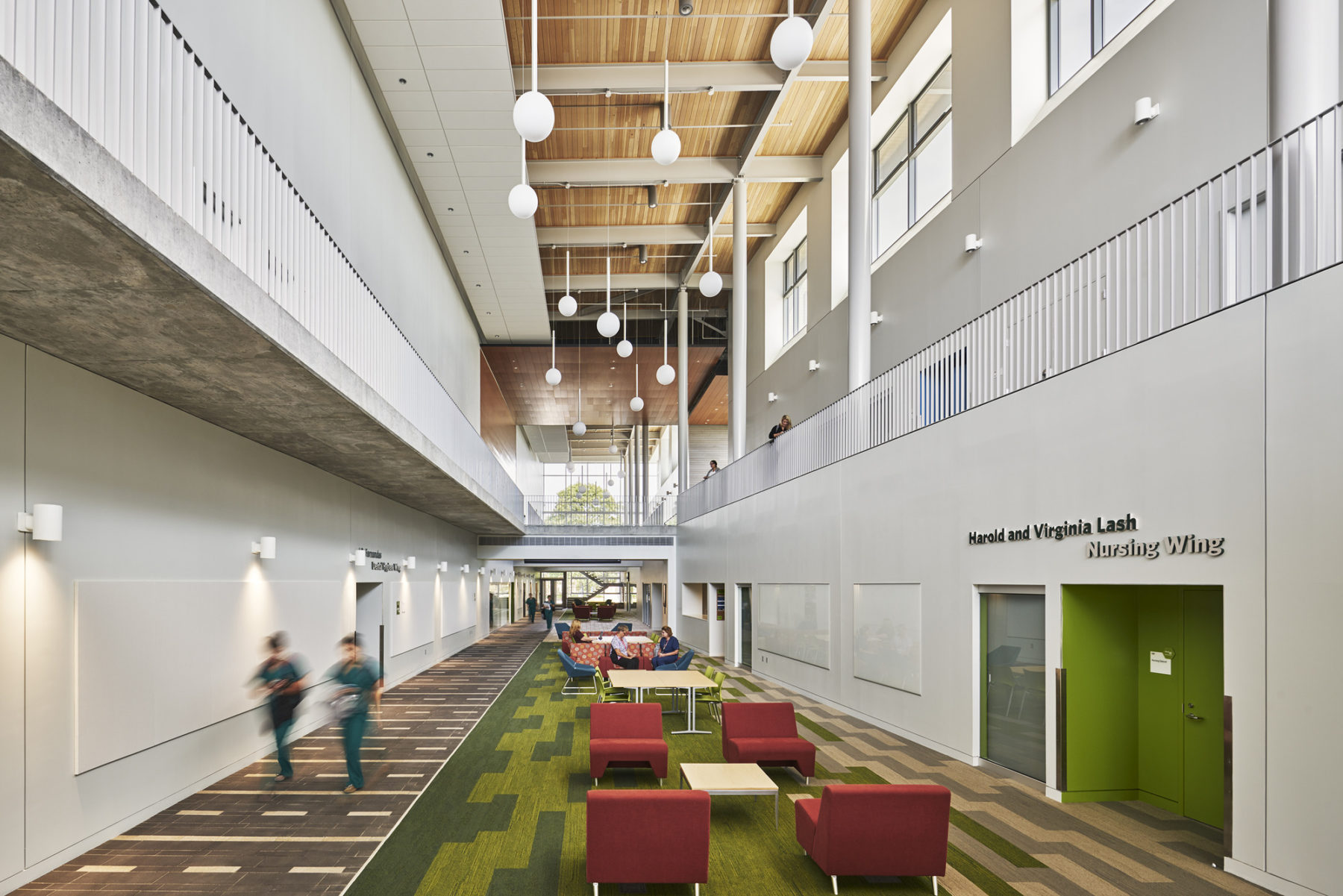
The atrium at Bristol Community College functions as a student living room that spans the length of the building.
At Bristol Community College, a shared, light-filled atrium acts as a fulcrum for the building around which teaching spaces are organized. Labs are fitted with glass walls that look out onto the atrium, making learning visible throughout the building and encouraging a culture of openness and collaboration.
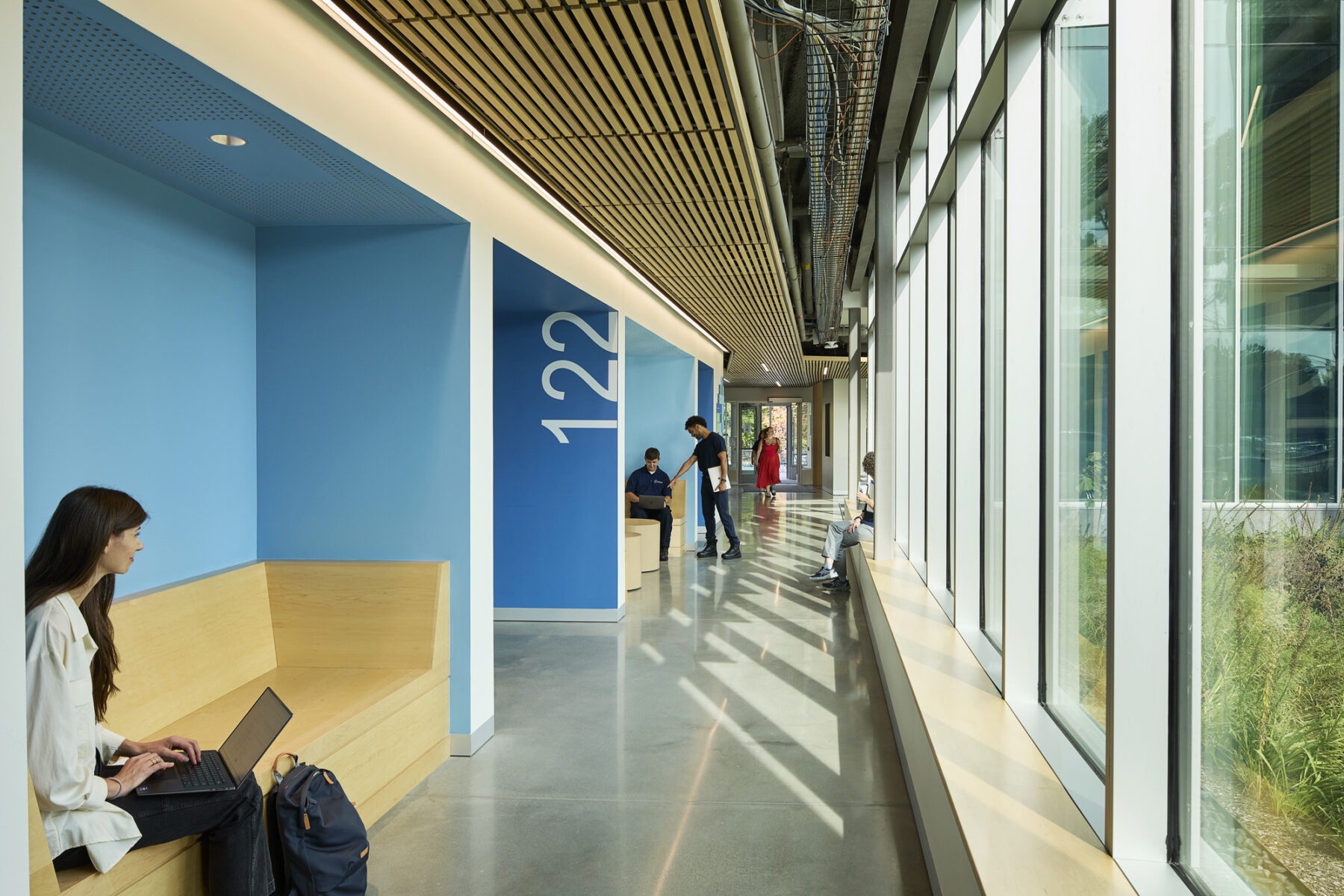
Informal study nooks provide spaces for a quick bite or break between courses.
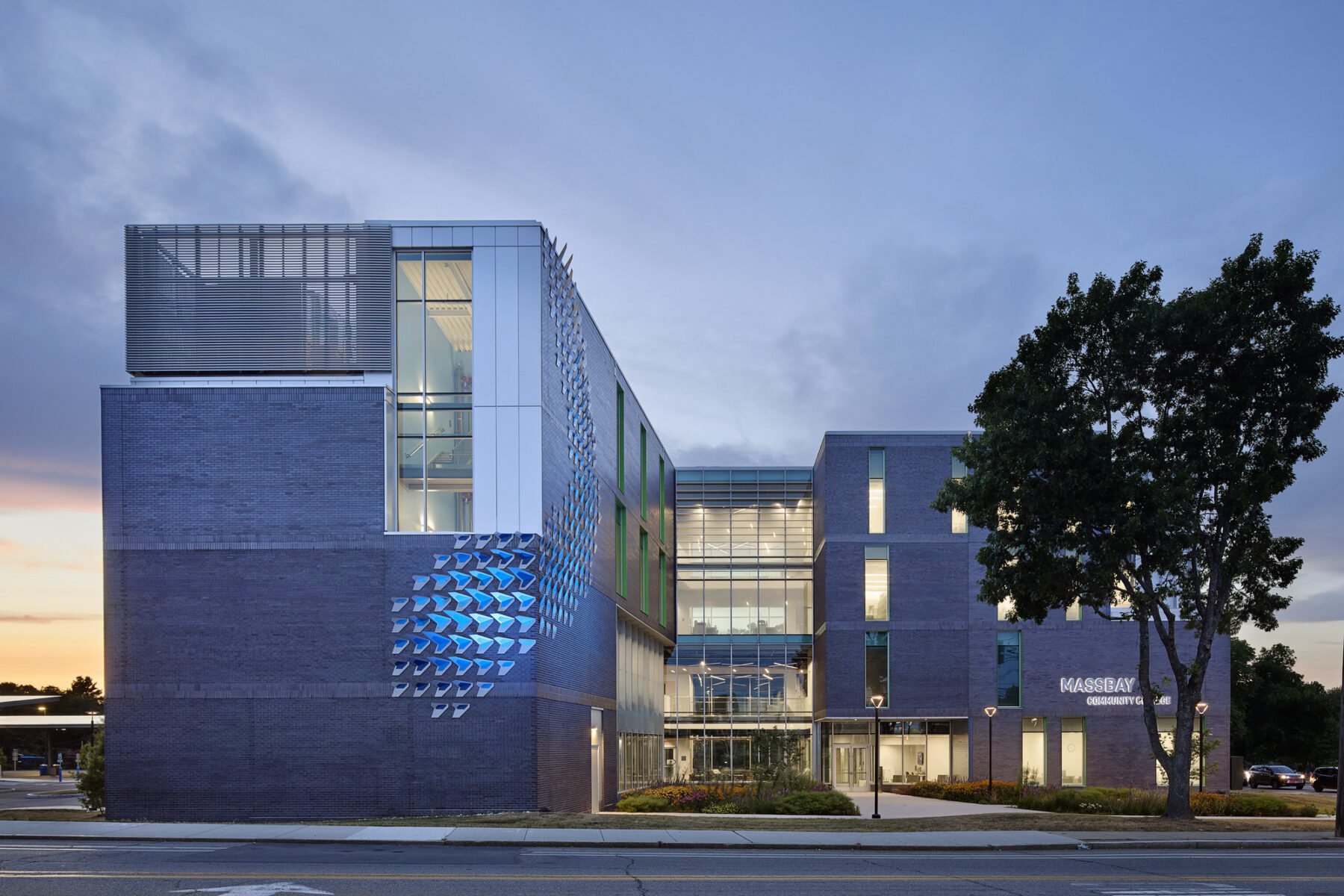
The painted metal panels that comprise Water Finds a Way create a dimensional effect that animates the facade from day to night.
Interstitial spaces, like the brightly colored study nooks that line the corridors of MassBay’s Center, also serve as welcoming invitations to have a quick lunch break or chat with classmates. A permanent architectural installation by local artists MASARY Studios adds dimension to the facade and acts as a beacon from morning to night. Titled “Water Finds a Way,” the artwork evokes the healing, restorative quality of water and the dynamic nature of the teaching and learning taking place within the building.
Access to quality outdoor spaces is just as vital to the student experience, especially given the high-stress nature of the medical field. Rather than operating on the traditional model of a medical school as a hermetic facility, Philadelphia College of Osteopathic Medicine’s (PCOM) South Georgia campus emerges in conversation with its environmental context, diffusing the barrier between interior and exterior.
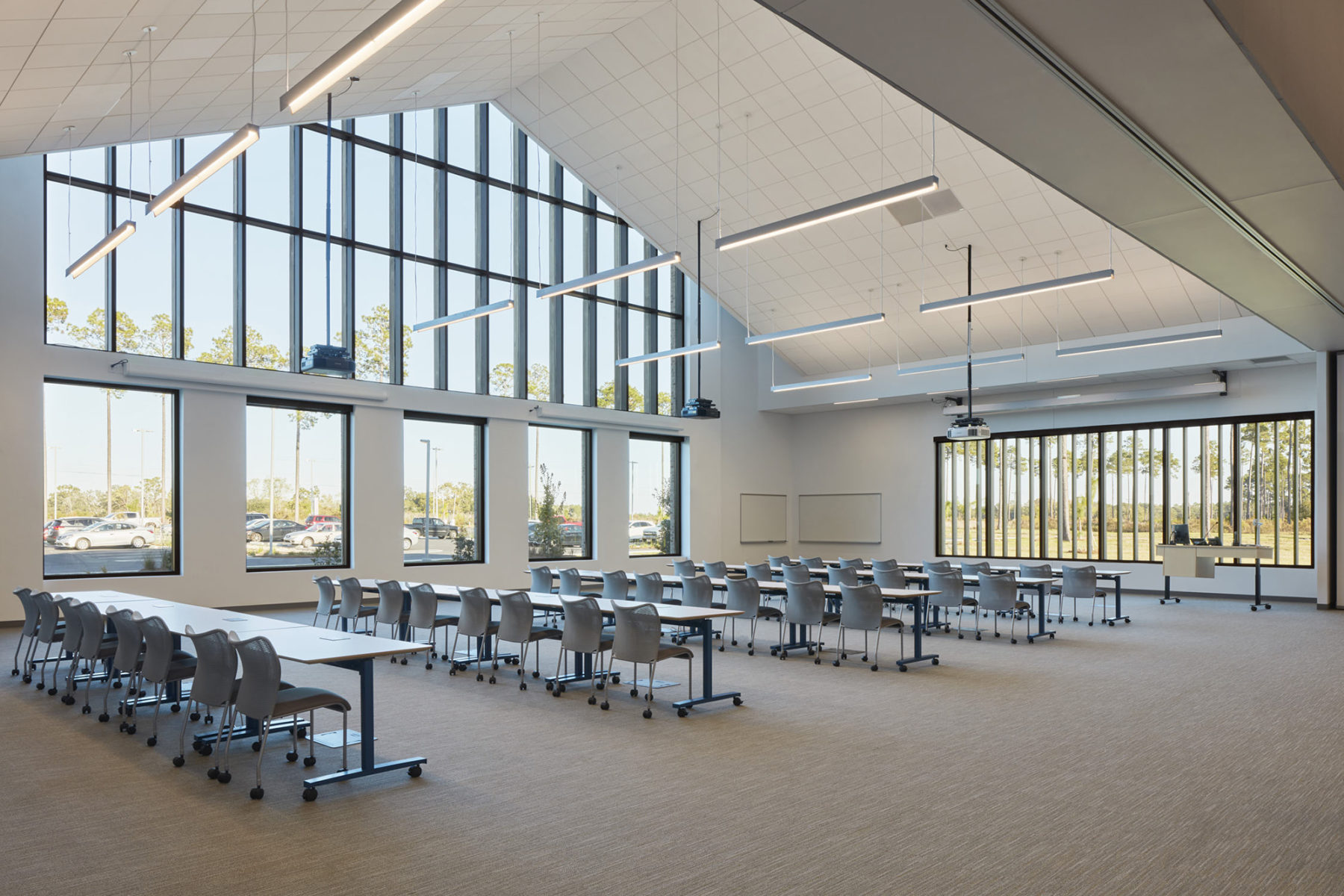
Large windows and gabled roofs bring in plenty of natural light into classrooms.
The planning process began with the land itself. Sasaki worked with the university to identify a location for a new campus focused on rural primary care and developed a master plan and building that responds to the natural setting of Moultrie, Georgia. The main entry is situated at the central juncture of the K-shaped building, operating as the social heart of the campus where students and faculty convene against the sweeping backdrop of the natural landscape, while large windows and roof lanterns suffuse the interiors with daylight.
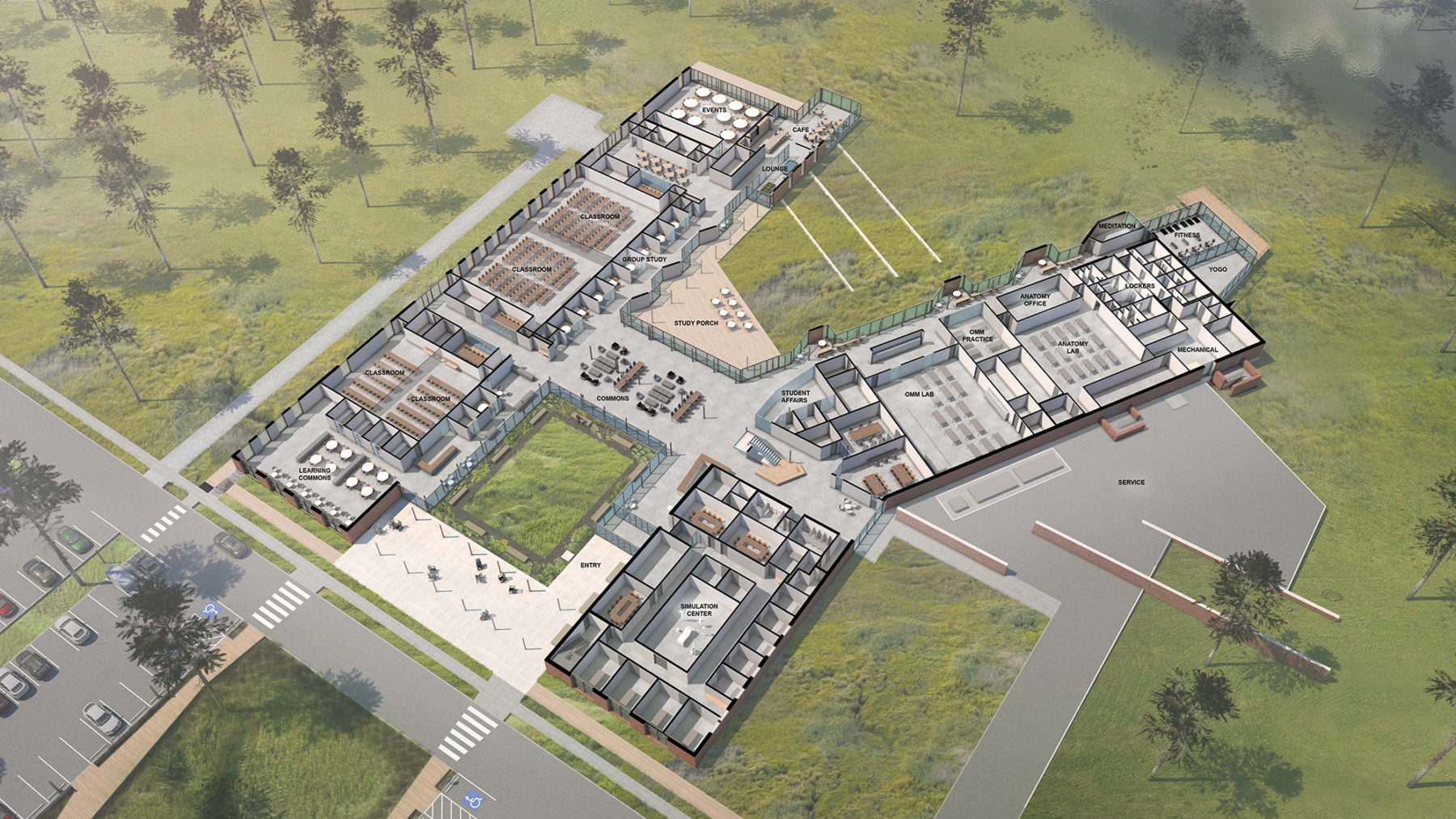
PCOM’s K-shaped plan stretches outward, melding the wings of the low-profile building into the landscape.
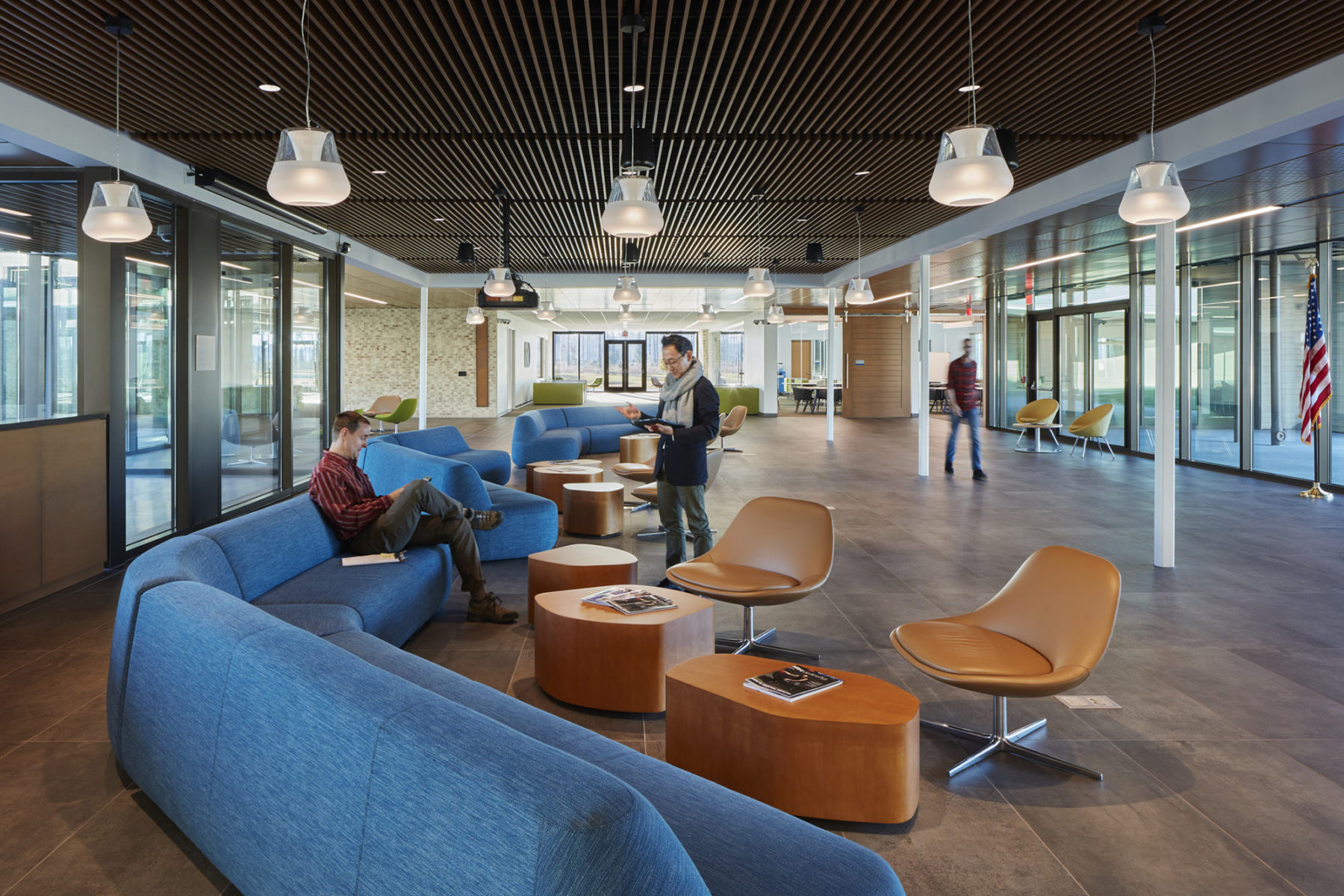
PCOM’s lobby is bookended by glass walls on both sides, with ample seating for students and visitors alike.
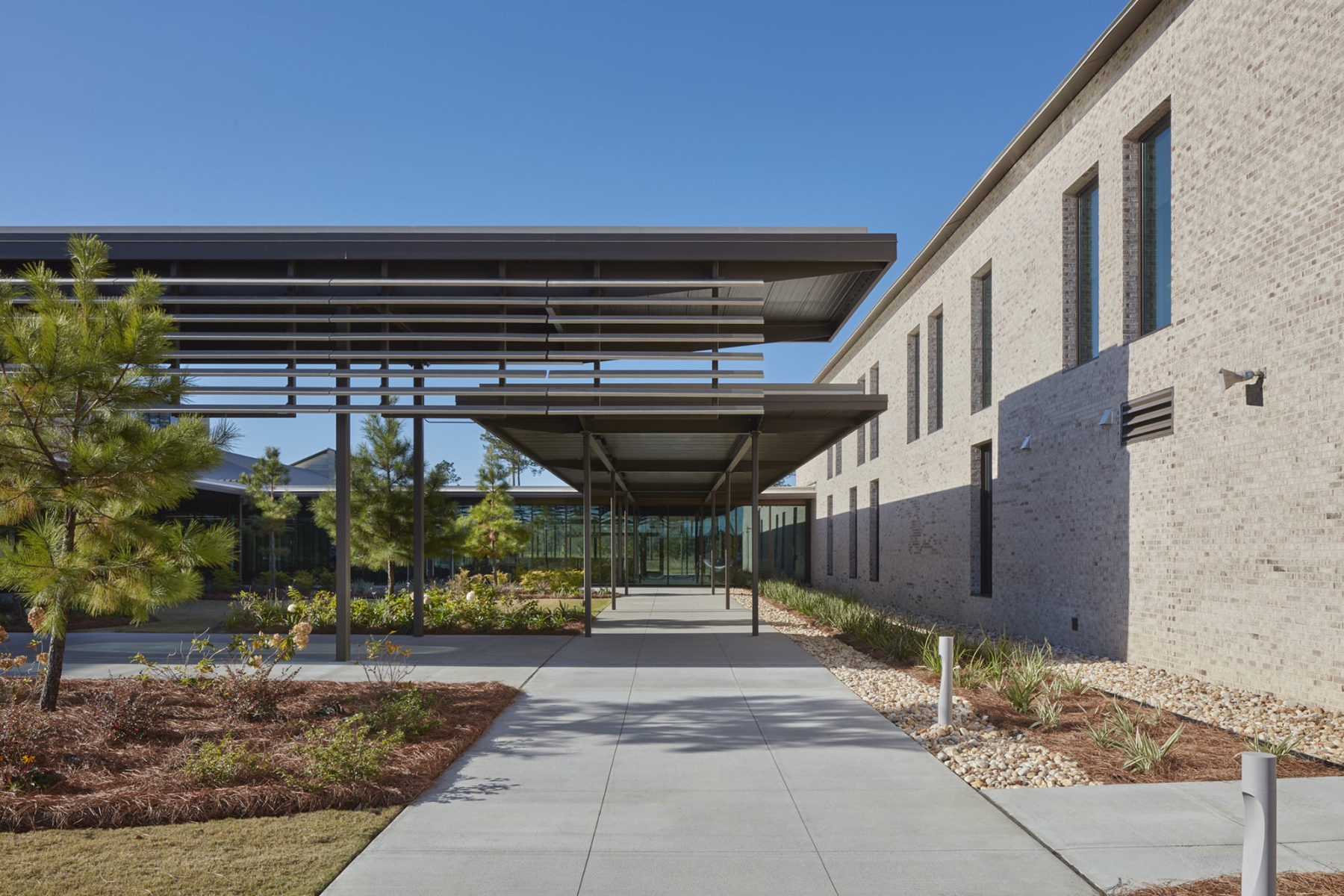
PCOM’s K-shaped plan stretches outward, melding the wings of the low-profile building into the landscape.
PCOM’s lobby is bookended by glass walls on both sides, with ample seating for students and visitors alike.
Outside, the covered porch offers spaces for people to relax and convene, while native plantings reinscribe connections to local context and double as stormwater management infrastructure. The simple metal roof and locally manufactured brick take cues from local vernacular, helping the building meld into the landscape rather than take on an intrusive or intimidating presence in the communities it serves.
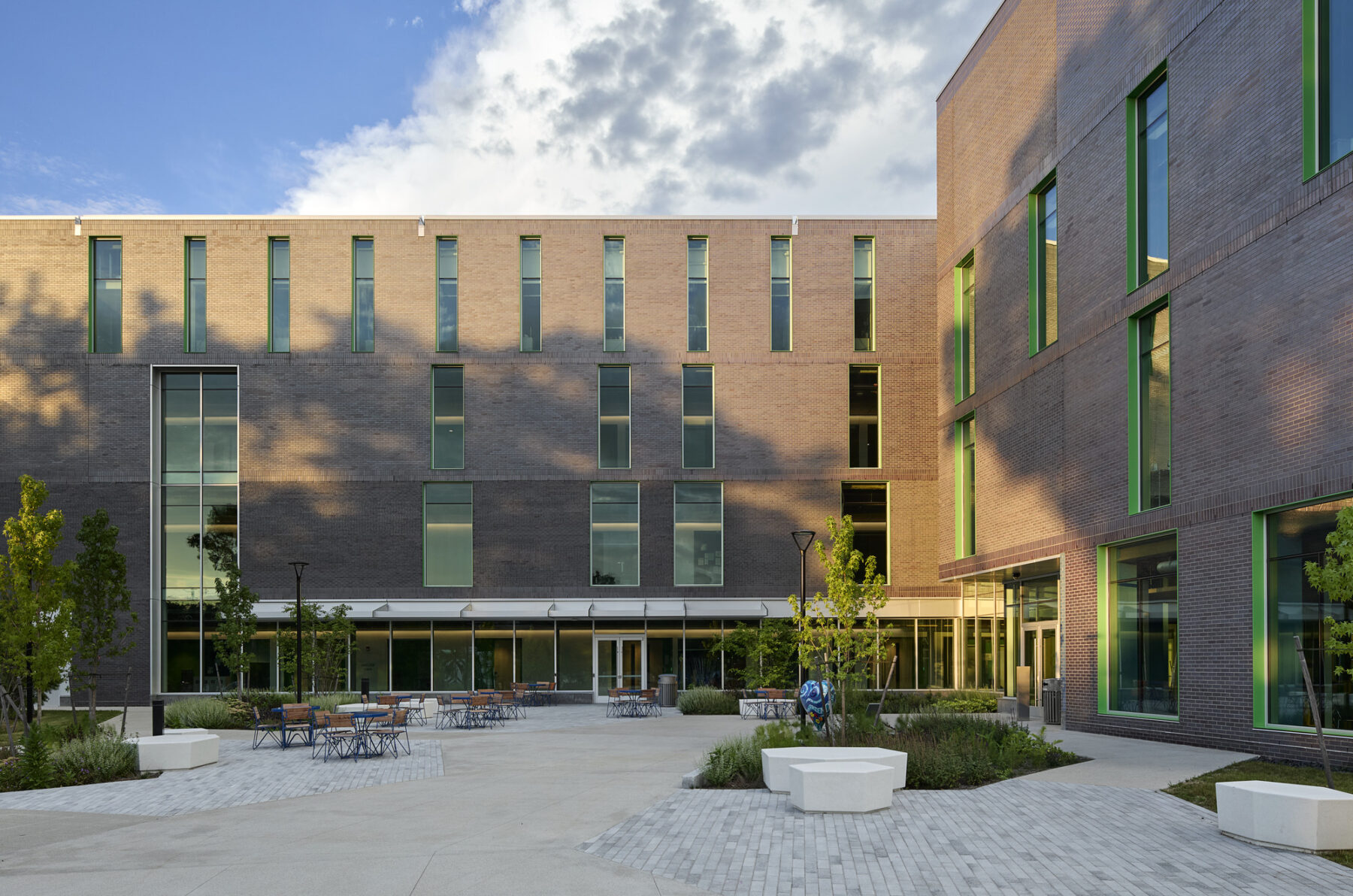
The courtyard at MassBay can also be programmed for academic needs, like a “disaster day” simulation training using the nearby ambulance dock.
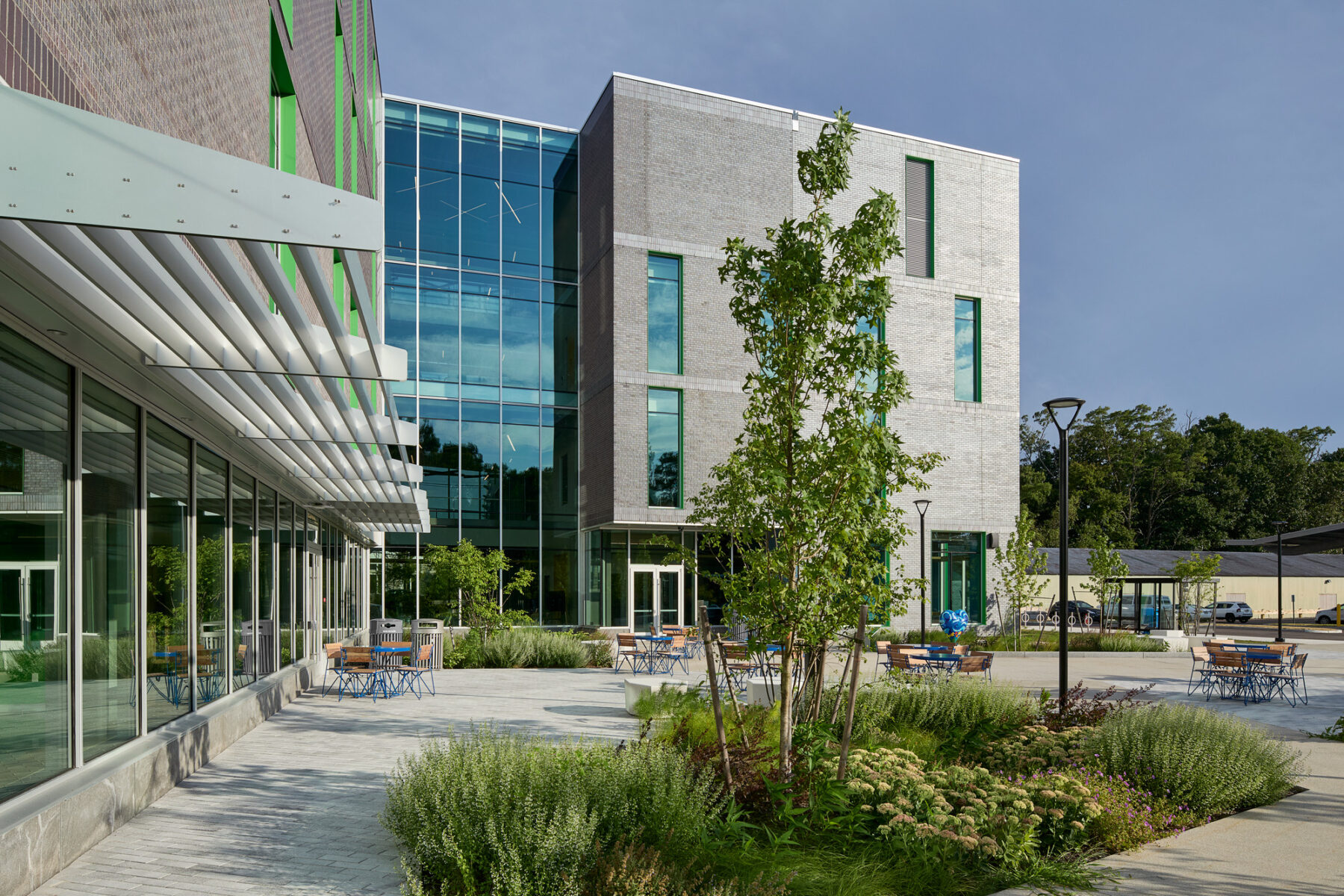
Outdoor spaces can also provide important green spaces on more urban campuses. Courtyard spaces at MassBay are enlivened with plantings and moveable furniture, allowing students to decompress while creating opportunities for flexible outdoor programming.
By investing in outdoor programming, not as an afterthought but as an intentional element of the building program, these campuses recognize that healthcare is at its best when its practitioners are trained in environments that prioritize and support their physical and mental wellbeing.
Through careful space planning, strategic renovations, and new construction, the most effective health sciences programs actively respond to the needs of current students while adopting flexible approaches that respond to evolving academic and industry trends. With their forward-thinking orientation, these buildings are charting a more sustainable and inclusive path forward and uplifting the next generation of healthcare workers to better serve communities everywhere.