Building the Future of Copley Square
 Sasaki
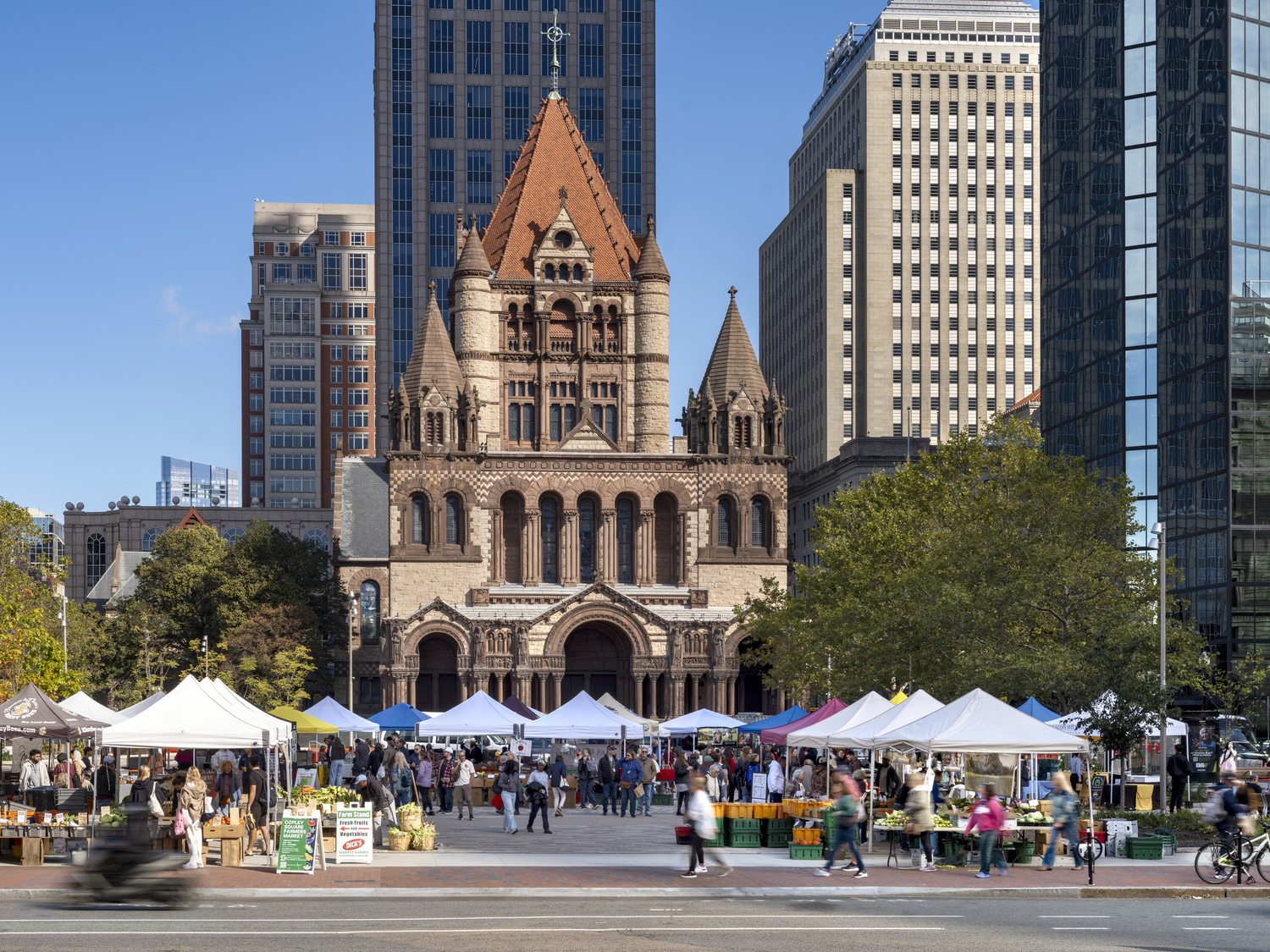
For over a century, Copley Square Park has been the front porch of Boston’s civic and cultural life. Generations of Bostonians and visitors have gathered here to relax, celebrate, protest, and commemorate, weaving the park’s history into rich layers of activity and diverse voices.
Yet decades of use put strain on the park’s key features. The root systems of the plaza’s beloved trees were distressed, the fountain needed upgrades, and lawns and pathways were in critical need of maintenance and care. The City of Boston’s revitalization of the 2.4-acre site in downtown Boston sensitively adapts the plaza through a combination of landscape and civil engineering strategies. These changes will help preserve the historic character of Copley Square and protect its best assets while ensuring its sustained future as a beloved public space.
City officials emphasized that the project was as much about community as it was about infrastructure.
“These improvements to Copley Square Park reflect years of planning, community input, and deep commitment to making this space welcoming, accessible, and resilient for everyone,” said Interim Parks Commissioner Cathy Baker-Eclipse.
“From fully accessible pathways to an expanded tree canopy and shaded seating, these improvements support the park’s daily function as a gathering space for residents, workers and visitors, while providing flexible space for community staples like the Copley Square Farmers Market to major cultural events such as First Night and the Boston Marathon.”
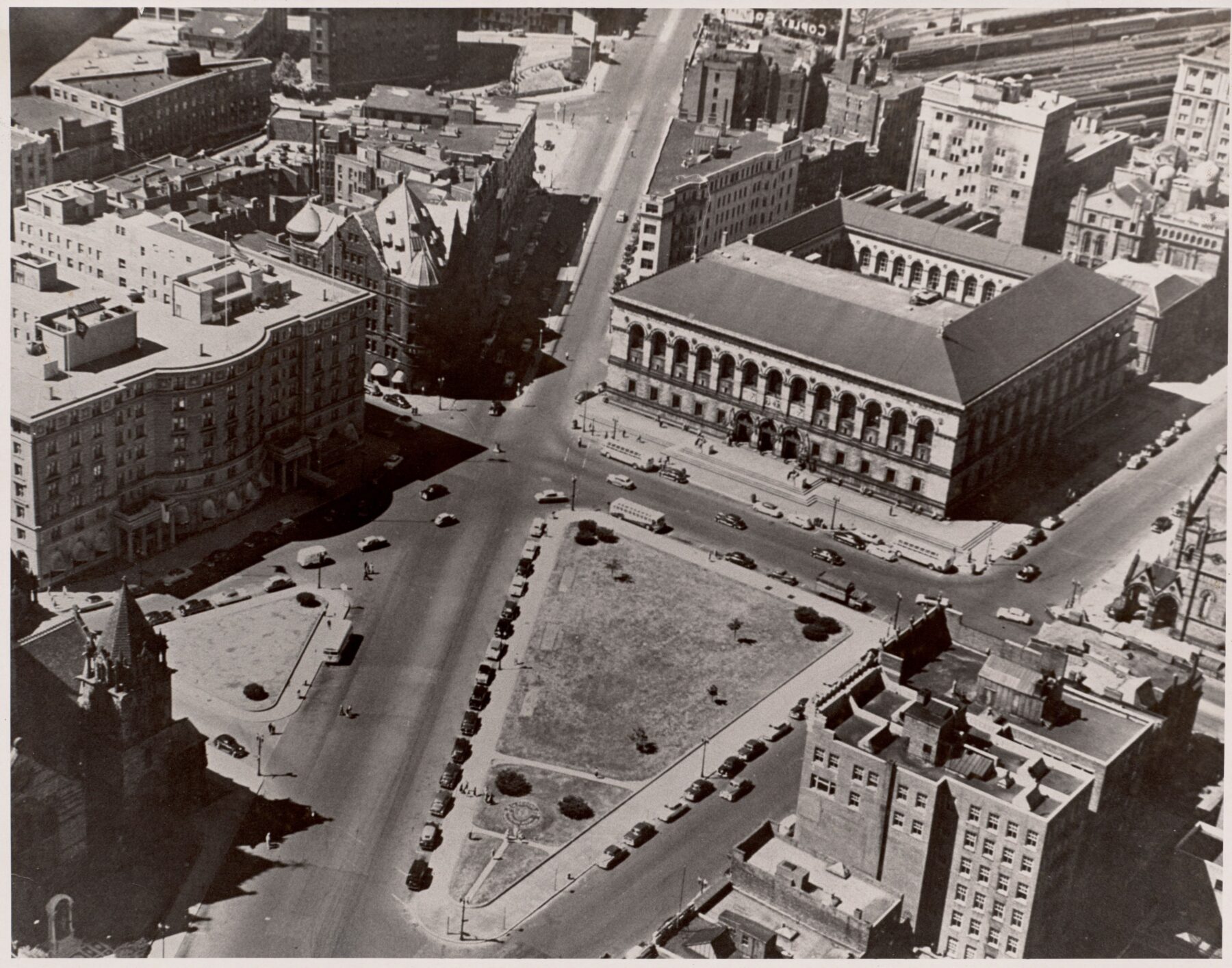
Aerial view of Copley Square from the 1950s. Photo from Boston Public Library Collection.
The City’s updates and renovations are part of a succession of changes spanning nearly two centuries. The square’s history as an urban center begins in the 19th century, when the area became a hub for local institutions including the Boston Public Library, Old South Church, Trinity Church, as well as the original Museum of Fine Arts.
In 1883, the square was named after famed Boston-born painter John Singleton Copley to reflect the rich cultural activity concentrated in the neighborhood.
Originally a grassy triangle enclosed by busy streets, the plaza was redesigned in the 1960s by Sasaki to shift to a more civic-minded space, replacing the segment of Huntington Avenue that ran diagonally across the site with a sunken piazza with a fountain. While this iteration helped make the area more amenable to pedestrians, the grading, along with the plantings and thick concrete walls around the perimeter created separations between street and square that led to the site feeling less welcoming than intended.
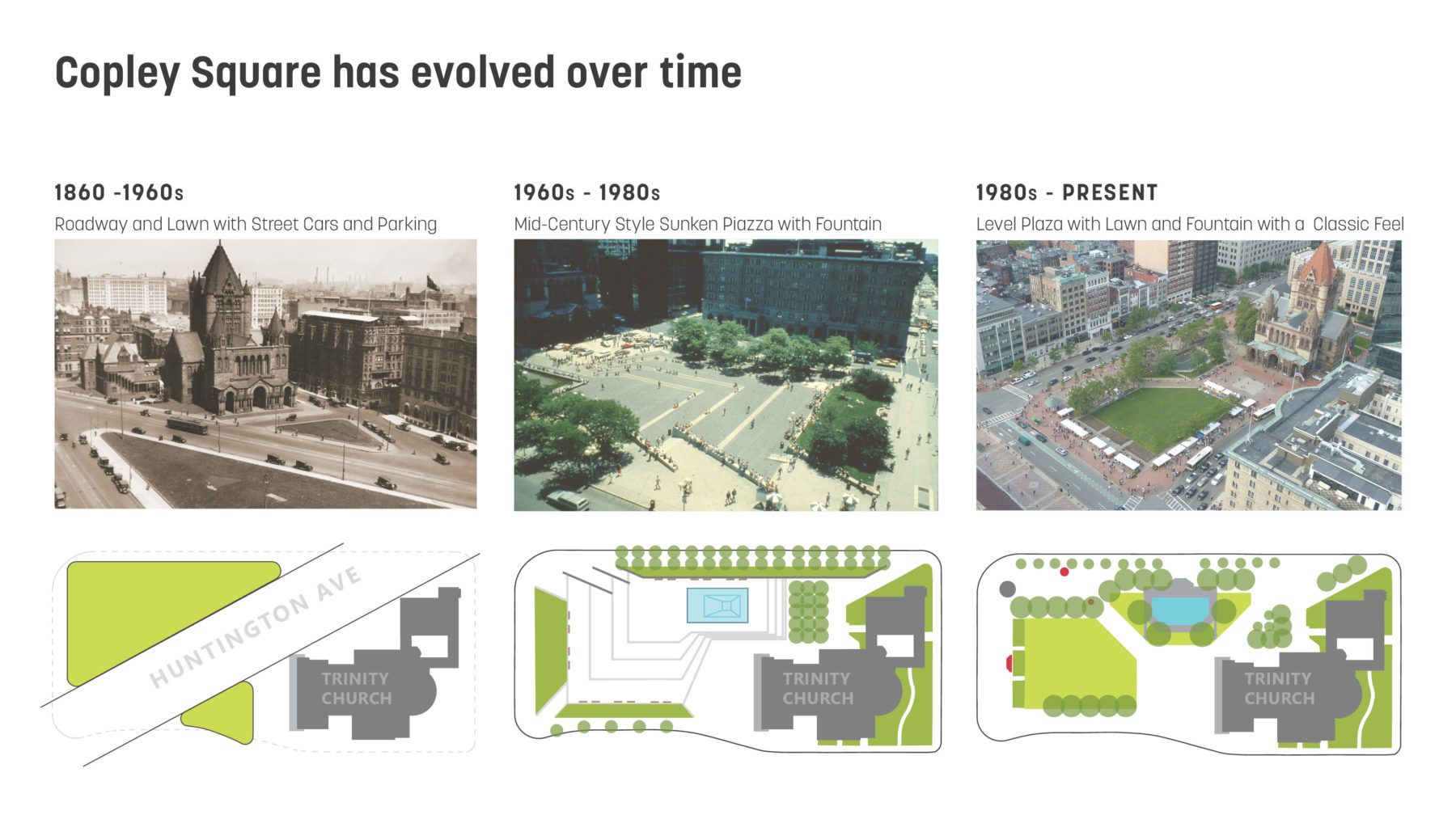
A second renovation in the 1980s addressed these needs by bringing the square back up to street level and adding more lawns, paved open spaces, and plantings across the site. While these changes helped activate the space and make it into the lively civic arena we know today, decades of heavy usage has put stress on the plaza and its trees.
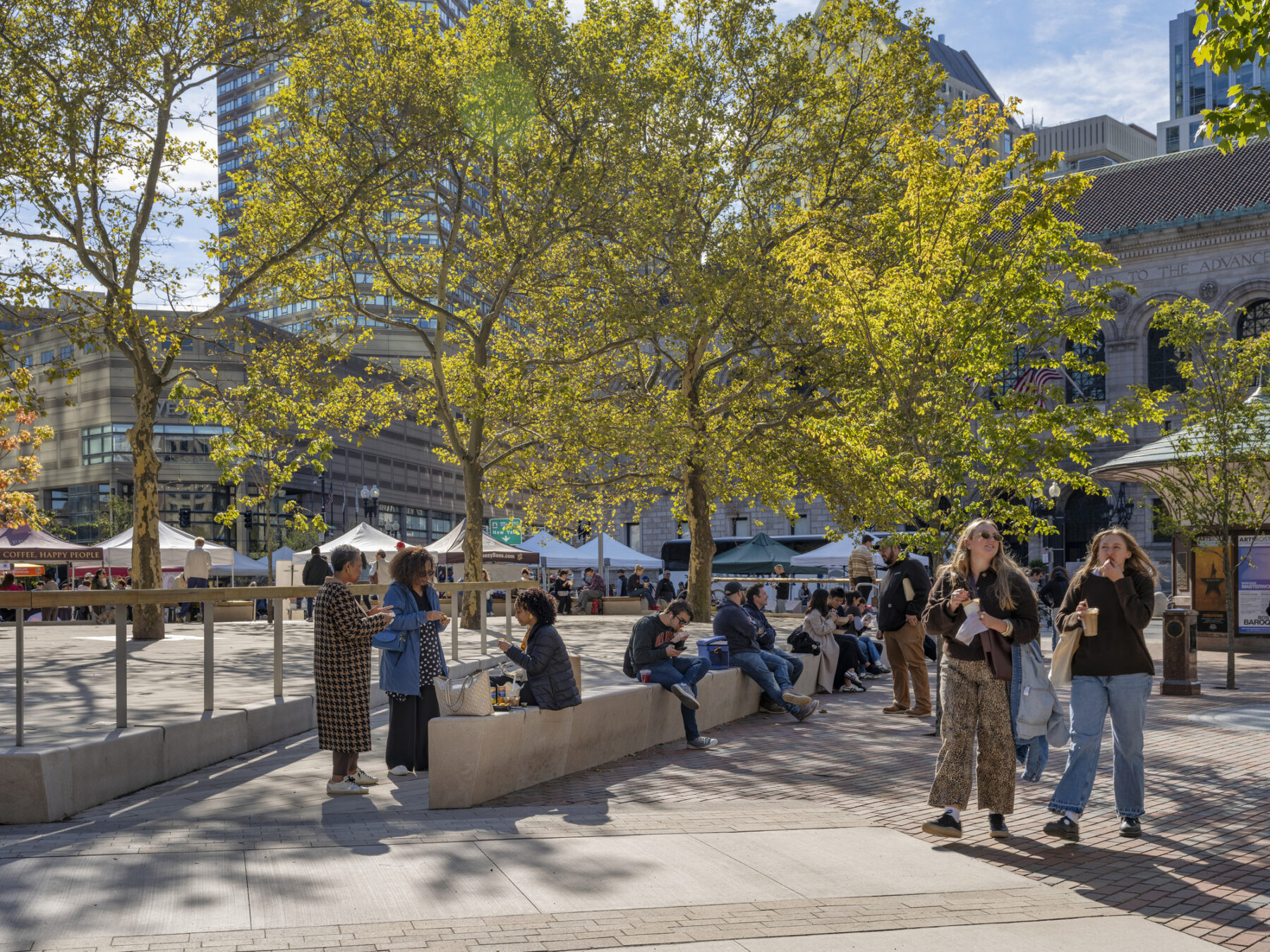
In order to bring out the best of Copley Square, we needed to hear from those who knew the place best. Over the course of over a year, a robust engagement process with community members and the city was carried out through formal public convenings, surveys, and meetings with stakeholders such as the Friends of Copley Square, Boston Public Library, Trinity Church, Mass Farmers Markets, and the Boston Athletic Association.
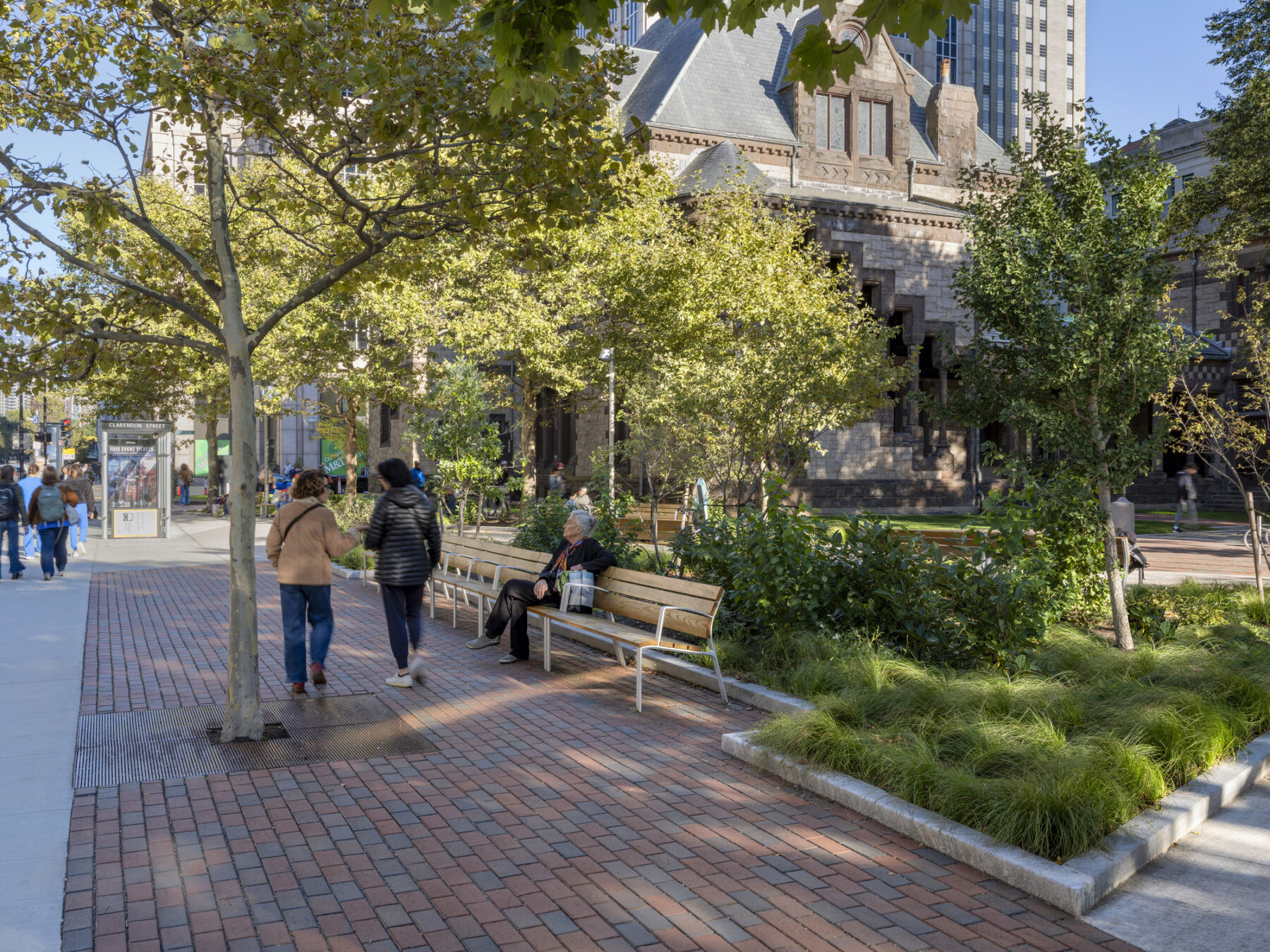
During our engagement sessions, preserving and enhancing the plaza’s beloved tree canopy and increasing shaded seating quickly emerged as some of the key priorities for the site’s redesign. In order to protect tree roots from heavy foot traffic, Sasaki’s designers and engineers devised a raised grove that removes stress from the critical root zone of some of the Square’s most established trees, while creating more opportunities for shaded seating.
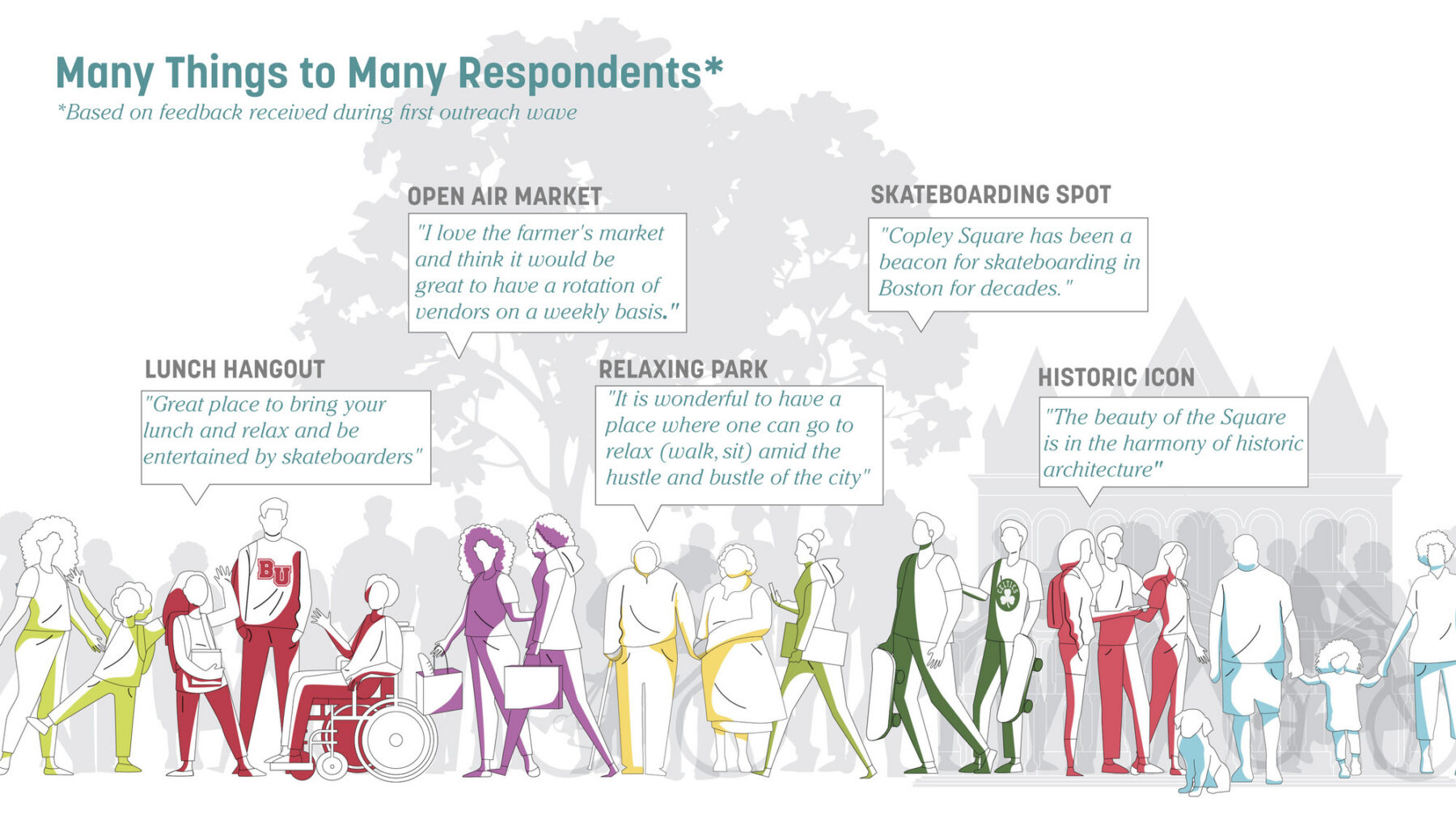
The results of the public engagement process showed the diversity of uses for visitors and residents.
Additional plantings around existing trees further enliven the plaza and bring the total number of trees from 52 to 83. The existing cycle of planted annuals has been supplemented with native plantings and perennials to create a more ecologically diverse and sustainable garden environment.
The fountain, a key feature of previous plaza iterations, has been reconfigured to improve accessibility, enhance operational efficiency, and meet current code requirements. Community feedback strongly favored preserving the fountain’s original design and aesthetic. To optimize performance, the team overhauled the mechanical systems and improved waterproofing of the vault and basin while reusing materials wherever possible. Enhanced lighting and newly ADA-accessible paths and seating around the water’s edge improve the visitor experience while honoring the fountain’s historic character.
In its previous state, the plaza was covered in cracked and uneven paved surfaces that failed to meet ADA standards and could not support vehicles used for events and facilities upkeep. The location of the lawn adjacent to the street meant that many events took place on the lawn, placing stress on the adjacent trees and requiring weeks of recovery after large gatherings. The new design focuses on resilient solutions that support Copley’s daily and event uses.
In order to reinforce the square, protect the existing tree systems, and improve circulation and access, the renovation resituates the lawn in front of Trinity Church. This change buffers the historic building from events and shifts the plaza to face Dartmouth Street, expanding pedestrian access and bringing programming in closer proximity to the Public Library and the street. The renovated plaza is designed to support Copley’s most popular programming through its larger size, vehicular rated paving, and array of utilities for concerts and events. At the same time, the shifted location of the lawn along with the new planting beds preserves the overall square footage of the green space, which comes to around 20,000 square feet.
In addition, an improved stormwater system lends further support to the plaza’s greenery as well as the Back Bay neighborhood’s resilience.
“Our parks are a key tool in making Boston more resilient to climate change,” said Brian Swett, Chief Climate Officer. “These upgrades, made in partnership with our community partners, will help manage stormwater flooding in Back Bay and provide shade on Boston’s hottest days. I am thrilled to see how the reconstruction makes this space more welcoming for our residents and visitors alike.”
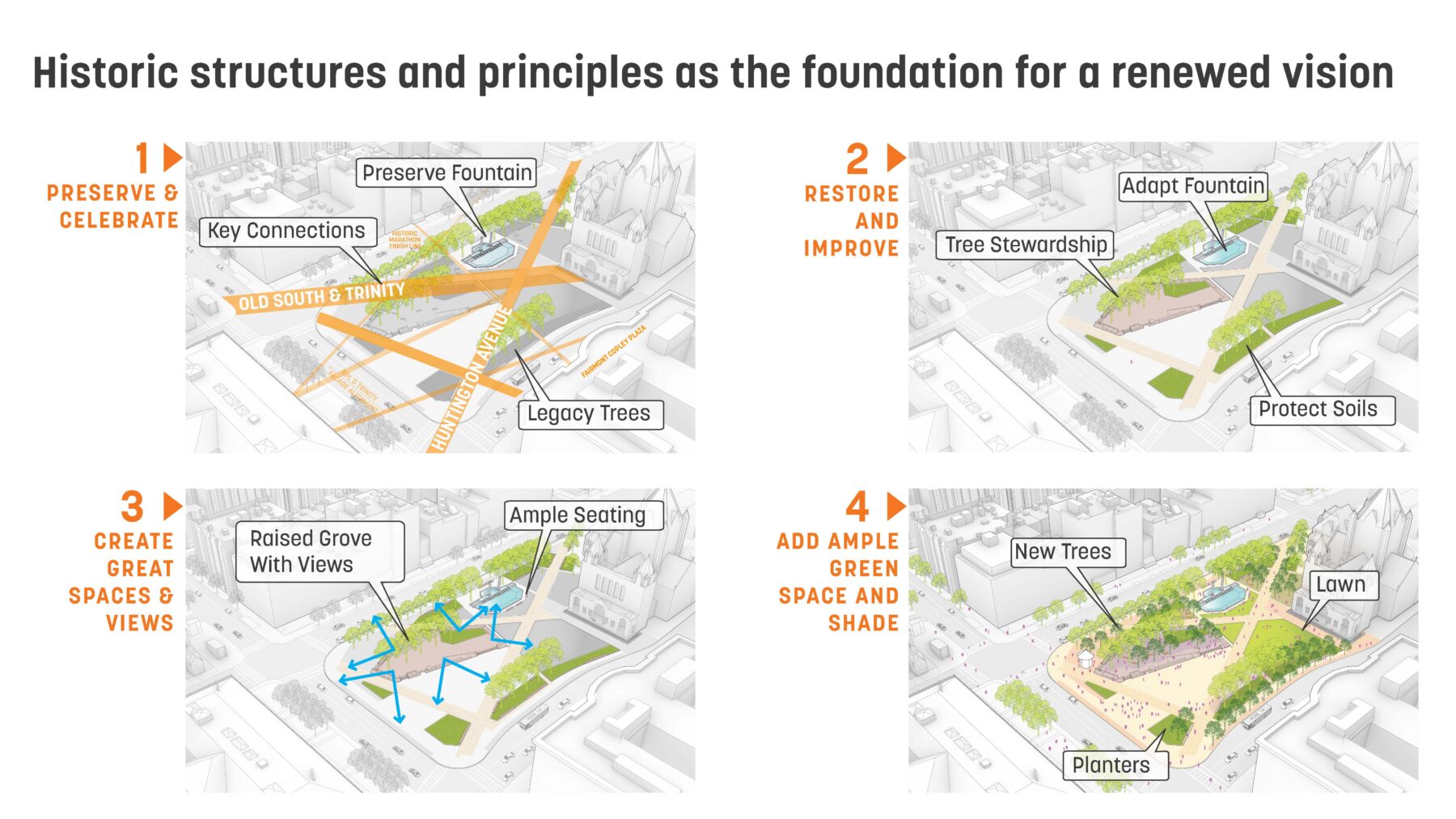
Guiding principles were developed after public engagement and an analysis of the site.
Groundwater recharge is a critical need both to maintain strong building foundations in Back Bay and to reduce the risk of flooding from increasingly intense rain storms. A 77,000 gallon infiltration facility under the plaza promotes groundwater recharge and upgraded storm drain lines foster root water uptake in the plaza’s trees. Two water quality structures filter particulates from stormwater runoff upstream of the infiltration system improving the quality of the water introduced back into the ground. In addition, in many areas, the design allows precipitation to flow directly to tree roots by replacing traditional hardscape with permeable pavers and bricks and porous resin bound aggregate.
While not always visible at surface level, these key engineering interventions are critical in supporting the activities and natural life that sustain and enliven Copley Square. From the finish line of the marathon, to weekly farmer’s markets and afternoon strolls, the new Copley Square fulfills its vital role as a Boston icon and a community nexus.